



Frozen Hami Melon supply for commercial buyers
We supply frozen Hami melon in wedge and diced styles for fruit blends and further processing. Wedges need a rind and seed-cavity standard, while dice are more exposed to uneven cuts, soft edges and pressure damage in the pack.
We agree ripeness, rind removal and seed-cavity cleaning for the chosen style. A trial with that exact sample helps us set firmness, color and broken-piece limits without treating wedges and dice as one grade.

Product forms
Orange-flesh melon wedges
For wedges, the cut face, rind removal and seed-cavity cleaning must be assessed together.
Diced Hami melon
Wedges, dice and any melon-ball form need separate size and rind standards. Dice require their own measured cube range, broken-piece allowance and carton trial.


Purchasing risks and acceptance checks
Appearance and identity: flesh color, translucency and visible rind.
We set a lot reference for the visible color and selected form of hami melon.
The selected style has a color and maturity reference for orange flesh.
Foreign parts and defects: seed-cavity remnants, green rind on peeled cuts and crushed dice.
We sample for rind, seed-cavity remnants and uneven dice and agree which findings are defects versus allowed natural variation.
Remaining seeds, fibrous cavity tissue and rind can be identified at receiving.
Functional performance: variable ripeness and softening.
We portion the selected style in the buyer's process and compare firmness, released juice and damage after handling.
The portioning trial distinguishes sound wedges from dice that have softened or crushed.

Product specifications
We match the form, grade and acceptance method to the agreed sample and your application.
| Item | Requirement |
|---|---|
| Product identity | Frozen Hami Melon; exact fruit variety or source lot to be confirmed where it affects orange or pale melon flesh with form-dependent rind removal. |
| Primary form | orange-flesh Hami melon wedges; any alternate form requires its own sample and order confirmation. |
| Appearance | Agree a reference for flesh color, translucency and visible rind; define acceptable natural variation and reject defects separately. |
| Size and grade | Set separate wedge dimensions or dice range, with rind, seed-cavity and broken-piece limits for the chosen style. |
| Critical defects | Agree inspection limits for seed-cavity remnants, green rind on peeled cuts and crushed dice, including how a buyer will sample a received carton. |
Preparation and frozen processing
- Hami Melon lot selection. We begin with the selected fruit lot and record the identity relevant to orange or pale melon flesh with form-dependent rind removal.
- Preparation and removal. Seed removal, rind trimming and measured cutting define the edible yield before freezing.
- Form and size control. We check rind removal, wedge geometry or dice size, and ripeness window against the order instruction.
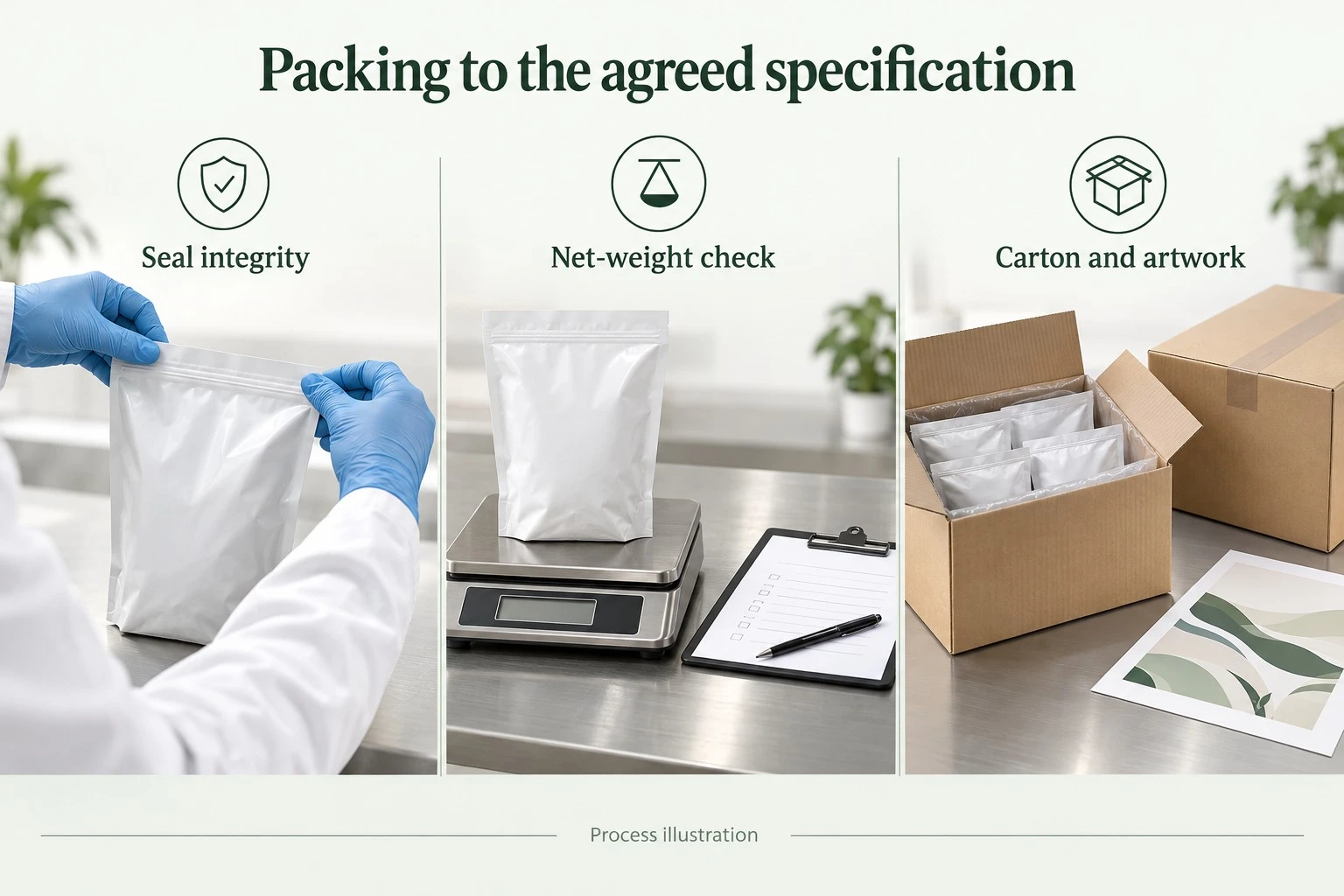
- Packed hami melon release. We inspect for seed-cavity remnants, green rind on peeled cuts and crushed dice, check net weight and seal integrity, and match carton identification to the lot record.

Quality control
Our lot review focuses on rind, seed-cavity remnants and uneven dice.
We check the seed cavity and rind edge on representative wedges, and count fines and compressed corners in diced fruit. The buyer's trial should compare juice release and firmness after the intended thaw or heat step.

Applications and quality requirements
| Application | Buyer channel | Purchasing requirement |
|---|---|---|
| Wedge portion programs | Foodservice portion suppliers | Set wedge weight, rind status and seed-cavity tolerance; inspect whether the portion holds shape after the buyer’s handling process. |
| Melon dice for fruit preparations | Fruit-preparation plants | Specify cube dimension, firmness and broken-piece allowance. Smaller dice can release water differently from wedges. |
| Beverage fruit bases | Beverage processors | Agree fruit maturity and flesh color, then measure yield after the buyer’s blending or extraction step rather than extrapolating from a cut photo. |

Packing and private label
For bulk ingredients we confirm the liner and carton around orange-flesh Hami melon wedges. The pack must protect the fruit from the pressure and moisture issues associated with variable ripeness and softening.
Wedges need enough room to avoid edge pressure; dice need a liner and fill level that limit compression and frozen clusters. Separate pack trials are needed if both styles appear in one program.
Documents and traceability
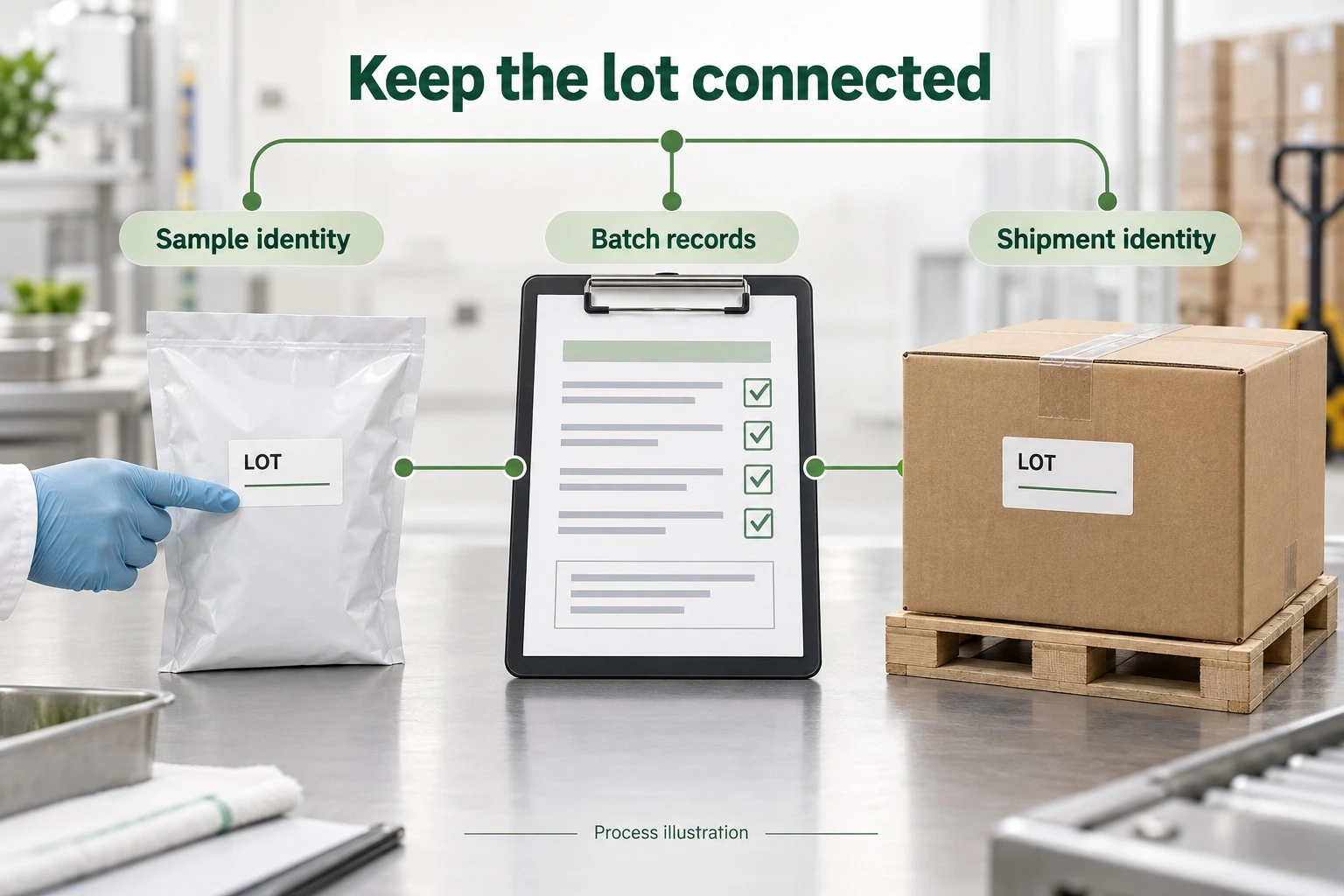
The Hami melon order file identifies wedges or dice, maturity reference, rind and seed-cavity findings, and packed lot.
Commercial papers and any requested batch report follow that specific cut; the other photographed style is not a substitute.
Frozen storage and delivery
Wedges need edge protection while dice need a compression check at carton base. We plan frozen loading by their separate carton and pallet patterns.
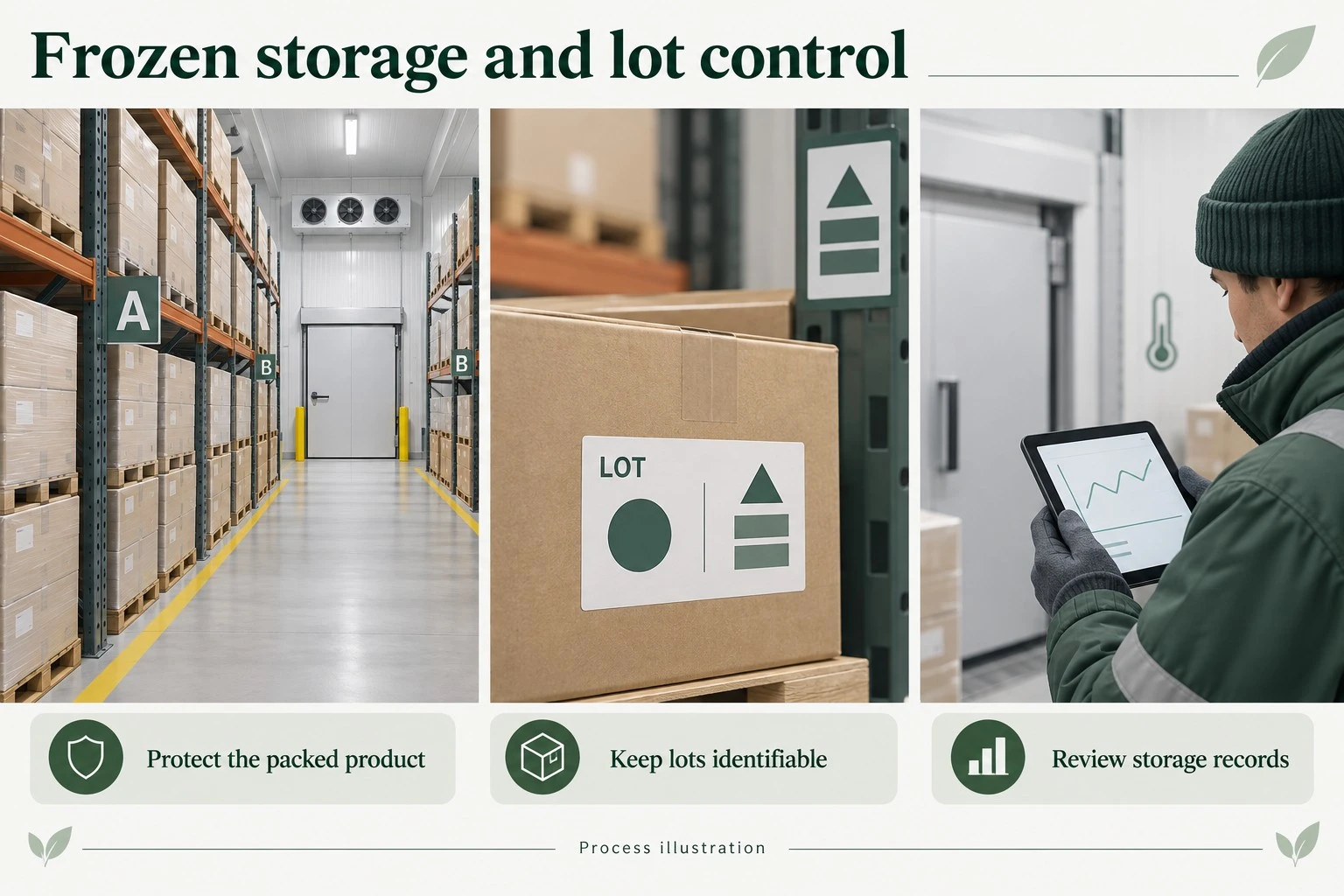
Wedge and dice cartons may occupy different pallet patterns, so loading quantity follows the selected style. Both remain labelled by separate frozen lots.

Frequently asked questions
Are the pictured wedges peeled?
The wedge reference shows rind on some pieces. Rind removal is a separate specification decision.
Is the diced style the same grade as the wedges?
No shared grade is established. Each cut needs its own sample, dimension and defect tolerance.
How are seeds controlled?
We define the allowance for seed-cavity remnants on the selected cut and inspect representative pieces.
What ripeness range is suitable?
The buyer’s application sets the firmness and flesh-color reference. We confirm the crop lot against that sample.
Are melon balls available?
One source set shows a ball form, but availability and size still need explicit lot confirmation before quotation.
Why can wedges and dice pack differently?
Their geometry changes fill density and pressure damage. We set the liner and carton around the selected cut.
What happens to wedge edges during handling?
We examine a packed sample for bruised or broken cut faces. Rind and cavity findings are recorded separately.
What is a practical acceptance test for melon dice?
Measure the cube range and count broken or compressed pieces from a handled carton. Then assess the fruit in the buyer's preparation.
Can the same artwork show wedges and dice?
Only if the delivered style and label are accurate. We approve the product image and pack declaration for each SKU.
Why do the two cuts need separate prices?
Trim yield, handling and packing differ between wedges and dice. We quote after the form and grade are selected.
Which lot information protects a melon program?
The style, maturity reference, defect limits and pack identity should be connected to the batch and shipment papers.
Can wedges share a mixed load with small dice?
They can be planned as separately identified SKUs. We check carton support so a heavier pack does not crush wedge edges.
Discuss your sourcing requirement
Tell us whether you need Hami melon wedges or dice and how they will be portioned; we will review the relevant sample and pack.
Send an inquiryView product catalogAs one of the most professional frozen hami melon manufacturers and suppliers in China, we're featured by quality products and good service. Please rest assured to wholesale high-grade frozen hami melon from our factory.