



Frozen Chinese Cabbage supply for commercial buyers
We supply frozen Chinese cabbage for dumpling fillings, prepared meals and soup bases. Soft leaf and firm pale rib behave differently during heating, making the leaf-to-rib balance as important as the nominal chop size.
We set piece length, rib inclusion and surface-water limits against the intended use. A filling or broth trial helps us assess yield, texture and moisture release while checking yellow leaf, dark bruises and coarse rib pieces.

Product forms
Leaf-led cut
A leaf-led chop gives a softer filling appearance but needs a defined allowance for torn edges and yellow leaves. We compare a packed sample with the buyer filling trial.
Rib-inclusive chop
Pale rib contributes bite and bulk. The order grade should state rib share, maximum rib thickness and the draining result expected after the customer heating step.
Soup cut
A longer leaf-and-rib piece can remain visible in noodle or soup meals. This is a separate style, with length and rib share approved on its own sample.


Purchasing risks and acceptance checks
water release from thick ribs and bruised leaf edges
We compare the raw-material condition and visible sample, then set an agreed limit for piece length and leaf-to-rib ratio.
Your receiving team can judge the lot against the same cut Chinese cabbage leaf and rib reference used during approval.
Unwanted material or appearance outside the green leaf with pale rib target
We define the visual exclusions for yellow leaf, coarse rib, dark bruising and excess surface water; sorting and final inspection are aligned to the agreed sample.
Leaf and rib samples can be judged separately for yellowing and coarse tissue.
Ice-bound leaf clumps can conceal a heavy rib share.
Open a packed carton and compare leaf, rib and free water after the filling trial.
The accepted carton has the agreed rib share and a measurable filling-water result.

Product specifications
We match the form, grade and acceptance method to the agreed sample and your application.
| Item | Requirement |
|---|---|
| Product identity | Cut chinese cabbage leaf and rib; confirm ingredient identity and intended frozen state on the order. |
| Commercial form | Cut leaf, rib-inclusive chop or a defined leaf-to-rib mix; each variation needs its own sample and approval. |
| Cut and size | Confirm piece length and leaf-to-rib ratio; agree the measurement method and tolerance from a reference sample. |
| Appearance | Agree the acceptable green leaf with pale rib range and limits for yellow leaf, coarse rib, dark bruising and excess surface water. |
| Processing route | Confirm washing, optional blanching and draining and any applicable pretreatment for the actual SKU. |
| Defect allowance | Write limits for water release from thick ribs and bruised leaf edges, broken pieces and foreign material in the approved specification. |
| Packing and label | Confirm unit weight, inner bag, carton, label language and carton marks for the destination market. |
| Commercial terms | Confirm MOQ, lead time, loading port, trade terms and shipment quantity for this order; no standard value is implied. |
| Shelf life and storage | Confirm the approved shelf-life statement and frozen storage condition on the final specification and label. |
Preparation and frozen processing
- Raw-material review. We define the incoming cut Chinese cabbage leaf and rib condition, maturity and visible exclusions before selecting a production lot. The material must be suitable for cut leaf, rib-inclusive chop or a defined leaf-to-rib mix.
- Cleaning and preparation. We remove damaged outer leaf and hard core material according to the agreed leaf-to-rib grade, then cut to the approved length. Drainage matters because retained wash water can become extra free water in a filling.
- Pretreatment and processing state. The order record addresses washing, optional blanching and draining for this SKU. Processing time, temperature and finished state must come from its approved production record.
- Freezing and separation. Open a packed carton and compare leaf, rib and free water after the filling trial.
- Inspection and packing. We sort against the green leaf with pale rib appearance target and named defects, then check pack integrity, net weight, label identity and batch code.

Quality control
For Chinese cabbage, the pale ribs and green leaves must be sampled together, not from separate carton layers. We check cut length, yellow leaf, hard rib and the water released during a filling trial.
We ask your team to assess moisture release during filling or broth processing, because a lot that looks acceptable in a frozen carton may perform differently after its intended processing step.

Applications and quality requirements
| Application | Buyer channel | Purchasing requirement |
|---|---|---|
| Dumpling and bun fillings | filling factories | Set a leaf-to-rib ratio and draining point to limit free water and uneven bite in the finished filling. |
| Soup and noodle meals | meal manufacturers | Choose a chop that disperses evenly while the thicker ribs reach the required tenderness. |
| Central-kitchen vegetable bases | foodservice kitchens | Agree the proportion of pale rib and green leaf so batch color and cooking yield remain predictable. |

Packing and private label
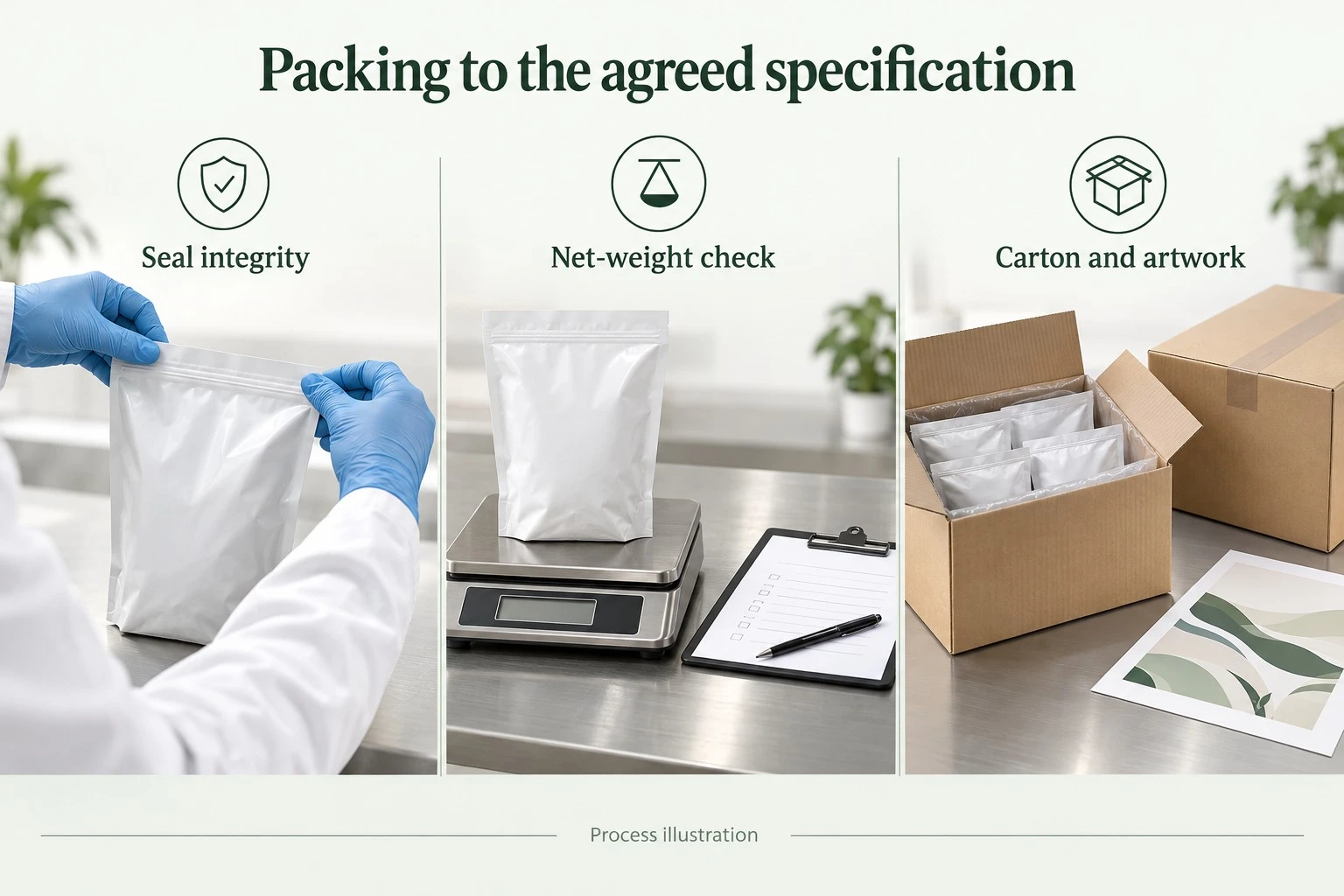
Bulk pack weight, liner and carton strength are set around cut Chinese cabbage leaf and rib and its risk of water release from thick ribs and bruised leaf edges.
For a retail filling ingredient, artwork should identify the approved leaf-and-rib cut, not imply leaf-only material. We review the actual bag seal, label language, artwork and carton marks before printing.
Documents and traceability
The invoice, packing list and carton marks must describe cut leaf, rib-inclusive chop or a defined leaf-to-rib mix consistently.
We discuss inspection records or reports for the actual cut Chinese cabbage leaf and rib lot and destination. Requested evidence must answer a defined receiving concern such as yellow leaf, coarse rib, dark bruising and excess surface water; certification scope is checked before it is claimed.

Frozen storage and delivery
We check cut Chinese cabbage leaf and rib cartons, lot codes and pallet layout before frozen loading.
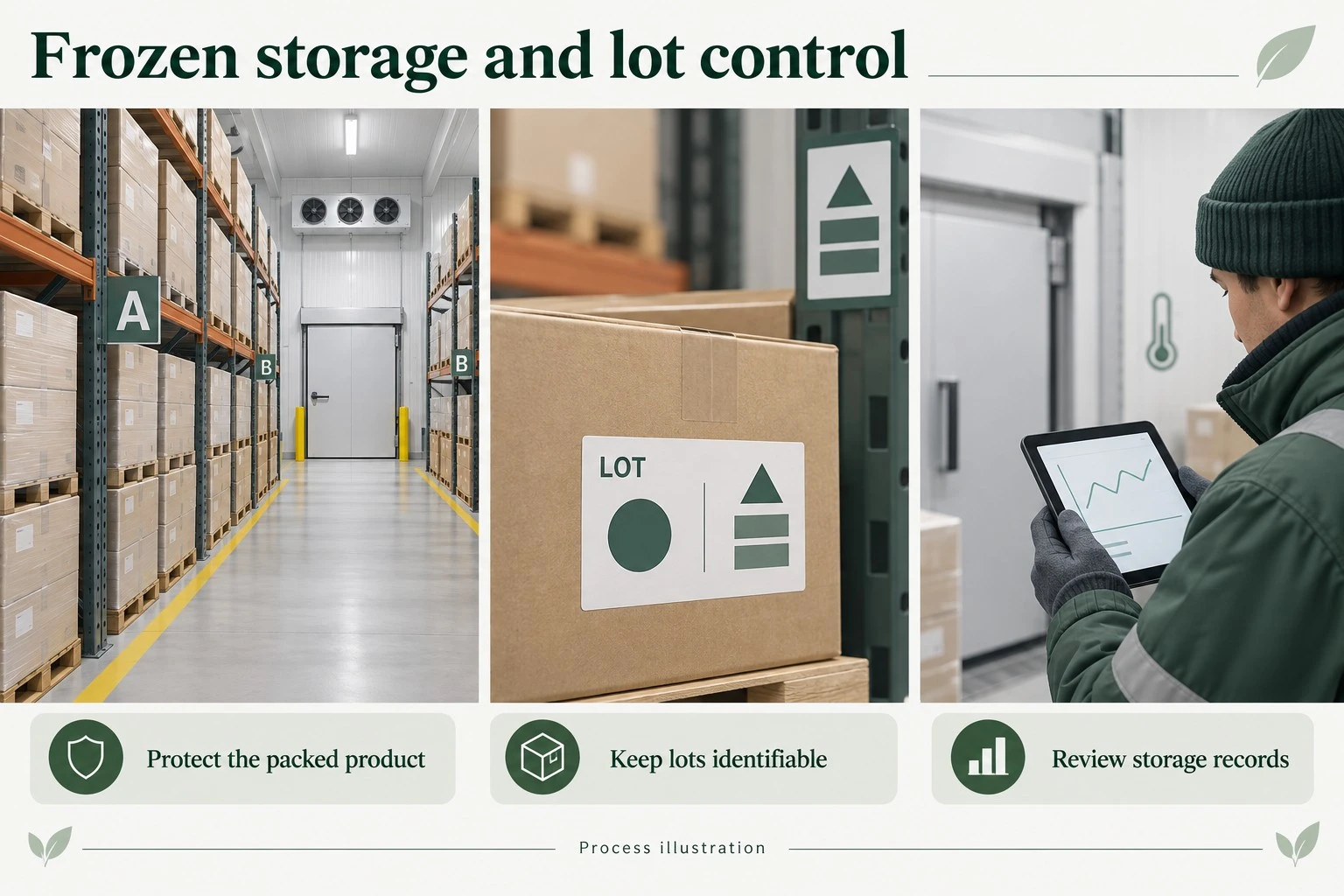
A mixed load keeps frozen chinese cabbage identifiable by lot and pallet position.

Frequently asked questions
How much rib is included in the Chinese cabbage chop?
We agree a leaf-to-rib ratio on a representative lot. The ratio affects bite and water release in filling production.
Can the cut be used in dumpling filling?
We test chop size and drained condition in the buyer formulation. A cooked filling trial should settle the acceptable free-water level.
Is this the same as heading cabbage?
No. Chinese cabbage has a distinct soft leaf and pale rib structure, so its cut and receiving standard must be separate.
How are bruised leaf edges handled?
We separate dark bruising from normal cut edges on the approved sample. The limit matters most when leaf color remains visible in a filling.
Can a soup cut be quoted from a filling sample?
The cutting target and receiving test differ. We would approve a second sample showing length, leaf retention and rib distribution.
Which yellow-leaf condition is rejected?
We separate normal pale rib from yellowed leaf tissue. The approved reference and defect allowance define the rejection point.
Does a carton sample need both leaf and rib?
Yes. We examine a mixed portion from the pack so a leaf-heavy surface cannot hide a rib-heavy lower layer.
How will frozen chinese cabbage be packed?
We select an inner bag and carton around piece length and leaf-to-rib ratio.
Which records accompany frozen chinese cabbage?
We link the leaf-to-rib balance, cut and retained-water standards to the accepted sample, lot inspection and shipment documents. Requested test reports are agreed for the destination and actual lot.
Can frozen chinese cabbage join a mixed frozen shipment?
We can review frozen chinese cabbage with other compatible frozen items under an agreed loading plan. Chinese cabbage retains its own leaf-to-rib specification and carton marks within a vegetable shipment.
How are MOQ and lead time confirmed for frozen chinese cabbage?
The required leaf-to-rib mix and preparation affect the packing run and production availability. We confirm the order quantity and lead time for that defined order rather than publish one value for every pack.
What should we discuss first for Frozen Chinese Cabbage?
Tell us whether you need a leaf-led filling cut or a rib-inclusive soup cut.
Discuss your sourcing requirement
Tell us whether the Chinese cabbage is for a filling, soup or prepared dish. We’ll compare leaf and rib proportions and check the chop and drainage requirements for your sample.
Send an inquiryView product catalogAs one of the most professional frozen chinese cabbage manufacturers and suppliers in China, we're featured by quality products and good service. Please rest assured to wholesale high-grade frozen chinese cabbage from our factory.