


How to Prepare Frozen Kale
May 19, 2026
Leave a message


The correct preparation depends on where the released moisture can go
For wet cooking systems, add frozen kale directly and allow enough time for the portion to heat through. For dry or structured recipes, thaw under controlled conditions, drain, and press gently before weighing it into the formula. Commercial kitchens should validate yield, water release, particle size, heating step, and portion weight with the actual frozen kale specification.
Home preservation guidance and commercial procurement specifications answer different questions. Use the method in this article for practical direction, then confirm the requirements that apply to the actual product, process, and destination market.
Direct or thawed
Decide whether the ingredient should be used frozen, thawed, blanched, cooked, drained, or portioned before it enters the final recipe.
Released water
Check the variable that changes most after freezing: texture, released moisture, separation, color, aroma, or pack-medium behavior.
Recipe-scale test
Confirm the written specification, current lot documents, packing, shelf-life statement, storage requirement, and a representative application test.
The Short Answer: How Should You Prepare Frozen Kale?
Prepare frozen kale according to the recipe. Use it directly from frozen for smoothies, soups, stews, sauces, and hot cooked dishes. Thaw and squeeze it first when the recipe needs low moisture and better texture control.
If the final dish has liquid, frozen kale can usually go in directly. If the final dish is a filling, baked item, egg dish, or dry mixture, remove water first.
| Application | Best Preparation Method | Why It Works |
|---|---|---|
| Smoothies | Use directly from frozen | Blending hides leaf texture and keeps the drink cold. |
| Soups and stews | Add directly from frozen | The cooking liquid thaws and softens the kale. |
| Sautéed kale | Thaw lightly or cook off moisture | Too much water can make the pan steam instead of sauté. |
| Quiche, omelets, pies, fillings | Thaw and squeeze well | Moisture control prevents watery texture. |
| Pasta and rice dishes | Use frozen or thawed depending on moisture target | Direct use is fast; thawing gives better water control. |
Do You Need to Thaw Frozen Kale Before Cooking?
You do not always need to thaw frozen kale before cooking. For recipes with enough heat and moisture, frozen kale can go directly into the dish. This saves time and reduces handling.
However, thawing is useful when the recipe is sensitive to water. Frozen kale releases moisture as it thaws. If that moisture stays in a filling, quiche, pie, dumpling, omelet, or ready meal, the final product can become watery.
| Use Frozen Directly | Thaw First |
|---|---|
| Smoothies | Quiche |
| Soups | Omelets and frittatas |
| Stews | Dumpling fillings |
| Sauces | Pastry fillings |
| Hot pasta sauce | Lasagna layers and savory pies |
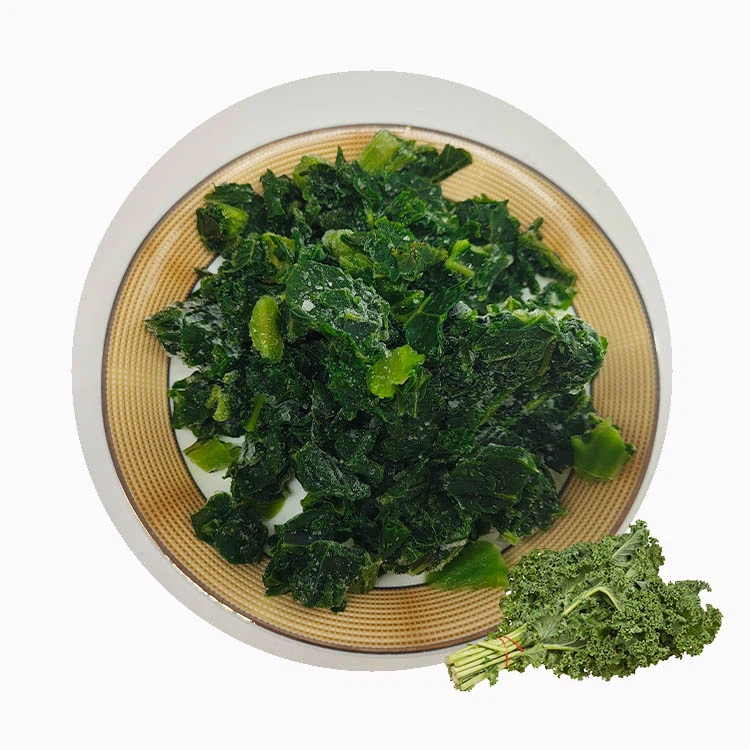
How to Thaw and Squeeze Frozen Kale
When a recipe needs dry or controlled texture, thawing and squeezing are the most important preparation steps.
Step 1: Thaw Only the Amount You Need
Remove only the required amount from the freezer. Repeated thawing and refreezing weakens texture and increases water release.
Step 2: Thaw in the Refrigerator When Time Allows
For controlled preparation, thaw frozen kale in a covered container in the refrigerator. This is especially useful for foodservice preparation, fillings, and ready-meal production.
Step 3: Drain the Released Liquid
After thawing, pour away the visible liquid if the recipe does not need it. This helps prevent watery dishes.
Step 4: Squeeze Gently but Firmly
Use clean hands, a spoon, a sieve, cheesecloth, or a clean towel to squeeze out extra water. Do not crush the kale into paste unless the final product is a puree or filling where texture does not matter.
Step 5: Season After Moisture Control
Season the kale after draining and squeezing. If you season before removing water, salt and spices may be lost with the liquid.
How to Prepare Frozen Kale for Smoothies
Frozen kale works well in smoothies because the blender breaks down the leaf texture. You do not need to thaw it first. Use it directly from the freezer with fruit and liquid.
Kale has a stronger green flavor than spinach, so it usually needs sweet fruit or acidity to balance the taste. Frozen mango, banana, pineapple, apple, peach, blueberries, strawberries, lemon, lime, and yogurt all work well.
Best Smoothie Formula
- Frozen kale
- Frozen mango or banana for body
- Pineapple, apple, berries, or peach for flavor balance
- Water, coconut water, milk, plant-based milk, or yogurt
- Lemon or lime juice if the smoothie tastes too green
For commercial smoothie packs, frozen kale should be cut small enough to blend smoothly and portioned consistently. Large compact kale blocks are less efficient for fast beverage preparation.

How to Prepare Frozen Kale for Soup
Soup is one of the easiest uses for frozen kale. Add it directly from frozen near the end of cooking if you want better green color and leaf identity. Add it earlier if you want a softer texture and deeper integration into the broth.
Frozen kale works well in vegetable soup, bean soup, chicken soup, lentil soup, minestrone-style soup, potato soup, sausage soup, and green soup bases. The released moisture becomes part of the broth, so draining is usually not necessary.
Soup Preparation Tips
- Add frozen kale directly to hot soup.
- Stir gently to separate pieces.
- Cook until heated through and softened.
- Add at the end for brighter color.
- Add earlier for softer texture.
- Adjust salt after the kale has fully thawed into the soup.
How to Prepare Frozen Kale for Sautéed Dishes
Sautéed frozen kale needs moisture control. If you put a large frozen block into a pan with oil, the kale may steam and release water before it can sauté. This can make the dish wet and flat.
For better results, use loose chopped IQF kale or thaw and squeeze block-style kale before sautéing. Cook over medium-high heat so extra water evaporates quickly.
Simple Sauté Method
- Heat a pan first.
- Add a small amount of oil.
- Add garlic, onion, chili, or spices if needed.
- Add frozen kale in small portions.
- Cook until water evaporates.
- Season after excess moisture is gone.
- Finish with lemon juice, vinegar, sesame oil, cheese, or herbs depending on the dish.

How to Prepare Frozen Kale for Pasta and Noodles
Frozen kale works well in pasta and noodle dishes because it does not need fresh crispness. It can be stirred into hot sauce, added to pasta water near the end of cooking, or sautéed with garlic before mixing with noodles.
If the sauce is thick and creamy, thaw and squeeze the kale first so the sauce does not become watery. If the sauce is broth-based or tomato-based, frozen kale can usually go in directly.
| Dish Type | Preparation Method | Reason |
|---|---|---|
| Tomato pasta | Add frozen kale directly to sauce | Extra moisture blends into the sauce. |
| Cream pasta | Thaw and squeeze first | Prevents the cream sauce from thinning. |
| Stir-fried noodles | Sauté and evaporate moisture first | Keeps the noodle dish from becoming wet. |
| Lasagna | Thaw and squeeze first | Controls water in layered baked products. |
How to Prepare Frozen Kale for Egg Dishes
Egg dishes are sensitive to moisture. Frozen kale should usually be thawed and squeezed before being added to omelets, frittatas, scrambled eggs, quiche, and breakfast casseroles.
If you add frozen kale directly to eggs, the released water can make the eggs watery and weak. For better texture, cook the kale first, evaporate moisture, then add eggs or mix into the egg base.
Best Egg Dish Method
- Thaw frozen kale.
- Squeeze out extra water.
- Sauté briefly with onion, garlic, or seasoning.
- Let excess moisture evaporate.
- Add to eggs, quiche filling, or casserole base.
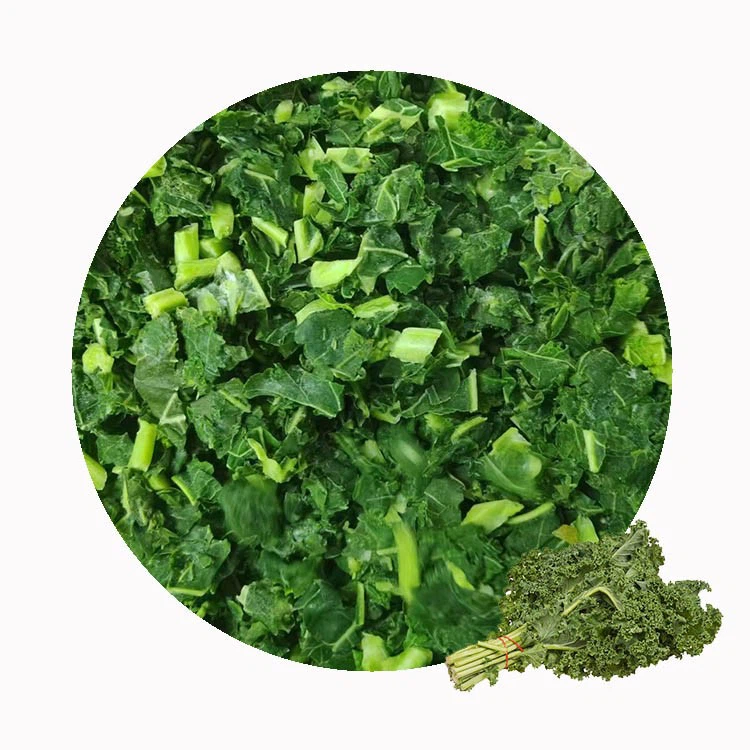
How to Prepare Frozen Kale for Fillings
Frozen kale can be used in dumpling fillings, pastry fillings, savory pies, ravioli, stuffed pasta, stuffed bread, buns, and ready-meal fillings. In these applications, water control is critical.
Always thaw and squeeze frozen kale before mixing it with meat, cheese, tofu, mushrooms, grains, eggs, or sauces. If the kale is too wet, the filling may become loose, leak during cooking, or weaken the product texture.
Filling Preparation Checklist
- Thaw under controlled conditions.
- Squeeze out water thoroughly.
- Chop finer if the filling needs uniform distribution.
- Season after squeezing.
- Test the filling after cooking, baking, or steaming.
- Adjust binder, starch, egg, cheese, or protein level if moisture remains high.
What changes when this becomes a purchasing decision?
A home-freezing method answers whether an ingredient can be preserved and how it should be prepared. A commercial purchase requires a second layer of control. The same product name can cover different cultivars, maturity levels, cuts, pretreatments, glazing levels, pack formats, defect tolerances, and shelf-life declarations. We therefore begin with the buyer's recipe and work backward to the frozen specification.
For frozen chopped kale, sample review should be tied to a repeatable method. Record the sample lot, storage temperature, thawing or cooking method, portion weight, time, and the result that matters to the final application. Visual inspection alone cannot establish microbiological status, cold-chain history, or conformance with every requirement. Those points belong in current documents, lot records, and agreed test procedures.
The most useful approval compares the product before and after the intended process. A beverage plant may measure puree yield and color. A bakery may assess water migration and filling stability. A foodservice operator may focus on portion control and cooking loss. A retail brand may also evaluate separation, visible defects, package presentation, and how the product performs after the consumer follows the label instructions.
Freezing does not sterilize food. It pauses microbial growth while the food remains frozen, but safe raw-material handling, sanitation, validated processing, protected packing, and controlled thawing still matter. Freezer storage time is also a quality question: flavor, texture, color, and separation can change even when the product has remained continuously frozen. This article uses preservation direction from NCHFP thawing and serving guidance and USDA freezing and food safety; the applicable regulation, commercial specification, and food-safety plan must still be confirmed for the destination market and product.
Before ordering, confirm product identity, cut or form, pretreatment, defect limits, microbiological criteria, foreign-material controls, packing, net weight, shelf life, storage temperature, traceability documents, loading plan, and the acceptance method for the intended recipe.
How to Prepare Frozen Kale for Sauces and Purees
Sauces and purees are good uses for frozen kale because the softened texture becomes less important after blending. Frozen kale can be added directly to hot sauce, soup base, or vegetable puree.
For green sauces, frozen kale usually works better when blended with ingredients that add brightness or creaminess. Lemon, garlic, olive oil, yogurt, nuts, cheese, herbs, apple, cucumber, or avocado can help balance the strong green flavor.
For commercial production, particle size matters. Chopped kale, kale puree, and kale cubes behave differently in sauces. Buyers should test viscosity, color, flavor intensity, and fiber texture before confirming bulk orders.
How to Season Frozen Kale
Frozen kale can taste strong or slightly bitter if used alone. Seasoning should match the final dish. The best approach is to control moisture first, then season.
| Flavor Direction | Good Pairings | Best Use |
|---|---|---|
| Bright and fresh | Lemon, lime, vinegar, green apple | Smoothies, sauces, sautés. |
| Savory | Garlic, onion, black pepper, chili, herbs | Pasta, soups, grain bowls, egg dishes. |
| Creamy | Yogurt, cheese, cream sauce, coconut milk | Pasta, soup, curry, casseroles. |
| Tropical smoothie style | Mango, banana, pineapple, coconut water | Green smoothies and smoothie packs. |
Common Mistakes When Preparing Frozen Kale
Using It Like Fresh Salad Kale
Frozen kale cannot return to fresh salad texture after thawing. Use fresh kale for salads and frozen kale for smoothies, soups, sauces, fillings, and cooked dishes.
Not Removing Extra Water
This is the most common problem. If the recipe is an egg dish, filling, quiche, pie, or dry sauté, thaw and squeeze frozen kale first.
Overcooking the Kale
Many frozen kale products are already blanched before freezing. They often need reheating and finishing, not long cooking. Overcooking can make the color dull and flavor stronger.
Adding Salt Too Early
If frozen kale is still releasing water, seasoning too early can dilute the final flavor. Cook off or squeeze out water first, then season.
Ignoring Cut Size
Large kale pieces work in soups and stews. Smaller chopped kale works better in smoothies, fillings, sauces, pasta, and ready meals. Product form should match the application.
How Food Businesses Should Prepare Frozen Kale
For food businesses, frozen kale preparation should be standardized. Operators should define whether the kale is added directly from frozen, thawed under refrigeration, squeezed, cooked, blended, or mixed into a formula.
A smoothie brand may use frozen chopped kale directly in blending. A soup producer may add frozen kale during the cooking stage. A dumpling factory may thaw and squeeze kale before mixing with the filling. A ready-meal producer may need controlled moisture and portion weight before assembly.
| Business Application | Preparation Method | Quality Focus |
|---|---|---|
| Smoothie packs | Use frozen chopped kale directly | Cut size, blendability, green flavor balance. |
| Soup production | Add during cooking | Color, particle size, cooking time, flavor release. |
| Dumpling and pastry fillings | Thaw, drain, squeeze, then mix | Moisture control, texture, filling stability. |
| Ready meals | Standardize portion and moisture level | Consistency after reheating and storage. |
| Sauces and purees | Cook and blend | Particle size, viscosity, green color, flavor intensity. |
What to Check When Buying Frozen Kale for Production
For commercial buyers, the preparation method depends on the frozen kale specification. A buyer should not only ask for "frozen kale." The product form must match the production line and final application.
Important points to confirm include:
- Product form: whole leaf, chopped kale, kale cubes, kale blocks, kale puree, or vegetable mix
- Raw or blanched status
- Cut size and size tolerance
- Stem content and leaf-to-stem ratio
- Color, aroma, and green flavor level
- Free-flowing IQF condition or block format
- Moisture level and water release after thawing
- Blendability for smoothie and puree use
- Cooking behavior in soups, sauces, and ready meals
- Packaging format and portion size
- Storage temperature and shelf-life statement
- Microbiological and foreign material control
- Traceability and batch documentation
- Cold chain and loading conditions
- Application suitability for smoothie, soup, sauce, filling, ready meal, retail, or foodservice use
The best frozen kale product is not simply the greenest sample. It is the product that prepares efficiently, controls water release, matches the recipe, and stays consistent through storage, shipping, thawing, cooking, and final use.

Where GreenLand-food Fits Into This Topic
At GreenLand-food, we look at frozen kale from the application side. For a general user, the question is simple: how to prepare frozen kale? The practical answer is to use it directly from frozen in liquid or blended recipes, and thaw and squeeze it when the recipe needs moisture control.
For commercial buyers, the more useful question is: what frozen kale specification works best for my smoothie pack, soup, sauce, ready meal, filling, retail frozen vegetable pack, or foodservice operation? In that case, cut size, blanching status, stem content, moisture behavior, packaging, food safety controls, and cold chain stability all matter.
Frozen kale can be a practical ingredient for importers, distributors, foodservice operators, ready-meal manufacturers, soup producers, sauce factories, smoothie brands, and frozen vegetable brands. The key is to match the preparation method with the product form and final application.
FAQ About Preparing Frozen Kale
How do you prepare frozen kale?
Use frozen kale directly in smoothies, soups, stews, sauces, and hot dishes. For quiche, omelets, fillings, pies, and ready meals, thaw it and squeeze out excess water first.
Do you need to thaw frozen kale before cooking?
Not always. Frozen kale can go directly into soups, stews, smoothies, and hot sauces. Thaw first when the recipe needs low moisture.
Can you sauté frozen kale?
Yes. For best results, use loose IQF kale or thaw and squeeze block-style kale first. Cook off extra moisture before seasoning.
Can frozen kale go directly into soup?
Yes. Soup is one of the best uses for frozen kale. Add it directly from frozen and cook until heated through and softened.
Can frozen kale be used in smoothies?
Yes. Use frozen kale directly from the freezer. Pair it with mango, banana, pineapple, berries, apple, yogurt, milk, or plant-based milk to balance the green flavor.
Why is frozen kale watery?
Kale contains water. Freezing changes the leaf structure, so kale releases moisture after thawing. Drain or squeeze it for fillings and egg dishes.
Can frozen kale be used in salad?
Usually no. Frozen kale becomes soft after thawing and does not have the crisp texture needed for fresh salad. Use fresh kale for salads.
How do you make frozen kale taste better?
Use garlic, onion, lemon, lime, vinegar, chili, herbs, yogurt, cheese, mango, banana, pineapple, or apple depending on the recipe. Balance kale's green flavor with acidity, sweetness, or creaminess.
How long should frozen kale be cooked?
It depends on the dish. In soup, cook until heated through and tender. In sautéed dishes, cook until excess moisture evaporates. Avoid overcooking if you want better color and flavor.
Is frozen kale suitable for food businesses?
Yes, if the specification matches the application. Food businesses should check product form, cut size, blanching status, stem content, moisture release, packaging, food safety controls, shelf life, storage temperature, and cold chain requirements before purchasing.
Confirm the frozen format against your real recipe
We supply frozen fruit and vegetable ingredients for importers, distributors, food manufacturers, foodservice operators, and private-label programs. Send us the application, preferred cut or form, packing, destination market, expected order quantity, and the quality points you need to verify. We can then discuss a relevant specification and sample plan.