


Ultimate Guide to Frozen Vegetables | IQF, Specs, Quality, Cold Chain & Supplier Capability
Jan 16, 2026
Leave a message

Ultimate Guide to Frozen Vegetables for B2B Buyers

Jacky from GreenLand-food - 10+ years in frozen fruit and vegetable sourcing, factory-direct supply experience, and export support for buyers in multiple markets.
I am Jacky from GreenLand-food, and I have worked in the frozen fruit and vegetable industry for more than 10 years. From the supplier side, I have seen many professional procurement teams lose time and money on frozen vegetable projects not because they lack experience, but because the risks are hidden in specification details, processing control, cold-chain handling and supplier capability.
This guide is written for importers, foodservice buyers, ready-meal manufacturers, retail private-label teams and industrial processors who need frozen vegetables to perform consistently. My goal is not to add technical words. My goal is to give you a practical map: what to check, where problems usually start, why quality differences appear, and how to write control points into your purchasing system before you place an order.
Common buyer pain points this guide addresses:
- Same product name, different performance: two offers may both say "IQF broccoli florets," but one performs well after cooking while the other becomes mushy, watery and broken.
- Similar quote, different real cost: sorting labor, waste rate, water loss, rework and customer complaints can make the lower-price offer more expensive.
- Good sample, unstable repeat orders: peak-season pressure, batch drift, delayed shipments and unclear specs can damage a program after the first approval.
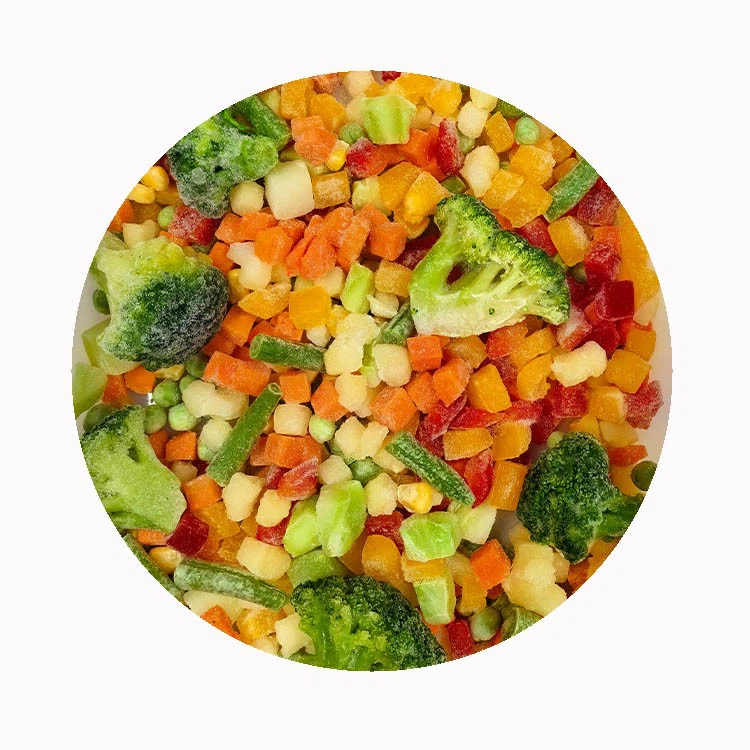
Frozen vegetables should be evaluated as a controlled supply system, not only as a commodity category.
What Are Frozen Vegetables?
Frozen vegetables should be understood as a system product, not simply "vegetables plus low temperature." For B2B buying, a more useful definition is: frozen vegetables are the combined result of product form, freezing method, specification language, process control, cold-chain execution and supplier capability.
When you buy broccoli, spinach, peas, corn, green beans or mixed vegetables, you are not only buying a crop. You are buying a process. That process may be controlled and repeatable, or it may be loose and difficult to verify. The difference often becomes visible only after cooking, holding, reheating or industrial use.
IQF Is Industry Language, Not a Quality Guarantee
IQF means individually quick frozen. In practical terms, it normally means the pieces should be separate, free-flowing and easier to portion. This is important for kitchens, factories, retail packs and frozen meal production.
However, IQF itself does not guarantee strong texture, low crumbs, low drip or stable color. Those results depend on raw material maturity, cut size, blanching condition, freezing speed, grading, dehydration control, packaging and frozen storage discipline. A buyer should treat IQF as the starting point of the specification, not the end of the evaluation.
Frozen Does Not Automatically Mean Ultra-Processed
One common internal question is whether frozen vegetables count as processed food. Freezing is a form of processing, but plain frozen vegetables are better understood as a preservation and supply method. Washing, cutting, blanching and quick freezing are used to stabilize a perishable raw material; they are not the same as formulating a product with heavy additives, sauces or complex industrial ingredients.
For procurement teams, the real risks are not the word "frozen." The practical risks are unclear specifications, weak process capability, cold-chain failure, poor documentation and unstable supplier systems. When those points are controlled, frozen vegetables can be a clean, practical and scalable ingredient for many B2B applications.

The strongest frozen vegetable programs control product form, processing, specification, cold chain and supplier execution together.
Frozen Vegetables vs Fresh Vegetables
The better question is not "which is always better?" The better question is "which is easier to control and repeat for my application?" Fresh vegetables can be excellent when supply is local, turnover is fast and maturity is consistent. Frozen vegetables become stronger when the supply chain is long, the kitchen needs stable portions, or the factory needs repeatable quality at scale.
Fresh vegetables introduce more variables: maturity differences, water content fluctuation, trimming loss, labor cost, short shelf life and higher daily inventory pressure. Frozen vegetables can reduce those variables by moving washing, cutting, blanching, freezing and packing into a controlled production system.
The value of frozen vegetables is not that they are always superior to fresh. The value is that they help buyers build a more standardized, stable and scalable supply program. For foodservice chains, retail packs and ready-meal production, this repeatability can matter more than the fresh/frozen label itself.
| Comparison Point | Fresh Vegetables | Frozen Vegetables | B2B Buying Meaning |
|---|---|---|---|
| Supply stability | More exposed to season, transport and daily market changes. | More stable when production, storage and cold chain are controlled. | Frozen formats support planned menus, contracts and repeat production. |
| Preparation labor | Often requires washing, trimming, cutting and waste handling. | Can arrive pre-cut, blanched and ready for cooking or processing. | Labor savings should be included in total cost comparison. |
| Quality variance | Can vary by lot, maturity, handling and storage time. | Can be standardized through specification, grading and process control. | Frozen supply is easier to build into a controlled system. |
| Best use | Fresh display, raw use, premium fresh presentation. | Cooked dishes, foodservice, retail packs, ready meals and industrial use. | Choose by final application, not by habit. |

For procurement, the key issue is not only freshness. It is variance, yield, labor and repeatability.
Why Identical Frozen Vegetables Perform So Differently
A common buyer question is: "They looked similar, so why did one product turn mushy when stir-fried and another one kept its texture?" The answer is usually hidden in process control. At first glance, two frozen vegetable samples may look close. After cooking, the differences appear through texture, drip loss, color, yield, breakage and flavor.
Freezing forms ice crystals inside the product. The size and distribution of those crystals affect the tissue structure. Slow freezing or unstable temperature handling can create more damage, which may appear later as softness, excess water, high broken pieces or poor cooking yield. Fast freezing, correct blanching and stable storage help reduce those risks, but they must be combined with good raw material and proper grading.
Many problems do not start at arrival. They are already built into the specification or hidden in the process. This is why buyers should define cut size, grade, defect limits, blanching level, cooking performance, drip behavior, net weight and cold-chain requirements clearly before comparing prices.
The Five Core Frameworks of Frozen Vegetable Buying
To reduce trial-and-error, I suggest evaluating every frozen vegetable project through five dimensions: product selection, specifications and quality language, processing performance, cold-chain/import risk, and supplier capability. This framework helps procurement, QA, R&D and operations teams speak the same language.
| Dimension | What to Define | Why It Matters |
|---|---|---|
| 1. Product Selection | IQF or block, whole/cut/diced/sliced, single vegetable or blend, organic or conventional. | If the product form is wrong, strict specs cannot fully save the application. |
| 2. Specifications & Quality Language | Size range, grade, defect limits, glazing, net weight, foreign matter, microbiological and residue standards. | Disputes are solved by clear definitions and evidence, not by general impressions. |
| 3. Processing & Performance | Texture after cooking, color stability, yield, drip loss, reheating behavior and crumble ratio. | The buyer sells a stable final product, not only a compliant raw material. |
| 4. Cold Chain & Import Risk | Loading controls, temperature records, data loggers, port risks, receiving inspection and sampling rules. | A well-processed product can still be damaged during storage or transport. |
| 5. Supplier Capability | Process control, QA execution, batch consistency, peak-season capacity, corrective action and transparency. | Certificates open the door; capability determines long-term stability. |

A reliable frozen vegetable project needs product selection, specs, processing control, cold-chain discipline and supplier capability working together.
Dimension 1: Product Selection
Decide what to buy before comparing prices. Ask whether you need IQF or block frozen, which cut form fits the application, whether a single vegetable or mixed blend is more suitable, and whether organic value matches the cost structure. Wrong selection creates labor and waste later in the kitchen or production line.
Dimension 2: Specifications and Quality Language
Translate "good quality" into verifiable language. Define cut size distribution, grade, defect tolerance, broken percentage, glazing and net weight logic, foreign matter control, microbiological standards and chemical residue requirements. Cross-border supply becomes easier when both sides agree on measurable acceptance points.
Dimension 3: Processing and Performance
Many buyers focus on COA documents, but the real cost is often determined by performance. Does the product keep bite after stir-frying, boiling or steaming? Is color stable? Is the cooking yield predictable? Does reheating release too much water? These points decide customer satisfaction and total cost.
Dimension 4: Cold Chain and Import Risk
Cold chain is not only logistics. It is an extension of quality. Loading temperature, reefer setting, data loggers, port delay handling, receiving checks and sampling rules should be part of the control plan. Quality degradation during transport is often difficult to reverse, so evidence must be prepared before problems occur.
Dimension 5: Supplier Capability
Certificates are important, but they are not the whole capability. Long-term stability depends on whether QA controls the production floor, whether batch consistency is managed, whether peak-season scheduling is realistic, whether corrective actions are fast, and whether communication is transparent. A frozen vegetable program is a long-term supply project, not only a one-time quote comparison.
The Three Most Common Myths About Frozen Vegetables
Myth 1: Frozen Is Always Worse Than Fresh
Practical truth: quality depends on the supply chain and storage conditions. Fresh vegetables can be excellent, but time, handling and storage are the real variables. Frozen vegetables can perform very well when raw material, processing and cold-chain control are strong.
Myth 2: IQF on the Label Guarantees Performance
Practical truth: writing "IQF" is easy; doing it consistently is harder. Freezing speed, ice crystal control, blanching, grading and storage discipline all affect texture, drip loss and broken percentage.
Myth 3: Certificates Equal Reliability
Practical truth: certificates show an entry-level system, but long-term reliability depends on production discipline, QA/QC maturity, capacity planning and corrective action capability.
How Buyers Can Turn Risk Into a Procurement System
The main purpose of this guide is to help your team write risk points into the buying system before the order is placed. A stronger frozen vegetable procurement process normally includes an approved product form, a clear technical specification, agreed sampling rules, application testing, cold-chain evidence requirements, documentation review and supplier communication rules.
When these items are defined early, quotations become easier to compare and quality disputes become easier to handle. Instead of relying on luck, the buyer can evaluate whether each supplier can meet the same measurable standard.
| Risk Point | What to Write Into the System | Result for Buyer |
|---|---|---|
| Unclear product form | Define species, cut, size range, IQF/block form and application. | Reduces wrong-product approval and production mismatch. |
| Hidden quality drift | Set defect limits, sample comparison rules and batch consistency checks. | Makes repeat orders more stable. |
| Cooking performance failure | Test stir-fry, boiling, steaming, reheating or final recipe performance. | Protects final menu or finished product quality. |
| Cold-chain dispute | Use carton checks, temperature records, data logger rules and receiving photos. | Improves evidence when quality problems appear after shipment. |
| Supplier overpromising | Review capacity, documents, QA response and corrective action records. | Helps select partners for long-term programs, not only one low quote. |
Need a clearer frozen vegetable buying path?
Tell us your target vegetable, cut size, application, packaging, destination market, quality standard and order volume. GreenLand-food can help you match frozen vegetable specifications with foodservice, retail, private-label and industrial processing needs.
Send InquiryFinal Note From Jacky
When you treat frozen vegetables as a controlled supply system, they become more predictable: stable, measurable and scalable. When you treat them only as a simple commodity, you may keep repeating the same cycle of similar-looking quotes, inconsistent batches and unclear responsibility.
My practical advice is to break the project into manageable dimensions, write dispute points into the specification in advance, and build an evidence chain around process, cold chain and receiving inspection. This makes the buying decision more professional and protects both the buyer and the supplier.
FAQ
Are frozen vegetables considered processed foods?
Freezing is a form of processing, but plain frozen vegetables are usually best understood as preserved vegetables rather than heavily formulated foods. The key is to check whether the product is plain, whether additives or sauces are included, and whether the processing steps are clearly described.
Are frozen vegetables as nutritious as fresh vegetables?
Both can fit a balanced diet. Nutritional differences depend on harvest maturity, storage time, blanching, cooking method and cold-chain control. Frozen vegetables are often processed close to harvest and can be a stable option when fresh supply has long storage or transport time.
Why do some frozen vegetables turn mushy?
Mushy texture often comes from raw material condition, over-blanching, slow freezing, temperature fluctuation, poor cut selection or overcooking in the final application. IQF helps, but it is not the only factor.
What matters most when buying frozen vegetables in bulk?
The most important points are product form, specification discipline, process performance, cold-chain control, documentation and supplier capability. Price should be compared together with usable yield, labor savings and final application performance.
Where should buyers go next?
For a broader article directory, start with the Frozen Vegetables Topic Directory. For product-level sourcing, review the GreenLand-food frozen vegetables category and define your target application before requesting a quote.
