


Frozen Spring Onion: Applications, Benefits, and Uses in Foodservice
Apr 28, 2026
Leave a message
Frozen spring onion, also known as frozen chopped scallion or frozen green onion, has become a practical ingredient for foodservice kitchens, ready meal factories, sauce producers, dumpling manufacturers, and frozen food brands.
In traditional cooking, spring onion is often used to add aroma, freshness, and visual appeal. However, for commercial food production, fresh spring onion can create several challenges, including short shelf life, labor-intensive preparation, trimming waste, and unstable seasonal quality.
This is why IQF frozen spring onion is increasingly used in modern food processing. It offers convenience, stable storage, consistent cut size, and easy portioning, making it suitable for both industrial production and high-volume foodservice operations.

Why Frozen Spring Onion Is Widely Used in Modern Food Production
In commercial kitchens and food factories, ingredient efficiency is just as important as flavor. Fresh spring onion needs washing, trimming, cutting, and careful storage. It may also lose freshness quickly during transportation or kitchen storage.
Frozen spring onion helps solve these problems by offering a pre-cleaned, pre-cut, and ready-to-use ingredient. When processed through IQF freezing, the spring onion pieces remain separate, making them easier to measure, mix, and apply in different recipes.
For B2B buyers, the value of frozen spring onion is not only about convenience. It also supports:
Better inventory control
Lower preparation labor
Reduced trimming waste
More consistent recipe performance
Easier long-term storage
Stable supply for large-scale production
This makes frozen spring onion a useful ingredient for food manufacturers, central kitchens, foodservice distributors, and frozen food importers.
What Is Frozen Spring Onion?
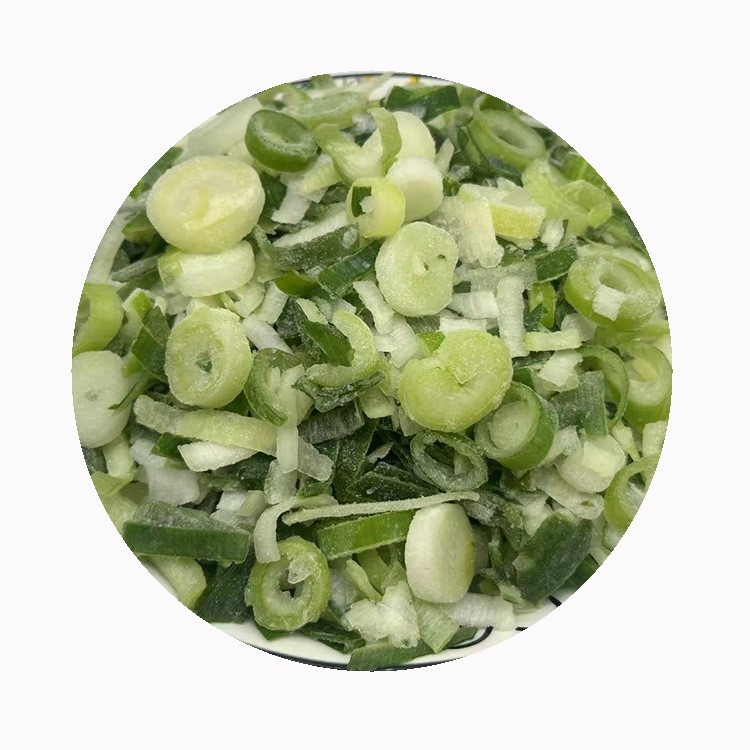
Frozen spring onion is made from fresh spring onion that has been selected, cleaned, trimmed, cut, sorted, quick-frozen, and packed for frozen storage.
Depending on the market, it may also be called:
Frozen chopped scallion
Frozen green onion
IQF spring onion
IQF chopped scallion
Frozen scallion cuts
Frozen sliced spring onion
The product is usually supplied in chopped, sliced, diced, or cut-section forms. Common cut sizes may include 3–5 mm, 5–10 mm, or 10–20 mm, depending on the final application.
Because the product is already cleaned and cut, it can be used directly in many cooked applications without the need for daily preparation.
Main Applications of Frozen Spring Onion
Frozen spring onion can be used across a wide range of food categories. It is especially suitable for cooked products, frozen meals, sauces, fillings, and commercial foodservice applications.

Stir-Fried Dishes and Ready Meals
Frozen spring onion is commonly used in stir-fried dishes and ready meal production. It can be added to fried rice, fried noodles, mixed vegetables, meat dishes, and Asian-style prepared meals.
For ready meal factories, frozen spring onion helps provide aroma and visual appeal while reducing manual preparation work. Since the product is already cut, it can be added directly into production lines according to the required formula.
Common applications include:
Frozen fried rice
Stir-fried noodles
Asian-style ready meals
Frozen vegetable mixes
Prepared meat and vegetable dishes
Meal kits
Soups, Stews, and Broth Bases
Frozen spring onion is also suitable for soups, stews, and broth-based products. It can be used in chicken soup, vegetable soup, hot pot soup bases, instant soup products, and cooked sauce bases.
Spring onion adds a mild onion aroma and improves the flavor profile of cooked dishes. In industrial food production, it can be blended with other vegetables, spices, or seasoning ingredients to create consistent soup and broth formulas.
Typical applications include:
Chicken soup
Vegetable soup
Hot pot broth
Instant soup products
Stewed meat products
Frozen soup bases
Dumplings, Buns, and Filling Products
Frozen chopped spring onion is widely used in dumpling fillings, bun fillings, pancake fillings, and other frozen prepared foods.
It can be mixed with pork, beef, chicken, seafood, tofu, mushrooms, or vegetables. For frozen food factories, using frozen spring onion can help standardize filling production and reduce the variation caused by fresh raw materials.
Suitable products include:
Frozen dumplings
Steamed buns
Spring onion pancakes
Meat fillings
Vegetable fillings
Asian frozen prepared foods
Noodles, Rice, and Asian Prepared Foods
Frozen spring onion is a practical ingredient for noodles, rice dishes, and Asian-style convenience foods. It can be used in fried noodles, fried rice, rice noodles, ramen toppings, noodle soups, and frozen meal bowls.
For central kitchens and foodservice operators, frozen spring onion helps improve preparation efficiency. Instead of washing and chopping fresh spring onion every day, kitchens can use frozen chopped spring onion directly from frozen storage.
This is especially useful for:
Chain restaurants
Central kitchens
Catering companies
Foodservice distributors
Quick-service restaurants
Asian cuisine operators
Sauces, Dips, and Seasoning Products
Frozen spring onion can also be used in sauces, dips, and seasoning products. It is suitable for scallion oil, dipping sauces, noodle sauces, hot pot sauces, frozen seasoning blends, and prepared sauce bases.
For sauce manufacturers, cut size and water control are important factors. A smaller cut size may be preferred for smoother sauces, while larger cuts may be used when visible vegetable pieces are required.
Common applications include:
Scallion oil
Dipping sauces
Noodle sauces
Hot pot sauces
Frozen seasoning blends
Ready-to-use sauce bases
Foodservice and Central Kitchens
In foodservice operations, preparation speed and consistency are important. Frozen spring onion helps restaurants, hotels, catering companies, and central kitchens reduce daily preparation work.
Instead of managing fresh spring onion storage, trimming, and cutting, kitchens can use frozen spring onion as a ready-to-use ingredient. This helps improve portion control and reduce waste.
For high-volume kitchens, frozen spring onion offers practical advantages in:
Storage management
Recipe standardization
Labor cost control
Menu consistency
Batch preparation
Cold-chain inventory planning
Retail Frozen Food and Private Label Products
Frozen spring onion can also be packed for retail channels, especially in markets where consumers frequently use scallions or green onions in home cooking.
Retail packs may be sold through supermarkets, Asian grocery chains, e-commerce platforms, and private label frozen food brands.
Common retail packaging formats include:
400 g bags
500 g bags
1 kg bags
Private label packs
Mixed vegetable seasoning packs
For retail buyers, packaging design, label compliance, cut size, and product appearance are important factors.
Benefits of Using Frozen Spring Onion Instead of Fresh Spring Onion
Fresh spring onion is widely used, but it has limitations in commercial supply chains. It has a short shelf life, requires daily preparation, and may generate waste from trimming and spoilage.
Frozen spring onion provides a more stable alternative for B2B users.
| Comparison Point | Fresh Spring Onion | Frozen Spring Onion |
|---|---|---|
| Preparation | Needs washing and cutting | Ready to use |
| Shelf Life | Short | Long frozen storage |
| Waste | Higher trimming and spoilage loss | Lower handling waste |
| Storage | Requires fresh produce management | Stored at -18°C |
| Labor Cost | Higher | Lower |
| Portion Control | Less consistent | Easier to measure |
| Supply Stability | Seasonal variation | Better long-term planning |
For food manufacturers and foodservice buyers, these advantages can help improve production efficiency and reduce ingredient handling risks.
How to Use Frozen Spring Onion Correctly
Frozen spring onion is usually best used in cooked applications. In most cases, it can be added directly from frozen without thawing.
Practical Usage Tips
Add directly to soups, stews, sauces, and hot dishes
Avoid repeated thawing and refreezing
Keep the product sealed after opening
Store at -18°C or below
Use appropriate cut size for each application
For fillings, test moisture balance before mass production
For industrial users, frozen spring onion should be tested in the final recipe to confirm flavor, texture, moisture level, and process compatibility.
What B2B Buyers Should Consider When Choosing Frozen Spring Onion
When sourcing frozen spring onion, B2B buyers should not only compare price. Product consistency, processing control, packaging, documentation, and cold-chain handling are also important.
Key Factors to Check
Cut size and uniformity
Color and aroma
Foreign matter control
Packaging format
Shelf life and storage condition
Loading quantity
Supplier export experience
Documentation support
Food safety and quality control system
A reliable frozen spring onion supplier should understand the buyer's final application and recommend suitable specifications accordingly.
For example, dumpling factories may care more about cut size and moisture control, while sauce manufacturers may require smaller cuts and stable aroma. Foodservice buyers may focus on easy portioning and practical packaging.
GreenLand-Food's Perspective on Frozen Spring Onion Supply
At GreenLand-Food, we view frozen spring onion as more than a simple seasoning vegetable. For B2B buyers, it is a functional ingredient that supports production efficiency, recipe consistency, and supply chain stability.
As a professional frozen fruit and vegetable supplier, GreenLand-Food focuses on practical frozen ingredient solutions for importers, distributors, foodservice companies, frozen food manufacturers, and private label brands.
We can support frozen spring onion supply for different applications, including ready meals, dumplings, sauces, soups, noodles, rice dishes, and foodservice operations.
Depending on buyer requirements, frozen spring onion can be supplied in bulk cartons, foodservice packs, retail bags, or customized packaging formats.
Conclusion
Frozen spring onion is widely used because it combines flavor, convenience, and storage stability. From stir-fried dishes and soups to dumplings, noodles, sauces, and ready meals, it helps foodservice operators and food manufacturers reduce preparation work while maintaining consistent product performance.
For B2B buyers, choosing the right frozen spring onion is not only about selecting a vegetable ingredient. It is also about matching cut size, packaging, quality control, and supply capability with the final application.
At GreenLand-Food, we supply frozen fruits and vegetables for global buyers who need stable quality, practical specifications, and reliable frozen supply. If you are sourcing frozen spring onion, frozen chopped scallion, or other frozen vegetable ingredients for your market, you can contact us to discuss your required specification, packaging, and application.
FAQ
1: What is frozen spring onion used for?
Frozen spring onion is used in stir-fried dishes, soups, stews, dumpling fillings, buns, noodles, rice dishes, sauces, dips, ready meals, and foodservice applications.
2: Is frozen spring onion the same as frozen scallion?
In many markets, spring onion, scallion, and green onion are used similarly. Frozen spring onion may also be called frozen chopped scallion or frozen green onion.
3: Can frozen spring onion be cooked directly?
Yes. In most cooked applications, frozen spring onion can be added directly without thawing. It is commonly used in soups, sauces, stir-fried foods, fillings, and ready meals.
4: Is frozen spring onion suitable for food factories?
Yes. Frozen spring onion is suitable for food factories because it is pre-cut, easy to portion, stable in frozen storage, and convenient for large-scale production.
5: What are the benefits of frozen spring onion?
The main benefits include reduced preparation labor, lower trimming waste, longer storage life, stable cut size, convenient handling, and better inventory control.
6: Can frozen spring onion be used in dumpling fillings?
Yes. Frozen chopped spring onion is commonly used in dumpling fillings, bun fillings, pancake fillings, and other frozen prepared foods.
7: Can frozen spring onion be used in sauces?
Yes. It can be used in scallion oil, dipping sauces, noodle sauces, hot pot sauces, seasoning blends, and prepared sauce bases.
8: What packaging is common for frozen spring onion?
Common packaging includes bulk cartons, 10 kg cartons, 20 lb cartons, 1 kg bags, 2.5 kg foodservice bags, and retail packaging.
9: How should frozen spring onion be stored?
Frozen spring onion should be stored at -18°C or below. Repeated thawing and refreezing should be avoided to maintain product quality.
10: Who buys frozen spring onion in bulk?
Typical buyers include importers, distributors, foodservice suppliers, central kitchens, frozen food factories, sauce manufacturers, dumpling factories, supermarkets, and private label brands.