


How Long Do Frozen Blueberries Last?
May 19, 2026
Leave a message


The useful answer is a quality window, not one universal expiry date
Commercial IQF blueberries require a different answer. Importers, retail brands, bakeries, beverage plants, dairy processors, and foodservice buyers should follow the shelf-life declaration for the actual product and lot. Packaging material, production date, storage requirement, temperature history, and intended application all influence whether a shipment is still within its agreed quality window.
A home freezer bag, an opened retail pouch, and an export carton of IQF blueberries should not be judged by the same date alone. The right decision combines time, temperature, package condition, visible ice, berry separation, odor after controlled thawing, and the quality required by the final recipe.
8–12 months
A practical best-quality range for properly packed frozen fruit at 0°F / -18°C or below.
Continuously frozen
Time guidance assumes safe handling before freezing and an unbroken frozen temperature history.
Use the specification
Confirm the shelf-life declaration, packing, lot date, storage requirement, and application acceptance points.
Direct answer
How long do frozen blueberries last in different situations?
The familiar 8–12 month range is a home-preservation quality recommendation for frozen fruit, not a promise that every bag will look and taste the same through month twelve. Fruit frozen at peak condition, dried well, packed with little air, and kept at a stable temperature will usually retain quality better than fruit that entered the freezer wet, soft, damaged, or loosely packed.
FoodSafety.gov explains that freezer storage times are quality guidance and that foods kept continuously frozen at 0°F / -18°C or below can be kept indefinitely from a safety perspective. The National Center for Home Food Preservation gives fruits and vegetables an approximate 8–12 month storage range at 0°F for quality. Both points matter: the freezer controls microbial growth while the product stays frozen, but it does not reverse poor handling before freezing or prevent every quality change.
Once blueberries thaw, the decision changes. Their time outside frozen storage, thawing temperature, odor, appearance, and handling environment become relevant. A frozen date cannot make up for an unknown thawing history.
| Storage situation | Time direction | What to check before use |
|---|---|---|
| Home-frozen blueberries | Aim to use within 8–12 months for best quality. | Date, seal, frost, freezer burn, odor after thawing, and intended recipe. |
| Opened retail pouch | Use sooner because air and repeated opening accelerate quality loss. | Reseal quality, odor transfer, clumping, and accumulated ice. |
| Commercial IQF blueberries | Follow the current supplier shelf-life statement for the confirmed lot and packing. | Specification, production date, storage record, carton condition, separation, defects, and application test. |
| Thawed blueberries | Use promptly under the applicable food-safety procedure. | Verified time and temperature, aroma, mold, fermentation, texture, and cross-contamination risk. |
Reference basis
See the National Center for Home Food Preservation storage guide and the FoodSafety.gov cold storage guidance. Commercial buyers should still use the contract specification and shelf-life declaration for the purchased product.

Safety versus quality
A safe frozen product can still become unsuitable for its intended use
Safety asks whether the blueberries were handled safely before freezing and stayed under controlled frozen conditions. Quality asks whether the berries still deliver the required color, aroma, separation, texture, drip loss, and appearance. Those questions overlap, but they are not interchangeable.
A lightly frosted bag may still work well in a smoothie or cooked sauce. The same bag may fail a retail topping program that needs clean whole berries, low surface ice, and strong visual uniformity. For a bakery, the decision may depend on berry size, leaking fruit, and color bleed after baking rather than on fresh-like firmness.
Loose IQF blueberries should remain individual and free-flowing, with controlled surface frost and minimal clumping.
Quality change
What happens when frozen blueberries stay in storage too long?
Frozen storage slows change; it does not stop every physical process. Moisture can move from the fruit or from humid air into the package. Ice crystals can grow during temperature fluctuation. Air exposure can dry the berry surface and weaken aroma. The cells damaged by freezing release more juice when the fruit thaws.
The calendar matters, but temperature stability and package barrier often explain more of the visible difference between two bags of the same age. A tightly sealed package in a stable freezer can outperform a younger bag that has been opened repeatedly or allowed to soften and refreeze.

| Observed change | Likely quality implication | Practical decision |
|---|---|---|
| Dry, pale, or leathery surface patches | Freezer burn and moisture loss; mainly a quality defect. | Downgrade from visible use; assess for blended or cooked applications if all safety checks pass. |
| Heavy loose ice or large clumps | Moisture entry, poor resealing, or temperature fluctuation may have occurred. | Review package and temperature history; test separation and drip loss before production. |
| Weak aroma or duller color | Long storage, air exposure, or raw-material variation may reduce sensory impact. | Check the finished formula rather than judging the frozen fruit alone. |
| More juice after thawing | Cell damage and freeze-thaw history can increase drip loss and color bleed. | Measure the effect in bakery, dairy, sauce, or beverage trials before acceptance. |
Four-point check
How to tell whether frozen blueberries are still acceptable
1. Package
Check torn seals, open corners, water stains, collapsed cartons, damaged liners, or an opened retail zipper that no longer closes tightly.
2. Ice and separation
Light frost can be normal. Heavy ice, a hard block, or berries fused together deserves a closer temperature-history review.
3. Controlled thaw test
Thaw a representative sample under the applicable procedure. Check odor, color, berry integrity, drip loss, and any mold or fermentation.
4. Final application
Judge against the recipe. A smoothie, muffin, yogurt topping, and retail fruit pouch do not need the same appearance or drip-loss limit.
Reject thawed fruit that has mold, a fermented or abnormal odor, slime, serious package abuse, or an unverified time-temperature history that falls outside your food-safety procedure.
IQF condition
Why individual freezing and berry separation matter
IQF means individually quick frozen. Rapid freezing supports smaller ice crystal formation than slow freezing, while the handling line is designed to keep berries separate. For buyers, the visible result should be free-flowing fruit that is easier to portion, dose, inspect, and pack.
Separation is not just cosmetic. A hard block can slow a production line, force manual breaking, damage berries, and reduce dosing accuracy. Light clumping may be manageable if the berries separate with gentle handling. Heavy clumping, large ice sheets, or compacted cartons require investigation.
For retail and premium visible use, berry integrity and low surface ice carry more weight. For puree, sauce, jam, or blended beverage, a buyer may accept a different visual grade while still requiring clean flavor, controlled defects, and documented safety criteria.
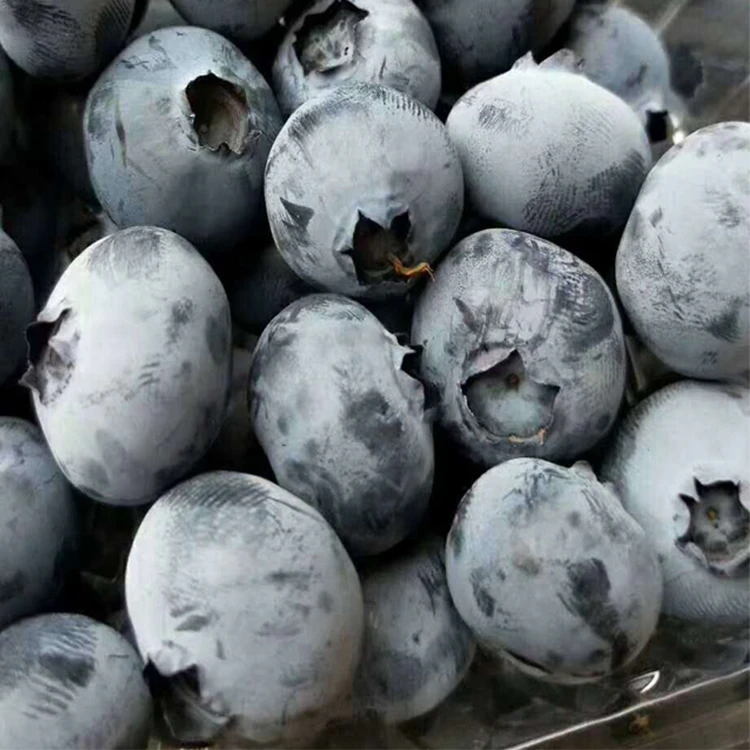
Whole-berry integrity, consistent size, and controlled surface frost are useful sample-approval points for visible applications.
Do not copy the wrong benchmark
Home-frozen blueberries and commercial IQF blueberries use different control systems
The 8–12 month home-quality range is useful because it gives households a simple planning horizon. It assumes a domestic freezer, household packing, and quality judged at the time of use. It does not define the legal or contractual shelf life of an export product, and it should not be copied into a commercial specification without supporting product information.
A commercial IQF program starts with a defined raw material, size or grade, process, package, storage temperature, and intended market. Production and lot dates are recorded. The product may be packed in a sealed liner inside a 10 kg carton, a foodservice bag, or a retail pouch with different barrier properties. The shipment then moves through cold storage, container loading, ocean or road transport, destination warehousing, and the buyer's own production environment.
That chain changes the evidence required for a shelf-life decision. A retail brand may need sensory review and package-performance testing through the labeled period. A bakery may focus on berry distribution, color bleed, and finished muffin quality. A beverage processor may accept a processing grade but require stable Brix, acidity, flavor, and microbiological criteria. One calendar number cannot describe all three acceptance standards.
When comparing suppliers, ask what the shelf-life statement covers: the exact blueberry type, current packing, required storage temperature, and quality attributes at the end of the stated period. Also confirm whether the remaining shelf life at arrival is sufficient for customs clearance, warehousing, production scheduling, and the buyer's own finished-product plan.
Household control
Freezing date, tight resealing, stable domestic freezer temperature, visual check, odor after thawing, and recipe suitability.
Commercial control
Specification, shelf-life declaration, production lot, packing barrier, cold-chain records, receiving inspection, and application trial.
Shared principle
Time matters only together with temperature history, package integrity, starting quality, and fitness for the intended use.
Packing and temperature
How to keep frozen blueberries in their best condition
Keep the product at 0°F / -18°C or below and minimize temperature cycling. A freezer that repeatedly warms during loading, defrosting, stock picking, or door opening encourages moisture movement and larger ice crystals. Warehouses should monitor the storage environment and investigate excursions rather than relying only on the display temperature at one moment.
Packaging should limit air and moisture exchange while protecting the berries from crushing. After opening a retail pouch, remove excess air and reseal it tightly. For foodservice and industrial packs, close the liner properly and avoid leaving product exposed during staging. Portion control helps because operators can take only what is needed instead of thawing a full bag.
Stock rotation still matters in a freezer. Record the production date, lot, receipt date, and shelf-life end date. Use FEFO when products have declared shelf-life dates, and keep cartons away from damage, contamination, and warm loading zones.

Application decision
Best uses when appearance has declined but the fruit remains acceptable
A product near the end of its best-quality period should be matched to an application that tolerates softer texture, more juice release, or weaker surface appearance. This is a quality downgrade decision, not permission to use spoiled or mishandled fruit.
| Application | Tolerance for quality decline | Test before use |
|---|---|---|
| Smoothie or beverage base | Often tolerant of softer berries and weaker surface appearance. | Flavor, Brix, acidity, color contribution, and foreign material controls. |
| Muffin, pancake, or bakery filling | Can accept some softness if berry distribution and bake performance remain suitable. | Size, color bleed, juice release, leaking berries, and batter performance. |
| Jam, sauce, puree, or compote | Usually less dependent on whole-berry appearance. | Clean flavor, Brix-acid balance, color, defects, and formula yield. |
| Yogurt fruit inclusion | Depends on whether the fruit remains visible or is prepared as a sauce. | Color migration, acidity, fruit integrity, viscosity, and storage stability in the final formula. |
| Retail whole-fruit pouch or visible topping | Low tolerance for heavy frost, splits, clumps, or weak whole-berry appearance. | Visual grade, berry size, separation, package presentation, and consumer preparation experience. |

Commercial shelf life
How long do commercial IQF blueberries last?
There is no responsible universal number for every commercial IQF blueberry product. The stated shelf life belongs to a defined product, process, packing system, storage temperature, and quality standard. A buyer should ask for the current declaration rather than copying a household range into a purchase specification.
Shelf-life review begins with raw material condition and continues through sorting, washing, freezing, inspection, packing, cold storage, transport, and receiving. Berry size and grade affect the commercial target. A premium retail program may reject surface ice or broken fruit that a sauce processor can accept, even when both products remain within their declared shelf life.
Before approving a longer transit or warehouse plan, buyers can request retained-sample review, thaw testing, drip-loss observations, and application trials. The shelf-life date is a boundary in the documentation; the receiving and production tests show whether the lot still performs as required.
| Buyer check | What to request | Why it affects the decision |
|---|---|---|
| Product identity | Cultivated or wild type, grade, whole-berry form, size range, ingredient statement. | Different sizes and grades have different appearance, flavor, cost, and application expectations. |
| Shelf-life basis | Production date, end date, required storage temperature, packing material, and declaration. | Prevents a household guideline or another SKU's date from being used for the order. |
| Quality specification | Color, Brix, defects, stems, clusters, leaking berries, foreign material, surface ice, and clumping limits. | Turns "good quality" into measurable receiving and processing expectations. |
| Safety and documents | COA, microbiological requirements, residue requirements, traceability, packing list, and destination-market documents. | Connects the physical lot to the agreed control plan and shipment record. |
| Cold chain | Cold-store handling, loading condition, reefer setting, arrival temperature, and excursion procedure. | A good date cannot compensate for uncontrolled thawing and refreezing. |
| Application trial | Thaw test, bake test, blending test, color migration, drip loss, and finished-product review. | Confirms whether the product works in the buyer's real formula, not only in a frozen sample. |
Thawing history
Can thawed blueberries be refrozen?
From a quality standpoint, refreezing is usually a downgrade. The first freeze damages some cell structure, thawing releases juice, and a second freeze creates more ice in the weakened tissue. The result is generally softer fruit, more drip loss, stronger color bleed, and less clean berry separation. That may be unacceptable for retail whole-fruit packs or visible toppings even when the fruit can still serve a cooked application.
Food-safety decisions require the real time-temperature history. Blueberries thawed under controlled refrigeration and kept within an approved procedure are different from cartons left in a warm loading area or product with an unknown excursion. Do not decide from appearance alone, and do not treat refreezing as a way to reset the original shelf life.
For a commercial incident, isolate the affected lot, record the carton and pallet identity, review temperature data, assess package condition, and follow the company's deviation procedure. If the lot remains eligible for use, document any application restriction. A visually weaker lot may move from premium visible use to a validated sauce or bakery application, but only after food-safety and quality approval.
The best prevention is portion and staging control. Use smaller bags where production needs frequent access, open only the quantity required, keep working time short, and return unopened stock to frozen storage promptly. These controls protect quality better than relying on refreezing after unnecessary exposure.
GreenLand-food sourcing support
Match the shelf-life statement to the blueberry specification and your application
At GreenLand-food, we help purchasing teams review frozen blueberry type, berry size, grade, Brix, color, defect tolerance, free-flowing condition, packing, storage requirement, documents, and application. We do not treat the longest date as the only buying advantage. A useful lot must maintain the quality your product needs through shipment, warehousing, thawing, processing, and sale.
For a new project, send the intended application and acceptance priorities first. A retail pouch may need calibrated whole berries and low clumping. A muffin producer may prioritize stable size and controlled color bleed. A smoothie plant may focus on flavor, Brix, acidity, and clean processing grade. These differences should appear in the specification before price comparison.
Review our frozen blueberry range, compare broader frozen fruit options, or see how we connect specification, batch, COA, packing, and shipment traceability. For home-freezing technique, read how to freeze blueberries.
Frequently asked questions
FAQ about frozen blueberry storage
How long do frozen blueberries last?
For home-frozen fruit, 8–12 months at 0°F / -18°C or below is a useful best-quality range. Commercial IQF blueberries should follow the shelf-life statement for the exact product, packing, and lot.
Are frozen blueberries still good after one year?
They may remain safe if they were handled safely and stayed continuously frozen, but the question becomes quality. Check freezer burn, ice, clumping, aroma after thawing, juice release, and whether the berries still fit the intended recipe.
Can frozen blueberries go bad?
Freezing does not sanitize fruit or repair poor handling. Discard thawed blueberries with mold, slime, a fermented or abnormal odor, or an unsafe time-temperature history. Freezer burn alone is mainly a quality issue.
What does freezer burn look like on blueberries?
It can appear as dry, pale, frosty, wrinkled, or leathery surface areas. Light freezer burn may be acceptable for blending or cooking, but heavy damage reduces flavor and texture.
Why are frozen blueberries clumped together?
Surface moisture, poor sealing, compression, and temperature fluctuation can bind berries with ice. Light clumps may separate easily; a hard block or large ice sheets deserve a cold-chain review.
Should frozen blueberries be thawed before use?
Not always. Smoothies and many bakery formulas can use berries from frozen. Thaw a sample when you need to measure drip loss, inspect odor and texture, drain juice, or evaluate a cold application.
Can you refreeze thawed blueberries?
From a quality perspective, repeated thawing and refreezing usually increases softness, ice, and juice loss. Any safety decision must follow the verified thawing history and the applicable food-safety procedure; do not refreeze fruit with an unknown history.
How should an opened bag be stored?
Remove excess air, reseal the bag tightly or use an airtight freezer-safe container, label the opening date, and return it to stable frozen storage quickly. Avoid repeated warm staging.
How long do commercial IQF blueberries last?
Use the supplier's current shelf-life declaration for the confirmed product and packing. Ask for the production date, storage requirement, specification, and lot documentation instead of applying a household range.
What should a buyer include in a frozen blueberry inquiry?
Send the blueberry type, size or grade, Brix or acidity target, defect tolerance, packing, quantity, destination, application, shelf-life requirement, private-label needs, and required certificates or test documents.
Plan your blueberry order
Request the shelf-life statement together with the specification
Tell us the required blueberry type, size, grade, packing, quantity, destination, and application. We can help your purchasing team review product condition, shelf-life documentation, cold-chain planning, sample expectations, and export support before order confirmation.