


Is Frozen Pineapple Good for You?
May 19, 2026
Leave a message

Yes. Plain, unsweetened frozen pineapple can be a useful fruit choice within a balanced eating pattern. Freezing changes texture and may change some nutrient levels over time, but it does not turn pineapple into an unhealthy food. The more important questions are whether the pack is 100% fruit, whether sugar or syrup was added, how large the serving is, how the fruit will be used and whether the cold chain has been maintained.
Choose plain frozen pineapple when you want fruit without a sweetened coating or syrup. Pineapple naturally contains sugar, so "unsweetened" does not mean sugar-free. It means no sweetener has been added. Compare the ingredient list, serving size, Total Sugars and Added Sugars instead of judging the product only by the word "frozen."
Frozen pineapple is food, not a fat-burning product, detox treatment or standardized bromelain supplement. It can contribute fruit, flavor and convenience; the final nutritional profile still depends on the whole product or recipe.

A plain frozen pineapple specification should identify the fruit form, ingredient declaration and any packing medium. The picture alone cannot confirm sugar, Brix, intended use or nutritional values.
What "Good for You" Means in This Article
Nutrition questions are often reduced to a yes-or-no label. A more useful answer looks at the food as sold and the way it is eaten. Plain pineapple pieces are different from pineapple in syrup, a sweetened fruit preparation, a juice drink or a dessert made with several added ingredients. All may have valid commercial uses, but they should not share the same nutrition message.
The American Heart Association explains that fresh, frozen and canned produce can all be healthy choices and advises checking for added sugar in frozen fruit. That is a sound starting point for pineapple: select a format that fits the overall diet and read the actual label.
This article uses "good for you" in that practical food context. It does not promise treatment, disease prevention or weight loss. People managing a medical condition, allergy, medication interaction or individualized carbohydrate target should follow advice from their qualified health professional rather than a supplier article.
| Product | What to check | Responsible interpretation |
|---|---|---|
| Plain IQF pineapple | Ingredient list states pineapple; no sweetened medium | A straightforward frozen-fruit option with naturally occurring sugars. |
| Sweetened frozen pineapple | Added sweetener, serving size and Added Sugars | A formulated product; evaluate it against the intended recipe and label. |
| Pineapple puree or preparation | Fruit percentage, sugar, concentrate, stabilizers and heat treatment | Nutrition and enzyme behavior cannot be inferred from "pineapple" alone. |
| Smoothie or dessert | Complete formula and portion, not only the fruit | Pineapple may be one useful ingredient, while the finished product determines the final profile. |
What Nutrients Does Pineapple Contribute?
Pineapple as a fruit naturally contributes vitamin C, manganese, water, carbohydrate and some dietary fiber. It also contains organic acids and aroma compounds that create its recognizable tropical flavor. The exact values in a frozen product vary with variety, maturity, growing conditions, trimming, cut size, processing, storage time, packing medium and laboratory method.
Vitamin C receives the most attention because pineapple is a meaningful source in its raw state, but vitamin C is also sensitive to oxygen, heat and storage. A responsible article should not copy raw-pineapple numbers onto every frozen SKU. If a brand plans to declare a nutrient amount or make a regulated nutrient-content claim, it should use product-specific formulation data and appropriate laboratory or regulatory support for the destination market.
Fiber also depends on form. Whole pineapple pieces retain the fruit tissue. A puree normally retains that tissue if it has not been filtered, while clarified juice can have a different fiber profile. A smoothie made with whole blended fruit is not nutritionally identical to a sweetened juice drink simply because both taste like pineapple.
Frozen Pineapple vs Fresh Pineapple
Neither format is automatically superior. Fresh pineapple offers a firmer bite and fresh-cut presentation. Frozen pineapple offers prepared cuts, portionability, longer inventory flexibility and year-round use under frozen storage. Nutrient retention depends on the complete history of each product, not a slogan that "fresh is always best" or "freezing locks in everything."
Freezing itself is only one step. Peeling, coring, washing, cutting, exposure to oxygen, freezing speed, storage temperature, pack protection and thawing can all affect quality. Fresh-cut pineapple also changes during transport, display and refrigerated storage. The fair comparison is the product that reaches the consumer or production line, not fruit at harvest versus frozen fruit months later.
| Factor | Fresh pineapple | Plain frozen pineapple | Decision |
|---|---|---|---|
| Nutrition | Varies with maturity and fresh-storage history | Varies with processing and frozen-storage history | Use actual product data for claims; do not assume identical values. |
| Texture | Crisper fresh bite | Firm when frozen; softer and wetter after thawing | Fresh for garnish; frozen for blends, cooked foods and many prepared products. |
| Preparation | Peeling, eye removal, coring and cutting required | Purchased in defined pieces, chunks, dice or other forms | Compare usable yield and labor, not only price per gross kilogram. |
| Inventory | Shorter handling window after ripening and cutting | Supports frozen stock and measured withdrawals | Frozen suits repeated production when the cold chain is reliable. |
| Best presentation | Fresh platter, garnish, crisp fruit cup | Smoothie, beverage, sauce, bakery, frozen mix | Match the form to the finished product. |

Prepared frozen pieces reduce peeling and coring work, but buyers still need an agreed definition for cut, core residue, eye residue, broken material and usable yield.
Natural Sugar, Added Sugar and Serving Size
Pineapple contains naturally occurring sugars. Freezing does not remove them, and an unsweetened pack is not a sugar-free food. The useful distinction is between sugars naturally present in the pineapple and sugars added during processing or formulation.
The U.S. FDA's label guidance separates Total Sugars from Added Sugars. Total Sugars includes naturally occurring and added sugars; Added Sugars identifies sugars added during processing. Regulations and label formats differ by market, but the purchasing principle is universal: request the ingredient declaration and nutrition information for the actual SKU.
Serving size matters as well. A moderate portion of plain fruit, a large multi-fruit smoothie and a pineapple dessert do not deliver the same total calories or sugars. Brands should define the portion and complete formula before developing a "better-for-you" message. Consumers should read the label rather than treating natural sweetness as unlimited or treating every gram of fruit sugar as evidence that the food is unhealthy.
- Read the ingredient list: pineapple only, or pineapple plus sugar, syrup, juice concentrate or other ingredients?
- Check the serving size and whether the values are per serving or per package.
- Compare Total Sugars and Added Sugars where the market label provides both.
- For a formulated product, evaluate the full recipe rather than assigning the pineapple ingredient's profile to the finished food.
Does Frozen Pineapple Contain Bromelain?
Pineapple fruit naturally contains bromelain, a group of protein-digesting enzymes. Raw frozen pineapple may retain enzyme activity because freezing is not the same as heat treatment. Activity can vary with raw material, process and storage, so a food ingredient should not be treated as a standardized bromelain dose.
The U.S. National Center for Complementary and Integrative Health notes that research on oral bromelain is limited for many promoted uses. Broad promises about inflammation, digestion or fat loss are therefore unsuitable for a general food article.
For food manufacturers, bromelain is more useful as a formulation issue than a marketing promise. Enzyme activity can affect gelatin, dairy, protein beverages and marinades. If that matters to your recipe, review our focused guide, Does Frozen Pineapple Have Bromelain?, and test the actual pineapple lot in the intended process.
Can Frozen Pineapple Support Weight-Control Goals?
Frozen pineapple can fit into many eating patterns, but it does not cause weight loss. Its practical value is that plain fruit can replace or accompany other foods in a planned portion. The outcome depends on the total eating pattern, not a special property created by freezing or eating pineapple at a particular time of day.
A bowl of plain pineapple is not the same product as a large smoothie made with sweetened juice, syrup, ice cream and multiple toppings. The fruit may be a reasonable component in both, while the complete recipes have different energy and added-sugar profiles. Commercial communication should describe the real product-fruit content, serving and ingredients-without "fat-burning," "detox" or guaranteed body-change language.
Texture, Thawing and Intended Use
Frozen pineapple is firm straight from the freezer and softer after thawing. Ice crystals disrupt part of the fruit structure, allowing juice to move out during thawing. That affects eating quality and formula behavior, but it does not determine whether the fruit is nutritious.
Use frozen pieces directly in equipment designed to handle them for smoothies, frozen bowls and some industrial blends. Thaw under controlled refrigerated conditions when the recipe needs measured drip, a softer texture or accurate batch weighing. Fresh pineapple remains the stronger option for crisp platters and dry garnish.
Frozen also does not automatically mean ready to eat. Check the package directions and supplier's intended-use specification. A further-processing ingredient may require a validated step in the customer's food-safety plan. Our separate Can You Eat Frozen Fruit? article explains that decision in more detail.
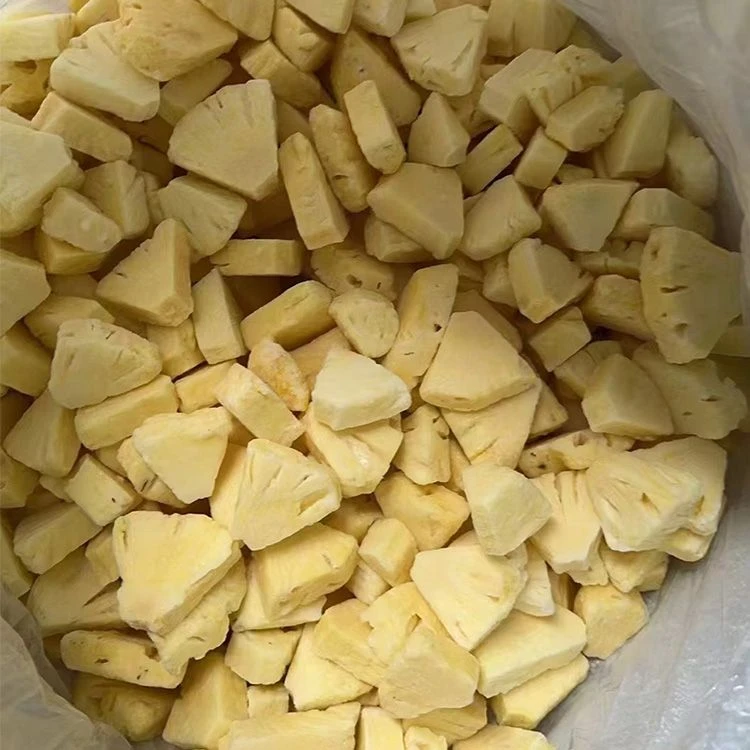
Piece shape and surface condition influence portioning and thaw performance. Define the intended use before setting appearance and size tolerances.
Product Form Changes the Final Nutrition Story
A consumer bag of chunks, a yogurt fruit preparation and a beverage puree can all start with pineapple, yet they serve different nutritional and technical roles. Buyers should specify both the physical form and the ingredient system.
| Format | Typical use | Nutrition/label question | Technical question |
|---|---|---|---|
| Chunks or pieces | Smoothies, foodservice, retail fruit packs | Is it 100% pineapple and unsweetened? | Size range, broken pieces, core/eye residue, free-flowing condition |
| Uniform dice | Yogurt, cups, toppings, portioned blends | What is the fruit percentage in the finished product? | Nominal cut, oversize/undersize tolerance, thawed integrity |
| Slices or rings | Dessert, bakery and presentation | Is any glaze, sugar or packing medium present? | Thickness, diameter, breakage and visual defect limits |
| Puree or pulp | Beverage, sauce, sorbet, dairy and filling | Pineapple only, or a sweetened/stabilized preparation? | Brix, acidity, sieve, enzyme/heat history and packing |
| Sweetened fruit preparation | Dairy, bakery, dessert and ready-to-use filling | Added Sugars, serving basis and full ingredient list | Fruit percentage, viscosity, heat stability and particle suspension |
The USDA frozen pineapple standard is a useful historical quality reference because it recognizes whole slices, half slices, broken slices, crushed pineapple, tidbits and chunks, and evaluates factors such as color, uniformity, defects and character. A buyer's contract can use different forms and limits, so confirm the applicable specification rather than presenting a grade standard as a nutrition guarantee.
How Food Brands Can Make Responsible Nutrition Claims
A product page may describe factual attributes such as "unsweetened," "100% pineapple" or "no added sugar" only when the formulation, processing and destination-market rules support that wording. "Healthy," nutrient-content and disease-related claims can have specific legal definitions. The rules also change, so product developers should obtain current regulatory review before printing packaging or advertising claims.
Use product-specific evidence. Start with the approved formula, supplier declaration, Nutrition Facts or local equivalent, serving size and laboratory data where required. Keep records that connect the declared values to the actual lot and finished-product recipe. A generic article about pineapple cannot validate a customer's final label.
Stronger commercial wording is often simpler: plain frozen pineapple; pineapple with no added sweetener; prepared fruit pieces for smoothies; fruit percentage shown on the label. Avoid claims about immune function, inflammation reduction, detoxification or fat loss unless a qualified regulatory team has established a lawful, adequately supported route-which is unlikely for a general frozen pineapple ingredient page.

Private-label approval should connect the formula, ingredient statement, nutrition panel, serving size, artwork, lot code and carton mark before mass packing.
What B2B Buyers Should Specify
At GreenLand-food, we start with the final product. A smoothie pack, a yogurt preparation, a bakery filling and a retail fruit bag do not need the same pineapple cut or quality tolerance. The nutrition position must also match the ingredient declaration: plain fruit and a sweetened preparation should never be quoted as if they were interchangeable.
| RFQ area | Details to provide or request | Why it matters |
|---|---|---|
| Identity and ingredients | Pineapple variety/type, unsweetened status, additives or packing medium | Supports correct product identity and label positioning. |
| Form and size | Chunks, pieces, dice, tidbits, slices, rings, puree; size and tolerance | Controls portioning, appearance, blend time and usable yield. |
| Flavor and maturity | Brix method/range, acidity or pH when relevant, color and aroma | Affects perceived sweetness and formula balance without proving a health claim. |
| Defects | Core, peel and eye residue; bruising, brown pieces, broken material, foreign matter | Protects appearance, texture, equipment and customer acceptance. |
| Process and intended use | Raw frozen or heat-treated, RTE or further processing, enzyme-sensitive application | Connects safety and bromelain behavior to the customer's process. |
| Packing | Inner bag, carton, foodservice or retail pack, private label, net weight and coding | Matches line use, warehouse handling, traceability and channel. |
| Documents | Specification, COA, nutrition/ingredient data, test reports, certificates and traceability as agreed | Supports technical approval and destination-market review. |
| Commercial plan | Sample need, MOQ discussion, annual volume, delivery window, destination and mixed load | Allows the supplier to discuss a realistic trial and production route. |
MOQ and lead time are not universal nutrition facts. They depend on cut, crop, stock, packing customization, production plan and destination. Share the first-order quantity and forecast before asking for a fixed answer. For a new health-positioned product, approve the fruit sample and complete formula before committing to printed retail film.
Cold Chain and Arrival Quality
Nutritional positioning cannot compensate for a damaged frozen lot. Temperature fluctuation can cause clumping, surface frost, dehydration, color change, drip and softer thawed texture. Keep the product under the storage and transport conditions stated in the agreed specification and label; GreenLand frozen fruit pages commonly use at or below -18°C as the frozen reference.
At receiving, verify container and seal information, product temperature using the agreed method, carton and inner-bag condition, lot codes, labels, separation and signs of thaw-refreeze history. Isolate questionable cartons and document temperatures, photos and lot identity before use. Food safety disposition belongs to the buyer's qualified QA process, not a visual nutrition review.

Stable frozen storage protects separation, color and texture before export. Confirm the contractual temperature requirement and receiving method for each order.
Common Mistakes
- Calling unsweetened pineapple sugar-free: unsweetened fruit still contains naturally occurring sugars.
- Assuming frozen and fresh are nutritionally identical: both vary; use product-specific values when precision matters.
- Judging a smoothie from the pineapple alone: the complete formula and serving determine the finished profile.
- Promoting bromelain as a medical benefit: fruit is not a standardized supplement, and broad health evidence is limited.
- Equating frozen with ready to eat: confirm label instructions and intended-use status.
- Using a raw-food database value as the frozen SKU's guaranteed value: verify the actual product and claim basis.
- Ignoring core and eye residue: these are quality and usability issues even when nutrition is the search topic.
- Printing private-label claims before formula approval: finish ingredient, serving, nutrition and regulatory review first.
How GreenLand-food Supports Frozen Pineapple Buyers
We supply IQF frozen pineapple formats for importers, distributors, beverage processors, foodservice teams, bakery and dairy manufacturers, retail frozen fruit packs and private-label projects, subject to product availability and order confirmation. We help your team align pineapple form, Brix direction, defect controls, packing and documents with the intended application.
For product comparison, review our Frozen Pineapple Pieces and IQF Pineapple Chunks pages. The wider Frozen Fruits range supports mixed-fruit and multi-SKU planning.
Send the required form, cut, unsweetened or formulated status, Brix direction, pack, quantity, destination, intended use and document list. We can discuss sample and order options around those details.
Download Product Catalog Send Your RequirementFAQ About Frozen Pineapple and Nutrition
Is frozen pineapple good for you?
Plain, unsweetened frozen pineapple can be a useful fruit choice within a balanced eating pattern. Check the ingredient list, serving size and the complete recipe in which it is used.
Is frozen pineapple as healthy as fresh pineapple?
Both can be useful. Nutrient values vary with raw material, processing and storage, while the clearest practical differences are texture, preparation and inventory life. Avoid claiming they are always identical.
Does unsweetened frozen pineapple contain sugar?
Yes. Pineapple naturally contains sugars. "Unsweetened" normally means no sweetener was added; it does not mean the fruit has zero Total Sugars.
Does frozen pineapple lose vitamin C?
Some vitamin C can change during preparation, processing and storage. The amount depends on the product history. Use tested product data if a vitamin C declaration or claim is commercially important.
Does frozen pineapple burn fat?
No food directly guarantees fat loss. Frozen pineapple can fit a planned diet, but timing it before bed or relying on bromelain does not turn it into a fat-burning treatment.
Is frozen pineapple a bromelain supplement?
No. Raw frozen pineapple may retain enzyme activity, but the amount is not standardized as a supplement dose. Treat bromelain primarily as a food-formulation consideration.
Can frozen pineapple be eaten directly?
Only when the product label and intended-use specification support direct consumption and it has been handled correctly. Frozen does not automatically mean ready to eat.
Is a pineapple smoothie always a healthy choice?
Not automatically. Check portion size and the full formula, including sweetened juice, syrup, ice cream, yogurt and toppings. Plain pineapple may be only one part of the finished drink.
What should a buyer request for a health-positioned retail pack?
Request the formula and ingredient declaration, product specification, serving basis, available nutrition data, packing details and destination-market regulatory review. Approve artwork only after the product is fixed.
Which frozen pineapple form is best?
Chunks suit smoothies and foodservice; uniform dice suit yogurt and portioned blends; slices suit presentation; puree suits beverages and sauces. The healthiest-sounding form is not automatically the best-the ingredients and complete application matter.
Final Answer
Plain, unsweetened frozen pineapple can be good for you as part of a balanced diet. It remains fruit, contributes pineapple's natural nutrients and offers practical year-round use. It also contains natural sugar, becomes softer after thawing and should not be promoted as a medical, detox or fat-burning product.
For consumers, check ingredients, serving size and Added Sugars. For food businesses, add product form, Brix, core and eye residue, intended use, packing, documents and cold-chain controls. A credible nutrition story begins with the real specification and finished formula, not a broad claim about freezing.