







Frozen Lychee Fruit
Description
Technical Parameters
IQF Frozen Lychee Fruit Supplier
We supply IQF frozen lychee for importers, beverage producers, food manufacturers, distributors, foodservice operators and private-label programs. Available forms include whole peeled and pitted lychee, whole in-shell lychee and broken peeled lychee for juice or puree processing.
Our primary Grade A product is whole peeled and pitted lychee from Fujian, China. We confirm fruit maturity, piece count, diameter, Brix, flesh color, intact-aril ratio, shell residue, seed fragments, browning and frozen condition by the approved commercial specification.
Send your required form, size, Brix, packing, quantity, destination and test list so we can review current-lot photos, COA availability, crop stock and the reefer loading plan.

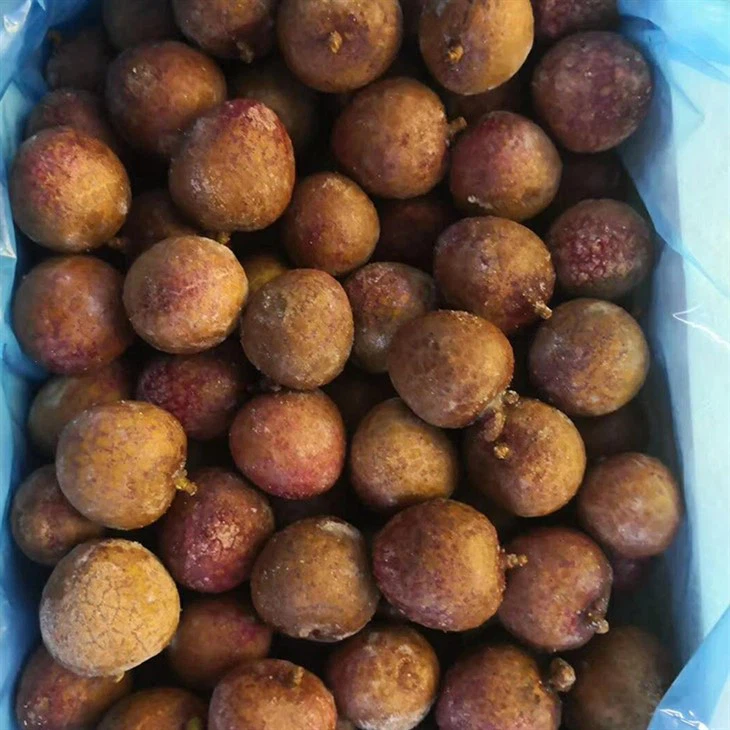
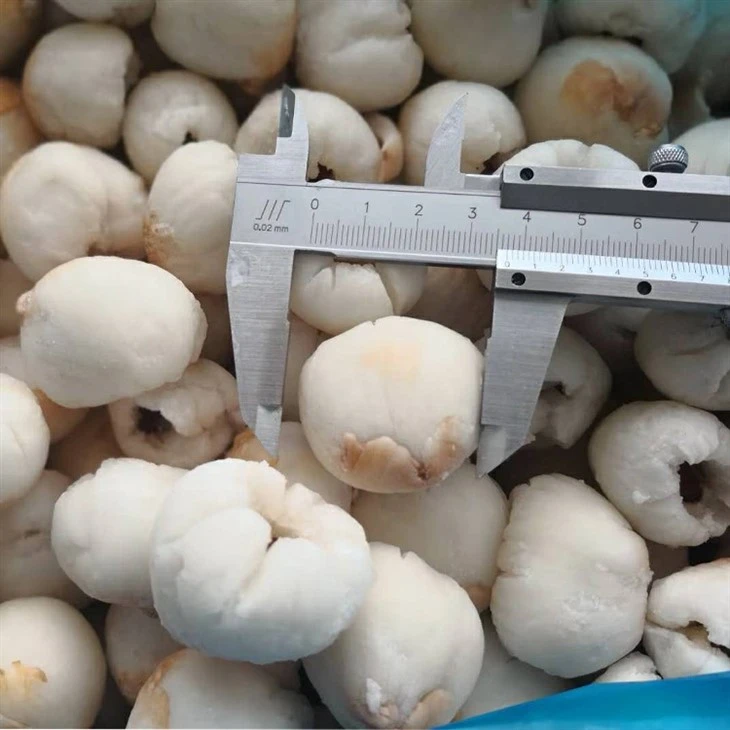
Product appearance supports review of creamy-white flesh, intact arils, pitting condition, browning and current-lot frozen quality.
Whole Peeled, Pitted and In-Shell Frozen Lychee
The term whole frozen lychee can describe two different products. Whole in-shell lychee retains the outer skin and seed. Whole peeled and pitted lychee means the complete edible aril after skin and seed removal.
For tea drinks, desserts, fruit cups, yogurt, foodservice and retail packs, the peeled and pitted form provides ready-to-use fruit. In-shell fruit serves specialty retail and visual presentation, while broken peeled fruit is matched to industrial processing.
Complete edible aril for tea drinks, desserts, yogurt, fruit cups and retail.
Whole fruit with natural skin and seed for display-led or specialty retail use.
Peeled and pitted broken flesh for juice, puree, jam, sauce and fillings.
Fruit raw material selected by Brix, acidity, color and processing performance.

A close product view helps distinguish intact peeled arils from broken processing pieces and in-shell fruit.
IQF Lychee Supply at a Glance
Whole peeled and pitted, whole in-shell or broken processing grade.
Fujian, China; Wuye and Lanzhu commercial varieties.
June-July harvest and IQF production; frozen supply subject to stock.
Brix by grade, pH 4.00-4.80 and acidity 0.20-0.60 g/100 g.
10 kg carton, 20 lb carton, foodservice bags and private-label packs.
Specification, COA, reports, declarations, certificates and traceability records.
IQF Frozen Lychee Specifications
We separate product form, piece count, chemical parameters and physical tolerances so purchasing and QA teams can compare samples and record binding requirements.
| Product / Botanical Name | IQF Frozen Lychee Fruit; Litchi chinensis Sonn. |
|---|---|
| Ingredient / Origin / Variety | 100% lychee; Fujian, China; Wuye or Lanzhu |
| Cultivation | Conventional; certified organic only when covered by valid documentation |
| Forms / Grades | Whole peeled and pitted; whole in-shell; broken peeled processing grade; Grade A, premium or processing specification |
| Peeled Piece Count / Diameter / Weight | Premium 50-70 pieces/kg; standard 70-90 pieces/kg; approximately 28-40 mm and 11-20 g/piece |
| In-Shell Count / Diameter | 20-27 fruits/500 g; approximately 20-30 mm |
| Brix | Processing ≥14°Bx; Standard Grade A ≥16°Bx; Premium ≥18°Bx; selected high-Brix lot ≥20°Bx only by current-lot confirmation |
| pH / Titratable Acidity | pH 4.00-4.80; acidity 0.20-0.60 g/100 g expressed as citric acid; Brix/acid ratio minimum 30 when specified |
| Color / Flavor / Odor | Peeled flesh creamy white to translucent white; characteristic sweet floral flavor; free from fermented, musty or abnormal odor |
| Whole / Broken / Brown Flesh | Whole intact arils minimum 90%; torn or broken maximum 8%; brown or discolored flesh maximum 5% |
| Maturity / Texture Defects | Immature or excessively firm maximum 3%; overripe or excessively soft maximum 3%; worm or insect damage absent |
| Seed / Shell / Foreign Matter | Whole seeds absent; seed fragments maximum 1 piece/10 kg; shell residue absent; glass, metal, plastic, stones and foreign matter absent |
| Frozen Condition | Clumps over three pieces maximum 5%; free ice maximum 1% |
| Added Sugar / Treatment | No added sugar in the standard 100% lychee option; any citric acid, ascorbic acid or browning-control treatment must be declared |
| Processing / Season / Supply | Peeled, pitted, inspected, IQF frozen and packed; June-July crop; year-round frozen supply subject to stock |
| Packing | 1 x 10 kg, 1 x 20 lb or 1 x 20 kg carton; foodservice 1 kg, 2.5 kg or 5 kg; private label 227 g-1 kg |
| MOQ / Mixed Container | Approximately 10 MT or one 20-foot reefer; 2-3 compatible frozen products subject to availability |
| Loading / Port / Lead Time | 20-foot reefer approximately 10-11 MT; 40-foot reefer approximately 22-24 MT; Xiamen, China; 15-21 days after deposit and packing confirmation |
| Storage / Shelf Life | At or below -18 C; loading temperature -18 C or below; 24 months from production date |
| Documents | Specification, COA, reports, ingredient declaration, packing list, certificates and traceability records by order |
Specification Note: Lychee is a natural agricultural product. Fruit size, Brix, pH, acidity, flesh color and texture can vary by variety, maturity, crop and production lot. Binding requirements follow the approved sample, final specification and sales contract.
Brix, pH and Acidity Control
We review Brix together with acidity, aroma, flesh condition and sweetness-acid balance. A minimum of 18°Bx or 20°Bx must be confirmed against the current production lot before contract approval.
Minimum 14°Bx.
Minimum 16°Bx.
Minimum 18°Bx.
Minimum 20°Bx by current-lot test.
Reference 4.00-4.80.
0.20-0.60 g/100 g as citric acid.
Testing uses representative thawed peeled lychee, a calibrated digital refractometer near 20 C, a calibrated pH meter and acidity expressed as citric acid. Results are recorded on the COA when included in the commercial specification.
Choose the Right Frozen Lychee Grade
| Grade | Concrete Specification | Recommended Application |
|---|---|---|
| Premium Large Peeled | 50-70 pieces/kg, Brix ≥18°Bx, intact arils ≥90% | Premium tea drinks, fruit cups, desserts and retail |
| Standard Peeled | 70-90 pieces/kg, Brix ≥16°Bx | Foodservice, yogurt, ice cream and bakery |
| High-Brix Selected | Brix ≥20°Bx by current-lot test | Premium beverages, cocktails and dessert brands |
| Whole In-Shell | 20-27 fruits/500 g | Specialty retail and visual presentation |
| Broken Processing | Brix ≥14°Bx with controlled broken flesh | Juice, puree, jam, sauce and fillings |
| Certified Organic | Physical grade plus valid certification | Certified-organic retail and manufacturing |
We match grade to your application. Tea drinks, fruit cups and visual desserts normally need larger intact pieces; beverage and puree production can use standard or broken grades without reducing food-safety or foreign-material standards.

A peeled-fruit sample supports piece-count, intact-aril, pitting, color and broken-flesh review.
Microbiological and Food Safety Standards
We confirm microbiological limits by destination market, application and signed specification. The following published limits are used for the standard export specification.
| Microbiological Item | Published Limit |
|---|---|
| Total Plate Count | ≤500,000 CFU/g |
| Coliforms | ≤1,000 CFU/g |
| E. coli | ≤100 CFU/g |
| Yeast and Mould | ≤100 CFU/g |
| Salmonella | Absent in 25 g |
| Listeria monocytogenes | Absent in 25 g |
Reference maximum 1.0 mg/kg.
Reference maximum 0.02 mg/kg.
Reference limits 20, 100 and 250 mg/kg respectively.
Comply with destination-market MRLs, legislation and contract.
Batch-specific pesticide-residue and heavy-metal testing can be arranged according to destination country, buyer program and selected raw-material lot.
Key Quality Points for Frozen Lychee Buyers
| Buyer Concern | Acceptance Standard | GreenLand-food Control | Buyer Evidence |
|---|---|---|---|
| Product Form / Size | Peeled, in-shell and broken separated; 50-70/kg or 70-90/kg; 28-40 mm peeled | Product code, count, weight and sample measurement | Current-lot photo, sample and specification |
| Brix / pH / Acidity | Brix by grade; pH 4.00-4.80; acidity 0.20-0.60 g/100 g | Calibrated refractometer, pH meter and titration | COA when included in contract |
| Intact / Broken / Brown Flesh | Intact ≥90%; broken ≤8%; brown or discolored ≤5% | Weight-based sample and color inspection | Physical inspection result |
| Pitting / Shell Residue | Whole seeds absent; seed fragments ≤1 piece/10 kg; shell absent | Pitting review and large-sample final inspection | Seed and shell inspection record |
| Maturity / Damage | Immature ≤3%; excessively soft ≤3%; worm damage absent | Raw-material, texture and finished-product inspection | Lot-linked acceptance result |
| Clumps / Free Ice | Clumps over three pieces ≤5%; free ice ≤1% | IQF, de-clumping and frozen sample inspection | Frozen-condition confirmation |
| Cold Chain / Traceability | Product -18 C or below; raw-material lot linked to shipment | Cold-store checks, coding and loading records | Temperature, label, lot and loading files |
Browning Control and Ingredient Declaration
Peeled lychee can oxidize, darken after thawing or show a light-brown area near the seed cavity. We separate natural and color-protected options and require the ingredient declaration to match the actual process.
100% Natural Lychee
No added sugar, preservative, color or acidulant. Natural color variation and limited browning near the seed cavity can occur.
Color-Protected Lychee
If citric acid, ascorbic acid or another food-grade treatment is used, it must appear in the specification, ingredient declaration and destination-market label.
Fujian Lychee Origin, Variety and Crop Season
We source this raw material from Fujian, China, with Wuye and Lanzhu among the available commercial varieties. The main harvest and IQF processing period is June-July.
Variety, maturity and crop conditions influence fruit size, seed size, Brix, acidity, flesh color and aroma. We review current-lot details before annual or high-volume contracts and prepare frozen stock for year-round shipment subject to availability.

Product evidence supports review of crop-dependent size, flesh condition and frozen appearance.
How IQF Frozen Lychee Is Processed
Origin, variety, lot, maturity, Brix and raw fruit condition.
Skin and seed removed with cavity and flesh condition review.
Shell, seed fragments, torn flesh, browning and damage checked.
Piece count, size, pre-cooling and individual quick freezing.
De-clumping, whole/broken inspection, detection and weighing.
Packing, coding, frozen storage, inspection and reefer loading.
Rapid IQF processing supports separate frozen pieces and convenient handling. It does not replace raw-material inspection, hygiene control, laboratory testing or continuous storage at or below -18 C.

X-ray inspection equipment supports foreign-material detection capability; applicability is confirmed by factory, product and order.
Quality Control from Fresh Lychee to Export Container
Raw Material Inspection
We review Fujian lot, variety, maturity, Brix, size, insect damage, mould, cracks, fermented odor and residue records.
Peeling and Pitting Control
We inspect shell removal, whole seed removal, seed fragments, torn flesh, cavity damage, juice loss, browning and intact arils.
Physical and Chemical Testing
We confirm piece count, diameter, Brix, pH, acidity, whole ratio, broken flesh and color tolerances.
Foreign-Material Control
We inspect shell pieces, seeds, seed fragments, stems, leaves, plastic, metal, glass, stones and packaging fragments.
Finished Product and Packing
We review clumps, free ice, temperature, weight, seal, carton, batch code, dates, labels and carton marks.
Laboratory and Documents
We coordinate COA, microbiology, residues, heavy metals, ingredient and additive declarations, certificates, traceability and loading photos.
Thawing and Processing Performance
Frozen lychee naturally softens and can release juice after thawing. The result depends on variety, maturity, pitting damage, freezing conditions, frozen-storage stability and thawing method.
For tea drinks, fruit cups or visual desserts, we recommend premium whole peeled samples and current-lot thaw testing. Juice, puree, jam and filling processors can compare standard or broken processing grades for raw-material value.

A current product view supports comparison of frozen integrity, color and the grade selected for thawed presentation or processing.
Applications for IQF Frozen Lychee
Premium 50-70/kg; size, intact flesh, Brix and visual quality.
Premium peeled; whole ratio, color, seed fragments and thawing appearance.
Standard 70-90/kg or broken grade; acidity, dosing and fruit distribution.
Processing grade; Brix, pH, acidity, seed fragments, color and yield.
Premium high-Brix grade; aroma, sweetness and visual presentation.
Premium whole peeled or whole in-shell; uniformity, intact rate and packing.

Product imagery supports application review without turning the page into a household recipe guide.
Frozen Lychee Product and Processing Video
Review the available product forms, packing condition and frozen-fruit handling process. Current-lot videos, production footage and loading records can be requested for qualified orders.
Bulk Packing and Private-Label Options
Bulk Packing
1 x 10 kg, 1 x 20 lb or 1 x 20 kg PE bag/carton.
Foodservice Packing
5 x 1 kg, 4 x 2.5 kg or 2 x 5 kg per carton.
Private Label
227 g, 454 g, 500 g, 1 kg or agreed printed retail bags.
We review printed-material MOQ, artwork, barcode, language, nutrition panel, carton marks and approval timing before production. The ingredient list must disclose any acidulant, antioxidant or browning-control treatment used.
Frozen Storage and Reefer Shipping
We store and transport frozen lychee at or below -18 C. Before loading, we verify container cleanliness, carton condition, lot, quantity, labels, seal number and product temperature.
The published MOQ is approximately 10 MT or one 20-foot reefer. Loading is approximately 10-11 MT for a 20-foot reefer and 22-24 MT for a 40-foot reefer, subject to carton, pallet and container configuration.

Cold-storage and packing evidence supports carton, pallet and frozen-condition checks before reefer loading.
Certifications and Export Documentation
We provide certificate copies only when they apply to the production facility, product scope, destination market and order. Depending on the confirmed supply arrangement, files may include BRCGS, HACCP, ISO 22000, Kosher, Halal, certified organic status or FDA Food Facility Registration.
Order documents may include specification, COA, microbiological, pesticide-residue and heavy-metal reports, ingredient and additive declarations, origin documents, packing list, traceability records and loading photos.
Organic lychee is supplied only when the raw material, processing facility and product are covered by valid organic certification and transaction documentation.

Certificate evidence supports document-scope review; valid coverage must be confirmed for the selected factory and lychee order.
Batch Traceability and Inspection Support
We connect each commercial lot with raw-material origin, variety, receiving date, production date, processing line, quality inspection, laboratory testing, packing, frozen storage and shipment information.
We can coordinate an on-site visit, remote factory review or third-party pre-shipment inspection according to the order, audit scope and purchase contract.

Pre-shipment inspection evidence supports label, lot, quantity, packing and cold-chain checks before loading.
Why Source Frozen Lychee through GreenLand-food
We separate peeled, in-shell and broken grades and confirm piece count and Brix.
We quantify intact, broken, brown flesh, shell, seed and frozen-condition tolerances.
We coordinate additive disclosure, COA, microbiology, residues and heavy metals.
We review bulk, foodservice, private label, mixed container, audit and loading needs.

The factory and frozen-fruit supply image supports processing coordination, export packing and mixed product programs.
Frequently Asked Questions About IQF Frozen Lychee
Is the lychee peeled and pitted?
Our primary product is whole peeled and pitted lychee. Whole in-shell fruit and broken peeled processing grade use separate codes and specifications.
What sizes are available?
Premium peeled lychee is 50-70 pieces/kg and standard grade is 70-90 pieces/kg. Peeled diameter is approximately 28-40 mm.
What is the standard Brix?
Processing grade uses ≥14°Bx, Standard Grade A ≥16°Bx and premium grade ≥18°Bx.
Can you supply Brix above 20°?
Selected lots can reach or exceed 20°Bx depending on variety, maturity and crop. We confirm this requirement through current-lot testing before order approval.
What are the pH and acidity ranges?
The reference pH is 4.00-4.80. Titratable acidity is approximately 0.20-0.60 g/100 g expressed as citric acid.
What is the intact whole-fruit requirement?
Grade A whole peeled lychee has a minimum intact-aril ratio of 90% by weight. Torn or broken arils are limited to 8%.
Are seeds and shell pieces permitted?
Whole seeds and shell residue must be absent. Seed fragments are limited to one piece per 10 kg inspection sample.
Is some brown color near the seed cavity acceptable?
A small light-brown area can occur naturally. Total brown or abnormally discolored flesh is limited to 5% by weight under the recommended Grade A specification.
Are additives used to prevent browning?
A 100% natural option can be supplied. If citric acid, ascorbic acid or another treatment is used, we declare it in the specification, ingredient list and label.
Is sugar added?
No sugar or sweetener is added to the standard 100% IQF lychee option.
Will lychee remain firm after thawing?
Thawed lychee is naturally softer and can release juice. For strong visual appearance, we recommend current-lot premium peeled samples and thaw testing.
What microbiological limits apply?
Standard limits include TPC ≤500,000 CFU/g, coliforms ≤1,000 CFU/g, E. coli ≤100 CFU/g and yeast/mould ≤100 CFU/g, with Salmonella and Listeria absent in 25 g.
What is the MOQ?
The published MOQ is approximately 10 MT or one 20-foot reefer. We can review mixed frozen-fruit loading according to stock and compatibility.
What documents can be supplied?
We can provide or coordinate specification, COA, microbiology, residues, heavy metals, ingredient declaration, certificate copies, origin documents, packing list and traceability records.
Can we arrange third-party inspection?
Yes. We can coordinate an on-site audit, remote factory review or third-party pre-shipment inspection according to the purchase contract.
Request a Frozen Lychee Specification and Quote
Please send your product form, piece count, Brix, additive requirement, packing, quantity, destination, application and test requirements. We will review the suitable grade, crop availability, documents and loading plan before quotation.
Hot Tags: frozen lychee fruit, China frozen lychee fruit manufacturers, suppliers, factory, iqf lychee, frozen lychee fruit, peeled litchi, frozen litchi
Technical specification · reference schedule
Frozen Lychee Fruit
We review the selected form, grade, process and packing against the technical schedule below. Published and TDS values are specification references for order review. External benchmarks apply only within their stated scope. Acceptance is governed by the signed SKU specification; the identified lot COA reports actual measured results.
01 / Physical & Sensory
| Parameter | Specification / reference | Verification & order basis |
|---|---|---|
| Count | 50–70 premium / 70–90 standard pieces/kgTDS reference | Count representative weighed fruit. Selected form and grade must match this TDS reference. Applies to: IQF peeled/pitted whole. |
| Diameter | 28–40 mmTDS reference | Frozen sample; caliper or cut gauge. Selected form and grade must match this TDS reference. Applies to: IQF peeled/pitted whole. |
| Intact Arils | ≥90 %TDS reference | Representative sample; count or mass as stated. Selected form and grade must match this TDS reference. Applies to: IQF peeled/pitted whole. |
| Product / Botanical Name | IQF Frozen Lychee Fruit; Litchi chinensis Sonn.Published reference | Check raw-material identity and variety/source declaration against the ordered programme. |
| Forms / Grades | Whole peeled and pitted; whole in-shell; broken peeled processing grade; Grade A, premium or processing specificationPublished reference | Confirm method, representative sample and acceptance basis in the signed specification. |
| Peeled Piece Count / Diameter / Weight | Premium 50-70 pieces/kg; standard 70-90 pieces/kg; approximately 28-40 mm and 11-20 g/piecePublished reference | Measure a defined frozen sample with caliper or size gauge; report distribution and tolerance. |
| In-Shell Count / Diameter | 20-27 fruits/500 g; approximately 20-30 mmPublished reference | Measure a defined frozen sample with caliper or size gauge; report distribution and tolerance. |
| Color / Flavor / Odor | Peeled flesh creamy white to translucent white; characteristic sweet floral flavor; free from fermented, musty or abnormal odorPublished reference | Compare with the approved sensory reference using the stated frozen/thawed/prepared condition. |
| Size-grade inspection | Use the selected diameter, length, piece mass or count-per-weight grade; state the proportion permitted outside the range. | Measure the named anatomical dimension; count and weigh the same representative sample. |
| Sensory acceptance | Characteristic colour, flavour and texture for the declared product; no abnormal odour or visibly deteriorated material.External reference Codex | Compare an identified frozen sample with the approved grade and defect schedule. External technical reference; confirm SKU and market applicability. |
02 / Physicochemical & Residue Controls
| Parameter | Specification / reference | Verification & order basis |
|---|---|---|
| Soluble Solids (°Brix) | ≥14 processing / ≥16 Grade A / ≥18 premium °BxTDS reference | Thawed sample; refractometer at 20°C. Selected form and grade must match this TDS reference. Applies to: IQF peeled/pitted whole. |
| Brix | Processing ≥14°Bx; Standard Grade A ≥16°Bx; Premium ≥18°Bx; selected high-Brix lot ≥20°Bx only by current-lot confirmationPublished reference | Measure representative prepared sample with a temperature-compensated refractometer. |
| pH / Titratable Acidity | pH 4.00-4.80; acidity 0.20-0.60 g/100 g expressed as citric acid; Brix/acid ratio minimum 30 when specifiedPublished reference | Use calibrated pH meter or titration on the stated sample preparation. |
| Thaw yield / drip loss | For a drip-sensitive grade, define thawing conditions, draining apparatus and duration before setting a numerical target. | Record initial sample mass and drained liquid mass; drip loss (%) = 100 × drained liquid mass / initial sample mass. |
| Pesticide residue schedule | Named active ingredients and commodity-specific limits are selected for the destination market. EU source | Link farm spray history, laboratory LOQ and batch result to the destination MRL. EU database is one market reference; apply the actual destination rule. |
| Lead, cadmium and other contaminants | Apply the limit for the exact commodity and processed form in the destination market. EU source | State analyte, preparation basis, method, LOQ and lot result. Do not transfer a fresh-commodity limit to a processed form without the required assessment. |
03 / Microbiological Criteria
| Parameter | Specification / reference | Verification & order basis |
|---|---|---|
| Total Plate Count | ≤500,000 CFU/gPublished reference | Report the named organism, analytical method, sample mass, sampling plan and lot result; use CFU/g for enumeration and a stated mass for detection. |
| Coliforms | ≤1,000 CFU/gPublished reference | Report the named organism, analytical method, sample mass, sampling plan and lot result; use CFU/g for enumeration and a stated mass for detection. |
| E. coli | ≤100 CFU/gPublished reference | Report the named organism, analytical method, sample mass, sampling plan and lot result; use CFU/g for enumeration and a stated mass for detection. |
| Yeast and Mould | ≤100 CFU/gPublished reference | Report the named organism, analytical method, sample mass, sampling plan and lot result; use CFU/g for enumeration and a stated mass for detection. |
| Salmonella | Absent in 25 gPublished reference | Report the named organism, analytical method, sample mass, sampling plan and lot result; use CFU/g for enumeration and a stated mass for detection. |
| Listeria monocytogenes | Absent in 25 gPublished reference | Report the named organism, analytical method, sample mass, sampling plan and lot result; use CFU/g for enumeration and a stated mass for detection. |
| Acceptance schedule | Select the test panel and limits by intended use (ready-to-eat or further processing), product form and destination. EU source | State organism, analytical method, sample mass and n/c plan; report actual lot results. A universal APC, coliform, Salmonella or Listeria limit is not assigned to every frozen product. |
04 / Freezing & Cold Chain
| Parameter | Specification / reference | Verification & order basis |
|---|---|---|
| Frozen storage and transport | ≤−18 °CTDS reference | Product core check and logger record. Selected form and grade must match this TDS reference. Applies to: Frozen Litchi frozen formats. |
| Frozen Condition | Clumps over three pieces maximum 5%; free ice maximum 1%Published reference | Confirm method, representative sample and acceptance basis in the signed specification. |
| Storage / Shelf Life | At or below -18 C; loading temperature -18 C or below; 24 months from production datePublished reference | Verify unopened-pack validation, declared storage condition and production/best-before coding. |
| Separation & loose-ice assessment | Keep inherent moisture, loose ice and permanently frozen clusters as separate inspection categories. | Weigh separated loose ice and welded clusters against initial sample mass; distinguish natural paired pieces or blocks. |
| Product thermal centre | −18°C or colder after freezing and thermal stabilization; maintain the agreed frozen distribution condition.External reference Codex | Probe the thickest representative pack and retain storage/transport temperature records. Codex quick-frozen reference; selected product form and route must be frozen. |
| Frozen condition at dispatch | Hard frozen, correctly sealed and coded, without thaw/refreeze evidence or excessive loose ice. Codex | Check pack integrity, free-flow or block condition as declared, carton condition and loading temperature. |
05 / Pack Size & Shelf Life
| Parameter | Specification / reference | Verification & order basis |
|---|---|---|
| Packing | 1 × 10 kg, 1 × 20 lb or 1 × 20 kg carton; foodservice 1 kg, 2.5 kg or 5 kg; private label 227 g-1 kgPublished reference | Check approved pack drawing, calibrated scale and production records. |
| Declared net contents | Verify each selected pack format against the artwork and applicable quantity-control rule. Codex | Calibrated checkweigher or scale; defined sample and tare. |
| Shelf-life basis | The labelled period applies only to its validated pack and continuous stated storage condition. Codex | Review stability study or approved shelf-life file and production-date code. |
06 / Process Controls
| Parameter | Specification / reference | Verification & order basis |
|---|---|---|
| Raw-material preparation checks | State shell and seed status explicitly; whole-in-shell count is not the peeled-flesh count. | Verify the selected product flow and the relevant trimming, sorting and pretreatment record. |
| Declared route | Peeled, pitted, inspected, IQF frozen and packed | Verify approved process flow, line record and finished-product identity. Page-described route; numerical set-points require the approved line SOP. |
| CCP designation | Use the site-approved HACCP plan to identify true CCPs and their validated critical limits. Codex | Check hazard analysis, monitoring, deviation and corrective-action records. A quality-control step is not automatically a CCP. |
07 / Ingredients, Additives & Allergens
| Parameter | Specification / reference | Verification & order basis |
|---|---|---|
| Ingredient / Origin / Variety | 100% lychee; Fujian, China; Wuye or LanzhuPublished reference | Check raw-material identity and variety/source declaration against the ordered programme. |
| Added Sugar / Treatment | No added sugar in the standard 100% lychee option; any citric acid, ascorbic acid or browning-control treatment must be declaredPublished reference | Verify approved formula, supplier declarations and line-specific allergen assessment. |
| Added glaze / coating declaration | Declare any intentionally added water glaze, syrup, oil or coating and the measurement basis; loose ice is assessed separately. | Verify formula/addition records; agree a deglazing or coating test and net-content basis where applicable. |
| Ingredient statement | 100% lychee; Fujian, China; Wuye or LanzhuTechnical control | Compare approved formula, product label and supplier bill of materials. Published product statement; verify final commercial formula. |
| Additive use | Declare any colour-protection agent, acidulant or other additive by ingredient and maximum permitted use for the target market. NHC standard | Check approved formula, actual addition record and market-specific additive category. GB 2760-2024 applies to China; export rules are checked separately. |
| Allergen and cross-contact assessment | Declare inherent allergens and assess shared-line cross-contact from the actual facility schedule. FDA | Review line matrix, cleaning validation and buyer label approval. Do not claim a shared-line allergen or allergen-free status without facility evidence. |
08 / Defects & Foreign Matter
| Parameter | Specification / reference | Verification & order basis |
|---|---|---|
| Whole / Broken / Brown Flesh | Whole intact arils minimum 90%; torn or broken maximum 8%; brown or discolored flesh maximum 5%Published reference | Inspect a defined representative sample; record count or mass basis and disposition. |
| Maturity / Texture Defects | Immature or excessively firm maximum 3%; overripe or excessively soft maximum 3%; worm or insect damage absentPublished reference | Compare with the approved sensory reference using the stated frozen/thawed/prepared condition. |
| Seed / Shell / Foreign Matter | Whole seeds absent; seed fragments maximum 1 piece/10 kg; shell residue absent; glass, metal, plastic, stones and foreign matter absentPublished reference | Inspect a defined representative sample; record count or mass basis and disposition. |
| Intrinsic defect classification | Shell, seed/fragment in pitted grades, brown flesh and damaged fruit. | Record each defect class separately by count or mass; state sample size, denominator and combined-limit rules. |
| Hazardous foreign matter | No foreign matter detected in the defined inspection sample; reject and investigate any finding.External reference Codex | Define visual-inspection sample size and detector challenge in the signed quality schedule. "None detected" is a sampling statement, not an absolute guarantee of zero particles. |
09 / Packaging Materials & Label
| Parameter | Specification / reference | Verification & order basis |
|---|---|---|
| Food-contact pack | Specify inner-contact material and obtain the applicable food-contact compliance declaration. NHC standard | Review film structure, supplier DoC, migration evidence and actual intended conditions. GB 4806 series is China-specific; EU export also checks Regulations 1935/2004 and 10/2011. |
| Carton and seal integrity | Define carton stacking strength, bag seal and puncture resistance for the confirmed net weight and pallet plan. EU source | Inspect pack drawing, compression/seal test and shipment configuration. |
| Label verification | Match product name, ingredient/allergen statement, net weight, lot/date, shelf life and storage instruction to the destination artwork. Codex | Approve artwork against the signed specification and destination rules. |
10 / Detection & Traceability
| Parameter | Specification / reference | Verification & order basis |
|---|---|---|
| Foreign-body detector | Validate Fe, non-Fe and stainless-steel challenge pieces for the actual product, aperture, pack and line; record the proven sensitivity. Codex | Challenge at defined start, changeover, interval and end points; retain rejection records. Do not copy generic detector sizes into a plant capability claim. |
| Lot traceability | Link input source lot, processing run, packaging code, test records, frozen storage and shipment to one finished lot. Codex | Trace one sample lot forward and backward in a recorded mock recall. Recall speed is stated only when the site has a validated target and record. |
Previous
No InformationNext
Peeled Litchi


