





IQF Frozen Lychee - Whole In-Shell, Peeled and Pitted
Description
Technical Parameters
IQF Frozen Lychee - Whole In-Shell, Peeled and Pitted
GreenLand supplies IQF frozen lychee from China for importers, distributors, beverage and dessert manufacturers, yogurt and fruit-preparation processors, foodservice buyers and private-label frozen-fruit brands. Choose whole in-shell fruit, whole peeled fruit, peeled and pitted lychee, or lychee meat to match your application.
Product form and seed status are confirmed separately before quotation. We then review the selected count or diameter, variety, Brix, flesh color, peeling and pitting quality, packing and document requirements. The approved specification and sample define the product for production and frozen shipment.

Choose the Lychee Form, Seed Status and Size
Lychee and litchi refer to the same fruit. For purchasing, the important distinction is whether the shell and seed remain. Match the size reference to the selected product form rather than treating in-shell counts, peeled-fruit counts and flesh diameter as one interchangeable specification.
Whole In-Shell Lychee
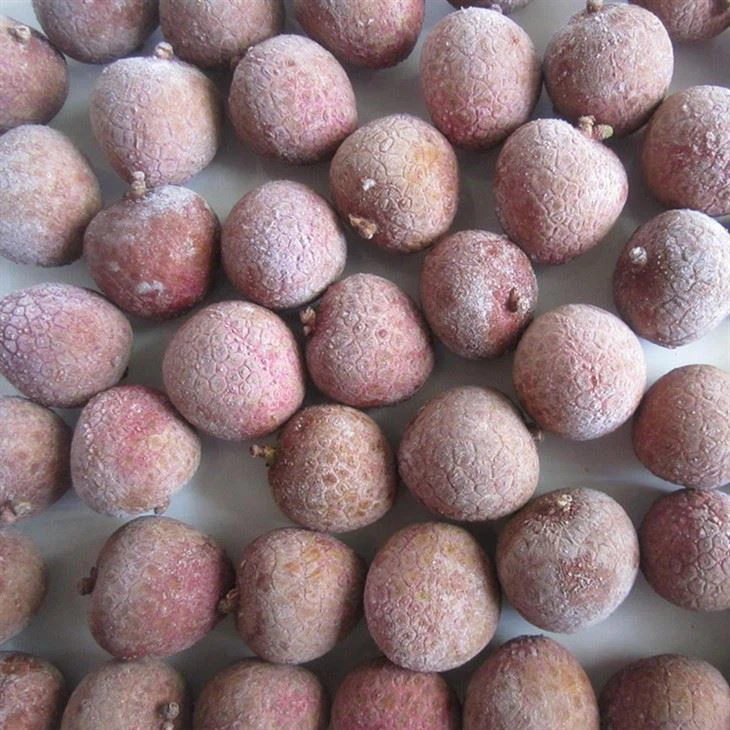
Whole fruit with both shell and seed retained. Commercial size references are 20-27 fruits per 500 g and 2-3 cm diameter, subject to variety and crop. Confirm the applicable count, diameter and sample for the order.
Whole Peeled Lychee
Whole peeled fruit with creamy white to pearly white flesh. Review size, Brix, color and flesh integrity. Peeling alone does not specify seed removal: confirm the required pit status separately before ordering.
Peeled and Pitted Lychee
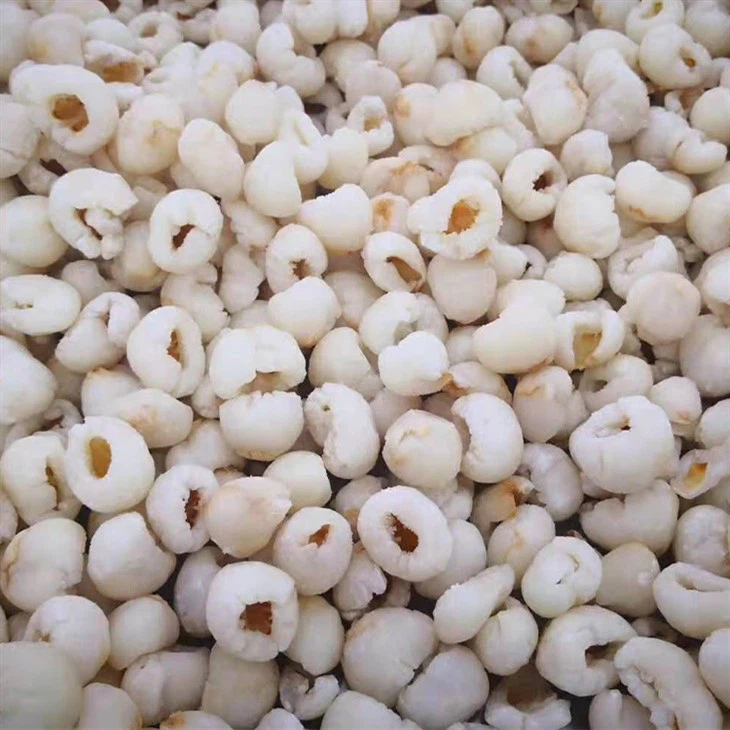
Fruit with shell and seed removed. Count options include 20-50 pieces per 500 g, or selected bands of 28-33 or 34-38 fruits per 500 g. The quotation states the agreed option for the variety and crop batch.
Lychee Meat
Lychee flesh with the seed removed. The listed diameter reference is 28-40 mm, subject to the selected form and buyer specification. Confirm flesh integrity and the applicable size against the approved sample.


Brix, Flesh Color and Product Condition
Brix by Variety and Lot
References of 18-20°Brix or above 20°Brix are reviewed for the selected variety and crop, not guaranteed for every lot. The specification states the agreed requirement; the COA records the actual result when Brix testing is included.
Color by Product Form
The in-shell reference is red to reddish-brown skin with creamy white flesh. Peeled and pitted products use creamy white to pearly white flesh as the color reference, assessed with the agreed sample and defect criteria.
Peeling and Seed Removal
For peeled and pitted orders, inspection covers remaining shell, skin and seed material, along with torn flesh, broken pieces and whole-fruit integrity. The product description and acceptance criteria identify what has been removed.
Defects and Frozen Condition
The inspection plan addresses browning, dark flesh, fermented odor, mold, decay, insect damage, unsuitable maturity and foreign material. Excess ice and serious clumping are checked alongside the selected physical grade.
What the Lychee Order Specification Covers
Form Matched to the Order
Select whole in-shell, whole peeled, peeled and pitted fruit, or lychee meat. The quotation and label identify the chosen form and seed status instead of relying on the generic name frozen lychee.
Size and Brix Requirements
Confirm the relevant fruit count or diameter, variety and crop batch. Brix is a separate requirement, supported by testing when agreed, rather than assumed from piece size.
Flesh Integrity and Appearance
Review remaining seed and shell material, flesh tearing, broken pieces and color for the selected form. Browning, fermented odor, mold, decay and foreign material are included in the inspection requirements.
Packing and Shipment File
Bulk cartons, foodservice packs and retail bags are reviewed with artwork, batch coding, COA and shipment documents. Mixed-container quantities are checked against packing and the frozen loading plan.
Processing Flows for In-Shell and Pitted Lychee
Whole in-shell lychee: raw fruit selection -> size and maturity sorting -> washing -> defect and foreign-material removal -> IQF freezing -> final inspection -> metal detection -> packing -> frozen storage.
Peeled and pitted lychee: raw fruit selection -> size and maturity sorting -> washing -> peeling -> pitting / seed removal -> flesh-integrity inspection -> defect and foreign-material removal -> IQF freezing -> final inspection -> metal detection -> packing -> frozen storage.
The selected product form determines whether peeling and seed removal are part of the process. Variety, maturity, size, color, flesh integrity and frozen condition are reviewed with the agreed Brix requirement and batch records. Preparation or further processing follows the approved application and package instructions.
IQF Frozen Lychee Commercial Specification
| Product Name | IQF Frozen Lychee / Frozen Litchi |
| Ingredient | 100% lychee |
| Origin | China |
| Variety | Wuye, Lanzhu or another agreed variety, subject to origin, crop season, raw-material availability and buyer requirements |
| Style | Individually quick frozen (IQF) |
| Available Forms | Whole in-shell lychee, whole peeled lychee, peeled and pitted lychee, or lychee meat |
| Pit Status | Seed retained in whole in-shell fruit; removed for peeled and pitted lychee and lychee meat. Seed status for whole peeled fruit must be confirmed separately. |
| Whole In-shell Size | References: 20-27 fruits/500 g and 2-3 cm diameter, or a buyer-specified size confirmed for the crop and sample |
| Peeled / Pitted Size | Alternative count references: 20-50 pieces/500 g, 28-33 fruits/500 g or 34-38 fruits/500 g. Confirm one applicable count range by form, variety and crop. |
| Form-Specific Diameter | 28-40 mm reference listed for lychee meat, or the buyer-specified diameter for the selected form; confirm separately from whole in-shell sizing |
| Brix | 18-20°Brix or above 20°Brix as order-dependent references. Confirm the requirement by variety and crop; actual results are reported when batch testing is agreed. |
| Processing Method | Selected, sorted and washed; peeled and pitted as required by form; inspected, IQF frozen, metal detected, packed and held in frozen storage |
| Color | Whole in-shell: red to reddish-brown skin and creamy white flesh. Peeled / pitted: creamy white to pearly white flesh. |
| Flavor and Odor | Characteristic lychee flavor, floral aroma and natural sweetness, free from off-flavor |
| Texture | Juicy flesh after the agreed thawing or processing preparation, without seriously mushy, dry, fermented or damaged pieces; assess against the approved sample |
| Grade | Grade A, Foodservice Grade or Processing Grade under the agreed buyer specification; no universal numerical grade limits are stated here |
| Defect Tolerance | Order-specific criteria for broken pieces, torn flesh, seed, shell and skin residue, brown spots, dark flesh, fermented odor, mold, decay, insect damage, unsuitable maturity, foreign material, excess ice and serious clumping |
| Ingredient / Additives | 100% lychee without additives for the standard product. Any separately agreed processing need must be declared in the approved specification and reviewed for the destination. |
| Cultivation | Conventional supply; organic orders require confirmation of a certified batch and valid supporting organic documents |
| Packing Options | 1 x 10 kg or 1 x 20 kg/carton; 20 lb or 40 lb carton; 20 x 500 g, 10 x 1 kg, 5 x 2 kg or 4 x 2.5 kg/carton. PE-lined cartons, printed retail bags and private-label formats by agreement. |
| MOQ | One 20-foot full-container load, or approximately 10-12 MT, subject to packing and the agreed mixed-container plan |
| Loading Capacity | Planning reference: 10-12 MT per 20-foot reefer; 20-24 MT per 40-foot high-cube reefer. Final quantity depends on packing format and pallets. |
| Shelf Life | 24 months under the specified frozen-storage conditions |
| Storage Temperature | -18°C or below |
| Crop Season | June-July reference, subject to origin, lychee variety and harvest plan |
| Supply Period | Year-round frozen-stock supply, subject to availability and production planning |
| Certificates and Documents | BRC, HACCP, ISO, Halal, Kosher and relevant FDA-related support as confirmed for the supplying site and market; organic documents for certified orders; specification, COA, batch traceability and agreed shipment documents |
| Payment Terms | T/T, L/C or the terms agreed for the order |
| Trade Terms | FOB, CNF/CFR, CIF |
| Shipment | Refrigerated container shipment |
| Loading Port | Xiamen, Qingdao, Dalian or another China port confirmed in the shipment plan |
| Lead Time | Approximately 15-21 days after order confirmation or deposit receipt, as agreed; subject to stock, packing and the shipment plan |
| Applications | Beverage and juice processing, smoothies, yogurt, ice cream, fruit preparations, desserts, bakery, foodservice, retail and private-label frozen packs, and industrial food processing |
Lychee Quality Checks before Packing
Variety, Maturity and Brix
Receiving and crop review cover variety, size, maturity, color, overripe and underripe fruit. Where Brix is a contract parameter, the corresponding sample or batch result is reviewed against the agreed requirement.
Shell and Seed Residue
For peeled and pitted products, check remaining shell, skin and seed material separately from torn flesh and broken pieces. Flesh integrity and the specified pit status are reviewed together before packing.
Flesh Color and Defects
Sorting removes unsuitable fruit with browning, dark flesh, fermented odor, mold, decay or insect damage. Final inspection reviews the agreed appearance standard, visible defects and foreign material.
Frozen Condition and Records
The release review covers IQF separation, excessive ice, clumping, final inspection and metal-detection records. Microbiological, pesticide-residue and heavy-metal documents follow the agreed test scope, linked with storage and batch records.
Frozen Lychee Product and Processing Video
Use the video as a reference during the product and processing discussion. For an order, request the sample, photographs and records corresponding to the selected form, count, flesh color, peeling or pitting requirement and packing.
Bulk, Foodservice and Private-Label Packing
Packing is selected for the product form and distribution channel. Review bulk cartons for manufacturing or repacking, smaller inner bags for foodservice, and approved printed bags for retail. Confirm net weight, artwork, destination documents and the container plan before production.
Options include 1 x 10 kg, 1 x 20 kg, 20 lb and 40 lb cartons with a PE inner bag. Confirm the carton configuration and any pallet requirements for the selected form.
Review 20 x 500 g, 10 x 1 kg, 5 x 2 kg or 4 x 2.5 kg per carton. The 500 g, 1 kg, 2 kg and 2.5 kg inner packs are matched to the approved retail or foodservice program.
Approve bag dimensions, printed artwork, barcode, carton marks, product form, pit status and ingredient statement together. Label content and destination documents follow the confirmed order and packing plan.
Frozen Lychee for Beverages, Desserts and Dairy
Food Manufacturing
For beverage, juice, smoothie, yogurt, ice cream, dessert, bakery, jam and fruit-filling production, select the lychee form and seed status before agreeing size, Brix and flesh-integrity requirements. Preparation follows the approved process and label instructions.
Foodservice and Catering
Hotels, restaurants, caterers, dessert shops, bubble tea and beverage chains, and central kitchens can review portion packs for their lychee recipes. Confirm whether the operation needs shell-on fruit or peeled and pitted flesh.
Retail and Distribution
Retail and private-label programs can use the agreed lychee form in frozen-fruit bags for supermarkets, Asian grocery channels and distributors. The product name, seed status and pack details remain consistent across the label and order file.
Industrial Processing and Repacking
Bulk fruit can be reviewed for repacking, beverage and fruit-preparation processing, dairy and dessert manufacturing, foodservice portioning and frozen tropical-fruit blends. The specification identifies the required flesh condition and packing.
Batch COA, Certificates and Export Documents
GreenLand provides the product specification, COA, packing list, commercial invoice and agreed batch-related records for the order. The specification states acceptance requirements; the COA reports the results within its identified testing scope. Confirm the document list for the destination before production.
The agreed file can include Brix, pesticide-residue, microbiological and heavy-metal reports; peeling and pitting confirmation; traceability records; and pre-shipment inspection support. BRC, HACCP, ISO, Halal, Kosher, FDA-related registration or support, and organic documents are reviewed for the relevant site, product and order rather than assumed to cover every shipment.
Frozen Storage, Reefer Loads and Mixed Containers
The specified storage and transport temperature is -18°C or below. Reefer arrangements are reviewed by product form, bag and carton size, pallet requirements and destination port, with the batch and packing identified in the shipment plan.
Mixed-container requests can include mango, pineapple, strawberry, blueberry, passion fruit, dragon fruit or other compatible frozen fruits, vegetables and mushrooms. Planning loads are approximately 10-12 MT per 20-foot reefer and 20-24 MT per 40-foot high-cube reefer; the final load follows packing, pallets and the confirmed shipment plan.
Coordinate Your Lychee Supply with GreenLand
With 17+ years of frozen-food export experience, GreenLand focuses on the specification, packing, batch traceability, documents and frozen shipment arrangements required by commercial buyers. The lychee order identifies the selected form and seed status before production.
We support importers, distributors, beverage and dessert manufacturers, dairy processors, foodservice and retail brands across frozen lychee, tropical fruits, vegetables and mushrooms. For lychee, the review centers on count or diameter, Brix, flesh color, peeling and pitting quality, defect tolerances and the agreed packing. Samples and order records provide the product-specific reference alongside the general supplier images.


IQF Frozen Lychee Buying Questions
It is selected lychee fruit that is sorted, washed and individually quick frozen, with peeling and seed removal performed according to the selected form. Final inspection, metal detection, packing and frozen storage follow the agreed production plan.
Are lychee and litchi the same fruit?Yes. Lychee and litchi are alternative names for the same fruit. The order still needs to state the product form, seed status, size and packing.
Which frozen lychee forms can be supplied?The listed forms are whole in-shell, whole peeled, peeled and pitted lychee, and lychee meat. Availability and the final specification are confirmed for the intended application and packing.
How is lychee size specified?In-shell references are 20-27 fruits per 500 g and 2-3 cm diameter. Peeled or pitted options include 20-50 pieces, 28-33 fruits or 34-38 fruits per 500 g. The lychee-meat reference is 28-40 mm. Confirm the relevant range for the selected form rather than applying all references to one lot.
Is 18-20°Brix guaranteed for every lot?No. The listed 18-20°Brix and above-20°Brix options depend on variety and crop. Agree the required value before ordering; the actual result is reported in the COA when Brix testing is included.
Does peeled lychee always mean pitted lychee?The peeled description alone does not confirm seed removal. Whole in-shell fruit retains its seed; peeled and pitted lychee and lychee meat have the seed removed. Confirm the pit status of whole peeled fruit explicitly in the specification.
Which quality points should buyers specify?Specify maturity, size, required Brix, flesh color and integrity, shell and seed residue, torn or broken pieces, browning and frozen separation. The inspection plan also addresses fermented odor, mold, decay and foreign material. Numerical defect limits are agreed separately; none are set universally on this page.
What are the main processing applications?The listed applications include beverages, smoothies, juices, yogurt, ice cream, fruit preparations, desserts and bakery products, plus foodservice, retail packing and industrial processing. Match the form and preparation instructions to the intended use.
What bulk packing can be quoted?Review 1 x 10 kg, 1 x 20 kg, 20 lb or 40 lb cartons, as well as agreed foodservice configurations. Confirm the inner bag and carton arrangement for the selected lychee form.
Can you prepare private-label lychee packs?Yes, under the approved packing program. The listed inner-pack sizes are 500 g, 1 kg, 2 kg and 2.5 kg, with custom packing reviewed separately. Artwork, product form, pit status and destination-label requirements are confirmed before production.
What storage conditions and shelf life are stated?The stated shelf life is 24 months under frozen storage at -18°C or below. Maintain the specified temperature during transport and follow the approved label instructions, avoiding repeated thawing and refreezing.
Can lychee share a container with other frozen products?Yes, subject to a compatible loading plan. Share the required mango, pineapple, strawberry, blueberry, passion fruit, dragon fruit or other frozen products, together with each quantity and pack format, for review.
Which documents are included with a lychee order?The agreed package includes specification, COA, packing list and commercial invoice. Brix and other laboratory reports, relevant certificates, peeling or pitting confirmation, batch traceability and inspection support are included according to the contracted scope and destination requirements.
What is the MOQ?The reference MOQ is one 20-foot full-container load, or approximately 10-12 MT depending on packing. Mixed-container requirements are reviewed separately against the product quantities, packaging and destination.
Can certified organic lychee be requested?Yes, when a certified batch and valid organic documents are confirmed before the order. Conventional supply is not presented as organic; the applicable product and document scope must be agreed.
Request a Frozen Lychee Specification and Quote
Send the product form and seed status you need, followed by count or diameter, packing, quantity, application and destination port. Add Brix, flesh color, defect criteria, documents and target shipment timing where specified. We will review the available crop or stock, sample, COA scope, packing, MOQ and mixed-container plan before quotation.
Hot Tags: IQF frozen lychee, frozen lychee supplier, peeled and pitted lychee, whole in-shell frozen lychee, frozen lychee meat, bulk frozen lychee, IQF frozen litchi, iqf lychee, frozen lychee fruit, frozen litchi, peeled litchi
Technical specification · reference schedule
IQF Frozen Lychee
We review the selected form, grade, process and packing against the technical schedule below. Published and TDS values are specification references for order review. External benchmarks apply only within their stated scope. Acceptance is governed by the signed SKU specification; the identified lot COA reports actual measured results.
01 / Physical & Sensory
| Parameter | Specification / reference | Verification & order basis |
|---|---|---|
| Whole in-shell count | 20–27 fruits/500 gTDS reference | Count representative weighed fruit. Selected form and grade must match this TDS reference. Applies to: Whole in-shell litchi only; peeled flesh uses a separate count/size specification. |
| Origin | ChinaPublished reference | Reconcile source declaration, intake lot and shipment documents. |
| Variety | Wuye, Lanzhu or another agreed variety, subject to origin, crop season, raw-material availability and buyer requirementsPublished reference | Check raw-material identity and variety/source declaration against the ordered programme. |
| Style | Individually quick frozen (IQF)Published reference | Confirm method, representative sample and acceptance basis in the signed specification. |
| Available Forms | Whole in-shell lychee, whole peeled lychee, peeled and pitted lychee, or lychee meatPublished reference | Confirm method, representative sample and acceptance basis in the signed specification. |
| Whole In-shell Size | References: 20-27 fruits/500 g and 2-3 cm diameter, or a buyer-specified size confirmed for the crop and samplePublished reference | Measure a defined frozen sample with caliper or size gauge; report distribution and tolerance. |
| Form-Specific Diameter | 28-40 mm reference listed for lychee meat, or the buyer-specified diameter for the selected form; confirm separately from whole in-shell sizingPublished reference | Measure a defined frozen sample with caliper or size gauge; report distribution and tolerance. |
| Color | Whole in-shell: red to reddish-brown skin and creamy white flesh. Peeled / pitted: creamy white to pearly white flesh.Published reference | Compare with the approved sensory reference using the stated frozen/thawed/prepared condition. |
| Flavor and Odor | Characteristic lychee flavor, floral aroma and natural sweetness, free from off-flavorPublished reference | Compare with the approved sensory reference using the stated frozen/thawed/prepared condition. |
| Texture | Juicy flesh after the agreed thawing or processing preparation, without seriously mushy, dry, fermented or damaged pieces; assess against the approved samplePublished reference | Compare with the approved sensory reference using the stated frozen/thawed/prepared condition. |
| Grade | Grade A, Foodservice Grade or Processing Grade under the agreed buyer specification; no universal numerical grade limits are stated herePublished reference | Confirm method, representative sample and acceptance basis in the signed specification. |
| Size-grade inspection | Use the selected diameter, length, piece mass or count-per-weight grade; state the proportion permitted outside the range. | Measure the named anatomical dimension; count and weigh the same representative sample. |
02 / Physicochemical & Residue Controls
| Parameter | Specification / reference | Verification & order basis |
|---|---|---|
| Brix | 18-20°Brix or above 20°Brix as order-dependent references. Confirm the requirement by variety and crop; actual results are reported when batch testing is agreed.Published reference | Measure representative prepared sample with a temperature-compensated refractometer. |
| Thaw yield / drip loss | For a drip-sensitive grade, define thawing conditions, draining apparatus and duration before setting a numerical target. | Record initial sample mass and drained liquid mass; drip loss (%) = 100 × drained liquid mass / initial sample mass. |
| Pesticide residue schedule | Named active ingredients and commodity-specific limits are selected for the destination market. EU source | Link farm spray history, laboratory LOQ and batch result to the destination MRL. EU database is one market reference; apply the actual destination rule. |
| Lead, cadmium and other contaminants | Apply the limit for the exact commodity and processed form in the destination market. EU source | State analyte, preparation basis, method, LOQ and lot result. Do not transfer a fresh-commodity limit to a processed form without the required assessment. |
03 / Microbiological Criteria
| Parameter | Specification / reference | Verification & order basis |
|---|---|---|
| Hygiene-indicator panel | Select aerobic count and relevant Enterobacteriaceae, coliform or E. coli indicators for the declared process and intended use. Codex | Report each quantitative result in CFU/g, method/reporting limit, sample plan and lot identity. |
| Pathogen acceptance programme | Define Salmonella and Listeria criteria when applicable to the destination, ready-to-eat status and buyer programme. Codex | State analytical portion, sample-unit plan, method and detected/not-detected reporting; identify the treatment and release basis. |
| Yeast & mould enumeration | Select separate yeast and mould criteria for the ordered grade and process; assess storage stability with the applicable product data. Codex | Report yeast and mould separately in CFU/g using validated matrix-specific methods. |
| Acceptance schedule | Select the test panel and limits by intended use (ready-to-eat or further processing), product form and destination. EU source | State organism, analytical method, sample mass and n/c plan; report actual lot results. A universal APC, coliform, Salmonella or Listeria limit is not assigned to every frozen product. |
04 / Freezing & Cold Chain
| Parameter | Specification / reference | Verification & order basis |
|---|---|---|
| Frozen storage and transport | ≤−18 °CTDS reference | Product core check and logger record. Selected form and grade must match this TDS reference. Applies to: Frozen Litchi frozen formats. |
| Storage Temperature | -18°C or belowPublished reference | Probe the product thermal centre after stabilization; retain cold-chain records. |
| Separation & loose-ice assessment | Keep inherent moisture, loose ice and permanently frozen clusters as separate inspection categories. | Weigh separated loose ice and welded clusters against initial sample mass; distinguish natural paired pieces or blocks. |
| Product thermal centre | −18°C or colder after freezing and thermal stabilization; maintain the agreed frozen distribution condition.External reference Codex | Probe the thickest representative pack and retain storage/transport temperature records. Codex quick-frozen reference; selected product form and route must be frozen. |
| Frozen condition at dispatch | Hard frozen, correctly sealed and coded, without thaw/refreeze evidence or excessive loose ice. Codex | Check pack integrity, free-flow or block condition as declared, carton condition and loading temperature. |
05 / Pack Size & Shelf Life
| Parameter | Specification / reference | Verification & order basis |
|---|---|---|
| Packing Options | 1 × 10 kg or 1 × 20 kg/carton; 20 lb or 40 lb carton; 20 × 500 g, 10 × 1 kg, 5 × 2 kg or 4 × 2.5 kg/carton. PE-lined cartons, printed retail bags and private-label formats by agreement.Published reference | Check approved pack drawing, calibrated scale and production records. |
| Shelf Life | 24 months under the specified frozen-storage conditionsPublished reference | Verify unopened-pack validation, declared storage condition and production/best-before coding. |
| Declared net contents | Verify each selected pack format against the artwork and applicable quantity-control rule. Codex | Calibrated checkweigher or scale; defined sample and tare. |
| Shelf-life basis | The labelled period applies only to its validated pack and continuous stated storage condition. Codex | Review stability study or approved shelf-life file and production-date code. |
06 / Process Controls
| Parameter | Specification / reference | Verification & order basis |
|---|---|---|
| Processing Method | Selected, sorted and washed; peeled and pitted as required by form; inspected, IQF frozen, metal detected, packed and held in frozen storagePublished reference | Check the approved product flow, line settings and identified production record; validate numerical critical limits within the site HACCP plan. |
| Raw-material preparation checks | State shell and seed status explicitly; whole-in-shell count is not the peeled-flesh count. | Verify the selected product flow and the relevant trimming, sorting and pretreatment record. |
| CCP designation | Use the site-approved HACCP plan to identify true CCPs and their validated critical limits. Codex | Check hazard analysis, monitoring, deviation and corrective-action records. A quality-control step is not automatically a CCP. |
07 / Ingredients, Additives & Allergens
| Parameter | Specification / reference | Verification & order basis |
|---|---|---|
| Ingredient | 100% lycheePublished reference | Verify approved formula, supplier declarations and line-specific allergen assessment. |
| Ingredient / Additives | 100% lychee without additives for the standard product. Any separately agreed processing need must be declared in the approved specification and reviewed for the destination.Published reference | Verify approved formula, supplier declarations and line-specific allergen assessment. |
| Added glaze / coating declaration | Declare any intentionally added water glaze, syrup, oil or coating and the measurement basis; loose ice is assessed separately. | Verify formula/addition records; agree a deglazing or coating test and net-content basis where applicable. |
| Additive use | Declare any colour-protection agent, acidulant or other additive by ingredient and maximum permitted use for the target market. NHC standard | Check approved formula, actual addition record and market-specific additive category. GB 2760-2024 applies to China; export rules are checked separately. |
| Allergen and cross-contact assessment | Declare inherent allergens and assess shared-line cross-contact from the actual facility schedule. FDA | Review line matrix, cleaning validation and buyer label approval. Do not claim a shared-line allergen or allergen-free status without facility evidence. |
08 / Defects & Foreign Matter
| Parameter | Specification / reference | Verification & order basis |
|---|---|---|
| Pit Status | Seed retained in whole in-shell fruit; removed for peeled and pitted lychee and lychee meat. Seed status for whole peeled fruit must be confirmed separately.Published reference | Classify on the defined sample by count or mass; record individual categories, denominator and any combined limit. |
| Peeled / Pitted Size | Alternative count references: 20-50 pieces/500 g, 28-33 fruits/500 g or 34-38 fruits/500 g. Confirm one applicable count range by form, variety and crop.Published reference | Measure a defined frozen sample with caliper or size gauge; report distribution and tolerance. |
| Defect Tolerance | Order-specific criteria for broken pieces, torn flesh, seed, shell and skin residue, brown spots, dark flesh, fermented odor, mold, decay, insect damage, unsuitable maturity, foreign material, excess ice and serious clumpingPublished reference | Inspect a defined representative sample; record count or mass basis and disposition. |
| Intrinsic defect classification | Shell, seed/fragment in pitted grades, brown flesh and damaged fruit. | Record each defect class separately by count or mass; state sample size, denominator and combined-limit rules. |
| Hazardous foreign matter | No foreign matter detected in the defined inspection sample; reject and investigate any finding.External reference Codex | Define visual-inspection sample size and detector challenge in the signed quality schedule. "None detected" is a sampling statement, not an absolute guarantee of zero particles. |
09 / Packaging Materials & Label
| Parameter | Specification / reference | Verification & order basis |
|---|---|---|
| Food-contact pack | Specify inner-contact material and obtain the applicable food-contact compliance declaration. NHC standard | Review film structure, supplier DoC, migration evidence and actual intended conditions. GB 4806 series is China-specific; EU export also checks Regulations 1935/2004 and 10/2011. |
| Carton and seal integrity | Define carton stacking strength, bag seal and puncture resistance for the confirmed net weight and pallet plan. EU source | Inspect pack drawing, compression/seal test and shipment configuration. |
| Label verification | Match product name, ingredient/allergen statement, net weight, lot/date, shelf life and storage instruction to the destination artwork. Codex | Approve artwork against the signed specification and destination rules. |
10 / Detection & Traceability
| Parameter | Specification / reference | Verification & order basis |
|---|---|---|
| Foreign-body detector | Validate Fe, non-Fe and stainless-steel challenge pieces for the actual product, aperture, pack and line; record the proven sensitivity. Codex | Challenge at defined start, changeover, interval and end points; retain rejection records. Do not copy generic detector sizes into a plant capability claim. |
| Lot traceability | Link input source lot, processing run, packaging code, test records, frozen storage and shipment to one finished lot. Codex | Trace one sample lot forward and backward in a recorded mock recall. Recall speed is stated only when the site has a validated target and record. |
Previous
Peeled LitchiNext
No Information


