



Snow Green Peas
Description
Technical Parameters
IQF FROZEN VEGETABLE SUPPLY
IQF Frozen Snow Peas for Bulk, Foodservice and Private Label Orders
We supply IQF Frozen Snow Peas and Frozen Peapods for importers, frozen vegetable distributors, Asian foodservice buyers, central kitchens, ready meal factories, food processors and retail frozen brands. Some markets use the term Snow Green Peas, but our quotation and specification identify the product clearly as flat, edible snow pea pods.
We confirm pod length, thickness, one-side or two-side stringless requirement, blanching level, color, texture, defect tolerance, packing and export documents before production. This prevents snow peas from being confused with shelled green peas or thicker sugar snap peas.

Whole frozen snow pea pods show the flat pod form, green color and free-flowing IQF condition to confirm before ordering.
Confirm the Pea Product Before Quotation
Pea names vary by market, and a wrong product description can lead to an unsuitable sample, specification or price comparison. We record the agreed product identity on the quotation, specification, packing marks and shipment documents.
| Product | Appearance | Quotation Treatment |
|---|---|---|
| IQF Frozen Snow Peas | Flat, thin, edible green pods with small undeveloped peas | Our main product on this page; also called frozen snow pea pods, frozen peapods or mangetout |
| IQF Sugar Snap Peas | Rounder, thicker edible pods with fuller peas | Confirmed and quoted as a separate product |
| IQF Green Peas | Shelled round pea kernels without pods | Confirmed and quoted as a separate product |
| Garden Peas | A broad market term that often means shelled green peas | Pod or kernel form must be clarified before pricing |

The product photo helps confirm pod shape, maturity, intact appearance and suitability for whole-pod applications.
Size, Stringless and Quality Options
The main form is whole IQF snow pea pods. We match size and trimming requirements to the buyer's application and approved sample rather than treating every crop lot as one undifferentiated grade.
Common target 4-9 cm, with final tolerance confirmed in the order specification.
Common target ≤6.5 mm to maintain a flat pod profile and avoid over-mature pods.
One-side or two-side stringless handling can be confirmed by buyer requirement.
Bright natural green, flat pods, tender texture and controlled yellow or damaged pods.
Buyer Risks and GreenLand-food Controls
We connect each quality concern to a production check and a result that the purchasing or QA team can evaluate.
| Buyer Concern | Order Risk | Our Control | Buyer Result |
|---|---|---|---|
| Wrong pea type | Snow peas confused with kernels or sugar snap peas | Confirm flat edible pod form with product name, photos and sample | Correct product comparison and packing description |
| Tough or fibrous pods | Over-mature raw material or incomplete string removal | Control maturity, thickness and one-side or two-side stringless requirement | Application-matched tenderness standard |
| Yellow pods or black spots | Poor sorting or raw material defects | Inspect color, maturity, insect damage, spots and damaged pods before and after freezing | Agreed defect tolerance for repeat orders |
| Soft texture or dull color | Unsuitable blanching or temperature handling | Confirm blanching level, cooling and peroxidase requirement when requested | Approved color and texture target |
| Broken pods or clumps | Rough handling, excess water or freezing instability | Control draining, IQF separation, final sorting and frozen storage | Controlled broken rate and free-flowing condition |
| Label or document mismatch | Artwork, carton mark or QA file not aligned | Review specification, label, marks, COA and shipment documents before dispatch | Clearer clearance and batch-file preparation |

A representative product image helps the purchasing team connect the written size, color and defect standard with the approved sample.
Core B2B Specification
The following is a commercial reference for RFQ preparation. Final limits, pack format and document scope are confirmed by approved specification, destination market and order agreement.
| Product Name | IQF Frozen Snow Peas / IQF Frozen Peapods |
| Raw Material | Selected edible snow pea pods |
| Style | Whole flat pods; cut form by order confirmation when available |
| Length / Thickness | 4-9 cm / ≤6.5 mm, or according to agreed specification |
| Stringless Requirement | One-side or two-side stringless according to buyer requirement |
| Processing | Selection, trimming, washing, blanching, cooling, IQF freezing, sorting and packing |
| Color / Texture | Natural bright green; tender and slightly crisp after final preparation, not seriously fibrous |
| Defect Control | Broken, yellow, over-mature, insect-damaged and spotted pods, stems, leaves and foreign material by agreed tolerance |
| Packing | 10 kg carton, 20 lb carton, 30 lb carton, 40 lb carton, 2 lb x 12, foodservice or retail packs; industrial tote by confirmation |
| MOQ | Normally 12 metric tons; mixed product loading can be discussed by SKU and production plan |
| Loading Reference | Approximately 22 metric tons per 40' RH, depending on packing and pallet plan |
| Shelf Life / Storage | 24 months at -18 C or below under continuous frozen storage |
| Trade Terms | FOB, CFR or CIF by confirmed shipment plan |
| Supply Period | All-year supply planning, subject to crop, inventory and order schedule |
| Documents | Specification, COA and export documents according to market and order requirements |
Processing Flow and Defect Control
| 1. Raw Material Selection | We select flat pods and remove serious over-maturity, yellowing, insect damage and black spots. |
| 2. Grading & Trimming | We grade length and thickness, trim stems and remove strings according to the order standard. |
| 3. Washing & Inspection | We wash the pods and inspect visible plant residue and foreign material. |
| 4. Blanching & Cooling | We control blanching and prompt cooling for color, texture and enzyme control. |
| 5. IQF Freezing | We drain and individually quick freeze the pods to reduce serious clumping. |
| 6. Final Sorting | We remove unacceptable broken, discolored or defective pods against the agreed tolerance. |
| 7. Metal Detection | We apply metal detection and record the packing batch. |
| 8. Frozen Storage | We keep packed product at -18 C or below before reefer loading. |

Processing evidence should connect trimming, blanching, IQF freezing and final inspection to the approved snow pea specification.
IQF Snow Pea Production Video
Use the production video together with the order specification and batch documents. It shows processing capability, while the approved sample and inspection standard define the product supplied for a specific order.
Quality Standards to Confirm by Order
We convert visual and laboratory requirements into an agreed inspection standard. Final microbiological, pesticide residue and heavy metal limits follow the destination market, buyer specification and order agreement.
Length, thickness, green color, flat pod shape, maturity and stringless requirement.
Broken pods, yellow pods, black spots, insect damage, stems, leaves and foreign material.
Color, texture and peroxidase result when blanching verification is required.
Microbiology, pesticide residue and heavy metal testing by applicable requirement.

Pod image for checking length, maturity and intact appearance.
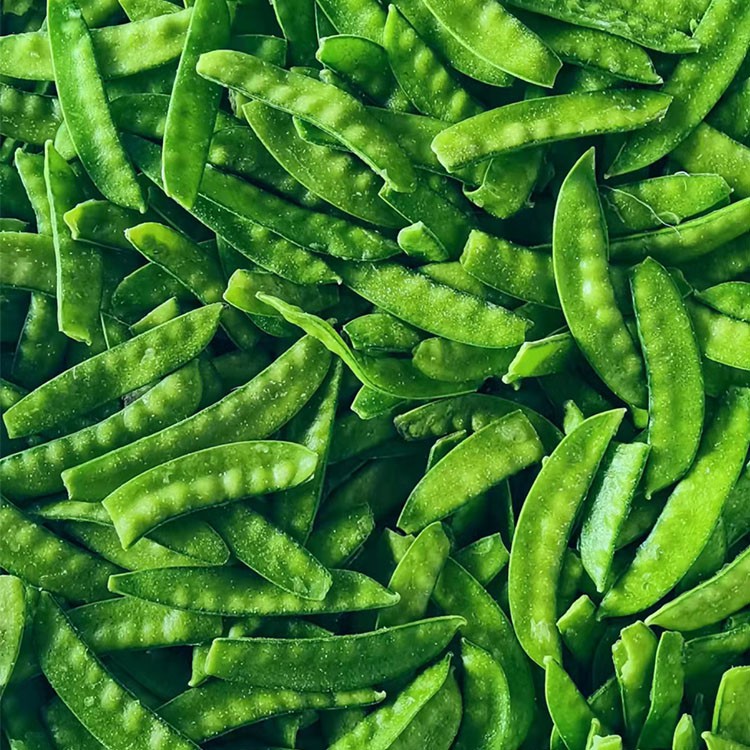
Frozen condition evidence for color, separation and surface ice review.
Application Matching for B2B Buyers
We confirm the final channel first, then align pod size, tenderness, stringless handling, defect tolerance and pack format with the buyer's production or resale plan.
Whole, visually consistent pods with controlled strings and a foodservice pack for stir-fry and side-dish programs.
Length, texture and blanching level matched to reheating time and production-line handling.
Pod length and broken-rate control aligned with the other vegetables in the formula.
Free-flowing product, consumer pack weight, artwork, barcode and master-carton marks confirmed before production.
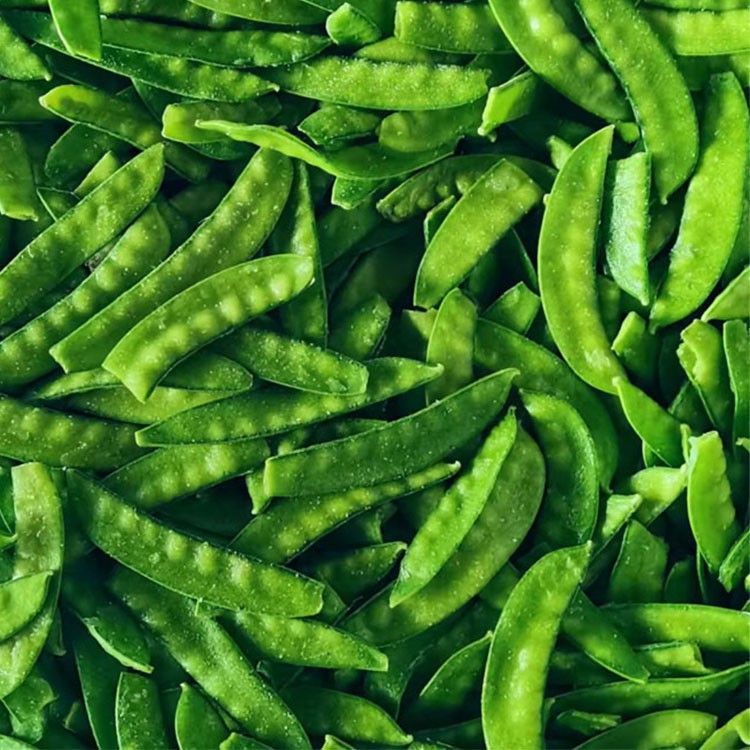
Whole-pod appearance can be matched to foodservice presentation, ready-meal processing and retail pack expectations.
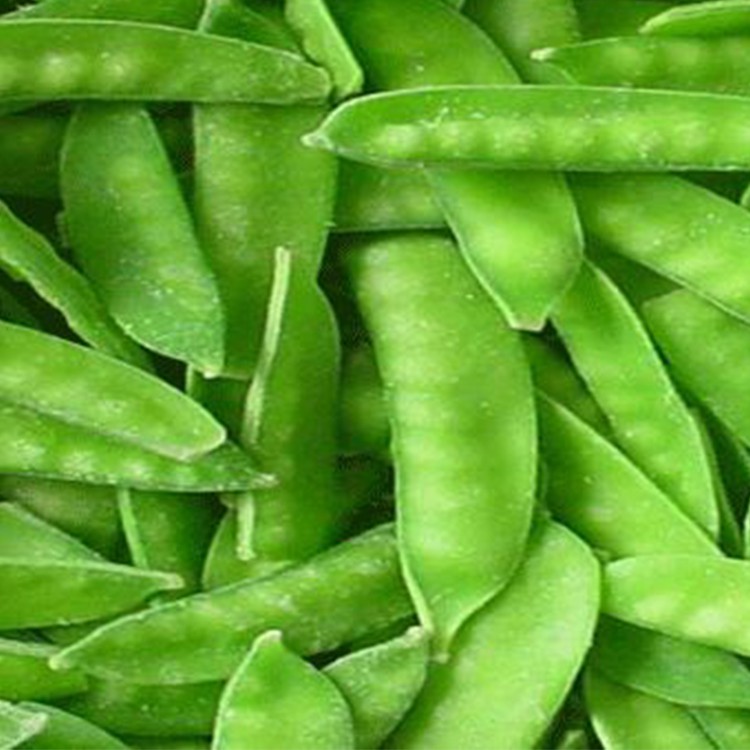
Product and packing photos help the buyer approve frozen condition, net-weight format and label presentation before shipment.
Bulk, Foodservice and Retail Packaging
| Packing Type | Reference Format | Typical Channel |
|---|---|---|
| Bulk Pack | 10 kg, 20 lb, 30 lb or 40 lb carton | Importers, processors, repackers and distributors |
| Foodservice Pack | 4 x 2.5 kg, 5 kg bag, 10 kg carton or 2 lb x 12 | Restaurants, catering, central kitchens and HORECA |
| Retail Pack | 400 g, 500 g, 1 kg or 2 lb bag | Frozen brands and retail chains |
| Industrial Pack | 500 kg tote or customized format by confirmation | Ready meal and frozen vegetable mix factories |
| Private Label | Printed bag plus master carton | OEM programs and retail brands |
We review net weight, inner bag, carton strength, label language, barcode, artwork, carton marks, pallet requirement and destination-market rules before packing approval. Mixed-container loading depends on SKU MOQ, production timing and final loading plan.
Certificates, Export Documents and Traceability
Factory certificates are confirmed according to factory availability and destination-market needs. Order files are prepared according to the confirmed contract, shipment and buyer QA requirements.
HACCP, ISO, BRC, FDA registration, HALAL, KOSHER or OU evidence according to relevant factory and order availability.
Product specification, COA by batch, microbiological report, residue or heavy metal report and peroxidase result when required.
Packing list, commercial invoice, certificate of origin, health certificate and other destination-port documents by agreement.
Batch information, carton marks, product photos and loading photos connect the packed goods with the shipment file.

Certificate images indicate document capability; applicability must be confirmed for the selected factory, product, market and order.
Cold Chain and Container Loading
We keep IQF snow peas at -18 C or below and arrange reefer shipment under a continuous frozen chain. Repeated thawing and refreezing can cause clumping, package deformation, texture loss and surface ice, so loading details are confirmed before dispatch.
| Storage | -18 C or below |
| Shipping | Reefer container by sea |
| 20' RF Reference | Approximately 10-12 MT depending on pack and pallet plan |
| 40' RH Reference | Approximately 22 MT depending on pack and pallet plan |
| Mixed Loading | Discussed by SKU, MOQ, availability and production schedule |
| Loading Proof | Carton, product and loading photos by buyer request |

Factory and equipment evidence helps buyers review processing, packing and frozen supply readiness.
Why Global Buyers Work with GreenLand-food
We separate snow peas, sugar snap peas and shelled green peas before quotation.
We confirm length, thickness, strings, color, defects and frozen condition in measurable terms.
We align the product and pack with foodservice, retail, ready meals or vegetable mixes.
We review packing, artwork, COA, export documents and loading evidence before shipment.

Factory overview for frozen vegetable processing capability.

Market and buyer-service evidence for export frozen food programs.
FAQ for IQF Frozen Snow Peas
"Snow Green Peas" is an unclear market term. We use IQF Frozen Snow Peas or IQF Frozen Peapods for flat edible pods and confirm the product with photos and specification.
Are frozen snow peas the same as green peas?No. Snow peas are flat edible pods; green peas normally refer to shelled round kernels.
Are snow peas the same as sugar snap peas?No. Sugar snap peas are rounder and thicker. We treat them as a separate product for specification and pricing.
What snow pea size can you supply?A common target is 4-9 cm length and ≤6.5 mm thickness. Final tolerance follows the approved specification.
Can you supply stringless frozen snow peas?We can discuss one-side or two-side stringless handling according to the buyer's application and order requirement.
Are the snow peas blanched before freezing?Yes. The standard flow includes blanching and cooling before IQF freezing, with the blanching level confirmed for the order.
Can you provide peroxidase test support?We can coordinate a peroxidase result when it is included in the buyer's blanching-verification requirement.
How do you control yellow, fibrous or damaged pods?We control maturity, grading, trimming, blanching and final inspection against the agreed color, texture and defect tolerances.
How do you control broken pods, clumps and foreign material?We use careful handling, draining, IQF separation, final sorting, metal detection and frozen storage controls.
What packaging formats are available?Reference formats include 10 kg, 20 lb, 30 lb and 40 lb cartons, 2 lb x 12, foodservice packs, retail bags and industrial totes by confirmation.
Can you arrange retail private label packing?Yes. We review bag size, artwork, barcode, label language, carton marks and master-carton information before production.
What is the shelf life and storage temperature?The reference shelf life is 24 months at -18 C or below under an uninterrupted frozen chain.
Can snow peas be mixed with other frozen vegetables in one container?Mixed loading can be discussed according to SKU MOQ, availability, packing compatibility and production schedule.
What documents can you provide?We prepare the specification, COA, packing list, invoice, origin and health documents, test reports and loading evidence according to the market and order agreement.
What information is needed for a quotation?Please send product type, length, thickness, stringless requirement, packing, quantity, destination port, application, private label needs, documents and target delivery schedule.
Request a Quotation for IQF Frozen Snow Peas
Tell us the required product type, pod length, thickness, stringless requirement, defect tolerance, packing, quantity, destination port and document needs. We will help confirm an order-ready specification, loading plan and quotation.
Hot Tags: snow green peas, China snow green peas manufacturers, suppliers, factory, frozen snow pea pods, frozen snow pea, snow green peas, snow cap peas
Technical specification · reference schedule
Frozen Snow Peas
We review the selected form, grade, process and packing against the technical schedule below. Published and TDS values are specification references for order review. External benchmarks apply only within their stated scope. Acceptance is governed by the signed SKU specification; the identified lot COA reports actual measured results.
01 / Physical & Sensory
| Parameter | Specification / reference | Verification & order basis |
|---|---|---|
| Style | Whole flat pods; cut form by order confirmation when availablePublished reference | Confirm method, representative sample and acceptance basis in the signed specification. |
| Length / Thickness | 4-9 cm / ≤6.5 mm, or according to agreed specificationPublished reference | Measure a defined frozen sample with caliper or size gauge; report distribution and tolerance. |
| Color / Texture | Natural bright green; tender and slightly crisp after final preparation, not seriously fibrousPublished reference | Compare with the approved sensory reference using the stated frozen/thawed/prepared condition. |
| Size-grade inspection | Use the selected diameter, length, piece mass or count-per-weight grade; state the proportion permitted outside the range. | Measure the named anatomical dimension; count and weigh the same representative sample. |
| Sensory acceptance | Characteristic colour, flavour and texture for the declared product; no abnormal odour or visibly deteriorated material.External reference Codex | Compare an identified frozen sample with the approved grade and defect schedule. External technical reference; confirm SKU and market applicability. |
02 / Physicochemical & Residue Controls
| Parameter | Specification / reference | Verification & order basis |
|---|---|---|
| Pesticide residue schedule | Named active ingredients and commodity-specific limits are selected for the destination market. EU source | Link farm spray history, laboratory LOQ and batch result to the destination MRL. EU database is one market reference; apply the actual destination rule. |
| Lead, cadmium and other contaminants | Apply the limit for the exact commodity and processed form in the destination market. EU source | State analyte, preparation basis, method, LOQ and lot result. Do not transfer a fresh-commodity limit to a processed form without the required assessment. |
03 / Microbiological Criteria
| Parameter | Specification / reference | Verification & order basis |
|---|---|---|
| Hygiene-indicator panel | Select aerobic count and relevant Enterobacteriaceae, coliform or E. coli indicators for the declared process and intended use. Codex | Report each quantitative result in CFU/g, method/reporting limit, sample plan and lot identity. |
| Pathogen acceptance programme | Define Salmonella and Listeria criteria when applicable to the destination, ready-to-eat status and buyer programme. Codex | State analytical portion, sample-unit plan, method and detected/not-detected reporting; identify the treatment and release basis. |
| Acceptance schedule | Select the test panel and limits by intended use (ready-to-eat or further processing), product form and destination. EU source | State organism, analytical method, sample mass and n/c plan; report actual lot results. A universal APC, coliform, Salmonella or Listeria limit is not assigned to every frozen product. |
04 / Freezing & Cold Chain
| Parameter | Specification / reference | Verification & order basis |
|---|---|---|
| Shelf Life / Storage | 24 months at -18 C or below under continuous frozen storagePublished reference | Verify unopened-pack validation, declared storage condition and production/best-before coding. |
| 8. Frozen Storage | We keep packed product at -18 C or below before reefer loading.Published reference | Confirm method, representative sample and acceptance basis in the signed specification. |
| Storage | -18 C or belowPublished reference | Confirm method, representative sample and acceptance basis in the signed specification. |
| Separation & loose-ice assessment | Keep inherent moisture, loose ice and permanently frozen clusters as separate inspection categories. | Weigh separated loose ice and welded clusters against initial sample mass; distinguish natural paired pieces or blocks. |
| Product thermal centre | −18°C or colder after freezing and thermal stabilization; maintain the agreed frozen distribution condition.External reference Codex | Probe the thickest representative pack and retain storage/transport temperature records. Codex quick-frozen reference; selected product form and route must be frozen. |
| Frozen condition at dispatch | Hard frozen, correctly sealed and coded, without thaw/refreeze evidence or excessive loose ice. Codex | Check pack integrity, free-flow or block condition as declared, carton condition and loading temperature. |
05 / Pack Size & Shelf Life
| Parameter | Specification / reference | Verification & order basis |
|---|---|---|
| Packing | 10 kg carton, 20 lb carton, 30 lb carton, 40 lb carton, 2 lb x 12, foodservice or retail packs; industrial tote by confirmationPublished reference | Check approved pack drawing, calibrated scale and production records. |
| Packing Type | Reference FormatPublished reference | Check approved pack drawing, calibrated scale and production records. |
| Bulk Pack | 10 kg, 20 lb, 30 lb or 40 lb cartonPublished reference | Check approved pack drawing, calibrated scale and production records. |
| Retail Pack | 400 g, 500 g, 1 kg or 2 lb bagPublished reference | Check approved pack drawing, calibrated scale and production records. |
| Industrial Pack | 500 kg tote or customized format by confirmationPublished reference | Check approved pack drawing, calibrated scale and production records. |
| Declared net contents | Verify each selected pack format against the artwork and applicable quantity-control rule. Codex | Calibrated checkweigher or scale; defined sample and tare. |
| Shelf-life basis | The labelled period applies only to its validated pack and continuous stated storage condition. Codex | Review stability study or approved shelf-life file and production-date code. |
06 / Process Controls
| Parameter | Specification / reference | Verification & order basis |
|---|---|---|
| Processing | Selection, trimming, washing, blanching, cooling, IQF freezing, sorting and packingPublished reference | Check the approved product flow, line settings and identified production record; validate numerical critical limits within the site HACCP plan. |
| 4. Blanching & Cooling | We control blanching and prompt cooling for color, texture and enzyme control.Published reference | Check the approved product flow, line settings and identified production record; validate numerical critical limits within the site HACCP plan. |
| Raw-material preparation checks | Inspect flat-pod presentation and fibre; keep snow-pea and sugar-snap grades separate. | Verify the selected product flow and the relevant trimming, sorting and pretreatment record. |
| Blanching / enzyme inactivation | Time and temperature are product- and cut-specific; confirm residual-enzyme endpoint when relevant. Codex | Record validated line set-points and product sample test; assess colour and texture after treatment. Only classify as a CCP when the site's HACCP plan identifies it as one. |
| Cooling and dewatering | Control prompt cooling and surface-water removal before IQF to avoid clumping and loose ice. Codex | Review line time/temperature record, draining check and frozen separation. |
| CCP designation | Use the site-approved HACCP plan to identify true CCPs and their validated critical limits. Codex | Check hazard analysis, monitoring, deviation and corrective-action records. A quality-control step is not automatically a CCP. |
07 / Ingredients, Additives & Allergens
| Parameter | Specification / reference | Verification & order basis |
|---|---|---|
| Added glaze / coating declaration | Declare any intentionally added water glaze, syrup, oil or coating and the measurement basis; loose ice is assessed separately. | Verify formula/addition records; agree a deglazing or coating test and net-content basis where applicable. |
| Ingredient statement | List every ingredient and its declared role for the selected SKU; verify any added sugar, oil, coating, seasoning or glazing medium. | Approved formula and supplier declarations. |
| Additive use | Declare any colour-protection agent, acidulant or other additive by ingredient and maximum permitted use for the target market. NHC standard | Check approved formula, actual addition record and market-specific additive category. GB 2760-2024 applies to China; export rules are checked separately. |
| Allergen and cross-contact assessment | Declare inherent allergens and assess shared-line cross-contact from the actual facility schedule. FDA | Review line matrix, cleaning validation and buyer label approval. Do not claim a shared-line allergen or allergen-free status without facility evidence. |
08 / Defects & Foreign Matter
| Parameter | Specification / reference | Verification & order basis |
|---|---|---|
| Defect Control | Broken, yellow, over-mature, insect-damaged and spotted pods, stems, leaves and foreign material by agreed tolerancePublished reference | Inspect a defined representative sample; record count or mass basis and disposition. |
| Intrinsic defect classification | Strings, coarse seeds, stem ends, yellow pods and broken pods. | Record each defect class separately by count or mass; state sample size, denominator and combined-limit rules. |
| Hazardous foreign matter | No foreign matter detected in the defined inspection sample; reject and investigate any finding.External reference Codex | Define visual-inspection sample size and detector challenge in the signed quality schedule. "None detected" is a sampling statement, not an absolute guarantee of zero particles. |
09 / Packaging Materials & Label
| Parameter | Specification / reference | Verification & order basis |
|---|---|---|
| Food-contact pack | Specify inner-contact material and obtain the applicable food-contact compliance declaration. NHC standard | Review film structure, supplier DoC, migration evidence and actual intended conditions. GB 4806 series is China-specific; EU export also checks Regulations 1935/2004 and 10/2011. |
| Carton and seal integrity | Define carton stacking strength, bag seal and puncture resistance for the confirmed net weight and pallet plan. EU source | Inspect pack drawing, compression/seal test and shipment configuration. |
| Label verification | Match product name, ingredient/allergen statement, net weight, lot/date, shelf life and storage instruction to the destination artwork. Codex | Approve artwork against the signed specification and destination rules. |
10 / Detection & Traceability
| Parameter | Specification / reference | Verification & order basis |
|---|---|---|
| 7. Metal Detection | We apply metal detection and record the packing batch.Published reference | Challenge the actual packed product on the selected line with validated test pieces. |
| Foreign-body detector | Validate Fe, non-Fe and stainless-steel challenge pieces for the actual product, aperture, pack and line; record the proven sensitivity. Codex | Challenge at defined start, changeover, interval and end points; retain rejection records. Do not copy generic detector sizes into a plant capability claim. |
| Lot traceability | Link input source lot, processing run, packaging code, test records, frozen storage and shipment to one finished lot. Codex | Trace one sample lot forward and backward in a recorded mock recall. Recall speed is stated only when the site has a validated target and record. |
Previous
Frozen Snow Pea PodsNext
Snow Cap Peas


