


How to Cook Frozen Snow Peas Without Losing Texture
Jul 31, 2026
Leave a message


Use heat to warm the pod, not to soften it completely
For the most reliable texture, preheat the pan before the frozen pods go in. Add only enough snow peas to keep the pan hot, stir or toss continuously, and finish when the cold center has disappeared but the pod still resists lightly when bitten. If the pan fills with water, keep the pods moving and let the moisture evaporate before adding sauce; do not cover the pan and steam them in their own liquid.
Package directions and the intended-use specification take priority. Commercial blanching does not by itself prove that every frozen snow pea product is ready to eat, so follow the label or your validated foodservice process for the required final heat treatment.
The right target is crisp-tender, not raw-fresh snap
Snow peas are flat edible pods. That makes texture more visible than it is in shelled green peas: the pod wall itself is the part you bite. Commercial frozen snow peas are commonly selected, trimmed, washed, blanched, cooled, drained, and individually quick frozen. Blanching helps control enzymes and prepares the vegetable for frozen storage; freezing turns part of the water inside the tissue into ice. Those steps give a convenient frozen product, but they also mean the cooked pod cannot behave exactly like a freshly picked raw pod.
A good cooked frozen snow pea should remain recognizable and intact. It should be evenly hot, bright to medium green, free from a large puddle of released water, and firm enough to offer light resistance. It may flex more than a fresh pod, and that is normal. "Crunchy" is often used loosely in recipe pages; for frozen snow peas, crisp-tender is the more useful and honest endpoint.
Texture begins before the pan is heated. Pod maturity, thickness, string control, blanching conditions, freezing speed, storage stability, and thaw-refreeze history all affect the result. Our related guide to how freezing speed affects vegetable texture explains the processing side in more depth. In this cooking guide, the practical conclusion is simple: start with a free-flowing frozen product, minimize extra water, use enough heat, and stop early.

Free-flowing whole pods with a light frozen surface are easier to portion and heat evenly than a compressed block with heavy ice accumulation.
Which cooking method protects texture best?
For an intact side dish or stir-fry component, a hot wok or wide skillet usually gives the best balance of rapid heating and moisture evaporation. Steaming is gentler and useful when oil is not wanted. Quick boiling is predictable but exposes the pod to more water, so it must be drained immediately. A microwave works for a small portion, but uneven load depth can create hot soft edges and cold centers. The windows below are starting points for plain whole frozen pods, not universal guarantees.
| Method | Starting window | Texture advantage | Main risk | Best fit |
|---|---|---|---|---|
| Hot wok or skillet | About 2–4 minutes from frozen in a household pan; powerful commercial equipment may be faster | Rapid surface evaporation and good control | Crowding drops the temperature and traps steam | Sides, stir-fries, noodles, finishing before sauce |
| Steam | About 3–5 minutes from frozen | Gentle heating with no direct water immersion | Leaving pods under the lid after the endpoint | Plain sides, chilled salads after rapid cooling |
| Quick boil | About 1½–3 minutes after the water returns toward a boil | Simple and easy to standardize by batch weight | Water uptake and continued cooking during draining | Large water-based systems, immediate chill or service |
| Microwave | About 2–4 minutes for roughly 250 g at 800–1000 W, stirred once | Fast for one small portion | Uneven depth and residual covered steaming | Small household or test-kitchen portions |
Begin checking before the end of the range. A thicker pod, heavy frost, a deeper batch, or weaker equipment may need longer; a lightly blanched thin pod in a high-output wok may finish sooner.
Best method: cook frozen snow peas in a wok or skillet
This is the strongest all-purpose method when texture matters. It works because the hot surface restores heat quickly while the open pan lets frost and released moisture escape. Use a wide pan rather than a narrow saucepan, and prepare the rest of the dish before the pods enter the heat.
- Separate the frozen pods. Break apart only loose clumps by hand or tap the closed bag against the counter. If the pods form a solid ice block, do not force them apart and tear them; run the sealed pack briefly under cool water just until the exterior releases, then dry the outside of the bag.
- Preheat the empty pan. Heat a wok or wide skillet over medium-high to high heat until a drop of water evaporates quickly. Add a thin film of high-heat oil. Garlic, ginger, or another aromatic can go in briefly, but do not let it burn while waiting for frozen pods to warm.
- Add a single working layer. A 28 cm household skillet generally handles a modest portion better than a full retail bag. The pods may overlap, but they should not sit in a deep frozen mound. If the pan immediately fills with water and stops sizzling, the load is too large for the equipment.
- Keep them moving. Toss or stir so different surfaces contact the pan. Early steam is normal as surface frost melts. Keep the pan uncovered. If water collects, move the pods toward the sides and let the center stay exposed so moisture can evaporate.
- Test a pod, not only the timer. Begin checking near two minutes. Cut or bite one of the thicker pods. The center should no longer be cold; the pod should bend without collapsing and give light resistance at the seam. Stop before the surface wrinkles and the green shifts toward olive.
- Season at the end. Add soy sauce, stock, lemon juice, vinegar, or another watery seasoning only after the pods are almost finished. Toss just long enough to coat. Move the finished snow peas to a serving dish or the next assembly stage immediately so the hot pan does not keep cooking them.

The useful endpoint is visible: intact bright pods with little free liquid. Dull color, wrinkling, pooling water, and collapsed seams indicate that heat exposure has gone too far.
Steam, quick-boil, and microwave methods
Steam when you want a clean, oil-free result
Bring the steamer to full steam before adding the frozen pods. Spread them in a shallow layer, cover, and begin checking around three minutes. Remove the basket as soon as the pods are hot and crisp-tender. Do not turn off the heat and leave them sitting under the lid; trapped steam keeps softening the tissue. For a chilled salad or cold noodle application, move the pods straight into cold water, drain thoroughly, and dry the surface before dressing.
Use a quick boil only when you can drain fast
Use abundant water and bring it to a strong boil before adding the frozen snow peas. A small load protects recovery. Start checking once the water returns toward a boil, usually within about 1½–3 minutes. Drain immediately in a wide colander. If the pods are for later reheating, cool them at once and stop slightly firmer than the final service target. Leaving them in hot water while another part of the meal is finished is one of the fastest routes to a limp pod.
Microwave one shallow portion at a time
Place roughly 250 g of frozen snow peas in a microwave-safe dish with one tablespoon of water. Cover loosely so some steam can escape. At 800–1000 W, begin with two minutes, stir and redistribute the pods, then continue in 30-second intervals until hot. A typical total is about 2–4 minutes, but dish shape and microwave output matter. Drain any water and uncover immediately. A deep bowl cooks unevenly because the outside softens while the center remains cold.
Method boundary: roasting, air-frying, and grilling can work for certain formulated products or lightly thawed portions, but they are less predictable for plain frozen snow pea pods. The dry equipment may brown exposed edges before an icy center heats through. Validate those methods on the exact product rather than copying a fresh-snow-pea recipe.
Cook from frozen unless the next step requires a dry, cold pod
Direct-from-frozen cooking limits handling and lets a hot pan, steamer, broth, or sauce provide the controlled heat. It is the default for stir-fries, soups, noodles, hot sides, vegetable blends, and most ready-meal assembly. Do not rinse loose IQF pods simply because they look frosty; extra water works against browning and heat recovery.
A controlled partial thaw can be useful for a chilled salad, a cold noodle kit, a coated product, or a test in which surface water must be measured. Thaw in refrigeration or under the validated handling procedure, drain fully, and use the product promptly. Never leave frozen pods at room temperature just to make them easier to cook.
If the bag contains heavy loose ice, large welded clumps, many broken pods, or signs of prior thawing, cooking technique cannot fully repair the starting quality. Record the condition, photograph the sample, and compare it with the agreed specification before adjusting the recipe around a defective lot.
How to use frozen snow peas without overcooking them
The most important application question is not only "What can I make?" It is "How much heat comes after this step?" A pod that will be eaten immediately can reach the final endpoint in the pan. A pod entering hot soup, a sauce kettle, a noodle tray, blast chilling, frozen storage, and consumer reheating needs a firmer first cook. Treat every later heating stage as part of one cumulative heat history.
| Application | When to add the pods | Texture control |
|---|---|---|
| Stir-fry or sautéed side | Cook from frozen after proteins and slow vegetables are nearly done | Finish sauce last and serve at once |
| Soup or broth | Add near the end, often for only the final 2–3 minutes | Avoid a long simmer; residual broth heat continues cooking |
| Noodles or fried rice | Add after noodles or rice are hot and free surface liquid is controlled | Use high heat and brief tossing; do not bury pods under wet ingredients |
| Ready meal or meal kit | Use frozen or undercook during pre-assembly, depending on the validated process | Test after freezing, storage, and the full consumer reheat-not only at assembly |
| Chilled salad | Briefly steam or quick-boil, then cool and dry immediately | Dress after draining; acid and salt pull more moisture during holding |
| Vegetable blend | Add according to the slowest and fastest components in the formula | Match cut size and blanch level so snow peas are not finished before dense vegetables |

In a ready-meal program, the relevant endpoint is the pod after assembly, freezing, storage, and final reheating. A bright pod at the packing line can still become soft if the total heat history is too long.
Why frozen snow peas turn soggy, dull, or stringy
Most failures have more than one cause. A cook may reduce the time but still get a weak result because the pan is crowded, the product is carrying excess ice, or the pods will sit in a hot sauce for ten more minutes. Diagnose the starting condition and the full heat path before changing one timer.
| Observed problem | Likely cause | Corrective action | Buyer or kitchen check |
|---|---|---|---|
| Water pooling in the pan | Crowded load, heavy frost, thawed product, or watery sauce added early | Use a smaller load, higher-output pan, open cooking, and late sauce addition | Record ice, clumping, and drained release during a standard cook test |
| Limp or collapsed pods | Excess cooking, long hot hold, or double cooking before and after assembly | Stop earlier, cool or serve immediately, and count downstream reheat | Evaluate after the final intended service step |
| Dull olive color | Long heat exposure, acidic sauce too early, or poor starting color | Shorten exposure and add acid after the pod is hot | Compare frozen and cooked color under the same lighting |
| Tough seams or strings | Mature raw material, incomplete string removal, or thickness variation | Do not overcook the whole batch to soften a specification defect | Define string, stem, maturity, length, and thickness tolerances |
| Cold center with soft edges | Large clumps, deep microwave load, or weak heat recovery | Separate pods, spread the load, stir midway, or cook smaller batches | Check free-flowing condition and portion weight |
| Many broken pods | Mechanical damage, brittle handling, compression, or repeated thawing | Handle frozen product gently and avoid aggressive stirring | Set a broken-pod tolerance and inspect the unopened sample |
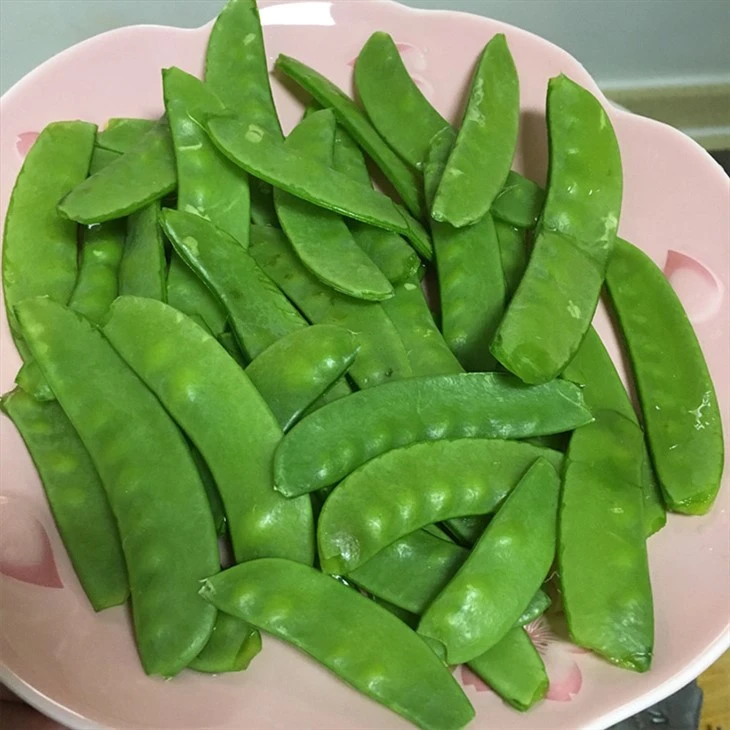
Read the pod before changing the recipe
A finished plate cannot tell you whether softness came from the raw pod, the freezing process, storage, or cooking unless you inspect the frozen sample first. Before a new lot enters production, look at pod length and thickness, flatness, developed seeds, strings, stems, broken pieces, color, surface frost, clumps, and free-flowing condition.
Then run the same small cook test with a fixed pan, load weight, oil level, time, and endpoint method. Record frozen weight, cooked or drained weight, released water, color, bite, broken-pod rate, and photographs. A simple controlled comparison is more useful than asking different cooks whether one sample "looks better."
For commercial sourcing, use the GreenLand frozen snow pea pods page to review product form, packing, and order context. The cooking article remains method-led; the product page carries the current commercial specification and quotation details.
Standardize the heat history, not just the first cook time
A one-pan household method does not scale by multiplying minutes. A 10 kg foodservice batch changes surface contact, equipment recovery, steam release, and mixing damage. Start by fixing the load per pan or kettle, the equipment setting, the frozen product temperature, the mixing tool, the point at which sauce enters, and the discharge endpoint.
Measure recovery: note how long the wok, skillet, or kettle takes to return to active sizzling or simmering after a frozen load is added. If recovery is slow, reducing batch weight usually protects texture better than extending a low-energy cook. Divide a large production requirement into repeatable loads rather than forcing all product through one deep batch.
Hot holding is cooking. A pod that is correct at discharge can become limp after 20 minutes in a covered hotel pan. If hot hold cannot be avoided, undercook slightly, minimize the hold time, keep wet sauce separate where possible, and validate the actual service window. For chilled assembly, cool rapidly under the site's food-safety process and avoid leaving a dense warm mass that continues cooking at the center.
For a frozen ready meal, evaluate the complete cycle: ingredient reception, any pre-cook, assembly, blast freezing, frozen storage, distribution, and the labeled consumer reheat. Approve the snow pea after the final reheat. The right input may be a firmer pod, a lower blanch level, a different thickness range, a later assembly point, or a reduced pre-cook-not simply a shorter consumer instruction.

Batch size, equipment recovery, mixing, discharge, and hot-hold time must be tested together. Scaling only the clock makes the result less repeatable.
What a buyer should include in a snow pea cook test
A useful approval test connects the frozen specification to the intended dish. Ask the supplier for a representative sample and the current specification, then test it in the same form and packing condition that production will receive. Do not compare one supplier's thin whole pods with another supplier's thicker pods under one unadjusted method and call the result a pure quality ranking.
For repeat purchasing, attach the approved method and sample result to the specification file. The commercial file may also include ingredient and process description, COA, microbiological criteria, residue requirements, allergen statement where applicable, packing information, label instructions, traceability, shelf life, and storage conditions. Which documents are required depends on the destination market, channel, and intended use.
At GreenLand-food, we help purchasing teams match whole IQF snow pea pods to foodservice, retail, vegetable blends, noodle kits, and prepared-meal programs. We confirm product identity, pod dimensions, packing, order quantity, application, and document needs before quotation. For a broader view of the available range, buyers can also download the GreenLand frozen food product catalog.
Frequently asked questions
How do you cook frozen snow peas without making them soggy?
Preheat a wide wok or skillet, add a small single working layer directly from frozen, keep the pan uncovered, and stir until the pods are hot and crisp-tender. Let released moisture evaporate before adding sauce. Stop when the pods are flexible with light bite; do not wait for them to become completely soft.
Should I thaw frozen snow peas before cooking?
Usually no. Cook free-flowing frozen snow peas straight from the freezer for stir-fries, hot sides, soups, noodles, and most ready-meal uses. Controlled thawing and thorough draining are useful mainly for cold applications or a process that specifically needs a dry, chilled pod.
How long do frozen snow peas take to cook in a stir-fry?
A household wok or skillet often needs about 2–4 minutes from frozen, while a high-output commercial wok may be faster. Begin checking early. Pan power, batch size, frost, pod thickness, and blanching history change the time, so use a hot center, bright color, little free water, and light bite as the final endpoint.
How can I use frozen snow peas in soups, noodles, and ready meals?
Add them near the end of soup cooking, after noodles or rice are already hot, or at a validated late point in ready-meal assembly. Reduce the first cook when the pods will face hot holding, freezing, or reheating. Approve ready-meal texture after the full final reheat, not only at the packing line.
What can I do with frozen snow peas that are already too soft?
Use a sound, safe product in applications where crisp pod structure is not the main quality signal, such as a blended vegetable soup, chopped filling, sauce, or finely cut noodle mixture. Do not disguise an out-of-spec or temperature-abused lot. If the unopened frozen sample is heavily clumped, discolored, damaged, or shows signs of thawing, investigate the lot before use.
Test the snow pea against your real cooking process
Send us your required pod length and thickness, packing format, quantity, destination, application, cooking method, hot-hold or reheat step, private-label needs, and requested documents. We can help prepare an IQF snow pea specification and sample plan for your foodservice, retail, blend, or ready-meal program.