


Jam vs Fruit Spread: What US Product Names Mean for a Frozen-Fruit Brief
Sep 28, 2026
Leave a message


A frozen-fruit supplier can document the fruit input; the finished-product maker must assess the complete recipe, process and proposed US label. For a buyer sourcing frozen berries or peaches, the useful first question is not which name sounds more appealing. It is whether the proposed finished product will be reviewed as a standardized jam or preserve, and what fruit-input records the formulator needs to make that review traceable.
Explain everyday jam and fruit spread names
In ordinary conversation, people often describe jam as a sweet cooked fruit product with a set texture. A fruit spread may seem softer, less sweet, or more fruit-forward. Those impressions can help a development team describe the eating experience it wants, but they do not establish the legal category of a finished US product. Two samples can have nearly the same color and spoon texture while differing in fruit preparation, sweetener solids, finished soluble solids, or label review. A photograph of a spoonful is useful for a sensory brief, not for an identity decision.
The US rule at 21 CFR 150.160 addresses fruit preserves and jams. It defines the ingredients and composition for products sold by those standardized names and treats "preserve" and "jam" as alternate names within the same section. That is why a simple claim that preserves must contain large pieces while jam must contain crushed fruit is too broad as a legal answer. Texture still matters to a commercial specification. It is simply a separate question from whether the formula and finished food meet the applicable standard. The FDA explanation of food standards describes their role in protecting the nature and expected composition of foods.
"Fruit spread" does not appear as an alternate standardized name in that jam section. Manufacturers may use a broader name for products developed outside its composition, but the words do not create a free pass on truthful labeling or other applicable requirements. They also do not guarantee a low-sugar product. A spread can be fruit-heavy or sweetener-heavy; it can use different gel systems; it can be packed in different ways. A buyer should read the actual formula and proposed label instead of inferring these properties from a friendly product name. The decision is especially important when the sales brief asks for "jam-like" texture while the formulation target deliberately departs from a conventional jam standard.
At the ingredient level, define the fruit form before talking about the finished jar. Whole IQF strawberries, strawberry pieces, raspberries, blueberries, and frozen fruit puree do not behave identically in a kettle. Whole berries can maintain visible pieces; smaller cuts disperse more readily; puree changes the apparent particle structure and may enter a formula on a different documentation basis. A frozen-fruit quote should therefore describe species, cut or puree form, expected variation, packing format, and any added material. "Fruit for spread" alone leaves too much room for a receiving dispute.
The sensory target should be written in its own language: visible pieces or smooth finish, spoonable or pourable body, color after cooking, and the amount of seed or skin that is acceptable. Those properties can be checked in a bench sample. The product name can then be assessed against the complete formulation. Reversing that order leads teams to choose "jam" or "fruit spread" as a marketing slogan and discover later that the recipe record does not support the choice.

Two spoonfuls of berry preserves with different visible texture
When comparing supplier samples, keep the sensory work consistent. Warm and cold fruit preparations can look and flow differently. Compare them at an agreed temperature and after an agreed rest time, and do not label a spoon photo as proof of fruit percentage. The image beside this section illustrates only a visual texture contrast. It does not certify either preparation as a standardized jam.
For a buyer, the immediate result is a two-part brief. The finished-product team owns the name, full formula, processing method, and label review. The fruit supplier owns a precise ingredient description and lot records. Clear ownership prevents a fruit photograph, a purchase order term, or a consumer-facing name from being treated as a substitute for formulation evidence.
Read the US jam standard for the actual fruit
The current US jam and preserve standard is more specific than the commonly repeated "45 parts fruit to 55 parts sugar" shorthand. Under 21 CFR 150.160, the fruit ingredients include properly prepared fruit that may be fresh, concentrated, frozen, or canned. Frozen fruit is therefore an expressly contemplated form in the standard. The rule then sorts named fruits into groups and sets different minimum fruit-to-saccharine-ingredient weight relationships. A buyer cannot check the right relationship until the fruit or fruit combination is known.
For a Group I fruit ingredient, or a permitted combination made exclusively of Group I fruits, the rule specifies at least 47 parts by weight of fruit ingredient for each 55 parts by weight of saccharine ingredient. Group I includes blueberry, raspberry, and strawberry. In other cases the relationship is at least 45 parts fruit ingredient for each 55 parts saccharine ingredient. Peach is a Group II fruit, so a peach formulation illustrates why a universal 45/55 line is misleading when discussing berries. These are ingredient weight relationships in the regulation; they are not a statement that every jar contains exactly 47% or 45% fruit by finished weight. Water leaves during concentration, and the finished product has its own criteria.
The same section also sets a not less than 65% soluble-solids requirement for the finished jam or preserve, using the method specified there. A supplier certificate that describes frozen-fruit Brix does not establish the finished jar's soluble solids. The manufacturer needs its own finished-product measurement and method record. A fruit puree with a particular soluble-solids reading cannot be substituted mechanically for fruit weight, either. It may change formulation behavior, but identity accounting must follow the rule's definitions of fruit ingredient and sweetener solids.

Formula and processing records guide a jam identity review
Fruit combinations require another check. The rule lists permitted combinations and minimum weights for each constituent fruit, with a separate apple provision and a pineapple exception. A "mixed berry jam" concept should therefore be built from actual fruit weights by species, not from the dominant color or the order in a sales description. This article does not calculate approval for a particular mixed-fruit recipe. The useful procurement action is to keep each fruit stream separately identified so the formulator and qualified label reviewer can test the proposed combination against the current text of the rule.
The standard also identifies optional ingredients, including nutritive carbohydrate sweeteners, spices, acidifying agents, pectin in a compensating quantity, buffering agents, preservatives, and permitted antifoaming agents. Their inclusion is subject to the rule's conditions and other applicable requirements. It is risky to turn that list into a generic permission for any modern sweetener or gel system. If the planned product uses an unusual sweetener, fiber, or stabilizer to reach a reduced-sugar texture, the label team should review the finished product's identity rather than assume it remains a standardized jam because it is thick and fruity.
Start the identity review with the actual formula and proposed US name. Confirm the fruit species and group, the permitted combination if more than one fruit is used, the properly prepared fruit weight, the sweetener solids basis, the optional ingredient list, and the finished soluble-solids test. The flow visual here is a decision aid: it identifies the records that must meet before a reviewer reaches a conclusion. It is not a label approval chart.
This distinction protects both sides of a frozen-fruit transaction. We can supply fruit in a defined form and report what is in the ingredient pack. We cannot determine the identity of a final jam or spread without the manufacturer's complete recipe and finished measurements. A buyer can make the inquiry efficient by sending the intended fruit, product form and target use while leaving the final US name open for qualified review.
Calculate fruit ingredient on the correct basis
The weight of an incoming frozen-fruit pack is not automatically the weight of fruit ingredient used for an identity calculation. The rule excludes sugar, water, or other substances added for packing or processing from fruit weight. It also addresses parts removed from the fruit, and it specifies treatment of pits and seeds for named stone fruits and other fruits. This is a practical reason to ask whether a pack is unsweetened IQF fruit, fruit in syrup, or a prepared puree with other additions before a purchasing team compares prices per kilogram.

Fruit input, sugar and water recorded separately before reduction
For an unsweetened IQF blueberry case, the useful record begins with the species and the net weight of fruit in the pack. A lot specification can identify the fruit form, size range, foreign-material controls, and any declared additions. That record then feeds the manufacturer's batch sheet. If frozen fruit has free surface ice or a packing medium, the formulator needs to distinguish that material from usable fruit input. The incoming carton weight alone does not resolve that distinction. A named fruit ingredient in the recipe should be supported by an actual ingredient identity and weight basis, not by a photograph of a full carton.
For a prepared peach ingredient, the question can be more involved. Peach pits and seeds are excluded from the fruit weight under the rule even if a fruit was initially handled with them. A pitted peach slice specification should say whether the weight refers to edible prepared fruit. If a thawed fruit pack is drained before cooking, record what was drained and why; do not silently treat liquid, syrup, or water as intact fruit flesh. The regulation's approach is specific to the purpose of its calculation. A process yield record may use additional weights for operational control, but those figures should be labeled so they are not confused with the identity input.
Concentrated fruit has its own basis. Section 150.160 defines concentrated fruit and relates its weight to the properly prepared fresh fruit used to produce it. A concentrate seller therefore needs a traceable conversion record. Merely writing "concentrated fruit" on an ingredient list does not tell the finished-product maker the equivalent properly prepared fresh-fruit weight. Nor should a frozen-fruit supplier invent that equivalence when it is shipping ordinary IQF pieces. The contract should identify which party owns the conversion and what source documents support it.
The sweetener side also deserves precision. The rule's weight treatment for optional saccharine ingredients refers to the solids of those ingredients. A liquid sweetener's gross dosing weight and its solids contribution are different figures. A batch sheet that combines them can make a ratio appear compliant or noncompliant for the wrong reason. Record ingredient mass, relevant solids information and the calculation method separately. Then keep finished soluble solids as a measured output rather than back-calculating it from an input list.
The following diagram traces the records through the operation. It separates fruit identity and usable input from added ingredients, then points to cooking loss and finished-product measurement. It does not insert an invented percentage or imply a GreenLand process test.
A comparison table is useful when a buyer has to decide which records to request before sending a sample brief.
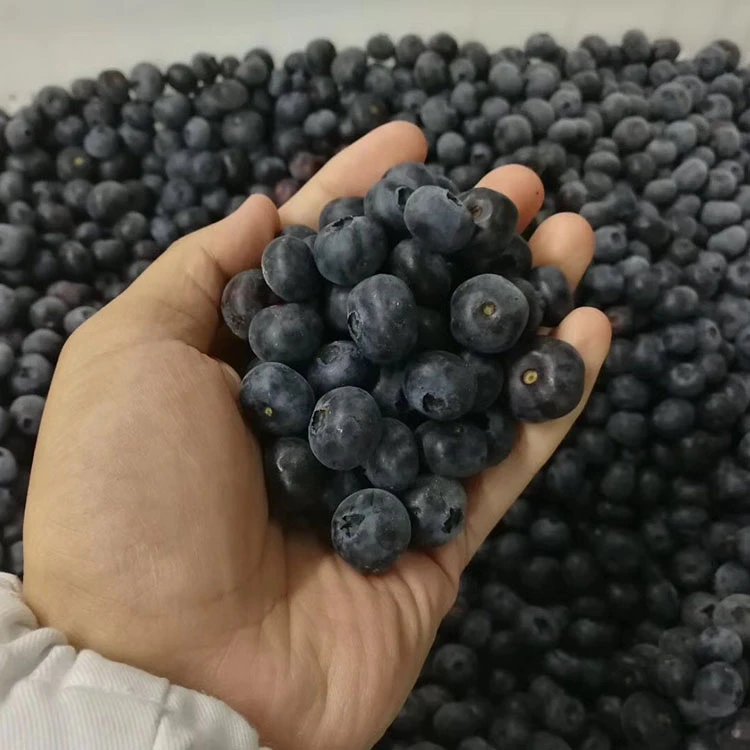
Frozen blueberries photographed in hand at a GreenLand product page
| Buyer question | Frozen-fruit evidence to request | Finished-product owner |
|---|---|---|
| Which fruit is in the formula? | Species, cut or puree form, and lot identity for each fruit | Confirms the proposed name and any mixed-fruit rule |
| What weight counts as fruit input? | Net fruit weight, packing medium and added-material disclosure, preparation basis | Records the actual batch input and applies the rule's weight definitions |
| Is concentrate being used? | Properly prepared fresh-fruit equivalent and source calculation, if applicable | Checks the conversion in the formula |
| How much sweetener enters? | Fruit pack's own added sugar disclosure, if any | Records all sweetener solids added in manufacture |
| Does the jar meet the proposed identity? | Ingredient traceability and agreed specification | Tests complete formula, process and finished soluble solids |
This table is deliberately a handoff, not a compliance certificate. The fruit supplier can make the fruit line reliable; the finished-product maker must combine that line with every other ingredient and measurement. If two quotes use different fruit forms or added materials, normalize them before comparing cost. A lower price per gross pack kilogram may not mean a lower cost per kilogram of usable fruit input.
Review naming, safety and claims separately
A product can satisfy a sensory brief and still need separate work on its name, process safety, and marketing claims. Conversely, passing a process validation does not establish that "jam" is the correct standardized name. These reviews draw on some of the same formula data but ask different questions. Keeping them separate is particularly useful for a new fruit spread because a team may change sweetener level, fruit type, pH, or packaging as it refines the taste.
The identity review asks what the finished product is and whether its proposed US name is supported by the current standard or another applicable naming route. For a jam or preserve proposal, that means the exact fruit group or permitted combination, correct fruit and sweetener weight basis, allowed ingredients, and finished soluble solids. The review must use the current rule and the actual recipe. A development sample described as "jam" in an internal spreadsheet is not itself a legal conclusion.
The process-safety review asks how the finished food will be made, packed, stored, and kept safe. It may require a qualified process authority or food-safety specialist depending on the product, packaging, acidity, water activity, distribution conditions and regulatory category. Fruit acidity by itself is not a blanket safety result. Nor does the presence of sugar on a batch sheet prove that a particular jar, pouch or bulk pack is shelf stable. The manufacturer needs measured product properties, controls, records and a validated process appropriate to its actual format. The frozen-fruit supplier should provide relevant ingredient information and traceability, but it cannot validate a process it does not run.

Identity, ingredient and claim reviews run as separate checks
The claims review asks whether words such as "no added sugar," "reduced sugar," "made with real fruit," "all natural," or a quantified fruit statement are supported and permitted on the proposed US label. Those statements may call for different evidence and sometimes a different recipe. "Fruit spread" alone proves none of them. A product can have a high fruit input and still contain an added sweetener; a jar can look glossy and thick while being formulated outside the jam standard. The label reviewer should consider the full ingredient declaration, Nutrition Facts, comparative claim basis, and any other applicable labeling rules.
Keep the three outputs visible in the project file. A formulation change that adds fruit concentrate may affect the identity calculation, flavor, color, nutrient profile and process controls. A change from frozen whole fruit to sweetened puree may affect ingredient order as well as fruit weight accounting. A new pack size or closure may trigger another process review even when the fruit supplier and fruit species stay the same. The visual here shows these parallel paths so a change-control meeting can ask which records need updating.
This separation also makes supplier communication fairer. We can answer whether a lot is unsweetened, what fruit form was shipped, and what documents accompany it. We should not tell a US brand owner that its finished jar is legally "jam," safe at room temperature, or eligible for a nutrient claim. Those conclusions depend on the owner's full formulation and manufacturing evidence. In a procurement brief, state the proposed application and ask for the ingredient information that will support each downstream review.
If the customer is still deciding between a standardized jam and a different fruit spread, request one or more fruit forms for a controlled formulation trial. Record which trial uses which lot, cut, or puree. A side-by-side test can answer sensory and yield questions. It cannot, by itself, settle every label or process question. Put those signoffs at the appropriate gate before the final name is printed or the product is offered for sale.
Ask the frozen-fruit supplier for the right records
A useful inquiry to a frozen-fruit supplier begins with the intended fruit and physical form. Tell us whether the project needs whole blueberries that remain visible, raspberry pieces that disperse into a filling, strawberry dice for repeatable distribution, or another defined input. Include the expected application, approximate batch scale, packing preference and destination. We can then discuss available product forms and the specification details that affect a formulation trial. The supplier brief should describe the fruit; the finished-product team can state that the naming decision is pending.

Frozen raspberries photographed in hand at a GreenLand product page
Request a written specification that identifies species, product form, cut or size expectations, whether the pack is unsweetened, added materials if any, net weight basis, packing format, storage condition and lot coding. A frozen fruit described only as "berries" is too vague for identity work and repeat manufacture. A whole strawberry, a diced strawberry and a puree all bring different texture and yield behavior even when the species is the same. For mixed-fruit development, keep the species and lot of each component separately traceable rather than combining everything under "mixed berries" before weights are recorded.
Ask how the supplier records lot identity from the ingredient pack to the shipping document, and what quality evidence is available for the ordered form. That may include product specification, inspection records or agreed acceptance criteria, subject to the actual program and transaction. Do not assume a certificate proves finished jam identity. The value of the supplier file is that it lets the manufacturer connect each batch input to a known fruit lot and resolve later questions about particle size, defects, flavor or yield. The buyer should agree which documents need to be supplied before dispatch.
Sample selection should reflect the expected production handling. If a pilot kettle will thaw and drain fruit, record the thaw condition and recovered liquid. If it will cook from frozen, note batch load, heating profile and fruit breakup. These are trial observations, not universal GreenLand operating promises. We can help define the fruit form and send a relevant sample; the manufacturer's trial records show how that ingredient performs in its equipment. A sample photo alone cannot tell the buyer the cook yield, soluble solids, or final shelf life.
Raspberry and strawberry photographs illustrate why product form belongs in the brief. A frozen raspberry lot has a different size, seed and handling profile from a strawberry piece lot. The corresponding GreenLand product photos show real ingredient appearances, not a guaranteed final spread texture. The buyer should select and approve the actual form against the trial goal, then retain the agreed sample and spec reference for repeat orders.
For an export order, include packaging configuration, quantity, loading destination and requested commercial documents in the inquiry. If the development team expects multiple variants, list the variants separately and identify the formulation question each is meant to answer. A supplier can then quote comparable forms and explain what needs confirmation instead of guessing whether "jam fruit" means whole berries, pieces, puree or a sweetened preparation.
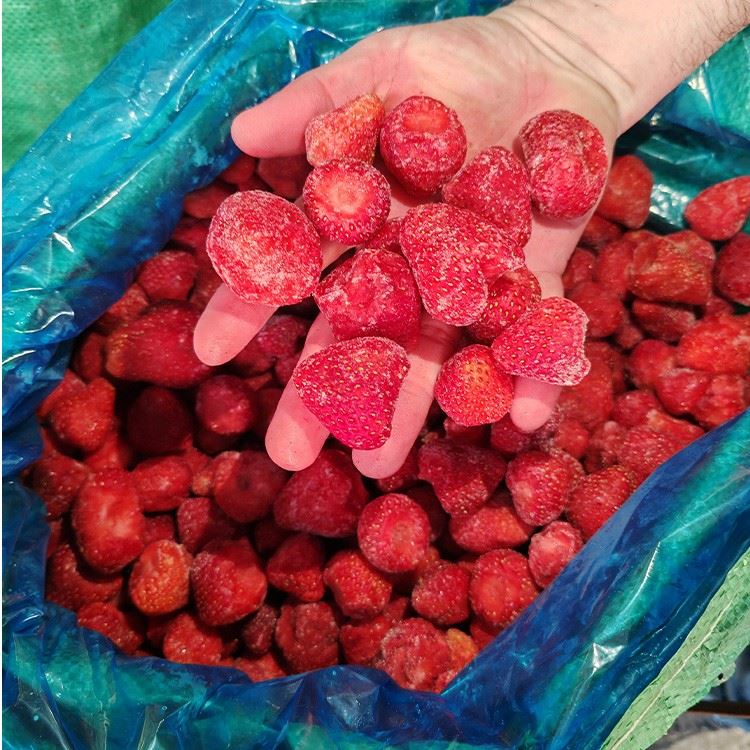
Frozen strawberries photographed in hand at a GreenLand product page
The decision that closes this brief is modest but valuable: choose a fruit input that is accurately named, weighed and traceable, then let the finished-product manufacturer review its complete recipe under the current US rules. That keeps a procurement conversation useful whether the final jar is sold as jam, preserve, or fruit spread. It also makes future changes easier to evaluate: when fruit species, form or additions change, the team knows exactly which identity, process and label records need another look.
Source Frozen Fruit with GreenLand-food
GreenLand-food is a professional frozen fruit supplier and manufacturer in China, providing factory-direct wholesale supply for importers, food manufacturers, foodservice distributors, and private-label programs.
Send your fruit species, cut or puree form, packing, quantity, application, destination, and requested documents.