



IQF Frozen Blueberries from Selected Fresh Fruit
Description
Technical Parameters
Selected Fresh Fruit · Pre-Cooling · Individual Quick Freezing
IQF Frozen Blueberries from Selected Fresh Fruit
GreenLand supplies IQF frozen blueberries prepared from fresh fruit selected at suitable maturity. Pre-cooling, cleaning, screening and individual quick freezing form the core of the product's preparation process.
The focus is on blueberry color, characteristic flavor, berry condition and frozen separation. After freezing, the berries are packed using food-grade materials and held in frozen storage.
Tell us your required product specification, packing, quantity, application and destination. We will review the supply and packing requirements before preparing a quotation.
Product at a Glance
Product: Frozen blueberries
Freezing: Individually quick frozen
Storage: -18°C
Stated shelf life: 24 months under the specified frozen-storage conditions
Order details: Specification, packing and quantity confirmed with the quotation
Product Features: Fruit Selection and Frozen Handling
Selection at Suitable Maturity
Fruit selection considers maturity, color, shape and visible berry condition. Visibly defective fruit is removed during picking and screening.
Pre-Cooling before Freezing
Pre-cooling is included between harvesting and further processing. The actual handling schedule and production arrangement should be confirmed for the proposed supply.
Individual Frozen Separation
IQF processing is used to freeze berries individually. Review the supplied product's berry integrity and frozen separation against the agreed specification.
From Fresh Blueberries to IQF Frozen Fruit
The preparation sequence combines fruit selection, pre-cooling, screening, freezing and low-temperature packing. The specific equipment, operating settings and processing times are confirmed with the producing facility.
1. Harvest Selection
Select fruit at suitable maturity and remove visibly defective berries during picking and initial selection.
2. Transport and Pre-Cooling
Move harvested blueberries to the processing facility and pre-cool them before subsequent preparation.
3. Cleaning and Screening
Clean and screen the berries, reviewing size, shape, color and visible defects against the production specification.
4. Individual Quick Freezing
Use IQF freezing to prepare individually frozen berries. Freezer conditions and the finished-product temperature follow the confirmed production process.
5. Low-Temperature Packing
Pack the frozen berries using food-grade materials, with the pack format and handling requirements agreed for the order.
6. Frozen Storage
Hold the packed product at the specified -18°C storage temperature and confirm the frozen transport arrangement before shipment.
Product Details and Quotation Requirements
The product information below separates the stated storage conditions from the commercial details that need confirmation for each purchase.
| Product | IQF frozen blueberries prepared from selected fresh fruit. |
|---|---|
| Product Form | Whole blueberry fruit, individually frozen; berry-integrity requirements confirmed in the product specification. |
| Preparation | Selection, pre-cooling, cleaning, screening, IQF freezing, packing and frozen storage. |
| Appearance and Flavor | Natural blueberry color and characteristic flavor. Specify the required berry condition and appearance tolerances. |
| Origin and Variety | Request confirmation for the proposed supply before purchase. |
| Size, Grade and Analytical Targets | Send any required size range, grade, Brix or other analytical target for review. Final limits are recorded in the agreed product specification. |
| Packing | Food-grade packaging. Pack weight, material, carton configuration and labeling are confirmed with the order. |
| Storage | Keep frozen at -18°C and follow the final package storage instructions. |
| Shelf Life | 24 months under the specified -18°C frozen-storage conditions. Confirm the applicable dates on the supplied product label. |
| Quantity and Delivery | Minimum order, availability and shipment timing are reviewed with the requested quantity, packing and destination. |
| Intended Use | Confirm the preparation method and any ready-to-eat requirement before order approval. |
Preparation, Thawing and Storage
Baking and Dessert Requirements
Describe whether the blueberries will be baked, cooked into a preparation or used without further heating. The required berry condition and intended-use approval should match that process.
Thawed Appearance
Thawed blueberries are softer than frozen berries. Evaluate texture and appearance under the preparation conditions relevant to your finished product rather than assuming identical fresh-fruit performance.
Frozen Handling
Maintain the stated frozen-storage conditions. Follow the package instructions for preparation and handling after thawing; the frozen shelf life does not describe the shelf life of thawed product.
Ready-to-eat confirmation: Freezing alone does not establish that a product is ready to eat. Follow the confirmed product specification and package preparation instructions. For use without further cooking, request written intended-use confirmation before ordering.
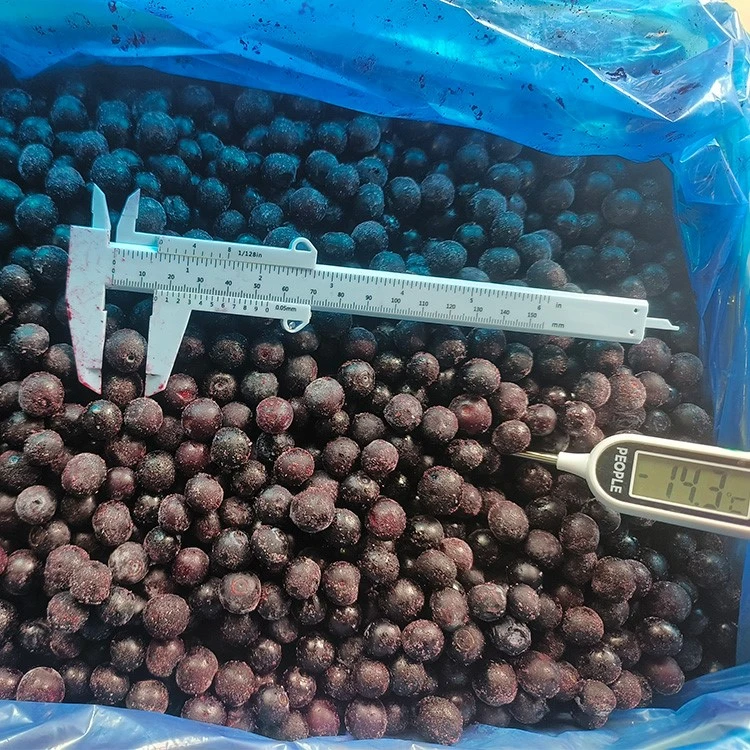

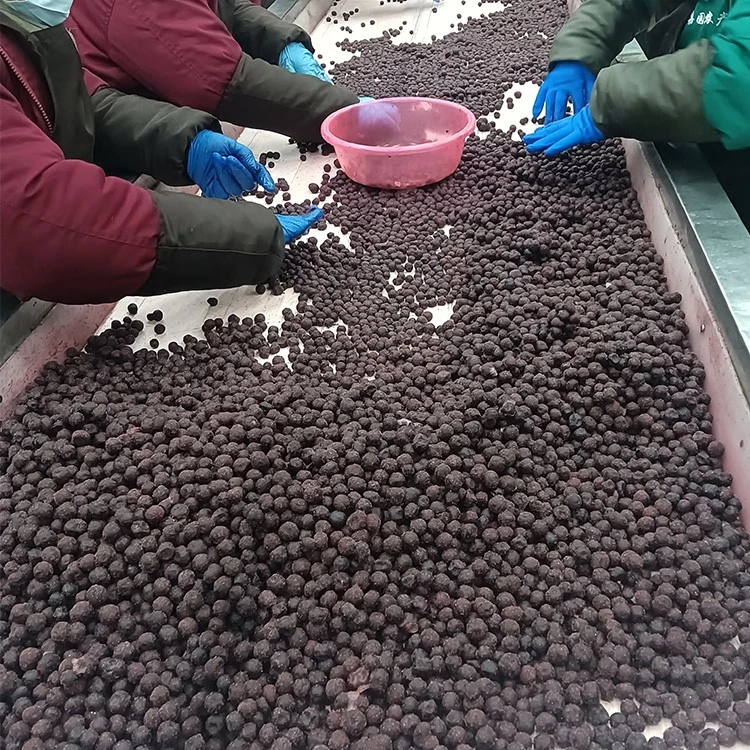

Reference Images
Images are for general reference. Request photographs corresponding to the proposed product and packing when reviewing a purchase.


Packing and Purchase Planning
A useful inquiry identifies the product requirements and delivery needs together. Start with the quantity and destination, then add your packing, application and quality requirements.
Product Requirements
State the required form, size range, grade and intended application. Include any analytical, testing or documentation requirements for review.
Packing Requirements
Specify the inner-pack weight, carton configuration, labeling and any printing requirements. The proposed format is confirmed before the order is finalized.
Delivery Requirements
Provide the quantity, destination market and requested delivery window so availability, packing and frozen shipment can be reviewed together.
Confirm the product and facility scope of any requested certificate or quality document before purchase.

Frozen Blueberry Buying Questions
Are these supplied as fresh or frozen blueberries?
They are supplied frozen. Selected fresh blueberries are the raw material used before preparation and IQF freezing; this is not a fresh-fruit shipment.
What size, grade or Brix can be ordered?
Send your required size, grade and analytical targets for review. The applicable values need confirmation in the quotation and product specification rather than being assumed from the product name.
Can the blueberries be eaten directly after thawing?
Confirm the product's intended use first and follow its preparation instructions. IQF freezing alone does not establish ready-to-eat status. A no-cook application needs explicit confirmation before purchase.
What are the stated storage conditions and shelf life?
The stated shelf life is 24 months at -18°C under the specified frozen-storage conditions. Follow the dates and handling instructions on the supplied product.
How do we request a packing proposal and quotation?
Send the quantity, destination, application, preferred pack and required specification or document list. GreenLand will review these requirements as part of the supply discussion.
Request an IQF Frozen Blueberry Specification and Quote
Tell us your product requirements, packing, quantity, application and destination market. We will review the specification and supply arrangement for your purchase.
Hot Tags: IQF frozen blueberries, frozen blueberry supplier, whole frozen blueberries, individually quick frozen blueberries, frozen blueberries for baking, frozen blueberries for desserts, frozen blueberry supply, frozen blueberry, frozen unsweetened blueberries, iqf frozen blueberries, frozen cultivated blueberries
Technical specification · reference schedule
Frozen Fresh Picked Blueberries
We review the selected form, grade, process and packing against the technical schedule below. Published and TDS values are specification references for order review. External benchmarks apply only within their stated scope. Acceptance is governed by the signed SKU specification; the identified lot COA reports actual measured results.
01 / Physical & Sensory
| Parameter | Specification / reference | Verification & order basis |
|---|---|---|
| Product Form | Whole blueberry fruit, individually frozen; berry-integrity requirements confirmed in the product specification.Published reference | Confirm method, representative sample and acceptance basis in the signed specification. |
| Appearance and Flavor | Natural blueberry color and characteristic flavor. Specify the required berry condition and appearance tolerances.Published reference | Compare with the approved sensory reference using the stated frozen/thawed/prepared condition. |
| Origin and Variety | Request confirmation for the proposed supply before purchase.Published reference | Check raw-material identity and variety/source declaration against the ordered programme. |
| Size, Grade and Analytical Targets | Send any required size range, grade, Brix or other analytical target for review. Final limits are recorded in the agreed product specification.Published reference | Measure a defined frozen sample with caliper or size gauge; report distribution and tolerance. |
| Size-grade inspection | Use the selected diameter, length, piece mass or count-per-weight grade; state the proportion permitted outside the range. | Measure the named anatomical dimension; count and weigh the same representative sample. |
| Sensory acceptance | Characteristic colour, flavour and texture for the declared product; no abnormal odour or visibly deteriorated material.External reference Codex | Compare an identified frozen sample with the approved grade and defect schedule. External technical reference; confirm SKU and market applicability. |
02 / Physicochemical & Residue Controls
| Parameter | Specification / reference | Verification & order basis |
|---|---|---|
| Soluble-solids reporting | Specify a natural-solids target for the selected cultivar/form; syrup-added and concentrated products use separate analytical bases. | Homogenize a representative thawed fruit sample and measure refractometric soluble solids; report °Bx, temperature and dilution. |
| Thaw yield / drip loss | For a drip-sensitive grade, define thawing conditions, draining apparatus and duration before setting a numerical target. | Record initial sample mass and drained liquid mass; drip loss (%) = 100 × drained liquid mass / initial sample mass. |
| Pesticide residue schedule | Named active ingredients and commodity-specific limits are selected for the destination market. EU source | Link farm spray history, laboratory LOQ and batch result to the destination MRL. EU database is one market reference; apply the actual destination rule. |
| Lead, cadmium and other contaminants | Apply the limit for the exact commodity and processed form in the destination market. EU source | State analyte, preparation basis, method, LOQ and lot result. Do not transfer a fresh-commodity limit to a processed form without the required assessment. |
03 / Microbiological Criteria
| Parameter | Specification / reference | Verification & order basis |
|---|---|---|
| Hygiene-indicator panel | Select aerobic count and relevant Enterobacteriaceae, coliform or E. coli indicators for the declared process and intended use. Codex | Report each quantitative result in CFU/g, method/reporting limit, sample plan and lot identity. |
| Pathogen acceptance programme | Define Salmonella and Listeria criteria when applicable to the destination, ready-to-eat status and buyer programme. Codex | State analytical portion, sample-unit plan, method and detected/not-detected reporting; identify the treatment and release basis. |
| Yeast & mould enumeration | Select separate yeast and mould criteria for the ordered grade and process; assess storage stability with the applicable product data. Codex | Report yeast and mould separately in CFU/g using validated matrix-specific methods. |
| Acceptance schedule | Select the test panel and limits by intended use (ready-to-eat or further processing), product form and destination. EU source | State organism, analytical method, sample mass and n/c plan; report actual lot results. A universal APC, coliform, Salmonella or Listeria limit is not assigned to every frozen product. |
04 / Freezing & Cold Chain
| Parameter | Specification / reference | Verification & order basis |
|---|---|---|
| Frozen storage and transport | ≤−18 °CTDS reference | Product core check and logger record. Selected form and grade must match this TDS reference. Applies to: Frozen Blueberry frozen formats. |
| Storage | Keep frozen at -18°C and follow the final package storage instructions.Published reference | Confirm method, representative sample and acceptance basis in the signed specification. |
| Separation & loose-ice assessment | Keep inherent moisture, loose ice and permanently frozen clusters as separate inspection categories. | Weigh separated loose ice and welded clusters against initial sample mass; distinguish natural paired pieces or blocks. |
| Product thermal centre | −18°C or colder after freezing and thermal stabilization; maintain the agreed frozen distribution condition.External reference Codex | Probe the thickest representative pack and retain storage/transport temperature records. Codex quick-frozen reference; selected product form and route must be frozen. |
| Frozen condition at dispatch | Hard frozen, correctly sealed and coded, without thaw/refreeze evidence or excessive loose ice. Codex | Check pack integrity, free-flow or block condition as declared, carton condition and loading temperature. |
05 / Pack Size & Shelf Life
| Parameter | Specification / reference | Verification & order basis |
|---|---|---|
| Packing | Food-grade packaging. Pack weight, material, carton configuration and labeling are confirmed with the order.Published reference | Check approved pack drawing, calibrated scale and production records. |
| Shelf Life | 24 months under the specified -18°C frozen-storage conditions. Confirm the applicable dates on the supplied product label.Published reference | Verify unopened-pack validation, declared storage condition and production/best-before coding. |
| Declared net contents | Verify each selected pack format against the artwork and applicable quantity-control rule. Codex | Calibrated checkweigher or scale; defined sample and tare. |
| Shelf-life basis | The labelled period applies only to its validated pack and continuous stated storage condition. Codex | Review stability study or approved shelf-life file and production-date code. |
06 / Process Controls
| Parameter | Specification / reference | Verification & order basis |
|---|---|---|
| Raw-material preparation checks | Confirm botanical species and cultivated/wild sourcing; distinguish bilberry from cultivated or lowbush blueberry. | Verify the selected product flow and the relevant trimming, sorting and pretreatment record. |
| CCP designation | Use the site-approved HACCP plan to identify true CCPs and their validated critical limits. Codex | Check hazard analysis, monitoring, deviation and corrective-action records. A quality-control step is not automatically a CCP. |
07 / Ingredients, Additives & Allergens
| Parameter | Specification / reference | Verification & order basis |
|---|---|---|
| Added glaze / coating declaration | Declare any intentionally added water glaze, syrup, oil or coating and the measurement basis; loose ice is assessed separately. | Verify formula/addition records; agree a deglazing or coating test and net-content basis where applicable. |
| Ingredient statement | blueberry as the main raw material; exact ingredient and additive declaration pending selected SKU | Compare approved formula, product label and supplier bill of materials. Published product statement; verify final commercial formula. |
| Additive use | Declare any colour-protection agent, acidulant or other additive by ingredient and maximum permitted use for the target market. NHC standard | Check approved formula, actual addition record and market-specific additive category. GB 2760-2024 applies to China; export rules are checked separately. |
| Allergen and cross-contact assessment | Declare inherent allergens and assess shared-line cross-contact from the actual facility schedule. FDA | Review line matrix, cleaning validation and buyer label approval. Do not claim a shared-line allergen or allergen-free status without facility evidence. |
08 / Defects & Foreign Matter
| Parameter | Specification / reference | Verification & order basis |
|---|---|---|
| Free-flowing blueberry clumps: Codex reference tolerance | ≤10 % m/mExternal reference Codex | Examine the entire container contents or as large a quantity as practicable in the frozen state; weigh berries stuck together that cannot easily be separated. Codex reference only when species is confirmed as Vaccinium corymbosum L., V. angustifolium Ait. or V. ashei READE and fruit is offered for direct consumption. Bilberries (V. myrtillus), puree and industrial further-processing products are excluded. Free-flowing presentation only. |
| Blueberry visual defect points: Codex reference ceiling | Minor ≤15; major ≤8; combined total ≤15 points per 300 g drained berriesExternal reference Codex | Segregate and classify visual defects in 300 g drained berries; assign points using Table 1, not percentage or defect counts. Codex reference only when species is confirmed as Vaccinium corymbosum L., V. angustifolium Ait. or V. ashei READE and fruit is offered for direct consumption. Bilberries (V. myrtillus), puree and industrial further-processing products are excluded. |
| Blueberries disintegrated, badly crushed or smashed: Codex reference tolerance | ≤10 % m/m of drained berriesExternal reference Codex | Separate and weigh this defect category in the 300 g drained-berry sample used for Table 1. Codex reference only when species is confirmed as Vaccinium corymbosum L., V. angustifolium Ait. or V. ashei READE and fruit is offered for direct consumption. Bilberries (V. myrtillus), puree and industrial further-processing products are excluded. |
| Intrinsic defect classification | Stems/leaves, green/red berries, clusters, mummified fruit and crushed/leaking berries. | Record each defect class separately by count or mass; state sample size, denominator and combined-limit rules. |
| Hazardous foreign matter | No foreign matter detected in the defined inspection sample; reject and investigate any finding.External reference Codex | Define visual-inspection sample size and detector challenge in the signed quality schedule. "None detected" is a sampling statement, not an absolute guarantee of zero particles. |
09 / Packaging Materials & Label
| Parameter | Specification / reference | Verification & order basis |
|---|---|---|
| Food-contact pack | Specify inner-contact material and obtain the applicable food-contact compliance declaration. NHC standard | Review film structure, supplier DoC, migration evidence and actual intended conditions. GB 4806 series is China-specific; EU export also checks Regulations 1935/2004 and 10/2011. |
| Carton and seal integrity | Define carton stacking strength, bag seal and puncture resistance for the confirmed net weight and pallet plan. EU source | Inspect pack drawing, compression/seal test and shipment configuration. |
| Label verification | Match product name, ingredient/allergen statement, net weight, lot/date, shelf life and storage instruction to the destination artwork. Codex | Approve artwork against the signed specification and destination rules. |
10 / Detection & Traceability
| Parameter | Specification / reference | Verification & order basis |
|---|---|---|
| Foreign-body detector | Validate Fe, non-Fe and stainless-steel challenge pieces for the actual product, aperture, pack and line; record the proven sensitivity. Codex | Challenge at defined start, changeover, interval and end points; retain rejection records. Do not copy generic detector sizes into a plant capability claim. |
| Lot traceability | Link input source lot, processing run, packaging code, test records, frozen storage and shipment to one finished lot. Codex | Trace one sample lot forward and backward in a recorded mock recall. Recall speed is stated only when the site has a validated target and record. |


