




Frozen Garlic And Ginger
Description
Technical Parameters
IQF & BQF Aromatic Ingredients for Global B2B Supply
Frozen Garlic and Ginger: Whole, Diced, Crushed, Purée and Portioned Cubes
We supply frozen garlic, frozen ginger and garlic–ginger blends for importers, food manufacturers, sauce processors, ready-meal factories, foodservice distributors, central kitchens and private-label programs. Your purchase can be built around separate single-ingredient products, a fixed-ratio blend, or portioned purée cubes that reduce preparation labor and improve recipe dosing.
We define the product before quotation: ingredient ratio, garlic and ginger form, particle size, peeling requirement, pretreatment, portion weight, sensory profile, defect limits, microbiological program, packing, label language and destination-market documents. This prevents a generic "garlic and ginger" description from becoming an inconsistent formula after production starts.

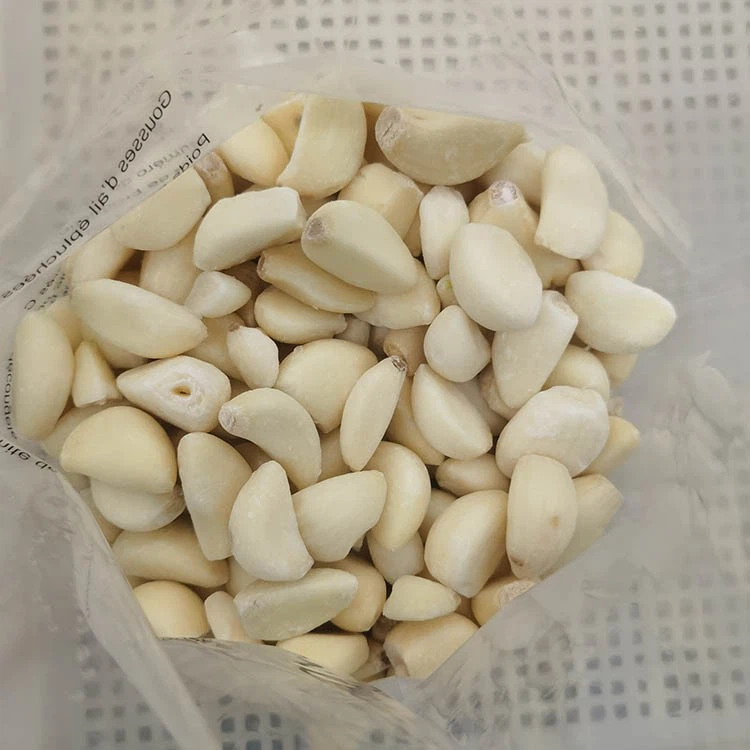
Peeled garlic cloves show the whole-clove option and the raw material used for dices, slices, crushed garlic and purée.

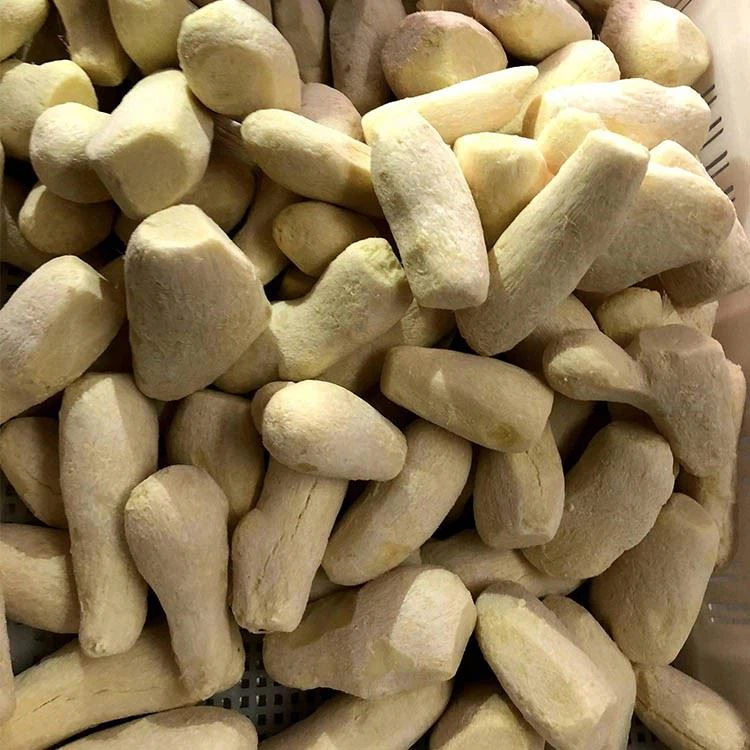
Frozen peeled ginger pieces show the natural root form used for cutting, mincing, grating and purée production.
Select the Product Definition Before You Compare Price
Three products can sit under the same search term but create very different costs and factory performance. Whole IQF garlic cloves are free-flowing units for further cutting or foodservice use. Diced garlic and ginger are calibrated ingredients for visible particle distribution. Purée cubes are BQF or mould-frozen portions for fast dosing. A garlic–ginger blend adds another decision: the formula ratio must be fixed by net ingredient weight, not described only as "mixed."
Separate Garlic and Ginger
We pack the two ingredients as independent SKUs. This gives your production team full control over dosing and works well when recipes use different garlic-to-ginger ratios across several finished products.
Fixed-Ratio Blend
Our standard commercial reference is 50:50 garlic to ginger by ingredient weight. We also quote 60:40 or 70:30 programs when your sauce, curry base, marinade or ready-meal formula needs a stronger garlic profile.
Portioned Purée Cubes
The standard reference portion is 20 g per piece. A nominal 20 g cube is controlled within an 18–22 g individual range, while average net weight and total pack weight follow the agreed packing specification.
Ingredient Declaration
The base program uses the declared garlic, ginger or garlic–ginger ingredients without added water, oil, salt or preservatives. Any recipe version is itemized separately so formula ingredients are visible in the specification and label text.
Procurement Risks and the Controls We Put Into the Order
Price per kilogram cannot be compared fairly until the form, formula and acceptance rules are aligned. We translate the main commercial risks into measurable order fields, then connect those fields with packing records, inspection results and the batch COA.
| Buyer Concern | Order Risk | Our Control | Procurement Result |
|---|---|---|---|
| Unclear blend ratio | Flavor shifts between lots and the ingredient statement becomes unreliable. | We state garlic and ginger percentages by weight and control the formulation record for the production batch. | A repeatable recipe basis for sauce, curry, marinade and ready-meal production. |
| Uneven cube weight | Portion cost and flavor dose vary on the foodservice or retail line. | For 20 g pieces, we use an 18–22 g individual range and check total net weight by pack. | More consistent dosing and a measurable receiving standard. |
| Peel, root scar or hard fiber | Dark particles, poor mouthfeel and blockage in fine sauce systems. | We trim root scars, remove loose peel and sort fibrous or discolored material before cutting or puréeing. | Cleaner appearance and a particle profile matched to the final application. |
| Clumping or broken portions | Difficult dosing, excess handling loss and inconsistent pack counts. | We control freezing, release from moulds, transfer temperature and packing pressure; IQF loose products have a separate cluster limit. | Free-flowing dices or separable portion blocks at receiving. |
| Specification and COA confusion | A limit is mistaken for a laboratory result, leaving the batch file incomplete. | We separate the contractual Specification Limit from the batch-measured Actual Result on the COA. | A clearer QA review and repeat-order evidence trail. |
| Weak cold-chain handling | Surface frost, fused pieces, leaking packs and aroma loss. | We hold frozen product at -18°C or below, check carton condition, review loading temperature and use reefer shipment. | A shipment plan built around stable frozen condition. |
Product Forms and Exact Commercial Size Options
We do not treat whole cloves, dices, purée and portion blocks as interchangeable. Each form changes aroma release, visual distribution, processing loss, thaw behavior and packing efficiency. The following sizes create a practical quotation range for foodservice, retail and industrial ingredient programs.
Frozen Garlic
- Whole peeled cloves: 180–300 pieces/kg or 260–380 pieces/kg. Uncalibrated whole-clove supply can be quoted for crushing or further processing.
- Diced garlic: 3×3 mm, 4×4 mm, 5×5 mm or 6×6 mm. The 4×4 mm format is the principal industrial reference for visible but evenly dispersed particles.
- Garlic slices: 1.8–2.1 mm, 3–4 mm or 4–6 mm thickness for foodservice, prepared dishes and further processing.
- Minced or crushed garlic: 1–3 mm or 3–5 mm particle profile, depending on whether the final product needs a fine sauce base or visible texture.
- Garlic purée portions: 20 g standard pieces, with 10 g, 25 g or 50 g project formats used when the mould, pack count and order volume are matched.
Frozen Ginger
- Peeled ginger pieces: natural root sections or 20–40 mm pieces for further grating, slicing or industrial processing.
- Diced ginger: 4×4 mm or 5×5 mm, with the typical fibrous texture of fresh ginger retained.
- Ginger slices: 2–4 mm thickness for broth, marinade, sauce and infusion manufacturing.
- Minced or grated ginger: 1–3 mm or 3–5 mm particle profile for seasoning bases, fillings and prepared foods.
- Ginger purée portions: 20 g standard pieces or project-specific 10 g, 25 g and 50 g portions.

The image shows two real ginger forms: frozen portion blocks and peeled frozen root pieces.

Frozen garlic purée portions illustrate the moulded format used for controlled dosing; piece weight is defined in the order specification.
Commercial Specification for Frozen Garlic and Ginger Programs
This table gives your purchasing and QA teams a complete basis for an RFQ. Product form, formula and pretreatment are quoted together because a 100% garlic IQF dice, a 50:50 garlic–ginger purée cube and an unblanched grated ginger pack require different process controls and microbiological expectations.
| Specification Field | Commercial Offer |
|---|---|
| Product Name | IQF Frozen Garlic; IQF Frozen Ginger; BQF Frozen Garlic Purée Cubes; BQF Frozen Ginger Purée Cubes; Frozen Garlic and Ginger Blend |
| Botanical Names | Allium sativum (garlic) and Zingiber officinale (ginger) |
| Origin | China; production and raw-material region recorded by batch |
| Ingredient Programs | 100% garlic; 100% ginger; standard-reference 50% garlic + 50% ginger; custom-reference 60:40 or 70:30 garlic-to-ginger ratio by net ingredient weight |
| Base Recipe | Declared garlic and/or ginger ingredients with no added water, oil, salt or preservatives; recipe-added versions are separately specified and labelled |
| Forms | Whole peeled cloves or root pieces, slices, dices, minced, grated, crushed, purée, portion blocks and garlic–ginger blend |
| Sizes | Garlic dices 3×3, 4×4, 5×5 or 6×6 mm; garlic slices 1.8–2.1, 3–4 or 4–6 mm; ginger dices 4×4 or 5×5 mm; ginger slices 2–4 mm; minced/grated 1–3 or 3–5 mm |
| Portion Weight | 20 g nominal standard; 18–22 g individual reference range; 10 g, 25 g and 50 g project formats |
| Pretreatment | Washed, peeled or trimmed, cut or puréed, blanched when specified, rapidly frozen, sorted, metal detected and packed |
| Freezing Method | IQF for loose cloves, pieces, slices and dices; BQF or mould freezing for purée portions and formula blocks |
| Appearance | Garlic: natural creamy white; ginger: natural creamy white to light yellow; blend: uniform pale cream to light yellow, with form typical of the agreed specification |
| Flavor and Odor | Characteristic garlic pungency and/or fresh ginger aroma; free from fermented, rancid, mouldy, burnt or other off odors |
| Texture | Firm but tender for dices and pieces; typical ginger fiber; smooth or fine-particulate texture for purée according to the declared form |
| Bulk Packing | 1×10 kg carton with food-grade PE liner; 2×5 kg; 10×1 kg; other industrial packing by pack and loading plan |
| Foodservice / Retail Packing | 20×500 g; 25×400 g; portioned pouches or trays; printed private-label bag and export carton |
| MOQ | 1 metric ton for a standard one-SKU program; 500 kg trial quantity for selected available forms; mixed-container planning by product compatibility and shipment schedule |
| Loading Capacity | Approximately 20–24 MT per 40'RH without pallets or 18–22 MT with pallets; approximately 10–12 MT per 20' reefer, depending on carton, pallet and legal payload |
| Shelf Life and Storage | 24 months from production when continuously stored and transported at -18°C or below |
| Crop and Supply | Garlic main crop approximately May–August; ginger main crop approximately July–November; frozen inventory supports year-round shipment planning |
| Lead Time | Normally 15–21 days after commercial order, pack format and label artwork are settled; custom moulds or printed film require the production schedule stated in the quotation |
| Loading Ports | Xiamen or Qingdao, selected according to production origin, inventory and vessel plan |
| Trade Terms | FOB, CFR/CNF or CIF; DDP/DDU discussed by destination route and importer arrangement |
| Documents | Product specification, batch COA, commercial invoice, packing list, bill of lading, certificate of origin and market/order-specific health, phytosanitary, microbiological, pesticide-residue or heavy-metal reports |
Application Matching: Form, Particle Size and Pack Must Work Together
We match the purchase specification to how the ingredient enters your process. A visible 4×4 mm dice should not be quoted as if it were a smooth purée, and a 20 g foodservice portion should not be packed like a 10 kg loose industrial ingredient. The following application groups keep the technical and commercial choices connected.
Sauces, Curry Bases and Marinades
Fine crushed material, 1–3 mm mince or purée disperses efficiently through the formula. We state garlic-to-ginger ratio, particle profile, added ingredients, pretreatment and microbial limits so the aromatic base can be repeated from batch to batch.
Ready Meals and Meal Components
A 3×3 or 4×4 mm dice provides visible distribution without large pieces. We link cut-size tolerance, discoloration, cluster rate and packing format with the dosing equipment and finished-meal appearance.
Foodservice and Central Kitchens
Twenty-gram portions simplify dosing when recipes are prepared repeatedly across outlets. We specify piece weight, pieces per inner pack, release condition, broken portions, bag seal and carton strength rather than selling an undefined frozen block.
Dumplings, Fillings and Prepared Foods
Minced 1–3 mm or 3–5 mm material distributes through fillings while maintaining the chosen particle visibility. Peel residue, hard root scar and coarse ginger fiber are important acceptance points for this application.
Industrial Further Processing
Whole peeled cloves, ginger pieces or 10 kg lined cartons give processors flexibility to cut, grind or blend in their own plant. We focus on raw-material condition, foreign-material control, net weight, batch documents and frozen delivery.
Retail and Private Label
Retail programs can use 400 g, 500 g or 1 kg packs, including portion cubes. We review ingredient statement, nutrition-data responsibility, allergen declaration, lot code, date format, barcode, language, artwork, carton marks and case count as one pack file.
How We Prepare Frozen Garlic, Frozen Ginger and Formula Cubes
- Raw material receiving: We inspect maturity, firmness, decay, mould, sprouting, mechanical damage, soil contamination and abnormal odor. Garlic and ginger remain separately identified by receiving lot.
- Sorting, washing and peeling: We remove damaged units, wash away soil and loose foreign material, then peel or trim according to the product form. Root scars, loose garlic skin and coarse ginger skin are controlled before size reduction.
- Cutting or puréeing: We cut dices and slices to the declared dimensions. For purée, the screen or grinding target is matched to the 1–3 mm or fine-purée specification.
- Formula dosing: For a blended product, garlic and ginger are weighed to the agreed ratio. The batch record identifies ingredient lots, target percentages, actual weighed quantities and mixing time.
- Pretreatment: A lightly blanched program is used when the agreed sensory and microbiological profile requires it. Unblanched products are stated as such because aroma intensity, enzyme activity and microbial expectations differ.
- Freezing: Loose dices, slices, cloves and pieces are individually quick frozen for separation. Purée is dosed into moulds or formed into blocks, then frozen rapidly to stabilize the portion shape.
- Final inspection: We inspect color, peel residue, root scar, fibrous matter, out-of-size pieces, clusters, broken portions and foreign material. Product is metal detected under the validated pack and line conditions.
- Weighing, packing and frozen storage: We check net weight, seals, labels, carton marks and lot codes, then transfer finished product to frozen storage at -18°C or below.

This general equipment overview shows processing, conveying, packing and inspection machinery; it is presented as facility capability, not as a garlic-only production line.
Sensory, Physical and Defect Acceptance Standards
A useful specification needs measurable acceptance rules. The limits below are our commercial reference for a standard Grade A program and are written as specification limits, not as a claim that every batch produces the same numerical result. The shipped-batch COA or inspection record contains the corresponding actual result.
| Parameter | Reference Specification Limit | How We Evaluate It |
|---|---|---|
| Foreign material | 0 detected in the inspection sample | Visual inspection and line controls for non-vegetable material such as stone, glass, wood, metal or insects. |
| Loose peel / root-scar residue | ≤0.5% by weight | Sample sorting and weighing of loose garlic skin, ginger skin or hard trimmed residue. |
| Discolored or blemished material | ≤3.0% by weight | Pieces with clear brown, grey, green, mould-like or other abnormal discoloration are separated from acceptable natural color. |
| Out-of-size pieces | ≤10.0% by weight | Measured against the declared dice, slice or particle-size range; nature-driven minor variation is included in the tolerance. |
| IQF clusters | ≤5.0% by weight | Three or more pieces frozen together and not readily separated without damage are counted as clusters. |
| Coarse ginger fiber / extraneous ginger matter | ≤2.0% by weight | Coarse fibers outside the declared particle profile are separated and weighed; typical fine ginger fiber remains part of the product. |
| Broken purée portions | ≤5.0% by count at packing inspection | A portion missing enough material to affect handling or dosing is counted as broken; small surface chips are evaluated separately. |
| 20 g individual portion weight | 18–22 g per piece; pack average meets declared net weight | Individual pieces are sampled after freezing, while finished packs are checked for total net weight and applicable legal metrology. |
| Flavor and odor | Characteristic; no off odor or off flavor | Frozen and prepared samples are checked for typical garlic/ginger profile and absence of fermented, rancid, mouldy or burnt notes. |
Reference sampling: at least 1,000 g for loose dices, slices or cloves and at least 100 portions for portion-weight and broken-piece review, unless the signed customer specification defines a different sampling plan.
Microbiological Program, Foreign-Material Control and Laboratory Records
Garlic and ginger are aromatic root ingredients, so the pretreatment and intended use must be connected to the microbiological specification. Our standard quoted low-micro, pretreated program uses the limits below. An unblanched program is not represented by these numbers; it receives a separate specification suited to the process and destination market.
| Test | Standard Quoted Limit |
|---|---|
| Aerobic Plate Count | ≤100,000 cfu/g |
| Coliforms | ≤1,000 cfu/g |
| Escherichia coli | ≤10 cfu/g |
| Yeast and Mould | ≤1,000 cfu/g |
| Coagulase-positive Staphylococcus aureus | ≤100 cfu/g |
| Salmonella spp. | Absent in 25 g |
| Listeria monocytogenes | Absent in 25 g for the applicable ready-to-use or customer program |
Metal detection is validated with the actual product and pack. A common starting sensitivity is Fe 1.5 mm, non-Fe 2.0 mm and stainless steel 2.5 mm; the signed specification records the achieved sensitivity because product effect, aperture size and packaging can change the validated test pieces.

The image shows general analytical and inspection instruments used for food-quality records; it does not represent a batch-specific garlic or ginger test result.
What the Batch COA Shows
We keep the contractual limit and the shipped-batch measurement in separate columns. A specification limit is the acceptance threshold agreed for the order. The COA Actual Result is the measured result produced for the corresponding production batch; it is not copied from the limit and is not replaced by words such as "pass" when a numerical result is available.
| COA Field | Specification Limit | Actual Result | Buyer Use |
|---|---|---|---|
| Product identity | Named form, ratio, cut or portion weight | Production batch identity and inspected form | Links the report to the ordered SKU. |
| Sensory / physical | Color, odor, size, defects and weight tolerances | Measured percentage, weight, count or assessed condition for that batch | Supports receiving inspection and repeat-order comparison. |
| Microbiology | The agreed cfu/g limit or absent-in-25-g requirement | The laboratory numerical result or detected/not detected result for the batch | Allows QA to evaluate the batch against the correct program. |
| Pesticide residues | Destination-market MRLs and the agreed test scope | Reported analyte result and reporting limit from the tested sample | Supports market-compliance and customer QA files. |
| Heavy metals | Applicable legal limit for Pb, Cd or other requested analytes | Batch or crop-sample result stated in mg/kg | Prevents a legal maximum from being misread as the product's measured value. |
| Disposition | All required fields within specification | Released, held or otherwise dispositioned for the identified lot | Completes the QA decision record. |
COA traceability fields: product name, ingredient ratio, form/size, lot number, production date, best-before date, pack format, test date, method reference, specification limit, actual result, disposition and authorized review.

This is a general facility certificate and registration display. Certificate applicability is reviewed for the selected factory, product, market and order; the image is not a garlic-and-ginger batch certificate.
Documents, Certification Scope and Batch Traceability
We prepare the buyer file around the actual shipment. Core commercial documents include the commercial invoice, packing list and bill of lading. Product and QA documents can include the signed specification, batch COA, certificate of origin, health certificate, phytosanitary certificate, microbiological report, pesticide-residue report, heavy-metal report and other destination-market files stated in the order.
Certification names are used only when the selected production facility and product scope apply. HACCP, ISO food-safety systems, BRCGS, Kosher, Halal, organic certification or FDA Food Facility Registration are not interchangeable, and a facility registration is not described as product certification.
Our traceability connection runs from garlic and ginger receiving lots through washing, peeling, cutting or puréeing, blend-formula weighing, freezing, portioning, packing, frozen storage and shipment. The finished lot code allows the production and packing records to be retrieved for repeat-order review or issue investigation.
Packing, Private Label and Pallet Planning
Packing is part of the product specification because aroma ingredients can absorb odors, suffer freezer burn or fuse together when the bag, seal or cold chain is weak. We match the pack to handling frequency, dosing method, retail presentation and container plan.
Industrial Bulk
One 10 kg food-grade PE liner inside an export carton is the standard bulk reference. Two 5 kg inner bags reduce exposure when the factory does not consume a full 10 kg at one time.
Foodservice
Ten 1 kg bags, twenty 500 g bags or twenty-five 400 g bags fit distributor and central-kitchen handling. Portion cubes can be counted into inner pouches so the net weight and expected piece count are both stated.
Retail and OEM
We review bag dimensions, film structure, seal width, artwork, product name, ingredient order, net weight, barcode, date format, lot code, storage statement, language and carton marks. Printed-film lead time is separated from product-production lead time.
Pallet and Mixed Container
We calculate cartons per layer, layers per pallet, pallet height, gross weight and legal payload. Mixed frozen SKUs can be planned in one reefer when temperature, food-safety segregation, carton dimensions and shipment schedule are compatible.
Frozen Storage, Reefer Loading and Export Delivery
Finished garlic and ginger products are held at -18°C or below. Before loading, we review product temperature, carton condition, label and lot-code legibility, quantity, pallet condition where used, container cleanliness and reefer settings. Repeated thawing and refreezing are not part of the agreed cold-chain plan.
A 40'RH typically carries about 20–24 MT without pallets or 18–22 MT with pallets. A 20' reefer typically carries about 10–12 MT. The quotation uses the actual carton dimensions, gross weight, pallet requirement, container payload and destination rules rather than treating the maximum container weight as guaranteed cargo.
For CIF or CFR/CNF orders, the destination port and vessel schedule are stated in the quotation. For mixed containers, we prepare a SKU-by-SKU loading plan so product quantities, carton marks, batch numbers and documents match the final packing list.

General frozen-food export loading shows carton handling, temperature checks and reefer loading; it is not presented as a garlic-and-ginger-only shipment.
Why Procurement Teams Use GreenLand-food for Aromatic Frozen Ingredients
We separate single-ingredient garlic, single-ingredient ginger and fixed-ratio blend programs, so the quotation does not hide a formula decision.
We connect cut size, purée profile, portion weight, defect tolerance, pretreatment, microbiology and packing to the final application.
Specification limits and batch Actual Results are kept separate, with lot identity and methods connected to the shipped product.
We discuss pack weight, piece count, film, artwork, carton, pallet and container planning as part of the same supply program.
Ingredient lots, formula weights, processing, packing and frozen storage records connect with the finished batch code.
We prepare the product, packing, document and cold-chain details needed by importers, distributors and processors.
Frequently Asked Questions
1. Is Frozen Garlic and Ginger one mixed product or two separate products?
We supply both structures. You can purchase separate 100% garlic and 100% ginger SKUs, or a fixed-ratio garlic–ginger blend. The quotation and ingredient statement identify the chosen structure clearly.
2. What garlic-to-ginger ratios are available?
The standard commercial reference is 50:50 by net ingredient weight. We also quote 60:40 and 70:30 garlic-to-ginger programs for formulas that need a stronger garlic profile; the agreed percentages appear in the specification and batch formulation record.
3. Do the base products contain added water, oil, salt or preservatives?
Our base quotation defines the product as the declared garlic, ginger or garlic–ginger ingredients without those additions. If your application needs salt, oil, acid, water or another recipe ingredient, we list it separately with the formula and label declaration.
4. What is the standard weight of a frozen garlic or ginger cube?
The standard reference is 20 g per piece, with an 18–22 g individual range and pack-average control to the declared net weight. Ten-gram, 25 g and 50 g formats are project options when mould, inner-pack count and volume are aligned.
5. What diced garlic and diced ginger sizes do you supply?
Garlic dices are offered at 3×3, 4×4, 5×5 or 6×6 mm. Ginger dices are offered at 4×4 or 5×5 mm. The specification uses an out-of-size tolerance so natural variation is measured rather than ignored.
6. Can you supply whole cloves, slices, minced products and purée?
Yes. Our range covers peeled garlic cloves, peeled ginger pieces, slices, dices, minced, grated, crushed, purée and portion blocks. We quote each form with its own size, pretreatment, packing and application requirements.
7. Are frozen garlic and ginger products blanched?
Both pretreated and unblanched programs can exist, but they are not presented as the same specification. A lightly blanched program is used when the agreed enzyme, sensory and low-micro profile requires it; an unblanched order receives separate microbiological and sensory limits.
8. What defect limits apply to a standard Grade A program?
Our reference limits include foreign material 0 in the sample, loose peel/root-scar residue ≤0.5%, discolored or blemished material ≤3%, out-of-size pieces ≤10%, IQF clusters ≤5% and coarse ginger fiber/extraneous ginger matter ≤2% by weight. The signed order specification can set a tighter application-specific limit.
9. Which microbiological limits are used?
Our standard quoted low-micro pretreated program uses APC ≤100,000 cfu/g, coliforms ≤1,000 cfu/g, yeast and mould ≤1,000 cfu/g, E. coli ≤10 cfu/g, S. aureus ≤100 cfu/g and Salmonella absent in 25 g. Listeria monocytogenes absent in 25 g is used for the applicable ready-to-use or customer program.
10. What is the difference between the specification limit and the COA Actual Result?
The specification limit is the contractual acceptance threshold. The COA Actual Result is the numerical or detected/not-detected result measured for the corresponding production batch. We keep the two columns separate so a limit is never presented as a batch test value.
11. Which bulk and retail packing formats are available?
Standard commercial formats include 1×10 kg, 2×5 kg, 10×1 kg, 20×500 g and 25×400 g per carton. We also prepare portion-count pouches, printed retail bags and private-label cartons when artwork, film structure and order volume are part of the program.
12. What are the MOQ and normal lead time?
The standard MOQ is 1 metric ton for one standard SKU, while a 500 kg trial is available for selected forms already compatible with the production plan. Normal lead time is 15–21 days after the commercial order, packing and label artwork are settled; custom moulds and printed film have their own schedule.
13. Can frozen garlic and ginger be loaded with other frozen products?
Yes, mixed-container planning is available when temperature, food-safety segregation, carton dimensions and shipment timing are compatible. We prepare a SKU-level quantity and loading plan so the final packing list matches the physical container.
14. How should the product be stored and how long is the shelf life?
Store and transport the product continuously at -18°C or below. The commercial shelf life is 24 months from production under stable frozen conditions. Repeated thawing and refreezing can cause fused pieces, surface frost, texture damage and aroma loss.
15. What information should I send for a quotation?
Send the product structure, garlic-to-ginger ratio, form, cut or particle size, portion weight, pretreatment, defect and microbiological requirements, pack format, quantity, application, destination port, private-label needs, certificate/document list and target shipment date. These fields allow us to price one defined product instead of an ambiguous commodity description.
Send a Complete Frozen Garlic and Ginger RFQ
Tell us whether you need separate garlic and ginger or a fixed-ratio blend. Include the form, ratio, cut size, 20 g or other portion weight, pretreatment, packing, quantity, application, destination port, microbiological program, private-label requirement and shipment date. We will match the product specification, batch-document plan, packing and reefer loading arrangement.
Hot Tags: frozen garlic and ginger, China frozen garlic and ginger manufacturers, suppliers, factory, frozen fresh ginger, frozen ginger root, iqf ginger, frozen ginger
Technical specification · reference schedule
Frozen Garlic and Ginger Blend
We review the selected form, grade, process and packing against the technical schedule below. Published and TDS values are specification references for order review. External benchmarks apply only within their stated scope. Acceptance is governed by the signed SKU specification; the identified lot COA reports actual measured results.
Specification scope: Confirm the garlic-to-ginger formula and each ingredient percentage for the ordered blend.
01 / Physical & Sensory
| Parameter | Specification / reference | Verification & order basis |
|---|---|---|
| Botanical Names | Allium sativum (garlic) and Zingiber officinale (ginger)Published reference | Check raw-material identity and variety/source declaration against the ordered programme. |
| Origin | China; production and raw-material region recorded by batchPublished reference | Reconcile source declaration, intake lot and shipment documents. |
| Forms | Whole peeled cloves or root pieces, slices, dices, minced, grated, crushed, purée, portion blocks and garlic–ginger blendPublished reference | Confirm method, representative sample and acceptance basis in the signed specification. |
| Sizes | Garlic dices 3 × 3, 4 × 4, 5 × 5 or 6 × 6 mm; garlic slices 1.8–2.1, 3–4 or 4–6 mm; ginger dices 4 × 4 or 5 × 5 mm; ginger slices 2–4 mm; minced/grated 1–3 or 3–5 mmPublished reference | Measure a defined frozen sample with caliper or size gauge; report distribution and tolerance. |
| Appearance | Garlic: natural creamy white; ginger: natural creamy white to light yellow; blend: uniform pale cream to light yellow, with form typical of the agreed specificationPublished reference | Compare with the approved sensory reference using the stated frozen/thawed/prepared condition. |
| Flavor and Odor | Characteristic garlic pungency and/or fresh ginger aroma; free from fermented, rancid, mouldy, burnt or other off odorsPublished reference | Compare with the approved sensory reference using the stated frozen/thawed/prepared condition. |
| Texture | Firm but tender for dices and pieces; typical ginger fiber; smooth or fine-particulate texture for purée according to the declared formPublished reference | Compare with the approved sensory reference using the stated frozen/thawed/prepared condition. |
| Flavor and odor - Reference Specification Limit | Characteristic; no off odor or off flavorPublished reference | Compare with the approved sensory reference using the stated frozen/thawed/prepared condition. Programme: Reference Specification Limit. |
| Style-specific measurement | For solid cuts, report each required dimension and the in-size fraction; for minced material, report particle distribution; for moulded puree or portions, report unit mass and refining grade separately. | Apply the measurement method to the selected physical style; do not use a portion weight as a solid-cut dimension. |
| Sensory acceptance | Characteristic colour, flavour and texture for the declared product; no abnormal odour or visibly deteriorated material.External reference Codex | Compare an identified frozen sample with the approved grade and defect schedule. External technical reference; confirm SKU and market applicability. |
02 / Physicochemical & Residue Controls
| Parameter | Specification / reference | Verification & order basis |
|---|---|---|
| Loose peel / root-scar residue - Reference Specification Limit | ≤0.5% by weightPublished reference | Use a validated analytical method for this matrix; report sample basis, unit, preparation and lot result. Programme: Reference Specification Limit. |
| Pesticide residue schedule | Named active ingredients and commodity-specific limits are selected for the destination market. EU source | Link farm spray history, laboratory LOQ and batch result to the destination MRL. EU database is one market reference; apply the actual destination rule. |
| Lead, cadmium and other contaminants | Apply the limit for the exact commodity and processed form in the destination market. EU source | State analyte, preparation basis, method, LOQ and lot result. Do not transfer a fresh-commodity limit to a processed form without the required assessment. |
03 / Microbiological Criteria
| Parameter | Specification / reference | Verification & order basis |
|---|---|---|
| Aerobic Plate Count | ≤100,000 cfu/gPublished reference | Report the named organism, analytical method, sample mass, sampling plan and lot result; use CFU/g for enumeration and a stated mass for detection. |
| Coliforms | ≤1,000 cfu/gPublished reference | Report the named organism, analytical method, sample mass, sampling plan and lot result; use CFU/g for enumeration and a stated mass for detection. |
| Escherichia coli | ≤10 cfu/gPublished reference | Report the named organism, analytical method, sample mass, sampling plan and lot result; use CFU/g for enumeration and a stated mass for detection. |
| Yeast and Mould | ≤1,000 cfu/gPublished reference | Report the named organism, analytical method, sample mass, sampling plan and lot result; use CFU/g for enumeration and a stated mass for detection. |
| Coagulase-positive Staphylococcus aureus | ≤100 cfu/gPublished reference | Report the named organism, analytical method, sample mass, sampling plan and lot result; use CFU/g for enumeration and a stated mass for detection. |
| Salmonella spp. | Absent in 25 gPublished reference | Report the named organism, analytical method, sample mass, sampling plan and lot result; use CFU/g for enumeration and a stated mass for detection. |
| Listeria monocytogenes | Absent in 25 g for the applicable ready-to-use or customer programPublished reference | Report the named organism, analytical method, sample mass, sampling plan and lot result; use CFU/g for enumeration and a stated mass for detection. |
| Acceptance schedule | Select the test panel and limits by intended use (ready-to-eat or further processing), product form and destination. EU source | State organism, analytical method, sample mass and n/c plan; report actual lot results. A universal APC, coliform, Salmonella or Listeria limit is not assigned to every frozen product. |
04 / Freezing & Cold Chain
| Parameter | Specification / reference | Verification & order basis |
|---|---|---|
| Freezing Method | IQF for loose cloves, pieces, slices and dices; BQF or mould freezing for purée portions and formula blocksPublished reference | Confirm method, representative sample and acceptance basis in the signed specification. |
| Shelf Life and Storage | 24 months from production when continuously stored and transported at -18°C or belowPublished reference | Verify unopened-pack validation, declared storage condition and production/best-before coding. |
| Separation & loose-ice assessment | Keep inherent moisture, loose ice and permanently frozen clusters as separate inspection categories. | Weigh separated loose ice and welded clusters against initial sample mass; distinguish natural paired pieces or blocks. |
| Product thermal centre | −18°C or colder after freezing and thermal stabilization; maintain the agreed frozen distribution condition.External reference Codex | Probe the thickest representative pack and retain storage/transport temperature records. Codex quick-frozen reference; selected product form and route must be frozen. |
| Frozen condition at dispatch | Hard frozen, correctly sealed and coded, without thaw/refreeze evidence or excessive loose ice. Codex | Check pack integrity, free-flow or block condition as declared, carton condition and loading temperature. |
05 / Pack Size & Shelf Life
| Parameter | Specification / reference | Verification & order basis |
|---|---|---|
| Bulk Packing | 1 × 10 kg carton with food-grade PE liner; 2 × 5 kg; 10 × 1 kg; other industrial packing by pack and loading planPublished reference | Check approved pack drawing, calibrated scale and production records. |
| Declared net contents | Verify each selected pack format against the artwork and applicable quantity-control rule. Codex | Calibrated checkweigher or scale; defined sample and tare. |
| Shelf-life basis | The labelled period applies only to its validated pack and continuous stated storage condition. Codex | Review stability study or approved shelf-life file and production-date code. |
06 / Process Controls
| Parameter | Specification / reference | Verification & order basis |
|---|---|---|
| Raw-material preparation checks | Check garlic peeling/root trimming and ginger peeling/fibre separately; confirm the cut or puree state of each component before blending. | Verify the selected product flow and the relevant trimming, sorting and pretreatment record. |
| Blanching / enzyme inactivation | Time and temperature are product- and cut-specific; confirm residual-enzyme endpoint when relevant. Codex | Record validated line set-points and product sample test; assess colour and texture after treatment. Only classify as a CCP when the site's HACCP plan identifies it as one. |
| Cooling and dewatering | Control prompt cooling and surface-water removal before IQF to avoid clumping and loose ice. Codex | Review line time/temperature record, draining check and frozen separation. |
| CCP designation | Use the site-approved HACCP plan to identify true CCPs and their validated critical limits. Codex | Check hazard analysis, monitoring, deviation and corrective-action records. A quality-control step is not automatically a CCP. |
07 / Ingredients, Additives & Allergens
| Parameter | Specification / reference | Verification & order basis |
|---|---|---|
| Ingredient Programs | 100% garlic; 100% ginger; standard-reference 50% garlic + 50% ginger; custom-reference 60:40 or 70:30 garlic-to-ginger ratio by net ingredient weightPublished reference | Verify approved formula, supplier declarations and line-specific allergen assessment. |
| Formula reconciliation | Name each component and target weight percentage; define allowed component variation and reconcile the complete formula to 100%.Technical control | Compare weighed input, blend record and representative finished-blend separation against the signed formula. |
| Added glaze / coating declaration | Declare any intentionally added water glaze, syrup, oil or coating and the measurement basis; loose ice is assessed separately. | Verify formula/addition records; agree a deglazing or coating test and net-content basis where applicable. |
| Ingredient statement | List every ingredient and its declared role for the selected SKU; verify any added sugar, oil, coating, seasoning or glazing medium. | Approved formula and supplier declarations. |
| Additive use | Declare any colour-protection agent, acidulant or other additive by ingredient and maximum permitted use for the target market. NHC standard | Check approved formula, actual addition record and market-specific additive category. GB 2760-2024 applies to China; export rules are checked separately. |
| Allergen and cross-contact assessment | Declare inherent allergens and assess shared-line cross-contact from the actual facility schedule. FDA | Review line matrix, cleaning validation and buyer label approval. Do not claim a shared-line allergen or allergen-free status without facility evidence. |
08 / Defects & Foreign Matter
| Parameter | Specification / reference | Verification & order basis |
|---|---|---|
| Foreign material - Reference Specification Limit | 0 detected in the inspection samplePublished reference | Inspect a defined representative sample; record count or mass basis and disposition. Programme: Reference Specification Limit. |
| Discolored or blemished material - Reference Specification Limit | ≤3.0% by weightPublished reference | Compare with the approved sensory reference using the stated frozen/thawed/prepared condition. Programme: Reference Specification Limit. |
| Out-of-size pieces - Reference Specification Limit | ≤10.0% by weightPublished reference | Measure a defined frozen sample with caliper or size gauge; report distribution and tolerance. Programme: Reference Specification Limit. |
| IQF clusters - Reference Specification Limit | ≤5.0% by weightPublished reference | Classify on the defined sample by count or mass; record individual categories, denominator and any combined limit. Programme: Reference Specification Limit. |
| Coarse ginger fiber / extraneous ginger matter - Reference Specification Limit | ≤2.0% by weightPublished reference | Classify on the defined sample by count or mass; record individual categories, denominator and any combined limit. Programme: Reference Specification Limit. |
| Intrinsic defect classification | Garlic skin/root plates, ginger peel/coarse fibre, dark or deteriorated tissue, component-ratio drift and wrong-cut fractions. | Record each defect class separately by count or mass; state sample size, denominator and combined-limit rules. |
| Hazardous foreign matter | No foreign matter detected in the defined inspection sample; reject and investigate any finding.External reference Codex | Define visual-inspection sample size and detector challenge in the signed quality schedule. "None detected" is a sampling statement, not an absolute guarantee of zero particles. |
09 / Packaging Materials & Label
| Parameter | Specification / reference | Verification & order basis |
|---|---|---|
| Food-contact pack | Specify inner-contact material and obtain the applicable food-contact compliance declaration. NHC standard | Review film structure, supplier DoC, migration evidence and actual intended conditions. GB 4806 series is China-specific; EU export also checks Regulations 1935/2004 and 10/2011. |
| Carton and seal integrity | Define carton stacking strength, bag seal and puncture resistance for the confirmed net weight and pallet plan. EU source | Inspect pack drawing, compression/seal test and shipment configuration. |
| Label verification | Match product name, ingredient/allergen statement, net weight, lot/date, shelf life and storage instruction to the destination artwork. Codex | Approve artwork against the signed specification and destination rules. |
10 / Detection & Traceability
| Parameter | Specification / reference | Verification & order basis |
|---|---|---|
| Component-level lot linkage | Retain every component lot and any rework lot used in the mixed-product batch. Codex | Trace each input through weighing, mixing, packing and dispatch records. |
| Foreign-body detector | Validate Fe, non-Fe and stainless-steel challenge pieces for the actual product, aperture, pack and line; record the proven sensitivity. Codex | Challenge at defined start, changeover, interval and end points; retain rejection records. Do not copy generic detector sizes into a plant capability claim. |
| Lot traceability | Link input source lot, processing run, packaging code, test records, frozen storage and shipment to one finished lot. Codex | Trace one sample lot forward and backward in a recorded mock recall. Recall speed is stated only when the site has a validated target and record. |
Previous
IQF Frozen Ginger Root


