


Are Mulberries Edible? Fresh, Dried and Frozen Forms
Sep 24, 2026
Leave a message

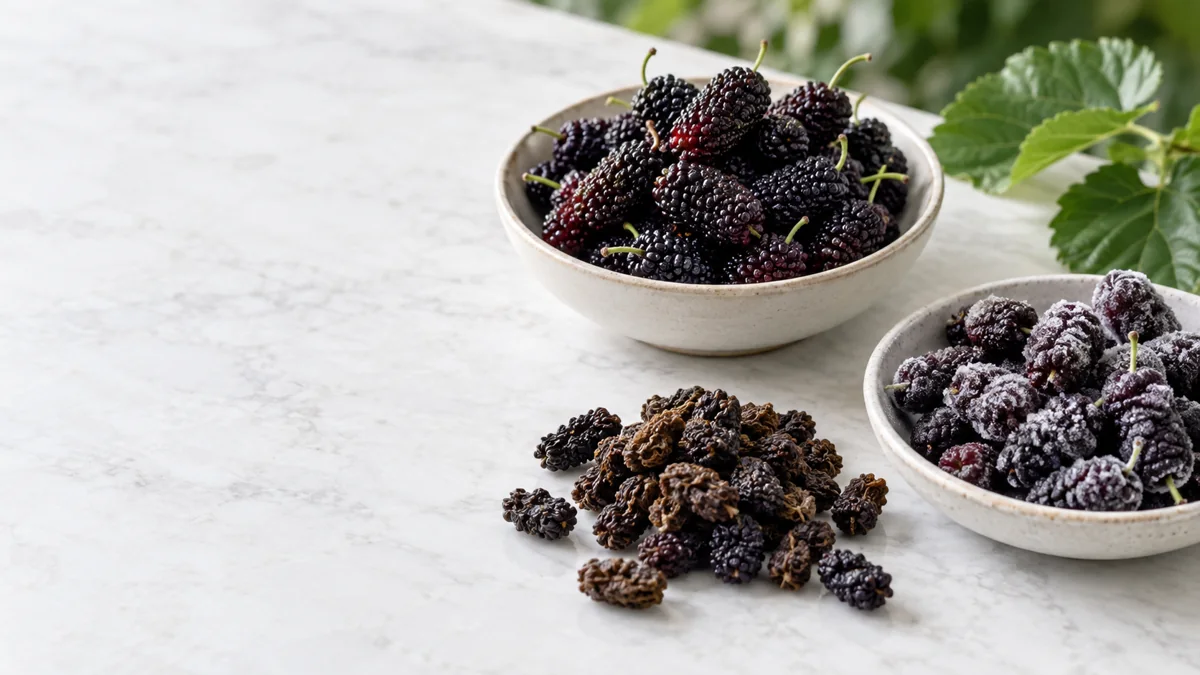
The useful distinction is between the ripe fruit and the rest of the plant. Do not treat an immature berry, leaf, stem, bark, or milky sap as interchangeable with the ripe fruit in a food recipe. If the tree is beside a road or on land with unknown spray history, its fruit also needs a different judgment from fruit supplied through a controlled food program. GreenLand-food supplies IQF frozen mulberries for buyers who need a defined fruit form, quality range, packing and lot documentation rather than a harvest from an unidentified tree.
The word "edible" answers only the first question. Whether a particular batch is pleasant, sound, properly handled and suited to a finished product needs separate checks. A freshly picked ripe berry and an IQF berry can both be suitable food while behaving very differently on a spoon or production line.
Which mulberries are edible and how to judge ripeness
The fruit of recognized red, white and black mulberry trees is commonly eaten once ripe. A mulberry is an elongated cluster of small drupelets, which explains why it resembles a blackberry at first glance. Its shape, the way it hangs from a tree, and the leaf and branch structure help establish identity. Fruit color alone does not identify the species. The University of Florida's mulberry guide notes that white mulberry fruit can be white, pink, purple or black, while red and black mulberry trees usually produce darker fruit.

Ripe dark mulberries and pale immature fruit on one branch
Ripeness is a combination of the fruit's type-appropriate color, softer feel, easy release from the tree and developed flavor. A red or black mulberry that remains pale and firm needs more time. A white mulberry may be ready while still light colored. Fruit on a single branch does not ripen all at once, so a harvest can include ready berries beside immature ones. A picking crew must sort repeatedly rather than stripping every fruit at once. For a household harvest, taste a small identified ripe berry before collecting a bowl; flavor varies even between trees of the same broad type.
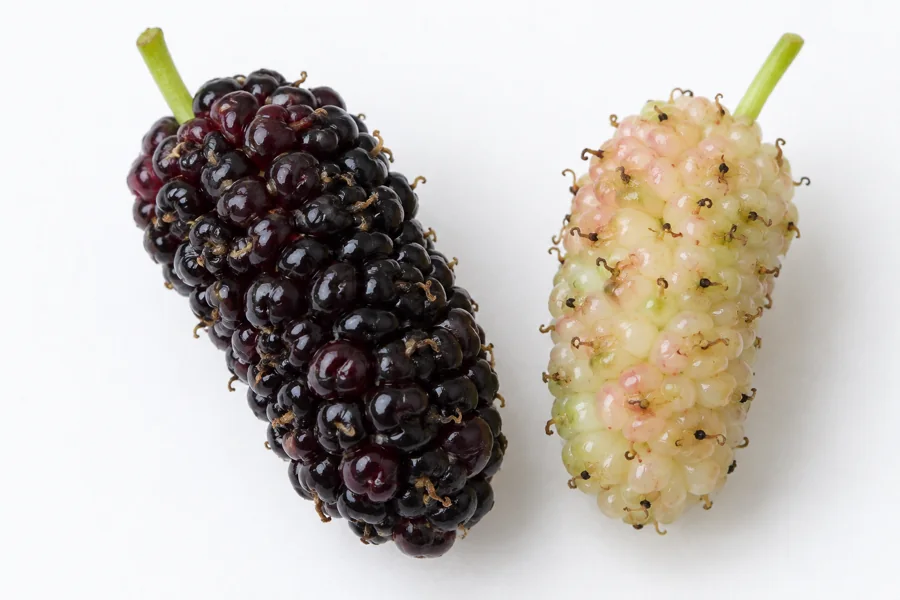
Close comparison of ripe dark and pale immature mulberries
An Ask Extension response confirms that ripe mulberries are edible and also points out the need to know whether a roadside or unfamiliar tree was sprayed. That advice matters more than a claim that all dark berries are safe. If you cannot identify the tree confidently, do not use its fruit. If the fruit is known but the handling history is uncertain, washing does not establish that an unsuitable pesticide or environmental exposure is acceptable. Choose fruit from a food supplier with a traceable source.
Fresh mulberries are delicate. A berry that is ripe enough to eat may also be soft enough to leak juice under pressure. That is why the fruit needs shallow containers, gentle handling and quick use or cooling. Inspect for mold, fermentation odor, heavy collapse, insects and obvious foreign material before serving. Color changes caused by maturity should be distinguished from decay, but there is no reason to rescue visibly spoiled fruit for a smoothie, jam or frozen pack. Cooking or freezing cannot turn a poor starting lot into sound fruit.
Different fruit colors also lead to different eating expectations. Many dark fruit lots offer a richer berry note and stronger color; pale fruit may taste mild and often brings less visible color to a finished product. These are tendencies, not a species guarantee. If a bakery needs a distinct purple filling or a drink maker wants a gentle flavor, the sample's measured sweetness, acidity, aroma and color in the finished formula matter more than the common name on a tree label.
The small central stem is another practical feature of mulberries. It may stay with the berry when picked, and how noticeable it feels depends on fruit type, maturity and preparation. Some home cooks leave it in jam because cooking softens the fruit; a premium whole-fruit topping may call for tighter stem control. When a fresh sample looks acceptable, check a spoonful after the actual cooking or thawing step before deciding that stem removal is unnecessary. The answer is an application decision, not a universal rule about edibility.
Fresh, dried and frozen mulberries in practical use
Fresh fruit gives the closest view of the original shape and a soft, juicy bite. Serve it soon after harvest or use it where that tender texture is welcome. It can top yogurt, fold into a short-run dessert or be cooked into a sauce. The fruit bruises easily, so long distribution chains and deep bulk containers are difficult. A commercial buyer should ask when the fruit was picked, how it was cooled, the usable life on arrival and what share remains whole after transport. A glossy fresh appearance on dispatch does not guarantee intact fruit at the customer's line.
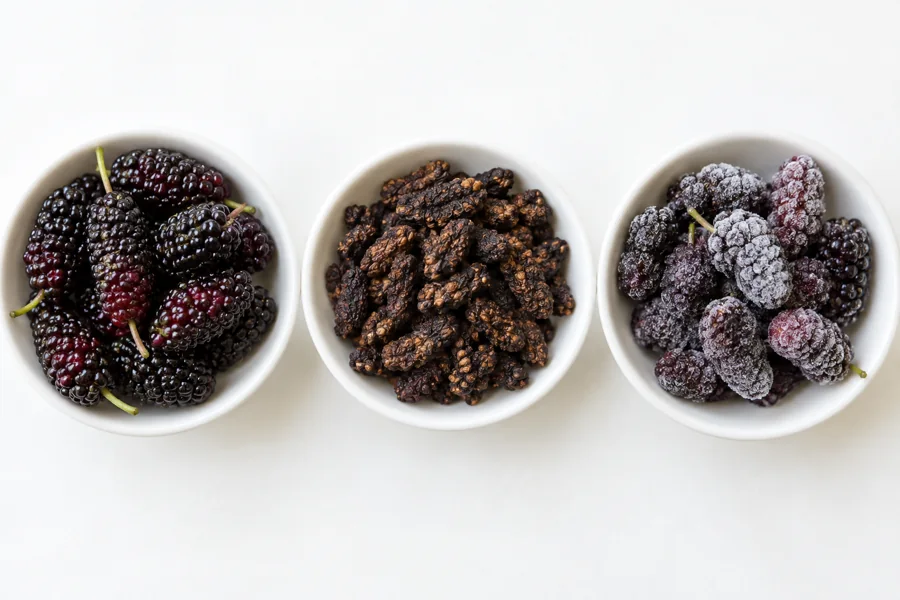
Fresh, dried and frozen mulberries in three bowls
Dried mulberries trade fresh juiciness for a chewy or crisp texture and concentrated flavor per gram. Their moisture content and drying method determine how they behave in a cereal mix, bakery dough or snack pack. A naturally sweet dried piece may still taste different from a fresh berry because water has been removed and volatile aromas change. Before buying, check for clumps, stickiness, scorching, foreign matter, evenness of drying and any added ingredients. A formulation that replaces fresh fruit with dried fruit must adjust the water balance rather than use the same weight without a trial.
Frozen whole mulberries keep the harvested fruit available beyond a short fresh season. Individually quick frozen fruit is convenient when a processor needs measured portions that separate from the pack. The fruit will usually soften and release some dark juice during thawing. That result suits puree, sauces, smoothies, yogurt fruit preparations and baked fillings, while a fresh-fruit garnish needs a separate sensory test. GreenLand's mulberry freezing guide gives preparation and thawing background; this article focuses on whether the ripe fruit is suitable for food and how its three forms change the buying decision.
When comparing forms, keep the application fixed. A frozen whole berry may provide visible identity in a yogurt cup but lose its crisp separation after thawing. A dried berry can travel at ambient temperature in an appropriate pack, yet its chew may be wrong for a beverage. A fresh berry can look excellent at harvest and still be impractical for a long shipment. Ask what the user should see and feel at the moment of eating, then choose the form and handling route that can deliver it. The price per kilogram alone hides yield, water content and labor differences.
For household use, a small freezer tray can separate gently handled berries before they go into a bag. Commercial IQF processing uses controlled sorting, washing, draining, freezing and packing, followed by frozen storage. Neither approach sterilizes the fruit. Follow the product's intended-use information and the food safety controls relevant to the final recipe. If a frozen berry goes directly into a ready-to-eat beverage, review the supplier's microbiological specifications and your own process rather than assuming the freezing step removes every hazard.
The best form may change between products in the same business. A visible berry in premium ice cream needs intact fruit and controlled juice bleed. A bakery filling can use more broken fruit if flavor and color remain right. A beverage base may favor puree or a defined broken-fruit fraction because separation is unnecessary. This is why GreenLand-food asks for the final application before confirming a mulberry grade, instead of presenting one general berry specification as suitable for every line.
Form also changes the language on a finished product. A manufacturer using whole fruit, a screened puree or a sweetened dried ingredient may need different ingredient declarations and sensory claims. Check the actual composition and destination-market labeling rules with the regulatory team. A specification that says "mulberry" should identify whether any sugar, juice concentrate, preservative or processing aid is present, rather than leaving the purchasing team to infer an ingredient statement from a sales image.
What to avoid when fruit or plant identity is uncertain
The straightforward food answer applies to ripe mulberry fruit from an identified source. It does not authorize tasting every stage or part of a mulberry tree. Unripe fruit can be strongly astringent and is unsuitable for an ordinary ripe-fruit ingredient. The milky sap in cut stems and branches can irritate skin; the University of Florida extension page specifically warns about rash in some people after pruning. Some cultures prepare selected mulberry leaves as food or tea, but that practice uses separate identification, preparation and quality controls. Leaves are outside a frozen-fruit product specification.

Hand holding ripe mulberry beside leaves and cut twig
If a child or a new picker asks whether a berry is edible, check the whole tree, not a detached handful. Many fruits share a dark, bumpy appearance. The tree's leaves, bark, growth habit and attached fruit help with identification; a local extension service can help when a tree is uncertain. Even after identification, assess the site. Road spray, pest-control products, industrial dust and runoff are practical reasons to avoid casual foraging. A berry can be botanically edible yet unsuitable for a food business because its exposure history is unknown.
Do not confuse an unpleasant underripe bite with proof of a toxic dose, and do not promise that every plant part is harmless. The evidence for a food article supports a conservative practice: select identified, fully ripe fruit and leave other plant material out of the fruit serving. If someone has consumed unknown fruit or develops symptoms, obtain individual medical or poison-control guidance. A supplier should keep this public advice factual and avoid dramatic claims from unsourced social posts about hallucinations or universal poisoning.
The same distinction matters at the processing plant. Leaves, stems, insects and other foreign matter can enter a harvested lot, particularly when ripe fruit is shaken down or collected under trees. Sorting and inspection must remove material outside the confirmed ingredient. A few tender stem fragments might be tolerable in a cooked industrial filling but unacceptable in retail whole berries or a smooth beverage. The acceptable limit belongs in a written specification with a clear sampling method; it should not be inferred from a product photograph.
Moldy or fermented berries are a separate problem from ordinary ripeness variation. The dark natural color can make spoilage harder to see in a large box, so inspectors need to examine representative fruit and odor, not merely a top layer. A sour fermentation note, extensive leakage, collapsed pieces or visible mold call for rejection or a documented disposition under the buyer's food safety program. Freezing such fruit only stores the defect. In our order discussions, we confirm the buyer's defect tolerances and handling conditions before using a lot in a finished food.
How frozen mulberries are sorted and specified for food production
When buyers source a frozen mulberry ingredient, "edible" is only the first threshold. The lot also has to perform in a real product. At GreenLand-food, we review fruit maturity, natural purple to dark-purple color, approximate size, Brix target, whole-berry share, stem and leaf tolerance, broken fruit, juice leakage and free-flowing condition against the intended application. Those points change both finished appearance and processing yield. A yogurt manufacturer may reject excessive dark bleed that a sauce producer would gladly use, even though both lots contain sound fruit.

IQF mulberries displayed on a white plate
Size and maturity are related but not identical. A larger fruit can be watery or underdeveloped, while a smaller ripe fruit may carry the flavor a beverage needs. Brix indicates soluble solids, mostly sugars in this context, but it cannot explain tartness or aroma on its own. A useful sample review tastes the fruit and checks the finished recipe at the expected inclusion rate. If the formulation has citrus acid, dairy or added sugar, test the mulberry inside that matrix. Ask the supplier to show the lot's range, not a single attractive berry selected for photography.

Close view of separate whole frozen mulberries
Whole-fruit integrity can change as berries move through washing, draining, IQF freezing, packing and shipment. Inspect a thawed sample as well as a frozen one. Frozen separation tells you whether pieces can be portioned on the line; thawed appearance tells you how many maintain useful form after water release. Define a sampling point and allowable broken fraction before an order. A visual acceptance criterion such as "mostly whole" becomes clearer when translated into the percentage, pack size and test method the buyer actually uses.
The pack must protect a delicate fruit from crushing and repeated temperature rise. Bulk cartons, foodservice packs and retail pouches have different handling demands. A deep bulk pack can be efficient for a processor that immediately purees fruit, while a small pouch may better preserve portioning for a retail customer. Check net weight, inner liner, sealing, carton strength and pallet loading alongside the cold-chain plan. Stable frozen storage at or below the agreed temperature matters because temperature cycling encourages ice, clumping and juice loss after thawing.
Documentation should match the lot and destination. Before quotation, a purchasing team can request the product specification, available COA, microbiological criteria, pesticide-residue requirements, country of origin, traceability details and relevant export paperwork. Confirm which certificates apply to the producing facility and which tests are specific to the actual batch. GreenLand's IQF mulberry product page describes current forms and quality points; the written offer and sample should settle the numbers for a particular order.
A sampling plan should say how many cartons are opened and how the fruit is inspected. A surface view after opening may overstate the quality of a pack if clumps, crushed berries or excess ice sit lower in the liner. Take fruit from more than one position, weigh the relevant fractions and document the thawing conditions used for sensory review. A repeatable method makes a complaint easier to investigate and gives both parties a fairer acceptance basis than isolated photographs taken after the pack has already warmed.
Keep lead time and crop availability separate from shelf life. Frozen inventory can support orders outside the short harvest period, but the quantity, grade and pack needed for a new project may still require production planning. A buyer who needs an unusual size band or private-label pouch should communicate artwork, forecast, destination and required documents early. That allows a supplier to confirm a feasible production window rather than infer year-round availability from the word "frozen."
Selecting a mulberry form for beverage, bakery and retail applications
The right mulberry is the one that delivers the needed flavor, appearance and handling at the point of use. A beverage line can process frozen whole berries into puree, but the seeds, skins and viscosity may require screening or a controlled blend. A bakery filling needs color and fruit identity after heat, so a useful trial measures how much juice escapes into the dough and whether added starch or other recipe changes are needed. Retail whole-fruit packs place more weight on free-flowing pieces, attractive shape and low leaf or stem presence.
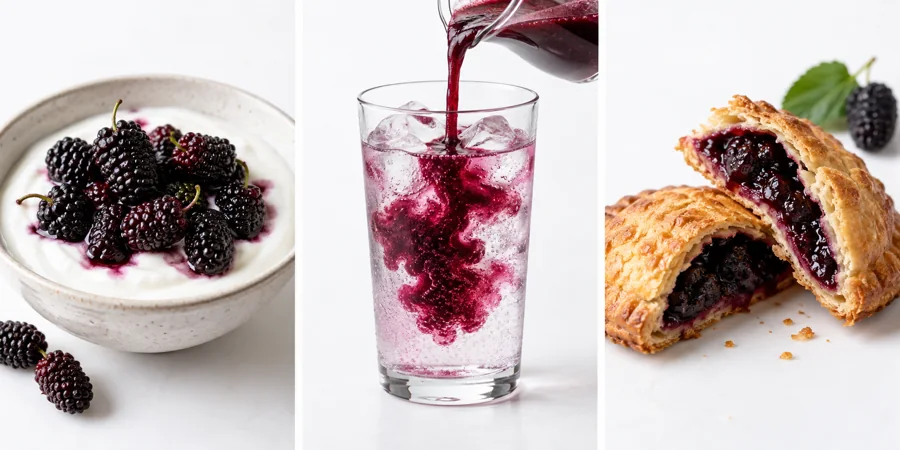
Mulberries in yogurt, beverage and pastry applications
For yogurt and dairy preparations, decide whether the product needs visible whole fruit, small suspended pieces or a colored swirl. Whole berries can look distinctive but may release pigment into the base over time. A puree distributes flavor evenly but removes the visual cue of a mulberry. Run a shelf-life trial in the actual dairy system and packaging. The sample should reflect the commercial lot's maturity and whole/broken balance, because a hand-picked image sample can understate leakage.
For bakery use, bake the candidate fruit at the real inclusion rate, temperature and process time. Frozen berries often enter batter or filling without a complete thaw, reducing handling damage, but a finished pie or cake may still show dark streaking and moisture movement. Those effects can be attractive or problematic depending on the product. Compare a whole-berry grade with a broken-fruit grade through the same recipe before paying for intact berries the consumer will never see. Include yield and line speed in that comparison.
For a smoothie or drink, fruit form affects labor and cost. A free-flowing IQF pack supports direct weighing, a block format may need controlled thawing, and dried mulberries need hydration or grinding. Taste the formula after any sweetener and acid addition, not just the plain fruit. Dark varieties can supply strong color, but the final shade depends on the other ingredients and the process. Avoid describing color as a guaranteed property across every crop or storage period.
For foodservice and retail, portioning and instructions matter. A restaurant may use frozen mulberries directly in a blended drink; a retail buyer may expect them to remain separate enough to spoon from the bag. The product label and handling guidance should fit that use. If customers will eat the berry without a heat step, the food safety plan and intended-use statement must be clear. Do not let an attractive photograph stand in for a validated ready-to-eat claim.
Before approving a shipment, compare representative samples from the offered lot with the application standard. Record the chosen form, Brix and acidity expectations if relevant, size range, color, broken-fruit tolerance, defect and foreign-material limits, pack format, quantity, destination and requested documents. Those details make the simple statement "mulberries are edible" useful to a purchasing team. They also give GreenLand-food a practical basis for confirming a frozen mulberry order and checking the delivered fruit against the same expectations.
For an ongoing product, keep one approved reference sample or a clear sensory description with the written specification. New crop lots can vary in sweetness and natural color even when they meet a broad grade. Reviewing each lot against the same beverage, bakery or dairy trial reduces the chance that a seasonal shift becomes a surprise in finished food. If the target changes, update the specification and sample approval record before production rather than relying on a verbal description such as "dark and sweet."
Source frozen mulberry with GreenLand-food
GreenLand-food is a professional frozen mulberry supplier and manufacturer in China, providing factory-direct wholesale supply for importers, food manufacturers, foodservice distributors, and private-label programs.
Send the product form, specification, packing, quantity, application, destination, private-label needs, and requested documents.