


How to Use Frozen Peaches in Cooking and Processing
May 21, 2026
Leave a message

Use frozen peaches directly for blending and many cooked applications, partially thaw them when shape still matters, and fully thaw them only when the process needs draining, drip-loss measurement or a controlled fruit base. The correct choice also depends on whether the product is a slice, dice, chunk, half, piece grade or puree-style ingredient.
Frozen peaches work well in smoothies, beverages, bakery fillings, pies, cobblers, sauces, compotes, dairy preparations, frozen desserts, breakfast products and foodservice menus. They should not be treated exactly like fresh peaches. Freezing changes the fruit tissue, so thawed pieces are softer and normally release more juice. In some recipes that released juice is useful; in others it must be measured, drained or built into the formula.
For a household recipe, the decision is often simple: use the fruit frozen, partly thawed or fully thawed. For a beverage factory, bakery manufacturer, dairy processor, foodservice distributor or retail brand, the same decision becomes a specification question. Cut form, dimensions, variety, maturity, Brix, color, anti-browning treatment, drip loss, broken pieces, packing and cold-chain condition all influence processing yield and finished-product quality.
Working rule: choose the peach format by what the final product must do. Use slices or halves for visible fruit, dices for repeatable distribution, chunks for a stronger fruit bite, and smaller pieces or puree-style material when shape is no longer important.
Match the Frozen Peach Format to the Final Use
Do not select frozen peaches by product name alone. A slice that looks attractive in a retail bag may be inconvenient in a yogurt cup. A 10×10mm dice may distribute evenly in a dairy preparation but disappear visually in a premium dessert. Bits and pieces can be economical for jam or sauce, yet unsuitable when a customer expects intact peach identity.
| Peach Format | Best-Fit Applications | Processing Advantage | Main Control Point |
|---|---|---|---|
| Slices or strips | Pies, tarts, toppings, retail packs, foodservice desserts | Visible peach shape | Thickness, breakage, color and drip |
| Dices | Yogurt, dairy topping, bakery filling, fruit cups, ready meals | Repeatable portioning and distribution | Dice range, small-piece percentage and firmness |
| Chunks | Smoothies, bakery, fruit preparation, beverage and foodservice | Stronger fruit identity with flexible processing | Chunk distribution, broken pieces and texture |
| Halves | Catering, plated desserts and further cutting | Large presentation and flexible downstream cutting | Size, pitting, bruising and breakage |
| Bits and pieces | Jam, sauce, compote, puree and industrial filling | Good use where shape has little value | Usable yield, peel/pit residue and color |
| Puree-style ingredient | Beverage, sorbet, dairy drink, sauce and fruit preparation | Smooth dosing and consistent blending | Availability, Brix, acidity/pH, fiber and pack format |
GreenLand-food's current frozen peach chunks page presents chunks, dices, slices, strips, halves and bits-and-pieces options. Published examples include 10×10mm or 15×15mm dices, 15–25mm or 20–30mm chunks, and 15–25mm strips. These are reference formats; the confirmed order specification must control the actual cut and tolerance.

A product sample should be reviewed for natural peach color, cut distribution, broken pieces, surface ice and free-flowing condition-not only for one attractive piece.
Should Frozen Peaches Be Thawed Before Use?
Frozen peaches do not always need to be thawed. Direct-from-frozen handling works well when the fruit will be blended, cooked or heated. Partial thawing makes sense when the operator needs to separate pieces or retain some shape. Full thawing is useful when free juice must be measured, drained or included deliberately in a filling, sauce or process formula.
| Application | Handling Direction | What to Watch |
|---|---|---|
| Smoothies and blended drinks | Use directly from frozen | Equipment load, added liquid and target viscosity |
| Sauce, compote or jam | Cook from frozen or staged thaw according to process | Evaporation, fruit integrity and final solids |
| Pie and cobbler filling | Frozen or partially thawed after formula trial | Juice release, thickener and bake loss |
| Yogurt or cold topping | Partially thaw under controlled chilled conditions | Eating texture, juice migration and portion accuracy |
| Industrial fruit preparation | Follow the validated batch process | Fruit temperature, drip, dosing basis and microbial controls |
Do not leave a bulk carton at room temperature simply to speed up production. Use the plant's approved thawing and staging procedure, keep lot identity intact and define whether the formula is calculated on frozen weight, thawed fruit weight or drained fruit weight. Those three bases can give different fruit inclusion percentages.
What Freezing Changes: Texture, Juice and Color
Freezing forms ice crystals inside peach tissue. After thawing, the cell structure does not hold water in exactly the same way as fresh fruit, so pieces soften and release drip. Quick freezing can reduce damage, but it does not preserve a fresh-cut bite perfectly.
The change is not automatically a defect. Softer texture helps in blending, cooking, compote and sauce production. Juice release can contribute peach solids and aroma to a filling. The same behavior becomes a problem when a tart needs neat slices, a yogurt cup develops watery separation or a bakery formula was designed around firmer fresh fruit.
Color also needs control. Peach flesh can brown after cutting through oxidation. Raw-material maturity, cutting delay, approved anti-browning treatment where required, drainage, freezing speed, packaging oxygen exposure and temperature stability all influence the finished appearance. Ask whether a treatment is used and make sure the ingredient declaration and destination-market rules match the confirmed specification.

Slices are useful when fruit identity is visible, so color uniformity, slice integrity, peel residue and broken-piece tolerance deserve more attention.
How to Use Frozen Peaches in Smoothies and Beverages
Slices, dices and chunks can go directly into a smoothie blender. Frozen fruit contributes both peach solids and cooling, so reduce added ice or liquid when a thicker texture is required. Start with a repeatable fruit-to-liquid ratio and test the blender load; an attractive large chunk is not useful if the equipment cannot process it consistently.
Beverage factories should decide whether fruit particles are part of the product concept. Puree-style material supports smooth dosing and blending. Dices or small pieces create visible fruit in teas, dessert drinks and selected dairy beverages, but they introduce questions about suspension, straw size, settling, heat treatment and package filling.
Brix helps describe sweetness, but it should not be read alone. Variety, maturity, acidity, aroma and dilution in the final formula shape flavor perception. Ask for a batch-specific Brix range and, where the process needs it, acidity or pH data. Then run a bench trial in the actual water, juice, dairy or plant-based system.
- Smoothie program: review blend time, usable yield, added liquid and serving viscosity.
- Fruit tea: review visible dice size, color, settling and package fit.
- Dairy beverage: review acidity, particle size, heat process and compatibility.
- Syrup or beverage base: review Brix, aroma, puree yield and final solids.
How to Use Frozen Peaches in Baking and Fillings
Frozen peaches work in pies, cobblers, crisps, crumbles, muffins, cakes, tarts, pastries and industrial fruit fillings because these applications already involve heat and texture change. The main issue is not whether the fruit can be baked. It is how much water the fruit releases and whether the pieces survive mixing, depositing, baking and holding.
Pies, cobblers and cooked fillings
Use slices, chunks or larger dices when visible fruit matters. Test the fruit frozen and partially thawed because the thickener requirement may differ. Record the peach weight basis, added sugar, acidity, starch or other thickener, cook temperature and post-bake set. Draining all juice may remove useful peach solids and flavor; adding all juice without adjustment may produce a weak filling.
Muffins, cakes and inclusions
Smaller dices normally distribute more evenly than long slices. Check whether the fruit sinks, creates wet pockets or tears during mixing. A controlled dice range and a limit for fines make production more repeatable than an undefined "peach pieces" specification.
Tarts, pastries and visible toppings
Slices support visual placement, but they also show browning and breakage clearly. Use a moisture barrier or pre-cooked fruit layer where the base cannot tolerate juice. Confirm slice thickness and intact-piece tolerance before price comparison; a cheaper bag with more fragments may create higher labor and lower usable yield.
How to Use Frozen Peaches for Sauces, Compotes and Jam
Sauces and compotes can accept pieces directly from frozen because cooking softens the fruit and releases juice. Use dices or chunks for a visible fruit texture, bits and pieces for an economical cooked base, or puree-style material for a smooth sauce. Heat gently at first so the fruit releases liquid without scorching, then reduce or thicken to the required finish.
In commercial production, define the desired particle size after cooking, not only before it. A peach dice may lose its shape during a long cook or high-shear transfer. Jam and fruit preparations also require formula-specific control of soluble solids, acidity, pectin system, heat process and fill conditions. Frozen fruit is an ingredient input; it does not remove the need to validate the finished product.
Savory sauces use the same logic. Peach can contribute fruit sweetness and acidity to chutney, glaze, barbecue-style sauce or condiment. The application should determine whether visible pieces, crushed fruit or a smooth base provides the correct texture.
How to Use Frozen Peaches in Dairy and Frozen Desserts
Frozen peach dices can provide visible fruit in yogurt and ice cream. Puree or a prepared fruit base is more suitable for drinking yogurt, sorbet, gelato bases and products that need smooth distribution. The raw frozen fruit is rarely the only formulation decision: sugar balance, acidity, stabilizer system, particle size and freeze-thaw behavior determine the result.
For yogurt cups, test how much juice migrates into the dairy phase during shelf life. For ice cream, fruit pieces can freeze harder than the surrounding mix if the fruit preparation is not balanced correctly. For sorbet, measure fruit solids, Brix and acidity rather than relying on fruit weight alone.
| Product | Useful Peach Form | Trial Focus |
|---|---|---|
| Yogurt cup | Small dice or fruit preparation | Particle distribution, syrup balance and migration |
| Ice cream | Dice, puree or ripple base | Piece hardness, flavor release and freeze-thaw behavior |
| Sorbet | Puree-style base | Brix, acidity, fiber and smoothness |
| Dairy or plant drink | Puree or fine fruit preparation | pH, heat stability, mouthfeel and sediment |
Foodservice, Breakfast and Ready-Meal Uses
Foodservice kitchens can use frozen peaches for oatmeal, yogurt bowls, smoothie programs, warm compote, pancakes, waffles, plated desserts, sauces and selected savory menus. Frozen cut fruit removes routine peeling and pitting work, but the pack still needs to fit the kitchen's batch size and freezer space.
Small foodservice packs reduce the number of times a carton is opened and staged. Bulk cartons can lower packaging cost for a high-throughput central kitchen, but only when the product can be portioned without thawing the entire case. IQF separation, inner-bag strength and piece flow therefore affect labor as much as the nominal carton weight.
For ready meals and chilled desserts, conduct the trial through the full process: mixing, filling, freezing or chilling, distribution, reheating or serving, and the intended holding period. A peach piece that looks firm at intake may soften further after sauce cooking and a second freeze-thaw cycle.
A Practical Processing Flow for Frozen Peaches
A factory does not simply open a carton and add peaches to a kettle. The handling sequence should protect lot identity, temperature control, yield measurement and formula accuracy.
- Receive and hold: inspect the lot code, carton condition, product temperature evidence, clumping and visible damage; keep the product under the approved frozen-storage condition.
- Define the dosing basis: decide whether the recipe uses gross frozen weight, net frozen fruit, thawed fruit or drained fruit.
- Stage or thaw: use the validated process for the selected format. Avoid uncontrolled warm-room thawing.
- Measure drip when relevant: record time, temperature, sample size and drainage method so results are comparable.
- Inspect the fruit: review color, aroma, cut distribution, peel residue, pit fragments, broken pieces and foreign matter.
- Add to the process: choose the addition point that protects fruit integrity or enables the required breakdown.
- Verify finished performance: check yield, texture, visible fruit, viscosity, Brix, acidity/pH where relevant and final sensory result.
- Retain traceability: connect the finished batch to the peach lot, specification, COA and receiving records.

Commercial performance starts before final use: maturity sorting, peeling, pitting, cutting, drainage, IQF freezing, inspection and packing all influence the ingredient received by the processor.
How to Control Extra Juice and Drip Loss
Drip loss is the liquid released during thawing. It affects usable yield, fruit-to-syrup balance, bakery moisture, yogurt separation and the cost calculation for every finished unit. A supplier's drip figure is meaningful only when the test method is defined.
Ask for the sample mass, product state, thawing time and temperature, drainage time, screen or sieve method and calculation basis. Then repeat the test on arrival using the same procedure. Comparing one supplier's 30-minute drainage result with another supplier's overnight result does not support a fair decision.
- Smoothies: count the released liquid as part of the beverage formula and reduce added water if necessary.
- Bakery fillings: adjust starch or other thickener after a controlled thaw/drip trial.
- Yogurt: use a fruit preparation or a controlled dice when free juice creates phase separation.
- Sauces and compotes: retain useful juice but define the reduction or final-solids endpoint.
- Costing: compare usable fruit yield, not only the invoice price per frozen kilogram.
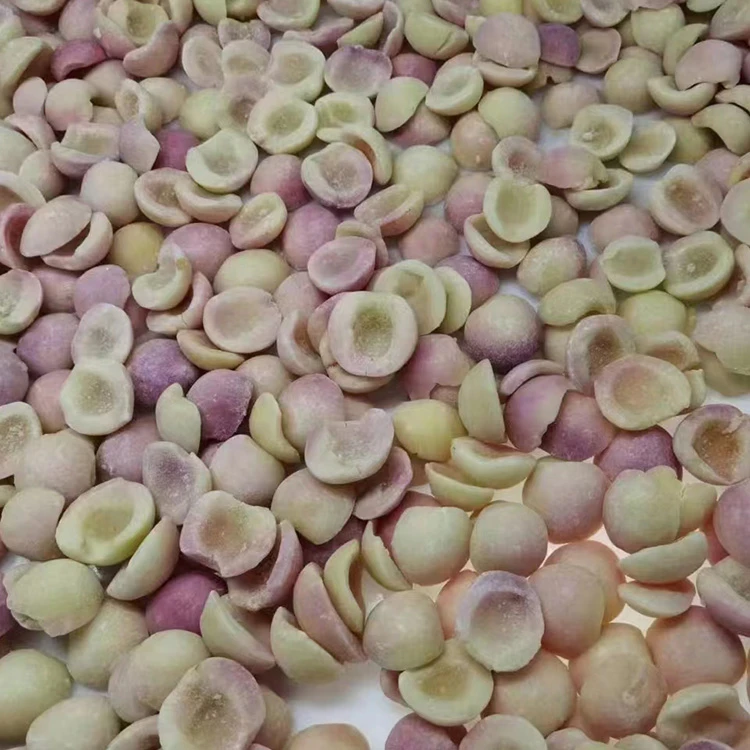
Spread samples help purchasing and QA teams compare cut distribution, fines, discoloration, surface ice and pieces joined by frozen moisture.
Frozen Peach Specification Checklist
"IQF peach" is not enough for quotation approval. The purchase specification should define the attributes that affect the line and finished product.
| Item | Define or Request | Processing Impact |
|---|---|---|
| Peach type and variety | Yellow/white, freestone/clingstone as relevant, origin and crop | Flavor, color, firmness and pitting behavior |
| Form and cut | Slice, dice, chunk, half, strip, bits/pieces or puree-style requirement with tolerance | Dosing, mixing, visible fruit and heating consistency |
| Brix and acidity | Batch range; pH or acidity where the formula requires it | Sweetness balance, beverage design, jam and dairy processing |
| Color and treatment | Natural target color, browning limit and declared treatment | Retail appearance and label compliance |
| Texture and drip | Firmness target and agreed drip-loss test method | Usable yield, filling moisture and fruit integrity |
| Defects | Peel residue, pit fragments, bruising, discoloration, broken pieces, clumps and foreign matter | Safety, labor, yield and finished appearance |
| Packing | Bulk, foodservice, retail or private label; net weight and inner bag | Opening frequency, portioning, label and logistics |
| Documents and tests | Specification, COA, microbiological/residue panels, traceability, certificates and shipping documents as required | Release, import and customer approval |
Request a pre-shipment or approval sample that represents the proposed grade. Run the sample through the intended process, record the acceptance result, and attach the approved standard to the purchase order. A photo alone cannot show Brix, drip loss, aroma or processing yield.
Packing, Cold Chain and Receiving
GreenLand-food's current frozen peach pages present bulk cartons, foodservice packs, retail bags and private-label options. Pack selection should follow the actual handling system. A 10kg bulk carton may fit an industrial filling plant; smaller inner packs may fit a restaurant chain, retail program or low-throughput kitchen better.
Keep the product under the frozen storage condition stated in the confirmed specification. Current GreenLand frozen peach and frozen fruit pages use -18°C or below as the cold-chain anchor. The adjacent article on frozen peach storage life covers the difference between continuous frozen storage and best-quality judgment; this application guide does not need to repeat the full shelf-life topic.
At receiving, check seal and lot identity, carton condition, temperature evidence where required, wet or collapsed packaging, heavy frost, ice blocks, clumping and off-odor. Hold questionable lots before production. If the problem involves drip or texture, retain a sample and test it against the agreed method before assigning responsibility.

Commercial packing should protect the fruit and match the buyer's opening, portioning, labeling, storage and container-loading plan.
Common Mistakes When Using Frozen Peaches
Thawing every application completely
Full thawing adds time and may release juice before the recipe can use it. Blend or cook directly from frozen when the equipment and formula allow it.
Using invoice weight as usable fruit yield
A bag with higher drip or more broken fines may cost more in the finished product even if its price per kilogram is lower. Define the yield basis and test method.
Choosing slices when dices fit the line better
Visible shape has value only when the final product shows it. Dices or smaller pieces often dose and distribute more consistently in yogurt, muffins, fruit cups and industrial fillings.
Approving a sample without a written tolerance
A sample can look good while the purchase order remains vague. Record cut range, Brix, color, defects, broken pieces, drip method, pack and required documents.
Ignoring thawed-fruit food safety and lot control
Once fruit is staged or thawed, follow the plant's approved chilled handling, time control and sanitation procedure. Do not return an uncontrolled warm batch to frozen storage and treat it as unchanged IQF fruit.
How GreenLand-food Supports Frozen Peach Projects
We supply bulk frozen peaches and peach cut formats within our wider frozen fruit range. Current product pages present chunks, dices, slices, strips, halves, bulk packing, foodservice packs, retail packs and private-label options, subject to crop, stock and confirmed order requirements.
Tell us the peach type, cut, dimensions, Brix direction, treatment or ingredient-declaration requirement, packing, quantity, application and destination market. We can then review current availability, sample route, MOQ, mixed-container feasibility, lead time, test panel, certificate support and export documents for the inquiry. Puree-style peach requirements should be confirmed separately because form and availability depend on the order plan.
Send your target application, cut form, dimensions, Brix direction, pack, quantity and destination. We will review the relevant frozen peach specification and commercial details.
FAQ About Using Frozen Peaches
Can frozen peaches be used without thawing?
Yes. Use them directly for smoothies, sauces, compotes and many heated applications. Partially or fully thaw only when the recipe needs piece separation, draining or controlled moisture.
Can frozen peaches be used in baking?
Yes. Test the fruit in the actual filling or batter because thawed juice can change thickener demand, bake time and the moisture around each piece.
What frozen peach format works best for smoothies?
Slices, dices and chunks all work when the blender can handle them. Puree-style material is useful for controlled dosing and smooth industrial beverage processing.
What format works best for yogurt?
Small dices or a prepared fruit base usually distribute more evenly than long slices. Test juice migration, particle texture and the fruit-to-dairy ratio through the intended shelf life.
How can a bakery control extra peach juice?
Use a defined thaw-and-drain trial, keep or remove juice according to the formula, and adjust thickener after testing the actual cut size and fruit lot.
Are peach slices and peach puree interchangeable?
No. Slices provide visible fruit and piece texture. Puree-style ingredients support smooth blending and dosing but require their own Brix, acidity, fiber and packing specification.
Why do frozen peaches become softer?
Ice formation changes fruit tissue, so thawed peaches release water and have a softer bite than fresh-cut fruit. Maturity and freezing control influence the degree of change.
What should be included in a frozen peach specification?
Define variety or type, form, dimensions, Brix, color, treatment, texture, drip method, defects, broken pieces, packing, storage, documents and application test.
Can GreenLand-food support retail and private-label peach packs?
Current GreenLand-food product pages present bulk, foodservice, retail and private-label options. Confirm the bag, label, carton mark, barcode, quantity and destination-market requirements during quotation.
What information should I send with a frozen peach inquiry?
Send the target application, peach type, cut form, size, Brix direction, packing, trial or annual quantity, destination port, required tests, certificates and private-label needs.