


How to Use Frozen Snow Peas: 12 Practical Meal Ideas
Aug 03, 2026
Leave a message


Choose the use by what happens after the snow pea enters the meal
Frozen snow peas are most successful as a late-added vegetable in fast dishes, or as an intentionally under-finished component in meals that will be held, frozen, or reheated later. They bring more than green color: the flat edible pod gives a recognizable shape and a light bite that shelled peas cannot provide.
The useful decision is not simply whether snow peas belong in a recipe. Decide whether the pod must remain whole, whether it needs to pass through filling or portioning equipment, how much moisture surrounds it, and how many heating stages remain. A whole pod can be the visual focus of a wok dish or side. A shorter pod or cut can distribute more evenly through soup, pasta, frozen blends, and prepared foods.
Whole for visibility; cuts for distribution
Keep pods whole when the meal should show a premium green vegetable. Discuss cuts when consistent mixing, smaller bites, filling, or dosing matters more than whole-pod presentation.
Later is usually safer
Add the pods after dense vegetables, proteins, rice, noodles, or sauce bases are already close to their target. Reduce the first heat exposure when a later hold or reheat will finish the product.
Protect an intact crisp-tender pod
The realistic target is a hot, flexible pod with light resistance-not the raw snap of a fresh pod. Long simmering, wet holding, and repeated heating are the main routes to collapse.
Approve the final process, not the first taste
For a ready meal, retail mix, or industrial formula, assess the pod after assembly, frozen storage, and the labeled reheat. A good result at the first cook is not enough.
Start with the pod, not the recipe name
Snow peas are flat edible pods with small undeveloped peas inside. That makes them different from round shelled green peas and from thicker, more rounded sugar snap peas. The distinction matters because whole-pod shape, seam texture, string control, and breakage are visible in the finished meal. A product sold simply as "frozen peas" may not deliver the same appearance or eating experience.
Whole IQF snow pea pods are the normal starting form for visible meal applications. Shorter length grades can fit smaller trays, noodle cups, and retail mixes more comfortably. Cuts can be discussed for soups, blends, fillings, and prepared foods when the whole pod is too large for portioning or when even distribution is more important. Before choosing a use, inspect whether the frozen pods remain free-flowing, whether the color is reasonably even, and whether the lot shows heavy surface ice, welded clumps, excessive broken ends, mature seeds, or tough strings.

Flat, intact whole pods make the strongest visual contribution in stir-fries, noodles, sides, and retail vegetable mixes.
What to do with frozen snow peas at a glance
The table is an application map, not a universal cooking schedule. Package directions, the product specification, kitchen equipment, batch weight, sauce load, and the final food-safety process all take priority. "Add late" means after slower components have done most of their work and before the pod loses its light bite.
| Use | Best product form | When to add | Texture target | Main control point |
|---|---|---|---|---|
| 1. Stir-fries | Whole, visually even pods | After protein and dense vegetables are nearly ready | Bright, hot, lightly resistant | Protect pan recovery and add wet sauce last |
| 2. Noodles | Whole short pods or bias cuts | Once noodles are hot and surface liquid is controlled | Flexible enough to toss, still distinct | Avoid steaming under a wet noodle mass |
| 3. Fried rice | Short whole pods or cuts | After the rice is hot and separated | Dry-surfaced and lightly crisp-tender | Keep released water away from the rice |
| 4. Soups | Whole pods for visibility; cuts for spoon fit | Near the end, after the broth base is complete | Tender enough for the spoon, not limp | Count residual heat in the pot and service line |
| 5. Curries | Whole pods or large cuts | After the sauce and slower ingredients are developed | A clear pod bite against a soft sauce | Avoid long simmering in thick sauce |
| 6. Pasta | Bias cuts, short pods, or whole premium pods | During the final sauce-and-pasta toss | Coated but recognizable | Match pod size to fork and pack format |
| 7. Vegetable blends | Whole pods or defined cuts | Blend frozen under a validated formula and final cook plan | Comparable doneness with companion vegetables | Align cut size and blanch level across components |
| 8. Ready meals | Whole short pods or controlled cuts | Late in assembly, often frozen or deliberately under-finished | Acceptable after the full labeled reheat | Validate the complete freeze-store-reheat cycle |
| 9. Meal kits | Portion-friendly whole pods or cuts | Pack separately or add at the consumer's late step | Easy to portion and hard to over-handle | Write clear component order and pack instructions |
| 10. Foodservice sides | Uniform whole pods | Finish close to service | Stable through the real hold window | Control batch load, hold time, yield, and breakage |
| 11. Retail frozen mixes | Whole pods or consumer-friendly cuts | Mixed and packed frozen; final addition follows consumer directions | Consistent across the declared method | Control component ratio, visible ice, bag fill, and instructions |
| 12. Industrial prepared foods | Cuts, short pods, or whole visible inclusions | At the latest point compatible with dosing, filling, and food safety | Process-stable after mixing and final heating | Test flow, breakage, water release, and final distribution |

One ingredient can need three different specifications
A whole visible pod, a cut component for a frozen blend, and a ready-meal inclusion may all begin as snow peas, but they should not automatically share one specification. The first needs attractive flat shape and controlled strings. The second needs an agreed cut distribution and ratio in the blend. The third must survive assembly and reheating without turning into a soft strip.
When we prepare an offer, we ask where the ingredient enters the process and what the buyer will measure at the end. That is more useful than quoting "IQF snow peas" as if every use were interchangeable.
Ideas 1–3: stir-fries, noodles, and fried rice
1. Stir-fries: use the whole pod as a visible texture contrast
Stir-fries are the most obvious use because the flat green pod remains visible beside meat, tofu, mushrooms, peppers, carrots, baby corn, or water chestnuts. Choose whole pods with reasonably even length and thickness when presentation is important. A shorter grade may suit smaller bowls or retail kits; a longer pod can look more deliberate in plated foodservice dishes.
Add the snow peas after the protein and dense vegetables are nearly finished. The objective is not to give the pod a separate long cook, but to warm it, remove loose surface moisture, and coat it during the final toss. A wet sauce added too early surrounds the pod with steam and extends the heat exposure. For a restaurant chain or central kitchen, test the real batch weight and discharge point. The approved product should remain intact through mixing and reach the plate with a light bite, not a wrinkled surface or an olive color.
2. Noodles: match pod length to the bowl and sauce load
Snow peas fit lo mein, chow mein, rice noodles, udon, noodle soups, and prepared noodle trays. Whole short pods work when the vegetable should be easy to pick up with chopsticks or a fork. Bias cuts or shorter segments distribute more evenly through a compact cup, a kids' portion, or a high-speed meal-kit tray. The form should support the eating format instead of forcing the consumer to manage a pod that is too large for the container.
Bring the noodles close to their final temperature and control free liquid before the snow peas enter. In a dry tossed noodle, the pod can finish during the last mixing stage. In a noodle soup, it should enter after the broth and slower vegetables are ready. For frozen noodle meals, the relevant texture is the texture after reheating. A pod that tastes correct on the assembly line may still soften during cooling, freezing, and the consumer's microwave cycle, so the first heat exposure often needs to stop earlier.
3. Fried rice: protect the rice from released water
Fried rice benefits from the green color and broad shape of a snow pea, but the dish is unforgiving when the vegetable carries excess water. Short whole pods or defined cuts are easier to distribute without dominating a spoonful. If the pod is used beside small carrot dice, corn kernels, or shelled peas, check whether its size still feels intentional rather than like an oversized component dropped into a fine mix.
Add the snow peas only after the rice is hot, separated, and no longer carrying a wet surface. Use a working batch that lets steam escape. The target is a dry-surfaced pod with light resistance that does not make the rice clump. In institutional or ready-meal fried rice, weigh the component ratio and inspect distribution across several trays. One tray with many pods and another with none is a formula-control problem, not a cooking problem.

Meal-kit assembly works better when pod length, component ratio, and the consumer's final heating order are defined together.
Do not solve a moisture problem by cooking the pod longer
A pan, noodle tray, or rice line can look wet because the load is too large, the frozen product carries heavy frost, a thawed batch has released water, or sauce entered too early. Extending the cook may evaporate some water, but it also destroys the texture you wanted to protect.
Separate the causes. Check the unopened frozen condition, weigh the working load, record the equipment recovery, and measure the liquid or sauce addition. If one lot carries much more ice or clumping than the approved sample, document it before rewriting the meal process around the defect.
Ideas 4–6: soups, curries, and pasta
4. Soups: decide whether the pod is a garnish-like vegetable or a blended component
Whole snow peas can give a clear green accent to Asian broths, vegetable soups, chicken soups, and noodle soups. Cuts make more sense when every spoonful should contain a manageable piece or when the soup will be filled into smaller retail cups. The broth may be light, creamy, or tomato-based; the important decision is whether the snow pea should remain visibly distinct or disappear into the background texture.
Complete the broth base and cook dense ingredients before the snow peas enter. Long simmering offers little benefit because the pod is thin and has already been blanched during normal IQF processing. Residual heat also matters: a kettle, insulated transport container, or buffet tureen continues softening the vegetable after the active heat is reduced. For foodservice, assess the pod at the middle and end of the real service window, not only when the soup leaves the kitchen.
5. Curries: use a light pod bite against a soft sauce
Snow peas work in Thai-style curries, coconut sauces, Indian-inspired vegetable curries, and mild prepared curry meals. Their value is contrast: the sauce and many other ingredients are soft, while the pod should remain recognizable. Whole pods give the clearest contrast; large cuts can be easier to portion in smaller bowls or factory-filled trays.
Develop the sauce, aromatics, protein, and dense vegetables first. Add the snow peas during the final stage, allowing the sauce to heat the pod without turning it into another soft ingredient. Thick sauces retain heat and continue cooking after filling. If the curry will be chilled or frozen, test the finished texture after the full reheat. Do not approve a pod solely because it looks green before packing; check whether the seam remains pleasant and whether the pod breaks apart under normal fork pressure.
6. Pasta: choose a cut that behaves well on the fork
Snow peas are useful in cream sauces, light olive-oil pastas, pesto-style dishes, baked pasta formulas, and cold or chilled pasta kits. Whole pods can suit a premium wide bowl, but bias cuts or shorter segments usually distribute more naturally through short pasta. For filled or compact prepared foods, a controlled cut is easier to meter and less likely to bridge across a filler or create uneven portions.
Add the pod during the final sauce-and-pasta toss when immediate service is planned. In a baked or reheated pasta, reduce the early heat and let the final process complete the texture. Sauce viscosity changes how quickly the pod heats and how much moisture is noticeable, so run the test in the real sauce rather than plain water. The finished pod should be coated and recognizable, with enough integrity to survive mixing without becoming green fragments throughout the dish.
A soft lot still needs a quality decision
A sound, safe product that is slightly softer than the target for a visible side may work better as a controlled cut in soup, filling, or sauce. That does not mean every weak lot should be hidden in a prepared food. Heavy clumping, damaged packaging, abnormal odor, serious discoloration, or evidence of temperature abuse requires a lot investigation.
Application matching is legitimate when the product remains within an agreed specification and the buyer approves the new end use. It is not a substitute for receiving checks, traceability, or a documented disposition decision.
Ideas 7–9: vegetable blends, ready meals, and meal kits
7. Vegetable blends: match the snow pea to the slowest and fastest ingredients
Snow peas bring shape and a premium green signal to Asian blends, wok mixes, steamable vegetables, and mixed side-dish programs. Companion vegetables may include carrots, peppers, broccoli, baby corn, mushrooms, water chestnuts, or beans. The blend should not be designed only by color. Dense carrots and broccoli stems heat more slowly than thin snow pea pods, so size distribution and blanch level need to support one practical final method.
Use whole pods when the blend promises visible variety, or defined cuts when the pack is small and even spoon or fork distribution matters. During approval, sort a representative sample into components and weigh the ratio. Then cook the complete blend according to the proposed directions. Check whether the snow peas collapse before the dense pieces are ready, whether small fragments collect at the bottom of the bag, and whether released moisture affects the method. Adjust form, size, blanching, or component ratio before relying on longer consumer instructions.
8. Ready meals: approve the pod after freezing, storage, and final reheating
Ready meals are a strong commercial use because snow peas add visible vegetable value to noodle trays, rice meals, curries, and Asian-style prepared dishes. They are also one of the hardest applications. The pod may experience supplier blanching, factory tempering or pre-cooking, hot sauce contact, filling, cooling, blast freezing, frozen distribution, and consumer reheating. Every stage adds to one heat and moisture history.
Whole short pods or large cuts usually fit trays better than very long pods. Add them at the latest stage compatible with the plant's validated food-safety and filling process. Some programs portion the pods from frozen; others use a controlled under-finish before assembly. There is no useful universal rule because sauce temperature, tray depth, freezing rate, storage, and reheat instructions differ. Run the real cycle and check the final pod for color, bite, stringiness, breakage, water release, and distribution across multiple trays. If the final result is soft, reduce earlier exposure before changing the consumer's validated reheat instruction.
9. Meal kits: make the late-addition logic easy for the user
Frozen meal kits can keep snow peas in a separate vegetable sachet, place them in a compartment with other fast-cooking vegetables, or include them in a mixed component. Whole pods support a premium visual. Cuts can be better for smaller portions, family kits with children, or compact cups. The pack design should prevent the pods from being crushed by heavier frozen blocks or becoming trapped in sauce before use.
Write the component order so the user adds snow peas after the slow ingredients or during the final heating stage. The instruction should be simple enough to follow without technical language. Validate it with ordinary consumer equipment, not only a laboratory setup. For retail launch, check bag or compartment fill, component weight, printed method, barcode and label version, and whether the declared serving produces consistent distribution. A meal kit succeeds when the product form, pack format, and instruction all point to the same finished texture.
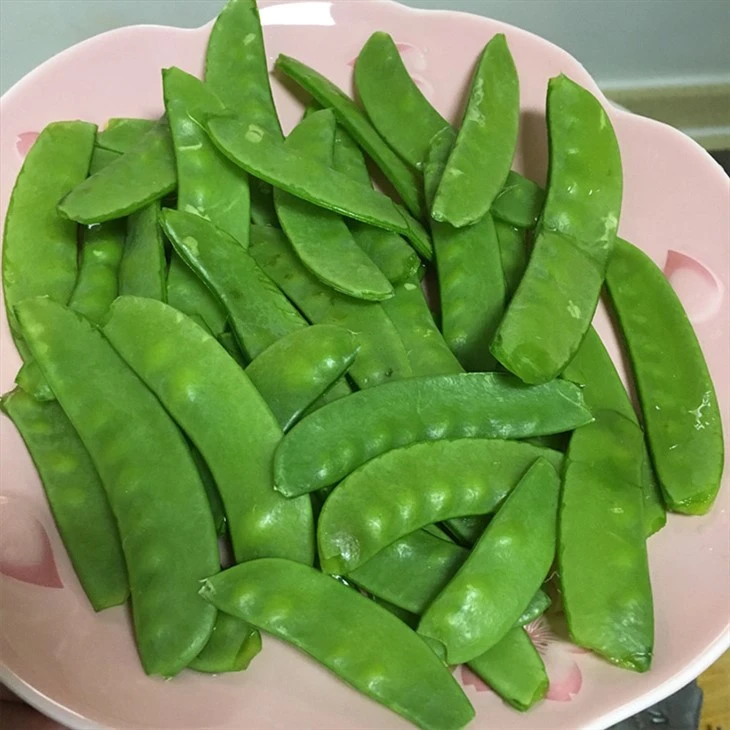
Pod length, flat shape, maturity, strings, breakage, and surface ice all influence how the ingredient performs in a tray, blend, or side dish.
Ideas 10–12: foodservice sides, retail mixes, and industrial prepared foods
10. Foodservice side dishes: standardize the batch and the hold window
A simple garlic, sesame, herb, butter, or light soy snow pea side can work for hotels, catering, cafeterias, restaurant chains, and institutional menus. Uniform whole pods are usually the best form because the side is judged directly on appearance and bite. The specification should define length or size band, thickness, string and stem control, broken-pod tolerance, color, frozen separation, pack size, and the expected cooking test.
Finish the side close to service. A correct discharge point can still fail after time in a covered hotel pan, transport box, or buffet tray. Approve the actual batch load, equipment setting, mixing tool, seasoning addition, discharge endpoint, drained or cooked yield, and maximum hold window. If the operation needs long holding, consider smaller repeated batches rather than forcing one pod to survive an unrealistic service period. Foodservice packs should also support fast portioning without repeated thawing of the master pack.
11. Retail frozen mixes: make the bag, formula, and cooking direction agree
Retail buyers can use snow peas in Asian stir-fry mixes, steamable vegetable bags, meal starters, and private-label frozen vegetable programs. The pod contributes strong shelf recognition through its flat shape and green color. Whole pods suit premium visible mixes; consumer-friendly cuts may fit smaller bags or quicker methods. The ratio must be controlled so the shopper sees the promised vegetable distribution rather than a few pods concentrated at one end of the pack.
Approve the formula and directions together. If dense vegetables require a long cook, the snow pea may need a firmer starting specification, a different size, or a later-addition pack design. Check net content, component ratio, free-flow condition, visible frost, bag seals, artwork, label language, barcode data, carton configuration, and traceability. For private label, the brand owns the consumer complaint even when the ingredient comes from another factory, so version control and change approval matter as much as an attractive sample.
12. Industrial prepared-food applications: treat the pod as a functional ingredient
Industrial uses include prepared noodle meals, filled savory products, vegetable toppings, mixed side components, soup and sauce inclusions, frozen bowl meals, and formula blending. Here the best form depends on the line. Whole pods create visible value but may bridge in small hoppers, resist even dosing, or suffer breakage under aggressive mixing. Cuts flow and distribute more easily, but too many fines can cloud sauce, weaken visual identity, and change usable yield.
Define the ingredient by process performance as well as appearance. Check particle or pod-size distribution, broken ratio, free-flow, clumping, surface ice, water release, mixing damage, filling accuracy, and final heat integrity. Add the snow pea at the latest stage that is compatible with the validated line and food-safety plan. Run enough production to reveal hopper flow, portion variation, and equipment recovery; a single bench sample cannot show those effects. The final acceptance point is the finished prepared food after its full intended heating and storage route.

A commercial blend needs controlled component ratio, size distribution, breakage, and one final heating method that works for every vegetable.
Turn the meal idea into an order-ready snow pea specification
A good application brief lets the supplier prepare the right sample and prevents a price comparison between products that will perform differently. Include these items before final quotation:
Product identity and form
IQF snow pea pods or mangetout; whole, short whole, bias cut, or defined segment; not shelled green peas or sugar snap peas.
Pod and defect criteria
Length, thickness, maturity, flatness, string control, stems, tips, color, broken pods, insect damage, foreign material, frost, and clumping.
Real application route
Dish, equipment, batch weight, addition stage, sauce or broth, mixing, filling, cooling, freezing, hot holding, and final reheat.
Commercial program
Bulk, foodservice, retail, or industrial pack; quantity, trial plan, destination, private label, documents, pallet plan, and delivery schedule.
Validate one representative sample in five stages
The application test should reproduce the buyer's real decision. Keep the equipment, sample weight, sauce or liquid, addition point, mixing, and endpoint consistent so two samples can be compared fairly.
- Inspect the frozen state. Record bag integrity, lot code, temperature on receipt, free-flow condition, surface frost, clumps, color, strings, broken pieces, and foreign-material signs. Photograph the representative sample before cooking.
- Run the intended first process. Use the real form, load, pan, kettle, filler, or tray. Record when the snow pea enters, how quickly the equipment recovers, and how much mixing or handling the pod receives.
- Measure the immediate result. Check color, bite, stringiness, water release, cooked or drained yield, broken ratio, and component distribution. Use the same lighting and evaluation terms across samples.
- Complete every downstream stage. Apply the planned sauce hold, chilling, blast freezing, frozen storage, transport simulation, hot hold, or consumer reheat. Evaluate the pod at the point where it is actually eaten.
- Attach the result to the specification. Keep the approved sample, method, photos, observations, tolerance, and corrective-action rule with the order file. A repeat purchase should be judged against the same application result, not only the product name.
This process is especially important when comparing whole pods with cuts, changing pack size, moving from foodservice to retail, or scaling a bench formula to industrial production. The foodservice frozen vegetable specification guide and our guide to frozen vegetables for industrial processing provide deeper control frameworks for those channels.
Match packing to how the snow pea will be portioned
The same pod can move through very different commercial packs. The packing decision affects frozen separation, labor, portion control, artwork, and loading-not only carton price.
| Channel | Packing direction | Approval focus |
|---|---|---|
| Foodservice | Multi-kilogram bags or cartons sized for repeat kitchen batches | Free-flow portioning, bag handling, batch load, yield, and hold window |
| Retail single product | Consumer pack with clear identity, net content, and cooking directions | Pod appearance, visible ice, seals, artwork, label, barcode, and shelf consistency |
| Retail mix or meal kit | Mixed bag, component sachet, or compartment pack | Component ratio, crushing protection, addition order, and full method performance |
| Industrial | Bulk carton or tote confirmed for the line and loading plan | Flowability, dosing, breakage, liner, pallet, traceability, and frozen-chain handling |
At GreenLand-food, we supply IQF frozen snow pea pods for bulk foodservice, retail, vegetable blends, ready meals, meal kits, and industrial processing. We help confirm pod form, length, thickness, string control, packing, order quantity, destination, documents, and mixed-container planning before quotation.
Keep the product in a continuous frozen chain and follow the agreed storage condition and pack instructions. Repeated thawing and refreezing can increase clumping, surface ice, breakage, and texture loss. For broader category sourcing, review our frozen vegetable range or download the GreenLand frozen food product catalog.
Tell us how the snow pea will be used
Send the target meal or channel, whole or cut form, pod length and thickness, string requirement, packing, quantity, destination, addition stage, sauce or broth, hot-hold or reheat step, private-label needs, and requested documents. We can prepare an application-matched specification, sample plan, packing option, and quotation.