


How to Make Mashed Cauliflower from Frozen Cauliflower
Sep 20, 2026
Leave a message

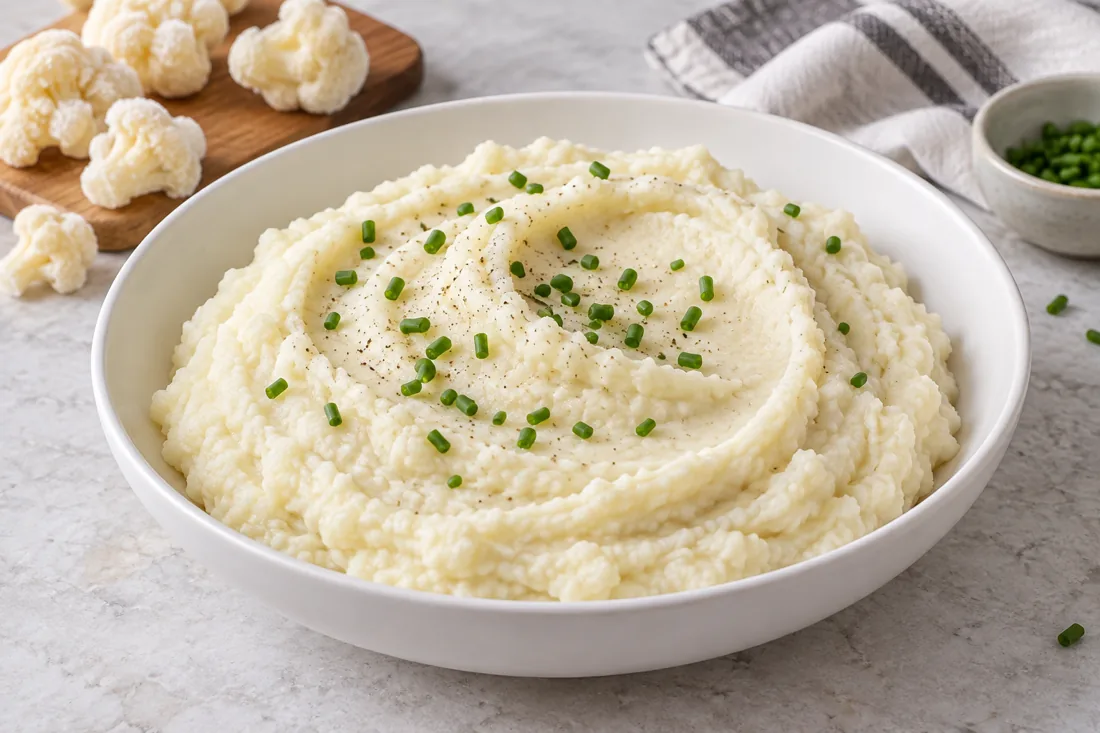
Frozen cauliflower is well suited to this application because a soft cooked texture is the goal. You do not need to preserve the crisp bite expected from a raw vegetable platter. You do, however, need to separate three decisions: how tender to cook it, how much moisture to remove and how smooth to make the finished mash. Treating those as separate stages gives you much more control.
The result will taste and behave like cauliflower, not exactly like mashed potato. A good cauliflower mash can be smooth, savory and substantial enough to hold a spoon groove without needing a long ingredient list. The method below works as a kitchen starting point and explains what to record when choosing a frozen format for foodservice.
Start with the right frozen cauliflower
Choose plain frozen cauliflower for the most controllable first batch. Read the ingredient list and cooking instructions before opening the bag. A product with cheese sauce, seasoning or added oil is already a different recipe, and its moisture and salt content will affect the result. Frozen cauliflower rice can also work, but it is not identical to florets in cooking and draining behavior.
With florets, the thicker stem sections usually determine when the batch is ready to mash. A bag containing a very wide size range may have soft crumbling curds while the largest stems remain firm. That is manageable in a home kitchen, but in a repeat production process it is a reason to discuss size distribution and stem proportion. A specification that only says "cauliflower florets" leaves considerable room for variation.

GreenLand cauliflower product photograph: floret and stem geometry should be assessed in a cooking trial.
Rice-sized pieces provide more small surfaces and can heat through quickly, but they are easier to lose through a coarse colander. Use an appropriately fine strainer or a cooking method that leaves little free water to drain. Do not assume that every product called rice has the same particle size. A coarse chopped product and a fine rice product may create different textures in the same processor.
Check the bag's condition as part of normal frozen handling. Product that is loose enough to portion makes controlled trials easier. Heavy clumping or visible thawing calls for a review of the storage history and receiving procedure, not an automatic conclusion about safety from appearance alone. Keep unused product frozen according to its label and avoid repeatedly warming the whole bag while measuring small portions.
For a first trial, measure a manageable frozen quantity and write it down. The exact portion is less important than being able to repeat it with the same equipment. If you change the input weight, cooker, draining time and dairy addition together, you will not know which change improved the mash. A simple recorded trial is more useful than an elaborate recipe that cannot be reproduced.
Our frozen cauliflower range is a starting point for discussing florets and other suitable forms. Product photographs show form and appearance, not a guaranteed finished mash texture. We confirm the actual cut, packing and supply options against the inquiry, and the kitchen should approve them in its intended process.
Avoid choosing the raw material only by how white or attractive it looks in a bowl. Those qualities matter, but the final application also depends on cooked tenderness, flavor, draining behavior and usable yield. A sample that looks slightly different from another can still make an excellent mash; a visually perfect sample can still need a process adjustment.
Cook until the stems are completely tender
For mash, stop thinking in terms of crisp-tender vegetables. The thickest stem should yield readily when pressed with a fork. If it resists, blending may chop the hard portion into smaller grains without turning it into a smooth purée. Check more than one large piece before ending the cooking stage, especially when the bag contains mixed floret sizes.
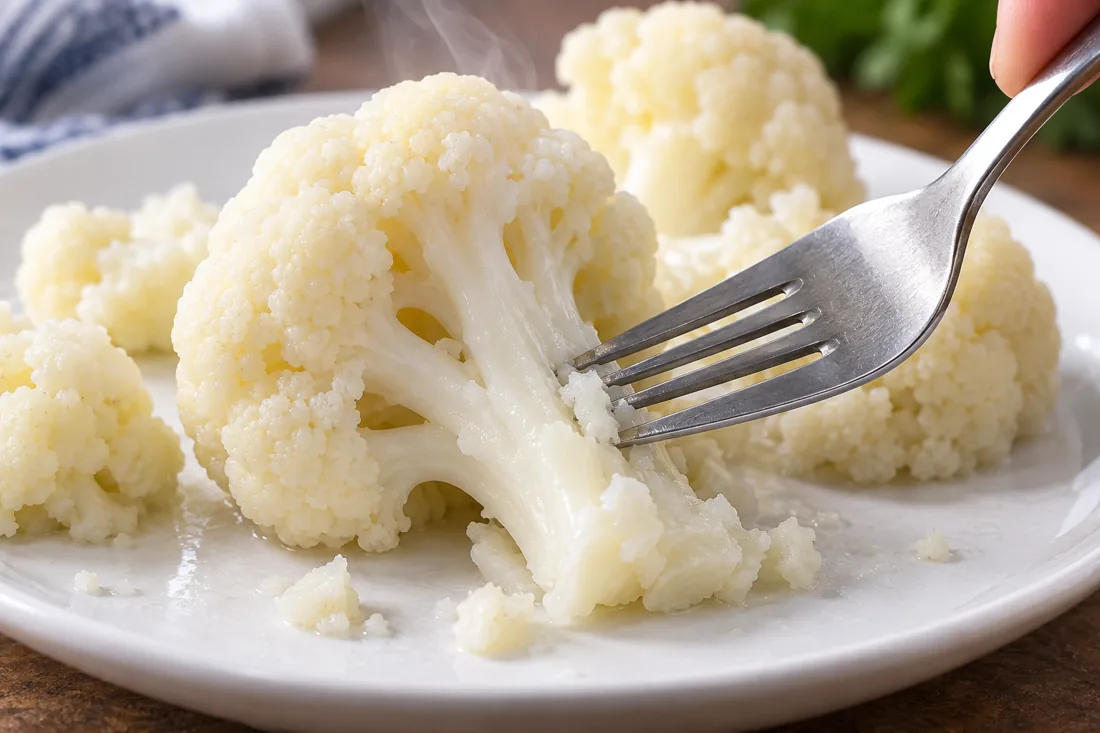
Illustrative tenderness check: the fork yields through the thick stem before blending.
Steaming is a useful starting method because it cooks the cauliflower without immersing it in a large volume of water. Use the equipment and water level appropriate to the steamer, keep the food above the water and follow the package's cooking instructions. Allow enough time for the stems to become soft. A brief steam intended for a vegetable side dish may not be sufficient for a smooth mash.
Boiling also works. The Cleveland Clinic mashed cauliflower recipe uses cooked, drained cauliflower, including a frozen option. The important practical follow-up is thorough draining; do not carry a ladle of cooking water into the blender by accident. Use enough water to cook properly, then separate the cauliflower from it before deciding how much liquid the mash actually needs.
Microwaving can be convenient for a smaller batch or an approved steam-in-bag product. Follow the product's instructions for container, venting and any added water. Let standing time occur where directed, then assess the largest pieces. Microwave heating can be uneven, so a soft floret from one corner does not establish that every stem is ready. Stir or redistribute when the instructions allow it.
- Choose a cooking method allowed by the product directions and measure the frozen portion.
- Cook until the required product cooking step is complete and the thickest stems yield easily to a fork.
- Check several pieces from different parts of the batch rather than only the smallest curds.
- If stems are still firm, continue cooking in short, controlled increments before draining and blending.
- Move the tender cauliflower into the draining stage promptly so the method remains repeatable.
Do not add large amounts of dairy at the start simply to help cook the stems. It makes the tenderness test less clear, complicates draining and can catch on the bottom of a pan. Cook the vegetable first, then build the finished texture. The same reasoning applies to a thick cheese sauce: it should not hide an undercooked cauliflower core.
The Iowa State Extension mashed cauliflower method also emphasizes cooking until tender before mashing. Different equipment can produce different styles, from rustic hand-mashed vegetables to a fine purée. Both can be good results, provided the chosen texture is intentional and the cauliflower is cooked appropriately rather than merely broken into smaller pieces.
Drain before you blend
Draining is the stage that most clearly separates a thick mash from a thin cauliflower soup. Transfer the cooked vegetable into a suitable strainer and allow free water to run off. Shake or turn it gently as appropriate, without forcing small particles through the mesh. A brief pause also lets surface steam escape, but keep normal safe food-handling controls in place rather than leaving the batch unattended to cool indefinitely.
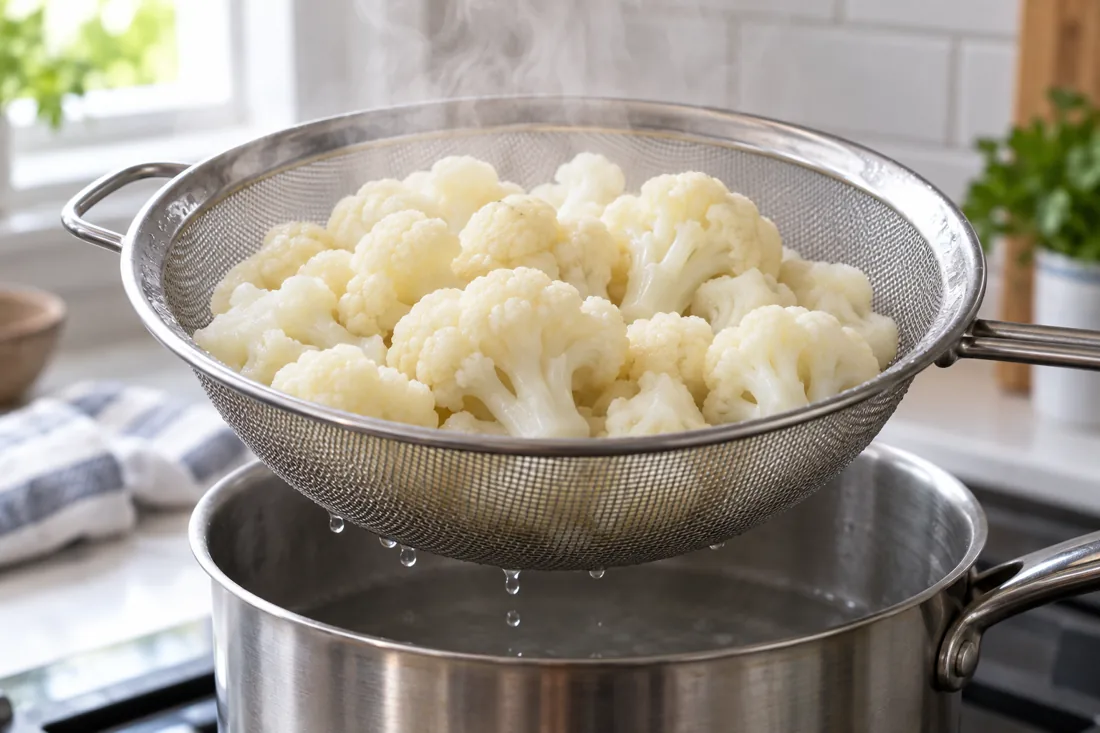
Illustrative draining stage: a strainer separates free water before liquid ingredients are added.
Look at the vegetable and the container below it. Water dripping freely is a sign that draining is still doing useful work. A strainer full of cauliflower resting in its own drained liquid is not draining effectively, so make sure there is clearance underneath. For cauliflower rice, use a fine enough mesh to retain the product while allowing the free liquid to pass.
For an especially wet batch, return the drained cauliflower to a warm, dry pan over controlled heat and stir briefly to release additional surface moisture. Watch carefully so it does not scorch or develop an unwanted roasted flavor. This is a short drying step, not an instruction to cook the mash until all moisture is gone. Cauliflower still needs enough water to form a pleasant purée.
Avoid squeezing very hot cauliflower in a kitchen towel. It can cause burns, and an unsuitable cloth can introduce lint or handling problems. A strainer, appropriate pan and controlled stirring are easier to standardize. If your operation uses a mechanical draining or pressing method, validate it with the actual product and sanitation procedure rather than borrowing an improvised household technique.
Do not judge dryness only by the absence of a puddle at the bottom of the cooker. A product can carry considerable moisture on and between its pieces. Conversely, aggressively drying every batch to the same visual point can lower yield and make the flavor too concentrated or cooked. The target is enough moisture control for the desired serving texture, not the lowest possible finished weight.
For repeat trials, weigh the cooked, drained cauliflower before adding butter, broth or dairy. That separates vegetable yield from recipe additions. If the final mash becomes thinner on one production day, the drained weight and added-liquid record help you locate the difference. Without those measurements, it is easy to blame the frozen product when a longer boil or a shorter drain was responsible.
A useful small test is to place a spoonful of the drained, roughly mashed vegetable on a plate. If clear water quickly collects around it, address the moisture before adding cream. If it sits as a dry, coarse mound but the stems are tender, a modest addition during blending may be appropriate. This simple observation is more informative than following an unchanged liquid quantity for every bag.
Build a smooth mash with controlled additions
Choose the equipment for the texture you want. A potato masher produces a more rustic result with small pieces. A food processor can make a finer purée, while an immersion blender needs a suitable container and enough depth to work safely. Follow the equipment's guidance for hot foods, maximum fill and venting. Never seal very hot food in a blender arrangement that is not designed to release pressure safely.
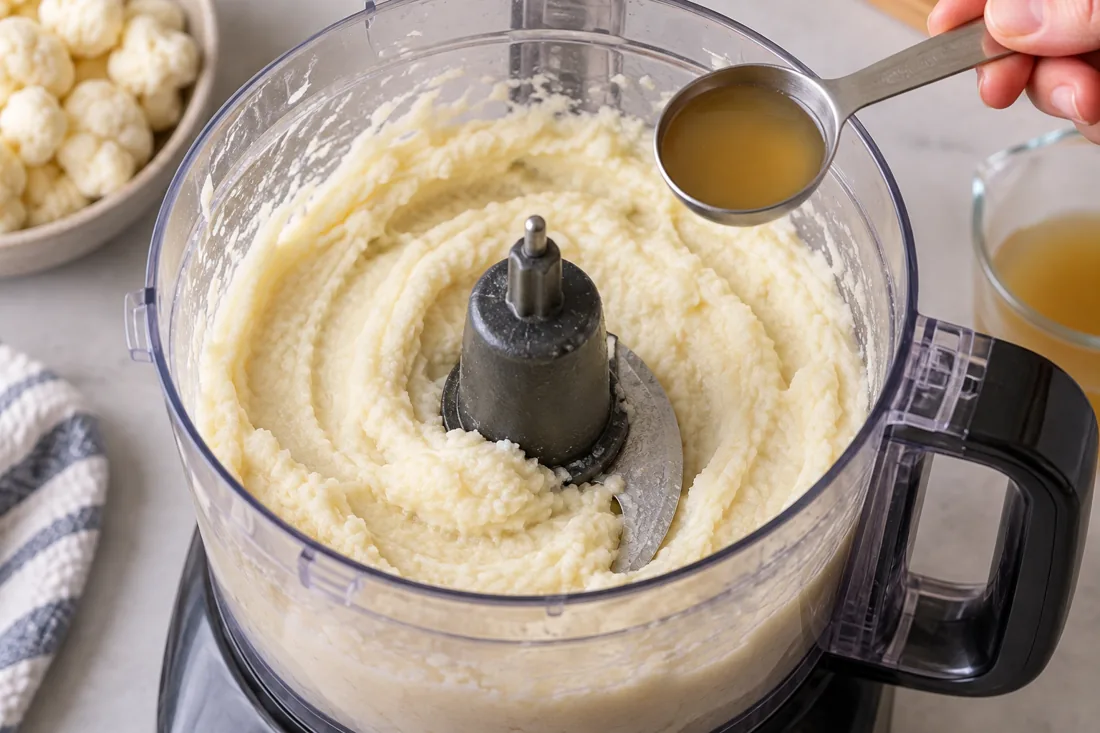
Illustrative blending stage: a measured spoon of liquid allows a controlled texture adjustment.
Start by processing the well-drained cauliflower with a modest amount of butter, olive oil or another recipe fat. Pause and scrape the sides as needed with the machine stopped. The first few moments may look uneven because large pieces have not yet reached the blade. Give the equipment a reasonable chance to work before deciding that a large amount of liquid is essential.
Add milk, cream or broth in small measured increments. The UCLA mashed cauliflower recipe uses frozen riced cauliflower and incremental broth, a useful model for controlling texture. You may need less added liquid than expected because the cooked vegetable already contains water. The amount that worked for one brand or cooking method is a starting reference, not a universal requirement.
For a manageable kitchen trial, use a tablespoon measure rather than pouring directly from a carton. Blend, stop and inspect after each addition. A spoon groove that remains visible briefly is a useful serving cue for a thick mash; a sauce-like flow may be right for another application. Choose the target before adding more. You cannot easily remove broth from a finished purée without changing the recipe again.
Season after the main texture is established. Salt, pepper and a little garlic can be enough, especially when the mash accompanies a strongly flavored main dish. Broth, cheese and salted butter can all contribute salt, so account for them before making the final adjustment. Taste a safely cooked portion at a representative serving temperature; an extremely hot sample can make flavor judgment difficult.
Roasted garlic can add a softer, sweeter flavor, while raw minced garlic has a sharper character and needs an appropriate cooking treatment. Do not assume that warm cauliflower automatically cooks a large amount of raw garlic thoroughly or gives the flavor you intended. Prepare the flavoring to suit the recipe, then incorporate it in a controlled amount.
Cheese can thicken and enrich a mash, but it also changes flavor, allergen information and cost. It should be an intentional ingredient rather than a hidden repair for poor draining. If a dairy-free recipe is required, choose suitable fat and liquid alternatives and verify the complete ingredient and allergen requirements. Do not label a product dairy-free simply because milk was omitted while butter or cheese remained in the formula.
Fix watery, grainy or weakly flavored mash
Diagnose the texture before changing the recipe. A watery mash and a grainy mash can look equally disappointing, but they usually call for different actions. Adding more liquid may help blades circulate a very thick, tender batch; it will not cook a firm stem. More processing may smooth cooked particles; it will not remove excess water already in the bowl.
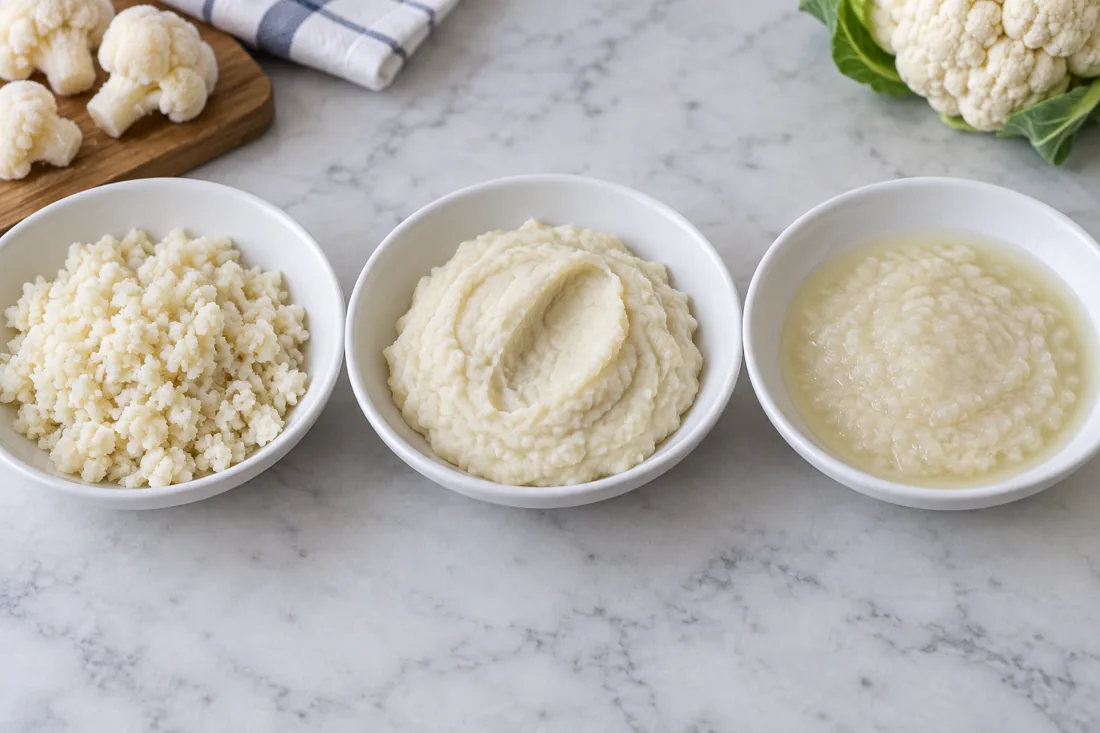
Illustrative texture comparison: coarse mash, smooth mash and a thin watery result require different corrections.
| What you notice | What to check first | Controlled correction | What may make it worse |
|---|---|---|---|
| Thin mash with a watery edge | Draining and recorded liquid addition | Gently reduce excess moisture in a suitable pan, then reassess | Adding cream before checking consistency |
| Firm grains or resistant pieces | Tenderness of the thick stems | Cook the vegetable sufficiently before final blending | Repeated blending of undercooked stems |
| Thick but uneven purée | Equipment load and circulation | Scrape safely, process in a suitable batch, add a small measured liquid increment if needed | Overfilling the processor |
| Smooth but bland mash | Salt, recipe fat and flavor balance | Adjust seasoning in small steps | Continuing to cook merely to intensify everything |
| Good fresh mash that loosens during service | Holding conditions and condensation | Test the actual service arrangement and revise the process | Approving only the immediate blender result |
A thin finished mash can sometimes be improved by gentle evaporation in a wide pan, with frequent attention to the bottom. Keep the heat controlled and use the appropriate food-safety procedures. If dairy or cheese is already present, the mixture may catch or separate more readily. It is usually easier to correct the next batch by draining properly than to rescue a large finished batch under service pressure.
If the mash is grainy, identify whether the particles are genuinely firm or simply part of a rustic hand-mashed texture. Press a particle between a fork and the plate. A resistant stem points toward undercooking; a soft particle may need a different tool or more processing. Decide whether a completely smooth purée is actually required before investing extra labor in eliminating every visible piece.
Weak flavor can come from too much liquid, too little seasoning or a mismatch with the main dish. First check the texture: if it is already correct, make a small seasoning adjustment rather than automatically adding more butter or cheese. A little acid may brighten some recipes, but introduce it cautiously and taste the whole plate. The mash should support the dish, not compete with every other component.
Do not use mashed potato flakes, starch or another thickener without treating it as a recipe change. Such an addition may be legitimate, but the ingredient declaration, dietary claims, allergens and texture target can change. A kitchen should know whether it is serving cauliflower mash or a blended formulation. For a commercial product, that distinction belongs in the approved recipe and specification.
Finally, distinguish quality troubleshooting from food safety. An attractive smooth texture does not establish that the food was cooked, cooled or held correctly. If time-temperature history is unacceptable or uncertain under your procedure, do not attempt to solve that problem with additional seasoning or blending. Follow the operation's disposition rules.
Compare formats for foodservice
Florets, cauliflower rice and a prepared mash are three different operational choices. The best format depends on equipment, labor, menu flexibility and the finished specification. Buying a smaller cut may shorten one part of the process but create more draining difficulty; buying a prepared mash may reduce preparation but limit control over the ingredients. Compare the complete process rather than only the minutes at the cooker.

GreenLand cauliflower rice product photograph: small particles need an appropriate cooking and draining method.
| Format | Practical advantage | Main point to test | Specification question |
|---|---|---|---|
| Plain frozen florets | Flexible use across mash, sides and other dishes | Thick-stem tenderness and draining yield | What size distribution and stem proportion are supplied? |
| Plain frozen cauliflower rice | Small pieces can be convenient for rapid heating and processing | Water retention, particle loss and final smoothness | What particle size and fines allowance are agreed? |
| Prepared frozen cauliflower mash | Reduced on-site preparation where the formula fits | Reheating, holding texture and flavor consistency | What are the ingredients, allergens and validated preparation instructions? |
Run a trial using the actual service equipment. A small countertop processor can make a fine sample that does not translate directly to a larger kettle and immersion blender. The geometry of the vessel, batch depth and mixing access all matter. Record the maximum practical batch, not merely the largest quantity that physically fits in the container.
Measure usable yield at a defined point. For example, record the drained cauliflower weight, the finished mash weight after additions and the portion count after the planned hold. These are different numbers with different meanings. A high final weight caused by extra broth may not represent better value if the mash cannot hold the intended plated shape.
Include labor in the comparison. Florets may need more tenderness checks; rice may need finer straining; a prepared mash may need careful reheating and a different holding container. The cheapest raw kilogram is not automatically the cheapest acceptable serving. Equally, paying for a prepared format adds little value if your kitchen already has spare equipment and needs a highly customized recipe.
The real product photograph in this section shows a cauliflower rice format from our product range. It is a form reference, not a claim that rice will always outperform florets or that a particular finished mash is included. We confirm the available cut and packing details, then recommend that the buyer trial the product in the intended process before approving repeat supply.
If the mash enters a chilled meal, frozen ready meal or institutional menu, test the complete downstream treatment. A product that is excellent immediately after blending may behave differently after cooling and reheating. Evaluate the same pack, portion depth and service sequence used in production, with the appropriate validated food-safety controls. That is where a meaningful format comparison ends.
Hold, reheat and approve a repeatable batch
Approve the mash at the time it will actually be eaten. Check it immediately after preparation, after the intended controlled hold and after reheating if reheating is part of the process. Condensation, evaporation and continued softening can change the texture. A sample tasted only at the blender can miss the problem that appears on a service line thirty minutes later.
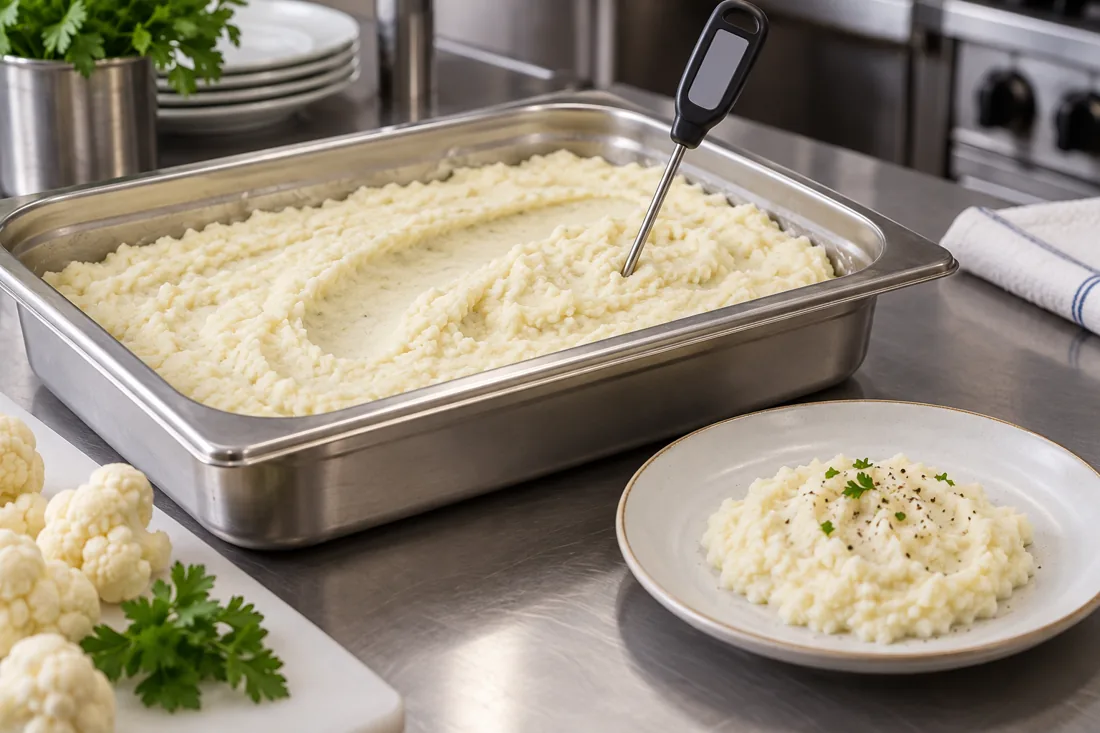
Illustrative service check: evaluate the mash in its actual holding container, under the operation's food-safety controls.
Use the operation's approved hot-holding, cooling and reheating procedures. Do not leave a warm batch on the counter to preserve a preferred texture. For household leftovers, USDA guidance advises prompt refrigeration, shallow containers and reheating leftovers to 165°F. Its general refrigerator guidance is three to four days for properly handled leftovers, not a shelf-life validation for a commercial packaged mash.
When reheating, add liquid cautiously. A cold mash may appear very firm and then loosen as it warms, particularly if the recipe contains fat or dairy. Heat appropriately, stir to distribute temperature and assess the hot texture before adding a large splash of milk. If a small addition is needed, measure it and include it in the revised procedure so different staff do not make different adjustments.
For a plated side, check whether the mash holds its shape beside sauce or meat juices. For a bowl meal, a softer texture may be more desirable. For a filled pastry or layered dish, free water may have consequences for the surrounding components. The acceptance standard should name the application rather than require an abstract maximum thickness that no one actually needs.
Keep a concise batch record: frozen product and lot, input weight, cooking method, tenderness endpoint, drained weight, ingredient additions, equipment, final yield and holding observation. A photograph of the finished spoon groove can help communicate the target, but pair it with the recipe and process. A picture cannot show how much water was removed or whether the batch was handled safely.
When contacting us about supply, include the preferred floret or rice format, pack size, expected quantity, destination and intended preparation. If you have a current product, share the cut and process requirements that matter rather than asking only for a visually similar bag. We can review available frozen cauliflower options and confirm details against the order.
The most repeatable method remains straightforward: cook the cauliflower until the stems are genuinely tender, drain before adding anything creamy, and build the finished consistency a little at a time. Once that sequence works in your equipment, a recorded holding trial turns a good first bowl into a dependable service product.
Source frozen cauliflower with GreenLand-food
GreenLand-food is a professional frozen cauliflower supplier and manufacturer in China, providing factory-direct wholesale supply for importers, food manufacturers, foodservice distributors, and private-label programs.
Send your required form and cut, pack size, expected quantity, application, destination, private-label needs and requested documents. We will review the available product and order-specific requirements.