


How to Roast Frozen Asparagus Without Excess Water
Sep 20, 2026
Leave a message

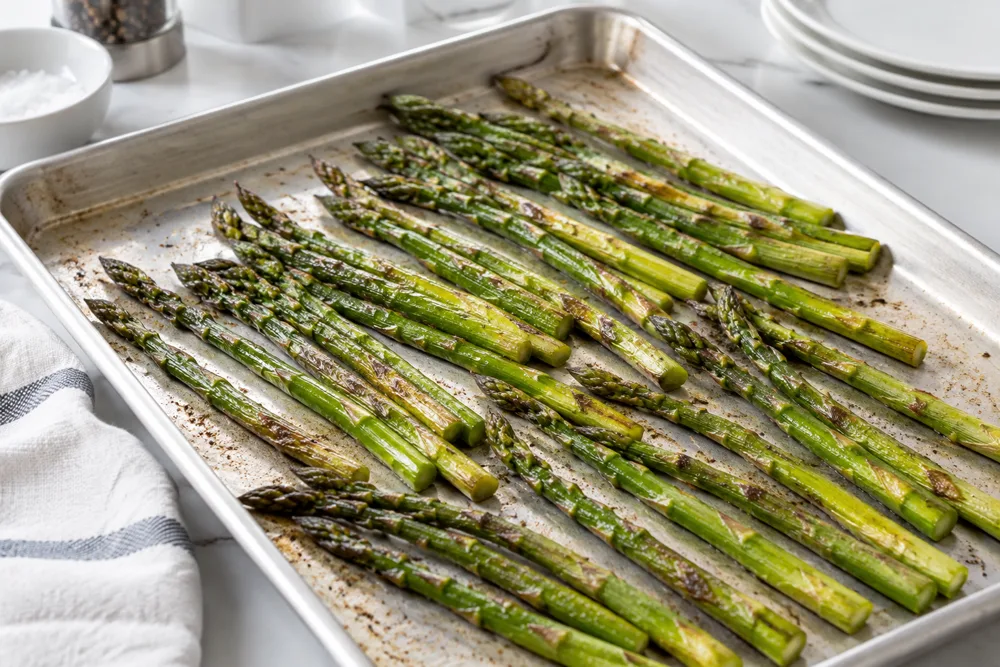
The goal is tender asparagus with some browned contact surfaces and very little free water on the tray. Frozen spears usually finish softer than fresh asparagus. Keeping them in the oven until they become uniformly crisp can leave the tips dry while the stems turn limp. Give moisture room to evaporate, check the thickest stem, and serve soon after roasting.
For a restaurant or foodservice distributor, those same details determine whether a bag performs consistently. Spear diameter, trimming, blanching and frozen condition influence the result before a cook selects a temperature. A small oven trial is therefore useful both for preparing dinner and for approving a commercial specification.
Why frozen asparagus releases water in the oven
Water enters the tray from two places: ice attached to the outside of the spears and moisture released from the vegetable as it warms. Freezing changes plant tissue, and commercially frozen asparagus has normally also been blanched. Its structure therefore responds differently from a freshly trimmed raw spear. A wet surface early in roasting is expected; a persistent puddle tells you that water is arriving faster than the tray and oven can remove it.
Roasting involves both heating the center and drying the surface. At the beginning, some energy goes into melting ice and warming cold tissue. As the water evaporates, the outside becomes more able to brown where it touches the tray. This explains why increasing oil alone rarely fixes watery asparagus. Oil can improve coating and contact, but it does not create more exposed space between tightly packed spears.
A deep casserole dish makes this problem harder to manage. Its sides shelter the food from airflow, and overlapping spears create pockets where steam accumulates. The same weight of asparagus spread over a broad, low-sided tray generally has more opportunity to lose surface moisture. The relevant comparison is exposed food surface and pan contact, rather than the name printed on the cookware.
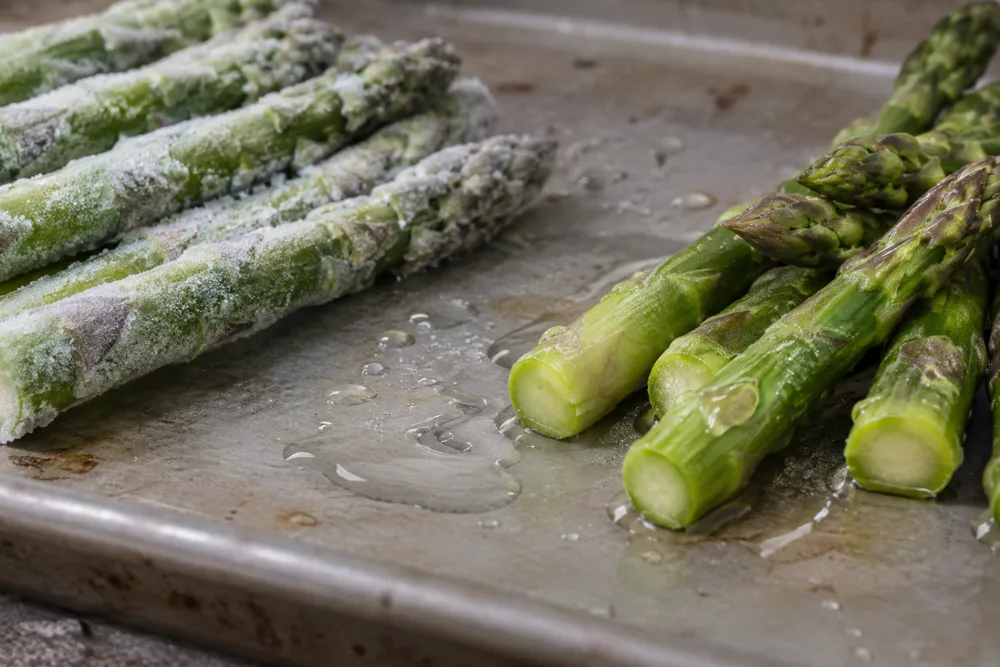
Illustration of released moisture; a dry tray surface depends on evaporation as well as the product.
Thawing on the counter adds an uncontrolled interval before cooking. The spears can soften, collect liquid and lose tip integrity while you prepare other ingredients. Direct roasting keeps preparation simpler and avoids that separate wet handling stage. If a frozen block cannot be separated safely, follow the package method or choose an application designed for the block; do not try to force a knife through hard frozen spears.
There is still a limit to what the oven can correct. Old raw material, woody trimming, excessive blanching or repeated temperature fluctuation can create quality defects that persist after roasting. Our asparagus preparation guide explains the earlier processing steps. For the roasting decision, the useful question is whether the frozen product has enough uniformity and structural integrity to reach the desired cooked texture together.
Ice attached to the outside is also different from the water held inside the vegetable. Removing loose frost can reduce the initial load of water, but it cannot prevent the asparagus itself from releasing moisture. Rinsing under a tap adds another wet handling step and is unnecessary for a product intended to be cooked from frozen. Where the package specifies a different preparation procedure, follow it. In a trial record, describe loose surface ice separately from liquid measured after cooking so the two observations are not confused.
Choose spears and cuts that roast evenly
Look for asparagus pieces that are reasonably similar in diameter and length within the portion you intend to cook. A thin tip and a thick lower stem do not heat at the same speed. A tray containing very slender spears beside much thicker ones can produce dry tips before the large centers are tender. Sorting an obviously mixed bag into two batches is often more effective than repeatedly adjusting the oven.
Whole spears suit plated sides because the shape remains easy to recognize. Tips and cuts can work for a roasted vegetable garnish, grain dish or prepared meal, but small pieces have more exposed cut surfaces and may need an earlier check. Center cuts will not provide the same visual presentation as whole spears. Select the form for the finished portion and write the cooking method around that form.
Our IQF asparagus product page describes spears, cuts, tips and center cuts, with diameter and length options confirmed by specification. These are useful purchasing distinctions. A buyer asking only for "frozen asparagus" leaves open several variables that affect loading, portion count, handling loss and the time required in the oven.

GreenLand product photograph. Confirm diameter, trimming and spear condition against the offered specification.
Inspect the frozen condition before cooking. Separate pieces are easier to distribute evenly. A little frost is common, while a heavy accumulation of loose ice increases the water arriving on the tray. Large clumps can also make portioning difficult. Their presence warrants checking handling history and the agreed specification; appearance alone cannot establish when a temperature change occurred or whether the product is safe.
Plain asparagus gives you control over the oil and seasoning. A pre-seasoned product may contain salt, butter, cheese, sauce or a coating that needs different heat exposure. Sugar-containing coatings can darken before the center reaches its required endpoint. Treat the manufacturer's directions as the starting authority for that SKU, and avoid applying an uncoated-spear schedule without a trial.
For an initial commercial sample, record the form, approximate diameter range, frozen starting weight and observed frost level. Keep photographs of the uncooked portion and the finished tray under similar lighting. These modest records make later conversations more useful: the buyer and supplier can discuss a particular condition instead of comparing two general impressions of "too watery" or "not crisp enough."
Set up the tray before opening the bag
Heat the oven fully before loading the asparagus. The thermostat reaching its target is a useful starting cue, although different ovens recover differently after the door opens. A cold tray full of frozen vegetables draws heat from the oven, and a heavily loaded oven may take longer to recover. Prepare the tray, oil and seasoning first so the freezer bag can remain frozen until the last practical moment.
Use a sturdy rimmed metal tray with enough area to leave visible gaps around the spears. For a home trial, about 450 g on a large half-sheet tray is a reasonable starting load if the actual spears fit without overlapping. It is a trial quantity, not a universal maximum. If the layer is crowded, divide it. Two lightly loaded batches are easier to control than a thick pile that requires a long drying period.
Bare metal offers direct contact and makes it easy to observe browning. Parchment can simplify release, provided it is rated for the selected temperature and used according to its maker's instructions. A silicone mat changes contact and heat transfer, so the result may need a different trial. Glass and ceramic dishes are less suitable for a method built around rapid contact heating; avoid exposing cookware to temperature changes its manufacturer does not permit.
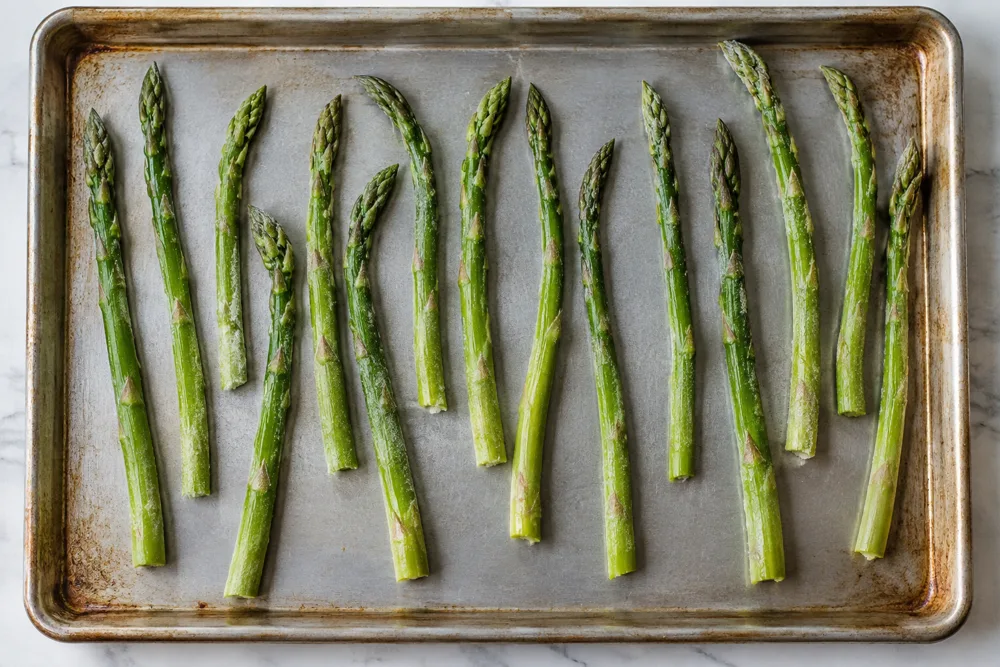
Visible gaps give moisture a route away from the asparagus surface.
Preheating a suitable metal tray can help establish contact heat, but it also makes loading less forgiving. Handle it with dry oven mitts, place it on a secure heatproof surface and add the asparagus carefully. Keep loose ice away from pools of hot oil. You can also begin with a room-temperature tray in a fully heated oven; focus first on a manageable load and repeatable handling rather than adding a hazardous flourish.
Use enough oil for a thin, even coating. For 450 g of plain spears, roughly one tablespoon is a practical starting amount, adjusted to the tray and product. Toss promptly and redistribute the asparagus. Large oil puddles do not solve a water problem, and a thick coating can leave the finished vegetable greasy. Add a modest amount of salt and dry seasoning, accounting for any salt already in the product.
Save wet sauces and generous lemon juice for the finish. A liquid dressing added before roasting increases the moisture that must evaporate and can leave uneven seasoning where it collects. Fresh chopped garlic also burns more easily during a hot roast than the asparagus center cooks. Use a suitable dry seasoning initially, or add garlic in a controlled late stage with enough time to soften without scorching.
A measured roasting method from frozen
The following sequence is a starting method for plain, individually frozen green asparagus. It is designed around observation and a modest load. It does not replace package cooking instructions, and the same time should not be printed on a retail pack until that product and the stated appliance conditions have been tested.
- Preheat a conventional oven to 425°F / 220°C. Set a rack near the middle and prepare a broad rimmed metal tray. Keep the asparagus frozen while the oven heats.
- Weigh or portion approximately 450 g, remove loose ice where practical without rinsing, and arrange the spears in one layer. Divide the portion if there is insufficient open space.
- Coat lightly with about one tablespoon of oil and season. Move individual spears apart so they contact the tray rather than resting across one another.
- Roast and make the first inspection around 12 minutes. Turn or reposition the spears gently with tongs, especially if one side of the oven colors faster.
- Continue until the thickest stems are cooked through according to the product directions, the texture is tender and the tray has little free water. A total of about 15–20 minutes is a starting expectation for medium spears, with earlier checks for thin pieces.
- Transfer promptly, then add lemon, herbs or another finishing ingredient in a measured amount. Serve while the surface is still relatively dry.
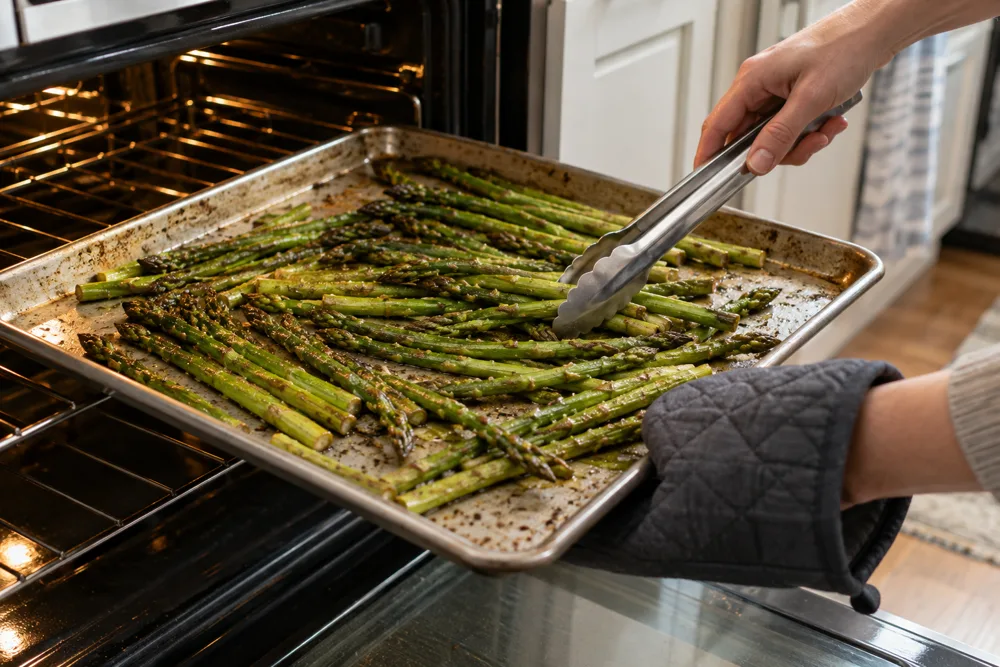
Turn carefully during the trial and compare both tray contact and upper-surface color.
Open the door only long enough to inspect and turn the vegetables safely. Frequent checking can slow heat recovery. When learning a new oven, one planned inspection followed by a shorter finishing interval is usually easier to interpret than repeatedly moving the tray in and out. Note the actual elapsed time together with the condition of the spears.
A fan oven can remove moisture differently and may color the tips more quickly. Follow the appliance guidance for converting conventional settings, then check earlier during the first trial. Do not assume that turning on a fan creates the same conditions as a compact air fryer. The tray area, airflow, load and distance from the heating element remain different.
If the tray contains substantial liquid at the first inspection, look at spacing and loading before extending the roast indefinitely. Where practical, carefully spread the spears over a second suitable tray. If the asparagus is already fully tender, further drying may cost more texture than it gains. Serve with a lighter finishing treatment and reduce the next batch load. That change addresses the reason the water accumulated.
Read the surface and center before adding more time
Use several cues together. Lightly browned areas where the spears contact the metal indicate that those surfaces have dried enough to develop color. The thickest part should no longer contain a cold or icy center, and a knife or fork should enter with the resistance you want for the dish. The package's required cooking endpoint takes priority over appearance. A brown tip alone cannot confirm that the whole portion is ready.
Uniformly dark asparagus is not required for a successful roast. Tips are thin and exposed, so they can become brittle while lower stems are still moist. Stop chasing an all-over crisp shell if the central tissue is already softening. The realistic result from blanched frozen asparagus is a cooked vegetable with roasted flavor and some surface contrast.
Watery and mushy describe different problems, even though they can occur together. Watery asparagus leaves free liquid around the portion. Mushy asparagus has lost desirable structure. A longer roast may remove the liquid, yet make the structure worse. This distinction matters when diagnosing a sample, because an instruction that fixes one observation can intensify the other.
| Observation | Likely process contribution | Useful next trial |
|---|---|---|
| Pale spears with a puddle | Crowding, excess surface ice or weak heat recovery | Reduce load and use a broader tray |
| Dark tips with a firm cold center | Wide diameter variation or aggressive surface heat | Separate sizes and reassess the setting |
| Dry tray with limp spears | Excess total heat exposure or soft starting product | Check earlier and compare a second lot |
| Tough lower stems | Trimming or maturity difference | Review the raw-material and trimming specification |
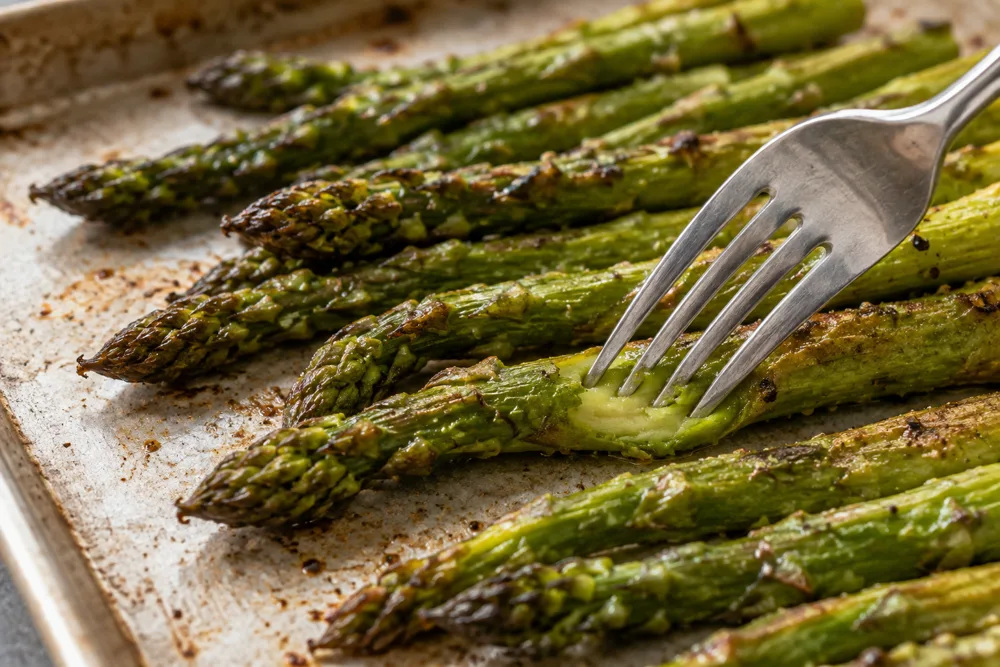
Check the stem and tip separately; surface color alone does not describe the center.
Keep the table as a diagnostic starting point. It cannot establish a defect's cause from appearance alone. For example, a limp spear might reflect the cooking schedule, previous blanching or a storage problem. Repeat the same modest tray trial with a second portion before drawing a supplier conclusion. If only the tray load changes, the comparison becomes much easier to interpret.
Evaluate flavor after the basic cooking result is acceptable. More salt can make a watery portion taste stronger without improving its texture. Cheese, butter and sauce can also hide the surface you need to inspect. An unadorned sample is useful during approval; the final seasoning can then be tested at its intended dose. Record both versions if presentation is part of the acceptance decision.
If the bottom of the spear is dark while its upper surface remains pale, inspect the pan before changing the oven. A dark thin tray may deliver a different contact result from a heavy bright sheet. The amount and distribution of oil also influence where browning develops. Record which tray produced the approved result so another cook can repeat the setup without guessing from the temperature alone.
A tray rotated halfway through cooking can help when an oven has a noticeably hotter rear corner. Turn it carefully and keep the door open only as long as necessary. If every tray needs repeated repositioning, the process may be too sensitive for the planned service volume. A smaller load or a different rack arrangement is worth testing before adding another complicated instruction.
Taste a tip and a lower stem from the same batch. The tip can become fragile while the thicker stem still resists a fork, especially when sizes vary. An average texture score hides that difference. For a plated side dish, the acceptable range may be narrow; for asparagus folded into a warm grain dish, some variation may be less noticeable.
Keep roasted asparagus appealing during service
Roasted asparagus begins changing as soon as it leaves the oven. Steam continues to escape from the warm tissue. A tight lid traps that moisture and can return condensation to the surface, while a deep pile holds heat and encourages further softening. A restaurant should therefore judge the serving method as part of the recipe, rather than approving a sample directly from the tray and assuming it will look the same later.
For immediate plating, transfer gently into a shallow arrangement and add finishing ingredients just before dispatch. Avoid placing the spears in a pool of sauce if the desired presentation relies on a dry roasted surface. A sauce can be served alongside or applied sparingly. Acid contributes brightness, but a heavy late pour can recreate the watery appearance that careful roasting removed.
For catered service, use the establishment's approved hot-holding procedure and equipment. Texture considerations must fit within the applicable food-safety controls. Trial the actual portion depth, lid handling and service interval. Check a sample at the intended time of consumption, because the customer's result is more relevant than the cook's first impression.
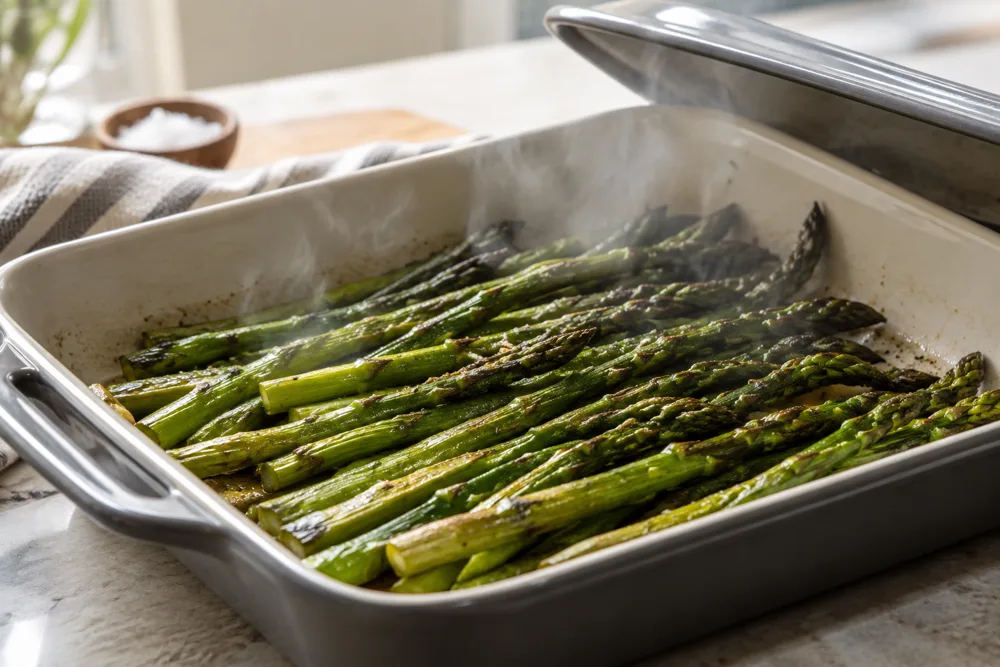
A shallow service arrangement helps show why the holding method affects texture.
Reheating introduces another heat cycle. An asparagus component for a ready meal may need a different initial finish from a side served immediately, but that adjustment requires a validated overall process. It is not a reason to leave a ready-to-cook vegetable inadequately heated before an uncontrolled hold. The development team should specify the full sequence, including cooling, storage and the final consumer or foodservice heating instructions.
At home, refrigerate leftovers promptly in shallow containers and follow established food-safety guidance for cooked leftovers. Reheating can restore warmth and some surface dryness, but it will not reverse the structural change already produced by blanching, freezing and roasting. Use realistic expectations when deciding whether to serve leftover spears as the same plated side.
A foodservice acceptance trial can compare the fresh-from-oven portion with the planned held portion using the same lot. Record the cooked weight, visible liquid, tip breakage and fork resistance. Decide in advance which changes are acceptable. A small amount of normal moisture may be harmless for a sauced dish but unacceptable for a dry vegetable garnish, so the finished application must define the standard.
Specify frozen asparagus for a repeatable oven result
We help purchasing teams match asparagus form and grading to the intended cooking method. For oven-roasted whole spears, begin with diameter, length, tip condition, trimming and the acceptable proportion of broken pieces. Include the expected frozen separation and surface-ice condition. These details give the supplier a clearer target than a request for premium quality alone.
Agree how the sample will be cooked. Record the oven type, setting, tray dimensions, product weight, oil dose, turning point and finished assessment. A supplier sample tested at a light load and a production batch cooked in a crowded tray are different trials. Reproducing the same conditions makes it easier to distinguish a product change from an equipment or handling change.
Cooked yield can be measured simply: weigh the frozen portion entering the process and the cooked portion after a defined resting interval. Keep any added oil or sauce consistent and state whether it is included in the finished weight. The resulting number is useful only with that method attached. A yield claim without a test procedure is difficult to compare between suppliers.

GreenLand product photograph. Agree the commercial form and tolerances before using the oven trial as an acceptance reference.
For packing, consider the amount the kitchen can use while keeping the remaining product frozen. A bulk carton may suit a central kitchen, whereas smaller inner bags can make portioning and rotation easier for individual outlets. Ask us to review packing size, carton arrangement, order quantity, destination and any private-label requirements together. These choices influence handling as well as logistics.
Sample approval should also cover the required documentation and lot identity. Request the agreed specification, relevant test information and traceability records for the supplied product. Certification claims need a current document with the correct holder and scope. A roasting trial establishes application performance; it does not replace the separate checks used to qualify a food supplier.
The wider frozen vegetable range can support combined purchasing where the order and loading plan allow. Keep the asparagus approval criteria specific even when several vegetables share a shipment. A diameter-controlled spear for roasting and a small cut for soup may come from the same product family, yet require different expectations in the kitchen.
Source frozen asparagus with GreenLand-food
GreenLand-food is a professional frozen asparagus supplier and manufacturer in China, providing factory-direct wholesale supply for importers, food manufacturers, foodservice distributors and private-label programs.
Send the spear or cut form, diameter specification, packing, quantity, roasting application, destination, private-label needs and requested documents. We can review the proposed product against your tray trial and serving requirements.