


Wild vs Regular Blueberries: Size, Flavor and Supply
Sep 20, 2026
Leave a message

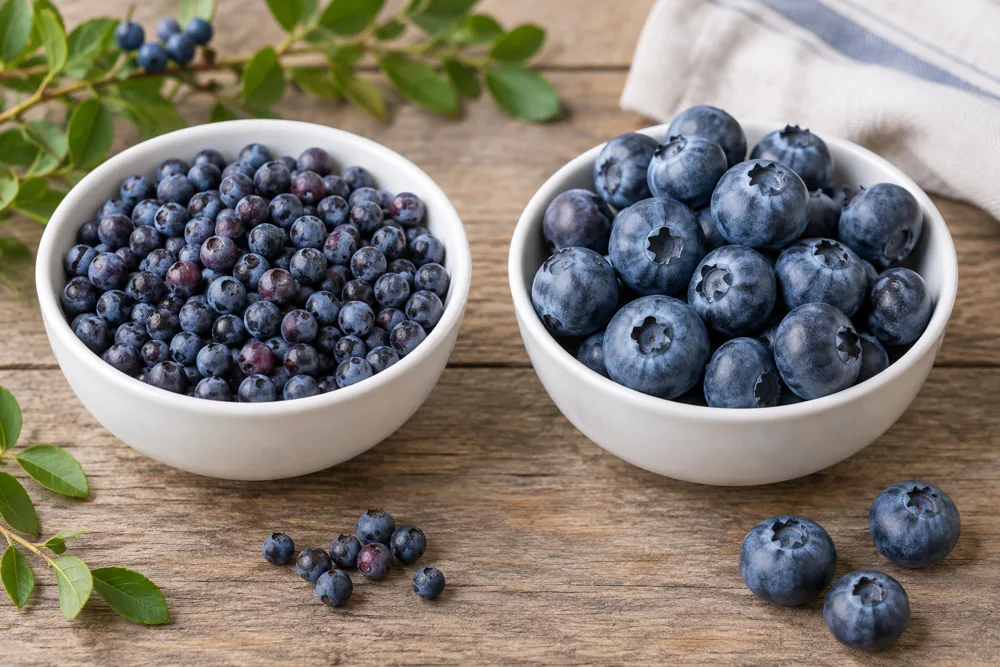
Wild berries often give a concentrated sweet-tart flavor and many small fruit pieces in a portion. Cultivated berries are often larger and can provide a more substantial individual bite. These are tendencies, not guarantees for every lot. Variety, maturity, origin, sorting, freezing and storage all affect the actual ingredient.
For buyers, the first task is to confirm what the name on the offer means. A small berry is not automatically wild, and a product described internationally as a wild blueberry may involve a different species, including bilberry. Once identity is clear, compare representative samples in the food you intend to make. Berry count, color release, texture and finished yield can matter more than a general claim that one type is better.
What wild and cultivated blueberries actually mean
Cultivated blueberries are blueberries grown as a managed crop from selected plants. The term commonly describes highbush varieties, although commercial blueberry production also includes other groups and hybrids. Growers select plant material for their climate, harvest window, fruit quality and market. Cultivated does not mean artificial, sweetened or genetically modified; those are separate questions about breeding, ingredients or product claims.
North American wild blueberry production usually starts with naturally established lowbush plants. Growers manage the fields to support production, including vegetation, soil conditions, pollination and harvest. "Wild" therefore describes the crop's origin and growth system, while the commercial field can still receive active agricultural management. It should not be understood as a promise that nobody has managed the crop.
The University of Maine describes several lowbush species found in Maine fields, with commercial production generally associated with Vaccinium angustifolium. Its native berry reference helps explain why a common name can cover botanical detail that matters to an ingredient specification. A buyer does not need to become a botanist, but the supplier should be able to identify the fruit accurately.
One repeated online claim needs correction: wild blueberries are not biologically incapable of growing from seed. The University of Maine publishes instructions for growing lowbush blueberries from seed. That possibility does not mean commercial wild fields operate like planted highbush orchards. Separate the way a plant can reproduce from the production system normally used to supply a crop.
The word regular is even less precise than cultivated. It is useful in everyday conversation, but it is not a sufficient purchase description. A quotation should identify the blueberry type and origin, then connect that identity to the agreed size and quality requirements. Otherwise two suppliers can offer materially different fruit under the same broad name.
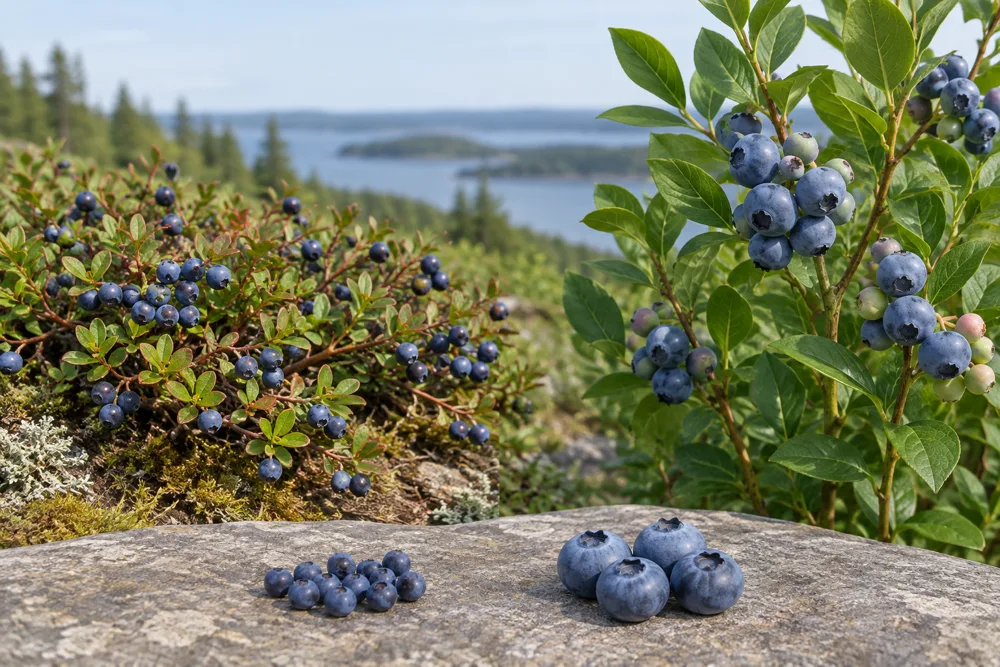
Lowbush and highbush growth habits help explain the common trade terms.
This distinction also prevents errors in marketing. If a finished product is advertised as containing wild blueberries, the ingredient identity and supporting records need to justify the claim. Choosing the smallest available cultivated grade does not provide that justification. Ask for clear product naming before designing packaging or comparing a price premium.
Ask whether the specification refers to a single named variety, a blend of cultivated varieties or the natural variability typical of the offered wild crop. This distinction helps explain why a representative sample can contain a range of sizes and flavors. A mixed crop is not automatically a defect; the question is whether its variation stays within the agreed limits and performs consistently in the finished food.
A supplier should also clarify which claims describe the product category and which describe the actual lot being offered. A website may show several blueberry products, while the quotation covers only one origin and grade. Match the sample label, specification, quotation and shipment description before approval. This small document check is particularly valuable when purchasing teams use translated common names or receive offers from several countries.
If the buyer wants to compare a wild premium with cultivated fruit, use the same commercial condition for both samples. Comparing newly opened frozen wild berries with cultivated fruit that has already thawed and been refrozen confounds identity with handling. An equal-condition comparison gives a clearer basis for a sensory decision and a more defensible purchasing discussion.
How size changes flavor and texture
Smaller berries create more individual fruit pieces in a fixed weight. In a muffin, pancake or yogurt portion, that can distribute blueberry flavor across more mouthfuls. A larger berry creates a more noticeable pocket of fruit. Neither pattern is inherently preferable; it depends on whether the finished food needs fine distribution, a prominent berry bite or a particular visual appearance.
A smaller sphere also has more surface area relative to its volume. Applied cautiously to berries of similar shape, this helps explain why skin can play a larger role in a portion of small fruit. Real berries vary in size and structure, so the geometric relationship is an explanation, not a nutrient calculation. Do not convert it into a promised antioxidant value for an untested lot.
Wild blueberry flavor is often described as intense and sweet-tart, while cultivated varieties span a wide range of sweetness, acidity and aroma. A ripe cultivated lot may taste excellent, and a poorly handled wild lot may disappoint. Taste the fruit under comparable conditions. A frozen berry sampled very cold can seem less aromatic than the same berry at a controlled tasting temperature.
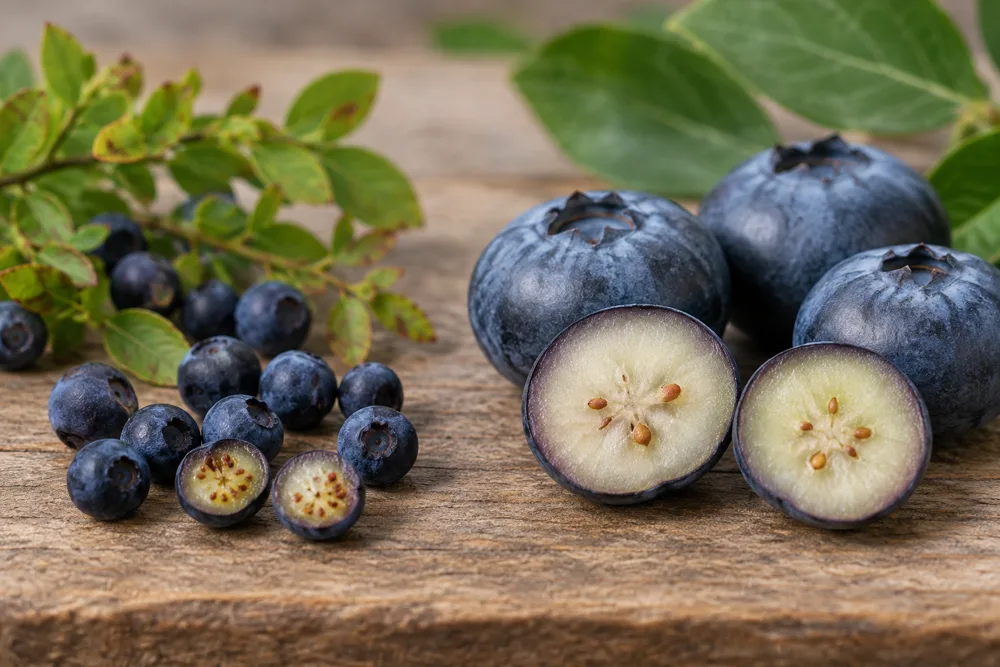
Skin-to-fruit relationships help explain texture, without establishing a nutrient value for an untested lot.
Sweetness should also be separated from soluble solids. Brix is useful in fruit purchasing, but perceived flavor reflects acidity and aroma as well as dissolved solids. Two samples with similar Brix can taste different in a neutral dairy base. If the application is sensitive to tartness, include an acidity measure or a defined sensory comparison in the approval procedure.
Skin texture becomes especially visible in smooth products. A sauce intended to retain berry identity may benefit from skin and small fruit pieces. A very smooth beverage or puree may require screening, with a corresponding effect on yield and color. Evaluate the actual process rather than assuming that an intense whole-berry flavor will survive every formulation and filtration step unchanged.
Fresh appearance and frozen appearance also need separate expectations. Natural waxy bloom can give berries a dusty blue surface. Frozen berries may carry frost, and thawing can release purple juice. These visible differences do not, by themselves, prove that one species was substituted for another. Identity comes from reliable sourcing and records; appearance helps evaluate whether the received lot matches the specification.
Compare wild and regular berries in the same recipe
The most useful comparison starts with equal ingredient weights and the same base formula. Keep the other ingredients, mixing method, heating and serving temperature constant. If the wild sample contains smaller berries, the piece count will change naturally. Do not compensate for that difference immediately, because it may be the very effect the buyer needs to understand.
For bakery use, cut the finished product and inspect the crumb. Look at the distribution of fruit, wet pockets, color streaking and the way berry pieces survive mixing. Small fruit may spread more evenly through a batter; larger berries may create a more distinct visual inclusion. The right result depends on the product promise and the portion size.
For yogurt or dessert toppings, observe how the berries release juice during the intended holding interval. Purple color moving into a white base may be attractive in a stirred product but undesirable in a layered presentation. Use the same fruit-to-base ratio and the same holding conditions for both samples. A photograph taken immediately after mixing does not describe the next day's appearance.
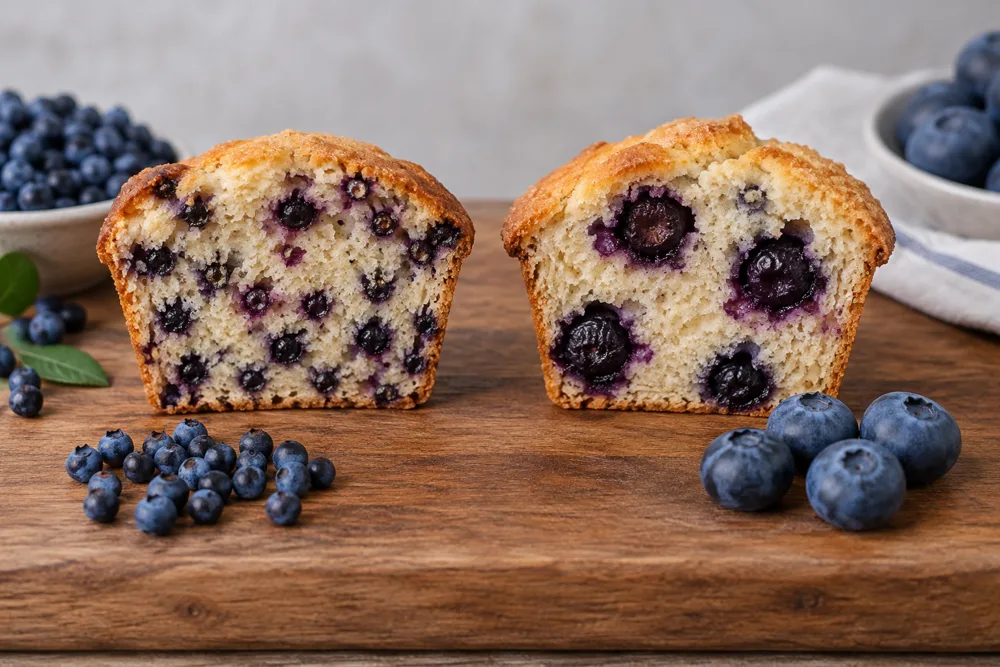
Compare distribution and wet pockets in the same base formula.
| Application | Small wild berries may contribute | Larger cultivated berries may contribute | What to compare |
|---|---|---|---|
| Muffins and pancakes | More frequent fruit distribution | Larger visible fruit pockets | Crumb moisture and berry integrity |
| Yogurt preparation | Fine fruit distribution and strong color | Distinct whole-berry bite | Color migration and portion consistency |
| Sauce or compote | Many small retained pieces | Larger softened pieces | Flavor, skin texture and reduction yield |
| Smooth beverage | Strong fruit character at a chosen dose | A different sweetness and aroma balance | Screened yield and finished flavor |
These are formulation possibilities, not universal performance promises. Frozen history can outweigh the typical difference between blueberry types. A sample with heavy breakage can release more color during mixing regardless of its botanical group. Keep the incoming condition visible in the trial record so the final result is not attributed entirely to wild or cultivated identity.
Run a second comparison only after the first reveals a meaningful difference. For example, the development team may choose to lower the fruit dose in one version or alter the starch system in a filling. Record that as an adjusted formulation, separate from the equal-weight comparison. This preserves a clear answer to two questions: how the ingredients differ and how each can be used effectively.
Frozen format and berry condition change performance
IQF describes individually quick frozen handling. It is useful when berries need to remain separate for weighing, mixing or retail portioning. It does not define species, grade, sweetness or readiness to eat. A bag can contain cultivated IQF blueberries or wild IQF blueberries, and either still needs the product-specific storage and preparation instructions that apply to it.
Whole berries are a natural starting point when the finished food needs visible fruit. Broken berries can be suitable for some cooked preparations, but a higher proportion of damage may alter color release, viscosity and appearance. A processor should approve the defect tolerance for the actual application. A specification suitable for puree is not automatically appropriate for a clear bag of retail whole berries.
Our frozen blueberry range includes cultivated and other blueberry formats, with wild blueberry availability confirmed against the order plan. We review the product type, size, Brix, defects, packing and application before confirming supply. This helps keep a buyer's ingredient requirement aligned with the available crop and format.

GreenLand product photograph of blueberries; this image alone does not establish wild identity or origin.
Unsweetened means no sugar or sweetener has been added under the agreed product description; the berries still contain their natural sugars. A sweetened pack or fruit preparation changes the formula in ways that cannot be corrected simply by substituting the same weight. Check the ingredient list and specification before comparing prices or designing a nutrition label.
Frozen separation deserves attention during receiving. A free-flowing lot can be portioned efficiently, whereas large clumps may create weighing and feeding difficulties. Loose frost, broken fruit and damaged packaging should be assessed against the agreed tolerances and transport records. These observations can identify a problem requiring investigation, but a visual check cannot reconstruct the full temperature history.
Keep storage conditions consistent during trials. Removing a bag repeatedly for tasting and returning it after partial thawing changes the sample. Portion the amount needed using clean equipment and maintain the rest according to the label. Our frozen blueberry storage guide develops the storage question in more detail; the comparison trial should begin with samples handled on equivalent terms.
Read origin and product descriptions carefully
Wild blueberry is not used identically in every market. In North America, it commonly points to lowbush blueberries from managed native stands. In international trade, similar common names may be used for other Vaccinium fruit. Bilberries are a separate identity that should be specified clearly when relevant. Their color and application behavior should not be assumed to match North American lowbush fruit.
Ask the supplier to state the botanical identity where the common name leaves room for confusion. Connect that identity to country of origin, crop or harvest information and the actual product description on the shipping documents. A photograph can support a discussion, but it cannot establish species or origin on its own.
Origin also affects the purchasing calendar. A frozen program can supply fruit outside its harvest season by using stored inventory, yet inventory position, crop quality and shipping lead time still need confirmation. Avoid treating year-round availability as a promise that any type, grade and packing format can be supplied immediately in any quantity.
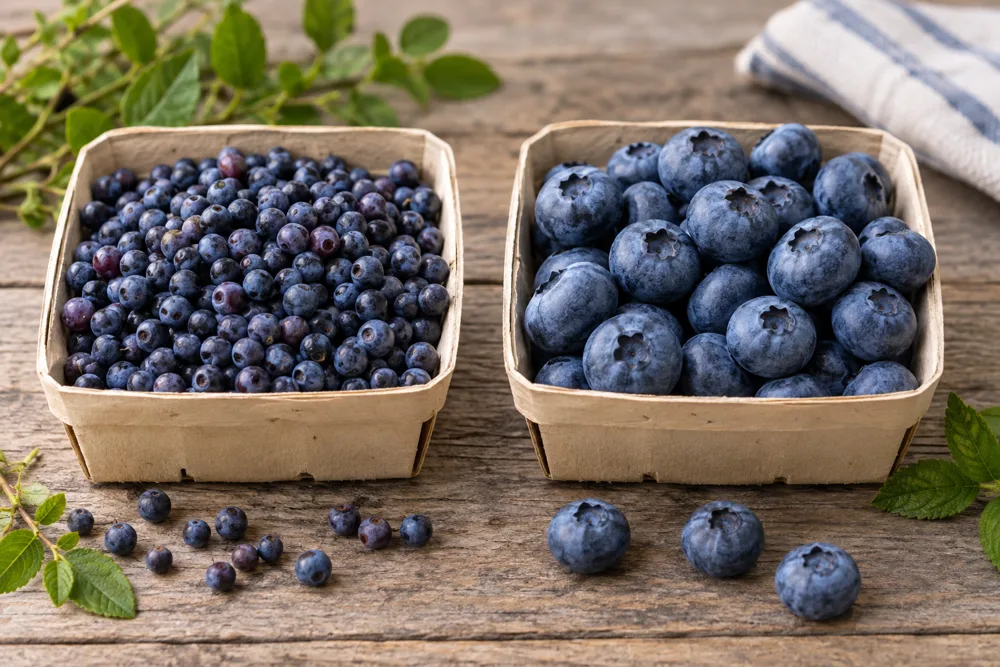
Use equal weights and consistent preparation for the first sample comparison.
Wild and organic answer different questions. Wild concerns the fruit and its growing system; organic concerns a certified production and handling claim under the relevant market rules. A wild berry is not automatically certified organic, and cultivated fruit can be organically certified. For an organic order, ask for the applicable current documents and confirm that the supplied product and trading chain fall within their scope.
Likewise, country of shipment and country of harvest are not necessarily the same. A commercial offer may involve processing, storage or export from a different place. State the origin information required by your customer and destination market before the order is finalized. This is especially useful when a brand's product story emphasizes a named growing region.
Be cautious with broad health comparisons in sales material. An association's average antioxidant comparison does not establish the composition of a particular lot, and laboratory antioxidant activity is not a direct promise of a health outcome. Buyers making nutrition or health claims should use appropriate substantiation and market-specific review. For routine ingredient approval, sensory quality, identity and dependable performance provide a clearer basis for choosing between products.
Evaluate a sample before changing suppliers
Request a sample that represents the proposed commercial specification. A hand-selected bowl of attractive berries is less useful than a sample drawn and packed under a defined procedure. Ask which lot it represents and whether its type, grade, packing and production conditions match the intended order. Keep the sample's identifying information with the trial notes.
Begin with the frozen product. Assess packaging integrity, separation, visible frost, size distribution, broken fruit and foreign material against the agreed method. Then conduct the relevant thawing or cooking trial. These are different stages of evaluation: a lot can look attractive in the bag and still release more liquid than the finished formula can tolerate.
Use a controlled tasting procedure if flavor is a deciding factor. Prepare the same weight, temperature and base food for each sample. Have the tasting team describe specific attributes such as acidity, aroma, bitterness, skin perception and lingering flavor. A preference score is useful, but a short explanation helps the supplier understand which characteristic needs to remain stable.
For a fruit preparation, weigh inputs and finished output under a consistent process. If screening is used, record the retained material and the usable yield. If the product is heated, record the final concentration or other agreed endpoint. Comparing only the purchase price per kilogram can hide differences in usable output or the amount required to reach the desired finished flavor.
Repeat the evaluation at the planned consumption stage. A muffin immediately after cooling, a frozen-and-reheated muffin and a packaged muffin at the end of its intended quality interval are different products. A change in berry type may be acceptable in one version and unsuitable in another. The test should follow the commercial product's real sequence as closely as practical.
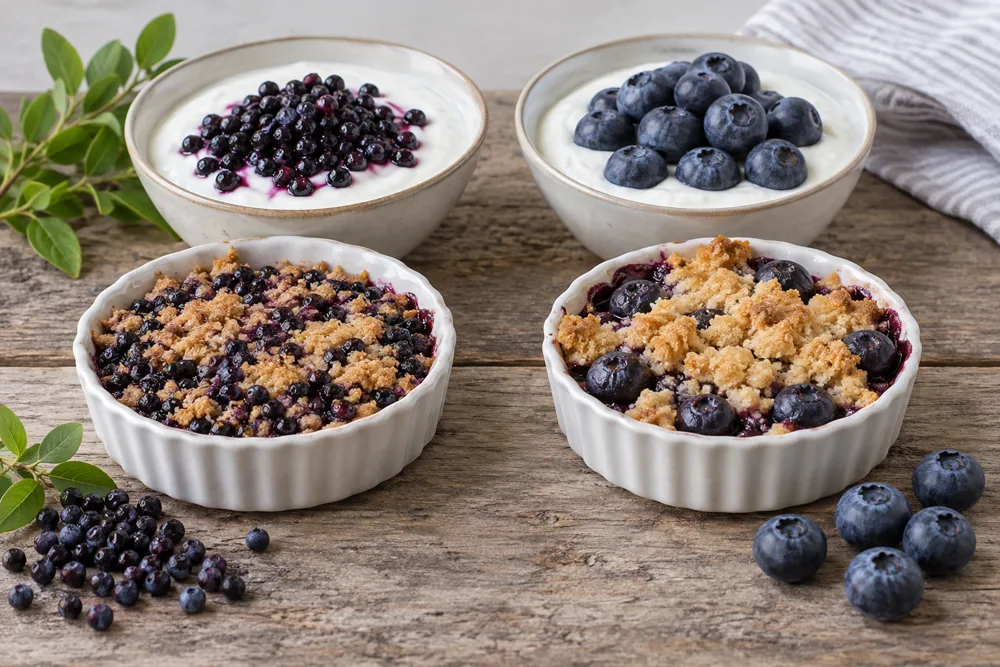
The intended application determines whether fruit distribution, whole-berry bite or color release matters most.
Keep the approved reference and written acceptance criteria together. If the next lot performs differently, the discussion can focus on measurable changes in size, breakage, flavor or processing yield. We can review those observations with the purchasing team and confirm which parameters need to be tightened, which reflect normal agricultural variation and which require a different product format.
When the price difference is substantial, calculate cost per finished portion using the approved formulation. Include the fruit dose, any screening loss and the usable output after cooking. This does not require a complicated purchasing model. A simple trial record can show whether a more expensive ingredient earns its place through flavor, appearance or a lower required dose.
Consider how accurately the operation can portion small and large berries. A weighed portion is consistent in mass, but individual fruit counts differ. An outlet counting berries onto a dessert may use more labor or deliver variable fruit weight when berry sizes change. Decide whether the production instruction should specify weight, count or both, then test that instruction with normal staff and equipment.
Retain photographs under repeatable lighting as supporting evidence. Include a scale reference for size assessment and label the lot outside the food area. Photographs are useful for comparing gross differences, but flavor, temperature history and compliance cannot be established by an attractive image. Keep them alongside sensory and specification records instead of treating them as the entire approval file.
A rejected sample should generate a specific reason. "Too tart for this yogurt base" or "too many broken berries for the clear retail pack" gives the supplier something actionable. "Not premium enough" does not identify what needs to change. Specific feedback can also reveal that the wrong format was sampled rather than that the entire blueberry type is unsuitable.
Build a blueberry specification around the finished food
Start the specification with identity and intended use. State whether the order requires cultivated blueberries, a defined wild blueberry type or a specifically identified bilberry product. Add the expected form and whether the ingredient is plain or sweetened. This foundation prevents a visually similar substitute from being treated as equivalent without review.
Next describe the physical attributes that influence the finished food: berry size range, whole-fruit proportion, broken-fruit tolerance, separation and relevant defects. If a small berry is needed for muffin distribution, say so directly. If a large whole berry is needed for visible topping, define that requirement rather than relying on a premium grade name.
Flavor and composition requirements should be practical to verify. Brix, acidity and color may be useful, but each needs a sampling and measurement method. Agree whether testing occurs on thawed fruit, expressed juice or a prepared sample. Results produced from different methods can appear inconsistent even when the underlying product has not materially changed.

GreenLand product photograph. Check the offered type, size, separation and defect tolerances in the order specification.
Packing affects how the ingredient reaches the process. Small inner packs can help an outlet use a controlled amount, while bulk formats may suit a factory with appropriate frozen storage and handling equipment. Share the expected daily consumption, order quantity, destination and private-label needs so we can review the packing and loading plan with the product specification.
Confirm the documentation needed for supplier approval and shipment. The request may include the specification, lot identification, relevant test reports, certificates and export documents. Ask for documents matched to the actual product and order rather than a general list of logos. Any claim about wild origin, organic status or a named region should be supported by the appropriate records.
The frozen fruit range provides broader sourcing context if the same program includes other berries or fruit ingredients. Keep each ingredient's acceptance criteria distinct. Blueberries selected for a visible whole-fruit dessert, a screened drink and a bakery filling can all be good products while requiring different specifications. The most useful choice is the one that consistently delivers the identity, flavor and performance your finished food requires.
Source frozen blueberry with GreenLand-food
GreenLand-food is a professional frozen blueberry supplier and manufacturer in China, providing factory-direct wholesale supply for importers, food manufacturers, foodservice distributors and private-label programs.
Send the blueberry type, size specification, packing, quantity, application, destination, private-label needs and requested documents. Confirm any wild-origin or certification requirement explicitly so we can review the matching product and supporting records.