


Why Do Tomato Skins Split? Separate Field Cracks from Frozen-Product Damage
Sep 27, 2026
Leave a message

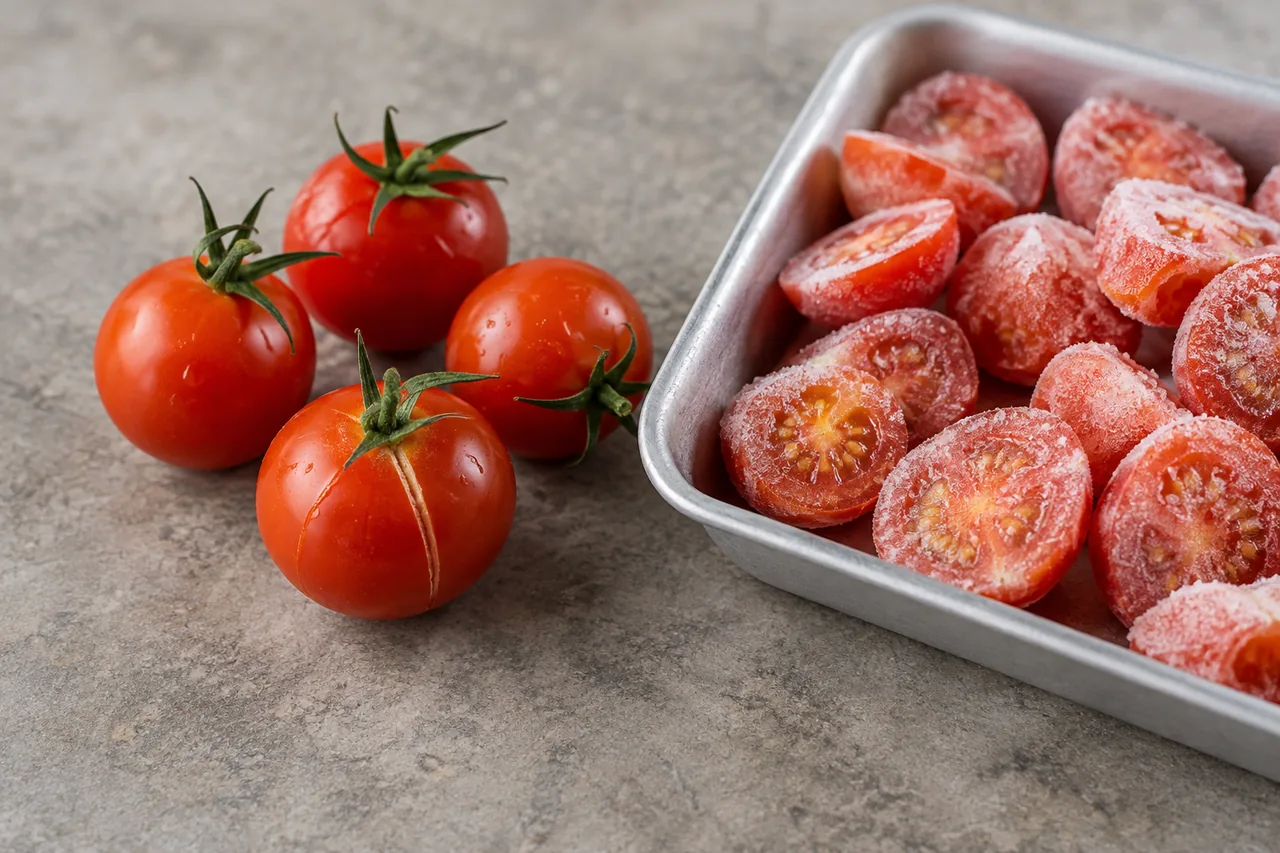
Recognize field growth cracks before freezing
Tomatoes expand as they develop. Changes in water supply and fruit growth can put pressure on the skin, producing cracks. Iowa State University Extension describes radial cracks running from the stem and concentric cracks around the shoulder. UConn IPM discusses growth cracks and finer surface patterns in more detail. These are useful diagnostic categories when fresh fruit arrives, but they describe a field mechanism, not every line of broken skin seen on a frozen piece.
Look first at location and shape. A radial crack starting near the stem scar or a curved crack around the shoulder suggests that the skin was stressed while the fruit grew. Old cracks may appear dry or corky at the edge. New cracks can expose wet tissue and have greater decay risk. Record both shape and condition; a dry superficial mark and an open, wet split should not be grouped into one vague "skin defect" count. Photograph representative examples with the stem end visible and include a scale or known tray size.
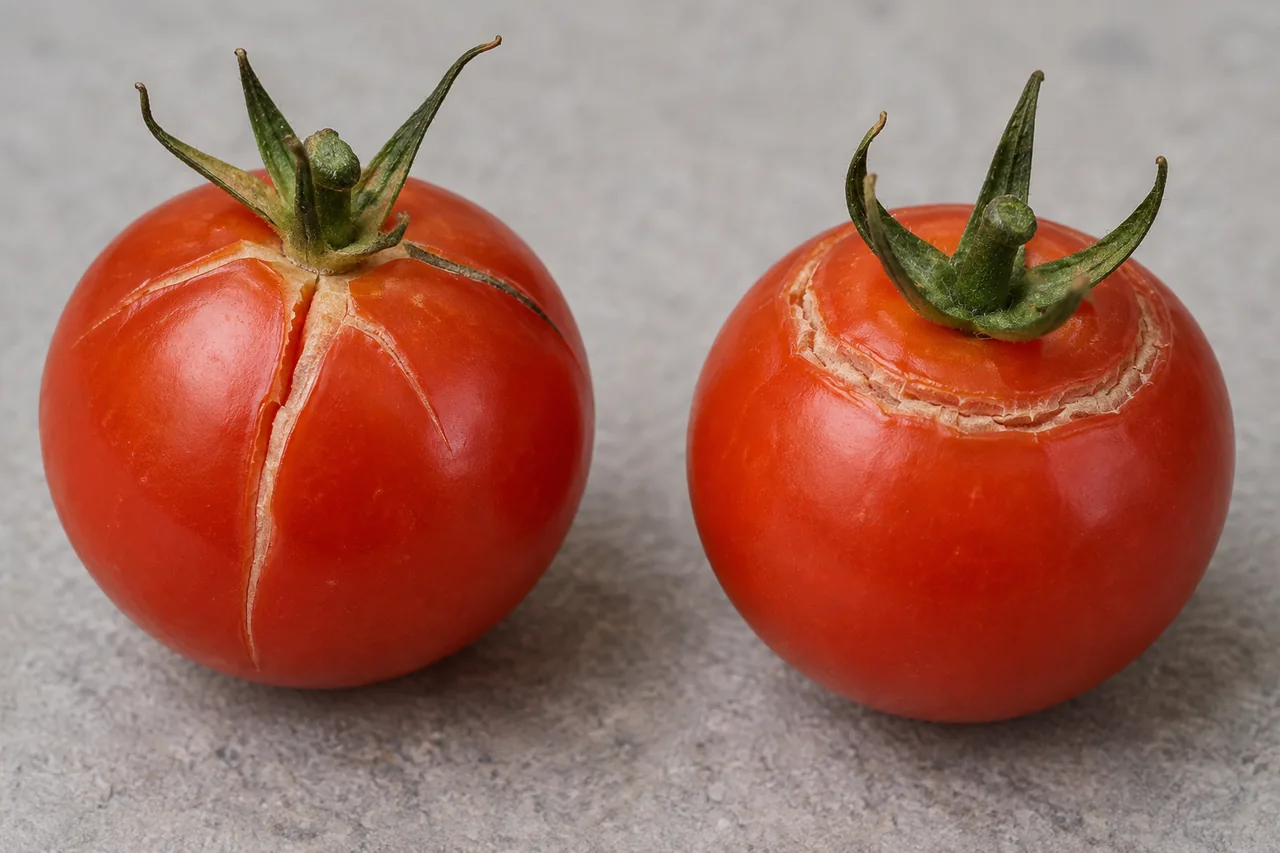
Fresh tomatoes with a radial growth crack and a concentric shoulder crack.
Do not infer that every cherry tomato with a split experienced one particular weather event. Variety, maturity, irrigation, rain, fruit load and harvest timing can interact. A receiving team usually lacks enough field information to assign one cause from appearance alone. It can accurately record the visible condition and request grower records if the lot repeatedly fails an incoming grade. That is a stronger claim than guessing from a single final-pack photograph.
UC Integrated Pest Management provides illustrated field-crack examples. Use such references to train inspectors on recognizable forms, then build a commercial defect chart from actual approved and rejected samples. If the buyer wants whole tomatoes with intact skins, even a small open split may matter. If the product will be halved and cooked into sauce, a superficial healed mark may have a different commercial consequence, subject to food safety and the agreed raw-fruit acceptance rule.
The key timing question is whether the crack was visible before the fruit entered the processing line. If it was, record it at intake and after sorting. If it was not, do not call it a field crack solely because it resembles an extension photograph. A traceable lot number, sample time and image of the raw fruit anchor the conclusion.
Record what was visible at raw-fruit receiving
Before setting a numerical defect limit, agree on the measurement unit. A count of cracked fruit per hundred can be useful for whole cherry tomatoes. Weight may be more relevant after fruit has been halved and mixed with juice or fragments. If one party counts pieces and the other counts kilograms, their percentages cannot be compared. Specify whether borderline cases are included and how multiple defects on one fruit are counted. Run a short calibration with both inspectors using the same tray; disagreements at this stage are cheaper to resolve than disagreements over a container already shipped.
The sampling plan should recognize that defects can cluster. A rain-affected harvest bin, a crushed lower carton or a warm pallet edge may carry a higher fraction than a neatly presented top layer. Sample across positions and note where exceptions occur. If a defect cluster maps to one pallet, it may be possible to segregate that pallet without misrepresenting the rest of the lot. If the whole lot is affected, sorting capacity and final yield may change. The record should support this operational choice, not just generate a pass or fail number.
A reliable investigation begins before washing or cutting. Pull representative samples from different containers and pallet positions according to an agreed plan. Record lot and harvest identifiers, arrival time, fruit temperature if specified, packaging condition and the number or weight examined. Separate categories for intact fruit, dry healed cracks, open wet cracks, bruising, decay and other damage. The exact limit belongs in the buyer's specification; the essential point is that inspectors use the same definitions.
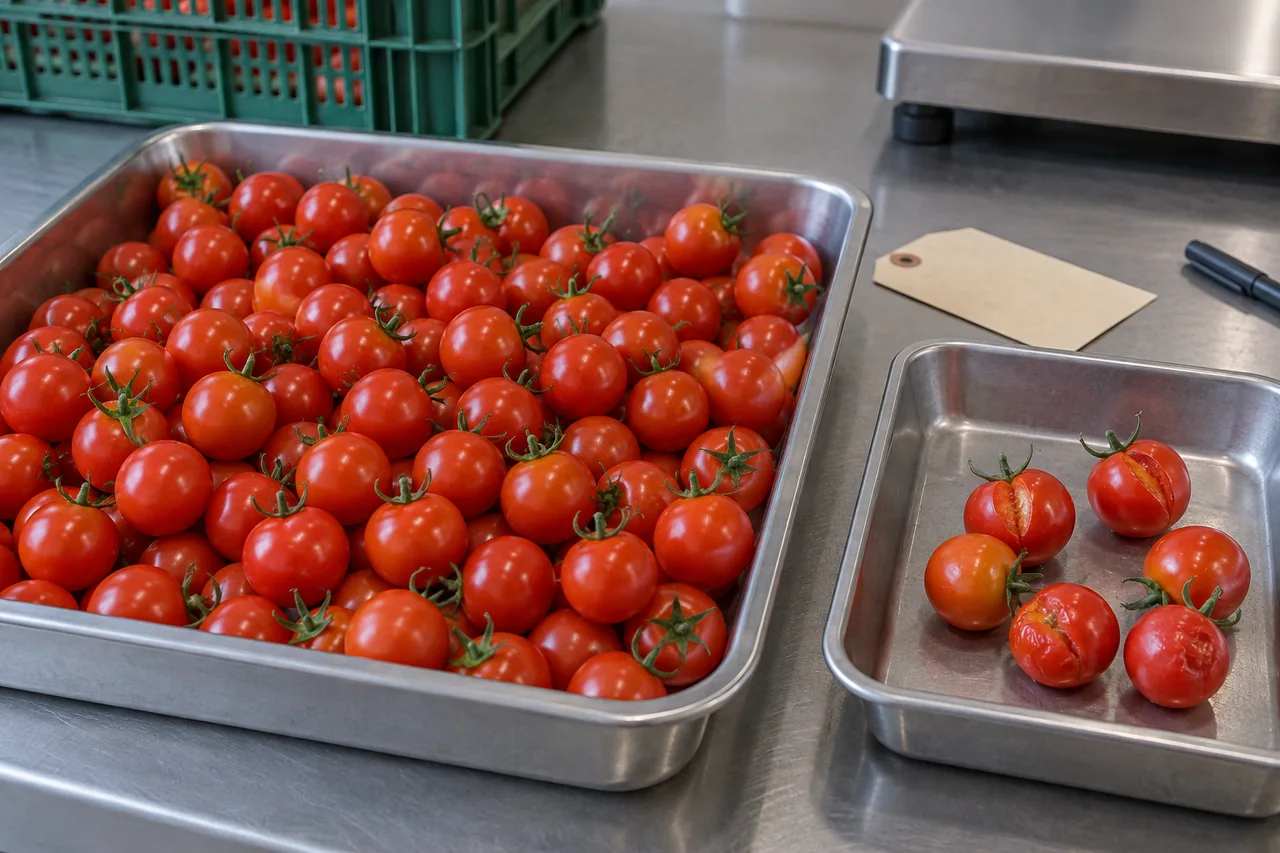
Intact and visibly cracked raw cherry tomatoes separated in receiving trays.
Take overview images of the sample tray and close images of individual defects. Show the stem shoulder and the opposite side of the fruit where helpful. Include a scale, a time stamp and the lot reference in the record, but keep the label outside the crop if it hides tissue. Retain the original images. A later annotated copy can explain the defect, but it should not replace the unmarked source. If the lot is mixed, take images of both representative sound fruit and representative defects rather than only the worst piece.
Sorting results matter as much as raw arrival condition. A sorter may remove visibly cracked tomatoes before the IQF line. If a final bag contains splits, the buyer needs to know whether the incoming cracked fraction was high, whether the sorter missed some pieces, or whether damage was added downstream. Record the number or mass rejected at sorting under the same lot ID. If there is no pre-freeze sample, the final sample cannot separate these possibilities with confidence.
Treat open cracks and decay according to the plant's food-safety system and purchase agreement. A decision about use in a cooked product does not automatically override a microbiological or hygienic concern. The team can classify a defect visually, then follow the validated disposition route for the lot. An inspector should not promise that freezing will make damaged raw fruit acceptable. Freezing preserves a condition; it is not a repair step.
For a repeat supplier relationship, share an agreed picture guide with the raw-fruit source and processing plant. The guide should show acceptable surface variation, an open crack and reject examples. Train and periodically calibrate inspectors against retained samples. This reduces disputes caused by two people calling the same feature by different names. It also makes seasonal comparisons more meaningful.
Locate damage added during washing, cutting or freezing
Fruit can be damaged after acceptance. Rough transfer, high drop points, washing equipment, mechanical cutting and freezing can all affect a delicate tomato. A cherry tomato half intentionally exposes a cut face; a torn or crushed rim is a different observation. The quality record should distinguish intended cut geometry from uncontrolled skin tearing, broken pieces and liquid loss. A sample at the post-sort point helps establish what entered the equipment.
A 2026 Food Biophysics study on cherry tomato preservation reports skin cracking under its tested freezing conditions. It supports the general possibility that freezing can add visible cracking. Its measurements belong to its methods and cultivars; they are not a GreenLand-food defect rate or a commercial guarantee. To assess a supplied lot, compare actual samples from the processing stages and record equipment settings under the plant's control system.
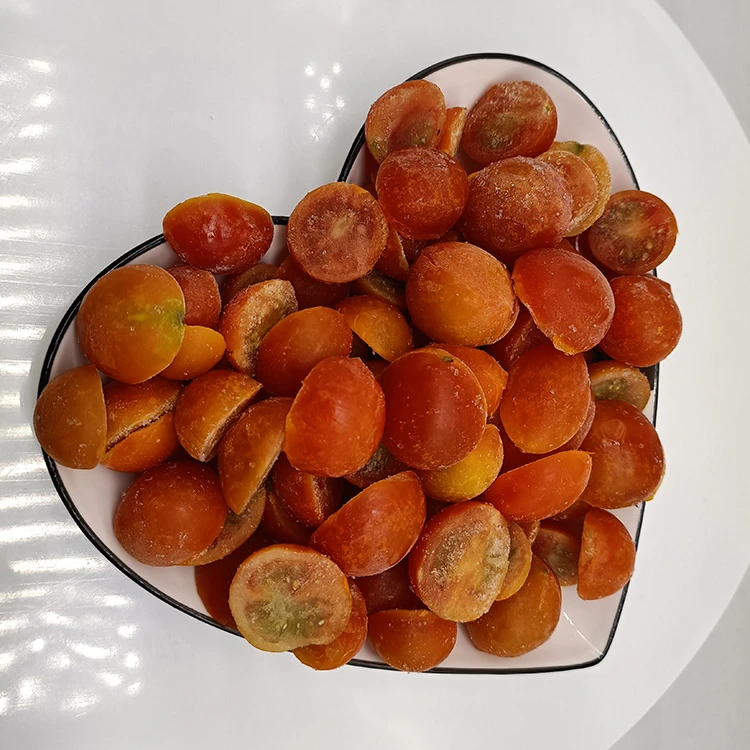
Actual GreenLand frozen cherry tomato halves in a bowl.
At the wash step, photograph fruit before and after washing if an issue appears. At cutting, check whether blades or alignment create ragged edges or crushed pulp. At the IQF exit, sample from the normal flow and note clumps, cracked skins, broken halves and frost. If a defect appears only after a specific transfer or freezing stage, investigate that operation before changing the raw-fruit grade. If it was present at intake, equipment adjustments may still reduce added damage but cannot erase the incoming condition.
Thawing creates another interpretation risk. Ice crystals and tissue changes can release liquid and soften fruit. A skin may look intact while frozen and split or slip when handled after thaw. For a sauce application, that may have little effect on the finished product; for a ready-meal garnish, it may be unacceptable. Run the sample through the buyer's actual thaw, cook or reheat method and report that state separately from the frozen-pack inspection. Never label a thawed observation as if it had been seen at IQF exit.
The GreenLand frozen cherry tomato page shows the commercial form. Its images illustrate the product but cannot prove when a defect in a particular shipment arose. Lot-specific records and matched stage samples are the evidence for that question.
Compare matched samples across the process stages
For each sampling point, define who collects the sample and when. A sample drawn before a line starts is not interchangeable with one taken near the end of a long production run. A shift change, equipment adjustment or freezer load change may alter the observed fraction. When a problem appears, collect enough time-stamped samples to identify whether it is persistent or concentrated in a short window. Tie the photographs to production logs, but do not invent a causal relationship merely because two times are close. Review the physical mechanism and repeatability.
The categories can also change meaning after cutting. A natural half has an exposed interior by design. An open growth crack on the skin near the shoulder may remain visible on that half. A jagged cut edge or torn skin beside the knife path suggests a separate handling issue. Use paired examples in the inspection guide so staff do not count all exposed pulp as damage. Record broken pieces that cannot be attributed precisely in a separate category. This makes the stage comparison honest while still flagging a loss of usable appearance.
Build a four-point record: raw receiving, after sorting or preparation, IQF exit, and the buyer's thaw or application trial. At each point, use a defined sample size and photograph the same defect categories. The fruit pieces are not literally the same individual tomatoes after cutting, but the samples can be matched by lot, production window and sampling procedure. That is enough to see whether the frequency or character of defects changes materially through the process.
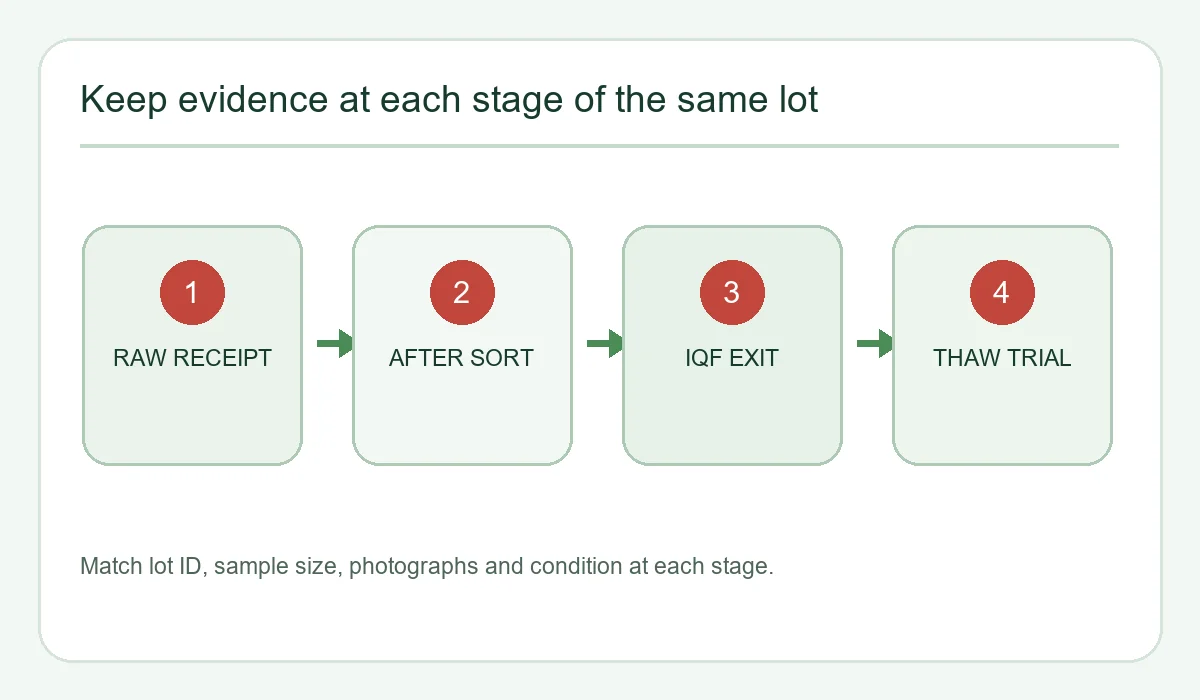
Diagram of lot samples at raw receiving, sorting, IQF exit and thaw trial.
Keep conditions consistent. A frozen sample should be photographed promptly under defined lighting so frost does not obscure the surface or thawing change the appearance. A thawed sample needs a controlled time and temperature, plus a note on whether liquid was drained. Use a neutral background and scale. A close-up of one extreme piece without an overview cannot establish a lot's condition. Pair detail images with the sample count and distribution.
Classify the result without overclaiming. If field-like growth cracks are visible at receipt and remain in the finished product, incoming quality is implicated. If raw and post-sort samples are sound but new tears appear at cutting, investigate that step. If the IQF sample looks sound but the thaw trial shows splitting, the application's thaw method or fruit structure may be important. There can be multiple causes in one lot. The investigation should identify what is supported by the observations and what remains uncertain.
Use the data to choose a corrective action. A high incoming crack count suggests a conversation with the grower or raw-fruit supplier about variety, harvest timing and grade. A post-cut increase suggests tool condition and handling review. A change after freezing points to process conditions and the specification for acceptable frozen appearance. A change only after the buyer's thaw points to the handling instruction and suitability for that application. Each action follows a stage, which is why the stage record has commercial value.
Record the decision in a short table with sample point, lot code, sample size, observed defect categories, photographs, disposition and owner. The table is more useful than a long narrative that says "tomatoes split in freezing" without measurement. When a buyer and supplier agree on the method before a complaint, they can apply it quickly when a shipment is questioned.
Set grade, application and lot disposition rules
Write the intended recipe into the approval record. A prepared-meal maker may place two halves on top of a finished dish, making every broken edge visible to the consumer. A soup producer may heat and blend the same ingredient, making piece shape irrelevant while flavor, solids and safety remain essential. If both customers share one nominal product specification, the supplier may be unable to understand why one accepts a lot and the other rejects it. The application can justify different appearance grades, provided each grade is named clearly and the same underlying food-safety requirements are maintained.

Actual GreenLand frozen cherry tomato halves in a bulk container.
Build a short trial around the weakest condition the ingredient will experience. For a frozen pizza topping, observe the piece after deposition, baking and a normal service hold. For a cold blended product, observe after the actual thaw and blending process. For a meal kit, check the effect of consumer reheating. A skin that looks acceptable at IQF exit can detach later; conversely, an uneven frozen cut face may disappear in cooking. Record the outcome, then use it to set an acceptance limit that predicts finished quality rather than pleasing an inspector only at receiving.
There is no single skin-integrity requirement for every frozen cherry tomato use. A whole-fruit retail pack may need visually intact pieces. A halved ingredient for pizza or prepared meals may tolerate some irregular cut edges but not excessive mush, decay or foreign material. A cooked sauce may have little need for perfect halves, while still requiring sound raw fruit and a safe process. The specification should say what form is being purchased and which defects matter at the chosen inspection state.
Define defect categories with photos: natural cut face, minor skin check, open split, broken piece, crushed pulp, discoloration and decay. Decide how each category is counted by number or weight, what sample size applies, and whether the inspection is frozen, thawed or cooked. If limits are based on a visual standard, retain an approved reference sample and note lighting and temperature. This prevents a warm, weeping sample from being compared unfairly with a hard-frozen sales photo.
For a marginal lot, a buyer may consider an alternative application, but only after confirming food-safety and contractual requirements. For example, a product that misses an intact-half appearance target might be evaluated for a fully cooked sauce route if its underlying condition is acceptable. Such a decision needs documented approval, traceability and correct product description. It should not be a casual reclassification that hides defects from the next buyer.
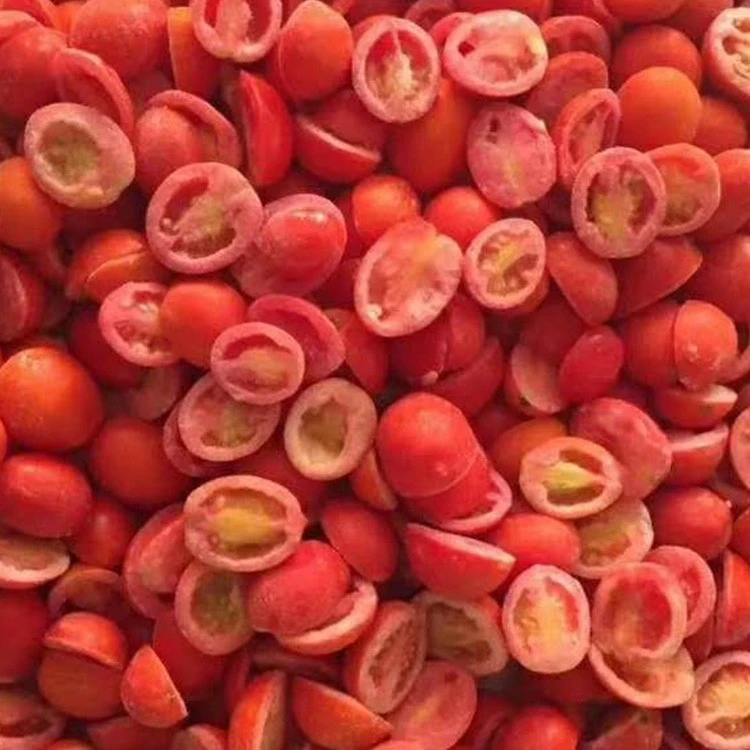
Actual GreenLand frozen cherry tomato halves in close view.
Assess yield in the actual line. A tomato half that breaks during conveying can reduce saleable visible pieces even if the incoming count was acceptable. Record drained mass and appearance after reheating when those determine portion value. Price per kilogram alone cannot express the impact of breakage on a premium topping. For a sauce, solids, flavor and usable mass may be more informative than the count of intact halves.
GreenLand-food's frozen cherry tomato category is a starting point for choosing form. The purchase specification and sample trial should settle the grade and application. Ask us which current forms and packs can be offered for the destination, then approve one against the actual product, not a generic tomato description.
Close a buyer claim with photographs and lot records
Set a practical response clock in the supply agreement. A buyer should preserve the questioned cartons under the specified frozen conditions, identify the affected pallet positions and notify the supplier before the material is blended into a larger batch. The supplier should identify which records and retained samples can be produced and by when. If samples are thawed for inspection, log that step and keep a separate unopened frozen sample where feasible. These simple steps prevent an avoidable evidence gap while commercial teams decide how to keep production running.
Where the buyer's claim concerns appearance, compare the retained frozen sample with the same inspection state at the destination. If it concerns sauce performance, compare controlled cooked samples. A photograph taken through a frosty bag and one taken of a drained, thawed tray answer different questions. Write the result in plain terms: the observed defect fraction, the agreed limit, the stage evidence that supports or does not support a cause, and the disposition. That statement can be checked later if the same symptom appears in another lot.
When a buyer reports split skins, begin with the identifiers: product form, lot code, carton and pallet, shipment and storage history, date of opening, sample method and condition at inspection. Request overview and close photographs of the unopened and opened pack when possible. Record whether the complaint concerns frozen appearance, thawed handling or cooked presentation. Those are different claim statements and may require different comparisons.
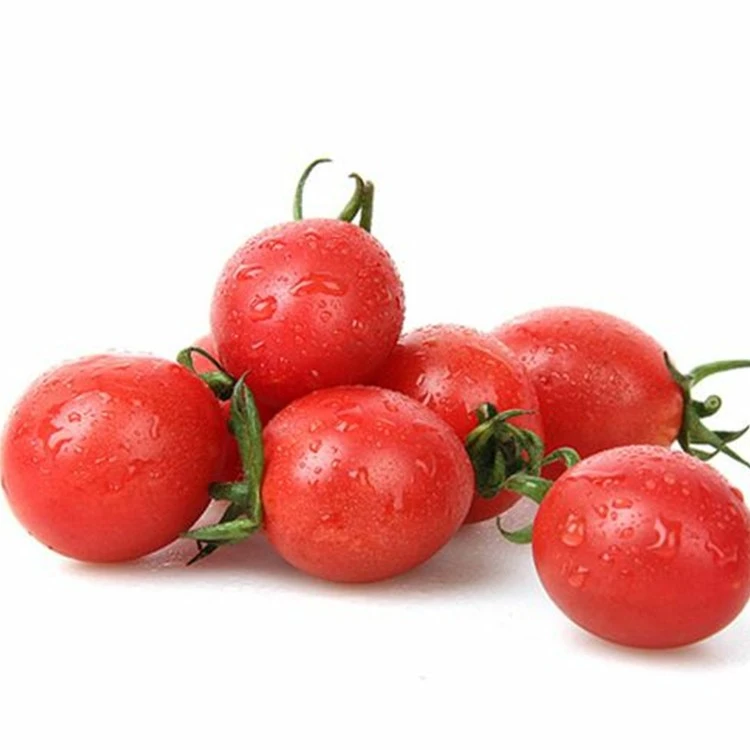
Fresh whole cherry tomatoes from the GreenLand product gallery.
Retrieve the processor's intake, post-sort and IQF records for the same lot and production window. Compare any retained sample using the agreed method. If the buyer's cold-chain record shows a temperature excursion or repeated thaw and refreeze, investigate its effect without assuming it is the sole cause. If the processing records show a step change in defects, address it directly. The goal is a supported disposition and prevention plan, not a debate about whose photograph looks worse.
A fair response states what the evidence shows and what it cannot show. A final-pack image may show an unacceptable number of broken halves, which can justify action under the specification. It may not reveal whether the crack began in the field or during freezing. If the earlier stage samples were not retained, say that attribution is uncertain and improve the next lot's sampling plan. Do not convert absence of evidence into certainty about a cause.
Agree the immediate commercial action separately from the root-cause inquiry. The buyer may need a replacement, credit, sorting plan or approved alternate use under the contract. The supplier needs time to review retained samples and process records. Record both the disposition and the preventive action, then test whether the next lot meets the agreed grade. A corrected process without a new sample check has not yet demonstrated improvement.
For an inquiry to GreenLand-food, share the intended use, preferred whole or cut form, visual tolerance, destination and expected volume. We can confirm the current frozen cherry tomato specification and the evidence available for lot approval. Clear stage records make it easier for both sides to protect finished-product quality and resolve a claim promptly.
Source Frozen Cherry Tomatoes with GreenLand-food
GreenLand-food is a professional frozen cherry tomatoes supplier and manufacturer in China, providing factory-direct wholesale supply for importers, food manufacturers, foodservice distributors and private-label programs.
Send the product form, specification, packing, quantity, application, destination and requested documents so we can confirm the current offer and sample route.