


What Is White Asparagus? Flavor, Peeling and Frozen Supply Compared with Green
Sep 27, 2026
Leave a message

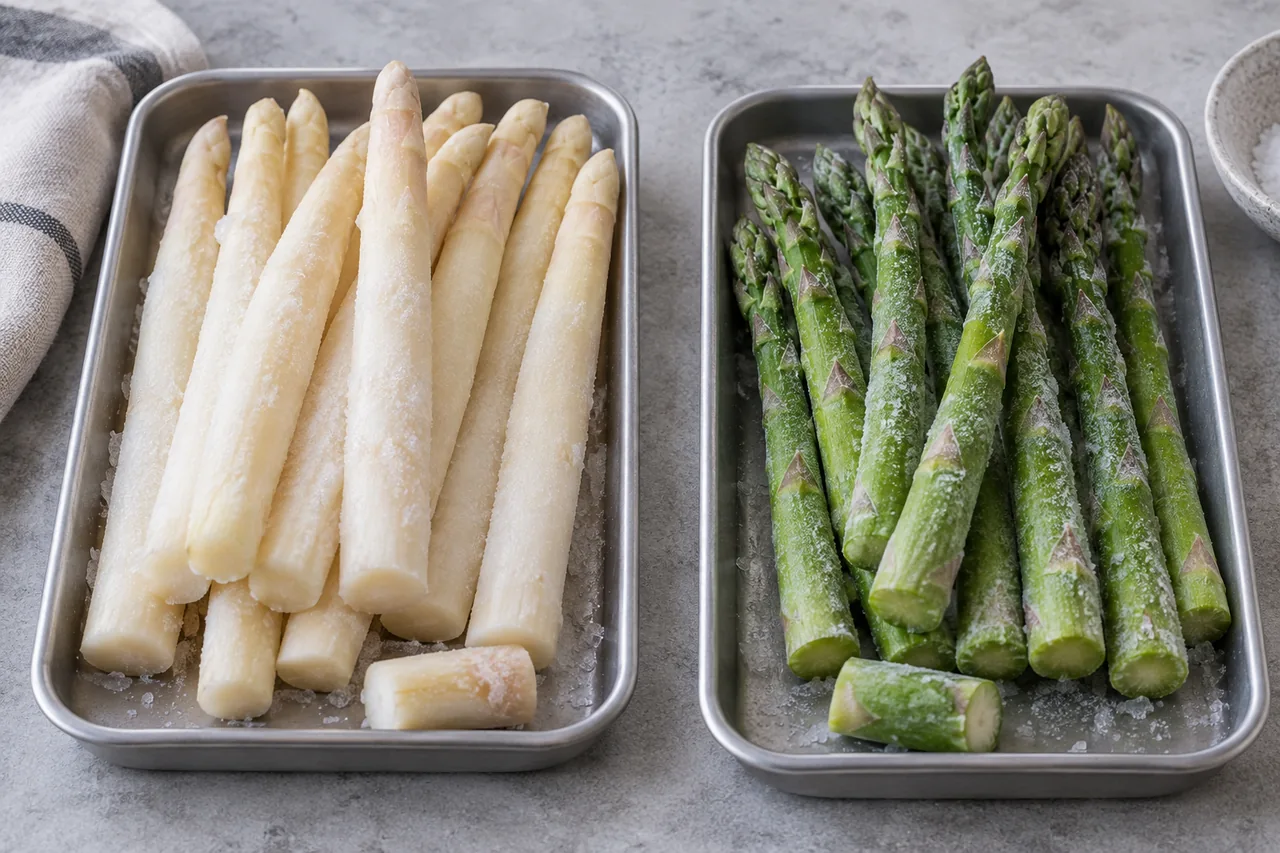
Why the spear is white and what that signals
White asparagus is produced by keeping developing spears away from light, commonly with soil or an opaque cover. Green spears grow in light and develop chlorophyll. The plant relationship matters because a white spear is not a bleached green spear. Its pale color arises before harvest. The Institute of Culinary Education describes the growing distinction, while culinary references describe a different flavor and preparation style. Those descriptions are a starting point for a buyer, not an acceptance specification for frozen product.
Light exposure and growing method can affect color, but harvest maturity, diameter, storage and preparation also shape the delivered ingredient. A buyer who wants a pale soup garnish should define an acceptable color range in the cooked application. A buyer who wants contrast on a plate may prefer a particular green tone. Neither should assume that a photo of raw spears tells them what a blanched, frozen and reheated spear will look like. Evaluate samples in the state the kitchen will serve them.
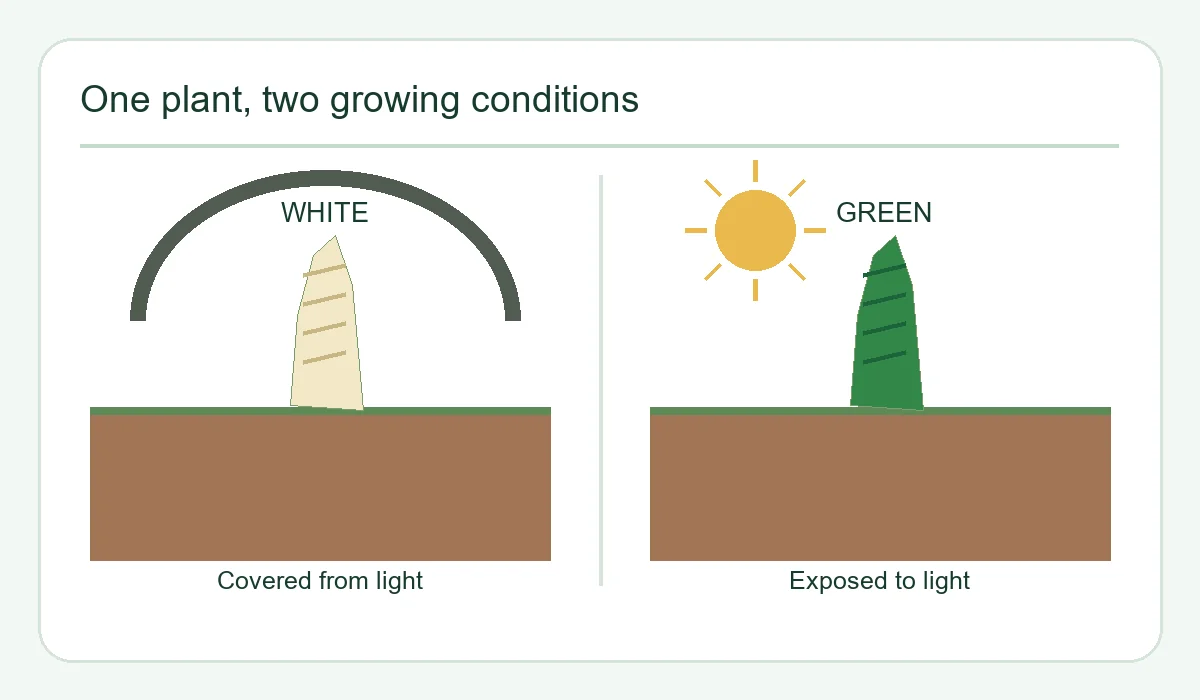
Diagram showing covered white asparagus and green asparagus exposed to sunlight.
The OECD asparagus standard illustrates attributes of fresh asparagus such as color, tip condition, shape and woodiness. It is helpful for describing what inspectors see at fresh intake. It is not a frozen-product purchase contract by itself. Freezing introduces cut form, blanching, individual quick freezing, pack condition and thaw or reheat behavior. GreenLand-food and the buyer need to agree which of those attributes are relevant to the finished frozen form.
For product development, begin with the intended visual role. Whole white spears can be a distinct plated vegetable. White cuts may be chosen for soup, quiche or filling where a uniform pale color matters more than complete tips. Green tips may provide stronger visual contrast in a prepared meal. A tender spear for one chef can be too soft for a reheated buffet; a cut acceptable in soup can be unusable for a whole-spear side. The product's job should lead the grade decision.
When requesting a quotation, name white or green, whole spear or cut, preferred diameter or cut length, peeling condition and the cooking process. Ask whether the sample is from the current intended supply route and whether color or size can vary by harvest lot. A buyer can then compare actual forms, instead of receiving a white price and a green price that cover unlike products.
Peeling, trimming and usable yield
For a meaningful yield trial, do not compare a carefully selected white spear with a random green bag. Take representative packs of each proposed grade and use the same scale and preparation rules. Weigh the packaging separately, record broken pieces and document what the operator removed. A second operator can repeat the trimming on another sample to show whether the result depends on individual judgment. If the process uses an automated peeler, trial the actual machine. Hand peeling can overstate or understate industrial yield depending on the operator and spear size.
Keep raw and cooked yield separate. Trimming removes physical tissue before heating; cooking can cause water loss and breakage. A product may look economical by raw usable weight but become fragile after a long service hold. Another may require more peel yet produce attractive intact portions. Record these distinct stages. When a supplier says "peeled white asparagus," ask whether the quoted net weight is before or after that processing and whether the contract controls residual fiber. Those details make the quoted price interpretable.
White asparagus often has a firmer outer layer, especially lower on the spear. Culinary guides commonly recommend peeling below the tip and removing the woody base. A frozen product may arrive peeled, partly peeled or in a cut form that removes some of the difficult tissue. That is why "white asparagus requires peeling" is too broad as an industrial instruction. The buyer must ask what the supplier has already done and verify it by cooking a sample.
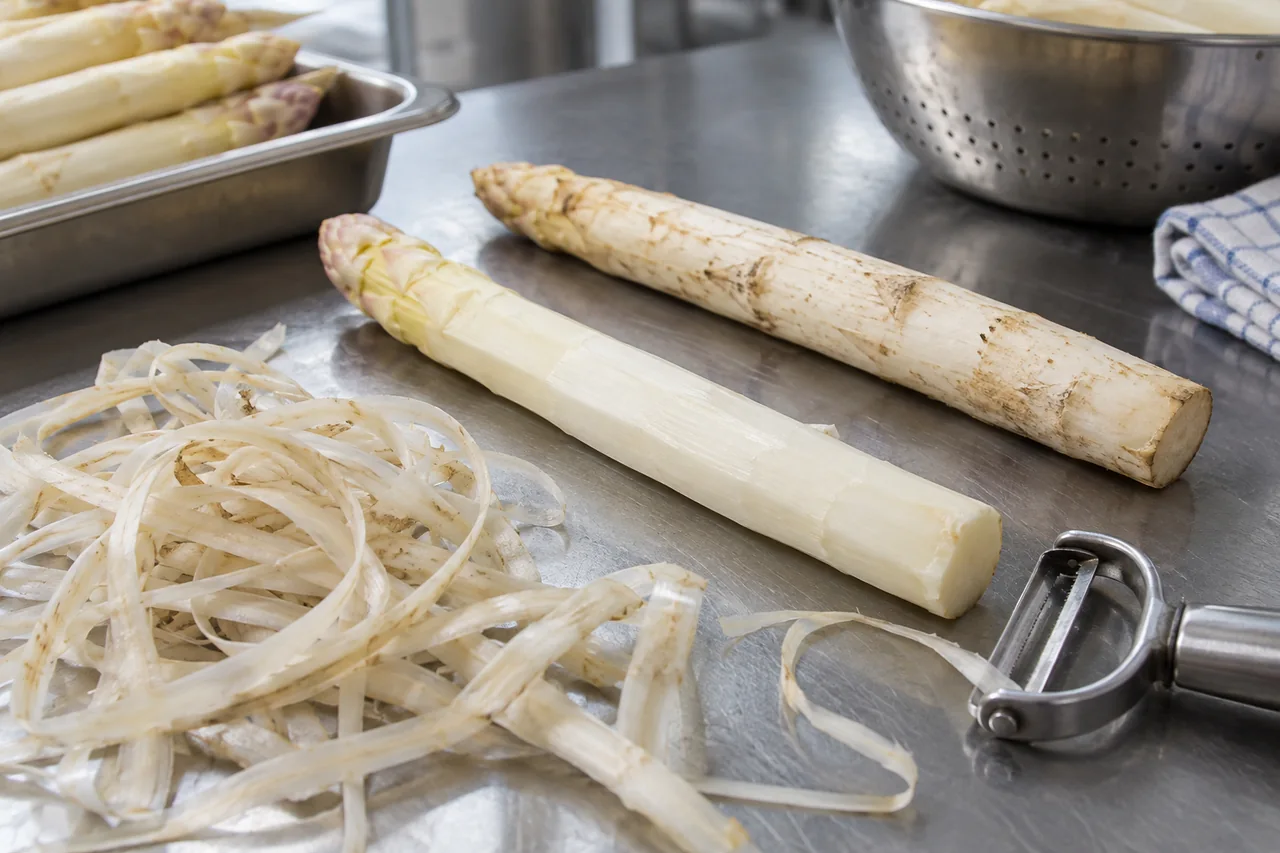
White asparagus spear beside removed outer peel and an unpeeled spear.
The Michelin Guide's white asparagus overview discusses the outer layer and peeling from a kitchen perspective. A processing buyer should convert that observation into a yield test. Weigh the received frozen sample, note ice or free liquid according to the agreed method, then trim or peel only as the normal kitchen or line would. Weigh the discarded portion and usable cooked portion. Repeat on representative spears across the size range, because one thick display spear cannot describe a mixed commercial pack.
If the product is sold as peeled, do not stop at the word on the specification. Check whether the lower stem still has stringy fiber after the intended heating method. Examine the base and the area below the tip, and note any additional trim needed. For cuts, sample pieces from across the pack. A few tender tips at the top of a bag can conceal fibrous stem pieces elsewhere. Record whether the additional labor is acceptable for the intended service format.
Diameter matters, but it is not a complete texture score. Larger spears may require different heating time from small spears. A narrow range can help a plated product cook consistently; a wider range may be acceptable when the vegetable will be pureed. Discuss tolerances rather than asking for "large" or "premium" without measurement. If the supplier quotes a grade by diameter, confirm how and where it is measured and whether the buyer's trial matches that grade.
A practical cost comparison uses usable portion after the buyer's normal handling. Suppose one white sample is priced higher than green but arrives already peeled and produces a high usable yield; another white sample is cheaper but needs extensive trimming. The ranking may change after labor and waste are counted. Do not put invented universal peeling percentages into the quote. Weigh the actual sample and record the method. A repeat trial should reach approximately the same result before it becomes a basis for an annual purchase.
Compare flavor and cooked texture in the same dish
White asparagus is often described as milder or more delicate than green, while green can have a more pronounced vegetal note. Those are useful tasting prompts, not guaranteed results for every frozen lot. Harvest maturity, peeling, blanching, storage and cooking can change both flavor and texture. A white spear that was handled well may be pleasant and tender; one with fibrous bases can disappoint even if the aroma is mild. The application test should measure what arrives on the plate.
Prepare the white and green samples with the same relevant process, while allowing a documented time adjustment if their sizes differ. For a soup, cook and blend them into the same base recipe, then compare color, aroma, bitterness, fiber and thickness. For a plated side, use the same steam or reheat equipment and target serving temperature. A tasting table should include both immediately after cooking and after the expected hold, because a buffet or airline meal may expose softness that a first bite misses.
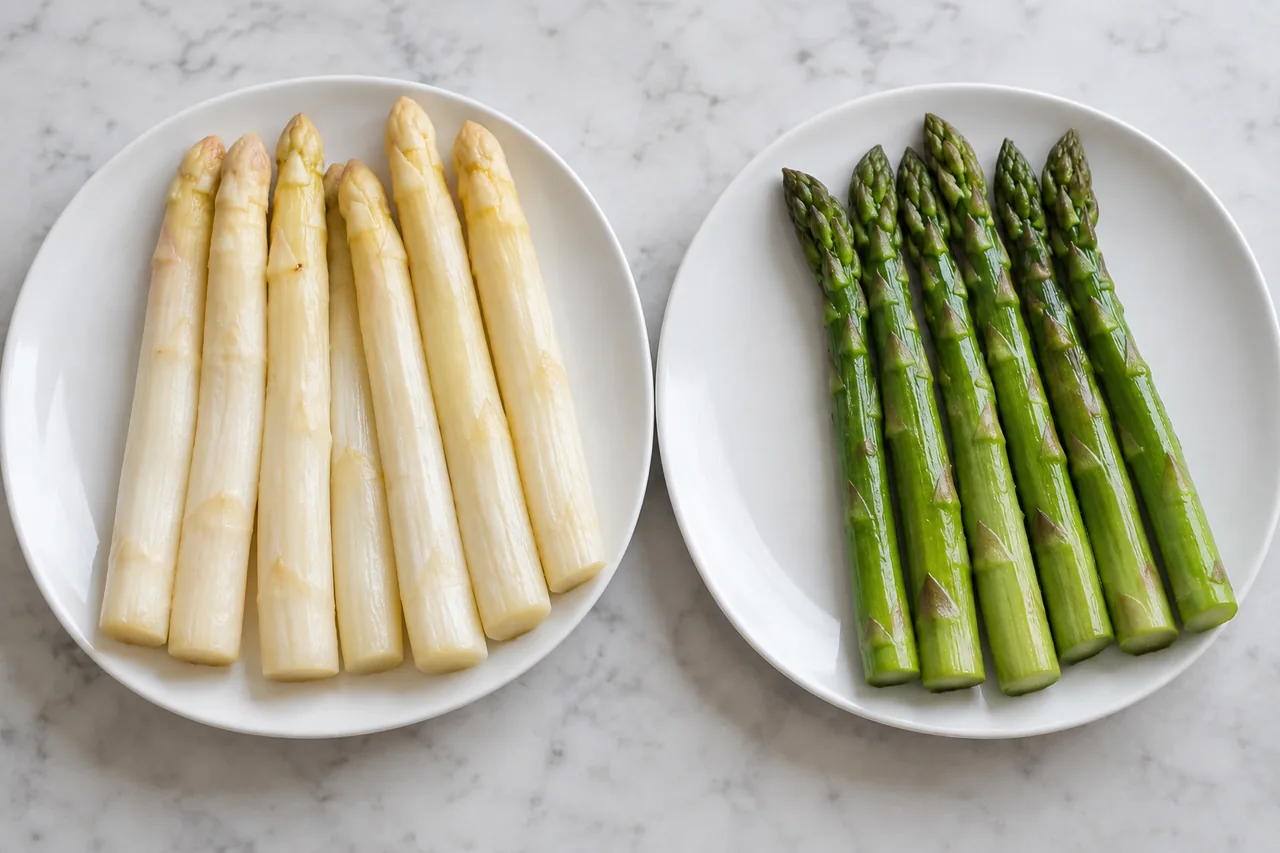
Cooked white and green asparagus portions prepared for comparison.
Keep the panel blind to the quoted price when possible. Ask tasters to describe the differences rather than declare one vegetable "better." A chef may value white asparagus for a pale sauce and green for a bright risotto, even if both pass a basic tenderness test. A plant making prepared meals may value consistent cut length and low fiber over delicate flavor. The decision belongs to the product and consumer context.
Avoid masking the comparison with heavy seasoning. Test first in a simple matrix that exposes the vegetable. Then repeat in the final recipe, because cream, acid, salt and heat can shift perceived flavor and color. If the product will be frozen again in a finished meal, include that cycle. A single freshly cooked kitchen sample may not represent a packaged meal after distribution and microwave reheating.
Photograph the cooked portions on the same background and record cook time, weight, drain method and serving temperature. The photographs help with visual acceptance; the process notes explain why two photographs may differ. If white and green samples have very different diameters, match size bands or note the mismatch. It is easy to attribute a longer heating time to color when spear thickness was the actual cause.
Confirm frozen form and pretreatment before quoting
The composition of a mixed cut pack deserves attention. Tips are visually attractive and can cook differently from bases. A buyer making a blended soup may accept a broad mix if fiber is controlled, while a ready-meal tray may need a defined tip proportion and cut length. Discuss these terms before a supplier sends an attractive small sample. The incoming production lot should be sampled from across cartons to check whether the same mix is present at scale. Record the method for counting or weighing each component; a handful photograph is not a quantitative pack specification.
Ask for the relevant food-safety and quality documents alongside the product offer. These may include origin and traceability details, process description, storage instructions and destination-specific certificates. Their exact names vary by market and buyer. Do not assume that a culinary comparison covers these requirements. A product can taste excellent but still be impossible to purchase if its documentation, packaging or delivery conditions do not meet the customer's program. Resolve those constraints while the sample trial is under way.
The existing GreenLand-food frozen white asparagus page describes spears, cuts, tips and center cuts, and refers to processing choices such as blanching and peeling when required. A current offer still needs confirmation. The page is an introduction to possible forms, not a promise that every size and pack is available for every shipment. A purchasing document should name the exact form, processing state and pack that the sample represents.

Actual GreenLand white asparagus spears in a crate.
For whole spears, inspect tip integrity, stem length, diameter range and broken pieces. For cuts, examine cut length and the proportion of tips, middles and bases if those distinctions matter to the dish. For a puree, some variation may be harmless. For a meal tray with visible vegetables, the same variation may make portions look inconsistent. Align the defect or fragment rule to the application instead of borrowing a universal visual grade.
Ask whether the product has been blanched and what cooking instruction the supplier recommends. Blanching is commonly used before vegetable freezing to manage quality; it changes the starting point for the buyer's thermal process. Do not assume a frozen spear is ready to eat or that reheating time alone controls safety. The final food operation needs its own validated cooking and handling process. Document whether samples were cooked from frozen or thawed, since the result can differ.
Check pack and cold-chain details: net weight, bag or carton configuration, storage temperature, shelf-life basis and lot code. Inspect whether pieces separate readily and whether excessive free ice or clumps affect dosing. If a manufacturing line needs a fixed piece count per portion, test the feeder with the actual frozen form. A kitchen that serves spears by weight may have a different tolerance for size variation.
GreenLand-food's broader frozen asparagus range can help a buyer compare green and white options in the same discussion. The decision still depends on current specification and samples. It is sensible to ask for documentation on origin, processing, traceability and microbiological controls applicable to the destination market, but to verify the documents attached to the offered lot rather than infer them from website text.
Run a paired frozen white and green asparagus trial
Consider a second, stress-condition run after the first tasting. Hold cooked portions for the maximum realistic service interval, or reheat a prepared meal from frozen as a customer would. Measure whether spears collapse, tips separate or water collects in the tray. A restaurant serving immediately and a distributor supplying airline meals will place different demands on the same vegetable. A meaningful trial includes the harder condition that the product must survive. If both colors pass, cost and menu positioning can decide; if one fails, the failure should be documented and repeatable.

Actual GreenLand frozen white asparagus cuts beside a grading ruler.
Blind tasting can be simple: code the samples, serve them in randomized order and collect short notes on sweetness, bitterness, fiber and overall fit. Then reveal the colors and discuss the visual role separately. This avoids a premium white-asparagus story influencing the first texture judgment. The panel need not pretend that color is invisible in the finished dish; it should merely record flavor and texture observations before cost and marketing expectations dominate the conversation. Keep the sample size modest but representative, and repeat if results conflict.
Create a small trial matrix before ordering a container. Use at least one white and one green sample in the intended form. If whole spears are required, do not compare white cuts with green spears. If the white sample is peeled and the green sample is not, record the difference because that is part of the supplied form and cost. Pull sample units from more than one pack if possible so the decision is not based on a specially arranged handful.
Record the starting frozen weight and piece count, the chosen thaw or cook method, any extra peeling or trimming, cooked usable weight, breakage, water loss and the sensory result. For food service, note how the portions look after the normal service hold. For industrial meals, run the line's fill, freeze and reheat sequence. Repeat the trial when the proposed pack or diameter range changes. These observations turn a color preference into a procurement decision.
Set a clear pass criterion before tasting. A plated white spear might need intact tips, minimal stringy fibers, a defined cooked bite and consistent pale appearance. A white soup cut might instead need easy blending and low waste. A green garnish might need a brighter final color and stronger stem integrity. If the goal is cost reduction, include waste and labor. If the goal is a premium menu claim, include the consumer-visible difference and any regulatory wording required in the market.

Actual GreenLand frozen green asparagus tips and cuts in a bulk bin.
Separate sample defects from process effects. If one tray is mushy, verify whether it was overcooked, held longer, or came from a different lot. If white spears show a tough base, repeat with the specified peeling and size band. Keep the photographs, weights and cook logs with the sample lot numbers. The record should be detailed enough that a second kitchen or plant can reproduce the comparison.
Our frozen asparagus cooking guide provides starting ideas for handling. A commercial trial should use the buyer's own equipment, portion size and final serving condition. That is especially important when a result will determine a long-term specification rather than a single menu special.
Write a specification for the chosen color and form
Include an acceptance method for cooked fiber if that is why the color choice matters. One option is a controlled steaming test with a defined sample weight, equipment setting and endpoint, followed by a documented bite assessment and count of pieces requiring extra trim. The exact method should fit the buyer's operation; it need not mimic a laboratory instrument. What matters is that two people applying it to the same lot can reach a similar decision. Avoid a clause such as "tender enough" with no agreed preparation.
Estimate the full purchase cost from the trial: incoming net kilograms, extra peel or trim, labor, cooked usable kilograms and the portion's accepted appearance. Compare it with the green candidate using the same cost model. A higher price per carton can be justified if it saves work or meets a menu target; a lower price may lose its advantage after discarded bases and rework. Use observed yields rather than a generic white-asparagus loss percentage. The commercial conclusion should survive a repeat lot, not rely on one photogenic spear.
Once the trial identifies a suitable form, write the purchase specification in concrete terms. Name product color and form, size or cut range, tip and stem requirements, peeling state, blanching or pretreatment state, acceptable broken pieces, packaging, net weight, storage and transport conditions, lot traceability and required documents. Include the sampling procedure and the condition in which each attribute will be judged. A clear specification protects both buyer and supplier when harvest conditions vary.

Actual GreenLand bulk white asparagus cuts.
The fresh OECD grading guide can inform descriptions of spear straightness, color and defects, but its fresh-market categories should be adapted for frozen use. A buyer may care more about intact frozen tips and reheated texture than fresh spear presentation. Confirm any named grade in the signed specification, rather than assuming the word has the same meaning in fresh and frozen trade.
Define a change-control point. If supply switches from whole white spears to center cuts, or from peeled to unpeeled, the prior yield and cooking trial no longer covers the new form. The supplier should present a sample and updated specification before shipment. Similar review may be needed for a material change in diameter, origin or pack. A controlled change is usually easier to manage than a dispute after the kitchen finds unexpected trimming labor.
For an inquiry to GreenLand-food, send the intended application, preferred white or green form, target dimensions, expected annual volume, destination, pack preference and the results you need from a sample. We can confirm current frozen white asparagus options and discuss a matched green sample. The useful commercial outcome is an agreed usable portion and repeatable cooked result, supported by the actual offer and lot documents.
Source Frozen White Asparagus with GreenLand-food
GreenLand-food is a professional frozen white asparagus supplier and manufacturer in China, providing factory-direct wholesale supply for importers, food manufacturers, foodservice distributors and private-label programs.
Send the product form, specification, packing, quantity, application, destination and requested documents so we can confirm the current offer and sample route.