


Apple Butter vs Applesauce: What Changes When You Start with Frozen Apples?
Sep 28, 2026
Leave a message


This is a proposed development method, not a report of a GreenLand production trial. We supply frozen apple ingredients and can confirm the form and specification offered for a particular order. The processor must establish its own formula, equipment settings, heat treatment, package and shelf life. A household apple-butter recipe is useful for understanding texture, but its preservation directions cannot authorize a commercial jar or pouch.
Decide which finished texture the menu needs
The clearest difference appears when both products are cooled to the temperature at which they will be sold or served. A spoonful of applesauce settles and can be portioned into a bowl, blended into batter or served as a loose fruit side. A spoonful of apple butter remains in a mound or spreads as a thin, stable layer on bread and pastry. The difference arises mainly from how much water the processor removes from the cooked fruit pulp. Color, spices and added sugar influence the experience, but they do not replace a texture specification.
The University of Maine's apple-preservation guidance describes applesauce as softened apples that can be milled or kept chunky. Its apple-butter method continues cooking the milled pulp and uses a cooled spoon mound and the absence of a liquid rim on a plate as practical observations. These are helpful culinary endpoints for a first trial. They are not calibrated production measurements. A factory still needs an agreed method for viscosity, solids or flow, a defined sample temperature and a sensory reference that purchasing and production teams can repeat.

One apple pulp input leading to flowing applesauce and mound-forming apple butter.
For a foodservice operator, the job determines the target. A breakfast sauce may be intentionally loose so a measured ladle covers pancakes. A bakery spread needs enough body to stay within a pastry layer during assembly. A yogurt swirl may need a different flow than either. Write the intended portion weight, application temperature and desired visible apple character before picking a recipe. Without those conditions, two suppliers can both offer "apple preparation" while sending materials that behave differently on the line.
Apple butter is frequently seasoned with cinnamon, cloves or other warm spices, yet the seasoning is a formula choice. A lightly seasoned butter and a sweetened applesauce can overlap in sugar perception. Compare sugar addition, apple variety, acidity and cooked flavor separately from physical concentration. A dark sample could owe part of its appearance to a formulation or an extended cook; it should not be accepted merely because it resembles a retail jar. Conversely, a paler spread that passes the chosen cool-flow and flavor tests may suit a bakery filling better than a darker but scorched sample.
The direct answer to a substitution question is conditional. In a finished food, applesauce contributes more free moisture at a given serving mass, while concentrated apple butter usually contributes stronger cooked flavor and a firmer deposit. Neither can be exchanged gram for gram without checking sweetness, water, spreadability and final texture. The most useful starting comparison puts both products into the actual cake, pastry, plated breakfast or sauce system rather than judging them only from two spoons.
| Buyer decision | Applesauce | Apple butter |
|---|---|---|
| Cooled texture | Loose enough to spoon or flow | Concentrated spread that holds a mound |
| Main development control | Cooked pulp consistency and particle size | Additional water reduction plus cooled spread check |
| Typical job | Fruit side, batter or pourable layer | Thin pastry, bread or swirl deposit |
| Cost basis | Packable sauce per recovered apple pulp | Packable butter after further evaporation |
Measure what the frozen apple lot yields after thawing
An IQF apple specification should describe the material that will enter the cooker, not simply the size of an attractive frozen cube. Ask whether the pieces are peeled and cored, what cut is available, how discoloration and defects are controlled, and whether the lot is intended to remain visible or to be milled. GreenLand's frozen apple page lists several cut forms and fruit-preparation applications. A visible slice grade has value in a tart or topping; a smooth butter process may gain little from paying for precise slice geometry that disappears in the mill.
Start a representative lot trial by recording frozen incoming mass and package condition. Thaw and prepare the fruit under the intended plant method, then weigh any released liquid separately. A drain loss is neither automatically waste nor automatically usable in the formula. If the processor adds it back, the cooker must evaporate it or the final spread will be wetter. If it is discarded, the usable apple mass falls. The trial record should state the choice because the cost calculation changes with it.
Peel and core handling can have a larger effect on recovered pulp than an appealing cut photograph suggests. Pieces that are already peeled and cored may simplify milling and reduce residue; pieces with peel may contribute color and body under some formulas but require a suitable mill or screen. Record screened peel, core fragments, damaged pieces and any rejected material as separate mass streams. The buyer should compare the cost of the accepted pulp, not the invoice price of all incoming fruit. A low raw-material price can lose its advantage after screening and reduction.

Frosted frozen apple dice on the GreenLand product page.
Variety and maturity also matter after the fruit is cooked. They influence acidity, sweetness, cooked aroma and how readily pieces break down. The relevant documents are a lot or crop specification and a representative sample, not a universal claim that one cultivar always makes superior butter. If a recipe will include substantial sugar or cider, the apple contribution may be partly masked. A pilot should still record the fruit's starting flavor and soluble solids, because a crop transition can alter the amount of sweetener or acid needed to reach the same finished profile.
Freezing changes tissue firmness, so a frozen piece that softens after thawing can still be a sensible ingredient for a milled sauce. It does not follow that every softened or discolored lot is acceptable. Inspect for off-odor, excessive browning, foreign material, package damage and repeated-thaw signs against the agreed specification. The processor's incoming-food controls remain in force. The fruit should travel through a documented frozen chain, and the sampled lot should resemble the intended commercial supply rather than a handpicked demonstration bag.
Our earlier guide to uses for frozen apples explains broad application choices. The present decision starts after that: how much of this particular frozen lot becomes clean pulp, and what happens to its water and flavor when the processor chooses a sauce or a butter endpoint? Those measurements make the frozen input commercially comparable with another apple form or a purchased applesauce base.
Concentrate apple pulp without using color as the only endpoint
The process begins with enough cooking to soften the apple pieces and produce a consistent pulp. Milling or screening then establishes the desired particle size and removes any specified peel or core residue. That first pulp can already be an applesauce if its texture and flavor meet the application. To make apple butter, the processor continues evaporating water while controlling heat transfer and agitation. The finished spread should be judged after a consistent cooling interval because hot pulp can flow differently from the same material at service temperature.
Water removal is the central operation, but cooking too aggressively can scorch the bottom before the bulk reaches the chosen endpoint. A wide pan at kitchen scale reveals the risk: the spatula must sweep the full contact area, and a persistent dark streak or bitter smell signals a quality problem. In a production kettle, the equipment, fill level, agitation pattern and heat input change the response. A household duration cannot be transferred to a larger vessel by simply multiplying the recipe. Record product mass over time, temperature under the processor's validated method and any fouling or scraping difficulty.
Darkening can be expected as apple solids and cooked flavors concentrate. It is useful as one appearance measure, not as a release test. Color can be affected by the starting fruit, added sugar, oxidation, spices and surface overheating. A butter can become dark while still carrying a liquid halo when cool. It can also become thick while acquiring unwanted burnt notes. Use a paired endpoint set: cooled flow or spread test, no unacceptable liquid separation, agreed color range and an aroma and flavor reference. If the intended pack contains visible fruit particles, check their consistency too.

Apple pulp being stirred in a wide pan as moisture evaporates.
The National Center for Home Food Preservation's apple-butter directions and the University of Maine's spoon and plate observations show how cooks recognize a thick spread. The production team can translate that idea into a controlled method. For example, place a fixed mass of product at a specified cooled temperature on a level plate and record its spread after a defined interval. That is a proposed in-house test, not a published universal threshold. A viscometer or other validated measurement can support it when repeatability matters. The chosen method should distinguish accepted sauce from accepted butter in the actual pack.
Sugar and spice should be added according to the target product, with their effects tracked rather than hidden inside a long cook. Added sugar changes soluble-solids readings and sweetness; an acid ingredient shifts flavor and may affect the finished formulation. Neither a refractometer reading nor a dark appearance alone establishes total apple solids or shelf stability. Record ingredient additions, apple-derived solids if the method can support them, and final batch mass. If the butter will enter a pastry, also test the deposited layer after baking or chilled assembly as appropriate.
Scorching and yield interact. A late correction that requires further cooking may lower packable mass while pushing flavor past the accepted profile. The plant should decide what constitutes a rework, what can be blended under an approved procedure and what must be rejected. Treat these as finished-food decisions governed by the processor's quality program. Buying a well-specified frozen apple lot helps reduce variability, but it cannot compensate for an unmeasured reduction process.
Compare sauce and butter from the same lot
A matched pilot is the simplest way to answer whether this frozen input favors the desired product. Take one approved frozen apple lot, prepare enough pulp under one documented thaw, cook and milling method, then divide it into two weighed portions. Stop one portion at the agreed applesauce endpoint. Continue the other to the agreed apple-butter endpoint. Keep seasoning controlled or introduce it at a recorded step, so changes in fruit behavior are not confused with changes in formula.
The pilot record should follow mass rather than only elapsed time. Weigh frozen input, released liquid, screening residue, usable pulp, added ingredients and finished sauce or spread. Record evaporation as the difference after accounting for known additions and removals. This will show why two products made from the same purchased fruit can have very different cost per finished kilogram. It will also reveal whether drained fruit liquid was discarded, returned to the cooker or used in another validated process stream.
Use the same sample temperature and serving conditions for both final products. The sauce should be judged for spoonability, fruit particle size, free liquid and flavor. The butter should be judged for spread, mound, separation, cooked aroma and aftertaste. Both should then be tested in the intended application at an equal serving mass. If the buyer wants a fruit layer, measure layer thickness and whether the product stays where it is deposited. If the buyer wants a plated sauce, measure whether it pours and covers the food consistently.

Proposed matched apple lot trial tracking usable pulp and two finished masses.
A pilot table can carry the minimum comparable fields without pretending to supply GreenLand test results. Use columns for the two endpoint batches and rows for incoming frozen mass, usable pulp mass, added ingredients, finished mass, cooled flow method, color, flavor, application result and packaging route. Leave the cells blank until the processor runs the trial. A numerical example is only useful when it is based on actual material, equipment and process conditions. Publishing a generic percentage would create false confidence in a price comparison.
King Arthur Baking demonstrates a kitchen-scale route from existing applesauce to apple butter for pastry use. That confirms the practical relationship between the products, but its short reduction and retail cost example describe its own starting sauce and vessel. A GreenLand buyer starts with frozen apple pieces or a confirmed fruit form and must include thaw and milling streams that a purchased applesauce has already absorbed. This is why the frozen-input comparison needs its own mass balance.
Repeat the promising pilot with at least another representative lot or crop transition if the product will be sold year-round. Review whether the endpoint method still produces comparable color, spread and yield after ordinary raw-material variation. A single successful kettle can approve a concept; repeated, documented runs establish the purchase and process limits that allow a commercial program. Sampling should be agreed before the order, including form, bag size, transport, thaw handling and the analytical or sensory checks the buyer will perform.
Test each product in its actual application
The finished dish or manufactured food can expose differences that a spoon test misses. In a cake batter, applesauce may contribute moisture and a mild apple note while apple butter brings concentrated flavor, sweetness and less free water per equal mass. A substitution can change crumb, bake time and perceived sweetness. Trial the ingredient at the actual inclusion rate and compare finished weight, crumb and flavor after the normal cooling or holding period. Adjust the formula based on that result rather than promising a universal one-to-one replacement.
In a pastry or filled bakery item, the crucial question is whether the fruit preparation remains in a clean layer through assembly and baking. A thick butter may suit a thin spread, but its sugar and acidity can still affect browning and taste. A looser sauce may soak dough or migrate at the edge. Test the selected deposit mass, dough type and process. Inspect the cut face and any surface leakage after the product reaches its real serving condition. King Arthur's apple-butter pastry example illustrates one application, not the performance of every frozen-apple lot.
For breakfast service, applesauce may be easier to ladle while apple butter gives a smaller concentrated portion. Costing should compare the amount actually placed on a plate and the customer's experience, not only kilogram prices. A menu developer may prefer a sauce that pools around a dish, a butter that stays on toast, or two products for different uses. A thicker material is not automatically better if it becomes difficult to pump, portion or spread under the kitchen's service conditions.

Applesauce in cake batter compared with thick apple butter on pastry.
Apple flavor is also part of the application. Long cooking may develop a darker cooked note that works in spiced bakery fillings but can dominate a light yogurt preparation. If the application depends on a bright fruit profile, stop at a less concentrated sauce or modify the formula under the processor's own development controls. Conversely, the mildness of sauce may require a larger serving for the same perceived apple impact. Evaluate flavor at the intended cold or warm service temperature rather than immediately from the hot pan.
Texture needs a hold test. Measure the sauce or butter after the planned refrigerated, frozen or ambient handling route, according to the product's validated program. Look for separation, graininess, skin formation, flavor drift and handling changes. If the finished food will be frozen, test after its actual freeze and thaw cycle. The frozen apple ingredient's stability does not automatically transfer to a cooked sauce or an egg- or dairy-containing dessert. Each added ingredient and final package changes the system.
Our broader article on what to do with frozen apples covers several uses. Here the commercial comparison is more specific: record the application result that justifies either end point. The buyer can then request the apple form that supports the chosen product instead of buying a premium visible-piece cut for a preparation that will be fully milled.
Cost the finished yield and validate the chosen pack
The invoice price per kilogram of frozen apple is only the first line of the cost model. The useful denominator is accepted finished kilograms of the sauce or butter that meet the product specification. Add the costs of thaw loss, screening residue, additional ingredients, cook energy, operator time, equipment occupancy, packing and quality checks. A longer reduction may improve the spread's value or portion efficiency, but it also removes water and consumes capacity. A lower-priced fruit lot can be expensive when it produces more unusable residue or requires extra reduction to meet the same endpoint.
Record bought fruit and finished output on a comparable basis. If one formula includes added cider or sugar, separate those inputs from recovered apple pulp. If the purchaser compares a frozen-apple route with a ready applesauce base, account for processing steps already carried out by the base supplier and any differences in ingredient declaration. The calculation should also capture packaging yield and any product left in the kettle, transfer lines or filling equipment. These are ordinary production losses, yet they can matter in a concentrated product.
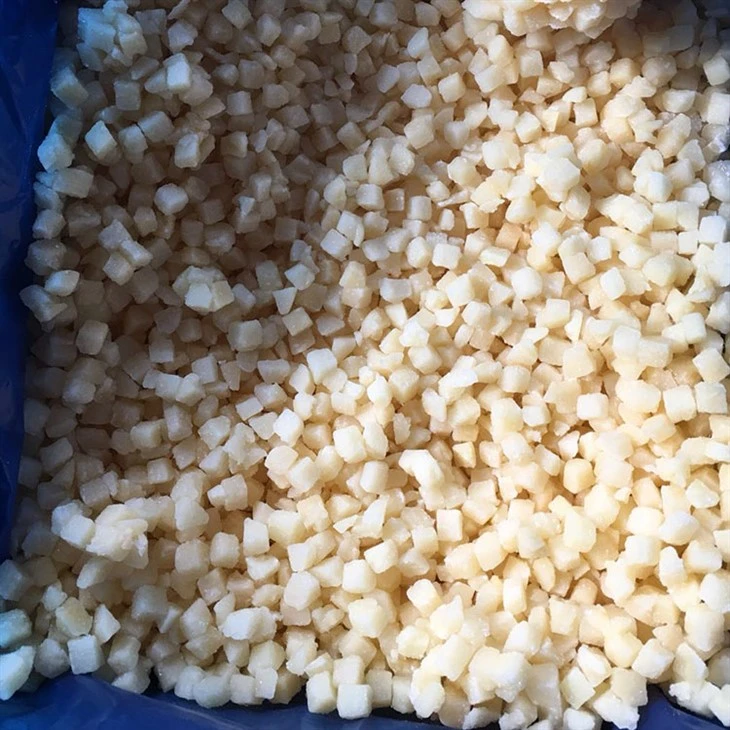
Frozen apple pieces photographed in bulk on the GreenLand product page.
Use a target pack as part of the pilot, not as an afterthought. A thin sauce may fill a pouch differently from a dense butter; a butter may require a different pump or deposit method. Check filling weight, air entrapment, seal cleanliness, post-fill appearance and the ability to remove the desired serving. For private-label work, confirm the ingredient declaration, artwork, destination-market requirements and the specification that will govern the finished product. We can quote frozen apple form and packing; finished sauce or butter packaging belongs to the processor unless a separate capability has been explicitly confirmed.

Blank mass accounting chart for purchased apple, recovered pulp and spread.
Refrigerated, frozen and shelf-stable distribution are separate validation projects. The household canning procedures published by preservation authorities were developed for their stated recipes, jar sizes and processing conditions. They do not validate a commercial product whose frozen apple input, sugar, acid, solids, filling line and pack may differ. A processor should have its own food-safety authority, process validation and shelf-life evidence for the chosen market. A spoon that holds a mound proves a texture observation, not microbial stability.
Before placing a frozen-apple order, send the required form, peel and core condition, cut or puree suitability, color and defect limits, quantity, packing, destination, application and requested documents. Ask for a representative sample and confirm crop or lot availability. GreenLand-food can work through these frozen ingredient specifications and factory-direct wholesale supply terms with the purchasing team. The final decision between sauce and butter should rest on the matched trial's accepted yield and application result, with the pack and process independently validated by the finished-food manufacturer.
Discuss a frozen apple supply trial
GreenLand-food is a frozen-food supplier and manufacturer with factory-direct wholesale options. Share your frozen apple form, application, pack and trial requirements so we can confirm a suitable specification and sample route.