


Broccoli Cheddar Soup with Frozen Broccoli: Keep Florets Distinct and Cheese Smooth
Sep 28, 2026
Leave a message

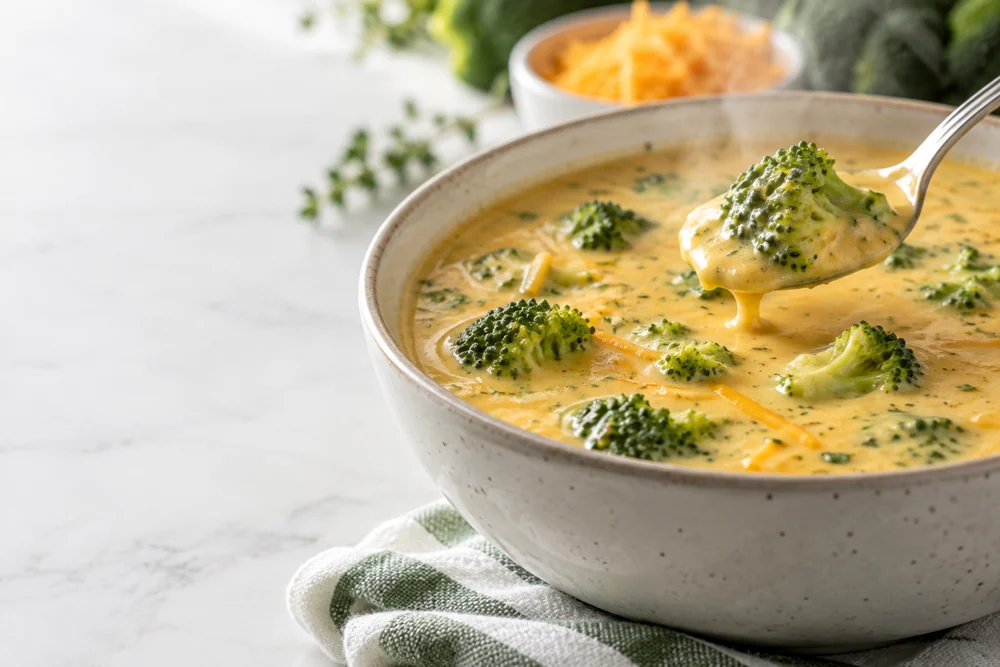
We supply frozen broccoli forms for foodservice and manufacturers, but no supplier photograph can tell a kitchen how its own cheese base will behave through a hot hold or a reheat. This guide shows how to turn a familiar recipe into a repeatable purchasing and kitchen trial. It does not claim a universal formula, a measured GreenLand soup yield or a validated shelf life. Set the safety limits for your operation separately and use the trial to decide which product form delivers the eating quality you have specified.
Select the broccoli cut for the finished bowl
Begin at service, with the spoon in the bowl. A small green floret should be visible if the menu promises pieces of broccoli. The stem must be soft enough to eat with the soup but substantial enough that it does not disappear during the normal holding route. If the product is intended as a uniformly smooth soup, the appearance and size distribution of intact florets matter less than even blending and a consistent green colour. These are two valid products, but they should not share an unspoken broccoli specification.
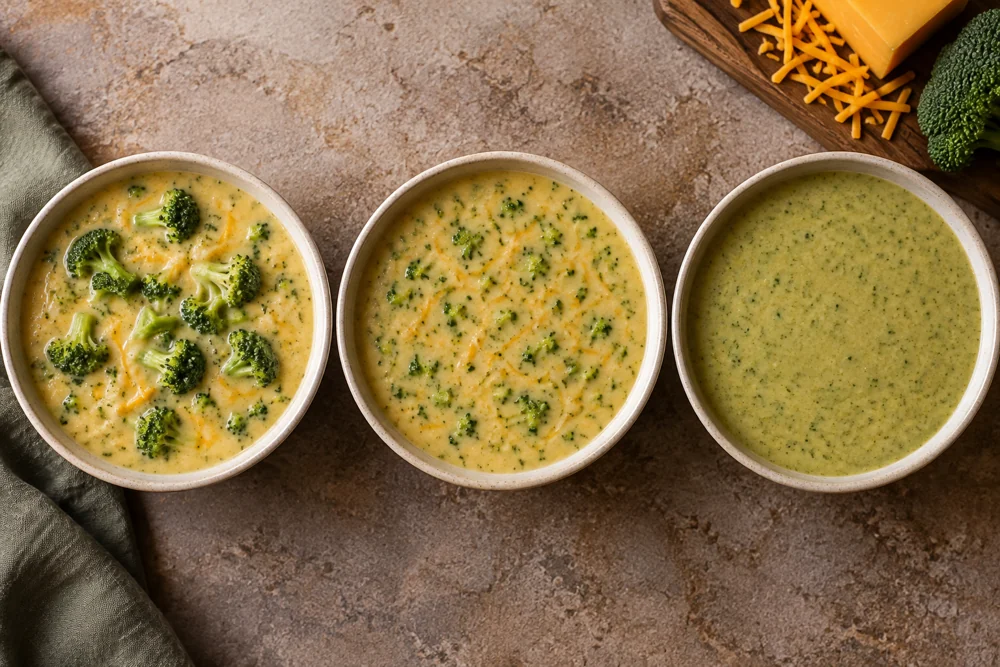
Florets, chopped broccoli and a blended form create different finished bowls.
Our frozen broccoli range includes florets and chopped forms. The floret page gives a buyer a starting point for a soup with visible pieces; the chopped broccoli page is relevant when even distribution or later blending is the priority. Confirm the current specification, piece range and pack with us for the actual lot. A category name by itself is not a promise that every piece is the same size or that a photographed sample represents the whole carton.
Spread a representative frozen sample in a shallow tray before cooking. Note the number of distinct florets, short stems, fines and any clusters. Use a definition your team can repeat: for example, a visible floret is a piece that remains recognisable after the intended cook and serve route. Avoid inventing a universal percentage threshold. The size that works in a restaurant cup may be awkward in a narrow soup dispenser, and a large floret that looks attractive in a photograph may break apart under stirring.
Cut size affects more than appearance. Fines thicken and colour a soup differently from large pieces because they disperse through the base. Thick stems require a longer cooking exposure than fine crowns. If the team plans to blend part of the broccoli and leave part intact, specify those portions separately. One lot can be divided for that test, but make the proportion explicit on the trial sheet. Otherwise a different operator may blend more of the vegetable and appear to have changed the cheese sauce.

Use the original floret photograph to discuss recognisable pieces.
The opened recipe pages show why the endpoint has to come first. Waitrose blends frozen broccoli into a smooth soup, while the Gracious Cooking frozen-floret version preserves a more recognisable vegetable. Both are legitimate recipes. A buyer should decide which bowl is being purchased or developed before approving the cut, since there is no sensible way to judge a floret lot only against a fully blended outcome.
Photograph the approved bowl from above and at spoon level under normal service lighting. Record the bowl size, portion mass and number of visible pieces in the sample you actually evaluate. The record need not become an elaborate colour instrument test; it must let the next cook distinguish acceptable green pieces from stems that dominate the spoon or fines that muddy the appearance. A small visual reference is often more useful to production than an adjective such as "chunky."
Measure the water contributed by frozen broccoli
Frozen purchase weight is a good purchasing unit, but it is not automatically the mass of broccoli that will remain recognisable in the soup. Ice on the pieces, liquid released during thawing and cooking, and any intentional draining step all influence the water entering the base. The relevant measure is the one used by the production route. A recipe expressed only as kilograms drawn from the freezer can drift when a later batch uses a different cut or preparation step.
Run a small mass balance before adjusting stock or thickener. Record frozen broccoli issued, the mass after the selected preparation, and any separated liquid. Use the same thaw or direct-cook route intended for service. If the method adds the frozen pieces directly to the pot, record that too; a drained-weight number from a different preparation has little meaning for the direct-addition recipe. Weigh the collection bowl before and after if liquid is separated. Do not treat the liquid as automatically waste or automatically usable stock. Its use belongs in the recipe decision.
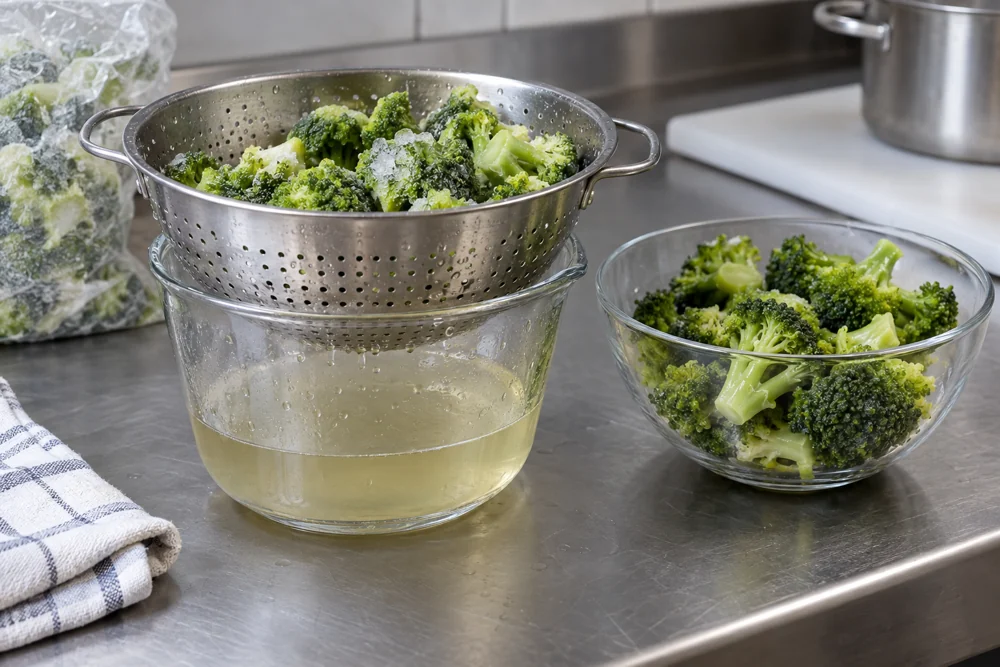
Separate the released liquid from the prepared broccoli when measuring the soup input.
The point is control rather than a supposedly correct yield. A floret sample exposed to a gentle thaw may release visible water; a direct-frozen addition transfers that water into the soup. Either can work if the stock and base account for it. If a trial starts with an overly thin bowl, simply increasing cheddar can create a heavy cheese flavour and a less stable phase without solving the underlying water accounting. Determine whether the liquid arrived with the broccoli, the added stock, milk or a later hold.
Keep preparation conditions written beside every weight. A deep, crowded container can drain differently from a thin layer. Standing time changes the amount of liquid visible at the bottom. Vigorous pressing may break florets and create more fines, which changes the texture endpoint. For a soup where intact pieces matter, gentle draining may be preferable to squeezing. A home recipe may suggest wringing thawed broccoli, but that step must be assessed against the product's desired cut integrity and the labour available in a scaled kitchen.
Build a simple table on the trial sheet: frozen mass issued, prepared mass added, separated liquid, total soup mass and portion count. Leave the actual values blank until the test. When you compare two broccoli lots, hold the soup base and final portion mass constant, then note whether a difference in viscosity follows the water contribution or the piece size. This avoids explaining every change as a cheese problem. A visual record of the separated liquid is useful, but the number belongs to the tested lot and method, not to all frozen broccoli.
The Betty Crocker soup demonstrates the convenience of frozen florets in a quick cheese base. It does not give a specification for the free water a foodservice batch can tolerate. The extra measurement here makes that convenience reproducible at the kettle size, fill weight and service window that matter to the buyer. It also makes a later supplier conversation concrete: we can discuss a sample form and cut with the kitchen's prepared-mass target in view.
Cook for the intended bite and green color
Broccoli does not stop changing when it looks cooked. Florets continue to soften during a hot hold, and a reheated portion receives another cooking exposure. The right endpoint at first heat therefore depends on what happens next. Serve-immediately soup can be judged directly from the pot. A chilled or frozen finished soup needs a separate test after the complete cooling, storage and reheat route. Judge the vegetable at that final point, where a customer meets it.
Build a reference batch with the selected cut and water-adjusted base. Add the broccoli at a documented point in the heating sequence, then note the moment when stems become pleasant to bite while crowns still have shape. Avoid promising that all pieces will cook evenly: the size distribution in the sample matters. If thick stems lag behind, it may be better to choose a different cut or divide the addition rather than extend the cook until the smaller florets lose all structure.

Compare recognisable green florets with a softer, more dispersed cooked result.
For a chunky soup, stir only as much as the kettle requires for safe, even heating. Mechanical agitation and pumping can break crowns into fines. The change may be small in a tabletop test and more important in a production transfer. Draw a sample before and after the normal transfer route when that route is part of the product. Count or photograph recognisable pieces in a standard serving. A bowl that emerges intact from a saucepan does not prove it will survive a pump, a hold and a dispenser.
For a smooth soup, the decision is different. Blend at a defined stage and check that the vegetable is dispersed consistently, rather than leaving occasional fibrous stems in an otherwise smooth bowl. Record whether broccoli is blended before cheese, after cheese or in a separate vegetable puree. Changing that sequence can change both the texture of the vegetable and the behaviour of the dairy phase. The smooth frozen-broccoli method is a useful culinary reference, but the mixing equipment and batch size still need a local trial.
Colour should be judged under ordinary light, not only under the warm spotlight of a recipe photograph. Take matched samples at first service and at the end of the intended hold or reheat. Use the same bowl and lighting. Note whether the pieces remain green, whether the surrounding cheese base looks dull, and whether fines are suspended through it. A greener first bowl is not the winner if the final bowl shows collapsed florets or a grainy cheese edge.
Do not use broccoli colour as a food-safety measure. The finished product's heating, cooling and holding controls come from your approved process and applicable rules. The FDA Food Code is a reference for US retail food operations, but the route and jurisdiction of a particular kitchen determine its control plan. Here the sensory check answers a narrower question: does the chosen frozen cut still look and eat like the promised broccoli soup after its actual service exposure?
Build a smooth cheddar phase
Cheddar contributes flavour, salt, fat and protein. It does not act as a simple dry thickener that can be added without regard to temperature or the rest of the base. A smooth broccoli cheddar soup depends on the structure of the underlying liquid, the cheese selected, the order of addition and the amount of heat applied after incorporation. Keep those variables separate in the pilot so that a grainy batch can be diagnosed rather than covered with more cream.
First prepare the chosen base to a reproducible viscosity before judging the cheese. That base may use a roux, a starch system or another approved formulation. The exact choice depends on whether the soup is served immediately, held, chilled or frozen after manufacture. Record the milk or cream composition, stock amount and thickening method. When testing a new broccoli lot, hold these fixed. If the base changes at the same time as the vegetable, a later improvement cannot confidently be assigned to the broccoli.
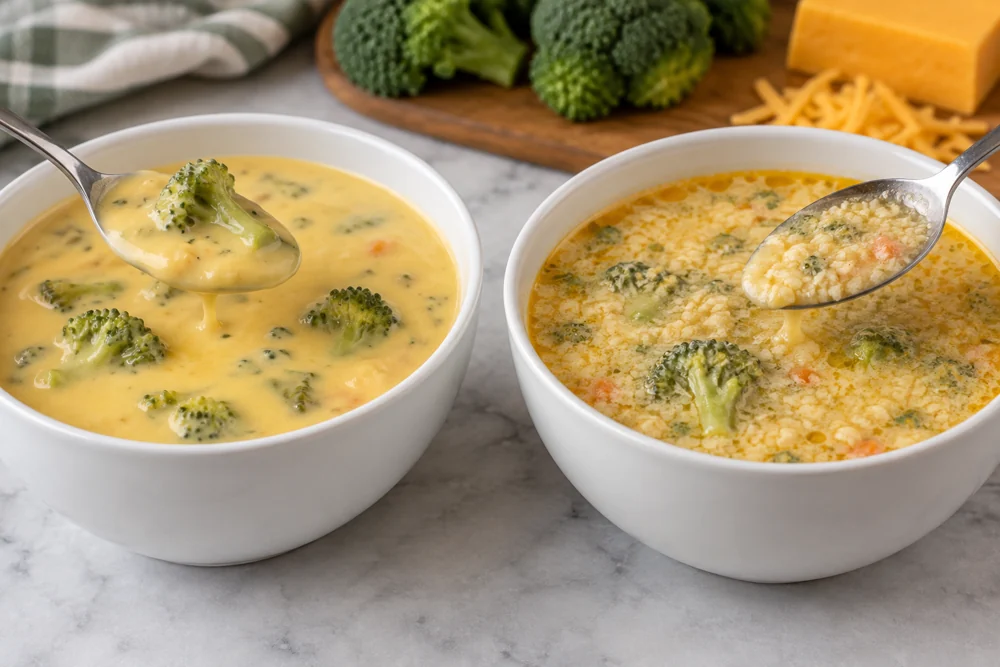
A smooth cheddar phase and a grainy or separated phase need different corrections.
Use a consistent cheddar source and shred or prepare it the same way across comparison batches. Differences in age, moisture and pre-shredded coatings can affect melting and taste. Incorporate the cheese into a hot but controlled base in stages, stirring enough to disperse it. Avoid sustained hard boiling after the cheese is added. Several opened consumer recipes, including Jo Cooks, place cheese late and use gentle heat. Treat that as a useful kitchen method to test, not as a validated setting for every industrial formulation.
Inspect the phase in a spoon, at the pot edge and after a short standing period. A smooth spoon coating is different from a soup that merely looks thick while undisturbed. Look for separated fat, tiny curds, powdery grain and watery liquid around the broccoli. Taste a standard portion once the temperature is appropriate for evaluation. Excessive cheese can mute the vegetable and make a cooled bowl heavy; too little may fail the promised cheddar character. The buyer's target is a balanced bowl after the intended route, not the largest cheese addition that can be made to dissolve once.
Broccoli also interacts with this phase mechanically. Large florets can drag sauce onto the spoon, creating an impression of more body than the liquid has on its own. Fines can make the base appear thicker while remaining uneven. Measure or describe viscosity using the same sample point and temperature, and taste both the liquid and a spoonful containing pieces. If the sauce is stable until broccoli is added, revisit the vegetable water and addition point before reformulating the whole cheese system.
A three-way development comparison is often enough to narrow the question: keep the broccoli and base constant, then compare the current cheese treatment, a gentler addition sequence and a different approved cheese preparation. Do not change portion size or stock during that test. Record the final bowl and the post-hold bowl. The result will be particular to the cheese and process used, which is precisely the evidence a foodservice or manufacturing team needs before it commits to a larger run.
Test holding and reheating in the actual service route
The first spoonful from a pilot pot is a useful checkpoint, not the whole approval. Restaurant soup may remain in a heated unit; a catering batch may cool and reheat; a manufacturer may sell a finished frozen soup. Each route exposes broccoli and cheddar to different handling. Define the route before the pilot, then test through it using the kitchen's approved safety procedure. This article cannot supply a universal hold duration, cooling schedule or shelf-life claim for a particular finished soup.
For hot service, compare a bowl drawn when the batch is ready with one drawn near the end of the planned service period. Keep the serving method consistent. Record whether the broccoli has fragmented, the base has thickened from evaporation, or liquid has separated near the surface. Stirring can temporarily hide separation, so inspect before and after the normal stir. A bowl may still taste acceptable while its appearance has lost the visible florets that justify the menu description.
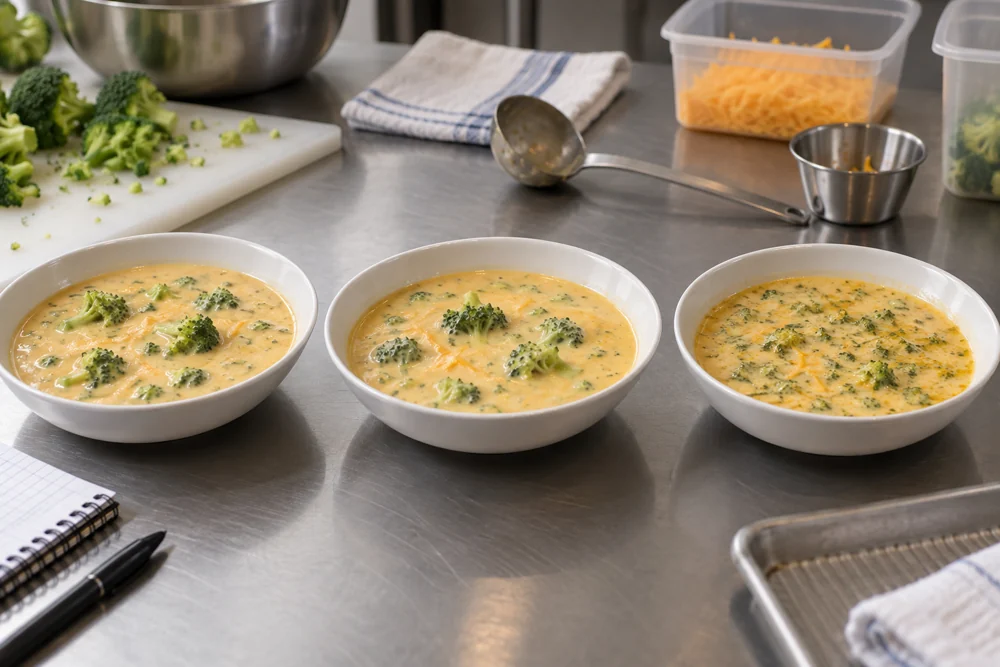
Judge the bowl after the actual holding or reheat route, not only at the first ladle.
For a cooling-and-reheat route, prepare matched portions in the intended container and fill depth. Follow the operation's validated controls, then reheat by the planned equipment. Judge the portion after it reaches its normal service condition. Note whether a skin formed, whether reheating restored a smooth sauce, and whether broccoli pieces retained a useful bite. If one reheating method breaks the sauce while another does not, the product brief should state which method was approved; a broad promise that the soup "reheats well" would be too vague.
If the finished soup itself will be frozen, trial the complete formulation after the planned freezing, storage and reheat process. Frozen broccoli as an ingredient and frozen broccoli cheddar soup as a finished dairy product are different tests. Cheese systems can change on freezing and thawing. Do not infer finished-soup stability from the fact that the vegetable ingredient arrived frozen. Assess package fill, thaw method, sauce texture, free liquid and floret condition together. The result belongs to the exact formula and process tested.
Keep the tasting panel small enough to work consistently, but include the people who will accept or serve the soup. Provide a simple scorecard: visible green pieces, broccoli bite, smooth cheddar phase, vegetable flavour, salt balance and any free liquid in the bowl. Add a comment field for defects rather than forcing every observation into a number. Photograph the same serving size at the same points. This makes supplier and kitchen discussions more useful than a general report that a sample was "good."
Safety records belong beside, but distinct from, these sensory observations. A pleasant colour does not establish safe cooling, and a separated sauce does not necessarily reveal a safety failure. Use the applicable food-code requirements and your own validated operating plan for the process. The development decision is whether the soup meets its customer-facing standard after it has been handled safely through the real route. If it fails, isolate whether the defect began with broccoli cut, water, cheese phase or handling.
Approve the broccoli lot with a repeatable soup trial
Bring the previous observations into a one-page decision. State the bowl's intended style first: visible florets, fine broccoli distribution or fully blended. Then record the frozen product form, sample identity, preparation route and prepared mass. Keep the soup base and cheese batch identified. A team cannot compare two broccoli lots fairly if one was boiled longer, one had more stock, or one was sampled before a hold while the other was judged afterward.
Use a defined trial size that represents the next production decision. A small kitchen run can screen obvious cut or flavour mismatches, but a larger kettle may change heat-up time, agitation, pumping and evaporation. Once a candidate passes the first screen, repeat it with the equipment and service pattern that matter commercially. The test is approved when the final served bowl meets the agreed appearance, bite and sauce criteria, and the purchasing team can identify the ingredient specification that produced it.

Use the distinct measurement photograph when specifying piece range.
| Decision item | Record in the trial | Failure that points back to the ingredient or method |
|---|---|---|
| Frozen input | Lot, form, pack, sampled mass and piece distribution | Too many stems, fines or broken crowns for the chosen style |
| Preparation | Direct-frozen or thaw/drain route, prepared mass and liquid separated | Unaccounted water changes the stock or thickening balance |
| Cooking | Addition point, bite at first service and after the route | Soft crowns or firm stems at the final serving |
| Cheddar base | Cheese source, addition sequence and sauce appearance | Grain, separated fat or watery edge after holding or reheating |
| Service | Container, transfer method, portion and endpoint photograph | Final bowl differs from the approved reference |
For a purchasing inquiry, send us the target cut, portion style, expected pack and quantity, destination, and the preparation method used in the trial. Ask for the current frozen broccoli specification and a relevant sample. If the work is for a manufacturer, add the downstream mixing, heating and packaging route. That context helps us discuss whether florets, a smaller cut or chopped broccoli is the more sensible starting point. It also prevents an attractive sample photo from being mistaken for a tested process result.
The team should retain the failed observations as well as the approved ones. If a lot has suitable colour but too many fine pieces for a chunky soup, it may be better suited to a smooth formulation, provided the other requirements are met. If an intact floret survives cooking but not pumping, the process or transfer route may need adjustment before rejecting the ingredient. This is a more useful commercial judgement than treating every bowl difference as a supplier defect.
When the specification and service test agree, write them together on the order and production brief. Keep the measured water and final-bowl photograph attached to the trial record. Future lots can then be checked against a concrete reference while the kitchen retains room to adjust a recipe deliberately. That is the practical value of a frozen broccoli trial: the buyer knows which product form to request, the cook knows how it enters the soup, and both can recognize a bowl that truly meets the agreed standard.
Source frozen broccoli with GreenLand-food
GreenLand-food is a professional frozen broccoli supplier and manufacturer in China, providing factory-direct wholesale supply for foodservice, food manufacturers, importers and private-label programmes.
Send us the target cut, soup style, preparation method, quantity, packing, destination, private-label needs and requested documents. Include the prepared-mass and final-bowl criteria from your trial so we can discuss a sample and order brief suited to your process.