


Frozen Spinach in Lasagna: Drainage, Layer Structure and Reheat Test
Sep 28, 2026
Leave a message

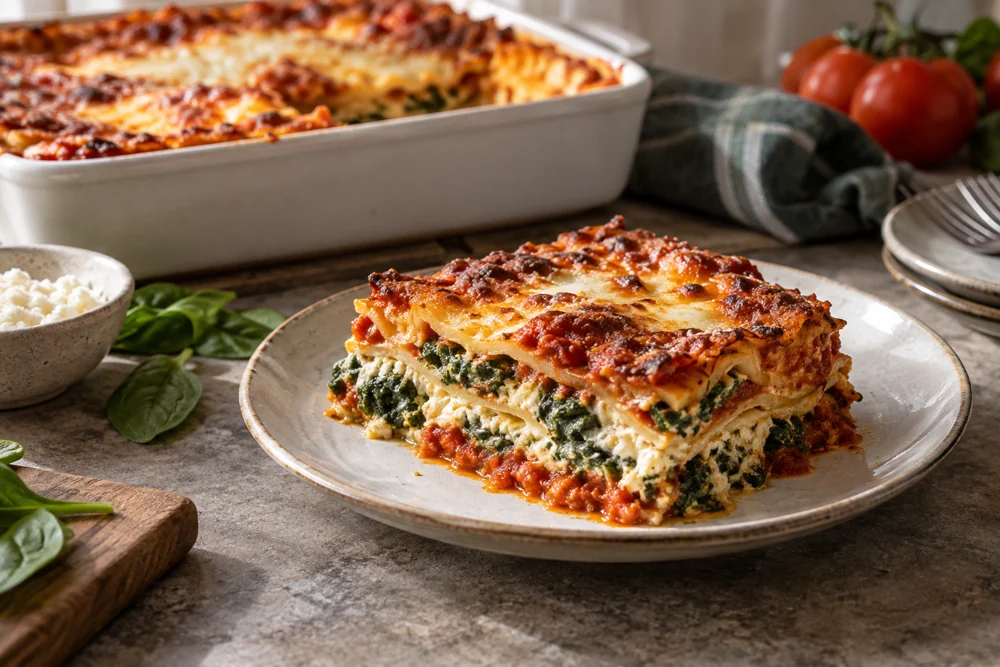
The practical challenge is controlling where water sits. Spinach can release liquid into ricotta, sauce can collect beside a sheet, and exposed pasta can remain firm while the centre looks wet. Adding less sauce may fix one symptom and create another. A useful trial follows the ingredient from its frozen purchased weight to its prepared weight, then follows the assembled tray through the intended service route.
This guide is for foodservice kitchens, prepared-meal developers and buyers comparing frozen spinach for a layered product. We use a spinach-and-cheese lasagna as the working example; tomato sauce, white sauce, pasta type and tray format remain choices for your formulation. The illustrations explain physical checks. They are not photographs of a completed GreenLand production trial or evidence of a validated recipe.
Choose a spinach form for even lasagna layers
Start with the cut you want to see and feel in the finished slice. Chopped spinach can distribute through ricotta in small pieces, making it easier to spread a consistent filling layer. Larger leaf pieces create more visible leaf texture but may drag through the filling during spreading or cutting. Either can work. The useful question is whether the prepared cut fits your mixing, depositing and portioning method without needing an extra processing step.
A photograph of frozen spinach tells only part of that story. Frozen portions may look compact because of their shape or packing, while the thawed ingredient separates into quite different pieces. Ask for the declared cut form and preparation instructions, then inspect the prepared sample. Our IQF chopped spinach page provides a starting point for discussing the ingredient; the sample and agreed specification should establish what the order will contain.
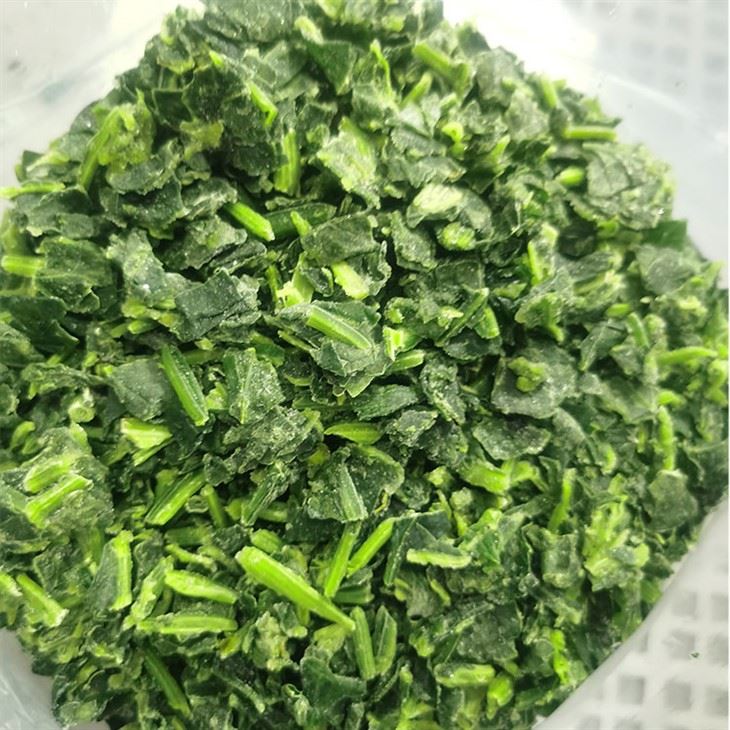
GreenLand product photograph: inspect the actual leaf cut and confirm the form supplied for your trial.
Look for uniformity at the scale of one portion. Spread a small amount of prepared spinach on a light plate and examine the distribution of leaf pieces, stems and compact clusters. Then mix another portion into your selected cheese base. A cut that looks suitable by itself can gather into green clumps in a stiff filling. Break up those clusters using the same mixer and mixing sequence planned for production, and record whether extra mixing damages the intended texture.
The spinach form also affects how easily you can measure it. Loose pieces may be convenient for weighing small trials; compact frozen portions can be convenient for a larger batch if they separate and prepare consistently. Avoid treating those conveniences as proof of performance in the tray. The prepared yield, spreading behaviour and visible leaf character still need checking. Keep the frozen form and the resulting prepared cut as separate fields on the sample record.
Consider how the filling will be deposited. A hand-spread restaurant tray can tolerate a different distribution of pieces from a narrow depositor nozzle or a shallow ready-meal compartment. If spinach catches on the tool, leaving ridges and bare patches, changing the sauce will not solve the underlying spreading problem. Trial the actual tool where possible, including the last part of the mixing bowl, where an uneven blend may leave a different spinach concentration.
There is no need to compare every available cut in the first round. Select two plausible forms, prepare them using their appropriate instructions and compare equal prepared weights in the same filling. Keep a photograph of the plate inspection and one cut portion from each tray. When the difference matters to the intended meal, retain both observations in the purchasing brief. When it disappears after mixing and baking, choose on the remaining practical criteria rather than on the frozen photograph alone.
Weigh the spinach after a defined draining step
For a filling that calls for thawed and squeezed spinach, define that preparation before setting the formula. Record the frozen input mass, the method used to thaw or otherwise prepare the ingredient, the draining equipment and the prepared mass added to the mixer. Follow the ingredient instructions and your operation's food-safety controls. Leaving a large bag on a counter is not a repeatable preparation method, and a drainage test does not replace the required cooking controls.
The phrase "squeeze dry" appears in many recipes, including Nebraska Extension's spinach lasagna. For a household dish it conveys the main action. For a production comparison, two people may squeeze to visibly different endpoints. Specify the practical details that your team can repeat: sieve size, batch depth, draining stage, pressing tool and handling sequence. A method that works for a handful of spinach may behave differently when the basket is filled deeply.
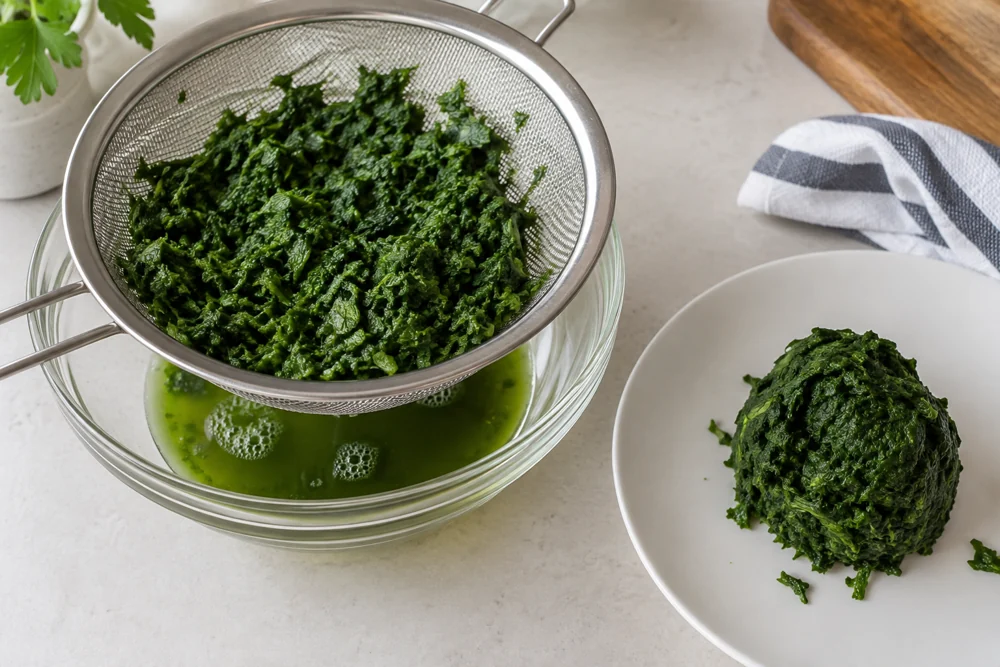
Separate the prepared spinach from released liquid before recording its mass. Illustrative trial scene.
Calculate prepared yield as prepared spinach mass divided by frozen input mass, multiplied by one hundred. For example, an illustrative one-kilogram input that produces seven hundred grams after the defined preparation gives a seventy-percent yield. This example explains the calculation; it is not a GreenLand product claim or an acceptance target. Compare samples only when they have gone through the same defined method, or clearly identify why their preparation routes differ.
Prepared mass is not the same as spinach dry matter. A heavier prepared sample may retain more water, and a lighter one may have been pressed more strongly. Examine the material alongside the number. Does it form a damp, separable mound? Does liquid immediately collect on the plate? Can the leaf be loosened without pulling it into strings? Those observations help explain why equal prepared weights might still behave differently in a cheese filling.
Keep a portion of released liquid visible during development. It makes the mass change understandable and helps the team notice differences between passive draining and additional pressing. Do not automatically pour it back into the sauce to recover yield: that changes the formulation you are trying to control. If using the liquid is an intentional recipe choice, weigh it as a separate addition and validate the resulting hydration and flavour in its own trial.
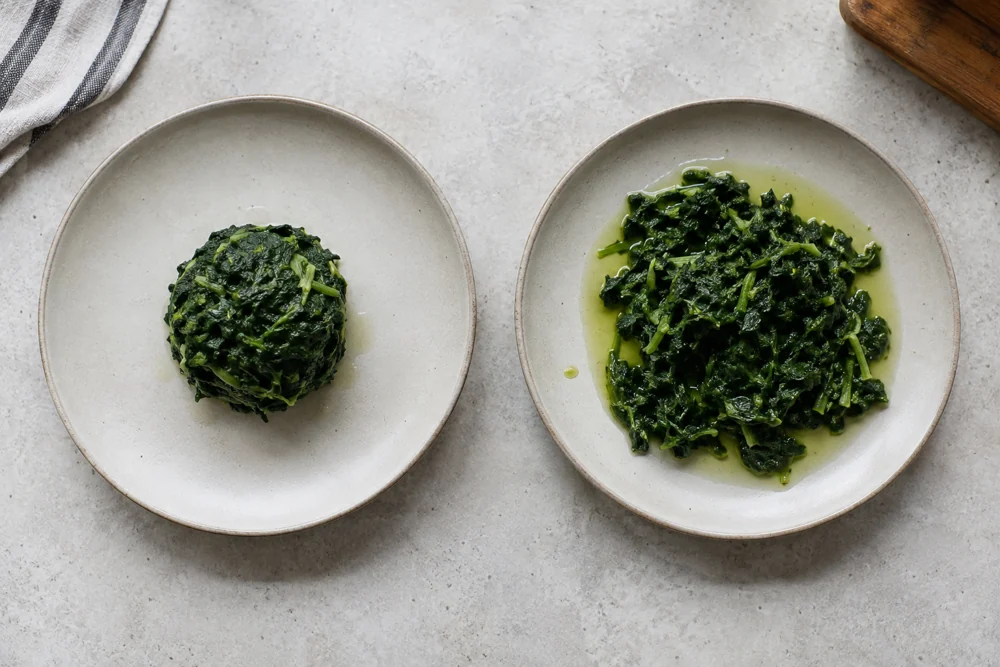
Compact drained spinach and a wetter loose portion present different filling conditions. Illustrative trial scene.
Once the drained condition is reasonably consistent, blend the spinach into a small, weighed cheese batch and let it stand for the period expected before assembly, under the operation's controlled conditions. Inspect the bowl bottom and the filling surface before spreading. Liquid appearing at this stage points to an issue upstream of the oven. Ricotta moisture, mixing and spinach preparation deserve attention before increasing bake time to compensate for a wet filling.
Record the handling effort as well as the yield. If one sample needs repeated manual squeezing to reach the intended condition, the labour and consistency may matter more than a small difference in ingredient price. The agreed method should be practical for the kitchen or line that will use it. A highly controlled laboratory preparation is useful only if its result can be translated into a workable production procedure.
Balance pasta, sauce and spinach through the tray
Lasagna moisture is a shared formulation problem. The pasta needs enough available water to hydrate through the selected cooking route, while the filling needs enough structure to stay between the sheets. Spinach brings moisture, cheese contributes moisture and fat, and the sauces distribute both. Treat each component as a separate weighed addition. "More spinach" should mean a defined change in prepared spinach mass, with the rest of the formula visible on the worksheet.
Choose the pasta format before fine-tuning the liquid. Fresh sheets, precooked sheets and oven-ready dried sheets are not interchangeable controls. Follow the selected pasta's instructions and use the same product across a comparison. An exposed corner can remain firm even when sauce pools elsewhere in the tray. That combination is a reason to examine coverage and distribution, rather than assuming the entire formulation simply contains too much or too little water.
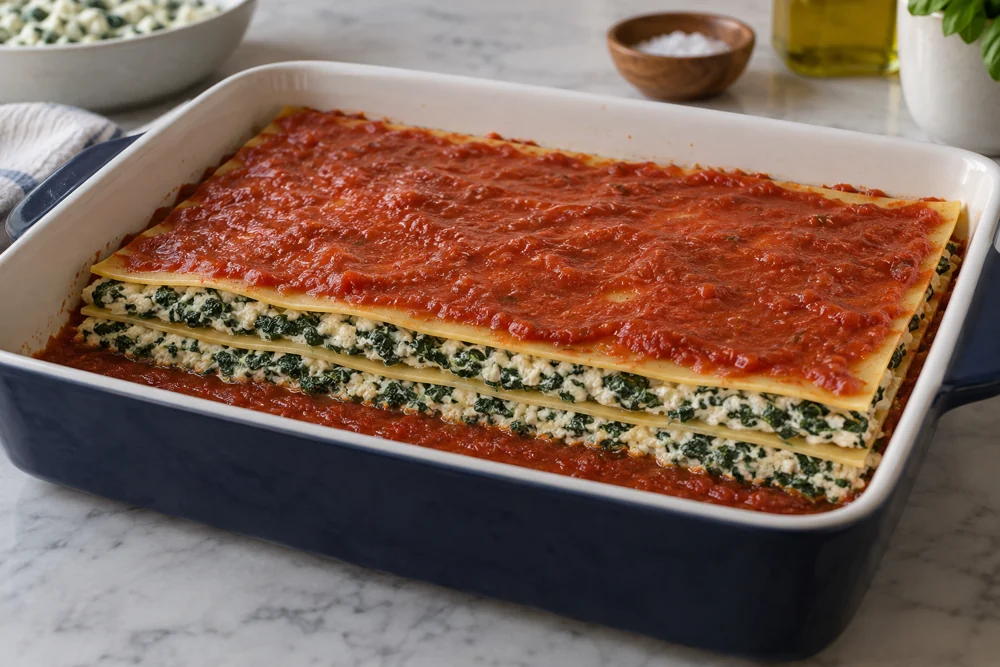
An illustrative cutaway shows even filling layers and sauce contact around the sheets. Illustrative trial scene.
Use a tray map during the first assembly. Weigh the sauce placed on the bottom, each filling layer and the finishing sauce, then note the number and overlap of sheets. Spread the spinach mixture to a consistent thickness, including the corners, without building a thick ridge in the centre. Photograph the open layers before covering them. It is much easier to explain an uneven cut slice when there is a record of how the tray was assembled.
| Component | Keep consistent during comparison | Check in the cut portion |
|---|---|---|
| Prepared spinach | Draining method, mass and loosened cut | Even leaf distribution without concentrated wet pockets |
| Cheese filling | Cheese product, mixing sequence and layer mass | Cohesive layer with the intended softness |
| Pasta sheets | Product, preparation, count and overlap | Hydrated centre and corners without hard exposed edges |
| Sauce | Formula, addition mass and coverage | Moist layers without excessive liquid around the slice |
| Tray | Material, dimensions and filled depth | Comparable centre and edge portions |
The sauce at the bottom is particularly easy to vary when a ladle is used by eye. Too little coverage may leave a dry contact area; uneven coverage can send sauce to one side when the tray moves. Check that the work surface and tray support are level. A correct total weight does not guarantee correct distribution. The same is true for spinach: a tray can meet the overall target and still produce portions with very different green filling layers.
If the first result is wet, trace the location before altering the formula. A watery cheese layer suggests a different investigation from a pool of tomato sauce at the tray edge. A pale liquid band under a thick spinach cluster may point to uneven filling distribution. Record the observation in plain language and change one relevant variable in the next comparison. Changing pasta, cheese, sauce quantity and pressing pressure together makes a better-looking second tray difficult to reproduce.
Use the first successful assembly as a working reference, then test whether another operator can follow it. Give that person the component weights, tray map and spreading instructions. A repeatable result matters more than a single carefully styled slice. If the second operator cannot create the same layer thickness with the chosen tools, simplify the depositing method or adjust the working instructions before treating the formulation as settled.
Bake and rest for a slice that keeps its shape
Keep baking conditions visible in the trial record. Tray material, filled depth, starting condition, lid or foil coverage and oven loading can all change the result. Use the cooking process required for your operation and product, and verify it through the appropriate controls. A browned top is a useful appearance observation, but it does not establish that the centre has met the required cooking conditions or that the pasta underneath is fully hydrated.
Compare like positions in the oven and tray. If one test tray sits near a stronger heat source, its firmer edge may reflect the baking environment rather than the spinach sample. Likewise, the first corner portion and a centre portion are different views of the product. Record both when they represent servings you will actually sell. Keep the oven programme unchanged while investigating a spinach preparation change, unless the programme itself is the variable under examination.

Compare cut-edge stability and liquid beneath the slice at the planned portioning point. Illustrative trial scene.
After baking, allow the planned rest before portioning and record its duration and conditions. Resting gives the filling and sauces time to settle into a more manageable structure, but it does not repair an unbalanced formula. Compare the cut at the actual service point. A tray that holds beautifully only after a much longer wait than your kitchen can allow is not yet a practical solution for that service schedule.
Cut with the same tool and portion dimensions each time. Examine whether the knife moves through leaf pieces cleanly, whether the pasta pulls the filling sideways and whether the bottom sheet stays with the portion during lifting. Then place the slice on the intended plate or meal tray. A slice can look stable while supported by its neighbours and spread noticeably once lifted. That movement is part of the assessment, not merely a plating issue.
Record visible free liquid separately from softness. A tender cheese filling can be desirable without a watery pool, while a firm slice may still release liquid beneath it. Photograph the side profile and the surface underneath after the same observation interval. Use the same angle and lighting so that the comparison is useful. Avoid choosing only the neatest portion from each tray, especially if corner and centre servings show different performance.
Taste and texture checks should sit alongside the photograph. Confirm pasta tenderness through the centre and corners, spinach texture within the filling, sauce balance and the ease of eating a normal forkful. A narrow focus on standing height can lead to a lasagna that is too dense or dry for the intended customer. The target is a slice that survives handling and remains pleasant to eat, with the acceptable balance defined by the meal format.
Before moving to frozen storage trials, repeat the preferred fresh-bake condition. If the result changes substantially between two nominally identical trays, investigate the preparation, component weights and oven conditions first. Freezing adds another set of variables and can make the original problem harder to identify. Keep the preferred fresh-baked slice as a documented reference, with its formula and process attached, so the next stage has a meaningful comparison.
Test the reheated frozen tray as a separate endpoint
Decide exactly what will be frozen. An assembled unbaked tray, a fully baked tray and individually portioned cooked slices are different products in practical terms. Their cooking instructions, packaging, handling and validation needs differ. The comparison in this section concerns a baked product taken through a controlled cooling, freezing, storage and reheating route. If your product follows another route, build the trial around that route from the beginning.
Use the actual intended pack size and filling depth where possible. A small laboratory portion does not automatically represent a deep catering tray. Record the packaging, lid, cooling and freezing process, storage conditions and the reheating equipment. Keep the relevant food-safety procedures separate from the texture score sheet, but make sure both refer to the same batch and route. The FDA Food Code is one reference framework for retail food operations; applicable requirements depend on the operation and jurisdiction.

Use matched portion views to inspect layers and seepage after the intended service route. Illustrative trial scene.
Choose storage checkpoints that serve the product-development question and have been agreed with the responsible technical team. A first short trial can reveal obvious structural failure, but it cannot establish the intended commercial shelf life. Later checks need the actual packaging and validated storage plan. Keep a retained fresh-bake reference record so that changes after reheating can be described specifically rather than as a vague loss of quality.
Reheat according to the intended instructions and verify the required endpoint using the operation's validated method. Then apply the same practical rest and portioning conditions planned for service. A microwave portion, a covered oven tray and a combi-oven programme may produce different edge and centre conditions. Do not average those routes into one result. If customers will use more than one method, each method needs a clearly identified trial and suitable instructions.
Inspect liquid at the bottom of the pack before cutting, at the cut face and beneath the lifted portion. Compare the spinach layer with the fresh-baked reference: does it remain evenly dispersed, separate from the cheese or become stringy when lifted? Check the sauce for visible separation and the pasta for both soft and firm areas. Freezing and reheating can expose weaknesses that were difficult to see in the first bake, so keep the observations tied to their location.
Use a simple agreed scoring description rather than an unexplained number. "Slice lifts intact, slight sauce spread, no separate watery pool" tells the kitchen more than "texture eight." If a numerical scale is useful, define its anchors with photographs and short descriptions. Include normal handling, such as removing a portion from the meal tray, because the commercial product needs to survive that step as well as look acceptable in an untouched container.
When the reheated result fails, compare it with the fresh-bake record before changing the spinach specification. The cause may involve cooling, freezing, packaging, sauce or the reheating route. Repeat a controlled comparison with the same spinach and a targeted process change when the evidence points that way. Conversely, if prepared yield or spinach distribution varies across lots, investigate the ingredient and preparation method together. This prevents a supplier change from becoming the default response to every wet slice.
Write the spinach purchase specification from the trial
Turn the preferred trial into a purchasing brief that another team can understand. Name the frozen spinach form, intended application, prepared-weight method and the visible leaf texture required in the lasagna. Attach the preparation record and photographs of acceptable filling distribution and cut portions. The objective is to make the sample evaluation reproducible, so a future delivery can be assessed against the same use conditions rather than against memory of one attractive tray.
Separate agreed supplier attributes from your own process outcomes. Product identity, cut description, packing, lot traceability and requested documents belong in the supply discussion. Prepared yield under your specified method and slice performance in your formulation belong in the application trial. Some outcomes depend on both. Make that dependency explicit instead of asking a product photograph or a general specification sheet to guarantee the behaviour of an entire finished meal.

GreenLand product photograph: inspect the actual leaf cut and confirm the form supplied for your trial.
Use the GreenLand frozen spinach range to begin the form discussion, then request confirmation of the exact item being sampled and quoted. A gallery may show several spinach presentations. The order description should identify the agreed one. Ask how the sample relates to the proposed supply lot, and retain its label information with the trial notes so that the result can be traced to a real ingredient sample.
Cost the spinach on the basis relevant to the filling. Purchased price per kilogram is useful, but the trial also gives a prepared yield and a required prepared amount per tray. Together these show the frozen input needed for the planned output. Add the preparation labour, waste handling and any extra chopping or pressing that the process requires. Use your own measured figures; a yield assumption borrowed from another recipe can make an otherwise careful comparison misleading.
Avoid turning an early preference into an unsupported numerical limit. If the first two samples perform similarly, additional representative trials may be needed before defining a narrow acceptance range. Agree which observations trigger a review, how a retained sample is prepared and who evaluates the finished tray. The method should distinguish a change in spinach from a change in operator technique, cheese moisture or pasta supply. Otherwise the purchasing specification may create disputes without improving consistency.
At GreenLand-food, we recommend bringing the application record into the initial supply conversation: the frozen form, preparation method, drained mass, filling use and intended service route. These details give a clearer basis for discussing a suitable sample and order requirement. They do not imply that every possible cut, packing option or application result is available without confirmation. The quote and specification should state what has actually been agreed.
The strongest handover is compact but complete: an identified spinach sample, a repeatable preparation method, a tray assembly record and separate fresh-bake and reheated assessments. Together they explain why that ingredient was selected and how the next delivery will be checked. Keep that reference with the formulation and update it when pasta, sauce, cheese, tray size or service instructions change. Consistent lasagna depends on keeping those connected decisions visible throughout purchasing and production.
Source frozen spinach with GreenLand-food
GreenLand-food is a professional frozen spinach supplier and manufacturer in China, providing factory-direct wholesale supply for foodservice, food manufacturers, importers and private-label programmes.
Send your required product form, specification, packing, quantity, application, destination, private-label needs and requested documents. Include the preparation and acceptance method used in your trial so we can discuss a sample and order brief that fits your process.