


How to Store Kale Before Processing: Dry Leaves, Wilting and Usable Yield
Sep 28, 2026
Leave a message

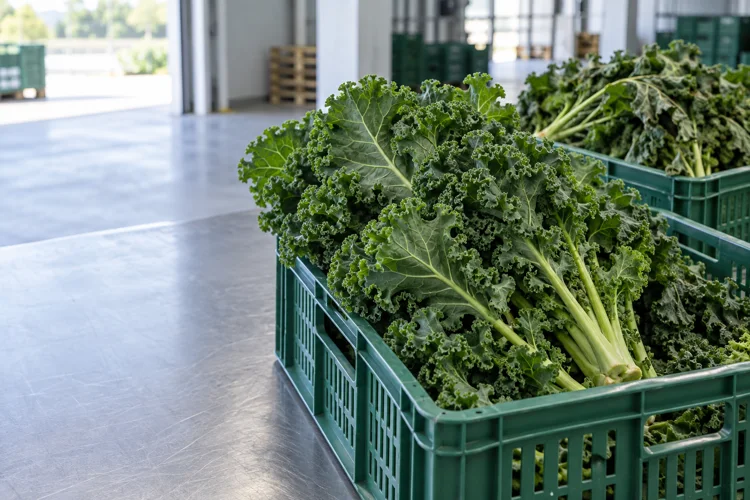
The question becomes more practical when the next use is known. Kale destined for a visible leafy side dish needs a different assessment from kale that will be chopped into soup. Neither route benefits from an unknown period of warm holding or from keeping a deteriorating lot simply because its delivery date is recent. Record the condition at receipt and judge what remains usable when processing actually begins.
We supply frozen kale ingredients against confirmed specifications. The approach below connects fresh-leaf handling with the buyer's eventual frozen product: what to inspect, how to distinguish water loss from surface wetness, and how to measure trimming and preparation losses. The suggested records are development tools, with no assumed yield, shelf life or completed GreenLand factory trial behind them.
Start with the condition and form of incoming kale
A receiving check should identify what has arrived before assigning a storage method. Whole bunches with mature stalks, loose intact leaves, chopped raw kale and washed prepared leaves are different materials. Record the form, lot identity, packaging and intended preparation. If the purchase description says only "fresh kale," clarify whether the weight includes substantial stems and whether any washing or cutting has already occurred. Those details affect both handling and the quantity that reaches the recipe.
Inspect leaves from more than the most attractive exposed part of the delivery. A practical sampling plan should represent the package and lot, including areas where crushing or retained moisture could be missed. Look at leaf color, firmness, broken edges, stem condition, soil, foreign material and visible deterioration. Record findings using agreed descriptions or reference photographs. A single photograph of a green outer leaf cannot establish that the whole lot meets the buyer's acceptance criteria.
The Iowa State Extension guide to kale and collard greens recommends choosing firm, deeply colored leaves and storing them unwashed in a refrigerator. That is a useful household starting point. A processor also needs receiving records and a defined decision when material falls outside specification. The inspection should establish whether the lot can enter the approved process, requires a documented assessment, or must be rejected. Appearance alone is not a food-safety clearance.
Avoid treating every soft leaf as the same defect. Slight loss of firmness, extensive yellowing, physical crushing and slimy deterioration describe different conditions. Their significance depends on the product and the approved acceptance rules. Sorting can remove specified unwanted parts from otherwise acceptable material, but it should not be used to conceal a deteriorating lot or bypass a rejection decision. Where the cause or extent of a problem is uncertain, the responsible quality team should determine disposition.
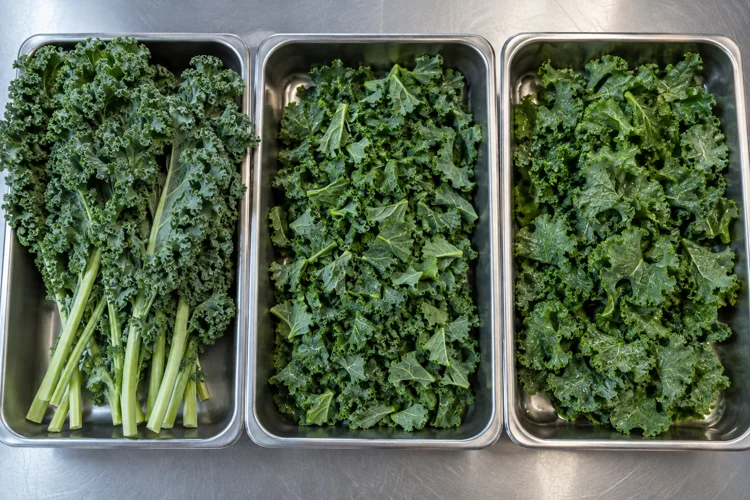
Whole leaves, chopped material and washed leaves represent different handling stages.
The planned cooking method helps define the useful leaf form. A coarse soup ingredient may tolerate a different proportion of tender rib than a smooth sauce. A leafy side dish may make tough stalks and torn pieces more apparent. State the intended form before comparing suppliers, because extra trimming can make two deliveries with the same invoice weight behave very differently. Maturity and leaf structure also deserve attention; "green" is too broad a specification for a repeatable texture target.
Establish the starting mass on a consistent basis. If a trial weighs kale with bunch ties, outer packaging or standing wash water, later yield calculations will be difficult to interpret. Record the tare and the stage at which net material is weighed. Keep receiving observations with that weight rather than on a separate note that cannot be traced to the sample. This gives the later holding and preparation comparison a clear baseline without pretending that a visual check predicts every outcome.
Keep leaves cold without trapping surface water
Fresh kale needs protection from moisture loss, yet a package full of standing water is not the same as a humid environment that limits wilting. Keep those two conditions separate in the handling discussion. Leaf surfaces, package condensation and the air around the product may behave differently. A dry-looking outer bag does not prove the lower leaves are free from pooled water, and a firmly closed bag does not prove the leaves are being held appropriately.
Colorado State University Extension advises household users to store kale in the produce drawer and use a bag or container lined with paper towels to absorb moisture. The principle is straightforward: reduce drying while managing unwanted water. In a commercial setting, choose packaging, liners and ventilation for the actual load and refrigeration system. Domestic paper-towel advice should not become an improvised production specification without considering hygiene, handling and the approved packing arrangement.
Move accepted material into the designated cold holding area promptly and follow the operation's temperature controls. Record the relevant product and room observations under a defined measurement method. A room display alone does not describe the temperature history of every crate. Likewise, a delivery that feels cool to the hand has not been measured. If the process requires a particular receiving limit or cooling time, use the applicable approved limit and a suitable calibrated instrument.
Check how the load is arranged. Overfilled containers can crush leaves, while blocked airflow or tightly packed warm material can make cooling uneven. Leaves next to a strong air stream may also experience different drying from leaves protected within the load. The storage arrangement therefore belongs in the trial record alongside the nominal cold-room setting. If one test uses loosely filled crates and another uses a compressed pallet, a yield difference cannot confidently be attributed to the kale alone.
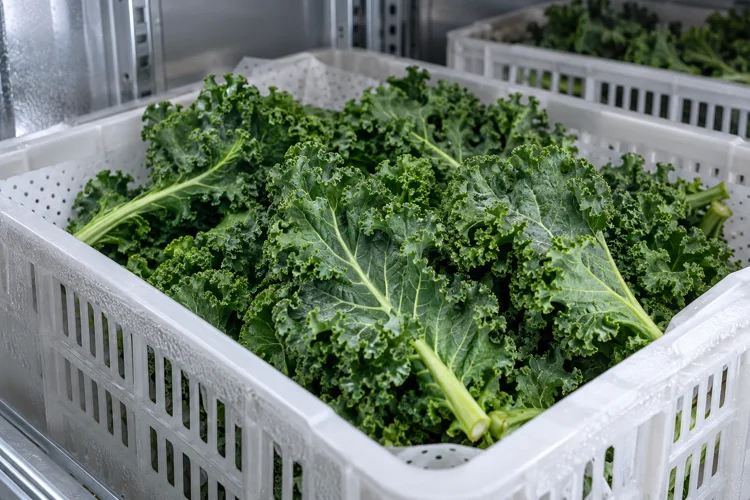
The holding arrangement should protect leaves while avoiding collected surface water.
Condensation deserves attention when material moves between environments. Observe whether water appears inside the liner, on the leaves or on surrounding surfaces, and whether it collects at the bottom. Correct the handling cause within the established cold-chain and hygiene procedures. Repeatedly opening containers for inspection can itself change exposure, so decide how observations will be made before a holding trial begins. Use representative samples and keep the remaining material under the intended routine conditions.
Set a processing schedule from the accepted lot and the operation's demonstrated holding window. The calendar is useful for rotation, but it is not a substitute for current condition or the documented temperature history. Check the lot again before use. If production is delayed, reassess the material through the normal quality procedure rather than automatically extending its release. The aim is to preserve sound raw material until the approved process can handle it, with the storage conditions and decision visible in the record.
Wash close to processing and dry the surface
Washing changes the handling stage. For intact household kale, washing shortly before use helps avoid putting wet leaves back into an extended storage period. A commercial operation may use a different sequence, including controlled preparation and intermediate holding. Follow that established process rather than applying a domestic rule to every production line. The key is to identify exactly when washing occurs and what happens to the leaves between washing, cutting, any heat treatment and freezing.
Separate dirty incoming material from cleaned material through the approved handling arrangement. Equipment, water management, staff practices and surfaces all belong to that system. Washing can remove soil and surface debris; it should not be described as making questionable kale safe or as guaranteeing that pathogens have been eliminated. If the operation uses a treatment in its wash system, its concentration, contact conditions and monitoring require the appropriate validated procedure and applicable rules.
For small kitchen quantities, separating leaves makes it easier to see soil retained in folds and around the ribs. Our guide to washing kale discusses preparation before use. In a buyer trial, document how the cleaning method reaches the actual leaf form. A whole bunch, a loose mature leaf and a chopped portion expose different surfaces and retain water differently. Compare them only through a method that is suitable for each intended ingredient.
After washing, define what "drained" means. A brief rest in a basket, a spinner and a commercial dewatering step will not necessarily leave the same surface water. Record the equipment, loading and endpoint used in the development trial. Avoid judging only the top of a pile; water can collect underneath while the visible leaves look dry. The target is controlled preparation for the next step, without unnecessary damage from pressing or handling.
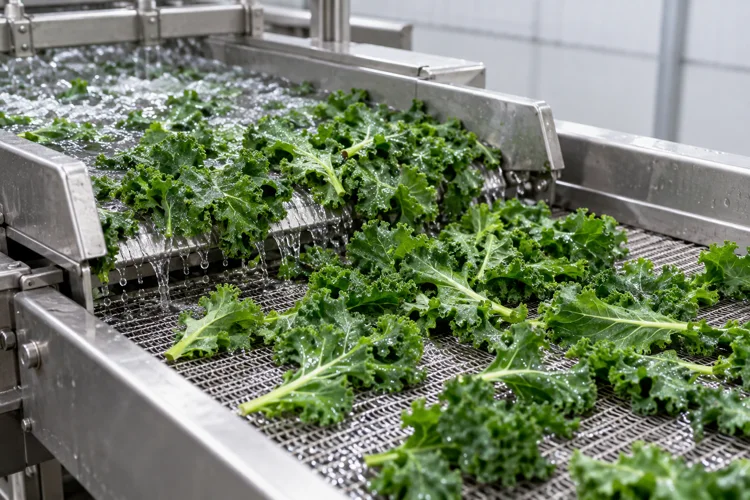
Record how washed leaves are drained before the next preparation step.
This matters when weighing the ingredient. Water carried into a cooked batch can change the apparent input mass and the time needed to reach the intended consistency. For a soup, it may become an unrecorded part of the liquid addition. For a sauteed filling, it may extend evaporation. Define whether the recipe weight refers to unwashed, washed-and-drained, cooked or frozen kale. Otherwise, a change in water handling can look like a supplier problem even when the leaf material is similar.
Cutting also needs a clear place in the sequence. Chopping before holding creates a different material from intact leaves and exposes cut edges that should be considered in the approved handling plan. A buyer should not infer that a storage statement for whole bunches automatically covers freshly chopped kale. Keep the label and records explicit when the material changes form. If prepared kale is held before further processing, identify that intermediate stage and follow its own established conditions.
Review the full path on a normal production day, including the waiting time between pieces of equipment. A well-controlled wash step can be undermined by an unplanned queue before the next operation. The trial should record enough about timing and loading to explain such delays. When a repeat batch behaves differently, this record helps distinguish leaf variability from changes in preparation, surface water and the time the cleaned ingredient spent waiting.
Track wilting, yellowing and usable yield
Usable yield connects the storage decision to the actual application. Begin with the agreed net input mass and define the point at which usable material is weighed. For a chopped-kale ingredient, that point might follow inspection, removal of specified stems and a defined draining step. The definition must remain the same between observations. If one operator includes thick ribs and another removes them, the resulting percentages describe different products.
A practical record separates the reasons for material loss. Record yellow or damaged leaves, excluded stem material, other rejects and the accepted portion according to the inspection plan. Keep water-related changes visible rather than forcing every difference into "waste." A lighter lot after holding may have lost water, while a heavier washed sample may carry added surface moisture. Neither change on its own identifies how much acceptable leaf material remains for the recipe.
Observe texture and color alongside weight. Wilting can affect handling and appearance even before a large difference is evident on the scale. Yellowing or localized deterioration can require removal under the agreed criteria. Compare observations with the receiving record so the team can see what changed during the hold. Use similar lighting and a consistent sample arrangement for photographs; otherwise, color comparisons may reflect the image conditions as much as the leaves.
| Record point | What to capture | Why it helps the decision |
|---|---|---|
| Receipt | Net mass, material form, lot identity and condition | Establishes the starting basis |
| Before preparation | Holding history and current leaf observations | Shows what changed before processing |
| After specified trimming | Accepted material and separated reject categories | Connects incoming weight to usable form |
| After defined draining | Mass and the actual draining method | Makes surface-water handling comparable |
| After application test | Cooked texture, appearance and portion recovery | Checks value in the intended food |
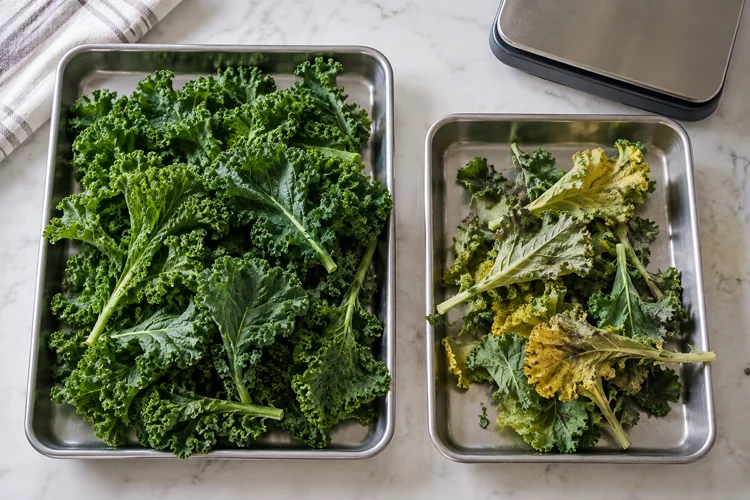
Separate accepted material from specified rejects when measuring preparation yield.
Calculate preparation yield as the accepted prepared mass divided by the defined starting mass, expressed as a percentage if useful. State both stages beside the result. This is a measurement method, not a promised commercial yield. It becomes informative when the same method is repeated on representative material. Small exploratory samples can guide the next test, but a single unusually attractive bunch should not set an order-wide acceptance expectation.
Use the result to examine the holding arrangement as well as the purchase price. A lot that requires more trimming, causes slower preparation or produces a different cooked portion may have a different operating cost. Record labor and process observations separately from the measured material recovery. Combining every disadvantage into one estimated "loss" can hide the cause and make a later supplier discussion less useful. Clear records allow specific changes to be tested.
If the observed loss exceeds the agreed limit, review the evidence before deciding what to change. The cause may relate to incoming quality, an extended hold, packaging, trimming rules or an inconsistent measurement method. Correct the method when it is unreliable, and follow the established disposition procedure for material that is unsuitable. Do not present soaking, chopping or freezing as a way to erase deterioration. A sound process begins with raw material accepted for that process.
Move sound leaves into the frozen process
Freezing should begin with kale that meets the raw-material requirements. It does not restore lost leaf quality or turn a rejected fresh lot into an acceptable ingredient. Decide the fresh holding window in relation to the processing capacity, so accepted material reaches the next step while it still meets the agreed criteria. When the schedule changes, keep the material under control and reassess it through the same release procedure used for other deviations.
The frozen product must be defined before setting the preparation sequence. Leaf size, stem inclusion, intended texture and any pretreatment all affect what the finished ingredient represents. Buyers comparing samples should ask whether they are evaluating the same form. Finely chopped, leaf-heavy kale and coarser material with more rib may behave differently in a ready meal, even if both arrive as green frozen pieces. A useful specification names the difference instead of relying on a generic product description.
Our frozen chopped kale page describes cut-size, leaf-stem and packing options that can be discussed for an order. Use those choices to define the sample request. Confirm the agreed pretreatment and intended cooking instructions, too. A buyer should not interpret a convenient frozen form as a universal ready-to-eat claim. The product specification and its intended use need to state the relevant requirements clearly.

This original product view shows the chopped kale form for specification discussion.
For household freezing, extension guidance commonly includes blanching, cooling and draining before packing. A commercial frozen-kale operation needs its own established process for the actual equipment, product and market. Do not copy a small-batch blanching time into an industrial specification without the necessary technical basis. The broader question, whether kale can be frozen, is answered separately; the decision here concerns which sound material and finished form the buyer intends to approve.
Keep the preparation record connected to the frozen sample. Record the fresh lot, cut, stem policy, treatment route, packing and relevant process conditions under the trial plan. Then the customer can evaluate a sample that represents a known product. An attractive handful taken from an unidentified bag cannot establish what should be produced for a later order. Traceability is particularly useful when a texture difference becomes visible only after the customer cooks the ingredient.
Once material is frozen, follow the confirmed frozen storage and handling instructions. Fresh-leaf advice about produce drawers, liners or washing no longer describes the same stage. Review pack integrity, frozen condition and any signs that require assessment under the receiving procedure. Keep sample handling consistent with the intended supply route so the application test remains meaningful. If a sample has an uncertain temperature history, document that limitation rather than using it to set the reference texture.
Preserve enough information to distinguish a raw-material problem from a process or handling change. For example, a shift in cooked texture might relate to the initial leaf form, stem proportion, pretreatment or customer cooking method. The record should make those variables visible without assuming which caused the difference. This supports a specific technical discussion and avoids turning every unfavorable result into a broad claim that fresh or frozen kale is inherently better.
Specify the finished kale against the actual application
Approve the ingredient in the food where it will be used. A simple cooked side, a broth soup and a blended sauce place different demands on kale. For a visible side dish, examine piece distribution, stem bite and the appearance of the served portion. In soup, check how the pieces disperse and feel after the planned cooking and holding period. In a blended product, assess the actual blend for texture and flavor rather than judging only the frozen leaf appearance.
Use a fixed preparation method for the first comparison. Record ingredient mass, other additions, equipment, loading and the cooking endpoint established for the application. If the reference is drained before use, define that draining method. If the product enters the recipe directly from frozen, evaluate that route. Comparing one sample after extra squeezing with another straight from the pack makes it difficult to interpret differences in texture, liquid release or finished portion size.
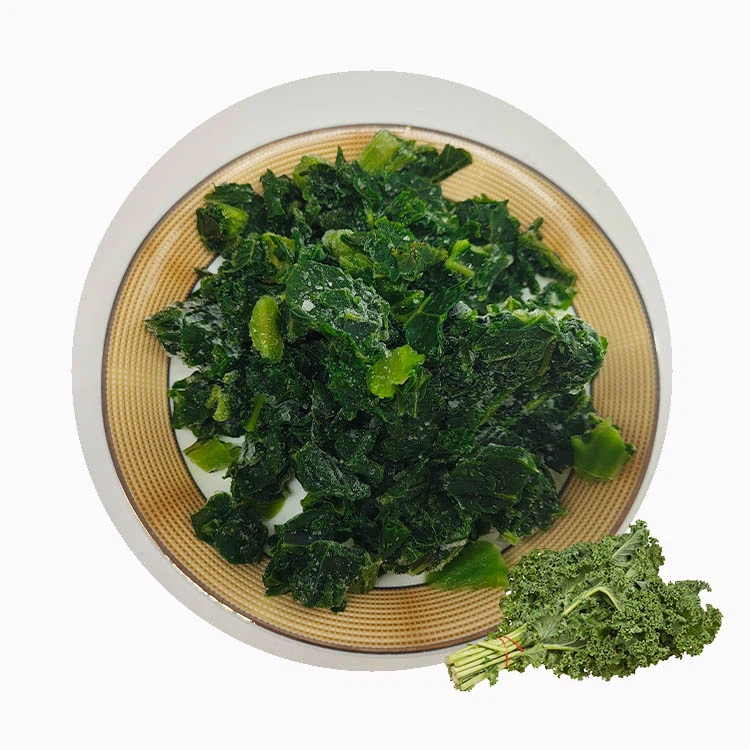
A distinct original plate view supports discussion of the supplied kale form; confirm the order specification.
Evaluate samples under the same serving conditions. Freshly cooked kale may look or feel different after the hold that a central kitchen actually uses. Test the relevant point in the workflow and describe observations plainly: tough rib, uneven pieces, excess liquid, dull appearance or a flavor that does not suit the dish. These descriptions are more useful than a single overall score when deciding what to change in the ingredient specification.
Two small comparison portions can help reveal a difference, but their appearance is only one part of the decision. The illustration here shows a controlled way to place samples beside one another; it is not a record of achieved product performance. Actual approval should come from the buyer's documented test using representative material. Keep an appropriate reference and repeat the passing route so the result does not depend on an undocumented adjustment by one experienced operator.
Translate the accepted observations into order requirements that another person can apply. Define the cut and leaf-stem expectations, agreed pretreatment, packing unit and intended preparation. Where a numerical limit is needed, state the sampling and measurement method with it. A maximum stem proportion without a clear method of sorting and weighing may be interpreted differently by two teams. A photograph can support the written specification, but it should not carry the whole agreement.
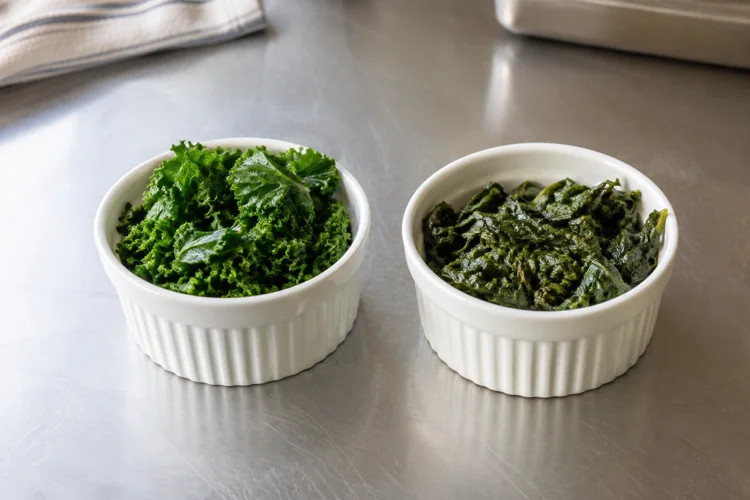
Compare cooked portions under matching preparation and serving conditions.
Include the practical supply details with the technical request: estimated quantity, destination, packing preference, application and required documents. State whether the sample must represent a proposed production specification or is only an exploratory option. We can use that information to discuss an appropriate frozen kale supply format and confirm the relevant order details. The customer's finished-food test then checks the actual eating quality and process fit.
Fresh storage and frozen purchasing meet at the same question: how much acceptable kale reaches the intended food, in the intended form? Clear receiving observations, controlled holding, defined preparation and an application trial answer that more reliably than a general storage-day estimate. Keep the evidence connected from incoming material to the approved sample, and review changes when the leaf form, handling route or recipe changes. That gives purchasing a specification grounded in what the operation can repeat.
Source frozen kale with GreenLand-food
GreenLand-food is a professional frozen kale supplier and manufacturer in China, providing factory-direct wholesale supply for food manufacturers, foodservice distributors and private-label programs.
Send your product form, specification, packing, quantity, application, destination, private-label needs and requested documents. Include the sample preparation and finished-food acceptance method when these affect ingredient approval.