


Can You Saute Frozen Vegetables Without Thawing?
Sep 23, 2026
Leave a message


This guide separates household method from commercial validation. It explains what changes physically, what a cook can observe, and what a buyer should put into a trial. The specific package directions, local food-safety rules and approved process always outrank a generic online time. Read the sequence as a decision path, not as a substitute for the label. Begin with product identity, control heat and moisture, inspect a representative endpoint, and record the result. When the food is purchased for repeated use, retain the lot and sample details so a successful method can be reproduced and an unexpected result can be investigated with evidence.
Yes, You Can Saute Frozen Vegetables
The first decision is practical: Frozen vegetables are suitable for sautéing when the method accounts for their cold mass and released water. Most separate iqf pieces can enter the pan frozen. An uncovered pan gives moisture a route out. These details explain why two cooks can follow the same short instruction and still obtain different results.
Browning follows evaporation rather than happening immediately. The exact endpoint depends on piece size and the intended bite. Use package directions when the product includes a sauce or special preparation. Observe the food itself at the point where the method changes: surface dryness, free water, coating color, center temperature, shape retention or separation may be more informative than an isolated minute count.
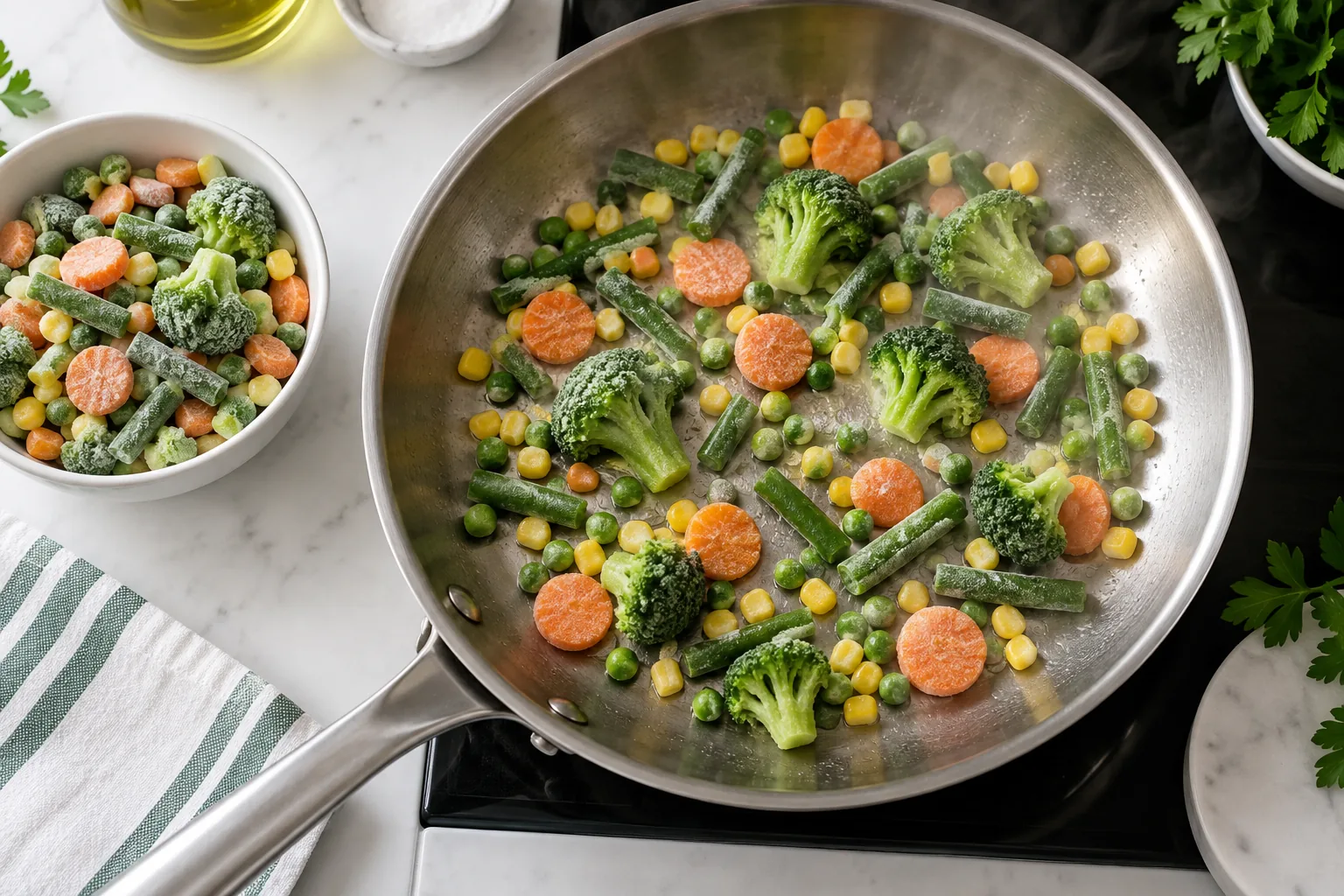
Yes, You Can Saute Frozen Vegetables - visual guide for the method described in this section.
Run the first attempt with a modest portion and write down the starting condition. A method that works only because the sample was unusually small will fail when a basket, pan or container is filled more deeply. Notice where water, heat and airflow can move. That observation gives you a useful reason for the result instead of another unexplained time recommendation.
For buyers of frozen mixed vegetables, define the product before discussing performance. Cut, formulation, pack, frozen condition and preparation history can all change the outcome. Ask for a representative sample and compare it with the intended application. The supplier can control the agreed ingredient specification; the customer still validates the final recipe, equipment and service conditions.
The immediate takeaway is to qualify the product form before choosing the method. Once the form is clear, the first trial can be simple and the observations meaningful.
Before leaving this section, translate yes, you can saute frozen vegetables into one observable checkpoint. Decide what would make you continue, adjust or stop. Write that checkpoint in ordinary language and keep it beside the first sample. The next operator should be able to recognize the same state without guessing what the author meant. This is especially important when frozen mixed vegetables moves between household, test-kitchen and commercial contexts.
Start With the Right Vegetable Form or Blend
This part of the method depends on the product in front of you. Small peas, corn and diced carrots heat quickly while large florets and thick beans take longer. Even cut size matters more than the word mixed. Heavily blanched vegetables can soften sooner. These details explain why two cooks can follow the same short instruction and still obtain different results.
Surface ice raises the water load. Select a blend whose components share a plausible cook window. Inspect the actual frozen form before choosing pan time. Observe the food itself at the point where the method changes: surface dryness, free water, coating color, center temperature, shape retention or separation may be more informative than an isolated minute count.

Start With the Right Vegetable Form or Blend - verified GreenLand product photograph used as product-form evidence.
Compare like with like. Use the same portion, vessel and endpoint when you assess a second sample, then change only the variable under review. This makes a difference in cut, formula or frozen condition visible. It also keeps a supplier conversation focused on the product instead of mixing product variation with a different appliance or recipe.
A specification for frozen mixed vegetables should name the attributes that the application can actually detect. Avoid collecting numbers that do not guide a decision. Link cut or formula to yield, appearance, handling and the desired endpoint, then agree how each attribute will be checked. This turns product approval into a shared, auditable process rather than a preference described after delivery.
Use the result to narrow the next decision, not to create a universal rule. A different formula, cut or pack may deserve a different route even when the product name looks the same.
Variation in frozen mixed vegetables should be investigated with evidence from the unopened pack and the prepared sample. Photograph the frozen form, note loose ice or clumping, and retain the package code. Then photograph the defined endpoint. The pair helps distinguish incoming condition from preparation effects and gives the supplier a useful starting point if the result falls outside the agreed expectation.
Use a Wide Hot Pan and a Manageable Frozen Load
Pan, freezer or appliance advice becomes useful only when the load is defined. Preheat a broad skillet so the first portion does not sit on a cold surface. Add only enough vegetables to leave visible pan area. A deep crowded mound behaves like a steamer. These details explain why two cooks can follow the same short instruction and still obtain different results.
Keep a second batch frozen while the first cooks. Use a stable heat setting the pan can sustain. Shake off loose package ice without rinsing the vegetables. Observe the food itself at the point where the method changes: surface dryness, free water, coating color, center temperature, shape retention or separation may be more informative than an isolated minute count.

Use a Wide Hot Pan and a Manageable Frozen Load - visual guide for the method described in this section.
During the trial, check the food before the expected finish and again at the intended endpoint. The early check shows how quickly the center and surface are changing; the later one shows whether quality survives the full process. Photographs and simple weights are often more useful than an adjective such as good, especially when another kitchen must repeat the decision.
When frozen mixed vegetables is used in more than one kitchen, record the equipment as part of the method. Fan strength, pan area, freezer recovery and batch depth are not supplier characteristics, yet they affect the way a product appears. Separating those variables from product attributes makes a complaint easier to investigate and a successful result easier to transfer.
Keep the load manageable until the endpoint is easy to recognize. Consistency comes from controlling heat and moisture, then documenting what the finished food actually looked and felt like.
A written method for use a wide hot pan and a manageable frozen load should name the portion and usable space, not merely the appliance or container. Surface area, depth and contact affect heat and water movement. If the method is later scaled, preserve those relationships or test the new geometry. Multiplying time by batch weight is rarely a dependable substitute for a scale-up trial.
Let Released Water Evaporate Before Chasing Browning
Speed is not the only measure of a sound method. At first the pan temperature drops and water pools. Keep the pan uncovered so vapor can escape. Stir enough to expose wet surfaces but not continuously. These details explain why two cooks can follow the same short instruction and still obtain different results.
Browning begins only after the visible water is largely gone. Oil added too early can float in the liquid. Listen for the sound changing from simmering toward sizzling. Observe the food itself at the point where the method changes: surface dryness, free water, coating color, center temperature, shape retention or separation may be more informative than an isolated minute count.

Let Released Water Evaporate Before Chasing Browning - visual guide for the method described in this section.
Moisture and temperature move together here. A cold, dense load absorbs heat, while released water delays drying or dilutes the surrounding mixture. Give that water a controlled route: evaporation, draining, reincorporation or capture, depending on the food. Choosing that route deliberately is more reliable than adding time without understanding what the extra time is doing.
The useful buyer question is not simply whether frozen mixed vegetables works. It is whether the approved form works under a defined load and service window with an acceptable yield. Set that window in the trial, retain the lot details and note deviations. Those records help purchasing, quality and kitchen teams discuss the same outcome with the supplier.
Do not confuse extra time with better control. Decide where water should go, protect the intended texture and stop when the required endpoint is reached.
Use a simple decision record: starting product, method, observation, adjustment and final result. Add actual times and weights only when they were measured. This avoids false precision while preserving the information that mattered. For frozen mixed vegetables, the record also supports a clearer conversation about whether variation came from the ingredient, storage, equipment or operator choice.
Stagger Components That Cook at Different Rates
The visible change has a physical cause. Dense carrots, beans or cauliflower may enter before peas, corn or tender broccoli tips. A pre-mixed bag limits exact staging but you can select components or blends designed for the result. Very unequal cuts create a narrow endpoint. These details explain why two cooks can follow the same short instruction and still obtain different results.
Add aromatics when they will not burn during evaporation. Season near the dry phase to avoid drawing more water too early. Document the sequence. Observe the food itself at the point where the method changes: surface dryness, free water, coating color, center temperature, shape retention or separation may be more informative than an isolated minute count.

Stagger Components That Cook at Different Rates - visual guide for the method described in this section.
Look at both surface and center. A browned coating, smooth sauce or softened exterior can hide a cold center, while visible juice can be entirely expected after thawing. Sample a representative large piece or portion. If the operation uses a measured safety endpoint, verify it with appropriate calibrated equipment rather than substituting color or texture.
Product photographs support identity, but they do not prove a finished result. For frozen mixed vegetables, use the real image to confirm form and condition, then use a controlled trial to establish performance. Keep generated process illustrations in their proper role: they explain a decision and are never presented as factory, customer or laboratory evidence.
Appearance is one part of doneness and quality. Check the representative center, respect the package directions and keep measured safety controls in place where required.
If this section changes a consumer or kitchen instruction, test the wording as well as the food. Ask another person to follow it without coaching. Ambiguous terms such as hot, dry, golden or tender need a visible or measurable reference. Clear language reduces overprocessing and makes frozen mixed vegetables easier to use consistently across shifts and locations.
Know When Partial Thawing or Draining Helps
Application determines what counts as a useful result. Leafy spinach blocks release far more water than separate IQF dice and are often easier to thaw and squeeze for a dry sauté. Vegetables frozen in a sauce need their own preparation route. Large icy clumps should be separated safely. These details explain why two cooks can follow the same short instruction and still obtain different results.
Partial thawing is a deliberate exception, not a rule for every mix. Keep thawed product under refrigeration. Never leave it on the counter for convenience. Observe the food itself at the point where the method changes: surface dryness, free water, coating color, center temperature, shape retention or separation may be more informative than an isolated minute count.

Know When Partial Thawing or Draining Helps - visual guide for the method described in this section.
Small corrections should remain small. Gentle mixing, a lower heat stage, a reduced load or a few extra minutes can solve a defined problem; several simultaneous changes make the lesson impossible to repeat. Stop when the product no longer matches its intended quality. More heat cannot restore tissue, coating or emulsion that has already broken down.
If a correction becomes routine, move it upstream into the written method or the frozen mixed vegetables specification. Repeatedly draining an unexpectedly wet lot, extending every cook or rebuilding a separated mixture hides a process mismatch. Document the observation, compare retained information and ask whether the product, storage or preparation step should change.
Treat troubleshooting as diagnosis. Name the defect, identify the most likely variable and change only that variable in the confirmation run.
Do not hide a recurring defect behind an attractive garnish, stronger seasoning or a longer cook. Those choices may be legitimate parts of the application, but they cannot explain why frozen mixed vegetables behaved differently. Preserve an unmodified comparison portion when practical. It provides a baseline for judging whether the correction solved the cause or simply masked the symptom.
Fix Watery, Pale, Mushy or Scorched Results
Safety and identity checks belong beside texture advice. A watery pale batch usually signals crowding, weak heat or a covered pan. Mushiness points to excess time after the vegetables softened. Scorched edges with cold centers suggest heat that is too high for the piece size. These details explain why two cooks can follow the same short instruction and still obtain different results.
Oiliness can follow adding oil before water evaporation. Change load or heat before blaming the ingredient. Compare the frozen condition and ice level between lots. Observe the food itself at the point where the method changes: surface dryness, free water, coating color, center temperature, shape retention or separation may be more informative than an isolated minute count.

Fix Watery, Pale, Mushy or Scorched Results - visual guide for the method described in this section.
Keep identity with the sample. Save the product name, lot, pack directions and any relevant supplier communication beside the trial note. That link matters when a later case performs differently or a time-sensitive notice appears. It also prevents a method developed for one form from being applied casually to another product with a similar name.
Food-safety status and sensory acceptance require separate records for frozen mixed vegetables. A product can be safe yet too soft, pale or separated for the application; an attractive sample does not establish safe handling. Follow current label, regulator and site controls, then judge quality inside those boundaries. Do not use a flavor or texture test to clear a safety question.
Retain the label and lot connection through use. Current notices and exact preparation language belong to the product in hand, not to a generic article.
Traceability remains useful after preparation starts. If frozen mixed vegetables is divided into smaller containers, carry forward the lot identity and date according to the site's system. That practice supports rotation, investigations and current notice checks. It also prevents a good result from becoming an anonymous sample that cannot be connected to a purchasable specification.
Turn a Skillet Test Into a Purchasing Specification
A repeatable result starts with a written trial. A purchasing trial should fix pan diameter, energy source, batch weight, start temperature and cook endpoint. Record total cook time, released water, yield, color and texture by component. Repeat across bags and lots. These details explain why two cooks can follow the same short instruction and still obtain different results.
Define blend ratios and cut tolerances. Check pack integrity and frozen condition at receipt. Tie the accepted result to the supplier specification, packing and cold-chain requirements. Observe the food itself at the point where the method changes: surface dryness, free water, coating color, center temperature, shape retention or separation may be more informative than an isolated minute count.

Turn a Skillet Test Into a Purchasing Specification - verified GreenLand product photograph used as product-form evidence.
Scale only after the small trial is understood. Repeat the chosen method with the actual service load, container and holding period, because those conditions change heat transfer and moisture. Confirm the result across more than one bag or lot. A repeat is valuable evidence; a single attractive plate is not a purchasing standard.
Before approving frozen mixed vegetables, agree on the sample, test method, acceptable result and documents required for the order. Include packing, quantity, destination and cold-chain expectations where they matter. A clear approval record reduces improvisation at receiving and gives both sides a concrete basis for investigating variation.
The commercial endpoint is a repeatable, written result. Match the ingredient specification, cold chain, kitchen method and holding plan before committing to scale.
Finish the approval with a short review involving the people who buy, receive and prepare frozen mixed vegetables. Purchasing needs a clear specification, receiving needs visible acceptance checks, and the kitchen needs a workable method. Quality staff need the lot and test record. When those views agree on the endpoint, the result is far more durable than a recipe note held by one person.
GreenLand-food is a professional frozen mixed vegetables supplier and manufacturer in China, supporting factory-direct wholesale supply for importers, food manufacturers, distributors and private-label programs.
Send the product form, specification, packing, quantity, application, destination, private-label needs and requested documents so we can review the right supply option.