


A COA Result at the Limit: Rounding, Uncertainty and the Agreed Decision Rule
Sep 29, 2026
Leave a message


Read the limit and the reported result separately
The first distinction is the kind of requirement. "Less than 0.50 mg/kg" excludes a result equal to 0.50 under its stated comparison convention; "not more than 0.50 mg/kg" includes equality in ordinary mathematical notation. A minimum works in the opposite direction. A target value with an allowed range is different again. Purchase specifications often use shorthand that was never intended to carry a formal decision at the exact boundary. Before a laboratory issues a conformity statement, the buyer should resolve the wording, units, basis and source of the limit. The rule may come from a contract, a customer standard or a destination-market requirement, and those sources may not use the same language.
The analyte and reporting basis must also match. A result expressed on a wet-weight product basis cannot simply be compared with a dry-weight limit. Different product forms or composites can affect what was tested. A COA row for one pesticide, nutrient or contaminant cannot establish compliance for a different named analyte, even if both rows use the same unit. The report should identify the method and any correction that is part of it. For a frozen food buyer, the sample code should connect to the production lot or the specified sublot and the sampling record. A precise result on the wrong material answers the wrong commercial question.
Rounding is often the visible cause of a dispute. Imagine an agreed maximum of 0.50 in an illustrative unit. A laboratory may have an internal result of 0.496 and print 0.50 to two decimal places. Another may have 0.504 and print the same 0.50 under a stated rounding convention. The printed figures look identical while the unrounded estimates fall on opposite sides of the nominal line. This example is only arithmetic; it does not decide either sample's conformity. The proper request is for the laboratory's reporting precision, rounding convention and value used in the decision, subject to its validated method and reporting policy. Buyers should avoid adding extra digits that the method cannot support merely to force a verdict.

The comparison sign changes the mathematical boundary.
The last printed decimal does not tell the entire uncertainty story. A report of 0.50 with a stated expanded uncertainty may be more informative than a report of 0.496 without one, even though the latter appears more precise. Distinguish display resolution, method precision and measurement uncertainty. Resolution is how many digits are shown; precision concerns spread under repeated conditions; uncertainty expresses the range of values reasonably attributable to the measured quantity under the method's scope. They are related but not interchangeable. A supplier cannot make a borderline result more certain by printing three extra zeros on a COA.

Two invented values may print the same after rounding.
When two reports differ, put their limit source, units, basis, method, result and rounding convention in parallel columns. Do not begin by subtracting the values. If one lab used "<" as the acceptance relation and the other used "≤," the decision language differs even before considering analytical variation. If one result is reported as below a detection or quantification limit, its numeric meaning requires its own explanation. The COA should make each qualifier visible. A buyer should ask the laboratory what exactly the published value represents rather than treating a spreadsheet cell as a complete measurement statement.
Ask what the uncertainty statement covers
Every measurement has uncertainty, but the reported estimate has a defined scope. Analytical uncertainty may combine contributions from preparation, recovery, calibration, repeatability and other parts of the laboratory method. An expanded uncertainty such as "±0.08, k=2" is not a guarantee that every package in a shipment lies within that band. It describes uncertainty associated with a defined measured quantity under a model and coverage statement. The lab should explain the coverage factor or probability, whether the uncertainty is absolute or relative, whether the result was corrected for recovery, and how any asymmetry or near-zero behavior was treated. The buyer does not need to invent a statistical interpretation from an unexplained "±" symbol.
Sampling deserves its own question. Codex CXG 54-2004, amended in 2021, explains that its analytical measurement-uncertainty guidance does not include the contribution associated with sampling the lot. Eurachem has a separate guide on uncertainty arising from sampling. That boundary matters for frozen produce because contamination or composition may vary among cartons, dates, fields or pieces. A precise result from a laboratory test portion cannot independently describe every carton. The commercial sampling plan defines what material reaches the laboratory and how the lot decision uses those results. Analytical uncertainty and sampling representativeness should be recorded separately unless the laboratory has explicitly evaluated a combined process.
For a large shipment, ask how increments were selected and combined, how the frozen state was maintained, and which lot units the composite represents. A composite can be appropriate for some analytes and purposes, but it can hide localized variation. A separately tested carton can expose variation but may not represent the shipment alone. Method validation, regulatory sampling prescriptions and the buyer's contract all affect the choice. The objective is to know what the COA value is evidence about. If the supplier's certificate refers to a production composite and the destination laboratory tested one arrival carton, the numbers answer related but different questions even if the analytical methods match.

A laboratory interval does not by itself cover the full shipment.
The uncertainty statement should also identify the measured quantity clearly. A residue result in mg/kg, a microbiological count in CFU/g and a percentage of broken pieces require different uncertainty or variability approaches. For some qualitative detection results, the useful method-performance information is not a symmetric numeric interval around a number. A general COA template that prints "±" beside every row may create a false impression of a single statistical treatment. Ask for the laboratory's specific explanatory note when a near-limit result could change a purchase or release decision.

The tested matrix and cut form should match the COA description.
Retained samples help with traceability, but they do not erase sampling uncertainty. The retention procedure should identify the portion, seal, storage temperature, chain of custody and purpose. Testing another portion can provide further evidence under a planned protocol. Repeating tests until a favorable value appears is a poor escalation rule: the resulting set is selected by outcome and no longer represents a neutral decision process. Agree when a retest is justified, which sample is used and how all results will be evaluated. If the method itself is questioned, a qualified laboratory should document the investigation before a new result is used.
Identify the decision rule agreed for the test
A decision rule describes how measurement uncertainty is considered when stating conformity with a requirement. ILAC G8 addresses the use of such rules for statements of conformity under ISO/IEC 17025. Eurachem's compliance guide explains options including simple acceptance against a limit, guard bands and conditional or inconclusive outcomes. None is an automatic default for every frozen-food contract or law. A regulator may prescribe its own rule. A customer may specify one in its purchasing document. A laboratory may offer a policy for a voluntary conformity statement. The parties must identify which rule governs this particular decision and whether a separate statutory process also applies.
Simple acceptance may compare the measured value directly with the stated limit. A guarded rule moves the acceptance boundary inward to control a selected risk of accepting material that could exceed the specification. A conditional rule can distinguish "conforms," "does not conform" and "inconclusive" when the interval overlaps a boundary. These descriptions are conceptual; a real decision rule must define the quantitative conditions, the risk it manages and how results are rounded. A buyer should not apply a generic guard band by subtracting a printed uncertainty from a limit without reading the agreed rule. The direction of the limit, uncertainty model and reporting convention all matter.
The party making the declaration matters as well. A COA may only report a measured value; it may not include any conformity statement. If a supplier writes "pass" next to that value, the buyer should ask what criterion and rule the supplier applied. If an accredited laboratory issues the statement, the method, rule and scope should be documented in its report or accessible agreement. If the decision concerns a statutory maximum, the applicable authority and legal text control; neither this article nor a supplier website can replace that interpretation. The buyer can still prepare the data package so qualified decision makers have the result, uncertainty and sampling facts together.

This is a conceptual illustration; only the agreed rule applies.
It is possible for two laboratories to agree on the measured estimate within their uncertainties and still issue different conformity statements because they used different rules. Conversely, two "pass" labels may conceal different evidence quality. The commercial response is to reconcile the rule before arguing about the label. Ask whether the stated limit was a contract limit or a legal maximum; whether equality is accepted; which uncertainty contributions are included; and which reporting precision the lab uses. If the contract is silent, document an agreed escalation rather than retroactively choosing whichever rule favors one side.
At GreenLand-food, we can support the buyer's technical agreement with product, lot, sampling and document identifiers. A frozen vegetable specification can name the method, reporting unit, required detection or quantification capability, uncertainty information and requested conformity language. We should not claim the laboratory can guarantee a batch through one test. The value of the agreement is that the same evidence is read under a known rule on both sides of the shipment.
Work through an illustrative boundary case
Consider a fictional frozen-bean analyte with an agreed contractual upper limit of 0.50 units. The numerical values here are invented solely to clarify reporting. Laboratory A's estimate before final formatting is 0.496 units and its report prints 0.50. It also states an expanded analytical uncertainty of 0.06 units for the relevant result and a named decision rule. The displayed 0.50 does not reveal the unrounded estimate, and the uncertainty interval crosses the nominal boundary. Under one explicitly agreed simple-comparison rule the decision may depend on the unrounded value used by the lab. Under a different agreed guarded or conditional rule, the same estimate may receive another conformity statement. The laboratory should apply its actual approved rule, not one selected after a dispute begins.
Now suppose Laboratory B prints 0.50 but the underlying estimate is 0.504 units. If both reports were rounded to two decimals, the displayed numbers are identical. That observation alone does not tell the buyer whether the two analyses disagree materially. Ask whether the methods, sample portions, corrections and uncertainty estimates are comparable. The difference between 0.496 and 0.504 in this illustration may be small relative to method variation, but that cannot be decided without the method-specific evidence. The lot decision also depends on whether the contract compares unrounded estimates or reported rounded values, and on any binding rule. The example deliberately stops before issuing a legal or commercial verdict.
One useful boundary-case table has four columns: limit and relationship, reported result and units, unrounded or decision value, and uncertainty plus rule. It makes missing information visible. If the lab cannot supply an unrounded value beyond its validated reportable precision, the answer is not to demand more digits; it is to use the method's justified precision and the predetermined rule. If the uncertainty belongs only to the laboratory portion, state that beside the result. If the sampling plan is weak, no arithmetic treatment of the analytical interval can repair representation of the shipment. The table supports a conversation with the lab rather than impersonating its judgment.

All values shown are invented to explain the information required.
An arrival result above a supplier COA result can have several causes: different sampled cartons, different preparation, different methods, analytical variation or a real difference in material condition. The investigation should preserve both reports and their raw identifiers. A sealed retained sample may support a planned referee test if its storage and chain of custody are credible. Testing more samples can clarify variability when the plan is chosen before seeing which outcomes are favorable. The outcome should be documented alongside every result, including those that did not support the preferred position. A defensible decision process is reproducible by a third party.
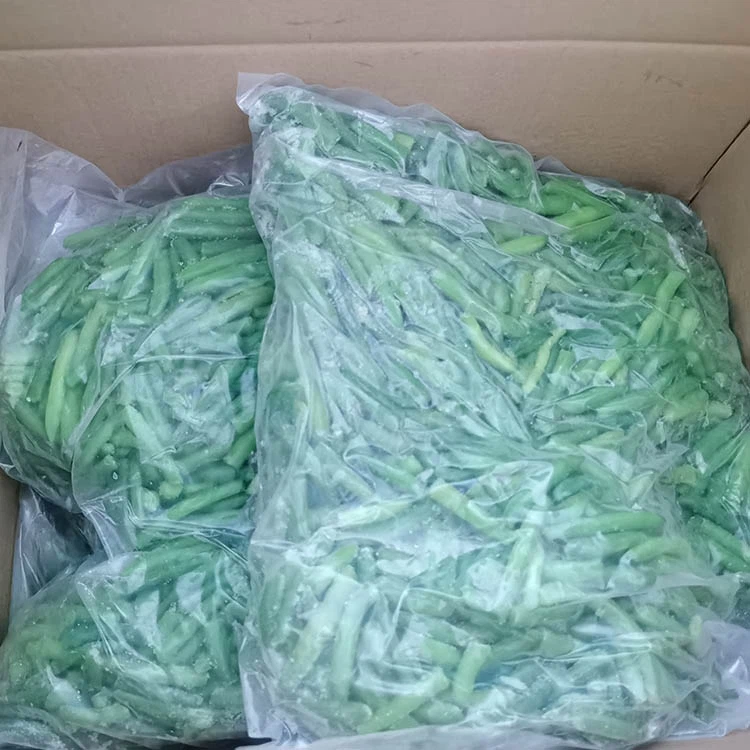
Packaging and lot identifiers connect a laboratory portion to commercial material.
The frozen-bean photos in GreenLand's product page show product form and packing, but they do not establish an analyte concentration. We use product identity in the example so the method agreement has a tangible matrix. A buyer interested in the broader document context can read our frozen corn COA guide. This page stays with the boundary issue: how a measured value, its presentation and the agreed rule interact.
Prevent the next borderline dispute
The best time to agree the decision rule is when the buyer approves the specification. State the analyte, product form, analytical method or acceptable equivalent, sample plan, units, limit relationship, result precision, uncertainty information and whether the laboratory must issue a conformity statement. If an exact method cannot be prescribed, define the performance and equivalence evidence required. Attach the approved document version to the purchase order so the supplier, laboratory and receiving team read the same requirement. A change to destination requirements should trigger a documented review before shipment, not an informal note after testing.
Also define the escalation path. A borderline result can be flagged for technical review without automatically treating the entire shipment as accepted or rejected. Name who checks the calculation and report, when the lab is asked for clarification, what sample remains sealed, and how a referee result will be interpreted. Decide how long records are retained under the actual business and legal requirements. No generic website retention period fits every destination. A clear escalation path gives both parties time to investigate while preserving evidence and temperature control.
The RFQ and technical agreement should connect the lab question to procurement details. Specify the frozen vegetable form, grade, packing, expected quantity, production or shipping window, destination, intended use and any private-label or document requirement. These details determine the relevant lot definition and the reporting bundle. A buyer of retail cut beans may need carton-level identity and a different sampling pattern from a processor buying a bulk ingredient. Our frozen vegetables category provides product context; the actual decision rule remains a matter for the agreed specification and qualified laboratory.
When a near-limit COA arrives, pause at the fields the report actually contains. If the limit, precision, uncertainty or rule is missing, request a written clarification. If the fields are complete, apply the agreed rule and retain the calculation trail. This sequence prevents a rounded digit from quietly becoming a new contract term and makes the final shipment decision reviewable by the people responsible for quality, purchasing and compliance.
It helps to define a reporting example in the purchase agreement. The example can show the name of a hypothetical analyte, a limit with its unit and comparison sign, the number of decimal places to be reported, a separate uncertainty field and the exact wording of the conformity statement. Label every example value as illustrative so it cannot be mistaken for a supplier result. The lab can then confirm whether its validated method can meet the required reporting range and whether the proposed rule is compatible with its accreditation and reporting practice. Resolving that question before the crop is processed gives the buyer time to change the test request or choose another qualified laboratory.

A planned escalation keeps the evidence and decision rule together.
The same discipline applies when a COA contains many parameters. Some rows may have wide margins from their limits and need no detailed boundary discussion; others may be close enough that reporting precision and uncertainty affect interpretation. A buyer can identify the sensitive rows in advance and request the relevant detail for them. This keeps the document useful without forcing a long statistical appendix onto every certificate. It also prevents a single generic pass stamp from hiding which requirements were assessed, which were only measured and which were not covered by the sampled material.
There is also a timing issue. If a result arrives after the buyer has already committed the lot to a packing program, the cost of an unresolved boundary grows quickly. The technical agreement should say when samples are drawn, how soon preliminary and final reports are expected, and whether a pending result holds shipment or only triggers review. A laboratory may need extra time to confirm an unusual finding or investigate quality control. Setting realistic lead time protects that work and gives the supplier a clear point at which to reserve stock, release packing materials or arrange the reefer booking. A rushed interpretation of an incomplete COA can create more delay than a planned decision window.
Source Frozen Vegetables with GreenLand-food
GreenLand-food is a professional frozen vegetables supplier and manufacturer in China, providing factory-direct wholesale supply for importers, food manufacturers, foodservice distributors and private-label programs.
Send your product form, specification, packing, quantity, application, destination, private-label needs and requested documents so we can discuss the right supply and inspection plan.