


Finish Frying Can Move Potato Oil from the Surface into the Matrix
Oct 09, 2026
Leave a message

Consider a processor asking GreenLand why a finished strip looks less oily even though its total-oil result has not fallen as expected. This is an illustrative procurement situation. We would begin by checking whether the product under comparison was a par-fried intermediate and whether the laboratory measured surface oil, matrix oil or total oil. The visible surface is one observation; it is not a complete account of the oil in the finished food.
Identify the intermediate actually being tested
"Frozen potato" is too broad a sample description for this question. A raw frozen piece, a blanched piece, a par-fried strip and a finished fried product have different processing histories. The original research concerned par-fried potatoes followed by a final frying step. A buyer should not attach its findings automatically to a raw frozen dice product merely because both are potatoes stored frozen. The condition of the intermediate is part of the research result and of the commercial comparison.

GreenLand photograph of an inspected potato cut. Confirm the exact offered pretreatment; the photo alone cannot identify a validated par-fried intermediate.
The GreenLand frozen potato range is a starting point for discussing cut form and available supply. Its photographs help identify dice, strips or wedges. They do not establish that every pictured product is a par-fried intermediate, or that a particular cut has a validated low-oil result. We would confirm the actual offered specification before applying research about finish frying. If a buyer needs a par-fried product, that requirement belongs explicitly in the inquiry and sample description.
Dimensions also belong in the description. An intact strip has a different relationship between surface and interior from a small dice or a broken piece. A pooled sample containing several forms can make an average result harder to interpret. It is not necessary to assign a universal surface-area rule to every product; it is necessary to know what was sampled. The buyer's cut specification, the sample photograph and the report should refer to the same material rather than three loosely related versions of "potato."
Identify the earlier frying history when it is relevant and available. Par frying introduces oil before the finishing step begins. That earlier oil can be distributed differently from oil acquired during finish frying. A result measured only after the final step does not by itself identify the origin of every oil portion. This becomes important when a purchaser asks whether a change came from the supplied intermediate or from the customer's final preparation.
The stage at which the sample is assessed should be stated too. A frozen par-fried strip, a freshly finished strip and a cooled finished strip are different samples. Draining, cooling and holding can affect the relationship between visible surface liquid and measured oil. Do not assume that two reports called "finished product" were taken at the same stage. The customer's comparison needs a clear endpoint so that a result can be reproduced or reviewed without guessing how long the sample had been held.
For the illustrative processor, we would request the product identity and the sample stage before proposing an explanation. If the product is raw frozen potato, the par-fried study may still suggest questions about structure and measurements, but it does not directly characterize that intermediate. If it is a par-fried strip, the study is closer to the buyer's question, while its dimensions, freezing conditions and final frying still need to be compared with the actual application.
A useful procurement description might therefore name the cut, its pretreatment category, its storage history and the final preparation being evaluated. It would also identify whether the test is intended to approve surface appearance, oil composition, texture or all three. These endpoints should not be collapsed into a phrase such as "frying performance." Their results can move in different directions, and the buyer needs to know which observation supports each part of the purchasing decision.
Follow oil through the final frying step
The primary source is "Impact of freezing method, frying and storage on fat absorption kinetics and structural changes of parfried potato", published in the Journal of Food Engineering. Its institutional abstract reports opposing changes in measured oil fractions: surface oil decreased while matrix oil increased. That finding is the central reason a cleaner-looking surface cannot automatically be read as lower whole-product oil. It does not, by itself, identify individual oil molecules moving between the two locations.

Conceptual surface and internal oil locations. Arrows illustrate a possible physical pathway; opposing measured fractions do not prove that the same oil was traced between them.
Surface oil refers to oil associated with the outside of the product under the study's measurement procedure. Matrix oil concerns oil associated with the internal food structure as defined by that procedure. These terms need a method description because separating the locations analytically is not the same as pointing to visible droplets in a photograph. The schematic shows a qualitative crust and pore arrangement. It does not supply measured proportions or establish how much oil is inside a commercial GreenLand strip.

Conceptual porous crust and moist interior. The geometric spaces represent structure qualitatively, without measured pore sizes or commercial oil proportions.
The distinction matters because visual observation emphasizes the exterior. A surface that looks drier or has fewer visible droplets may still belong to a piece with substantial internal oil. Conversely, a visible droplet does not tell the buyer the mass of oil in the whole piece. Appearance can be a valid approval endpoint for a finished dish, but it must be described as appearance. A quantitative oil claim should come from an appropriate measurement of the named sample and fraction.
Earlier primary research, "Oil absorption during frying of frozen parfried potatoes", also addressed oil uptake in this specific food system. It helps place the question within research on par-fried potatoes rather than generic frozen vegetable handling. The existence of several oil-uptake studies does not justify importing their experimental times or temperatures into a customer's process. Their value here is to show why oil location and preparation stage deserve separate attention.
Oil provenance is another distinct question. The primary paper "Provenance of oil in par-fried French fries after finish frying" examines the source of oil associated with the finished product. That is different from simply asking how oily the surface looks. A buyer considering a change in intermediate or frying oil should identify whether the available evidence concerns total amount, spatial distribution or origin. One result does not automatically answer the other two.
For our illustrative processor, the initial finding may therefore be quite consistent: the exterior looks cleaner, but the whole-product result does not fall. The apparent contradiction disappears once the endpoints are named. That does not prove that internal uptake caused the processor's particular observation. It shows that the observation is not sufficient to rule it out. A cause conclusion still needs a relevant comparison and measurements capable of distinguishing surface and matrix contributions.
The commercial implication is to avoid using a visual promise as a substitute for an analytical specification. "Less surface residue under the tested preparation" and "lower total oil on the stated basis" are different claims. Either could be useful if supported, but the report should preserve the distinction. This is especially important when a food manufacturer intends to use the supplier's statement in its own finished-product specification, where an exterior photograph cannot support a numerical composition requirement.
Freezing history can change the final response
The Journal of Food Engineering study compared unfrozen material with par-fried potatoes frozen under several experimental conditions. Its abstract identifies freezing at −18°C, −82°C and with liquid nitrogen, followed by storage comparisons up to four months. These are descriptions of the research design. They are not recommended freezing settings, a GreenLand storage specification or a validated shelf-life statement for the buyer's intended product.

Conceptual frozen, frying and cooled stages. History and assessment stage matter; the drawing supplies neither experimental kinetics nor a recommended freezing method.
The study reported that freezing method and storage affected final frying behavior, fat absorption and structural changes. That makes freezing history a relevant variable to record when comparing samples. It does not establish that one method always gives a better result across all cuts and processes. A method can affect several endpoints, and the buyer's preferred outcome may depend on texture, appearance and composition together. The study's tested conditions constrain the comparison rather than supplying a universal ranking of frozen potato quality.
Food structure is one reason the history matters. A potato piece passes through changes associated with water, heat and the development of a crust during preparation. The diagram separates a frozen intermediate from a frying stage and a cooled porous crust. Its arrows are conceptual, without kinetic values. It helps explain why a label saying "frozen" alone does not describe all of the structural circumstances that an oil-uptake measurement may respond to.
Record the known storage and handling state of the actual test sample. Was it sampled directly from frozen storage, held after thawing, or subjected to a different history before finish frying? If the histories differ, an observed change cannot confidently be assigned only to supplier or lot. A buyer need not reconstruct every minute of transport to ask a useful question, but the comparison should identify material differences known to affect its interpretation. Missing information belongs in the limitations, not in an invented narrative.
There is a transfer limit between experimental storage and commercial supply. A laboratory comparison over a stated period does not establish the shelf life of every frozen potato format. Commercial packaging, product formulation, initial condition and intended preparation may differ. If a buyer asks about shelf life or handling requirements, those need the relevant supplied-product specification. We would not substitute the study's storage range for GreenLand's documented product information or the customer's own validated application requirements.
A change in freezing history can also be entangled with a change in cut or pretreatment. If a comparison substitutes both a different intermediate and a different storage condition, its result cannot isolate the effect of one variable. The report may still describe which finished sample performed better for that application, but the cause claim should remain limited. This distinction helps the buyer use application evidence without overstating what an informal comparison established about the supplier's processing route.
For the illustrative processor, we would therefore keep the history beside the oil measurement rather than treating it as a separate logistical footnote. If the two samples arrived in different states or were handled differently, that fact could change how the result is read. The next decision is whether the available comparison is adequate for purchasing approval or whether a better-defined sample comparison is needed. The research supports asking that question; it does not answer it for a lot that was never studied.
Match the oil and texture measurements
A finished piece can be assessed for whole-product oil, a separated oil fraction, moisture, crust properties and texture. These are related but different endpoints. The buyer should identify which result is intended to support each claim. A crispness judgment cannot establish oil content, and a total-oil result cannot fully describe the texture of the crust and interior. A favorable number for one attribute should not be treated as approval of every aspect of a finished strip.
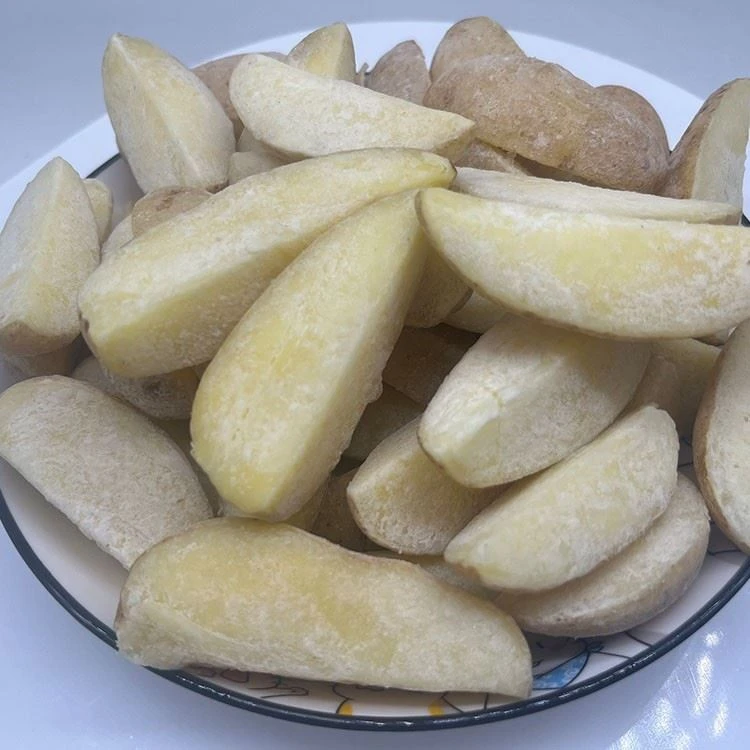
GreenLand product photograph showing a potato form and dimensional context. Match the offered cut to the ingredient specification before testing its finished response.
For oil results, start with the sample and reporting basis. Oil per unit of finished wet product and oil per unit of dry matter are different concentrations. Moisture loss changes the denominator. A higher wet-weight oil percentage does not automatically establish that the absolute amount of oil increased by the same proportion; the piece may also contain less water. The laboratory report should state its basis so that the buyer does not compare incompatible numbers or interpret a concentration difference as a complete uptake balance.
Ask how the fraction was measured when surface and matrix oil are discussed. A procedure intended to separate surface-associated oil needs to be described well enough for the laboratory to judge comparability. A whole-piece extraction is a different measurement. The study's terminology should not be attached to an informal wiping or visual observation as though the methods were identical. If the buyer has only a total-oil result, the record should say that its internal and surface components were not separately established.
Texture measurements need similar discipline. A puncture measurement at the crust and a whole-piece compression result engage different parts of the strip. A sensory judgment adds its own preparation and assessment conditions. Results can be useful side by side, provided the report does not pretend they are alternative units for the same property. Define the property the buyer cares about and retain the method that actually measured it, especially when the sample has a crisp exterior and a moist interior.
The same finished sample identity should connect these endpoints. If an oil aliquot came from one cooking run and texture was assessed from another with a different holding stage, the report needs that distinction. Otherwise, the reader may assume the results describe one matched finished product when they do not. For a commercial approval, a clear account of the compared samples is often more valuable than a larger collection of numbers from loosely related preparations.
Product photographs support a separate part of this work. The image above shows an inspected GreenLand potato form and dimensional context. It is useful when discussing whether the supplied piece resembles the buyer's requested ingredient. It does not show a validated finish-fried crust or provide oil data. We would confirm cut dimensions through the offered specification and use finished-product evidence for the cooking endpoints, so the buyer can see where each part of the approval comes from.
Our existing guide to cooking frozen potatoes provides broader preparation context. This article adds a narrower analytical question about oil location and measured endpoints in a par-fried system. The research should not be turned into a generic promise that a particular way of cooking any frozen potato will deliver a low-oil product. Any such commercial claim needs product-specific evidence under the intended preparation and on the stated analytical basis.
Approve a bounded finished-product result
The purchasing conclusion should identify what was actually approved. A named par-fried intermediate can be accepted for a defined finish-frying route and a stated set of endpoints. If the buyer approved surface appearance, say that. If whole-product oil was measured, state the method and basis. If texture was part of the decision, retain its assessment stage. This gives a later reader a usable result instead of a broad label such as "reduced oil uptake" whose meaning changes between teams.

The same oil symbols with different water amounts distinguish amount from concentration. The diagram is conceptual and does not quantify moisture loss or fat uptake.
The denominator illustration uses the same oil symbols with different water amounts to distinguish concentration from total quantity. It is conceptual and contains no commercial test data. It does not predict how much moisture a particular potato strip loses. Its role is to prompt the buyer to read the report basis before comparing percentages. If absolute uptake is the question, the technical team needs the relevant quantity information rather than relying on an unlabeled concentration alone.

Conceptual crust puncture and whole-piece analytical sample. These measurements concern different endpoints even when they refer to the same finished lot.
Keep the oil and texture samples linked to the offered material. A diagram of a crust measurement and a whole-piece analytical sample shows why their results should remain distinct even when they originate from the same lot. If the customer changes the cut, intermediate pretreatment or final preparation, the earlier result should be reviewed for transfer. It may remain useful, but it should not automatically become evidence for a different finished product with a different structural and moisture history.
For the illustrative processor, we would record the immediate conclusion as follows: cleaner surface appearance is compatible with a different distribution of oil, and it does not establish a lower total-oil result. The cited par-fried study demonstrates why that interpretation deserves consideration. To diagnose the customer's own observation, we would need the actual sample history and relevant measurements. This separates a supported scientific possibility from a proven explanation of a particular buyer's process.
Where information is missing, name the unresolved decision. If pretreatment identity is unknown, determine whether the research system matches the offered intermediate. If measurement basis is missing, clarify it before judging the percentage. If only appearance was assessed, avoid an analytical oil claim. These are specific next steps that improve the purchasing record; they do not require inventing a processing recipe or claiming that GreenLand has validated an unconfirmed par-fried SKU.
The same restraint applies to nutrition language. A cleaner appearance or a change in surface oil is not evidence of a healthier product. A reduced-fat or other composition claim requires an appropriate comparison and the relevant requirements for the intended market. This article does not infer a health benefit from the physical redistribution of oil. Its purpose is to improve the interpretation of ingredient and finished-product evidence, which remains useful without adding unsupported dietary promises.
An effective final approval therefore stays close to the tested pair: this identified intermediate, prepared through this described finishing route, gave these measured results on these bases. The paper shows why a decrease in measured surface oil can coexist with an increase in matrix oil, and why freezing history belongs in the comparison. Demonstrating the origin and movement of the same oil would require the corresponding provenance evidence. The buyer's own application evidence determines whether the offered material meets its finished-product requirements. Keeping those roles clear makes the supplier discussion more precise and the approval easier to defend when a later sample behaves differently.
Related reading
Match the offered potato cut with the intended final preparation.
Review product state and freezing context before applying par-fried research.
Keep ingredient chemistry and finished fry appearance as separately supported endpoints.
Source Frozen Potato with GreenLand-food
GreenLand-food is a professional Frozen Potato supplier and manufacturer in China, providing factory-direct wholesale supply for importers, food manufacturers, foodservice distributors and private-label programs.
Send your product form, specification, packing, quantity, application, destination, private-label needs and requested documents. Include the cut, required pretreatment, final cooking route and whether your approval concerns surface appearance, texture or measured whole-product oil.
We will review the offered specification, sample availability and relevant documentation against your proposed program. Product-specific analytical and application requirements should be confirmed before the order is approved.