


Green Bean Rupture Force: A Crisper Bite Can Still Carry More Strings
Oct 09, 2026
Leave a message
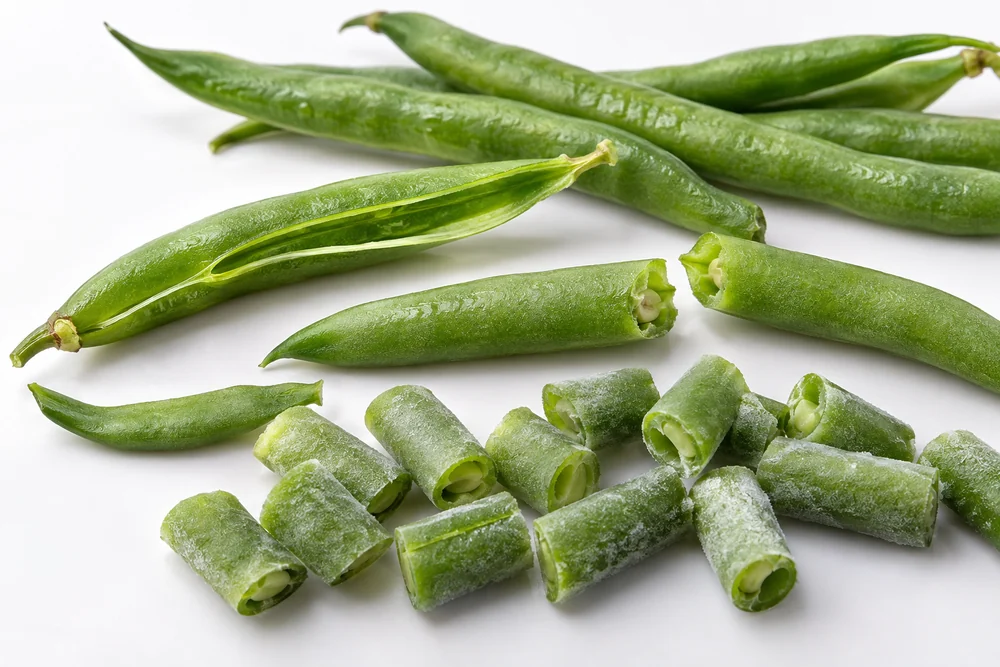
Describe the crispness and defect the buyer actually means
"Firm" can be praise or a complaint. A green bean that snaps cleanly and has a lively bite may be described as firm. A pod that resists chewing because a seam string remains may also be described as firm, but the buyer may reject it. Parchment-like tissue can add a papery, tough sensation that a simple force result might count as resistance. Those sensory differences matter for a frozen cut served as a side dish, a bean inside a ready meal or an ingredient in a mixed vegetable pack. The buyer should state which experience it wants before choosing an instrument metric.
Snap beans are immature pods of Phaseolus vulgaris. Their form, cut and maturity affect how a knife or texture analyzer meets the tissue. A piece cut across the pod presents a different geometry from an intact pod pressed along its length. A string along the seam may survive cooking and remain noticeable even after the flesh is tender. It is useful to look at where the unwanted material is located rather than describe every resistant bite as too much overall firmness. This anatomical specificity is the contribution of a good acceptance plan.
An illustrative buyer question makes the risk clear: a purchaser asks GreenLand whether a higher force reading proves a crisper green bean when the sample contains more strings. This is a hypothetical situation, not a record of a past customer or of GreenLand test data. We would ask for the actual frozen cut, cultivar or grade where known, sample preparation and force method, plus a direct inspection of seam fibres and cooked bite. A higher result could reflect the desired crispness, an unwanted fibrous structure, or both. The force trace alone cannot assign the contribution.
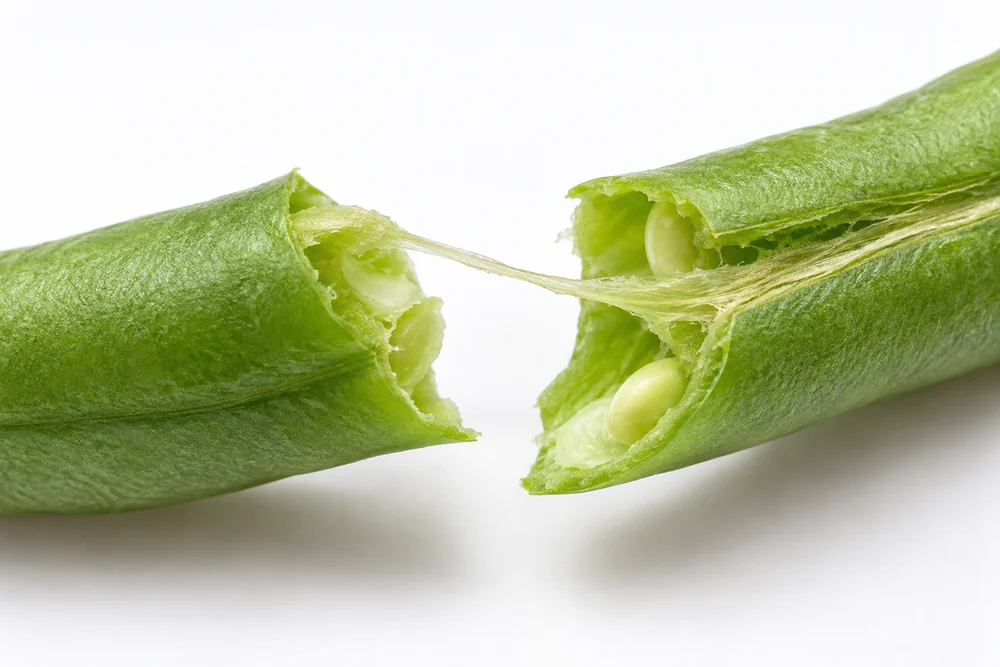
Record the clean snap and the persistent fibre as separate observations.
The original Sensory and Instrumental Texture of Snap Bean study compared sensory observations and instrument measurements in selected green bean material. The published methods describe a blade test on a pod placed in a defined orientation between immature seeds. Its sensory panel rated crispness, freedom from parchment and freedom from strings. The research is relevant because the team did not rely on force as the sole definition of quality. The study was not a commercial IQF qualification across all cultivars, cuts or cooking routes, so no universal force threshold should be extracted from it.
For a buyer, a concise defect language helps communicate with the supplier. A clean snap is a desired bite event. A seam string is a persistent fibre that can be pulled from the pod seam. Parchment describes a tougher tissue layer affecting mouthfeel. Soft, limp flesh is another problem. These can be scored separately on representative cooked samples. If the customer only reports "too firm," the supplier cannot tell which attribute to improve. A set of reference samples or photographs, accompanied by an actual bite assessment, gives both parties a more reliable target.

Frozen green bean pods and cuts can be sampled separately for string defects.
The descriptors should be usable by ordinary receiving staff as well as specialists. A quality team could demonstrate a clean break and a visible string using actual reference pieces, then agree when a fine fibre is acceptable and when it is a defect. The team should not improvise a number after seeing a disputed shipment. Establish the sample size and preparation first, then record observations piece by piece. This gives the supplier a reproducible complaint and gives the buyer a way to see whether a proposed grade change helps. A vague statement about "better texture" offers neither side a reliable action.
Higher force carried an undesirable relation in the study
The study reported negative associations between instrumental firmness measures and the panel scores for its three sensory traits. That sentence requires the scale definitions. The panel's crispness scale ran from very crisp at the low end to very soft at the high end, whereas the parchment-free and stringless scales placed better absence of those defects toward the high end. As a result, the negative association does not mean that every sensory attribute became worse as force increased. In the tested set, higher force could coexist with a score indicating more crispness, while lower scores for freedom from parchment or strings indicate less desirable fibrous traits. This mixed interpretation is precisely why a single label such as "better texture" is unsafe.
Correlation also differs from cause. A cultivar may have several anatomical traits that vary together, and the blade meets a whole pod, not one purified tissue. The paper does not prove that seam strings alone caused every higher force value, nor that a particular pectin or fibre fraction determined the result. Its test geometry and panel definitions shape what can be inferred. The data justify asking whether resistance comes from a valued snap or an unwanted string; they do not supply a chemical or breeding rule that explains all commercial green beans.

Interpret the force result with each sensory scale direction.
The sensory paper's results are also bounded by sample state. The instrumental blade test was carried out on harvested pods, while the trained sensory panel assessed prepared samples under the study's method. GreenLand's offered ingredient is frozen and may be cut, blanched, packed and later cooked by the buyer. Freezing and preparation can affect flesh texture and how fibres present during eating. The negative associations are therefore a research clue, not a ready-to-use IQF acceptance standard. An approval should test the actual offered form through the buyer's intended cooking route.
The paper can be misread if the word crispness is used without its numeric anchor. If one reader assumes "five means crisp" and another reads the actual method where "one means crisp," the same correlation sign produces opposite plain-English summaries. A procurement document should avoid that ambiguity. Name the descriptor and the scale direction in any report: lower score means crisper, higher score means softer; for the other descriptors, higher score means more freedom from the defect. Better still, show a small reference sample for each score point. That prevents a statistical shorthand from becoming a wrong commercial instruction.
Independent work in a green bean sensory breeding study found that stringlessness and parchment-free character mattered in panel evaluations of sterilized bean varieties. It supports treating those traits as meaningful defects rather than footnotes to force. However, it examined different material and processing, so its coefficients should not be merged with the rupture-force experiment. A University of Kentucky snap-bean extension page identifies the pod seam string in plain botanical terms. Those sources supply context, while the buyer still needs its own frozen-cut observations.
The practical interpretation is not to reject every strong pod. A clean, crisp snap can be desirable. Nor should a buyer reward a high force reading when its panel repeatedly finds strings. The measures can pull in different directions. A defensible approval asks what the finished consumer will chew and whether an instrumental reading adds predictive value for that specific product. If it does, calibrate it against sensory and defect outcomes using the same cut and preparation. If it does not, keep the method as research data rather than a purchase-order threshold.
One practical mistake is to average all traits into a single "texture score" before looking for an unacceptable defect. A lot with good snap and too many strings might earn a moderate composite score, yet still fail a premium side-dish requirement. A product used in soup may tolerate a softer flesh but remain sensitive to persistent fibres. For each application, decide which traits are minimum conditions and which can trade off. Keep a defect limit separate from an overall preference score. That approach respects the published study's multiple endpoints without transferring its numeric scale into an untested commercial specification.
Locate the tissue contributing to the rupture
The location of the blade and the bean's orientation influence a force measurement. In the published method, a single pod was placed across a slot and cut between two immature seeds, with the blade entering from a defined side. A commercial texture test that presses a frozen piece longitudinally or slices through a seed pocket is not measuring the same geometry. Comparing the resulting numbers as if they were interchangeable would misstate the science. If a buyer intends to use force, it should document sample temperature, pod size, cut position, blade type, speed and the preparation stage.
Inspecting tissue helps interpret the result. Open several representative pods along the seam and look for long fibrous material that persists when the flesh breaks. Check whether a parchment-like layer can be seen or felt after the normal cooking treatment. A photograph can record the location and frequency of a defect, but it cannot calibrate force by itself. It may show a string on one pod without telling the buyer how many pods in the lot have that defect. Combine visual observations with a defined count across enough pieces to represent the delivery.
Cut size can change the experience of the same fibre. A long whole bean may allow a string to run through several bites; a short cut piece may leave only a fragment, yet a high concentration of fragments can still impair a ready meal. Thin French cuts expose more inner tissue and may soften differently from transverse pieces. This is why the acceptance target should specify the offered format. It would be misleading to test a whole pod, buy diced IQF beans and assume the numbers predict the cooked dice. The anatomical feature is the same plant structure, but its presentation to an instrument and a diner changes.
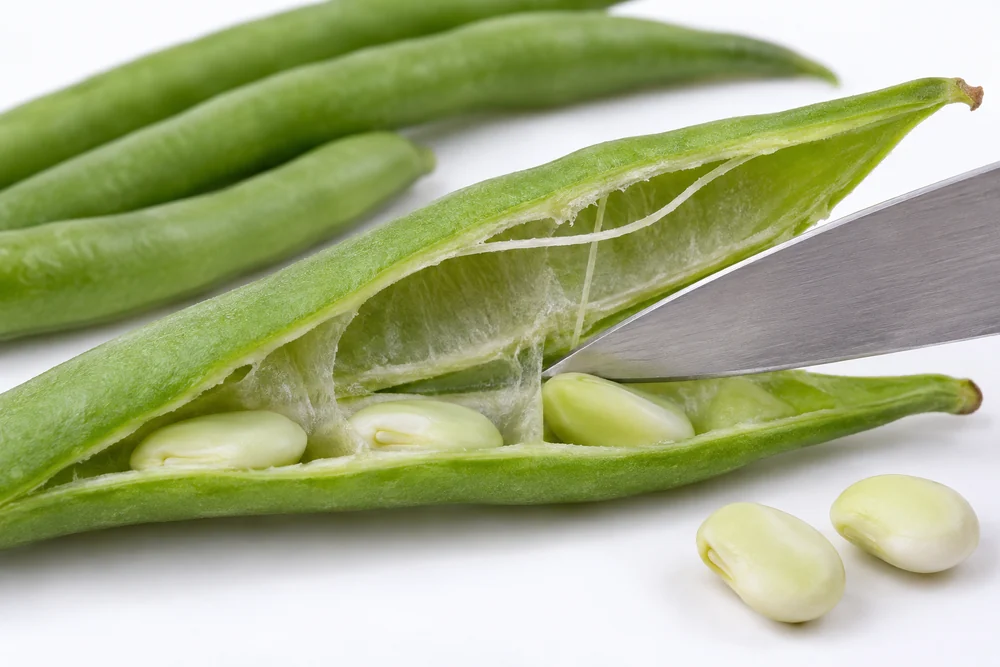
Blade position and pod orientation determine which tissues resist the test.
Maturity also matters as an input question, although a color or diameter alone cannot identify every fibrous defect. Buyers can request a maturity range, pod size or sieve grade when relevant to the product. The supplier can then sample against that specification. If a complaint appears only in a subset of larger pieces, stratify the inspection by size before averaging all pieces together. A pooled force average may hide the very class that causes consumer rejection. A defect count by size band can suggest whether the buying specification needs refinement.
Texture tools are most useful when they complement, rather than replace, this anatomy check. A blade curve may include a yield point, rupture peak and total work; different parts of that trace may respond to different tissues or sample geometry. The study reported several instrumental parameters, but a commercial team should not select the largest correlation after the fact and declare it a universal grade. Choose the measurement based on the defect and validate its repeatability with the intended frozen cut. Retain the sensory reference that gives the number practical meaning.
Even within one lot, several pods can produce a wide force range. Individual pod diameter, seed development and exactly where the blade lands all affect resistance. Report the distribution and method, not only a mean. If a buyer's rejected pieces cluster at one end of the distribution, that pattern may be more informative than a small change in average force. Sample identity matters too: the instrument pieces and the sensory pieces should come from the same representative pool. This does not require a large laboratory program for every shipment; it requires enough method discipline to avoid comparing unrelated subsets.
Compare the offered frozen cut and finished bite
The product relevant to GreenLand is the frozen bean a buyer will receive, not a fresh breeding plot pod. Start with a representative incoming sample, document whether it is whole, cut or another form, and note size distribution, broken pieces, discoloration and pack condition. Then cook it by the buyer's standard method, controlling time, equipment load, water or sauce amount and serving temperature. A bite at room temperature after a long delay can be different from a bite immediately at the intended serving condition. Keep the preparation reproducible before comparing lots.
For a mixed vegetable or ready-meal customer, evaluate beans inside the actual matrix. Other ingredients may determine the heating window, and a sauce can soften or mask texture. A panel can separately score clean snap, fibrous seam residue, parchment-like chew and overall acceptance. An instrument can measure force on prepared pieces of a consistent geometry if that adds useful discrimination. The panel and instrument should use matched lots and documented conditions; otherwise disagreement may reflect sampling differences rather than a scientific paradox.
Suppose a buyer has two lots: one registers a higher blade peak, but its cooked pieces leave more seam fibre. The buyer should not approve it as "crisper" on the peak alone. Count the string defect, compare desirable bite and evaluate the product at serving conditions. If the lot with a lower peak has a clean snap and fewer strings, it may be preferable for the application. If the high-force lot also gives a valued crisp bite and strings remain within an agreed limit, it may be acceptable. The answer comes from the jointly defined endpoint, not from an automatic direction for the force number.
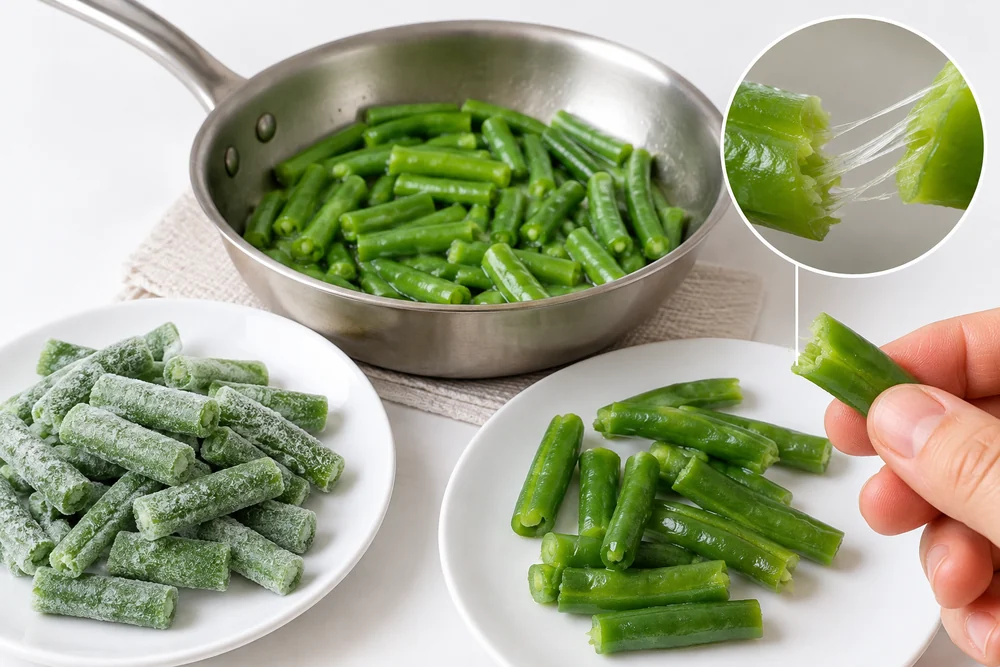
Compare the frozen cut and the finished bite using consistent preparation.
A useful trial sheet records the sample identity, frozen storage and cooking route, number of pieces inspected, defect counts and sensory descriptors. If a texture analyzer is used, record its geometry and calibration. This creates a reference for repeat procurement. A new lot can be compared with the approved sample by the same method. A change in cut size or cooking method should trigger a focused reassessment because it can change the relationship between force and eating quality. No universal threshold follows from the original paper.
The sensory assessment should be blind to the lot name when possible. If tasters know which beans came from a favored supplier, a new crop or a proposed cheaper grade, their expectations may color the result. Serve samples at the same temperature and in randomized order, using the dish that matters to the customer. Provide water and short breaks if many samples are compared. These steps are ordinary quality practice, but they become especially valuable when the decision turns on a subtle difference between desirable snap and fibrous chew. They help ensure a force number is judged against the actual eating experience.

Inspect the supplied cut and pod form under the buyer's intended preparation.
GreenLand's frozen green bean page is the place to start a product-form and supply discussion. A buyer can ask about the available cut, specification, packing, sample quantity and destination. If several vegetables share a formula, the frozen vegetable category gives broader sourcing context. The approval for green beans should still refer to Phaseolus pod quality and the buyer's finished bite, rather than import a criterion developed for snow peas or another vegetable with different anatomy.
Use a defect-specific acceptance decision
An acceptance rule should say what is being limited and how it is observed. For strings, define the inspection sample and what counts as a persistent seam fibre after cooking. For parchment, define the sensory description and reference material. For desirable crispness, define the cooking and serving conditions. For cut integrity, specify a piece-size or broken-piece assessment if that matters to the product. These criteria can be negotiated between buyer and supplier from representative trials. A single high rupture force is not a substitute for the set when the consumer can encounter both a good snap and an unwanted string.
If instrumental force is included, treat it as a supporting variable validated against the defect and bite measures. The buyer should check that repeated measurements of the same sample are consistent and that the test can distinguish accepted and rejected lots. An arbitrary value copied from a fresh-pod research paper would ignore frozen state, cut geometry and cooking. The original study's mixed scale directions also make an unqualified "higher is better" statement especially risky. Keep the sensory scale and instrumental method attached to every reported number.
The final purchase specification can include separate fields for ingredient identity, format and sensory performance. It might identify Phaseolus vulgaris cut beans, a cut-length range, color and defect criteria, packing, and a reference method for the cooked bite. The exact tolerances should be agreed from representative samples and the buyer's use. If the customer's marketing promises a particular texture, its own finished-product trials must support that promise. A supplier can state what it offers and how it controls the incoming ingredient; it cannot infer every consumer's bite from one instrumental peak.
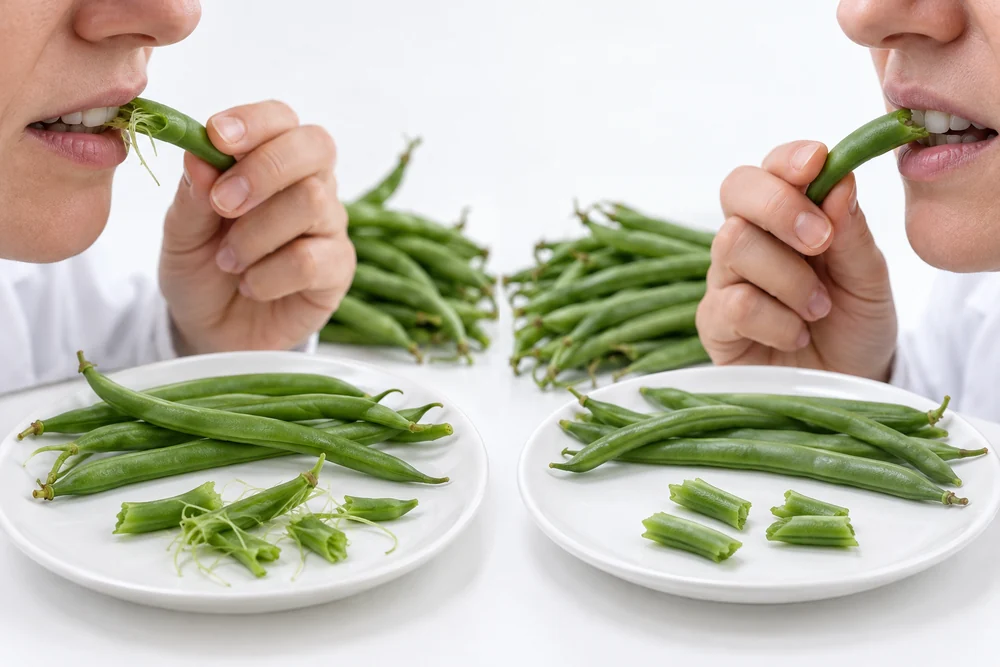
Approve the bite and fibrous defects separately from the force reading.
For supplier discussions, identify which part of the supply program may be changed. A different pod size or crop maturity specification could be tested if fibrous defects cluster in those classes. A revised cut might alter how a string appears in the finished meal. Better sorting might reduce a recurring defect if it can be detected consistently. These are possible trial routes, not guaranteed fixes. The supplier and buyer need an agreed reference sample and enough observations to judge whether a change helps the intended use without compromising yield or another quality attribute.
For a GreenLand frozen green bean inquiry, specify the cut and intended dish, then provide both the rupture-test geometry and cooked observations of clean snap, seam strings and parchment-like chew. We can help align a representative lot and product specification with that trial. A higher peak is only useful when it predicts the accepted bite under the buyer's own preparation; it must not be rewarded while persistent fibres are overlooked. Retain the chosen reference sample and defect rule with the crop and application so later lots can be compared fairly.
If the buyer later changes the finished dish, the earlier acceptance may need revision. A quick stir-fry, a boiled side dish and a retorted ready meal expose the bean to different heat and moisture histories. A pod that gives a satisfying snap in one route may become soft in another, while a persistent seam string may remain objectionable across several routes. Keep the approved sample and method with the intended application, and reopen the texture question when the process changes. That is a more durable purchasing rule than declaring any single force direction universally favorable.
Plan frozen green bean supply with GreenLand-food
For frozen green bean, tell us the intended product form, application, pack, and inspection priorities. GreenLand-food is a China-based frozen-food supplier and manufacturer. We can discuss factory-direct wholesale supply around the specification you need to evaluate.