


Green Bean Retorting: Pectin Transformation Is Not Loss of Every Cell-Wall Fraction
Oct 09, 2026
Leave a message
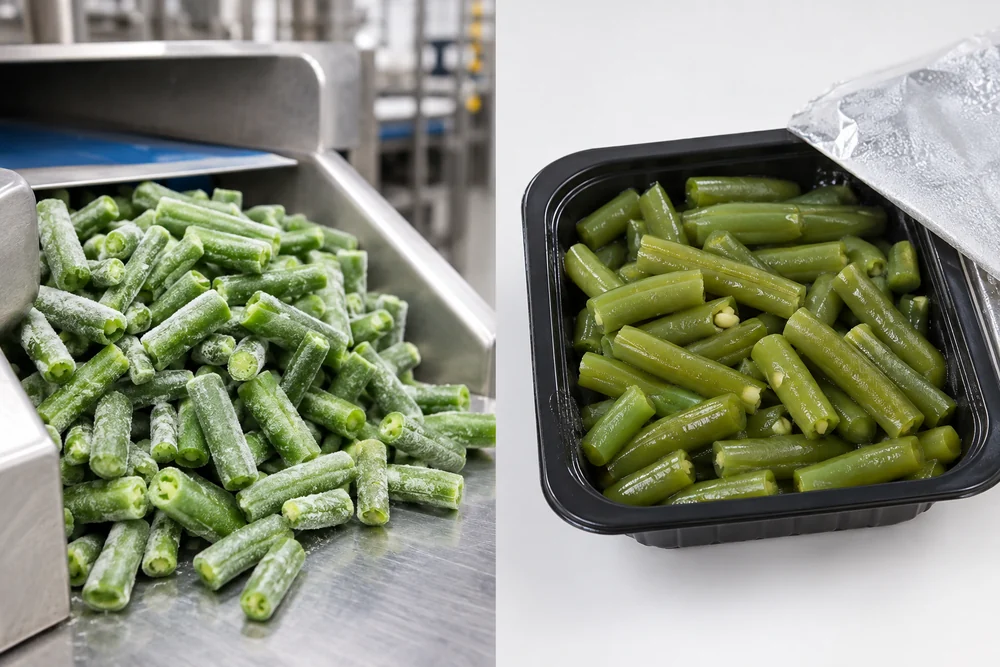
Locate the heat stage that changed the tissue
A bean may encounter blanching before freezing, then frozen storage, thawing or direct dosing, sauce filling, retorting and subsequent storage in the finished pack. Those stages affect the same piece in different ways. If an incoming frozen bean has a sound cut shape but the finished tray contains soft, fragmented pieces, the defect must be compared at multiple stages before anyone assigns responsibility. A reheated supplier sample cannot reproduce the liquid, package geometry and thermal history of a sealed ready meal. Conversely, a defect already present in frozen pieces should not be hidden by blaming the retort.
Start by defining what "loses structure" means to the buyer. Does the bean bend without a clean bite, split along its length, release seeds, shed skin into the sauce or break into small fragments during mixing? Are pieces soft immediately after retort or only after storage? Those observations point to different tests. A shear force on a pooled sample may not describe the visible failure of individual pieces, while a photograph of one broken pod cannot establish the whole lot's texture distribution. The target should be the useful bean piece in the final meal.
The research article at the center of this discussion examined fresh and industrially processed green bean varieties, including the sterilization stage. The official EPA research record of its abstract reports that major processing changes concerned pectic polymers. In the tested material, sterilization was associated with degradation and solubilization of pectic material from cell walls and the middle lamella; hemicellulose and cellulose fractions did not show significant change by the reported analyses. These are fraction-level results from two cultivars. They give a mechanism worth investigating, not a diagnosis of a customer's specific meal without samples.
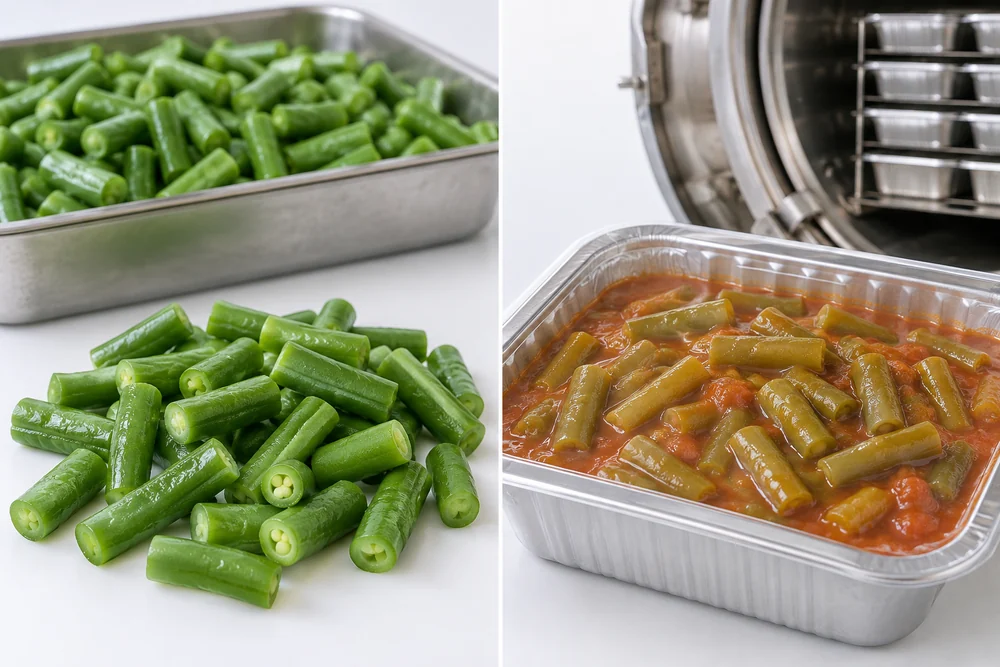
Sample before and after the heat stage that changes the bean tissue.
To locate the stage, retain matched samples from the incoming frozen ingredient, after any kitchen preparation, just before sealing, immediately after heat processing and after the intended shelf period. The processor should record bean cultivar or commercial grade where known, cut length, sauce composition, fill weight, pack size and the actual heat record. If a sample is taken from an open kettle rather than a sealed pack, label that difference. The same piece can experience very different heat and moisture conditions in those environments. A chain of samples makes a useful comparison possible.
An incoming agreement can cover defects visible on frozen pieces, cut size, maturity indicators, packaging and traceability. It cannot guarantee that every buyer retort will preserve the same bite. If a producer wants the frozen input qualified for a specific ready meal, it should request representative lots and run its validated line conditions. GreenLand can work with the buyer on an ingredient specification, while the customer's food safety and process authority controls the retort. No temperature or time from a literature study should replace an approved sterilization schedule.
The sampling point should be written on every tray or bag retained for comparison. "Cooked bean" is too vague if one sample came from a briefly heated pot and another from a sealed pack after a validated retort. Cooling rates and time before evaluation can also change the apparent bite. Evaluate paired samples after a defined rest period and under the intended eating conditions. For a chilled meal reheated by the consumer, the consumer heating step belongs in the quality trial, but it remains separate from the industrial lethality process. A bean may survive the retort yet lose its desirable texture after subsequent storage and reheating.
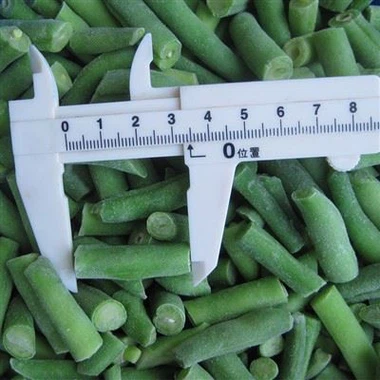
Frozen green bean pods and cuts are the forms to match to a retort specification.
If a buyer is comparing two supplier lots, alternate the lots through otherwise matched production runs when practical. An isolated morning run of one lot and an afternoon run of another can confound lot with equipment state, sauce concentration or holding time. Record which trays contain which lot and avoid mixing cartons without traceability. These ordinary production details often explain more than a broad "fibre" claim. They also make the conversation with a supplier constructive: the parties can identify a reproducible input difference, a handling difference, or a process result that needs joint investigation.
The industrial study did not show uniform wall degradation
Green bean pod tissue has cells joined by middle-lamella material and surrounded by cell walls. Pectin is particularly relevant to the adhesion between neighboring cells and to the properties of the primary wall. Hemicellulose and cellulose are other wall components. They are not interchangeable units of "fibre," and a test that isolates one fraction says something different from a total dietary fibre label. The industrial study extracted pectic and hemicellulosic material from alcohol-insoluble residues of two bean varieties and compared their carbohydrate composition and relative molecular mass through processing.
Its result is more specific than the statement that heat destroys fibre. The paper described pectic polymers moving toward soluble fractions and a partially degraded galacturonic acid backbone after sterilization. It reported no significant change in the analyzed hemicellulose and cellulose fractions. A tissue can therefore lose cell-to-cell adhesion even while some structural polymers remain measurable. That is a plausible explanation for softening, but the exact mechanical relationship in a particular ready meal still needs direct testing. It would be inaccurate to infer that every intact cellulose fibre guarantees a firm bite.
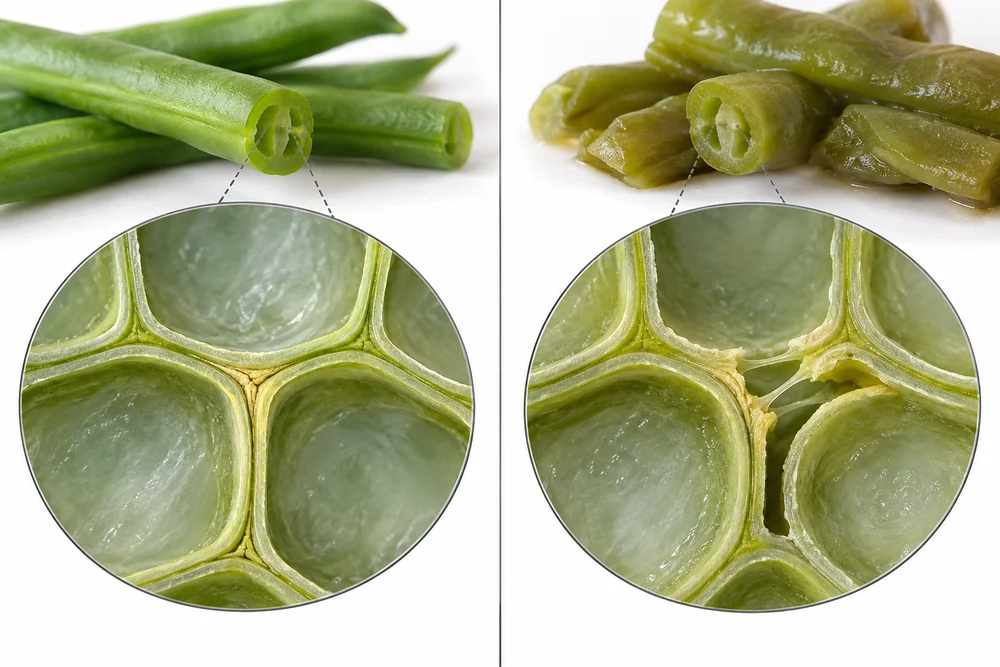
Pectic adhesion can change without every cell-wall fraction changing in the same way.
The two cultivars also differed before processing. The study reported that one fresh variety contained more pectin and hemicellulose but less cellulose than the other. Such an initial difference reminds a buyer that source material and processing interact. It does not permit ranking all modern commercial frozen green beans by the old varieties' values. Cultivar, harvest maturity, pod anatomy, blanching, storage and the customer's later process can change what is measured. A supplier may have a quality program for a specific frozen cut, but the processor should validate the actual material available for its recipe.
An associated green bean microscopy research record emphasizes cell wall, middle lamella and fracture plane as separate subjects of observation. The publicly accessible portal record does not provide enough results for a detailed microscopic conclusion about the buyer's beans. Its value here is to show what a specialist investigation might examine when routine texture measurements cannot explain a failure. For most commercial investigations, representative before-and-after pieces, a well-defined sensory endpoint and documented process conditions come first.
This distinction helps avoid an expensive wrong correction. If the problem is primarily piece damage during mechanical transfer, changing a bean's pectin chemistry may miss the cause. If the bean is sound through filling but soft after heat, the processor should examine its approved process and product matrix with qualified personnel. If pieces are poor on receipt, the supplier specification and sampling need attention. The original paper narrows a scientific hypothesis about sterilization and wall fractions; it does not allow a quick accusation or a universal treatment.
Wall-fraction results must also be read against the analytical method. Extraction can classify material by its solubility under laboratory conditions, while a consumer experiences a hydrated cooked pod. A shift from one extractable fraction to another is evidence of changed polymer behavior, but it is not a direct measurement of the force required to bite through a green bean. To bridge that gap, a specialist would pair chemistry with microstructure and standardized sensory or instrumental observations. The buyer rarely needs every assay at the first complaint. It needs a clearly documented defect and stage; the deeper method can be selected after that foundation is established.
Soluble pectin and total fibre answer different questions
A total fibre assay estimates a broad nutritional fraction under a defined method. It does not reveal the molecular size, solubility or location of a particular pectic polymer in a bean pod. A piece can retain much of its measured fibre while becoming softer because the relationships among cells have changed. Conversely, a changed soluble pectin result cannot be translated directly into a consumer nutrition statement without the appropriate finished-food method and labeling context. Procurement and product development should keep texture analysis and dietary-fibre claims in their own lanes.
The original industrial study found that sterilization altered where pectic material could be extracted and how some polymers were structured. It did not report a uniform disappearance of every wall constituent. When a buyer sees a bulk fibre figure before and after processing, a similar number should not be used to dismiss a real sensory softening complaint. The assay is answering a different question. A more relevant investigation may need soluble and insoluble pectin fractions, tissue microscopy or another specialist method, chosen only after a clear failure mode has been documented.
The same caution applies to a package label or supplier datasheet. A frozen bean's declared fibre content is useful nutritional information for its specified form and jurisdiction. It is not a structural warranty for the same bean after being sealed in an acidic sauce and retorted. The processor can ask whether a lot was within the agreed incoming specification, but must also assess the downstream recipe. Salt, acid, calcium, other ingredients and the distribution of heat in the pack can complicate tissue behavior. Changes to those variables belong in the processor's validated meal trial.
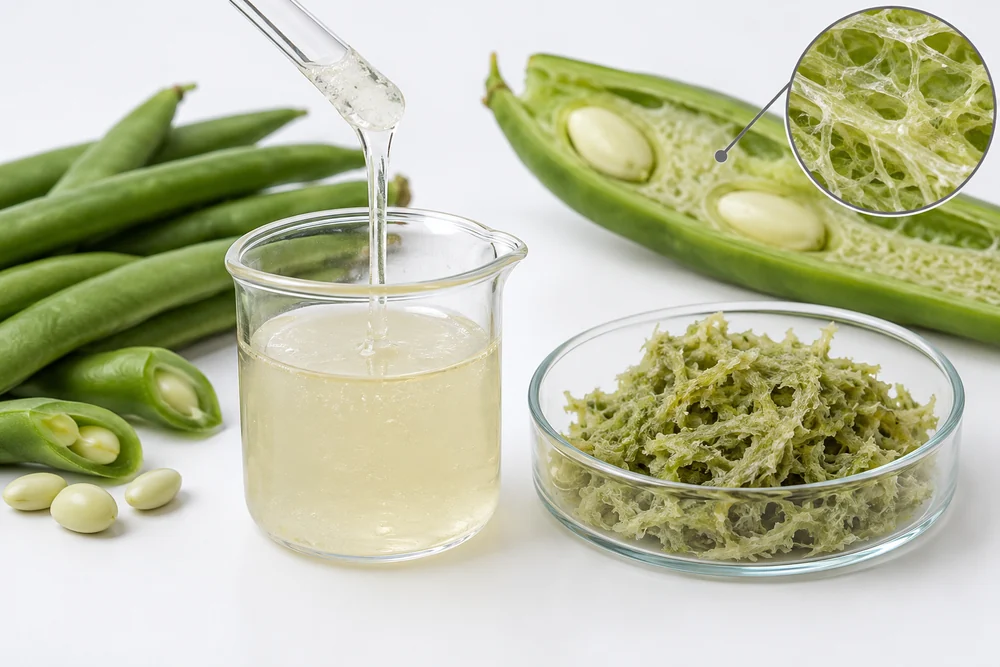
A soluble-pectin result and a total-fibre result answer different questions.
Measure texture in a way that reflects the defect. If the consumer sees broken pieces, count the proportion of pieces retained above a defined size after a reproducible handling step. If the concern is a mushy bite, use a trained panel with a clear descriptor and, where helpful, an instrumental method whose probe and sample geometry match the bean cut. If sauce adhesion or skin sloughing is the issue, document those directly. One force reading may be convenient, but it cannot automatically stand in for every sensory attribute. The method should be agreed before comparing supplier lots.
A University of Tennessee snap-bean texture thesis abstract compared canned and frozen material and reported differences among pectin, total dietary fibre, shear and sensory measurements in its own samples. It is another example of why the endpoint matters; its values are not acceptance cutoffs for a GreenLand lot or a modern ready meal. The original retort-related study remains the primary evidence for the fraction distinction here. The rest of the article develops a buyer test plan as professional inference, not as a claim that the research already evaluated the buyer's product.
When a report says "no significant change," it means the study did not establish a change in that fraction under its tested design and method. It is not proof that each molecule, tissue region or commercial bean remains identical. Statistical resolution depends on sampling and variability. In the same way, a total-fibre declaration on a commercial label is a rounded nutritional statement under a specified method; it is not a microscopic map. These limits are important because buyers often receive several data sheets with impressive numbers but no direct correspondence to the texture complaint they are trying to resolve.
The processor can make a simple comparison table for its own investigation: incoming frozen piece condition, piece condition just before sealing, finished piece count, bite description and any analytical result. Each row should retain the same lot and preparation history. That table is useful because the attributes are comparable across stages. It should not merge a supplier's nutritional fibre figure with a customer's texture score as though the two share units or test conditions. If the customer later needs a specialist pectin assay, add it as a separately defined column with its sampling stage and interpretation.
Investigate the failed bean in its finished matrix
Imagine a ready-meal processor asking GreenLand why a frozen green bean input that passed a simple cooked sample loses structure after the processor's downstream retort. This is an illustrative scenario, not a historical GreenLand customer case. We would first confirm the offered frozen cut and the exact product stage at which the buyer observed the defect. We would request paired samples and records rather than declare the bean unsuitable. The comparison should include a retained incoming pack, a pre-retort filled pack and a finished pack from the same lot when possible.
The meal matrix matters. Beans in water, cream sauce, tomato sauce and a low-moisture filling do not experience identical environments. A sauce can change heat transfer, chemical exposure and how the bean is perceived in a bite. The bean may also be stirred, pumped or deposited before sealing. Keep that path in the batch record. If the initial frozen pieces have a stable form but a pre-retort sample is already broken, investigate mechanical transfer and mixing. If pieces remain intact until heating, the validated thermal route and formulation become more relevant. This sequence limits guesses.
The processor should sample across a sufficient number of packs and positions to understand variability. A single attractive bean from the center of one tray cannot represent the lot, and one badly broken piece cannot establish a systemic defect. Define the evaluation unit: pieces per tray, percentage of intact pieces, a trained bite score or an instrumental measurement. Record how a pack is opened and how sauce is removed before examination. Draining can itself break a fragile piece; the test method must be gentle and consistent if the goal is to compare process stages.

Evaluate bean integrity and bite in the finished food matrix.
If specialist analysis is justified, retain tissue samples with their stage identity. A laboratory may compare soluble pectic material or cell-wall structure, but the analytical result should be interpreted beside the actual piece failure and the process log. Finding altered pectin in a retorted bean would be consistent with the published mechanism; it would not, by itself, identify which operation or party caused an unacceptable meal. The buyer needs a controlled comparison of alternatives under its approved process before attributing responsibility.
Trial corrections should be proportionate. A different bean maturity range, cut, blanching condition or supplier lot may merit a test if incoming material appears involved. A change in sauce or handling may be relevant if the defect emerges downstream. A retort change must remain under qualified food-safety control. Adding calcium or fibre simply because pectin is mentioned in a paper would jump over the diagnosis and may affect taste, labeling or process safety. Identify the failed stage before changing the validated sterilization route.

Assess texture after the intended thermal process on this product form.
Texture trials should also distinguish the bean's own failure from how the surrounding meal presents it. A thick sauce can conceal small broken pieces; a thin sauce may make them conspicuous. A strong acidic or salty flavor can alter sensory judgments of tenderness. Serve trial samples at matched temperatures and in the intended serving format. If the buyer uses a trained panel, give panelists clear descriptors such as snap, fibrous chew, seed release and piece integrity. If the buyer uses a consumer panel, ask a simpler acceptance question suited to the product. The two types of evidence serve different decisions.
GreenLand can provide frozen green bean product information, discuss cut and packing, and help align a representative sample with the buyer's application. The customer should identify destination market, quantity, finished meal type and required documents in the RFQ. A broader frozen vegetable category discussion may help when several vegetables share a ready-meal program, but each vegetable's tissue and heat response still needs its own approval.
Match a correction to demonstrated structure loss
Once the stage and failure mode are known, the buyer can decide what success would look like. If the incoming frozen pieces are unevenly cut, a tighter cut specification may improve dosing and visual uniformity without changing cell-wall chemistry. If pieces suffer breakage before heat, gentler transfer could help. If a validated retort leaves the bean too soft, a different raw material or recipe trial might be appropriate. These are possibilities to test, not guaranteed fixes. The correct action depends on evidence from the actual line.
The published wall-fraction finding is most useful when it prevents a false inference. Stable cellulose and hemicellulose measurements in the study did not mean the bean tissue was unchanged; pectic material shifted substantially under its processing conditions. Likewise, a stable bulk dietary fibre number in a commercial report cannot rule out structural changes relevant to bite. The opposite shortcut is also unsafe: altered soluble pectin does not prove that every finished-piece defect came from the same mechanism. A sensible approval considers both chemical evidence, if obtained, and the mechanical behavior customers experience.
For scale-up, keep the accepted sample, cut specification, sauce formula, fill procedure, validated thermal process and evaluation method together. A new crop lot or alternate bean cut should be checked against that reference using the same finished pack, not only against a saucepan sample. If the product is destined for private label or several markets, agree which document set and sensory criteria apply. A processor can then explain why an input was accepted or rejected based on a reproducible finished-product test.
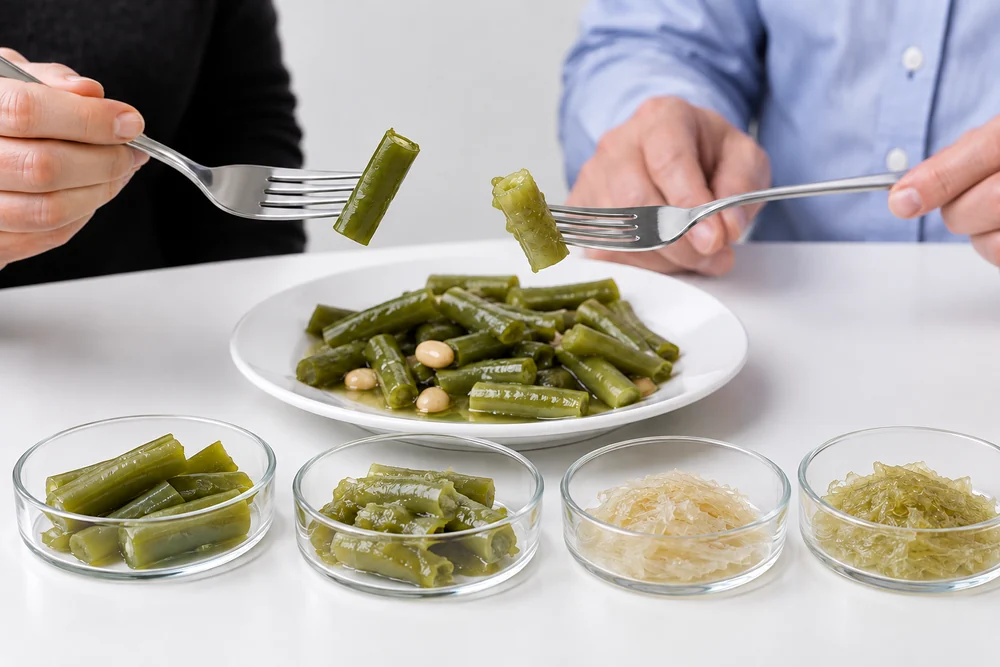
Choose a correction only after identifying the stage and structure involved.
Procurement can put the outcome into a practical acceptance conversation. If the customer needs pieces above a chosen size after retorting, define the count method and the stage of measurement. If the priority is bite, retain a sensory reference and specify the reheating method. If the issue is inconsistency across deliveries, require representative sampling from several cartons and compare against the approved lot. The criteria should be negotiated from the customer's finished product, not copied from a two-cultivar paper. That is how a scientific observation becomes useful without being overstated.
For a GreenLand frozen green bean inquiry, give us the cut, pack, ready-meal format and the stage at which pieces fail. We can align a representative ingredient sample and document its incoming condition. The processor can then compare that same lot before filling, after mechanical transfer and after its validated retort, using intact-piece counts and cooked bite criteria. If pectic change is suspected, a specialist assay can support the diagnosis; a stable total-fibre figure cannot clear a soft finished meal or authorize an untested retort adjustment.
Plan frozen green bean supply with GreenLand-food
For frozen green bean, tell us the intended product form, application, pack, and inspection priorities. GreenLand-food is a China-based frozen-food supplier and manufacturer. We can discuss factory-direct wholesale supply around the specification you need to evaluate.