


High-Starch Banana Puree May Not Respond to an Amylase Viscosity Fix
Oct 09, 2026
Leave a message

For a buyer developing clarified banana juice, this distinction can prevent an expensive false start. Composition describes what the fruit contains. A treatment trial describes how an enzyme preparation behaves in that material under defined conditions. The relationship needs evidence, especially when the intended feed is a frozen ingredient and the supporting paper concerns another preparation history. Neither a starch percentage nor an enzyme activity certificate measures the customer's finished process.
Consider an illustrative discussion with GreenLand-food. A processor has measured substantial starch in green banana puree and expects its chosen enzyme preparation to make the feed easy to filter. When the puree remains thick, the purchasing team asks whether the ingredient specification is wrong. We would ask for the maturity and form of the material, the preparation history, the enzyme identity, the viscosity method and the actual filtration result. That information helps distinguish an incoming specification issue from an intervention that has not been qualified for the intended matrix. This is a development scenario, rather than a verified customer case.
The historical research is useful for that diagnosis. It does not validate all alpha-amylases, prescribe a commercial cocktail or establish performance of GreenLand-food frozen banana. It also examines browning as a separate problem. A useful flow result therefore needs to be assessed alongside the other outcomes required for the beverage, under the customer's independently qualified process.
Do not equate abundant starch with the viscosity-controlling target
Define the material before assigning a target. Green banana puree and ripe banana puree are different inputs, and a clarified juice process has a different objective from a smoothie, bakery filling or spoonable fruit preparation. Record the maturity basis, cultivar information where available, product form and preparation route. A puree made from thawed slices should be described that way. A fresh green-fruit result should not be relabeled as evidence for a commercial frozen feed merely because both materials contain banana.
A composition result provides a hypothesis worth examining. If a sample contains substantial starch, an amylase intervention may be a reasonable development candidate. That does not tell the team whether the selected enzyme can act effectively under the chosen conditions, whether the relevant material is accessible or whether the observed flow behavior will change enough to meet the process objective. The trial must answer those questions. Measuring abundance and measuring intervention performance are separate steps in the reasoning.

Illustration: banana pulp illustration with starch granules and wall fragments.
Banana puree is also a structured mixture. Cell fragments, wall material, dissolved components and other constituents contribute to the physical environment in which an enzyme operates. A bulk starch value does not describe all of those relationships. The original experiment's response to combinations of wall-directed activities is evidence that the successful intervention could not be predicted from starch abundance alone. It does not prove that a single wall polymer was the sole cause of viscosity, or that starch never matters in banana processing.
The intended outcome determines which physical changes are useful. A clarified juice developer needs recoverable liquid with an agreed clarity and handling performance. A manufacturer of a thick banana ingredient may value body that the clarification process would remove or reduce. The same viscosity decrease can therefore be helpful in one application and undesirable in another. Buyers should state the finished product before comparing treatment reports, because the phrase better processing has little meaning without a specified endpoint.
Incoming product form belongs in that discussion. Slices, chunks and other offered banana forms differ in the preparation needed before they become a test puree. A purchasing team should confirm the available form rather than assume that the supplier provides a ready clarified-juice feed. The GreenLand-food frozen banana page supports a conversation about the ingredient. Any puree, juice or downstream enzyme-processing requirement needs separate confirmation and qualification.
An initial investigation should keep the specification and process questions connected. Check whether the received sample matches the ordered form and declared composition. Then compare its treatment response under a consistent preparation method. If the untreated control differs substantially between trials, the team should investigate the input or test basis before attributing every change to the enzyme. That helps avoid rejecting a suitable ingredient because an unqualified development intervention performed poorly, or approving an unsuitable lot because the treatment happened to compensate for one observed attribute.
The commercial value of the composition result is therefore its ability to guide a controlled question. It can justify testing a starch-directed preparation, but it cannot guarantee a viscosity fix. The useful decision is whether a defined preparation produces a repeatable improvement in the customer's actual feed and separation route. That conclusion is stronger than selecting by composition alone, because it connects the proposed intervention to the outcome for which the buyer will pay.
The original banana experiment compared actual responses
The primary 1991 paper examined commercial enzyme preparations for viscosity reduction and filterability in banana juice development. Its abstract reports that two combinations of pectinase, cellulase and hemicellulase were more effective than the compared individual preparations in green and ripe banana purees. It also reports that the tested alpha-amylase did not effectively reduce viscosity relative to the control, including the green puree described as high in starch. This is an observed preparation response, rather than a general statement derived from composition.

Illustration: conceptual thick and flowing banana puree filtration comparison.
The original banana viscosity and browning study should be cited with its material and comparison intact. The result concerns the selected products, their activity profiles and the experimental route. It does not show that every available alpha-amylase will fail in every banana material. Enzyme preparations differ, and their practical performance belongs to the conditions in which they are tested. A purchasing team should retain the full product identity and supporting method when asking its technical team to evaluate a candidate.
The combinations also need careful interpretation. Better performance of preparations containing several wall-directed activities does not isolate the contribution of each activity. The finding supports testing a suitable spectrum of activities against the matrix, while leaving individual causal contributions unresolved unless the experimental design establishes them. Describing the result as proof that pectin alone controls all banana viscosity would go beyond the reported comparison. The article's decision point remains the observed response of the preparation as tested.
The historical date matters to the transfer boundary. This was a laboratory study of banana puree and clarified juice, rather than a present-day qualification of a named commercial frozen banana lot. Its value is a durable diagnostic example: the assumed abundant substrate did not identify the useful treatment. Commercial preparations, ingredient histories and equipment must be assessed with current information. A modern product bearing a similar enzyme name should not inherit the historical result automatically, either as a guarantee of success or as a prediction of failure.
Other primary studies help show why the endpoint must remain visible. Research on ripe banana pulp considered clarification using pectinolytic enzymes. Later work using combinations of cellulase and pectinase tracked extraction responses such as yield, viscosity and soluble solids. A more recent banana syrup study included extraction followed by concentration, creating a different finished-product objective. These studies broaden the context for testing, but their separate recipes and reported optima cannot be merged into a universal banana processing instruction.
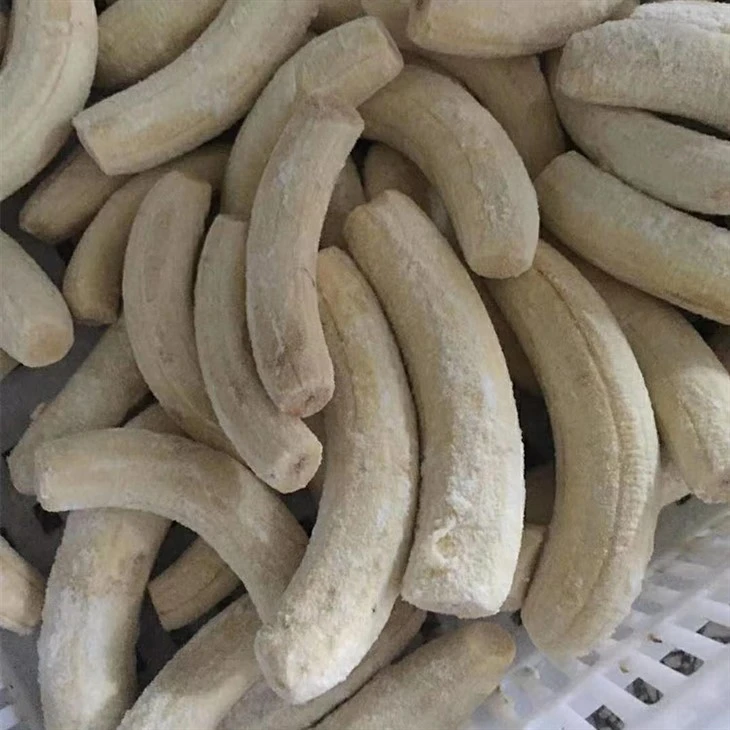
Frozen peeled banana pieces. Confirm the offered specification for the application trial.
The opened primary work on a thermophilic polygalacturonase also compared fruit juice responses for banana and other materials. It demonstrates that enzyme characteristics and the material influence reported performance. The quantitative results belong to its enzyme and experimental design. They should not be used to fill a missing result for the customer's preparation. A technical comparison can identify which outputs were measured and what additional validation is needed without treating all pectinase literature as one interchangeable evidence base.
For an RFQ or development brief, provide the supplier and the enzyme specialist with the problem in measurable terms. State the feed form and maturity, the desired liquid recovery, the observed viscosity basis and the filtration constraint. Include the two reports or treatment conditions being compared. This makes it possible to discuss the ingredient and the development route separately while preserving their connection. GreenLand-food can clarify the offered banana material and lot documentation; approval of a proposed enzyme intervention requires the customer's actual process evidence.
| Material or objective | Relevant observation | Qualification boundary |
|---|---|---|
| Tested alpha-amylase | Ineffective viscosity reduction in the historical comparison | Does not rank all alpha-amylases |
| Tested wall-enzyme combinations | Better viscosity and filterability response | Preparation and matrix require identification |
| Current frozen banana feed | Customer qualification needed | No historical result substitutes for actual feed trial |
Viscosity reduction and filterability need both results
A lower viscosity reading is useful only when the measurement represents the process question. Record the instrument or method, sample preparation, temperature and test setting used for each comparison. A reported value without those conditions may be difficult to compare with another laboratory's value. For a structured puree, the way the sample is mixed and presented can matter to the result. The purchasing team does not need to become a rheology laboratory, but it does need enough method information to interpret the acceptance data.
Filterability adds a practical separation outcome. A sample can appear easier to stir yet still produce poor liquid recovery through the intended filter or pressing route. Conversely, an intervention may change the separated fractions in a way that improves recovery while creating a different juice appearance. The original study's use of both viscosity and filterability is therefore valuable. It keeps flow behavior connected to the actual separation task rather than approving a treatment because one laboratory number improved.
Define the filtration result on a basis that can be repeated. The method should identify the feed quantity, separation setup, observation period and collected fraction. If a screen, filter medium or other component changes, document that change. An apparent treatment improvement may otherwise reflect a different separation arrangement. The customer's qualified team should choose methods suitable for its process. This article does not provide a pore size, pressure, time or operating prescription, because those choices require the actual equipment and product objective.
Liquid recovery should also be distinguished from total feed disappearance. Weighing or measuring the recovered liquid and identifying retained solids makes the result easier to interpret. Report the basis for yield and whether added water or other ingredients are included. A more dilute feed may flow more easily without demonstrating the same intervention effect as an enzyme treatment. Keeping the material balance visible helps the buyer assess both the technical outcome and the ingredient cost associated with the recovered beverage.

Illustration: banana puree flow measurement beside filtration assessment.
An enzyme activity number provides useful preparation information, but it is an assay result under stated conditions. It does not measure the entire puree or its filtration performance. Different assays can use different substrates and units, so a larger numerical value cannot be assumed to identify the better commercial choice. Use the activity information to understand and reproduce the candidate preparation. Use the matrix trial to decide whether the preparation meets the viscosity and separation requirements. Both records contribute to qualification, with different jobs.
The best screening comparison retains the untreated control and the candidates on the same material basis. Agree which outcomes must improve and which must remain acceptable. A developer may need viscosity, recoverable juice, clarity, solids and sensory observations together. A strong response in one output may be offset by an unacceptable change in another. Recording the complete comparison prevents a development team from selecting a preparation by the easiest measurement while missing the constraint that actually limits the customer's process.
The resulting evidence should support a decision that purchasing can repeat. A sample approval can reference the offered material, the qualified preparation and the agreed endpoints rather than a vague statement that banana enzymes work well. If later lots perform differently, the retained records help locate the change. The input, enzyme preparation, sample handling, instrument method and separation route can then be reviewed in a logical order. That is more informative than assuming that every poor filtration result proves too much starch in the ingredient.
Cost comparisons also need a common recovery basis. A preparation with a lower purchase price may require a different intervention or produce less usable liquid, while a stronger laboratory flow response may have little commercial value if the filtration bottleneck remains. Compare the candidate costs against the customer's qualified process and measured recovered product. Include any changed input form or packing requirement in that assessment. The purchasing team can then discuss the ingredient and intervention together without assuming that the cheapest enzyme or the lowest viscosity reading defines the lowest cost for an acceptable beverage.
Test the relevant frozen ingredient separately
A customer using frozen banana should test the actual offered form in its intended development route. The historical fresh-puree comparison cannot supply that missing validation. Confirm whether the sample is slices, chunks or another specifically offered material, and document any declared pretreatment. Keep the material's frozen history and its state at preparation visible in the trial record. A report describing fresh green puree should not be used as a certificate for a thawed commercial ingredient without the relevant comparison.

Illustration: frozen banana slices beside thawed mashed banana.
Thaw handling belongs to the feed definition. State whether the released liquid is retained, drained or incorporated during size reduction, and use a consistent preparation basis for candidates and controls. The appropriate handling must fit the customer's validated quality and food safety procedures. The purpose of recording it here is analytical: two samples prepared from the same frozen lot can become different feeds if one retains all liquid and the other discards part of it. Their viscosity and recovery results would then need different interpretation.
The frozen banana thawing article extends the discussion of material handling. For an enzyme trial, the customer should translate that background into a controlled preparation method suited to its application. Record the condition in which the material enters the treatment stage and the point at which measurements are taken. A defined sample route makes the result useful when the team later compares scale trials or repeat ingredient lots.
Maturity and form should be chosen for the desired product rather than for the historical experiment alone. If the drink is designed around ripe banana flavor and sweetness, a result from green material may pose a useful mechanistic question but cannot establish the preferred commercial input. The purchasing specification should reflect the actual application requirements. GreenLand-food would confirm availability and the offered form during quotation, including the information needed for the customer's sample evaluation. We would not infer an unlisted green puree or clarified juice capability from a research paper.
Use permitted preparations and independently qualified process conditions. The customer and enzyme supplier need to establish the preparation's suitability, supporting documentation and use in the intended market. Laboratory performance is not evidence of permission, and an old commercial preparation name does not settle current status. The development route also needs the customer's appropriate control of processing and later storage. These are separate approval requirements that the historical finding cannot answer through a viscosity result.

Frozen banana slices. Confirm the offered specification for the application trial.
Sampling for a larger order should preserve the relationship between the trial and the commercial specification. Identify the lot, packing and preparation used for development, then discuss whether subsequent supply will match that basis. If the customer changes the form, packing or handling route, consider whether further application verification is required. Quantity, destination and lead time belong in the RFQ because they affect the practical supply plan. A successful laboratory treatment has limited purchasing value if it relies on material whose commercial specification remains undefined.
The frozen ingredient trial should end with an explicit outcome. If the chosen preparation achieves acceptable flow and liquid recovery in the actual feed, the customer can proceed to the appropriate scale and finished-product validation. If it fails, the team can examine alternative preparations or input choices using the same agreed criteria. The result should remain formulation and process specific. This protects the useful historical lesson without turning one unsuccessful alpha-amylase into a blanket rule for all frozen banana development.
Resolve color stabilization as a separate requirement
The original banana paper addressed browning as well as viscosity and filtration. Those questions should remain distinct in the buyer's approval. A preparation that improves liquid recovery does not automatically stabilize the clarified juice's appearance during processing or storage. The development team should measure the color outcome required for the finished product rather than infer it from an easier-flowing puree. The fact that both issues appear in one paper does not make them the same intervention or endpoint.
The historical abstract reports different responses to the tested anti-browning approaches and notes continuing darkening in some clarified samples. That is a reason to retain the color control in a development program. It is not a recommendation to reproduce the study's preservative or heating conditions. Commercial use needs current permission, product-specific validation and the customer's qualified process. This article therefore keeps the historical browning comparison as evidence that color required separate assessment, without supplying an additive dose or operating recipe.
Measure color at the stages that matter to the customer's route. The prepared feed, recovered juice and stored finished beverage may reveal different changes. Use a defined observation method and consistent sample presentation. If instrumental measurements are used, retain the settings and reference basis. If an agreed visual standard is used, describe lighting and sample conditions sufficiently for a meaningful comparison. An attractive initial cup is useful evidence of that moment; it does not measure all later storage behavior.

Illustration: pale and browned banana juice samples.
Flavor and appearance also require finished-product assessment. The historical paper reported sensory observations under its tested conditions, but those observations do not establish acceptance of the customer's banana drink. Enzyme preparations and other interventions may change more than one attribute, and a clarification objective still needs acceptable flavor and aroma. Agree the sensory and appearance requirements before the larger order or process approval. That avoids selecting a treatment on liquid recovery while discovering an unacceptable beverage only after scale-up.
For supplier communication, distinguish an ingredient defect from a downstream color change with the available evidence. A receiving inspection can describe the frozen banana as delivered. A later beverage report should identify the preparation and processing stage before attributing the result to the incoming lot. We would ask for the sample identity, photographs or measurement records and the conditions being compared. That information supports a practical investigation without claiming that GreenLand-food has already tested the customer's enzyme route or color intervention.
A purchase decision can then combine the requirements without confusing them. The incoming banana must meet its agreed specification; the enzyme intervention must produce the required viscosity and separation response; and the finished beverage must meet its color and sensory criteria. Documents, traceability, packing and commercial terms support those decisions but do not replace the application trial. When requesting supply, include the intended product use and the trial basis so that the offered material can be matched to the actual development need.
The key diagnosis is the one demonstrated by the historical comparison: abundance of a component did not identify the successful intervention. The tested wall-enzyme combinations performed better for the stated viscosity and filtration objectives, while color remained a separate requirement. For current frozen banana purchasing, use that finding to formulate a better trial question. Approve the actual material and process from their observed outcomes, with the required commercial and finished-product evidence recorded beside them.
Related reading
Control the thawed material and released liquid before comparing enzyme response.
Compare applications whose desired banana body differs from clarified juice.
Source frozen banana with GreenLand-food
GreenLand-food is a professional frozen banana supplier and manufacturer in China, providing factory-direct wholesale supply for importers, food manufacturers, foodservice distributors and private-label programs.
Send the product form, specification, packing, quantity, application, destination, private-label needs and requested documents. Include the material and trial basis for the development question discussed here.