


How to Blanch Carrots
Jun 23, 2026
Leave a message

How to Blanch Carrots: Times, Steps and Freezing Tips
To blanch carrots, bring a large pot of water to a full boil, add prepared carrots in a small batch, cook only until their color brightens and the outside begins to soften, then move them immediately into ice water. Drain them well before serving, chilling, freezing, or adding them to another recipe. For most carrot slices, strips, or small dices, about two minutes is a practical starting point. Whole baby carrots need longer, commonly around five minutes. The exact time depends on thickness, so use the clock and the cut size together rather than treating one number as universal.
Blanching is a brief pre-cooking step, not a way to finish the vegetable. It helps you control texture and is especially useful before freezing because it slows enzyme activity that can gradually affect color, flavor, and texture in storage. For a quick side dish, soup, stir-fry, salad, or meal-prep bowl, it also gives carrots a clean, tender-crisp starting point without leaving them soft or waterlogged.
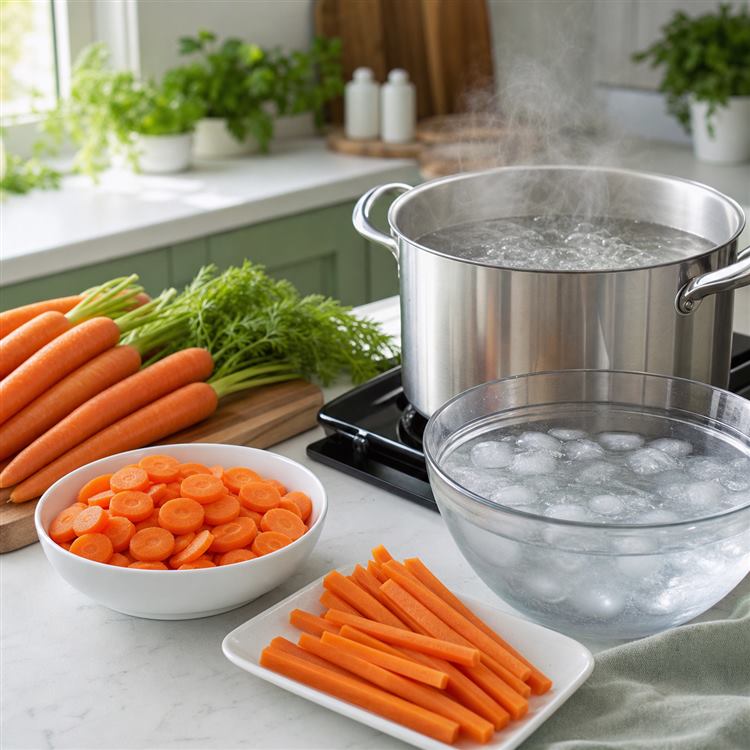
What Blanching Does for Carrots
Carrots are firm, dense roots with a naturally sweet flavor and a bright orange color. A short exposure to boiling water begins to soften the outer structure, removes a raw edge, and makes the color appear more vivid. The immediate ice bath stops that cooking quickly. This stop-and-cool sequence matters. If carrots remain hot in the colander after draining, they continue cooking from retained heat and can turn too soft before they ever reach the pan, freezer bag, or finished dish.
For freezing, blanching has a second role. It is not a complete food-safety kill step and it does not replace clean handling, proper storage, or package instructions. Its main quality purpose is to prepare the vegetable for frozen storage. Commercial processors use a tightly controlled version of the same principle before freezing: product condition, water quality, time, temperature, cooling, drainage, and freezing speed are all managed as one sequence.
Prepare Carrots Before They Reach the Pot
Start with sound carrots that are firm, clean, and free from obvious decay. Rinse under clean running water, trim the stem end and any damaged areas, and peel when the skin is rough or when your recipe calls for a polished finish. Peeling is a quality choice, not an automatic requirement for every home recipe. For commercial use, the decision is normally part of the agreed product specification because peeled and unpeeled carrots behave differently in appearance, labor, and yield.
Cut pieces to a reasonably even size. Uniformity is the quiet secret behind a useful blanch. If thin coins and thick chunks enter the same pot, the thin pieces can become soft while the thick pieces stay raw at the center. Separate noticeably different sizes into different batches. Keep a bowl of ice water ready before the carrots enter the pot; stopping to make ice water after cooking is a reliable way to overcook them.
| Carrot form | Starting blanch time | Useful application | Watch for |
|---|---|---|---|
| Thin slices, matchsticks, or small dices | About 2 minutes | Freezing, stir-fries, salads, quick soups | Pieces that are too thin may need a shorter time |
| Thick coins and medium chunks | About 3 minutes | Roasts, stews, meal kits | Keep the center firm, not fully tender |
| Whole baby carrots | About 5 minutes | Freezing and later roasting or glazing | Cooling must reach the center |
The Simple Blanching Method
1. Use plenty of water
Fill a large pot with enough water that the carrots can circulate freely. A crowded pot loses its boil, extending the time unpredictably. Salt is optional for flavor when you are cooking carrots for immediate use; it is not required for the blanching function.
2. Add small batches and start timing when the boil returns
Lower carrots into actively boiling water carefully. If the water stops boiling, wait until it returns to a lively boil before starting the timer. This gives a more repeatable result than counting from the moment cold carrots enter the pot.

3. Cool immediately in ice water
Lift the carrots out with a basket, spider, or slotted spoon and move them straight into a generous bowl of ice water. Stir gently so warm pieces do not sit together. Leave them until fully cool; a similar amount of cooling time to blanching time is a useful minimum, while thick whole carrots may take longer.

4. Drain and dry for the next use
Drain thoroughly. For a stir-fry or salad, a clean towel can remove surface water. For freezing, drying matters even more because water left on the surface becomes excess ice, encourages clumping, and makes later portioning less convenient.
How to Blanch Carrots Before Freezing
Blanching before freezing is useful when you want carrots to retain better quality during storage. After cooling and drying, spread pieces in one layer on a lined tray and freeze until firm. Then transfer them to moisture-resistant freezer packaging, remove as much air as practical, label the pack, and return it promptly to frozen storage. Tray-freezing first is helpful for pieces that you want to pour or measure later; it reduces the chance that damp carrots freeze into one large mass.
For a larger program, use a product brief before production: desired cut, piece-size range, color, moisture condition, packaging, destination market, storage temperature, and final application. The same decisions that matter at home become contractual quality points at scale. For example, a soup producer may accept a less uniform dice than a retail pack, while a ready-meal line may require a tightly controlled cube size for even heating and visual consistency.
Commercial frozen carrots are commonly processed through controlled washing, trimming, cutting, blanching, cooling, draining, freezing and packing. The individual pieces found in a retail or foodservice bag may be made through an IQF process designed to keep product separate and easy to portion. See our IQF processing article for the factory sequence behind that free-flowing condition.

Blanching for Different Dishes
The target texture should follow the next cooking step. If carrots are going into a long-simmered stew, keep the blanch brief because they will continue softening in the pot. If you plan to roast them, drain carefully and let surface moisture evaporate so oil can coat the pieces rather than steam them. For cold salads, blanch just long enough to remove the harsh raw bite, then cool thoroughly so the pieces stay crisp and do not warm the dressing.
Frozen carrots can often go directly from the freezer into soups, sauces, casseroles, or stir-fries. Avoid thawing them on the counter for extended periods, as they can release water and lose their useful bite. When a recipe needs neat, intact pieces, add frozen carrots near the end of cooking. When the goal is a puree, soup, or sauce, a longer cook after freezing may be entirely appropriate.
Why the Ice Bath Matters More Than It Looks
The ice bath is not decorative kitchen theater. It ends the heat transfer that started in boiling water. Carrots are dense enough to hold heat for longer than many leafy vegetables, particularly when pieces are thick or when a large quantity is drained together. If hot carrots are left in a strainer, the outer layer continues softening while the center catches up. That makes it difficult to achieve a bright color and a firm, clean bite at the same time. The cold-water step gives you a defined stopping point.
Use enough ice and water to keep the bath cold after the carrots enter it. A few cubes in a small bowl of lukewarm water are not enough for a large batch. Replace ice when the bath warms significantly, and separate batches if you are processing several kilograms. For foodservice work, a perforated pan or basket set inside a larger iced container can make transfer, draining, and batch control easier. The principle is simple: every piece should cool promptly, not only the pieces touching the outside of the bowl.
Texture, Color, and Size: What to Adjust First
When a blanch result is wrong, change only one variable at a time. If carrots are too hard, first check whether the pieces were evenly cut and whether the water returned to a full boil before timing began. If they are soft, shorten the blanch time before changing the ice bath. If their color seems dull after freezing, review drainage, packaging, and freezer handling as well as the cooking step. A poor outcome is rarely fixed by simply adding more time; extra time often turns a small texture issue into a larger one.
Carrot shape should fit the final dish. Thin matchsticks suit quick stir-fries but can disappear in a long braise. Small dices distribute evenly through soups and fillings, while thick coins create a more visible side dish. Crinkle cuts increase surface area and can hold sauces well, but their ridges also make even drying important before freezing. Whole baby carrots need enough time for the center to warm, yet should still be removed before they become a fully cooked side dish. Thinking about shape before blanching saves rework later.
Storage and Freezer Quality After Blanching
Once cooled, carrots should be handled according to the next use. For a chilled salad or meal-prep component, refrigerate promptly in a clean covered container and use within the practical life of the prepared dish. For freezing, remove as much surface moisture as possible, freeze in a shallow layer, then pack once the pieces are firm. Moisture on the carrot surface becomes loose ice in a pack; repeated temperature fluctuation can create larger ice crystals, clumping, and a softer texture after cooking.
For a home freezer, label packs with the date and use the oldest packs first. Keep packages away from the door, where temperatures may change more often. For commercial cold storage, maintain lot identity from prep through packing and dispatch. Quality retention is different from an unlimited claim about eating quality: carrots may remain usable under continuous frozen storage for a long time, but color, flavor, and texture can gradually change. Packaging integrity and stable temperature are what protect the quality you worked to preserve during blanching.
From Home Pot to Industrial Blanching Line
The home method explains the logic, while industrial production applies it with greater control. A factory may use a water or steam blanching system selected for the carrot format and throughput. Operators monitor time, temperature, product loading, water condition, cooling performance, drainage, and the movement into freezing. The objective is not to make every carrot taste like a finished cooked side dish. It is to create a stable intermediate product that can later perform in a customer recipe.
For commercial buyers, request a sample that has passed through the actual production route, not an improvised kitchen sample. Test it in the intended preparation: boil, steam, roast, microwave, blend, or use in a ready meal. Record the starting frozen condition, cooking time, yield, piece integrity, color, flavor, and any water released. This gives purchasing, quality, and operations teams a shared language for deciding whether a cut and blanch level fit the program. It also makes later batch comparisons much more useful.
A Buyer Checklist for Frozen Carrot Programs
Before approving a frozen carrot, define the cut, target size, color range, defect tolerance, packaging, net weight, destination label, storage condition, and expected cooking method. Then agree on how samples and production lots will be checked. A soup processor may focus on cube size, color, and cooking yield. A retail brand may also need free-flowing behavior, clear pack presentation, and a consumer-friendly preparation result. A catering kitchen may prioritize tray or bag size and fast, repeatable reheating.
At receiving, inspect carton condition, lot markings, temperature evidence, product separation where relevant, excessive frost, and a defined sample of the contents. Retain a sample when the program warrants it. A consistent inspection process avoids arguments based only on memory. It also lets a supplier distinguish a product issue from a cold-chain or storage issue after delivery. Good procurement is not about chasing a perfect-looking piece; it is about matching measurable product condition to a real operational use.
Common Blanching Mistakes and Practical Fixes
The most common mistake is treating the blanch time as a cooking time. Carrots that taste perfect directly from the pot may become too soft after they are frozen, reheated, roasted, or added to soup. Remove them while the center is still firmer than the finished texture you want. The next cooking step should complete the process. This is particularly important for meal-prep and commercial formats, where the carrot may be exposed to more than one heat step before it reaches the plate.
Another mistake is overloading the pot. Large cold batches drop the water temperature and make results inconsistent. Work in portions that let the water return to a rolling boil quickly. Do not use the same ice bath through a long session without checking whether it has warmed. Finally, do not seal wet carrots into a freezer bag. Allow them to drain, spread them briefly on a clean towel or tray, and package them only once surface moisture is under control.
Using Blanched Carrots Well
Blanched carrots are flexible because they already have a controlled head start. Toss cooled slices with a bright dressing for a chilled side; add them near the end of a stir-fry; roast them with oil and herbs until their edges color; or fold dices into a soup, rice dish, sauce, pasta filling, or vegetable blend. When using them in a glaze, keep the initial blanch short so the carrots can take on flavor in the final pan without losing their structure. When using them in purees, soups, and sauces, the exact blanch time is less critical than clean flavor, good drainage, and a consistent cut.
For foodservice menus, a single properly specified frozen carrot cut can support several dishes. Slices can work for sides and roasts, dices for soups and pot pies, sticks for mixed vegetables, and baby carrots for plated meals. That flexibility can simplify inventory, but only when the format has been tested in the actual cooking system. Use the same standard in a home kitchen: choose the cut for the meal you are making, blanch it briefly, cool it decisively, and let the final recipe deliver the last stage of tenderness.
A Final Timing Check Before You Start
Set up the ice water, tray, colander, packaging, and timer before you heat the pot. This small amount of preparation is what makes blanching feel calm and repeatable instead of rushed. Keep notes when a particular cut works especially well for your recipe: thickness, blanch time, cooling time, and final cooking method. The next batch will be easier, and the result will be closer to the texture you intended.
For a business program, turn those notes into an approved preparation standard. Define the frozen product, portion size, cooking method, target tenderness, and visual expectation. That lets training, purchasing, and operations work from the same instruction, whether carrots are prepared in one kitchen or across multiple locations, service shifts, seasonal menus, and controlled product launches for every batch.
| Common issue | Likely cause | Better action |
|---|---|---|
| Soft carrots | Long blanch time or delayed cooling | Use a timer and prepare the ice bath first |
| Uneven texture | Mixed cut sizes or crowded pot | Cut evenly and blanch in small batches |
| Frozen clumps | Carrots packed wet or frozen too slowly | Drain, dry, tray-freeze, then pack |
Buying and Using Frozen Carrots for Commercial Programs
For foodservice, retail private label, distributors and food manufacturers, the question is often not how to blanch one batch but how to select a format that removes unnecessary preparation. Whole baby carrots, slices, crinkle cuts, sticks, dices, and mixed-vegetable components all have different yield and plating implications. The Frozen Vegetables category is a useful starting point when comparing formats for soup, ready meals, side dishes, retail and industrial use.
Ask for the cut description, size distribution, color expectation, defect limits, pack weight, cold-chain condition, lot coding and application sample. If your recipe needs a particular cook time, test the candidate carrots in that exact process. A frozen carrot product can look similar in a sample tray but behave differently when held in a steam table, blended into a puree, roasted at high heat, or reheated in a microwave meal.

Need frozen carrots for a commercial recipe or retail program?
Tell us your target cut, size, packaging, cooking method, destination market and expected volume. We can help match frozen carrot formats with soup, ready meals, foodservice, retail or processing use.
Send InquiryFAQ
How long do you blanch carrot slices?
Use about two minutes as a starting point for evenly cut slices, strips, or small dices, then cool them immediately in ice water.
Do whole baby carrots need longer?
Yes. Whole baby carrots commonly need about five minutes because heat takes longer to reach the center.
Do I need an ice bath?
An ice bath is strongly recommended when you want to stop cooking quickly, preserve a firmer texture, or freeze the carrots.
Should carrots be peeled before blanching?
Peel them when the skin is rough, when appearance matters, or when the recipe calls for it. Clean, tender carrots can be blanched unpeeled for some uses.
Can I freeze carrots without blanching?
You can freeze them, but blanching is generally the stronger choice for preserving quality over storage. It prepares the carrots for freezing without fully cooking them.
Why are my blanched carrots still hard?
They may be cut too thick, the pot may have been crowded, or timing may have started before the water returned to a boil. Adjust the next batch by cut size.
Can frozen carrots go straight into a recipe?
Yes. Soups, casseroles, stir-fries and sauces often work well with carrots cooked directly from frozen.
How can GreenLand-food help with frozen carrot sourcing?
Share your application, cut, size, pack and destination market. We can discuss a suitable frozen carrot format and the product details needed for your approval process.