


How to Roast Edamame
Sep 24, 2026
Leave a message

Choose shelled beans or edamame in pods
Shelled edamame beans are the green kernels removed from the pod. They expose a large surface area to hot air, so oil and seasoning contact the edible part directly. When dry and spread apart, the beans can develop toasted spots and a firmer bite. This format is practical for snack portions, grain bowls, salad toppings and prepared meals because no guest has to shell the pod. The product photo here shows the other starting form: frozen pods, which have a different surface and should be treated as their own roasting method.
Edamame in pods is served so a diner presses the beans from the cooked pod. The fibrous pod is a serving shell, not the part to eat. Roasting the pod can give it charred or blistered patches and warm the beans inside, but the pod shields the beans from direct dry heat. A podded appetizer therefore should not be judged by whether every hidden bean becomes crunchy. It is generally a warm, tender bean inside a seasoned outer pod.
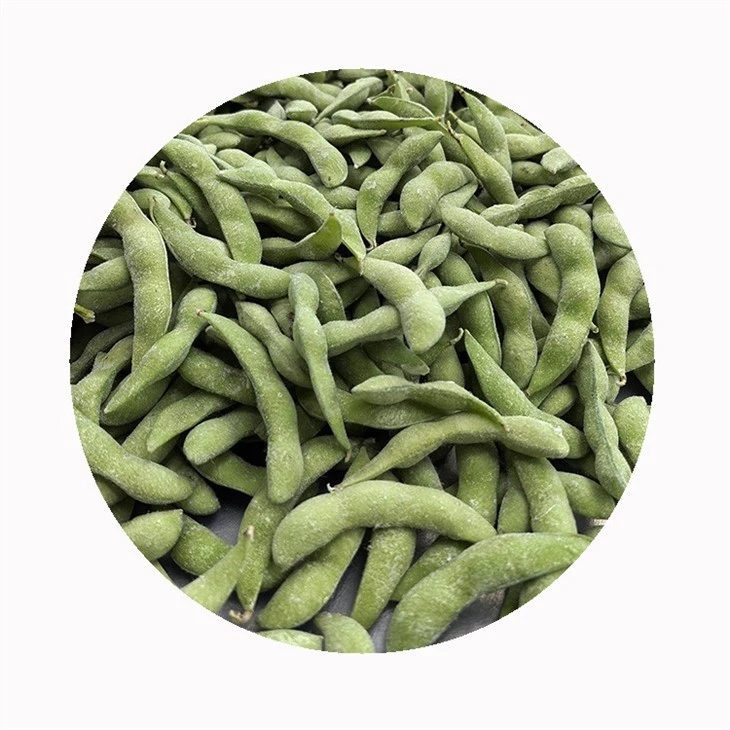
Frozen edamame pods as supplied before roasting.
Before setting an oven program, read the carton or retail pack. Frozen edamame may have been blanched or precooked to different degrees, and the safe final-use instruction belongs to the actual product. GreenLand-food's frozen edamame range offers podded and shelled forms under agreed specifications. We confirm the processing status and intended preparation with the buyer rather than assuming that all green frozen beans can be thawed and eaten without a final cook.
Size matters as well. A tray of small shelled kernels releases moisture and browns faster than large kernels when its load is the same depth. Two-bean and three-bean pods also differ in thickness and count. A kitchen using both formats should write separate weight, temperature and visual endpoint instructions; one general "roast edamame" line leaves too much variation for service. If a buyer's menu describes a crispy snack, test shelled beans first. If the menu describes a familiar podded starter, assess the warmed beans and blistered pods together.
The distinction carries through procurement. A frozen bag marked "edamame" may contain pods, shelled beans, or a mix specified for another use. State the form in the purchase order, request a representative photo or sample, and confirm whether salt or other seasoning is already included. These simple checks prevent a kitchen from receiving a product that needs extra labor or gives a different edible yield than the recipe costing assumed.
If a menu will use roasted beans as a topping, the size and integrity of shelled kernels become especially visible. Broken beans and loose skins may brown sooner than whole kernels and collect at the edge of the pan. For an in-pod appetizer, pod fill and intactness matter more: a pod with one small bean offers a different customer experience from a well-filled two- or three-bean pod. Ask for the grade that fits the dish and compare several bags, because an attractive sample bowl can hide variation in the rest of the carton.
Prepare frozen edamame for roasting
Water is the main obstacle to surface browning. Frozen edamame releases meltwater as it warms; if the beans enter the oven wet and crowded, that water steams them before the surface can roast. For shelled beans, thaw using the product directions, drain them in a colander and spread them briefly on a clean towel. Pat them dry. The image in this section shows the difference between beans simply drained and beans whose surface water has been removed. The latter need less oven time to reach a dry exterior.

Shelled edamame drained and patted dry before roasting.
Do not leave a frozen soy product at room temperature for an indefinite period to simplify prep. Use the package's handling instructions and keep the ingredient under appropriate time and temperature control. If the label requires heating to a particular endpoint, that requirement remains even when the beans are dry enough to brown. The prep step improves roasting performance; it does not convert a product of unknown cooking status into a ready-to-eat one.
For a basic tray, toss a measured amount of beans with a small amount of oil and salt after drying. Oil helps contact and browning, but a heavy coating can leave a greasy finish and delay evaporation. Start with enough to lightly coat the beans, then document the amount that works for your tray weight. Dry spices can go on before roasting if they tolerate the heat; delicate herbs, citrus zest and some sugary sauces are better added late so they do not scorch before the beans are ready.
Preheat the oven and use a tray large enough to keep the beans in one layer. A shallow metal pan exposes more surface than a deep dish. If one kilogram of beans forms a thick mound, split it across pans or roast in batches. Parchment can simplify cleanup, but the layer depth and moisture are more decisive than the liner. A commercial kitchen should test its actual pan, fan speed and load instead of copying a domestic recipe's timing directly.
For a frozen product with a printed cooking direction, write the test in terms the user can repeat. "Spread 250 g in one layer on a standard baking sheet" is more actionable than "roast until done," but it still needs a visual finish and a statement about whether the oven is fan-assisted. If preparation begins from frozen rather than thawed, test that condition separately. Ice on the beans consumes heat and creates steam; it cannot simply be treated as the same recipe with one extra minute added.
Podded edamame also benefits from draining and surface drying. The pods can carry ice crystals or water in the pack, and a wet coating hinders blistering. A small amount of oil and coarse salt can be tossed with the pods, but the edible beans remain inside; plan seasoning so the diner receives it on fingers and lips while pressing the beans out. A sauce added too early can scorch on the pod, so a finishing toss after heating may be more reliable.

Close view of dry roasted shelled edamame with golden spots.
Roast shelled edamame in the oven
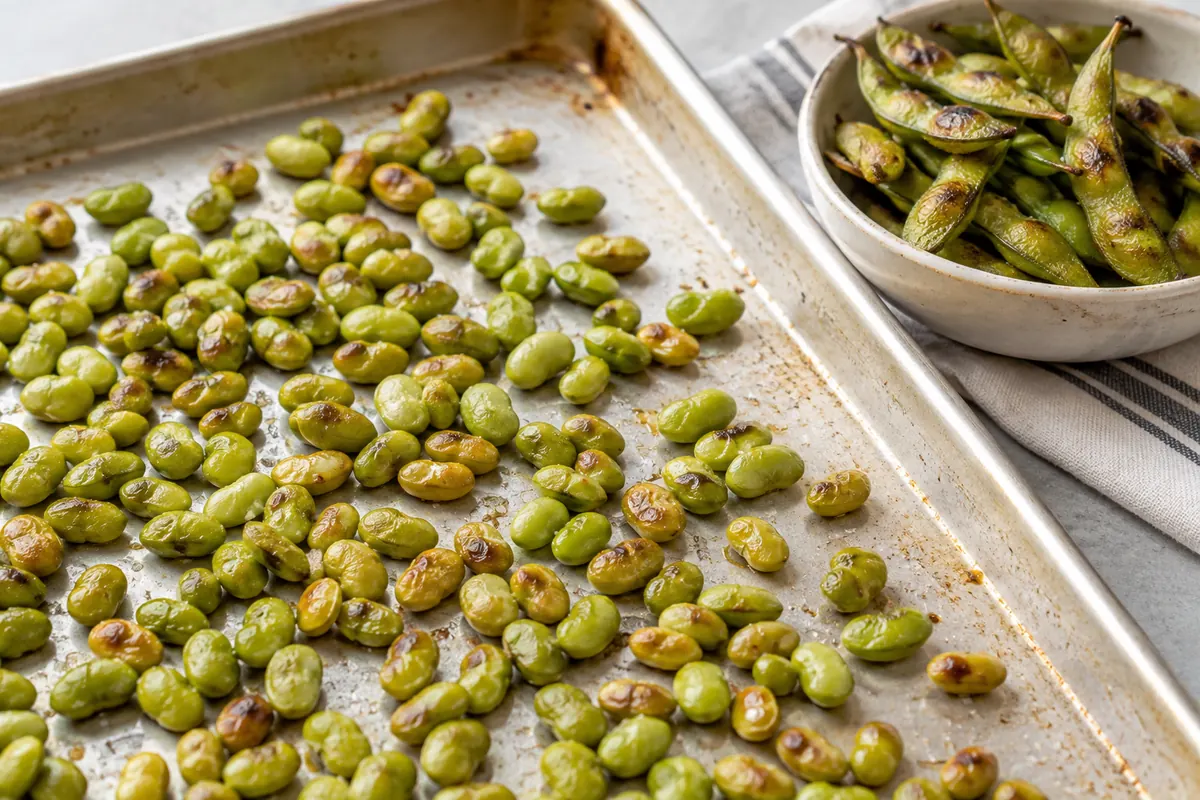
For an initial oven trial, set the oven near 400–425°F (205–220°C) and spread drained, dried shelled edamame in one layer. Start checking at about 15 minutes; many trays need roughly 20–30 minutes for a dry lightly browned finish, but the exact time moves with bean size, tray load and oven. Stir or turn once after the first half of cooking so beans at the edge do not dry out while the center remains pale. The process photo shows an uncrowded tray with modest browning rather than a pile of steamed beans.
Look for a surface that is no longer wet and several small golden spots. The inside should meet the product's required cooked state while retaining a pleasant bean flavor. If you want a softer bowl ingredient, stop earlier once the required heat treatment is complete and the surface is lightly roasted. If you want a drier snack, continue in short intervals while watching for dark patches and hard, shrunken beans. Cooling changes the texture: a bean that feels soft immediately out of the oven may firm up after a few minutes on the tray.
Published recipes show why one time cannot cover every format. Cooks Without Borders uses a 425°F oven and a 20–30 minute range after partial thawing and careful drying. Another frozen edamame recipe from Pictsweet Farms first prepares the product according to its package, drains it, and then gives it a shorter roast. These are different starting states and endpoints. Use them as method references, then validate the lot and oven you actually have.
When browning is uneven, adjust the physical setup before adding more time. A crowded center stays damp; a thinly loaded edge darkens. Rotate the tray, change the load weight or use two trays. Large amounts of liquid seasoning can re-wet the beans. If the trial with soy sauce tastes good but lacks a dry exterior, reduce the liquid, add it after roasting, or change the tray load. Record the revised recipe rather than asking cooks to guess what "crispy" means during rush service.

Shelled edamame spread separately on a roasting tray.
The macro detail in this section shows a suitable dry finish: separated beans with lightly wrinkled surfaces and golden areas, still recognizably green. It is a visual guide to texture, not a substitute for the product's food safety instruction. For a packaged roasted edamame concept, include cooling and pack moisture in the trial, because a bean that leaves the oven dry can soften in a closed warm container.
Let a small sample cool to the temperature at which it will actually be eaten, then test it again. Roasted beans eaten warm from the oven can feel tender in the center, while the same batch may become firmer and drier on a buffet or in a takeaway bowl. If the product is meant to stay crisp through a holding period, record the interval and container alongside the oven settings. A recipe that succeeds only during the first minute after roasting may not be suitable for service without a revised process.
Roast edamame in pods
For a podded appetizer, thaw and drain the frozen pods according to the pack, then dry their exterior enough for roasting. Toss lightly with oil and seasoning, spread them on a large tray and roast in a preheated hot oven. A short high-heat method around 450°F (230°C) can blister the outer pod in roughly 10–15 minutes for some products; the familiar Delish podded recipe uses that approach. A thicker load, a cooler oven or a product requiring more thorough heating will need a different tested time. Follow the pack's final-cooking directions whenever they are more specific.
Turn the pods once if one side browns faster. The outer surface may pick up darker patches while the beans inside remain bright and tender. Open a pod from the thickest part of the tray to check the beans. Serve with a bowl for spent pods and make the eating method clear to customers unfamiliar with edamame. The image shows beans pressed from a roasted pod and an empty pod nearby, emphasizing the distinction between attractive blistering and the edible portion.

Roasted edamame pods with the edible beans visible inside.
Seasoning can be simple: salt and a squeeze of lemon after roasting, or a restrained chili and garlic finish. Wet sticky sauces coat pods well but can burn on the tray; consider tossing the hot pods in sauce after they have reached the desired temperature. For takeaway service, test the closed container. Condensation can quickly soften the roasted pod surface, so a result that works at the pass may need a different hold or packaging procedure for delivery.
Do not promise a crunchy bean from this method. The pod acts as insulation and retains moisture around the kernels. If the menu needs a truly dry, snackable texture, shelled edamame is the more direct starting form. In a sourcing conversation, explain the menu endpoint first: blistered podded starter, warm tender kernel, or dry roasted bean. That answer helps choose the product form before anyone negotiates a carton price.
Podded edamame also has a different usable-yield calculation. The gross frozen pack includes pods that diners discard. A buyer comparing shelled and in-pod prices should weigh the cooked edible beans from a representative sample and include prep labor, seasoning use and customer presentation. A lower price per carton can be misleading when the menu prices only the edible portion. GreenLand-food can quote the forms separately with pod count, bean fill, packing and application stated.
The serving vessel also affects the experience. A deep closed cup traps steam and can soften blistered pods before the table receives them. A shallow open dish allows heat to escape and gives customers room to place empty pods in a separate bowl. These are practical service details rather than a change to the frozen ingredient. Test the complete handoff from oven to table, especially when the appetizer travels through a delivery system or waits for other dishes at the pass.
Read the texture and adjust the batch
Edamame can pass through several sensible endpoints. A pale tender bean suits a warm side or prepared bowl; a lightly golden, dry bean suits a roasted topping; an excessively dark, shrunken bean tastes hard and bitter. The side-by-side visual makes that progression visible. These are quality judgments after the product has received its required final heating, not independent evidence that a particular temperature is safe.
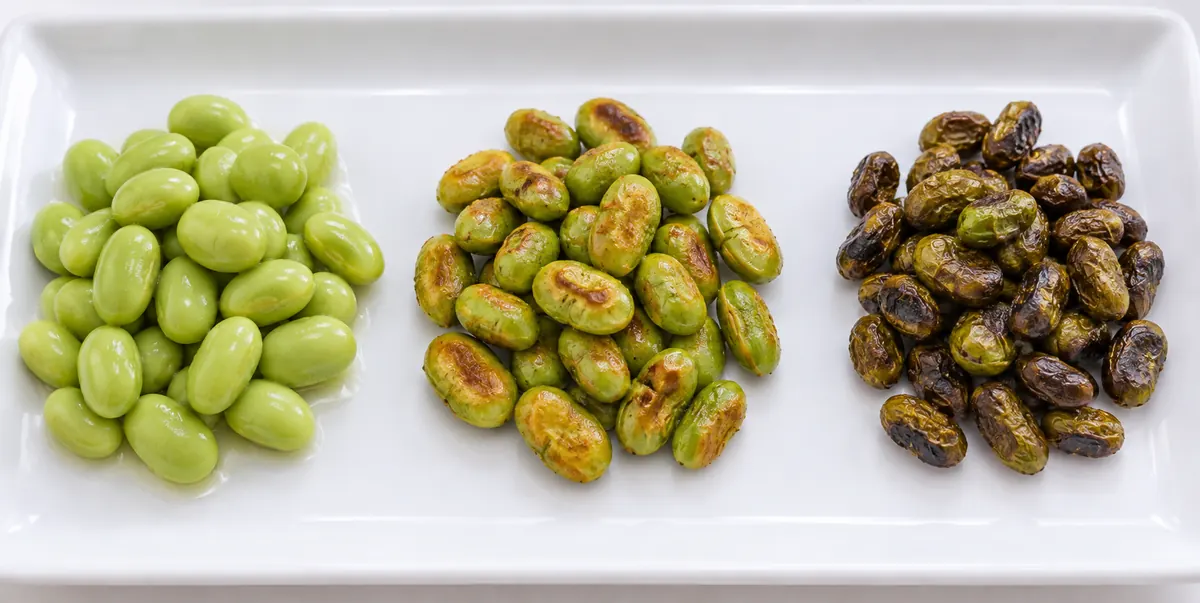
Three roasted edamame portions showing pale, golden and overdone states.
If beans are wet and soft, first ask whether they were dried and spread thinly enough. If yes, give them more time in small increments and check the oven's real temperature. If only one edge is overdone, reduce the tray load or change its position and turning interval. If all beans are tough before they brown, examine the original bean size, prior cooking level and moisture loss; simply increasing heat may make the exterior darker without restoring a tender center.
Seasoning affects the finish. Salt before cooking draws some moisture to the surface, while liquid sauces add more. A light oil coat and dry spice often produce a cleaner roast than a heavy glaze. Add acid and delicate aromatics after cooking to protect their flavor. For a commercial recipe, record the weight of beans, weight of oil and sauce, pan area, oven setting, stir point, final time and cooled texture. That record lets another cook repeat the trial instead of interpreting a photograph by instinct.
Holding is part of the method. Spread a finished tray briefly so steam can escape, then assess how the beans perform in the intended container. A deep covered pan traps vapor; a sealed retail pouch needs a moisture and shelf-life design beyond a simple home oven recipe. Do not treat homemade roasted edamame as equivalent to an industrial shelf-stable dry roasted snack. The processes, water activity targets, packaging and validation are different.
When a batch disappoints, change one variable at a time. Alter drying, load, temperature or time and compare the result with the approved target. This makes the next trial informative. It also helps a supplier diagnose whether an apparent roasting issue stems from the frozen ingredient-uneven bean size, broken kernels, ice or blanching variation-or from the kitchen process. A shared endpoint photo and simple sensory notes can be more useful than debating whether the beans were "roasted enough."
Apply the method in foodservice and packaged products
The final commercial decision begins with the product specification. State shelled or in-pod, bean or pod size, green color range, blanching or precooking status, whether seasoning is included, pack format and the intended roasting endpoint. The real GreenLand shelled-bean photo in this section shows the ingredient before cooking; its color and bean integrity are receiving checks, not a claim about how the roasted item will look. A cooked trial should accompany that raw-material check.

Frozen shelled edamame kernels for commercial supply.
For a central kitchen, order consistency affects service more than one successful sample. Ask for a representative lot across bags, then roast at the planned batch weight and oven load. Measure cooking time, usable yield, broken-bean rate, surface moisture and cooled texture. If podded edamame is the menu item, assess pod integrity, bean fill, color after heat and ease of eating. If shelled beans go into salads or bowls, check whether they stay separated and retain acceptable texture after cooling and assembly.
GreenLand-food's IQF edamame detail describes podded and shelled forms, natural green color, size grading, packing and frozen storage at or below −18°C. We confirm those points with each buyer along with crop availability, quantity, destination documents and intended application. For a roasting program, add the actual preparation instructions and a cooked-sample acceptance reference. A specification that only says "IQF green edamame" leaves too much uncertainty in the tray.
Packaging should fit the channel. A foodservice bag may prioritize repeatable portions and economical carton handling. A retail private-label pack needs clear ingredient identity, soy allergen labeling as required by the destination market, cooking directions and a visual that matches the contents. A prepared-meal producer may need a kernel that keeps its shape through a second heat cycle. Confirm the relevant document package and label requirements before printing packaging, because they depend on the market and product configuration.
The simplest useful trial sends the same frozen lot through two controlled recipes: a shelled single-layer roast and a podded appetizer roast, if both forms are under consideration. Compare edible yield, labor, tray occupancy, flavor and texture at service time. The result identifies which frozen format supports the menu. Send GreenLand-food the chosen form, size, pack, order quantity, destination and target dish so the quotation and sample can reflect that practical decision.
Source frozen edamame with GreenLand-food
GreenLand-food is a professional frozen edamame supplier and manufacturer in China, providing factory-direct wholesale supply for importers, food manufacturers, foodservice distributors, and private-label programs.
Send the product form, specification, packing, quantity, application, destination, private-label needs, and requested documents.