


What Does Yuca Look Like?
Sep 24, 2026
Leave a message


Recognize a fresh yuca root
The whole fresh root is usually long and cylindrical, with a thick dark brown to reddish brown covering. Its outline is less regular than a supermarket potato. The middle may be broad, the ends narrower, and shallow ridges or growth marks can run across the skin. Soil can sit in those ridges on an unwashed root. A cleaned or waxed root keeps the same basic shape but can look darker and slightly glossy. The USDA inspection instructions describe cassava as long and cylindrical with a surface ranging from fairly smooth to bark-like, which captures this natural variation better than one idealized photograph.
The real product photograph alongside this section shows the rough peel and a light cut end on the same lot. A cut end is valuable because the outer skin hides the flesh condition. If you buy fresh roots at a market, compare several pieces rather than expecting identical length or taper. Look for a firm, heavy-feeling root and an intact surface; obvious softness, deep damage or a leaking area deserve closer inspection. A thick peel is normal. A thin loose flap of wax is a packaging detail, while peel that separates with soft, deteriorating flesh suggests a different problem.

Fresh cassava roots with brown peel and pale cut face.
The cut end should look pale and sound. This does not mean every root is pure white: normal flesh can range from white to cream and some varieties are yellow. What matters within a shipment is whether the declared variety and color reference are consistent. Dark gray or black lines inside a freshly cut end are different from the bark-colored skin outside. They may indicate deterioration in the edible tissue and require trimming or rejection according to the intended use and agreed defect limits.
A fresh root is not graded only by how much of its outer surface looks attractive. The amount of usable flesh after peeling can vary with bark thickness, taper and concealed defects. If a kitchen buys by weight, it should test a small representative group, peel it using its normal method, then compare trimmed usable kilograms with the received weight. This also shows whether a seemingly inexpensive fresh lot creates extra work. Keep the peel-yield result alongside notes on cut-face color, because the two observations explain different parts of the purchasing result.
Yuca is often sold in thick sections because a full harvested root can be long. A cross-cut portion still has the same bark skin wrapped around a compact pale interior. In foodservice purchasing, this means the name on a carton and the broad silhouette are insufficient on their own. A receiving sample should expose both the skin and the cut face, and the supplier should state whether roots are whole, cut, peeled or waxed. These are straightforward visual details that prevent an operator from comparing unlike products.
GreenLand-food's frozen cassava range begins with selected fresh roots but supplies the prepared ingredient after peeling and cutting. The fresh root is useful background for identifying the crop; it is not the product form that most industrial kitchens will receive. When a buyer evaluates samples, we connect the original root's condition with the appearance of the finished frozen cut, where trimming, fiber and color become easier to judge.
See the flesh, peel and fibrous center
The most informative view is a clean cross-section. Outside is the dark, coarse peel. Immediately under it there may be a pinkish or cream layer; inside that is a thick cylinder of firm, starchy flesh. A small central thread or woody strand may appear at the center of the cut. In some roots it is subtle, while in others it becomes obvious after cooking and can be pulled away from the softer flesh. The explanatory close view in this section is meant to show the relative positions, not to promise that every root has the same peel thickness or fiber diameter.

Cassava cross-section showing thick peel, white flesh and central fiber.
Yuca's dense raw interior behaves differently from a juicy vegetable. It resists a knife more than a cooked potato, and the cut surface looks compact rather than wet or translucent. When cooked properly, the starchy material softens and may separate into coarse fibers. That texture is one reason a chef can serve cassava as boiled pieces or fry a prepared stick. It also explains why a processor asks for a cut dimension and a cooking method together: a thick wedge and a slim stick reach their desired center texture at different rates.
Peeling removes more than a cosmetic outer wrapper. The bark and underlying rind are not a garnish, and raw cassava must be prepared carefully because of its natural cyanogenic compounds. Cleveland Clinic's cassava guidance cautions against eating raw or improperly prepared cassava and advises peeling and cooking it. The root's external color cannot tell a cook whether its natural compounds have been adequately controlled. Follow the actual product instructions and a validated preparation process; do not treat a pale cut face or a brief blanch as proof of ready-to-eat status.
The central fiber also affects cut selection. A chunk that contains the core may remain tough along one line even when the surrounding flesh softens. For a smooth mash, puree or prepared snack, a buyer may require that the fibrous core be removed or tightly limited. For larger foodservice wedges, the kitchen may be able to remove it after cooking. Those are different yield and labor assumptions. A specification should say which applies, and the sample should be cut open so the requirement can actually be checked.
Natural cream flesh, faint yellow from a specified variety, and a narrow central fiber are quite different from broad dark vascular streaking, gray patches or an off odor. The visible comparison later in the page separates these conditions. During receiving, cut a representative number of roots or frozen pieces and record the findings. A single attractive whole root is a poor stand-in for the usable yield of a lot, because most decisive defects are concealed beneath the peel.
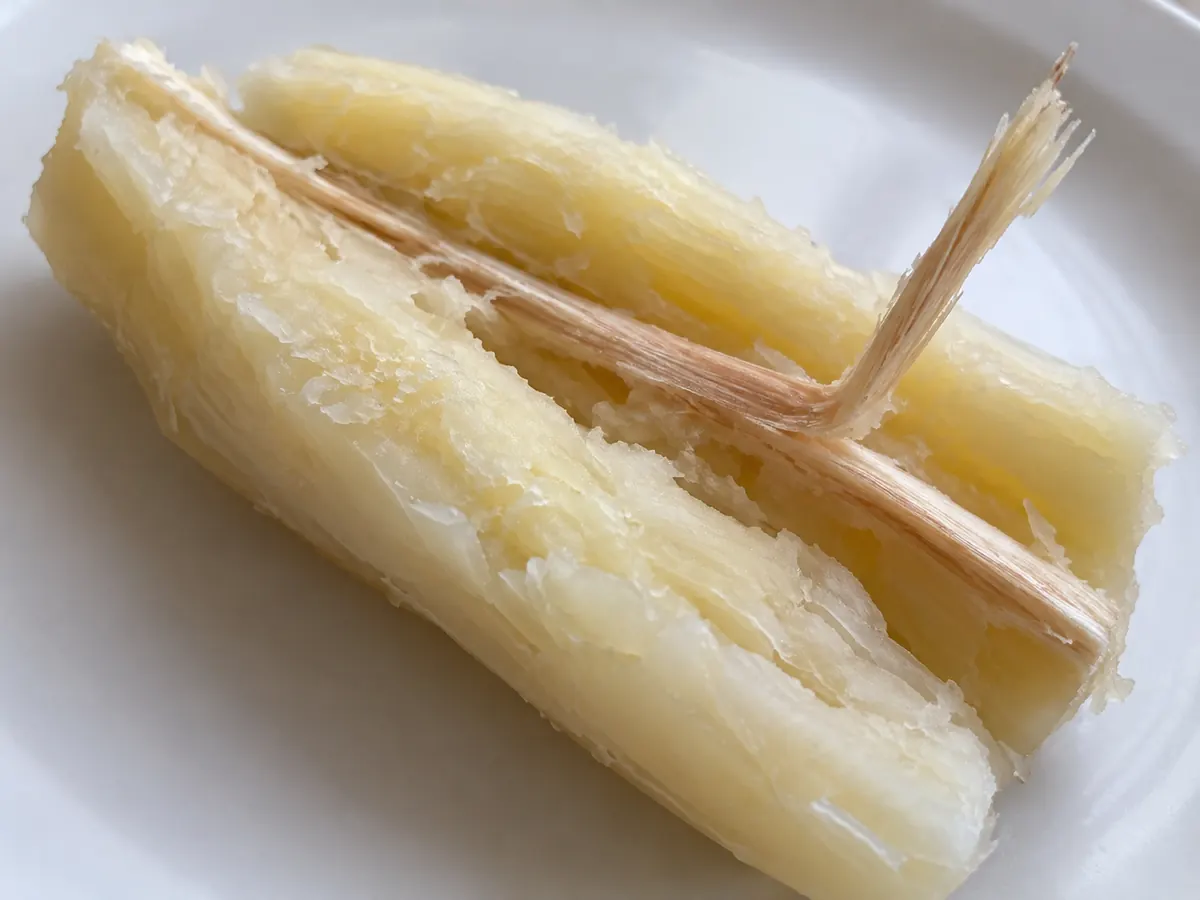
Cooked cassava wedge with woody central fiber separated.
Distinguish yuca from similar roots and yucca
A fresh yuca root can be mistaken for sweet potato, yam or taro when seen only from a distance. The side-by-side visual helps by keeping the roots at one scale and showing each cut face. Cassava is typically an elongated bark-skinned root with pale, dense flesh. A common orange sweet potato usually has smoother copper-colored skin and orange flesh. Taro often has a smaller, rounded or oval form, a rough hairy surface, and a pale interior that can show purple specks. These are useful identification cues, although varieties and regional market names still vary.
The spelling also causes confusion. Yuca is a food name for the cassava plant, Manihot esculenta. Yucca, with two c's, generally names a different group of spiky-leaved plants. An occasional market label may use the spellings loosely, so an import specification should use "cassava" and the botanical identity rather than relying on one casual common name. The GreenLand-food cassava product page uses yuca and cassava together because buyers in different destinations search for both names.
Visual similarity does not mean the crops have the same preparation requirements. A sweet potato or taro recipe cannot automatically be transferred to cassava. The peel, core, starch behavior and food safety requirements differ. In a restaurant, the practical first check is to read the package and confirm that the ingredient is edible cassava or yuca, then follow the supplied cooking directions. In a manufacturing plant, the raw-material identity should remain consistent from approved sample through specification, carton label and production record.
Prepared frozen cuts can be harder to identify than a fresh whole root because the bark has been removed. A white cube might resemble another starchy root in a bag. The cut's color and texture are helpful, but the label, ingredient declaration and supplier traceability carry the identity. We recommend comparing a thawed or cooked sample against the intended application, especially when a blended root-vegetable line includes cassava, taro or yam. That trial checks texture and flavor as well as appearance.
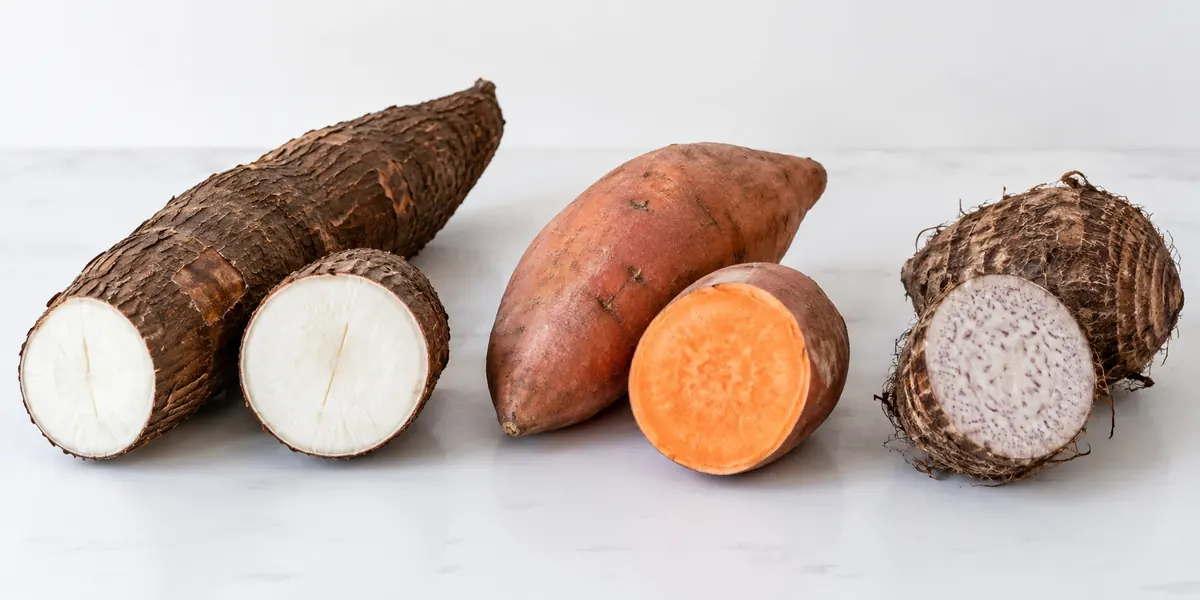
Cassava, sweet potato and taro roots with contrasting cut surfaces.
The point of this comparison is a more accurate purchase decision. If a buyer needs cassava fries, the brief should specify peeled cassava sticks and their pretreatment and cooking instructions. If the application needs taro's distinctive texture, a visually similar white cassava cube will not become equivalent through a name change. Clear identification at the beginning saves work later in recipe validation, labeling and complaint investigation.
Recognize peeled and frozen yuca formats
After peeling, yuca loses the feature that makes it easiest to recognize. Frozen peeled cassava typically appears white to light cream. It may be supplied as whole peeled lengths, larger chunks, shorter pieces, cubes, wedges or sticks. The real GreenLand product photograph here shows a commercial cube cut. Its pale color and separated pieces illustrate the intended frozen format, while the approved specification determines the actual dimension, processing level and defect tolerance. One photograph cannot substitute for those measurements.
The shape changes how an operator uses the ingredient. A cube is easy to dose into soups, stews and ready meals; a longer stick suits a fry or side dish; a larger chunk gives a more traditional whole-piece presence. A puree maker may favor a cut that heats and breaks down predictably rather than a visually perfect wedge. An IQF pack should allow portions to separate when frozen. Large welded clumps complicate dosing and can point to temperature exposure or excess free water, so inspect the pack condition alongside cut size.
The IQF frozen cassava product detail lists chunks, sticks, cubes and customized cuts and states that blanching or other pretreatment depends on the buyer specification. That distinction matters in both copy and operations. "Frozen" describes preservation; it does not by itself say the piece is fully cooked. A cook should follow the label or agreed process, and a buyer should require written processing status before developing preparation instructions for a retail or foodservice pack.
Peeled cassava is also a yield decision. Fresh roots must be washed, peeled, trimmed and often cut before cooking. Frozen prepared pieces move those steps to the supplier, allowing the buyer to compare usable output per carton rather than price per kilogram of unpeeled root. However, a prepared product needs its own acceptance checks: leftover peel, excessive core, dark tissue, broken pieces, frost and size variation can all change the true usable yield.

Frozen peeled cassava cubes in a product tray.
The freezer also changes what can be inspected immediately. A frozen piece may carry frost that hides a small surface mark; a thawed sample can show more color detail but will no longer represent the handling state of an intact frozen carton. Inspect the pack frozen first for separation, ice and damage. Then cook a second representative portion by the planned method and examine the interior. Keep these two observations separate in the report. A receiving photograph of frosty pieces cannot establish cooked tenderness, just as a plate of cooked yuca cannot document original free-flowing condition.
GreenLand-food confirms cut style, peeling condition, core removal, natural color, pretreatment, packing and frozen storage against the order. We also ask about the final dish. A foodservice distributor selling a retail yuca-fry bag needs a different visual standard and instruction review from a ready-meal factory that cooks cassava cubes inside a sauce. The label and sample should show the intended form plainly enough that receiving and kitchen teams recognize the same ingredient.
Judge acceptable appearance and reject defects
Start with the exposed edible portion. Sound cassava flesh is generally firm and pale for a standard white variety. An occasional small superficial mark can be assessed against a written trimming allowance, but a gray or black streak running through the flesh is a different issue. The comparison visual in this section shows a clean piece beside pieces with dark internal lines or a localized gray area. It is an educational illustration; use an actual lot sample and agreed grading reference when making a purchase decision.
Dark internal discoloration can be missed when the root remains whole, so sampling must include cutting. The exact sampling plan and rejection limits depend on destination, grade, application and customer tolerance. A buyer should define whether a defect is measured by affected pieces, weight of trimmed material or both. One vague line such as "good quality" leaves too much room for disagreement when a production shift encounters a costly number of unusable roots.
For frozen cassava, inspect after opening more than one bag or carton. Look at color uniformity, free-flowing condition, visible peel, foreign plant material, dark spots, excessive fibers, chipped or crushed cuts and surface ice. Some frost on a cold product can be normal; heavy glaze-like accumulation or clumps need an explanation in relation to the signed specification and cold-chain record. Measure nominal cuts and note both undersize fragments and oversized pieces, because they can cook unevenly in the same process.

Peeled cassava pieces showing clean flesh and dark interior streaks.
Texture needs a cooking trial. A pale piece can still become stringy, hard at the center or excessively fragile after heating. Cook a sample by the actual intended method, then score tenderness, fiber, breakage and flavor. For a fried product, inspect the inside after the outside browns; an attractive crust does not demonstrate that a thick center has been properly cooked. For a ready meal, test the piece after the complete reheating cycle rather than only after the ingredient's first blanch.
Food safety remains separate from cosmetic grading. The Cleveland Clinic guidance explains why raw or improperly prepared cassava is unsafe. A supplier's white color claim does not override cooking instructions or process validation. We therefore ask buyers to state whether the product is raw frozen, blanched, par-cooked or fully cooked, and to approve the handling statement that will travel with the goods. If the condition or status is uncertain, hold the lot for clarification before service or production.
Specify visual quality for foodservice and manufacturing
An effective yuca RFQ gives the supplier a physical target. State whether you want whole peeled roots, chunks, cubes, wedges or sticks; nominal dimensions and permitted variation; white or specified yellow flesh; desired core removal; peeling standard; and allowed dark spots, fragments and broken pieces. Include the intended application and cooking method. These details are more useful than a broad request for "premium yuca," because the appearance appropriate for a stew cube differs from a retail fry with a visible straight edge.
The trays in the explanatory image make the cut question concrete: the same crop becomes cubes, sticks or irregular chunks, and each changes portion size and cook time. Agree an approved photo reference and a physical or cooked sample where appearance matters. The sample should represent the proposed grade, not a hand-selected showpiece. At incoming inspection, compare multiple cartons with that reference and record size, color, core, peel and defect findings. A consistent procedure helps both supplier and buyer resolve a deviation without arguing over adjectives.

Peeled cassava cubes, sticks and chunks in separate trays.
Add operational details before quotation. Confirm whether the cassava is raw, blanched or partly cooked; the target pack weight and inner bag; expected quantity; destination market; private-label artwork; requested certificates or test reports; traceability fields; and cold-chain handoff. GreenLand-food's frozen cassava page describes prepared cuts and storage at or below −18°C, subject to the order specification. A buyer should still confirm the exact process and shelf life for their own product, pack and market rather than copying a general website line into a label.
For foodservice, an operator may need consistent large pieces that hold together during boiling and can later be fried. For a soup or stew factory, the main concern may be uniformity after a long cook and predictable starch release. For retail packs, visual cleanliness, simple cooking instructions and clear naming become prominent. The same supplier can discuss all three, but the acceptance standard should be written for the final application instead of treating every white cassava piece as interchangeable.
We help purchasing teams compare the cost of fresh-root trimming with a frozen prepared format on a usable-yield basis. Request a trial quantity and measure what remains after the intended cook: portion count, rejected defects, labor, time and texture. That evidence tells you whether a cut is suitable more reliably than a catalog picture alone. It also gives a useful baseline for future crops and lots when the root's natural size and shape vary.
When the visual, process and application requirements are clear, receiving staff can recognize the right product before it enters production. A brown fresh root with a pale center and a pale frozen cube are two stages of the same cassava ingredient, but each requires its own inspection. Keeping those stages connected in the specification makes both quality control and cooking instructions easier to defend.
Source frozen cassava with GreenLand-food
GreenLand-food is a professional frozen cassava supplier and manufacturer in China, providing factory-direct wholesale supply for importers, food manufacturers, foodservice distributors, and private-label programs.
Send the product form, specification, packing, quantity, application, destination, private-label needs, and requested documents.