


Shiitake Dashi: Why Dried Mushrooms and Frozen Shiitake Are Not Direct Substitutes
Sep 28, 2026
Leave a message


Define shiitake dashi before choosing the mushroom
Dashi means a Japanese cooking stock or broth, as Kikkoman's culinary glossary explains. It can come from kombu, bonito, dried sardines, shiitake or combinations, so the word alone does not identify the ingredients or the strength. For this comparison, "shiitake dashi" refers to the stock associated with rehydrating dried shiitake. A cook may reserve that aromatic liquid and later add it to another dashi. A manufacturer may instead need a standardized soup base at a defined finished volume. Those are related uses but not the same concentration.
Just One Cookbook explicitly distinguishes a strong liquid made with only enough water to cover dried caps from a more diluted version made with more water. The mushroom count may be similar while the resulting stock behaves differently in a soup. This is why a sensory panel should not compare a spoonful of concentrated dried soak with a full bowl of weak frozen-mushroom broth and declare the dried mushroom "better." First specify the final dilution, seasoning and serving context.
A strained soaking liquid also differs from a soup containing mushroom pieces. The broth has its own color, aroma and body; the pieces add appearance and chew. A clear noodle broth may need the dried-shiitake note but no visible cap. A hot pot or ready meal may need identifiable slices, even if the base uses another stock. Treating the visible inclusion as the entire flavor system can lead to a weak base or an overloaded pack. Both elements deserve separate targets in a product brief.

Concentrated dried shiitake soaking liquid beside a more diluted stock.
If kombu, bonito or other savory ingredients are added, name them. A kombu–shiitake blend can be an excellent stock, but it is not a shiitake-only reference. Bonito changes the ingredient declaration and whether the whole recipe qualifies for a plant-based claim. Soy sauce, miso and salt also reshape the tasting. The comparison should document every addition so the team can tell whether the mushrooms or the seasoning drove preference.
Consider clarity as part of the brief. Some soup lines require a relatively clear, golden broth with restrained sediment. Others accept a darker, cloudier and fuller mushroom profile. Dried mushroom rehydration liquid may need fine straining; a broth cooked from frozen cuts may contain more visible particles or released solids. The color is not a quality score by itself. Record the target appearance alongside aroma and taste so a candidate is judged against the actual product rather than an imagined "ideal dashi."
This definition keeps procurement honest. A quote for IQF shiitake slices gives the processor a mushroom cut and pack. It does not include the concentration step, the broth recipe or a guarantee that the finished flavor matches an existing dried dashi. GreenLand can help confirm cap size, cut, stem trimming and cold-chain condition. The soup developer must prepare and approve the stock or inclusion under its own process.
Keep rehydration, extraction and cooking separate
Dried caps need water to become pliable; during rehydration, soluble compounds enter the surrounding liquid. Japanese home-cooking sources commonly describe a covered cold-water soak in the refrigerator, followed by removal of the caps and straining of the liquid. That is a flavor-extraction method. It should be recorded as an ingredient preparation step, not described as cooking or as a microbial kill step. The rehydrated caps may be trimmed and cooked in a different dish or used later in the soup according to its recipe.
For a production trial, weigh dried mushrooms and water and note cap size, whole or sliced form, soak vessel, start and finish times, actual temperature, recovered liquid and straining method. The ratio matters because the same extracted material can be concentrated or diluted. Yet no single internet recipe ratio is a universal factory standard. Dried lots vary in size, dryness and sensory character; the chosen target must be tested at the final soup concentration.
Keep cold rehydration under the operation's approved food-safety controls. A source may propose a warm shortcut for culinary flavor, but a temperature used to favor extraction is not automatically a safe holding condition. Do not copy a warm enzyme hold or a household counter soak into a foodservice procedure without hazard review. The current FDA Food Code is a model for retail and foodservice controls in the United States, while local rules and the operation's own program govern actual practice. This article does not assign a universal time or temperature as a validated lethality step.

Covered dried shiitake rehydration vessel beside a strainer and collected amber liquid.
After soaking, strain with the mesh or filter that the finished product needs. Fine sediment, cap fragments and grit can affect the appearance of a clear soup. Record whether the caps were pressed or squeezed, since that choice may alter yield and cloudiness. If the liquid will be heated in a soup, note that as a later step. If it will be cooled or stored, use the facility's approved cooling, storage and reheating procedure. A household recipe's "three days in the refrigerator" is not a shelf-life basis for a commercial product.
Cooking frozen shiitake is a different process sequence. IQF mushrooms already contain substantial water and do not require a dried-cap rehydration stage. The processor may add them to simmering liquid, sauté them before adding stock, or cook a mushroom broth and then strain it. Each route changes water release, browning, aroma and clarity. Frozen slices should be cooked according to the ingredient status and intended dish. Cold soaking frozen pieces in water is neither the traditional dried extraction nor a food-safety shortcut.
The words "dashi" and "broth" can remain useful if the process is named: dried-shiitake rehydration stock, cooked broth from IQF shiitake, or soup based on dried dashi with frozen shiitake inclusion. This vocabulary matters for recipe cards, batch records and supplier discussions. If two teams use "shiitake stock" for different liquids, a sensory disagreement may be a documentation problem rather than a flavor mystery.
Why equal weights of dried and frozen shiitake do not match
A gram of dried mushroom and a gram of frozen mushroom have different water bases. Drying removes much of the original moisture; freezing keeps the mushroom's water in the ingredient, even though ice crystals may change texture when it thaws. Equal purchased weights therefore do not represent equal mushroom solids. Nor do they guarantee equal extraction into a chosen volume of water. Without measured dry matter and a matched process, a gram-for-gram switch is simply an untested change to the recipe.
The difference is more than moisture. Drying changes shiitake aroma. An original sensory and volatile-compound study comparing fresh and mushrooms dried by several methods found changes in the composition and sensory profile; the outcome depended on drying method. That supports the narrower statement that a dried-shiitake reference has a characteristic profile that a frozen fresh-style ingredient may not duplicate. It does not support a universal claim that every dried lot has a certain multiple of "umami" compared with every frozen lot.
Online sources sometimes quote exact guanylate multiples or suggest a precise fresh-to-dried substitution ratio. Such values are not portable across cultivars, drying conditions, moisture states, extraction methods and soup formulations. A laboratory concentration in raw mushroom tissue is not the same as the perceived flavor of a finished, seasoned soup. This guide avoids converting those claims into a purchasing rule. Use measured soup outcomes instead of a borrowed biochemical number.

Dried caps and frost-covered IQF shiitake pieces on separate sides of an unmarked scale.
The frozen material may have its own positive attributes. A gently cooked frozen shiitake slice can supply a recognizable cap shape and mushroom bite. A soup made from frozen mushroom may taste fresher or lighter than a concentrated dried dashi, depending on the lot and process. That can be exactly what a particular ready meal needs. The question is whether it meets the chosen dried-stock reference, not whether it can make any worthwhile broth at all.
Water accounting helps explain differences in a pilot. Weigh the frozen mushrooms in their received condition, record visible frost or clumping, and note how much water enters the pan with the ingredient or is released during cooking. Record the final broth volume after straining or evaporation. If one broth is reduced further, it may taste stronger because of concentration rather than the mushroom form. Standardize the final volume and salt before a blind comparison. Never balance one sample by adding undocumented seasoning until it tastes similar; that hides the process change.
Cost comparisons need the same denominator. Dried caps may be purchased at a high price per kilogram but used as a small flavor input. IQF cuts may cost less per kilogram while adding far more water and visible pieces. Compare the cost of each approved finished soup portion, including the required mushrooms, cooking, straining loss, labor and any retained inclusion. A simple price-per-kilogram comparison across dry and frozen forms tells the buyer little about the final bowl.
If a product developer wants to replace dried dashi, run a reformulation trial openly. Define the dried reference, test an IQF broth under a safe cooked process, and decide whether the changed flavor is acceptable. The result may be a new broth with its own merit, or a combined system: dried dashi for the base and IQF slices for visible mushroom. That is a deliberate product choice, not an invisible substitution.
Give frozen shiitake a clear role in the soup
GreenLand's frozen shiitake range is relevant to soup producers because it offers whole caps, slices and other cuts by confirmed specification. Choose the form for the job. Thin slices distribute through a noodle broth and make the mushroom visible in each portion. Whole caps may suit hot pot or a premium serving but need attention to cap size and stem chew. Dice can add small, consistent pieces to a prepared meal. A cut-form decision should be tied to the pack, cook and serving test, not chosen from a catalog photo alone.
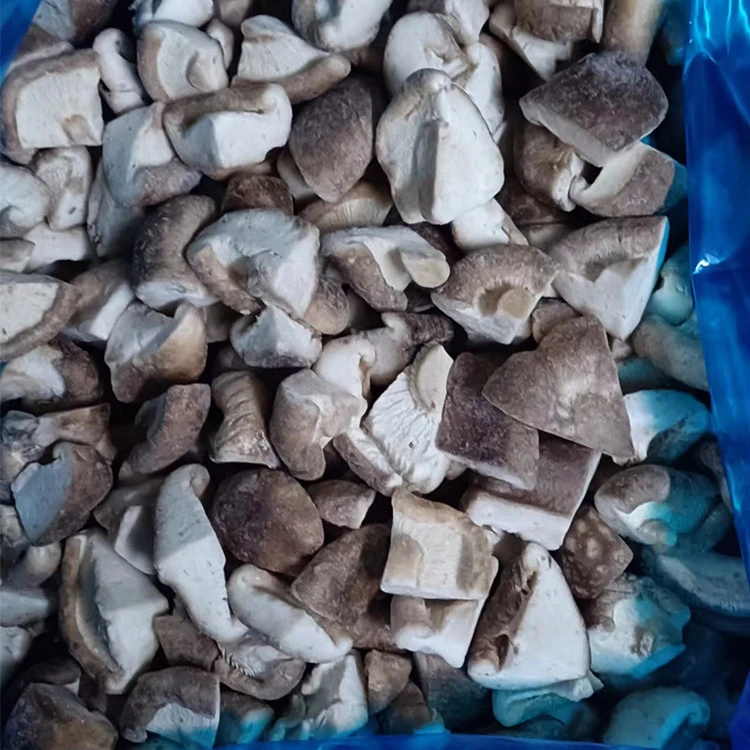
Real GreenLand photograph of IQF frozen shiitake pieces.
For a cooked frozen-mushroom broth, start with a defined mushroom mass, water volume, vessel, heating process and strain. Record the final volume, color, aroma, sediment and taste after the intended seasoning. Taste the broth in the finished soup, not only straight from the pan. A heavier dose can add mushroom flavor but may also darken the stock or create a flavor that overwhelms other components. A lighter broth may be better in a delicate clear soup. There is no universal correct concentration.
When the IQF mushroom is a visible inclusion, cook it according to the approved process and check the thickest pieces. Frozen shiitake can release water into the soup, affecting dilution and salt perception. If the product is portioned into individual bowls or trays, examine whether slices distribute evenly and keep their intended shape after filling, cooling, freezing and reheating. A good stock can still fail as a ready meal if the pieces become rubbery or stems remain tough.
GreenLand's page asks buyers to confirm stem trimming, cap diameter, slice thickness and whether a lot is blanched or unblanched. Those are meaningful variables. Pretreatment can affect how the mushroom behaves in the customer's kettle, so obtain the exact status of the offered lot. Do not assume that an IQF label means it is fully cooked or ready to eat. The downstream cooking and food-safety plan belongs to the processor and should match the ingredient's documented condition.
Try a combined design when the product needs both a dried-stock character and mushroom pieces. Prepare the dried dashi reference under its documented method, then add cooked IQF slices at the serving or processing stage. Record how the added pieces change dilution, color and aroma. This combination can give the customer a clear dashi identity and a visible shiitake cue, but it needs its own formulation and price analysis. Do not claim the pieces are merely garnish if they alter the soup's flavor or water balance.
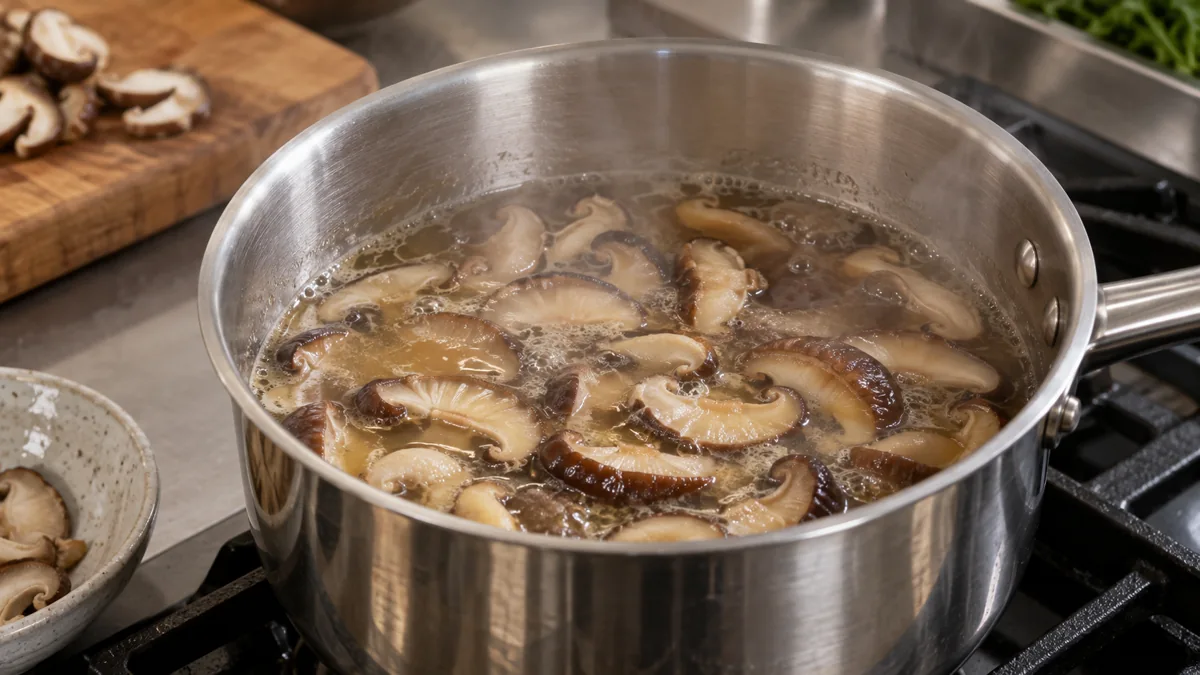
Shiitake slices cooking in a saucepan of mushroom broth.
The product photo can support a cut-form discussion, not a sensory conclusion. A real image of frozen slices or caps shows the form and visible frost at the source. It cannot prove the supplied lot's exact aroma, broth strength or cook yield. Use a dated representative sample and the current specification for approval. The purpose of the photo in this article is to keep the frozen ingredient's identity separate from the illustrated dried-stock process.
Approve flavor strength and handling together
Run a three-way comparison if the project is deciding between stock and inclusion. Sample A is the documented dried-shiitake dashi reference. Sample B is a safely cooked broth made from the offered IQF shiitake. Sample C uses the dried dashi base with an agreed amount of cooked IQF slices. Bring all three to the same finished soup volume, salt level, supporting ingredients and serving temperature. These are proposed trial arms, not reported experimental results.
Code the bowls before tasting and randomize serving order. Ask the panel to score mushroom aroma, savory depth, balance with other ingredients, color, clarity or sediment, aftertaste and overall fit for the product. Score the pieces separately for visibility, cap tenderness, stem chew and portion consistency. A single "best soup" mark cannot explain whether a sample won because of stock flavor or because visible pieces made it seem more generous.

Three equal-volume finished mushroom soups prepared for a blind comparison.
Use objective records where they help. Record ingredient weights on the correct moisture basis, input and final liquid volumes, solids or turbidity if the operation uses such tests, cooking and straining loss, and the amount of seasoning required to reach the target. Retain the mushroom lot codes and the preparation sequence. Those data make a result repeatable. Avoid inventing a guanylate value or turning a visual color difference into a quantified umami claim without actual analysis.
Tasting should include the final application. A clear soup may show sediment that disappears in a dark ramen. A mushroom note that is prominent in plain broth may be muted by miso, soy or chili oil. A chilled ready meal reheated by the customer can differ from a fresh test pan. Repeat the chosen arm through the normal holding, cooling, freezing and reheating cycle where applicable. Set the comparison at the actual point of consumption rather than at whichever intermediate stage makes one option look strongest.
Handle all arms under the same approved safety program. Dried mushroom soaking is not a lethality step. Straining does not make a contaminated liquid safe. Frozen mushroom status must be known, and the cooking process should meet the product's hazard controls. Cooling, storage and reheating must follow the operation and destination market's requirements. The FDA Food Code is a model reference for US retail and foodservice, not a substitute for a facility-specific validated procedure. Do not borrow a household stock storage period for a wholesale soup program.
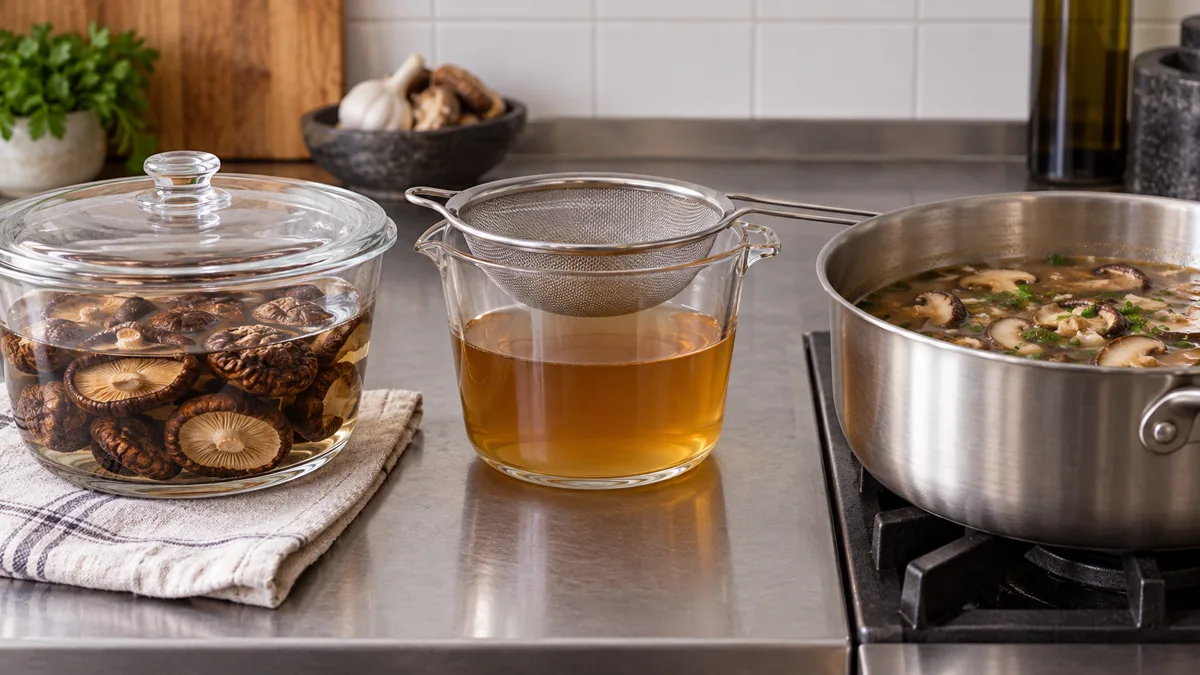
Covered rehydration strained liquid and a separate cooked soup pan.
The panel can still make an honest decision without a universal winner. It may find that dried dashi is essential in a clear bowl, frozen broth works in a strongly seasoned soup, or the combination gives the best flavor and visible value. Those are product-specific outcomes. Document the decision in relation to a named recipe, lot and process; revisit it if the mushroom form, drying source, pretreatment or seasoning changes.
Write a frozen shiitake specification for a soup trial
Begin the RFQ with the ingredient's actual role. If the buyer needs IQF pieces for soup, state whole cap, slice, dice or other agreed cut; target size or slice thickness; acceptable stem length; and whether blanched or unblanched material is required. Add intended cooking and final dish. If the buyer is also testing a broth from IQF shiitake, ask for a representative sample and use the trial protocol to determine an acceptable flavor result. Do not ask GreenLand to certify that its IQF mushrooms are dried dashi material.
The quality specification should cover cap condition, natural color, characteristic aroma, free-flowing frozen state, frost or clumping expectations, damage, foreign material and agreed defect limits. Request the product's ingredient and treatment declaration, pack configuration, lot identification, storage requirement and relevant inspection or certificate documents. GreenLand's frozen shiitake category says cuts, pretreatment and documents are confirmed by order. A sales page can guide the inquiry, but the signed specification and sample govern the actual shipment.
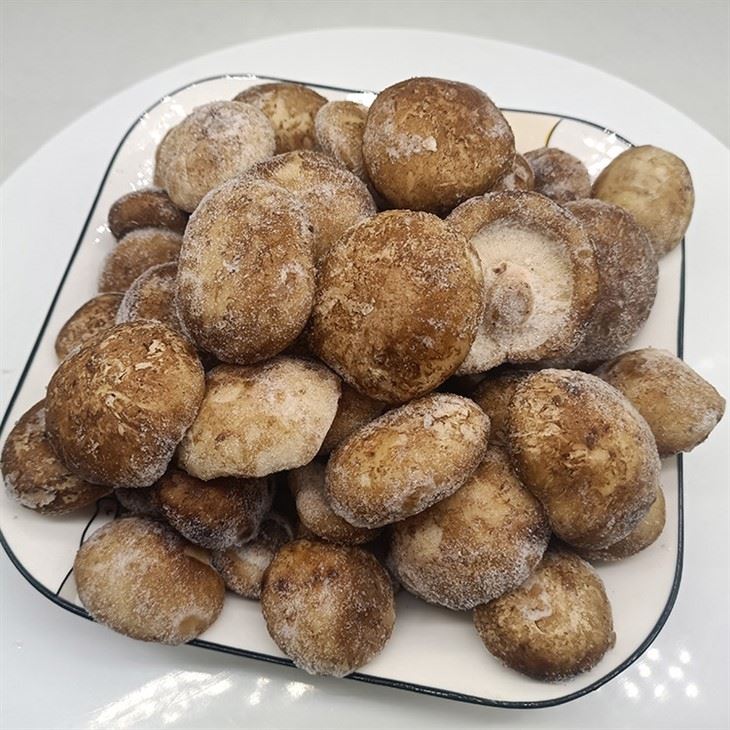
Real GreenLand photograph of frozen whole shiitake caps.
Describe the sample approval in practical terms: sample quantity, lot code, arrival temperature or frozen condition, cooking method, final soup volume, seasoning and sensory reference. For a visible inclusion, count pieces per portion, check stem chew and note texture after normal reheating. For a broth use, record straining yield and flavor at final dilution. A change from slices to dice can alter both appearance and extraction; treat it as a new form needing confirmation rather than as a trivial packaging substitution.
Cost the approved route against the finished product. Include mushroom purchase, usable cut yield, stock loss, cook time, packaging and distribution handling. A frozen inclusion may justify its cost because it is seen in the bowl, while dried dashi may be the more efficient flavor base. A combined option can be right when both experiences matter. The commercial decision should use accepted bowls per delivered shipment, not an equal-weight ingredient comparison that ignores water.
Keep the stock and the inclusion specification linked but distinct. The stock record controls liquid composition, strength and handling. The frozen ingredient record controls form, cut, pretreatment, lot and cold chain. If the same soup uses both dried and frozen shiitake, identify both suppliers and retain their documents. Any plant-based claim must review the entire formula, including fish-based dashi, sauces and seasonings. The presence of shiitake alone does not establish the claim.
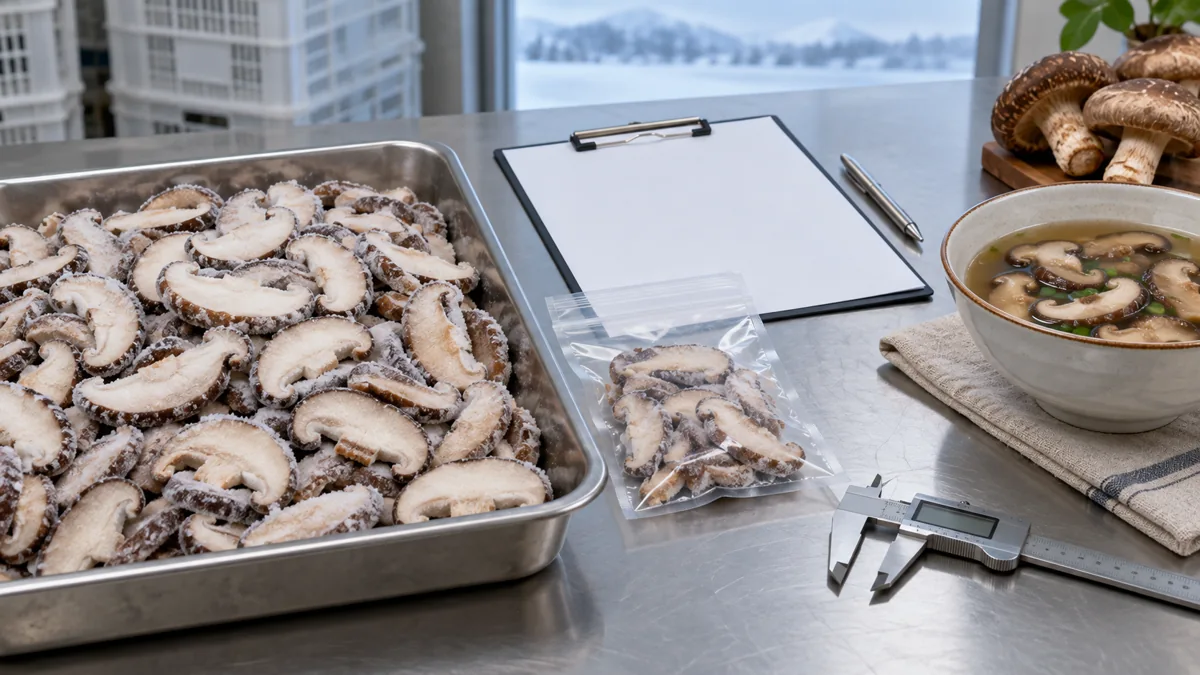
IQF sliced shiitake sample beside a blank buyer sheet and finished soup.
GreenLand-food can discuss IQF frozen shiitake samples, cuts, bulk or retail packing and export support for the mushroom ingredient. Share your soup application, required form, annual volume, destination and current reference recipe. We can help match an offered frozen cut to the trial while your team decides whether the finished broth needs dried extraction, cooked frozen-mushroom flavor, visible pieces or a measured combination.
The direct answer is simple: dried-shiitake dashi and IQF shiitake are not direct weight-for-weight substitutes because the material's water basis, processing and role in the recipe differ. Frozen shiitake can be useful in a cooked broth and as an inclusion. Test those roles against the same finished soup, under approved handling, and write the chosen result into separate stock and ingredient specifications.
Source frozen shiitake mushrooms with GreenLand-food
GreenLand-food is a China frozen shiitake supplier and manufacturer providing factory-direct wholesale IQF mushroom cuts for soup and prepared-food buyers.
Share your required cut, cap size, stem-trimming standard, pretreatment, pack, destination and soup trial. We can discuss a traceable ingredient sample; your team validates the stock and finished dish.