


Cold-chain support that connects cargo and evidence
We help plan frozen-product handling, loading and temperature evidence around the shipment. Our approach connects what happens to the cargo with the records used at receiving, so product condition and a temperature event can be assessed together.

Prepare the cargo and the reefer as one operation
We review frozen-product readiness with the reefer preparation and loading arrangement. Our published blueberry specification uses −18°C or below as its storage reference; the selected SKU and agreed transport conditions guide the shipment discussion. The reefer maintains cold cargo, so the product condition before loading matters.
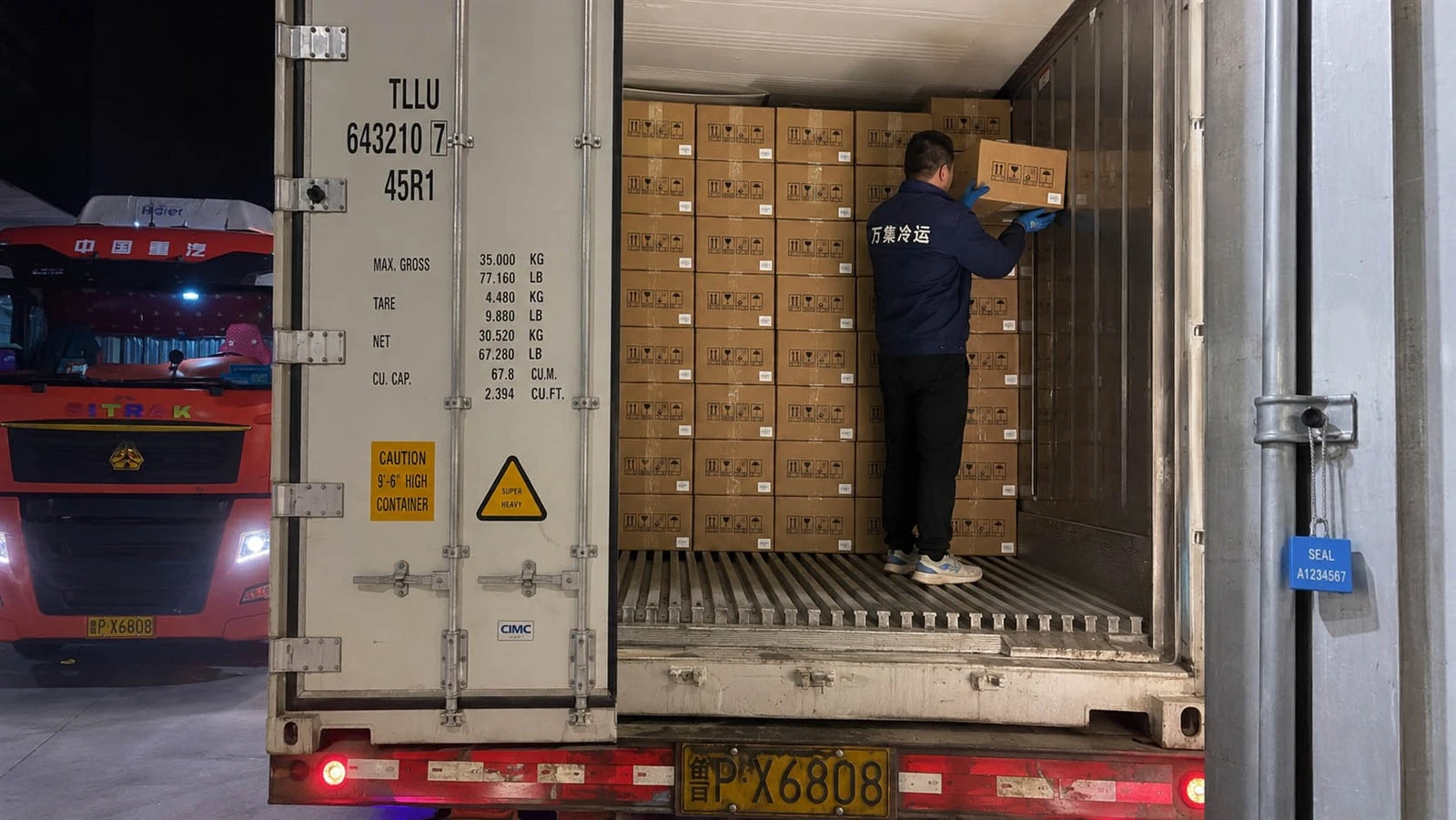
Carton layout and circulation are part of the same preparation. Airflow through the load, the return-air path and door-open exposure affect conditions inside the container. We discuss these alongside the loading sequence and handover, rather than treating the setpoint as the complete control.

Distinguish air readings from product measurements
We interpret each measurement according to what it measures. Supply or return air describes the reefer environment; a logger describes conditions around its position. A probe measurement describes the product at the selected location and method.
Frozen cargo changes temperature more slowly than surrounding air. A short door-side rise and a sustained event across deeper cargo positions therefore need different interpretation. We connect the reading with its location, method and product condition before drawing a quality conclusion.

Choose a logger plan that answers the shipment question
We discuss logger placement according to the route and the evidence needed. Door-side and deeper-cargo positions can describe different exposure; device position and a photograph of its actual location make the resulting curve easier to interpret.
Device identity, recording interval, time zone and calibration context matter as much as the maximum number on a report. Offline logging supports review after retrieval; connected monitoring can be discussed where intervention during transit is needed and technically suitable. Our temperature control and data logger guide develops these choices.
Read the full event timeline
We review how high the temperature rose, how long it lasted, whether it repeated and where it occurred. Loading, door opening, transfer and defrost events give the curve context. Product measurements, carton condition, frost, clumping and handling observations help explain whether the cargo was affected.
We discuss the raw-data and reading arrangements with the monitoring scope. Keeping the original file and its time basis supports comparison with the shipment timeline; a single screenshot can miss the duration and sequence that matter to an investigation.

Connect the handover with the shipment identity
We help align case quantities and batch identity with the packing list, container and seal. Where monitoring is included, logger IDs, positions and loading times belong with that shipment information, giving the receiving discussion a shared reference.
We also work through the route, named place and version of the agreed trade term, including the monitoring scope, costs, retrieval and data handover. This helps clarify the arrangements at each transfer. Our cold-chain logistics guide explains the connection between physical handling and receiving evidence.

Talk through the cold-chain arrangements
Tell us the product or shipment you have in mind. We will help work through the handling and monitoring options.
A product name or brief message is enough to start. If you already have a specification or photo, you can share it too. Our team will follow up to clarify the details.