


Inside an IQF blueberry specification
Whole cultivated blueberries, an 8–16 mm size range and a frozen-storage reference: the published July 2024 specification SP24E004 makes the product definition visible. The accompanying images show how specification, carton identity and inspection work connect.
This historical document reference is a practical example for discussing a similar product. Current order details are established with the relevant quotation and shipment records.
Discuss a blueberry requirement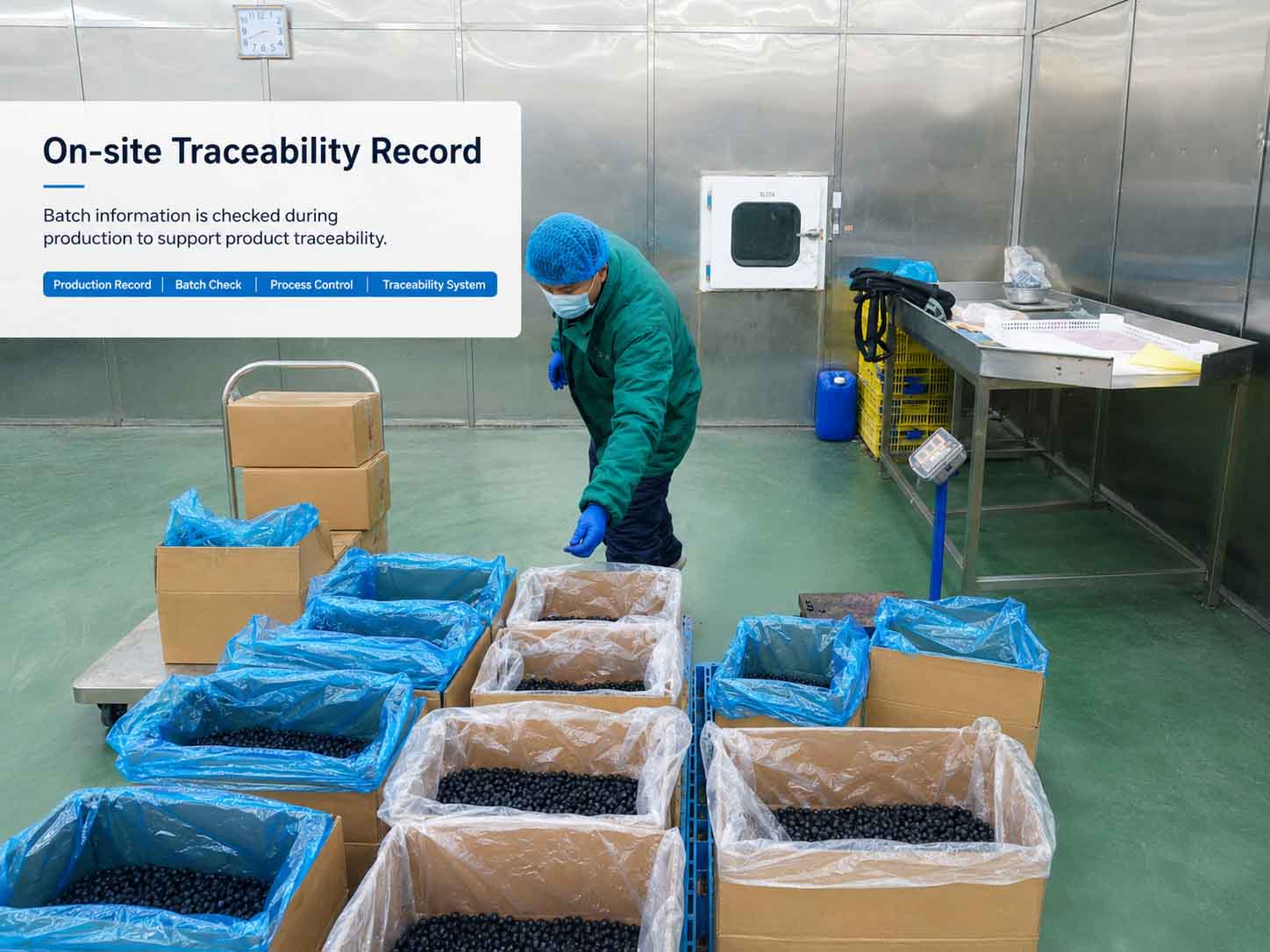
The product standard comes first
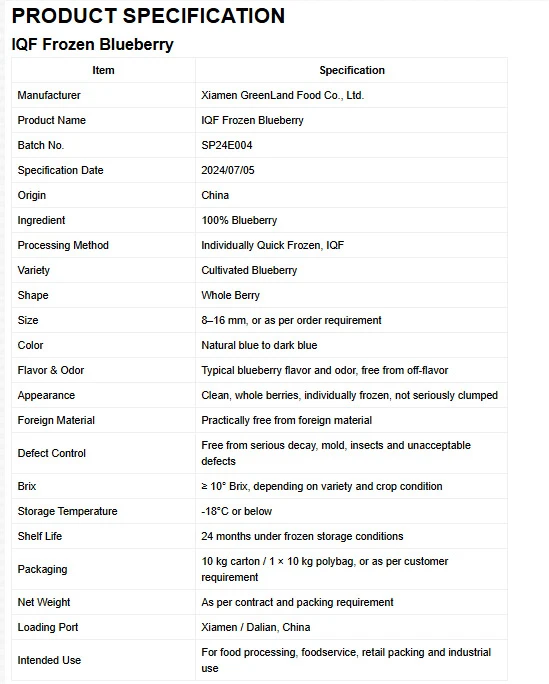
The published reference identifies the product and the target specification before presenting the supporting documents. These fields belong to the historical SP24E004 example; a new quotation identifies its own approved product and lot.
| Reference field | Published blueberry example |
|---|---|
| Product | IQF Frozen Blueberry - whole cultivated berries |
| Batch reference | SP24E004 |
| Specification date | July 5, 2024 |
| Size range | 8–16 mm |
| Processing | Individual Quick Freezing (IQF) |
| Frozen storage | −18°C or below |
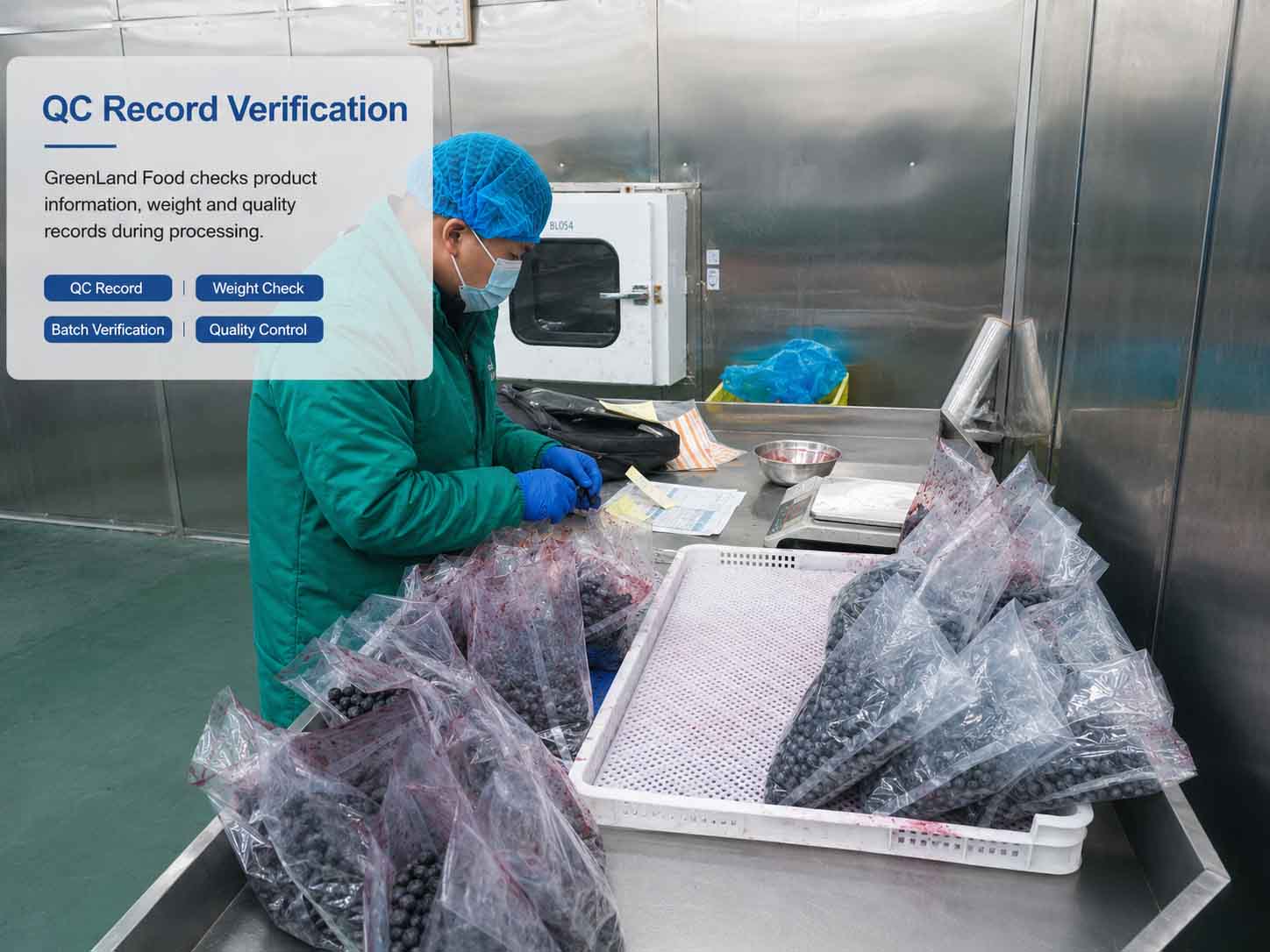
Size controls berry distribution and presentation. Whole-berry integrity and free-flowing condition affect portioning and handling. We use the application and agreed defect definitions to decide which checks need to appear in the inspection record.
Separate the acceptance target from the test result
The specification states what the product must meet. The COA or laboratory report records the tested sample, methods, dates and results. We match the product and sample or batch identity before comparing a result with the acceptance requirement.
For your procurement file, request the report reference and sample identity together with the relevant test. That keeps a product specification from being mistaken for a test result, and a test from an unrelated sample from being attached to the order.
Further detail: Open the complete blueberry reference and published documents
Check carton, batch and shipment as one chain
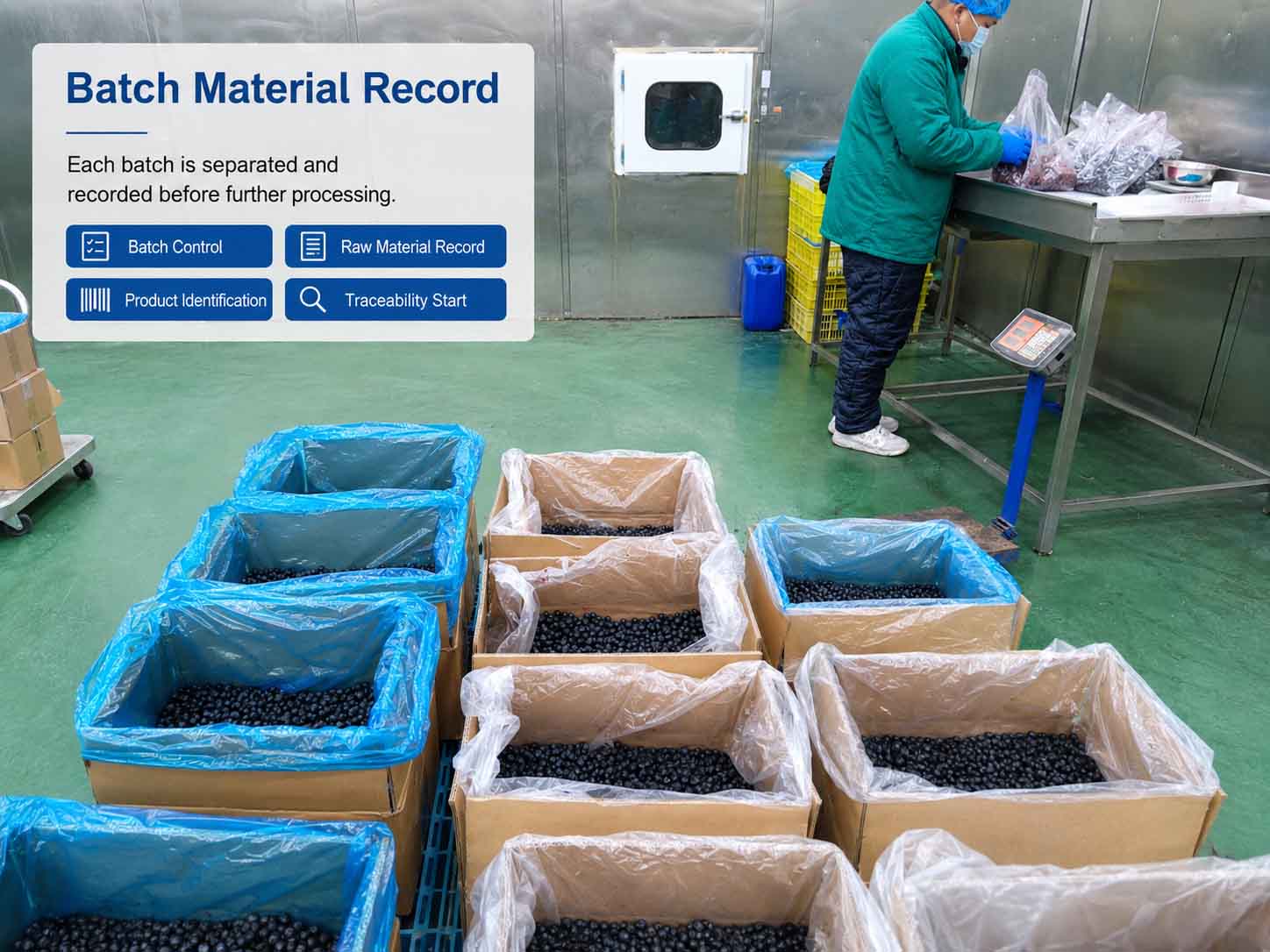
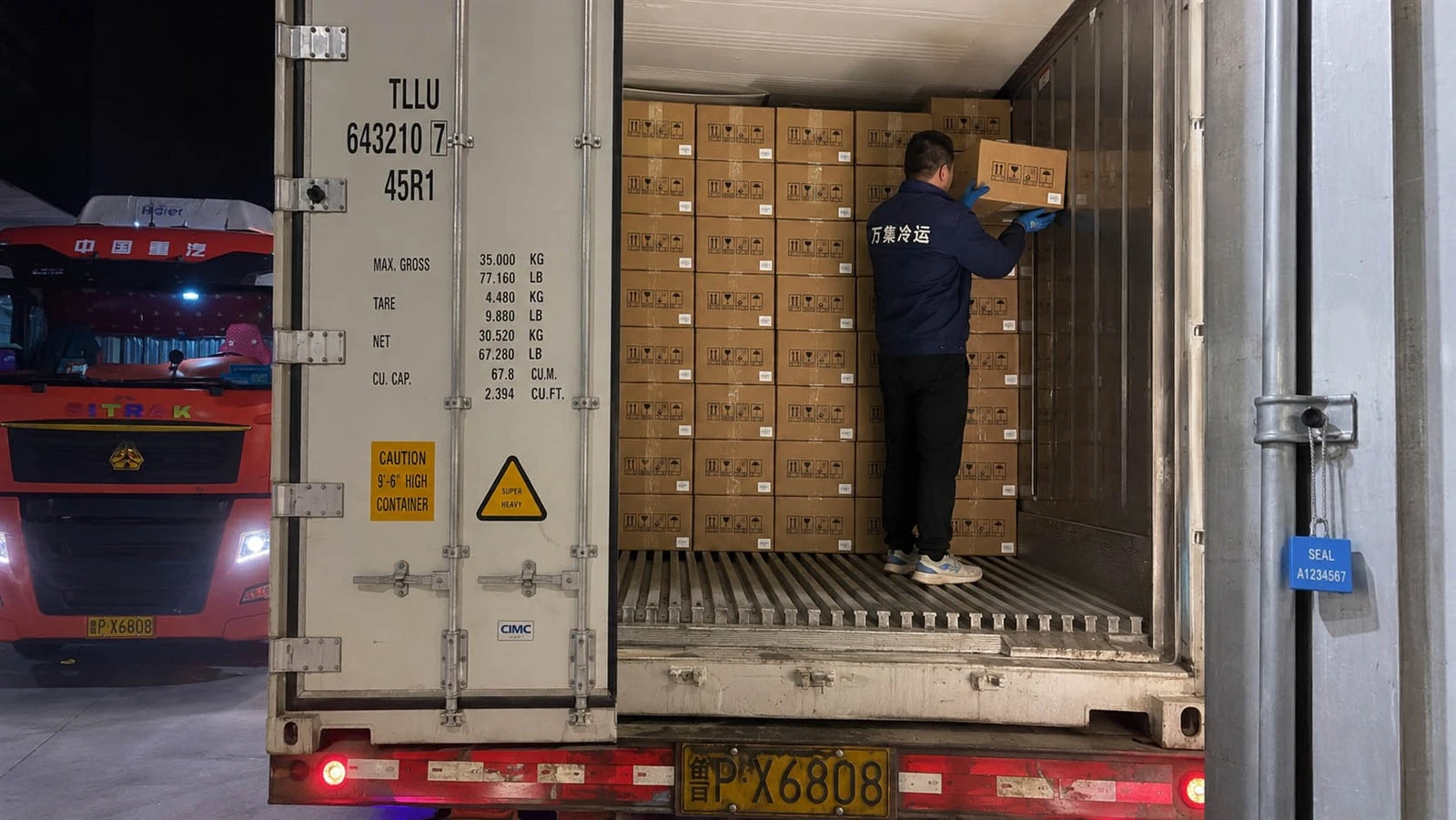
We connect the case product name and batch code to the packing list, then the shipment records to the container and seal. Your receiving team can follow that chain from the delivered carton back to the named batch.
| File or physical record | Identity to match | Procurement use |
|---|---|---|
| Approved product specification | Product, size, form and specification version | Defines the acceptance target |
| COA / test report | Product, sample or batch, date and report reference | Supports the agreed quality review |
| Carton mark and packing list | SKU, batch and case quantity | Reconciles the packed goods |
| Loading and shipping records | Container, seal and shipment reference | Connects those goods to the dispatch |
Why the application changes the comparison
For a retail whole-berry pack, visible berry integrity and size distribution are central to the product review. For a further-processing ingredient, the receiving and preparation method may lead to a different useful grade. We discuss the intended use before comparing product options.
A meaningful sample comparison uses the same preparation method and a defined basis for measuring size and defects. That gives the specification a practical role in quality review, beyond a descriptive product sheet.

How the documents stay connected
The specification describes the product; the lot and carton marks identify the packed goods. The packing list carries those quantities into the shipment, while container and seal references identify the transport unit. These connections make a receiving question easier to trace back to the relevant goods.
In a mixed shipment, each product still needs its own specification and lot identity. We discuss the product and packing details together so a shared container does not blur the distinction between SKUs.
Further detail: Factory audit and inspection support · Product quality control
Looking for a similar frozen product?
Tell us the product you have in mind. We can discuss the grade, packing and relevant product information with you.