


Frozen food developed around the way you use it
We connect product form, sample performance and packing so a frozen fruit, vegetable or mushroom SKU works in your kitchen, processing line or retail range. Our team helps turn an initial product idea into a clear specification, then works through the sample, pack and shipment decisions with you.

Choose cuts that suit the finished application
We look at the product after the preparation it will actually receive. A small dice for a prepared meal needs a different size distribution from a larger piece displayed in a retail mix. Thickness affects heating and bite; fines and broken pieces affect appearance, usable yield and dosing. We discuss cut tolerance alongside the application, rather than treating a nominal dimension as the whole grade.
For fruit, we distinguish whole-fruit integrity from size and assess drip loss under a consistent thawing method. For vegetables and mushrooms, reheating or cooking comparisons help connect trimming, stem content and texture to the finished dish.

Make a blend repeatable by weight
We work through the ingredient proportions and cut sizes together. Different piece weights can make two bowls look different even when their ingredient ratios match. A written blend ratio gives the recipe a measurable basis; compatible cuts help distribute the ingredients through portioning and packing.
Sample preparation matters here too. We compare the product using the same thawing, cooking or handling method as the intended application, so the sample discussion reflects the result your operation needs.

Match the pack to handling and portioning
We discuss the pack around opening, portioning and freezer handling. A bulk liner reduces the number of bags and seals handled per tonne. Smaller inner bags can reduce exposure after opening and suit outlets with lower daily use. Retail packs bring film performance, shelf presentation and label accuracy into the same decision.
Packing references include 1 × 10 kg or 1 × 20 kg bulk cases, 4 × 2.5 kg or 10 × 1 kg foodservice cases and smaller retail bags. We review suitability for the selected product: loose kernels and cut cob pieces, for example, create different puncture, space and stacking demands. Our frozen corn packing guide explains how these formats affect handling.

Bring the printed pack and product into alignment
We help coordinate product master data with the artwork: the product name and ingredients, unit net content, storage wording, lot/date coding and unit or case barcode must describe the same SKU. A change in blend composition or pack weight needs a matching artwork review before printing.
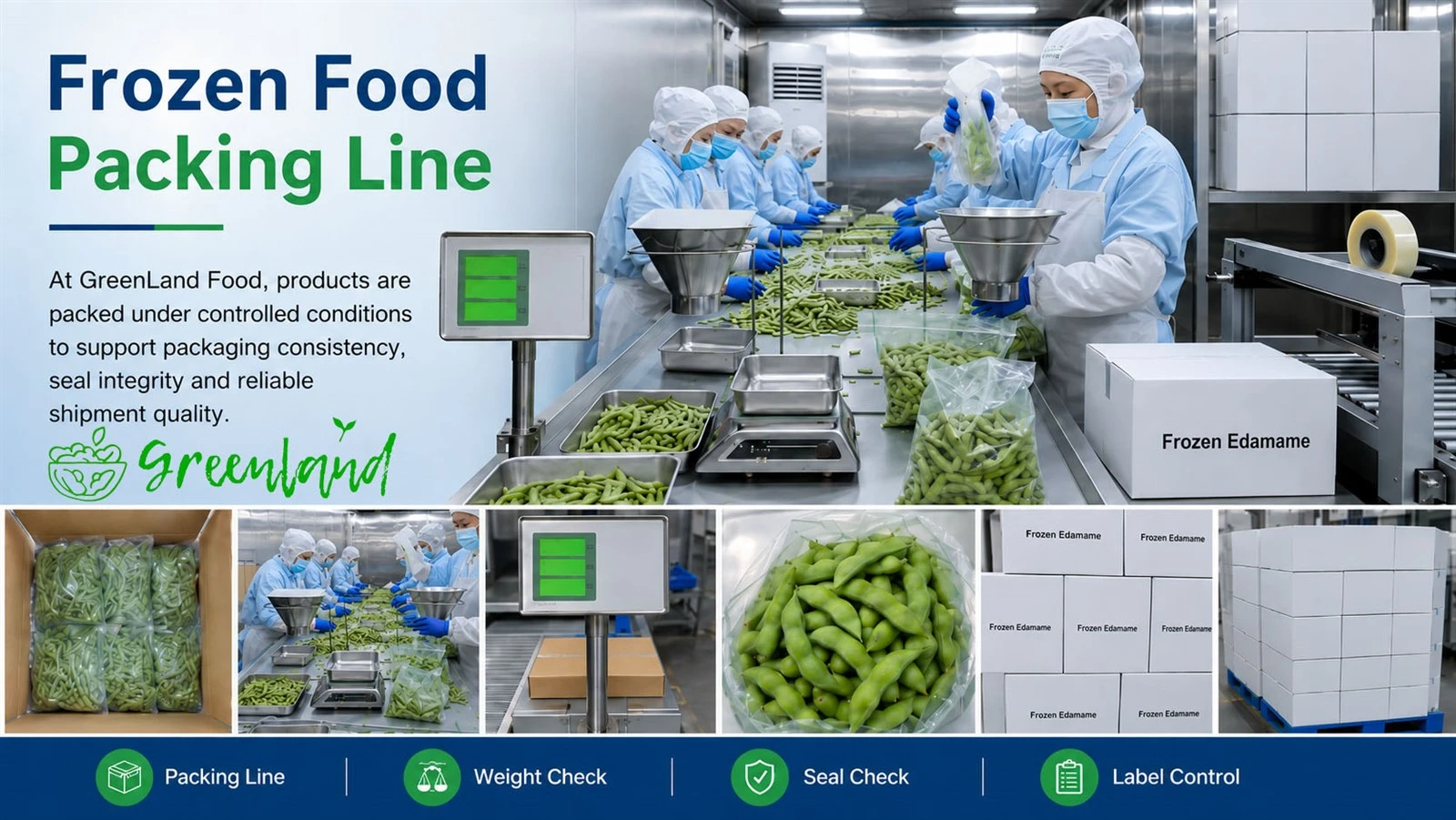
Frozen film flexibility, seal integrity and bag dimensions affect how the pack performs after filling, storage and transport. We consider the carton configuration and stacking with the inner bag, so a good-looking design also works in the physical supply chain. Our retail private-label specification guide covers the connection between specification and packaging.
Connect the sample decision to bulk production
We organize the agreed specification, reference sample decision and packing/artwork versions together for the project. This gives the product comparison a stable basis when a bulk lot is assessed: the same defect definitions, size tolerance and preparation method are used.
Sample appearance and a measured result answer different questions. We discuss both, including how carton position and sample size affect the comparison, so a single attractive sample is followed by a meaningful bulk-product check.

Check the product and the finished case together
We discuss the inspection points that matter to the SKU: grading and appearance, unit net weight, seal condition, bag count and carton identity. Relevant foreign-material controls belong to their process stage; the finished case check then connects the packed product to the approved configuration.
This is particularly useful for blends and retail packs, where a correct product formula can still be undermined by the wrong net weight, label version or case count. We keep the measured result tied to the product and packing version being evaluated.

Explain the commercial logic of custom packing
We separate product quantity from printed-material requirements when discussing a quotation. A product run, bag format and print run can have different minimum quantities. Plate or artwork work, sample preparation and unused printed film can also affect the first project differently from a repeat order.
Our team works through those cost components and the timing dependencies with you. Product readiness, sample decisions, artwork and material availability all influence the packing and dispatch plan. That makes the quotation easier to compare and helps identify which decision should come next.

Let us help shape your product idea
Tell us the product you want to develop or the pack you have in mind. We will help you work through the practical options.
A product name or brief message is enough to start. If you already have a specification or photo, you can share it too. Our team will follow up to clarify the details.