


Apricot vs Peach for Frozen Fruit Formulations: Flavor, Cut and Texture
Sep 28, 2026
Leave a message


Choose by finished-product role before changing fruit
The first decision is the job the fruit must do. In a premium pastry, a customer may need to see a recognizable half or slice after baking. In a stirred yogurt, uniform small pieces may matter more than a dramatic whole-fruit shape. In a smoothie, neither cut may remain visible, but color, aroma and the way thawed fruit enters a blender become central. Those are different purchasing specifications even when the ingredient line on the formula says simply "apricot" or "peach."
Apricot tends to be smaller and has a different flavor identity from peach. Peach itself is not a single sensory profile: white and yellow flesh, cultivar, growing conditions and maturity change what a buyer experiences. General statements that one fruit is always sweeter, more acidic or firmer are poor substitutes for testing the actual lot. A comparison made with one ripe retail peach and one underripe apricot would tell a processor little about two frozen supplier samples.
Start by writing the finished-product promise in ordinary terms. Is the label and photograph built around peach pieces? Is the product meant to have a bright apricot note? Is visible yellow-orange color part of the appeal? Can the fruit disappear into a puree, or must a consumer find pieces in every portion? This language helps the product developer decide what to measure and helps the supplier offer a cut that fits the line.

GreenLand frozen apricot product photograph: an actual apricot piece photograph grounds the choice of visible fruit identity.
We also ask where the fruit sits in the process. A fruit layer under yogurt faces different shear and acid conditions from a filling pumped into a pastry. A fruit inclusion added before baking is exposed to heat and moisture movement; a topping added after cooling is not. The same frozen piece can perform acceptably in one route and poorly in the other. Define the point of addition, mixing energy, target piece survival and desired color before negotiating price per kilogram.
The photograph of an actual frozen apricot form below is useful for checking fruit identity and piece size. It is a sourcing reference, not proof that every production lot will have identical shape. The buyer should request a current representative sample and a written cut range rather than infer a specification from a single website image.
It also helps to identify what cannot change without affecting the product claim. If the front panel names peach, apricot is not a quiet purchasing substitution; it changes the named ingredient and likely the sensory promise. Even when the label allows a broader "stone fruit" description, the change may affect ingredient declarations and customer expectations. Bring quality, regulatory and marketing colleagues into the decision before a procurement substitution is treated as a routine price negotiation.
For a new concept, make a short scorecard before requesting quotes: desired fruit recognition, target cut, heat exposure, acceptable juice release, flavor intensity, color contrast and available line equipment. Rank the items that truly decide success. This prevents a supplier from optimizing the wrong feature-for example, offering beautifully intact halves to a customer whose blender will destroy them, or a low-cost small cut to a customer selling a visibly generous fruit topping.
| Buyer question | Frozen apricot trial | Frozen peach trial |
|---|---|---|
| Visible identity | Check the approved half or piece after processing | Check the approved chunk or slice after processing |
| Flavor | Measure and taste the offered lot in the finished base | Measure and taste the offered lot in the same base |
| Liquid | Weigh released juice under the agreed thaw route | Weigh released juice under that same route |
| Use cost | Calculate accepted pieces and formula adjustments | Calculate accepted pieces and formula adjustments |
Compare flavor and acidity at the same fruit contribution
An apparent flavor difference can come from dilution rather than the fruit itself. If one sample is tested with all its thawed liquid while the other is drained, equal scoop weights will deliver unequal fruit solids. If a peach formula uses a larger fruit load to compensate for a delicate aroma, a direct taste comparison at the original sugar level can also mislead. We would first compare the same usable fruit mass and document exactly how thawed liquid was handled.
Set up a small matched trial with the same base, processing order and serving temperature. Hold the recipe constant except for the fruit form and any deliberately tested adjustment. Note the frozen weight, thawed weight, separated liquid and the amount of fruit that entered the product. Record soluble solids and pH where those measurements matter to the formula. These measurements do not predict flavor by themselves; they help explain why two otherwise similar trials taste different and make the next lot easier to compare.
Evaluate aroma and taste at the point a customer will encounter the product. A fruit piece warmed in a pastry may express a different note from the same piece in a chilled dairy base. The sweet dairy matrix can blunt tartness, while a light beverage base may expose it. For a layered dessert, taste the fruit and base together, then taste the fruit layer alone. If a fruit is being substituted in an established product, use a blind side-by-side test with the current approved ingredient as a control.
Do not adjust sugar merely because a generic comparison article calls apricot "tart" or peach "sweet." Decide whether the target is the current product's sweetness, its fruit identity or a new sensory profile. Make one measured adjustment at a time and document it. An acid correction that makes a chilled puree lively might make a heated filling seem sharp; a sugar increase may change water binding or the nutritional declaration. Product development, labeling and quality teams should approve the final adjustment together.
Color is another sensory variable. Apricot's orange tone may remain distinct in a pale yogurt or bakery glaze, while peach pieces can show different pale yellow or white flesh and may be more visually subtle. Browning, oxidation and thermal treatment can change both. Inspect samples before processing, after processing and near the intended end of shelf life. A good day-one photograph is not enough for a product sold after storage.

Illustrative two equal fruit-mass puree cups with acidity and aroma testing tools; show the need to measure each lot without invented readouts.
The accompanying test image is an illustration of equal-mass sample work. It deliberately has no invented instrument values. The result must come from the buyer's own formulation, the supplier's representative lots and the agreed measurement method.
Sampling discipline matters because a frozen bag is not always perfectly uniform from its top to its bottom. For a pilot, mix or draw across multiple packs according to the sampling plan, while keeping lot identity clear. Use more than one tasting panelist where practical and note whether the product was evaluated chilled, ambient or warm. The object is not to force a laboratory protocol onto every small bakery; it is to prevent a single attractive spoonful from determining a production-scale formula.
When a sensory trial finds a preference, ask why. Was the preferred sample more aromatic, more visibly fruity or simply sweeter because its released liquid was included? Could a different cut of the losing fruit solve the problem? A decision record that captures the reason is more useful than a score alone when the next season's lot arrives. It also helps GreenLand-food respond with an alternative form that addresses the actual gap.
Control pit, peel, cut and usable yield
Stone-fruit identity has practical consequences at the cutting table. Both apricots and peaches contain a hard pit that must be removed. The finished cut, residual pit fragments, skin condition and damaged-piece allowance all affect the ingredient the processor can actually use. A low nominal price has little meaning if the delivered form creates more sorting, trimming or rejected packs than the line can tolerate.
Specify the cut with a sample photograph and an actual size range. "Chunks" can describe pieces with very different cross sections; "halves" can vary in integrity. Decide whether peel is acceptable and whether the product needs a particular flesh color. For a visible bakery topping, define the acceptable proportion of intact pieces and the allowance for broken material. For a puree or smoothie, uniformity may matter less, but foreign material, pit control and sound fruit still matter.
We would weigh a representative frozen sample, thaw it under a defined method when appropriate, and separate sound pieces, broken pieces, peel/pit defects and free liquid. Record usable yield for the intended use, not a generic drained yield alone. A small broken piece may be acceptable in a fruit preparation yet unacceptable for an individually decorated pastry. Conversely, discarding it in a yield test for a puree would overstate the cost of that route.
Piece geometry also changes how a production line handles the ingredient. A larger peach chunk can be attractive in a clear container but can bridge at a narrow depositor or create uneven portions. A smaller apricot piece may distribute more evenly yet lose the visual impact of a half. Check pump and nozzle clearance, mixing damage, filling accuracy and the expected fruit count per serving. If the inclusion is added to a frozen dessert, run the real freezing and serving test; a frozen piece can feel harder than it did after a bench thaw.

GreenLand frozen apricot product photograph: actual apricot halves make pit removal, cut and yield visible.
For traceability and quality control, ask the supplier to connect the sample to a production specification and lot records. Confirm the declared product name, country of origin, cut, grading method, packing, net weight, storage temperature and the controls for pits and foreign matter. Those details support receiving checks and supplier comparison. They should not be replaced by an attractive image or a broad "IQF fruit" description.
The two product photographs in this section and the final purchasing section show actual GreenLand fruit forms. They help a buyer frame questions about cut and appearance. The acceptance limits still belong in the agreed specification and representative sample approval.
Defect language deserves care. A "pit-free" purchasing goal is sensible, but the inspection method, sample size and response to a detected fragment need to be defined in the quality agreement. Likewise, "uniform cut" should be translated into a dimensional range and a permitted share of out-of-range pieces. Clear categories make supplier communication fair and give receiving staff a practical way to decide whether a lot can enter production.
Test thaw liquid and heat texture in the actual formula
Frozen fruit can release liquid as ice crystals melt and the fruit structure changes. The amount depends on the raw fruit, maturity, cut, freezing conditions and later handling. It is tempting to describe one fruit as universally "juicier," but a processor buys a particular frozen form, not an abstract species average. Compare the offered lots under the same thaw and processing conditions.
For a practical bench test, weigh identical edible fruit amounts into the same type of tray and thaw under a documented time and temperature plan that reflects the manufacturing process. Weigh the pieces and any free liquid separately. Photograph the result and describe whether pieces remain discrete, collapse or become fibrous. If the line adds fruit while frozen, also run that route; the outcome after mixing, heating or baking can differ from a tray-thaw observation.
The critical decision is whether released juice is part of the formula. In a fruit layer, it may contribute flavor and color but change viscosity. In a pastry filling, excess free water may soften crust or require process changes. In a beverage, the juice may be fully useful even if intact pieces are not. A trial that discards liquid in one treatment and includes it in another cannot support a fair fruit comparison.
Heat tests should match the real thermal profile and final package. Observe pieces after a short bakery bake, after a filling cook, or after a thermal process required for the specific product. Check whether pieces remain visible, whether color shifts and whether the surrounding matrix separates. Avoid relying on a home-kitchen rule for thickener addition. Starch type, solids, pH, heating rate, fruit load and packaging all influence the needed adjustment.
Record the finished product after the relevant holding period as well. A fruit layer can look stable immediately after filling and release water later. A frozen pastry inclusion can appear intact before baking but collapse in a reheated product. For a shelf-stable preparation, a process authority and the product's validated food safety plan determine the necessary controls; a recipe swap is not a substitute for that validation.

Illustrative matched thaw trays for apricot and peach with collected liquid; demonstrate recording fruit plus released juice.
The matched-thaw illustration shows how to keep the comparison visible. It is a teaching image, not an analytical result or a picture of GreenLand production. The purchase decision should be based on the buyer's recorded trials and approved quality criteria.
If the product is baked or cooked, consider where the fruit sits in the matrix. Pieces at the surface lose moisture and can brown differently from pieces inside a filling. A single pan test can be distorted by placement. Prepare more than one portion and record the positions examined. A filling that seems too wet in one geometry may work in a smaller pastry, while a large slab can expose water migration that a small sample hides.
For a cold preparation, follow the product through a realistic distribution hold. Look for liquid pooling, separation around fruit pieces and changes in bite after the base equilibrates. The observation period should match the commercial plan, with food safety controls handled separately by the relevant team. This makes the fruit comparison relevant to the customer's experience rather than only to the fresh pilot batch.
Match the fruit form to bakery, dairy and beverage use
For a bakery inclusion, ask whether the fruit must remain as a recognizable piece after baking, whether free juice can be absorbed by the filling and whether the cut can be deposited consistently. Apricot halves or pieces may be chosen for a distinct shape and flavor; peach chunks or slices may suit a larger visual declaration. Neither is automatically superior. Run the dough, filling, proofing, bake and post-bake storage steps that the actual product uses.
In dairy, assess how the fruit meets the base. A sweetened fruit preparation may be cooked separately before being layered into yogurt, while a chilled dessert may receive fruit more gently. Compare fruit distribution, piece survival and the visual contrast against the white base. Check taste after the intended refrigerated holding period. The fruit's acidity and the preparation's formulation can influence flavor and stability, so the dairy developer should evaluate the whole system rather than the fruit alone.

GreenLand frozen apricot product photograph: actual peach chunks make portion size and pale color visible for bakery and dairy use.
Beverages shift the decision again. In a blended drink, a smooth puree may be worth more than an attractive chunk. Screen loss, fiber perception, color and aroma after mixing become useful measures. In a bubble-tea or fruit-piece drink, size consistency and sediment matter. A buyer who needs a clear beverage base may find both visible cuts unsuitable without further processing. Specify whether the ingredient is a fruit piece, puree, juice component or finished fruit preparation.
Food service buyers may have a different priority: a repeatable portion from a frozen bag and a predictable result after thawing. A peach chunk that is easy to portion into a cup might offer a different operational value from an apricot half used as a garnish. Assess bag handling, clumping, scoopability and waste during service. Keep the test tied to the way staff will actually work, including how long opened product remains under controlled conditions.
The actual peach product photograph near this section shows a possible piece form. Pair it with an apricot sample in a real side-by-side use test; its color or cut in an online picture should not be used as the sole reason to change a formula.
One buyer may benefit from using both fruits. A blend can create a more complex flavor or balance visual piece size, but it adds a second specification and may complicate consistency. If a blend is proposed, trial each fruit alone first so its contribution is understood, then test the blend at a defined ratio. Confirm how the two pieces distribute in filling equipment and whether the label and ingredient order reflect the actual recipe.
Write an apricot-or-peach purchasing specification
A useful specification starts with the application, not a list copied from a catalog. State the fruit species and required form, including flesh color where that affects the finished product. Add the cut size or range, peel requirement, proportion of intact pieces, acceptable broken material and limits for pits or other foreign matter. Define the packing format, net weight and storage/transport conditions. If the application depends on a prepared fruit component rather than plain IQF fruit, describe that component separately.
Next, define the sample and test method used for approval. Identify the approved reference sample or sensory target, the thaw procedure, how free liquid is handled and the processing trial that matters to acceptance. Where relevant, include measured soluble solids, pH, color or drained yield with ranges agreed from real samples. Do not insert numbers from a general comparison article into a contract without supplier and buyer validation. A measurable range is valuable only if both parties use the same method.
For receiving, decide what a warehouse or quality technician can check quickly. Verify pack integrity, labeling, temperature history where available, visible clumps and obvious defects. Draw the agreed sample and compare cut, color, piece condition and odor with the approved standard. Escalate a questionable lot before it enters a large production run. A documented route for nonconforming material is more useful than an undefined promise of "premium quality."

GreenLand frozen apricot product photograph: another actual apricot shot helps show cut variation during buyer inspection.
Cost comparison should use usable material in the finished product. Calculate the cost per accepted fruit contribution after documented sorting or drained-liquid treatment, then add any change in sugar, thickener, processing time, depositor performance and waste. A cheaper bag may be more expensive in a pastry that rejects broken pieces; a fruit with more free liquid may still be economical in a blended drink where that liquid is retained.
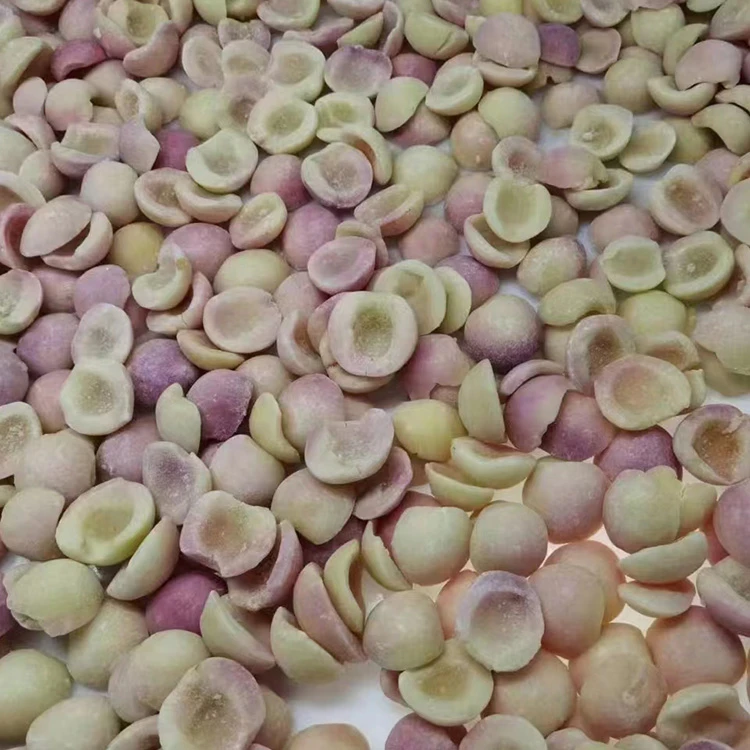
GreenLand frozen apricot product photograph: a second peach shot supports a paired cut and defects review.
Finally, ask for a representative commercial sample, a current specification and the documents required by the destination market. GreenLand-food can discuss frozen apricot and frozen peach chunks, packing and supply options against a buyer's brief. The practical next step is to send the target product, cut, required quality limits, volume and destination, then confirm availability and test the offered lot in the actual formula.
Source Frozen Fruit with GreenLand-food
GreenLand-food is a professional frozen fruit supplier and manufacturer in China, providing factory-direct wholesale supply for importers, food manufacturers, distributors and private-label programs.
Send the product form, specification, packing, quantity, application, destination, private-label needs and requested documents. We will confirm the current offer and representative sample route.