


Asparagus Quiche with Frozen Asparagus: Keep the Tips Intact and the Custard Set
Sep 28, 2026
Leave a message

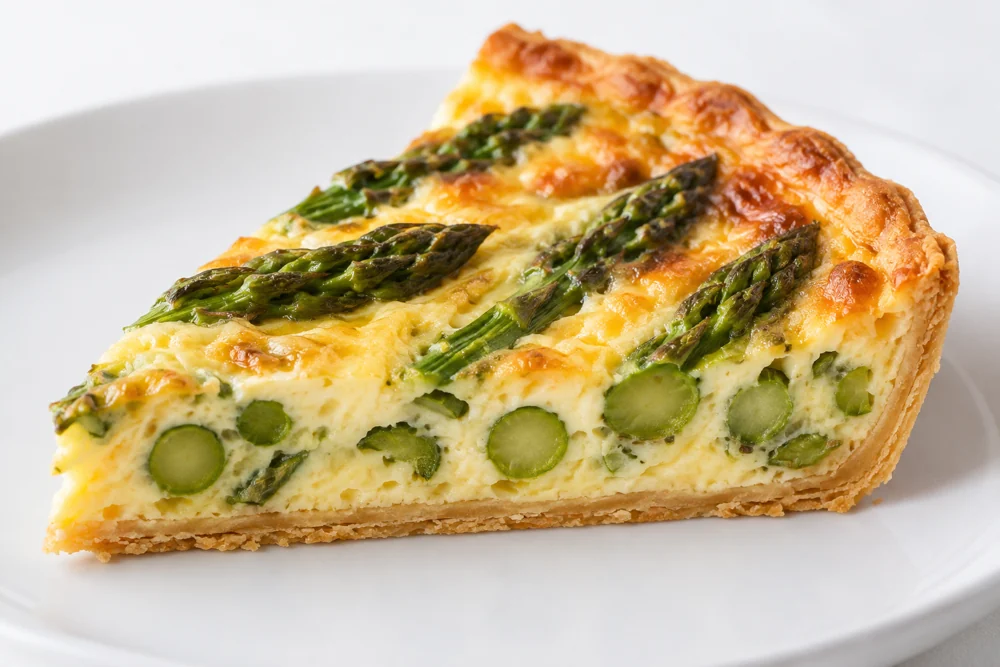
This approach turns a recipe for asparagus quiche into a repeatable product decision. It helps a team choose whether a tips-and-cuts mixture gives the intended appearance, whether preparation removes enough free water, and whether the egg filling remains pleasant after holding or reheating. The trial described here is a proposed development method. It contains no claimed GreenLand finished-quiche formula, measured yield or shelf-life result. Your kitchen sets the recipe and acceptance limits using the ingredient specification and its validated food-safety process.
Choose asparagus cuts for a clean quiche slice
Start with the slice you want to sell. A shallow bakery tart, a deep restaurant quiche and a small individual pastry expose different amounts of asparagus at the cut face. Whole spears create a recognisable top pattern, but a long spear can pull through the custard when a customer cuts it. Short stem pieces distribute more easily. Tips provide a clear visual identity, although their delicate buds may break during mixing or repeated handling. A useful specification therefore describes both the filling pieces and any tips reserved for display.
We list spears, cuts and tips in our frozen asparagus range. These names describe different purchasing options; they do not establish that every lot has the same diameter, blanching treatment or share of intact tips. Before ordering a trial sample, tell us the pastry diameter, portion size and intended arrangement. We can then confirm the form and current specification for discussion. A photograph of attractive tips alone cannot establish the distribution of pieces throughout a commercial carton.
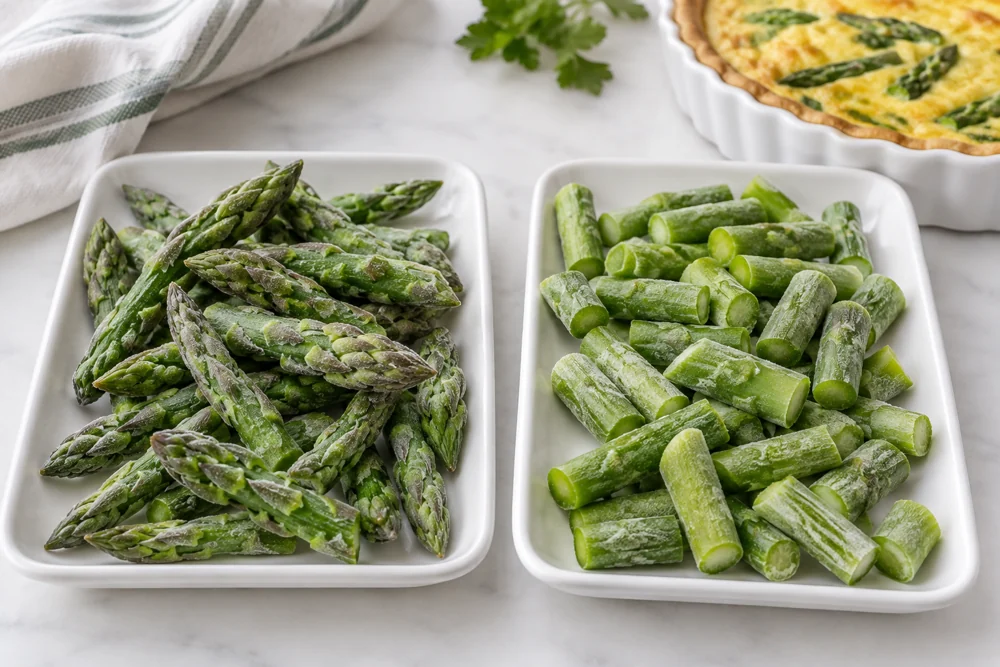
Tips and stem cuts play different roles in the filling and surface arrangement.
Inspect a representative sample before cooking. Spread it in a shallow tray and separate intact tips, stem cuts and fragments. Record the sample mass and how the sample was taken. A few pieces selected from the top of a bag may miss settling or breakage elsewhere. If appearance matters strongly, record the number or mass of usable display tips using a definition agreed by the kitchen and supplier. State whether a partly open tip or a short attached stem remains acceptable. This makes later comparisons possible without inventing a universal grade threshold.
Diameter deserves as much attention as length. Two equal-length pieces can have different cooking behaviour when one is much thicker. A thick stem may remain firm after the surrounding custard has set, while a narrow tip may become soft during the same bake. Test the piece range you expect to receive. If the kitchen trims or splits thicker stems, record that preparation and its labour requirement. A recipe that works only after extensive hand selection may be suitable for a small premium run but difficult to repeat on a larger filling line.
The original King Arthur asparagus quiche reserves tips for the surface and uses sliced asparagus in the filling. That is a useful structural example. For a frozen ingredient, extend the idea by measuring the usable tip share and checking the condition after preparation. Keep selected tips out of vigorous mixing, distribute filling cuts first, and place the display pieces deliberately. Any extra preparation step belongs in the pilot cost as well as in the visual specification.
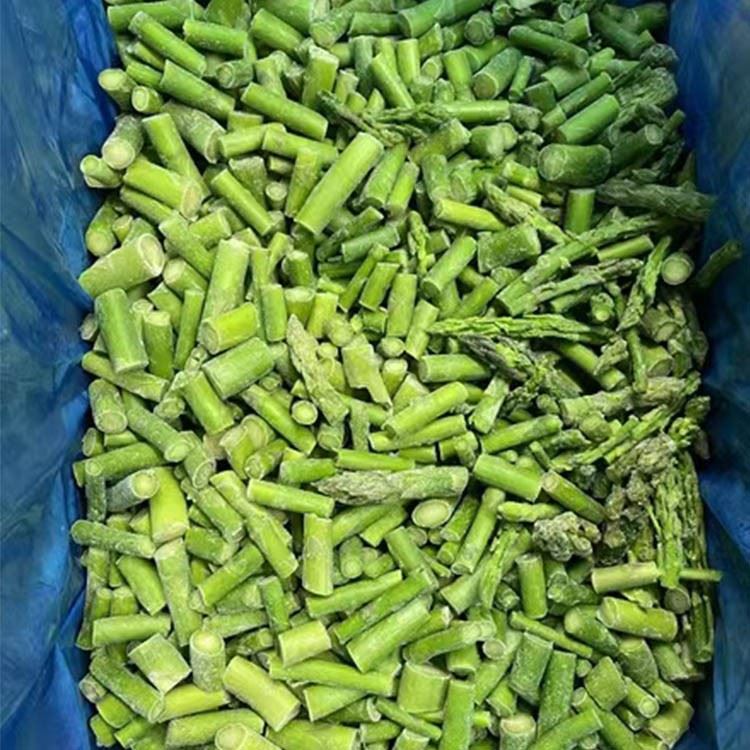
GreenLand asparagus product photograph: confirm the supplied form and tip condition.
Set a reference slice photograph under ordinary service lighting. Show the top, cut face and pastry bottom, with the same portion angle each time. Record whether the asparagus appears evenly distributed or collects in one part of the filling. The aim is to create a shared description of the product your team intends to make. If a customer expects a tip in every individual quiche, that requirement must appear in the assembly plan and purchasing calculation, because an average tip percentage cannot guarantee every portion receives one.
Measure water before filling the pastry
The frozen purchase weight and the prepared asparagus weight answer different questions. The first determines ingredient use and purchasing cost. The second describes what enters the egg mixture. Liquid released during thawing or heating can vary with the product and preparation method. Keep a separate record of both weights so that changing the preparation method does not silently change the vegetable dose. A wetter sample can otherwise appear to offer more yield while adding less useful asparagus structure to each slice.
Compare two preparation routes only when both are compatible with the product instructions and the kitchen's food-safety plan. One may involve brief heating from frozen followed by draining; another may involve controlled refrigerated thawing and draining before the required cooking step. The purpose is to understand water release and tip damage under your actual conditions. Neither route should be selected solely because it sounds convenient. A blanched ingredient still needs its specified preparation, and the eventual bake must meet the requirements for the complete egg dish.
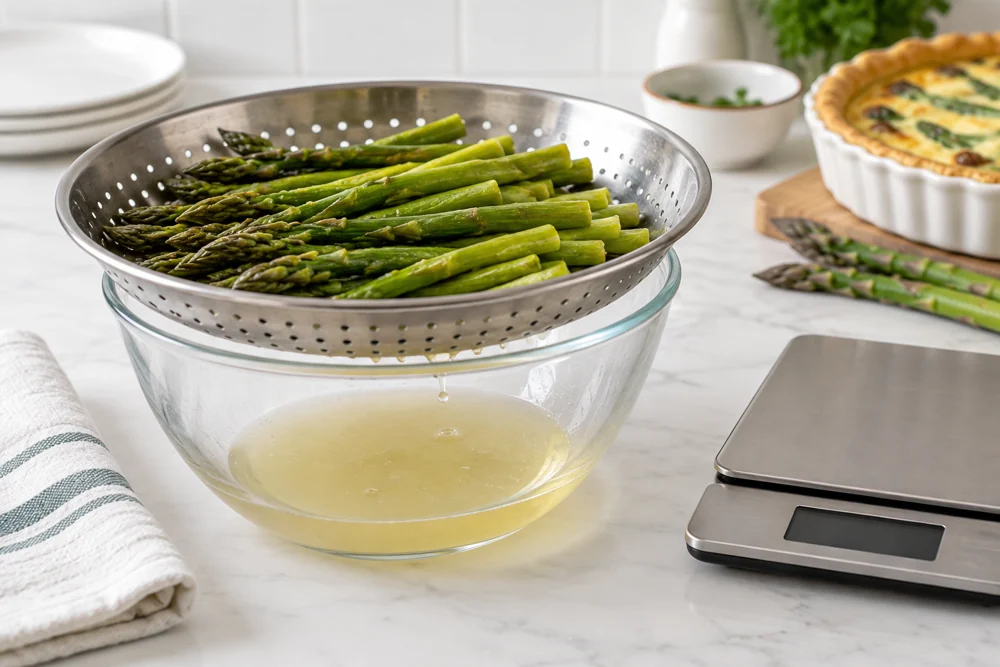
Collect released liquid separately when measuring prepared asparagus.
Use the same starting mass for each route, then weigh the prepared asparagus after the defined draining step. Record the equipment, tray depth, temperature, time and any pressure applied. Catch and weigh released liquid where practical. Some mass may also leave through evaporation or remain on utensils, so avoid forcing every difference into a category called thaw water. If the method includes a hot pan, the weight change combines several effects. A simple mass record is still useful when those limitations are written beside it.
The handling should preserve the parts that matter in quiche. Hard squeezing can damage asparagus tips and is poorly suited to a vegetable whose appearance is central to the finished pastry. Allow liquid to drain through a suitable perforated tray and use any further drying step consistently. Spread pieces in a controlled layer rather than leaving a deep pile with a wet centre. When cloth or paper is used in a small kitchen trial, record it and consider how that step would translate to a commercial process before declaring the method practical.
The Tesco asparagus quiche method dries steamed asparagus before it enters the pastry. That supports the practical importance of surface water, but a household instruction does not supply an IQF drainage specification. In a development trial, record the actual prepared mass and inspect the tray for water accumulating during the assembly period. A batch that looks dry immediately after draining may release more liquid while waiting for the next filling run.
Decide how long prepared asparagus may wait before assembly within the approved process, and include that waiting period in the trial. Weigh a portion at preparation and another at the planned filling point. Note whether the pieces remain separated, whether tips collapse, and whether liquid collects beneath them. This is especially relevant when pastry shells are prepared in one area and filling occurs in another. A convenient bench result may change when a larger production schedule introduces a queue between steps.
Once a preparation route is selected, express the asparagus addition on the prepared-mass basis. Keep the frozen-to-prepared relationship alongside it for purchasing. For example, the production sheet should have separate spaces for frozen kilograms issued, prepared kilograms available and prepared grams per quiche. Leave the yield field open until it is measured. This lets the team identify whether a difference in finished texture came from drainage, portioning or the custard itself, instead of changing several ingredients to compensate for an unknown water contribution.
Give the pastry base its own trial
A quiche can have a firm filling and still disappoint when the bottom pastry is damp. Treat the shell as a separate part of development. Keep its dough, thickness, pan and filling weight constant while comparing the approved crust preparations. A partially baked shell, a shell with a tested seal and an untreated reference may behave differently, but the result depends on the actual pastry system. Commercial frozen shells may already have specific baking instructions that should take priority over an unrelated home recipe.
King Arthur and The Kitchn both include a preliminary crust bake in their quiche methods. These references establish a reasonable trial direction, rather than a universal setting for every shell. A thin metal tin transfers heat differently from a deep ceramic dish, and a large production tray changes loading and airflow. Record the pan material and the number of shells in the oven. Otherwise, a later switch in equipment can be mistaken for an asparagus problem even when the vegetable input has stayed consistent.
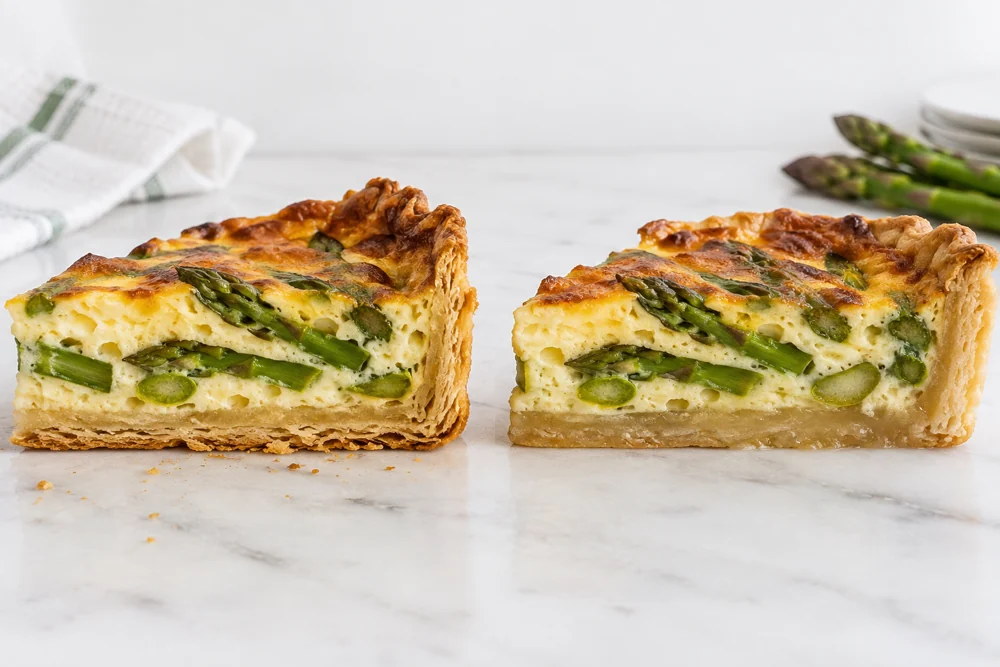
Inspect the pastry beneath the slice for a visible damp band.
Prepare matched test shells from the same pastry batch. Fill them with the same prepared asparagus mass and the same custard batch. If you compare a seal treatment, record exactly what was applied, its mass and how it was set before filling. A barrier that changes flavour, browning or allergen composition must be assessed as part of the final formula. Keep any added cheese or egg layer consistent so that the comparison actually isolates the intended difference in crust preparation.
Inspect the bottom after the normal standing period, then again after the intended display or reheating route. Lift a slice onto a white plate and examine its underside and cut edge. Record whether the pastry flakes, bends, sticks to the pan or forms a translucent wet band. A photograph taken from above can hide all of these defects. Agree a simple scoring description before the trial: for example, a crisp flaking base, a tender but coherent base, and a visibly wet base. The business decides which condition suits its product.
Moisture can reach the pastry from several sources. Asparagus may release liquid, the custard may be loosely set, or condensation may form during cooling and packing. Examine when the defect first appears. If the bottom is already wet immediately after the standing period, review ingredient water and the bake. If it becomes wet only after packing, review the complete cooling and packaging sequence within the approved process. Increasing the crust bake alone may make the rim too hard without addressing the later moisture source.
The serving format also changes the judgement. An individual tart eaten warm may need a crisp base throughout. A chilled slice intended for reheating may prioritise a base that remains coherent after transport and reheats without excessive drying. Write the acceptance point in the product description so the team does not compare a hot reference with a cold sample. Test the same slice size and use the intended plate or pack: a closed container can produce a different moisture environment from an open bakery display.
Include pastry loss and rework in the pilot record. If a shell cracks during partial baking, leaks custard during filling or breaks when removed from the tin, the cost belongs to the selected process. Record the number of saleable portions as well as the number baked. This is where a more expensive shell or an additional preparation step may prove worthwhile, but only the actual run can show that. A crisp photograph is useful evidence of appearance; it does not establish production efficiency.
Balance asparagus with the egg custard
Once the asparagus preparation and shell treatment are stable, work on the custard. Hold the prepared vegetable mass constant while changing the chosen egg-and-dairy formulation. A measured liquid-egg input is easier to reproduce than an instruction based only on the number of eggs, especially when egg sizes vary. Identify the dairy ingredient by its actual specification and include cheese, cream or other additions in the formulation record. Substituting one dairy product can alter several properties at once.
Use a reference formula that the kitchen has already approved for its shell and equipment. Then introduce the actual frozen asparagus using the measured prepared mass. Keep the total fill weight and depth within the intended range. If the vegetable occupies more volume than expected, do not simply pour in the remaining custard until the shell overflows. Record any unused mixture. Otherwise, the written recipe and the product in the oven describe different formulations, making the next comparison unreliable.
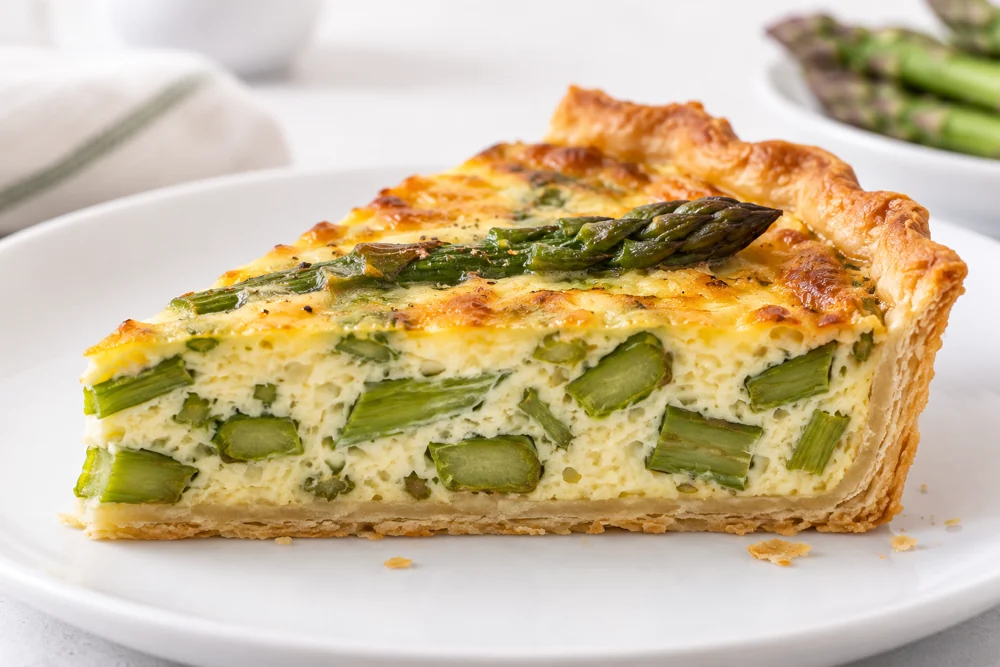
Short pieces should remain evenly distributed through the set filling.
Distribute short pieces before pouring the custard and place display tips according to the assembly target. Check the first and last shells filled from the mixing bowl. Pieces may settle, and a ladle can deliver a different vegetable-to-liquid balance as the batch empties. If a gentle remix is necessary, define when it happens and assess whether it breaks the tips. Separate placement of tips can improve consistency when appearance is central, while the chopped filling remains a measured component of each portion.
The centre set, slice quality and water release should be recorded together. After the approved bake and standing procedure, cut a standard wedge and observe whether the filling holds its shape, crumbles, drags on the knife or releases liquid. A rubbery edge with a loose centre may point to an uneven process or excessive depth. A uniformly firm but wet slice may have another cause. Avoid making a large recipe correction from a single cue such as surface colour or one clean knife cut.
For food safety, use the validated time-and-temperature requirements for the complete egg dish and the applicable jurisdiction. The FDA egg-safety guidance distinguishes proper cooking from visual appearance. A clean knife or browned crust is a culinary observation and cannot replace the required control. Choose a probing method that reaches the relevant part of the product without assuming the oven setting is the food temperature. Record the process separately from the sensory score.
Compare formulas at the same serving temperature because a warm custard and a chilled custard can feel different. Use identical slices and a consistent standing period. If a team member tastes one sample immediately and another after a long delay, the comparison becomes difficult to interpret. Present coded samples where practical and ask for specific observations: asparagus tenderness, egg texture, creaminess, seasoning and pastry condition. A single preference score can hide the reason one version performs better.
Calculate cost against the saleable portion after the trial. Include prepared asparagus yield, tip selection, egg and dairy inputs, pastry losses and the actual number of portions. A lower raw-material price does not automatically produce a lower portion cost when more input is lost in preparation or more pieces require hand placement. We can discuss the ingredient specification and supply format, while the bakery's measured process establishes its own finished-product yield and operating cost.
Approve the quiche after its intended service route
Choose the route before accepting the formula: immediate warm service, chilled distribution followed by reheating, or a finished frozen product. Each route exposes the pastry, custard and asparagus to a different sequence. A successful fresh-baked slice is the starting observation. It does not establish how the same product will behave after cooling, packing, transport and another heating step. Keep ingredient freezing separate from finished-quiche freezing in both development notes and customer instructions.
Run the selected route with the intended equipment, pack and portion. For reheating, compare the centre, edge and bottom because these can change at different rates. Record visible liquid at the slice base, tip colour and integrity, pastry softness and custard texture. Weighing the product before and after the route can help explain drying or liquid loss, provided the same handling method is used. Any additional observation should answer a practical release question rather than make the trial sheet longer without improving the decision.
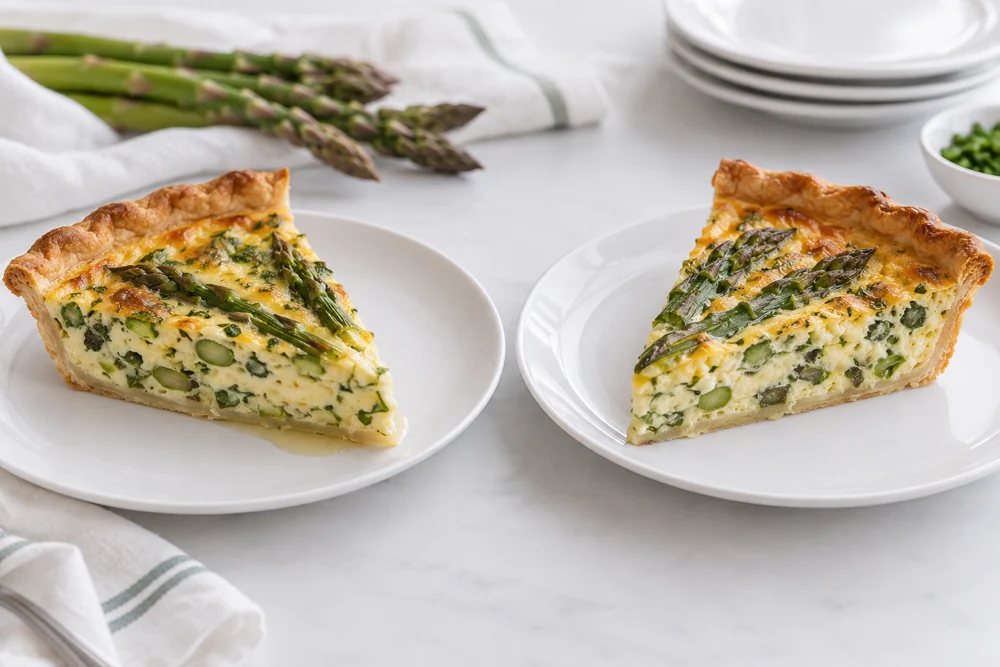
Record any liquid released at the slice base after the intended service route.
The following comparison keeps the variables visible. It is a blank development framework; the kitchen supplies measured values and acceptance limits.
| Trial field | Defined reference | Actual frozen-asparagus trial |
|---|---|---|
| Ingredient form and lot | Record form and lot | Record form and lot |
| Frozen input and prepared mass | Measure separately | Measure separately |
| Intact display tips per portion | Set assembly target | Count usable tips |
| Shell treatment and fill weight | Record approved method | Keep equal for comparison |
| Custard and pastry after service | Photograph and score | Photograph and score |
| Safety controls and release | Approved process record | Verify against same requirements |
Repeat the promising condition on another representative lot before fixing a narrow purchasing tolerance. The first trial shows what happened with that sample; a second lot tests whether the chosen preparation absorbs expected variation. If the result changes, investigate the input dimensions, treatment, draining method and assembly record before deciding that the formula needs another adjustment. Retain the records that explain the difference, including sample photographs and the frozen storage history available to your team.

GreenLand asparagus product photograph: confirm the supplied form and tip condition.
Turn the passing trial into a concise ingredient brief. State asparagus colour, form, cut range, diameter, usable tip requirement, preparation instructions, packing unit and the agreed sample test. Include destination, estimated order quantity and the planned production schedule so the supply discussion reflects the real application. Confirm any required certificate and lot documentation for the selected facility and order. The commercial specification should describe measurable ingredient requirements without promising that one asparagus grade guarantees every finished quiche outcome.
Review the pack as part of that handover. A whole quiche, a cut wedge and an individual tart have different exposed surfaces and opportunities for damage. Check that the chosen support protects the pastry edge and that the display tips remain in position after the normal handling route. Record the pack used in the successful trial. A later switch to a deeper container or a tighter lid may require another check of condensation, presentation and the approved reheating instructions.
For the production handover, retain the approved shell, custard formulation, vegetable preparation and assembly photographs together. Name the point at which prepared asparagus is weighed, the person or role responsible for portion checks, and the action when tips or draining performance fall outside the agreed limits. Keep the final reheating instructions tied to the validated product and pack. That gives the next shift a repeatable method and gives purchasing a clear basis for requesting the next asparagus sample.
Source frozen asparagus with GreenLand-food
GreenLand-food is a professional frozen asparagus supplier and manufacturer in China, providing factory-direct wholesale supply for foodservice, food manufacturers, importers and private-label programmes.
Send your required product form, specification, packing, quantity, application, destination, private-label needs and requested documents. Include the preparation and acceptance method used in your trial so we can discuss a sample and order brief that fits your process.