


Can You Freeze Mushroom Soup? Broth and Cream Need Different Tests
Sep 28, 2026
Leave a message

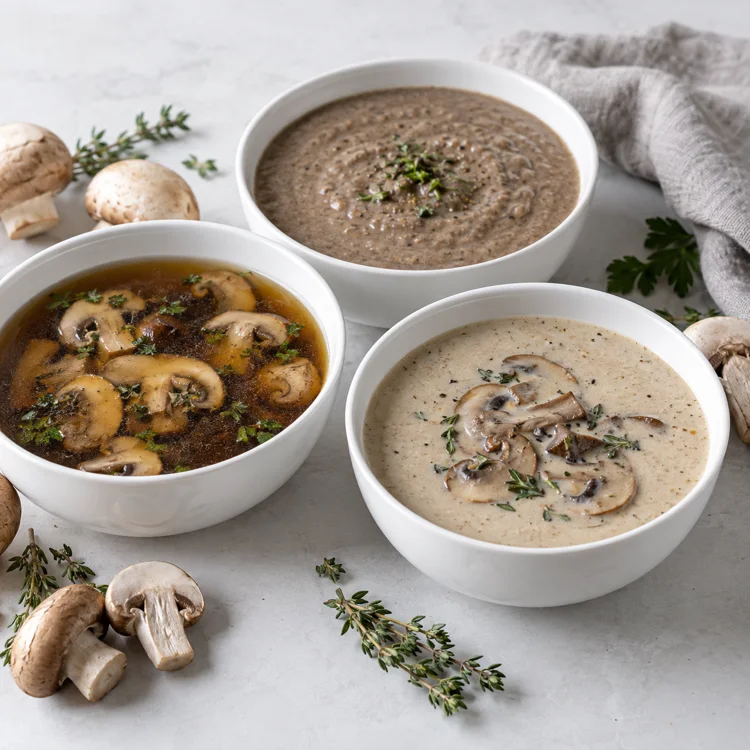
Choose broth, blended base or finished cream soup
Start by describing the soup that will enter the freezer. A broth soup contains a relatively fluid liquid phase with visible mushroom pieces. A blended base distributes the cooked mushroom material through the liquid and may be concentrated for later finishing. A finished cream soup already includes the dairy or another creamy ingredient system intended for serving. These categories provide a useful starting point, although an actual formula can contain features of more than one.
The reason to separate them is practical. In broth, the main quality questions may be the bite and distribution of the pieces, flavor after reheating and the amount of liquid in a serving. In a blended base, thickness and uniformity matter more, along with the amount of finishing liquid required. In a cream soup, the developer must also examine the appearance and smoothness of the creamy phase. Freezing changes the whole food system, so a mushroom-only test answers only part of the question.
Published recipes illustrate why blanket advice about cream soup is unreliable. Arla's bechamel and cheese version includes freezing guidance for that recipe. Belly Full's Hungarian mushroom soup advises against freezing its dairy-rich formula because of the resulting texture. These are different recipes and different quality judgments. They should lead a developer to test the actual formula rather than choose whichever storage statement is most convenient.
The Mama Loves to Cook recipe offers another route: freeze the blended soup before adding cream and lemon, then finish it after reheating. That approach can be useful where the service team has the equipment and time to complete the dish consistently. It may be less suitable for a finished retail meal whose customer expects to heat the pack and serve immediately. The operating model should determine which route is worth developing.
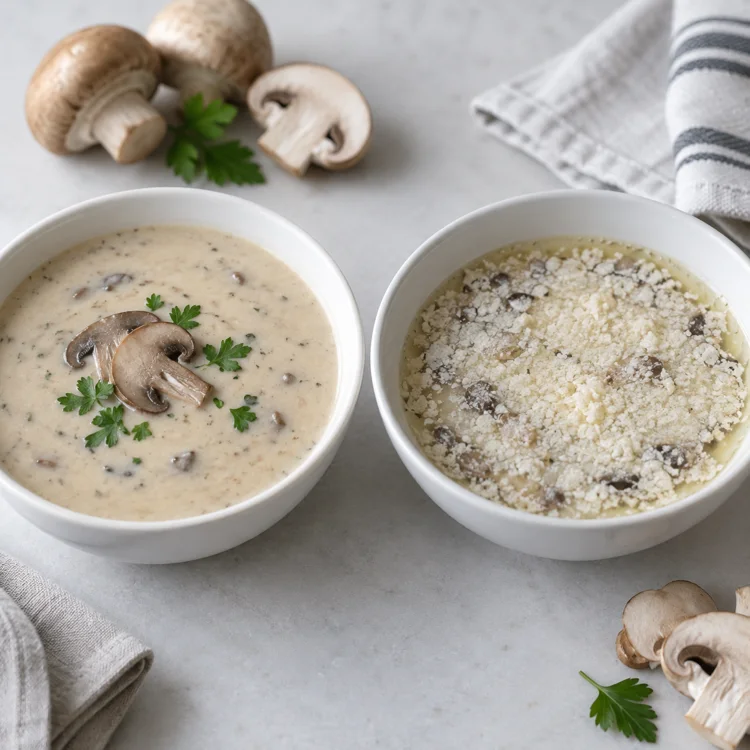
A cream formula should be assessed for smoothness and separation after its full process.
| Soup format | Main quality question after freezing | Finishing decision |
|---|---|---|
| Broth with mushroom pieces | Are flavor, piece texture and portion distribution acceptable? | Adjust only within the approved serving method |
| Blended mushroom base | Does the base remain uniform at the intended dilution? | Add the specified liquid and any cream during the defined finish |
| Finished cream soup | Does the creamy phase remain smooth through reheating? | Use a validated formula and heating method that preserve the accepted texture |
Write down what "acceptable" means before freezing the pilot. A rustic soup can tolerate some fine mushroom texture, while a smooth cream soup may be rejected for the same particles. A concentrated base is expected to be thicker than its finished serving, so compare it at the specified dilution. Include serving temperature, portion size and the actual bowl or pack. This creates a clear endpoint for the rest of the trial.
A plant-based creamy ingredient is also a specific formulation choice. Replacing dairy with another ingredient does not prove that the new soup will remain uniform after freezing. Review its label, intended use and processing guidance, then run the same complete quality test. Keep any allergen and dietary claims tied to the actual ingredients and manufacturing controls. The useful question is how this soup behaves, with this ingredient system, in this process.
Set mushroom size and free liquid before freezing
Choose the mushroom species and cut for the finished spoonful. Large slices give visible identity but may be awkward in a small portion or become too soft through repeated heating. A chopped form can distribute more evenly, while a fully blended base places less value on intact appearance. The right cut depends on the planned soup, not simply on which frozen sample is easiest to obtain. Record the exact form so the trial can be repeated with a production lot.
Our frozen button mushroom page describes whole, sliced, diced and chopped forms according to the confirmed specification. The broader frozen mushroom range includes other species for different applications. Use the named ingredient in the formula and sample request. A mixed-mushroom soup should specify its mix, because a change in species can alter appearance, texture and flavor independently of the freezing process.

Whole button mushrooms show cap and stem form; confirm the intended cut for the trial.
Confirm the pretreatment and intended-use instructions on the ingredient specification. A frozen mushroom may be raw, blanched or otherwise prepared, and those distinctions matter to the cooking plan. Do not treat an IQF description as a ready-to-eat declaration. The soup process must provide the controls required for the actual ingredient and operation. Keep that safety assessment separate from the sensory preference for a particular slice thickness or species.
The amount of free liquid needs to be understood before the soup is adjusted. During heating, frozen mushrooms can contribute liquid to the pan or kettle. In a broth soup, some of that liquid may fit naturally into the formula. In a cream soup or concentrate, it can change the intended solids level. Measure the preparation outcome rather than automatically discarding the liquid or adding the full broth allowance from a fresh-mushroom recipe.
If mushrooms are cooked separately before entering the soup, define that step consistently. Record frozen input, the preparation method and the mass of the cooked mushroom system transferred to the soup. Identify any liquid that is removed or retained. A cook who adds both the mushrooms and their liquid is using a different input from a cook who drains them thoroughly. The same nominal frozen weight can therefore produce different soup thickness without any fault in the thickener.

Slice geometry affects preparation and the texture visible in the finished food.
GreenLand-food's cooked-mushroom freezing guide discusses the ingredient's softer texture and moisture behavior. The additional question here is how those mushrooms interact with the finished soup. For a chunky recipe, inspect pieces after the full reheat, including their size and distribution in a portion. For a blended recipe, inspect the resulting smoothness and the amount of blending needed to reach the target.
Avoid compensating for every thin batch with more thickener before checking the mass record. The cause could be additional mushroom liquid, a different reduction endpoint or an inconsistent finishing dilution. A thickener adjustment might restore spoon coating while leaving flavor or portion cost different. Resolve the source of variation, then decide whether the formula or ingredient acceptance method needs revision. That makes the next frozen trial a useful comparison.
Cool and portion for the actual pack
Cooling is a food-safety step as well as preparation for freezing. A deep pot left to cool slowly on a worktop is unsuitable as a general method for a large batch. Divide the soup or use equipment and procedures that remove heat effectively while protecting the food. The appropriate commercial method depends on the operation, product and local requirements; it should be established before the development team produces more soup than it can cool safely.
For household leftovers, USDA guidance says to refrigerate at 40°F or below or freeze at 0°F as soon as possible, and not leave food out beyond two hours, reduced to one hour above 90°F. These are household handling limits, not a substitute for a commercial cooling plan. A business needs its applicable requirements and monitored procedure for the actual batch, container and equipment.
The National Center for Home Food Preservation's soup guidance recommends rapid cooling, suitable freezer containers and portions small enough to freeze effectively. It also discusses concentrating soup for later finishing and leaving room for expansion. These principles help frame a home trial. A commercial producer should record the actual cooling and freezing performance of its package rather than assume a household container example establishes production capacity.
Choose portions around how the soup will be used. A single serving can avoid repeated handling of a larger block, while a kitchen may need a defined quantity for a service pan. A concentrate should have an unambiguous finishing quantity and method. If the pack is too large for the receiving kitchen's equipment, the customer may improvise a thawing or heating step. Address that mismatch during development instead of placing the burden on the eventual user.

Cooling equipment and portion depth must match the batch being handled.
Leave the appropriate expansion space for the container and soup, following the container manufacturer's instructions and applicable freezing guidance. Avoid filling rigid containers to the brim. Use packaging intended for the food, the freezer and the planned heating route. Glass requires particular care about suitability and thermal shock; a container chosen for display is not automatically suitable for moving between hot, cold and frozen conditions.
Record fill mass and the pack's shape. Two containers holding the same weight can have very different depths, which affects how their centers cool and reheat. In a pilot, measure representative locations with appropriate equipment and document the method. A cold surface or a firm frozen edge does not describe the entire pack. The final process should be based on the slowest relevant part of the product, as determined by the responsible technical assessment.
Keep lids, seals and outside surfaces clean during filling and handling. Mark the formula version, batch, packing date and intended evaluation point on the trial record. A soup that cannot be traced back to its mushroom lot and processing history provides limited development evidence. Good sample identity also prevents a chilled reference, a frozen test and a rejected variant from being confused during sensory review.
Protect frozen quality through storage and handling
Freezing preserves a particular starting condition; it does not reverse poor preparation or an earlier handling problem. Use sound ingredients and a properly controlled soup process before evaluating frozen storage. If a sample has an uncertain cooling history or a package failure, address that issue under the safety plan. Do not taste it simply to decide whether it belongs in the quality comparison.
Once the product is frozen, stable storage and intact packaging support a meaningful trial. Record storage conditions and the actual duration before testing. If one sample is held near a frequently opened door and another remains in a more stable location, the comparison may include a handling difference. For commercial development, use representative storage and distribution conditions with an appropriate monitoring plan rather than an undocumented corner of a freezer.
The package should protect the soup from leakage, damage and exposure during the intended route. Inspect seals after freezing and after the handling expected before reheating. Flat pouches can offer a different practical format from rigid tubs, but their suitability depends on the material, seal, fill and heating instructions. A pouch that is convenient to stack still needs to withstand the actual process and customer use.

Pack shape, seal integrity and handling influence the practical freezing route.
Define the evaluation schedule around the product's intended life. A next-day test can reveal immediate separation or a major texture problem, but it does not establish the quality of a product held for months. Later tests should examine the same attributes using the same methods. A commercial shelf-life decision also requires the relevant safety and packaging evidence, which a visual comparison alone cannot provide.
The NDSU Food Freezing Guide gives household guidance for soups and purees, including concentration, rapid cooling, headspace and reheating cream soups with stirring. Its suggested home storage periods are quality guidance within that context. They should not become an expiry date for a GreenLand ingredient or a newly developed retail soup. Keep the ingredient's agreed storage specification and the finished soup's validated shelf life as separate records.
Check whether mushrooms remain distributed through the packed soup. In some formulas, pieces may settle before freezing or during filling. The first and last portions from a kettle can then contain different amounts of visible mushroom. Stirring and filling procedures should be tested so the declared portion and expected eating quality are reasonably consistent. If the soup is meant to be blended smooth, check for coarse particles that escape the process and collect at the bottom.
Any thawing step must be part of the intended process. A soup designed for heating directly from frozen should be tested that way, while a refrigerated thawing route needs its own handling instructions and quality assessment. Avoid repeated warming and refreezing during sampling. Portioning trial material in advance can reduce unnecessary disturbance and gives each evaluation a clearer storage history.
Reheat the base and finish the cream phase
Reheating has to achieve the required safe condition throughout the soup while preserving the accepted texture. Broth and cream formulas may need different equipment settings and agitation to reach that result. The phrase "heat gently" describes a quality preference, not a complete safety instruction. Record the relevant temperature, time, mixing and portion conditions under the operation's validated method.
For household leftovers, USDA advises checking that reheated food reaches 165°F throughout, using measurements in several places. Commercial requirements depend on the jurisdiction, product and service route. Use the applicable procedure for the operation, including any requirements for food reheated for hot holding. A visibly steaming edge cannot prove that the center of a frozen portion has reached the required condition.
For a broth soup, observe whether reheating leaves the mushroom pieces intact enough for the intended dish and whether evaporation changes the serving concentration. If water or broth is added, measure it. A loosely covered pan and a tightly covered one can produce different final masses. The accepted method should therefore describe the equipment and cover arrangement alongside the finishing quantity, so the serving team can reproduce the reference.

Controlled heat distribution and stirring support the quality of the creamy phase.
For a cream soup, stirring and controlled heat distribution can help avoid localized overheating while the whole portion is reheated safely. A suitable double-boiler arrangement is one household method discussed in extension guidance. Commercial equipment may provide other controlled options. Whichever route is chosen, the quality test should include smoothness, visible oil or water separation, scorching and the texture of the mushroom pieces after the required heating process.
If the base is frozen without cream, write a precise finishing instruction. Identify the base quantity, the cream or other liquid, the addition stage and the final yield. Record what happens when the service team follows the method with realistic equipment. A base that works only when an experienced developer makes unmeasured additions is not yet a dependable foodservice component. The customer needs a reproducible finish that fits its service time.
A slight quality defect may be partly corrected by stirring or blending, but that correction changes the product. Blending a chunky soup to hide graininess removes the intended piece texture. Adding liquid to loosen a thick sample changes flavor concentration and portion yield. Document such changes as development alternatives rather than silently treating the repaired sample as a passing result for the original formula.
Serve the comparison at the temperature and holding condition that the customer will encounter. Soup tasted immediately after reheating may behave differently after the intended service period. Review the surface, spoon coating and consistency of several portions. If cream is added at the end, make sure the entire finishing and service procedure meets the safety plan; a quality preference for late addition does not remove the need for appropriate temperature control.
Compare one formula through the complete cycle
The most useful first trial compares a fresh reference with the same formula after the intended freeze and reheat process. Keep ingredient identity, mushroom cut and batch preparation aligned. Split the prepared batch under an appropriate controlled procedure so the reference and frozen sample have a clear relationship. Record which differences are caused by the process being tested and which differences are deliberate formulation changes.
Then compare a second route if the first result identifies a meaningful problem. For example, a finished cream soup that separates may justify testing the same mushroom base with cream added during finishing. Keep the target serving concentration comparable. Otherwise, a thicker or richer sample may appear better simply because the two versions contain different final amounts of liquid or dairy. The trial should answer a specific question about the finishing route.
Use a short set of observable quality attributes. Describe the soup's smoothness, any liquid ring, mushroom piece identity, distribution per portion, flavor and usable yield after reheating. Record the serving temperature and evaluation interval. Photographs under consistent lighting can support those notes, but they cannot establish aroma, mouthfeel or safety. Keep the written observations and process data beside the images.

Compare the fresh reference and reheated trial under the same serving conditions.
| Evaluation point | Fresh reference | Frozen and reheated sample |
|---|---|---|
| Formula, mushroom lot and cut | Record | Confirm same basis |
| Pack or serving mass | Measure | Measure before and after heating |
| Final dilution and cream addition | Record | Record actual additions |
| Surface liquid and smoothness | Describe | Describe under same conditions |
| Mushroom pieces and flavor | Assess in a full portion | Assess in a full portion |
| Required process controls | Document | Document through the complete route |
Do not invent numerical acceptance limits before a relevant reference has been agreed. A customer may accept a small change in spoon coating but reject visible dairy granules, or may value recognizable mushroom pieces over a perfectly smooth base. Turn the accepted observations into methods that another person can apply. Where a measurable limit is useful, define the sampling procedure and equipment along with the limit.
Repeat the passing route before scaling it. A second batch tests whether the result depended on an unusually favorable preparation, a different operator or an undocumented correction. Next, evaluate another appropriate mushroom lot under the same method to assess the ingredient window. Changes in cut, pretreatment or packing should be reviewed when they affect the process. Sample approval is most valuable when the production order matches what was actually tested.
For commercial procurement, send the mushroom species, form, intended soup, packing, quantity and destination with the sample request. Explain whether the mushroom remains visible or will be blended, and whether the finished soup is frozen as broth, concentrate or cream soup. Include the acceptance method that matters after reheating. We confirm ingredient specifications and relevant order documents against those requirements, giving the soup producer a clearer basis for its own finished-product development.
Choose the route that delivers the required soup through the real customer workflow. A broth base may offer the simplest preparation, a concentrate may suit a kitchen with a controlled finishing step, and a finished cream soup may be appropriate when its formula and process pass the full trial. The final approval should name that route explicitly, with the tested package, handling instructions and product evidence needed to repeat it.
Source frozen mushrooms with GreenLand-food
GreenLand-food is a professional frozen mushrooms supplier and manufacturer in China, providing factory-direct wholesale supply for food manufacturers, foodservice distributors and private-label programs.
Send your product form, specification, packing, quantity, application, destination, private-label needs and requested documents. Include the sample preparation and finished-food acceptance method when these affect ingredient approval.