


Beetroot Betalains Are Not Anthocyanins: Choosing the Correct Pigment Test
Oct 09, 2026
Leave a message


A defined photometric measurement can support a broad group question, while chromatography can provide more detailed component information when the decision requires it. Neither output should be relabeled without its analytical basis. At GreenLand-food, we recommend beginning with the intended material and target: whole frozen beetroot pieces, a defined buyer-prepared homogenate or another clearly stated ingredient. The composition report and a later evaluation of colour in a finished formula serve different purposes. This article addresses the pigment identity and laboratory brief needed before that later development work.
Identify the pigment family before ordering a red-colour assay
Red appearance does not identify a pigment family. Beetroot, berries and red cabbage can all contribute visible red or purple shades, yet their major colouring compounds do not belong to one interchangeable analytical category. For beetroot, the relevant family is betalains. Betacyanins and betaxanthins are groups within that family, with characteristic red-purple and yellow colours respectively. The laboratory request should preserve that hierarchy. A buyer asking for betalains is asking about a family; a request for betacyanins or betaxanthins narrows the target. Those names should not be treated as alternative spellings of anthocyanins.
Betanin is a specific pigment within the betacyanin group. Naming it may be useful when a component-specific question is involved, but a betanin result is not automatically a complete betacyanin or total-betalain quantity. A method may report a group using a stated reference equivalent, which is another defined analytical convention. The buyer should ask whether the output represents individually quantified compounds, a group estimate or an equivalent quantity. Each can be useful when named accurately. The problem arises when an abbreviated COA heading turns one of them into a broader claim than the laboratory established.
Anthocyanins belong to a different chemical family and require their own analytical definitions. An anthocyanin method used for a blueberry specification cannot simply be assumed to quantify beetroot betalains because both samples are coloured. The response depends on the method's chemistry, measurement conditions and calibration. If an unexpected signal appears, the laboratory must evaluate its meaning within the assay's scope. A visible red extract does not validate the method. Similarly, a low anthocyanin result does not establish that the beetroot lacks its characteristic colouring compounds. It may show that the requested analytical target did not answer the buyer's actual question.

Beet betalains include two pigment groups. The relationships shown are schematic and do not represent a tested GreenLand lot.
The product name should accompany the pigment name. A whole frozen beet ingredient contains plant tissue, water and multiple constituents, rather than a purified pigment standard. Extraction, homogenization and measurement need to be suitable for that material. A laboratory method demonstrated in a commercial colour extract may offer useful background while still requiring assessment for frozen pieces. Ask whether the procedure has appropriate evidence for the intended matrix and result range. A test quote with the right pigment name is a starting point; the laboratory also needs enough sample information to select and describe the suitable procedure.
For an R&D team, the initial request can be straightforward: determine the defined betacyanin and betaxanthin quantities in the stated beet material, with the reference basis and sample preparation reported. If the developer instead needs a named component or the relation among specific components, say so before the laboratory selects the analysis. A broad total cannot later be expanded into an individual profile through interpretation alone. Clear analyte wording helps the laboratory explain what it can measure and helps procurement decide whether the proposed report satisfies the requirement rather than merely carrying familiar colour terminology.
The family distinction is supported by original analytical work that treats betalain components as named targets. For example, the beetroot powder extraction study separately examines betacyanin and betaxanthin measurements and chromatographic analysis. Its powder and extraction context should remain visible. It supports the distinction between groups and methods, while offering no ready-made frozen-piece specification. Buyers can use the names to improve their brief without transferring the paper's extraction performance or sample values to a GreenLand lot.
Recognize what an anthocyanin request leaves unanswered
An anthocyanin-specific result answers the quantity defined by that anthocyanin method. It does not become a validated total-betalain result because the sample was beetroot. A berry-oriented template may express results as an equivalent of a particular anthocyanin standard and use measurement conditions designed for that family. Those conditions and reference assumptions need to be examined before the output is interpreted for another family. A purchasing team should avoid changing the heading from anthocyanins to betalains on its internal worksheet. That change would alter the claim while leaving the method and calculation unchanged.
Ask the laboratory three connected questions: what analyte or group was measured, what reference equivalent was used and whether the procedure is suitable for the supplied matrix. The answers reveal the scope of the result. A reference equivalent is a way to express a method response relative to a chosen compound; it is not proof that every pigment in the sample has that identity. The laboratory should explain the assumptions and limitations of the conversion. This allows the buyer to use a group estimate appropriately instead of mistaking the unit label for an individually resolved chemical composition.

A different assay targets a different family. The relationships shown are schematic and do not represent a tested GreenLand lot.
An inappropriate initial request can still be corrected without erasing the record. Preserve the original report and clarify why it does not answer the intended beetroot question. Ask whether suitable retained material is available for the correct analysis and whether its preparation history remains appropriate. If a fresh sample is needed, connect it to the same lot through a documented sampling plan. The followup should establish the betalain target directly. Repeating the original anthocyanin assay with a different dilution will not necessarily resolve the wrong-family request, even if the new number appears more plausible beside the product's colour.
Suppose a developer wants frozen beetroot for a red formulation and sends GreenLand a laboratory template previously used for berries. The template asks for anthocyanins as a named anthocyanin equivalent. Our response would be to clarify that the beet ingredient calls for a betalain question, specifying betacyanins, betaxanthins or the components required. We would ask the laboratory to confirm the appropriate method and reporting basis before testing.
The broader lesson also applies to mixed ingredients. A finished blend containing beetroot and a berry may contain both families through the different ingredients. In that case, a single family assay does not automatically represent all colouring material. Name the ingredients and decide whether the laboratory needs separate family totals or a method capable of distinguishing selected components in the mixture. That is a different request from measuring pure beet material. A buyer should not extrapolate the method's suitability from one ingredient to the combined matrix without asking the laboratory how the mixture changes extraction, interference and identification requirements.
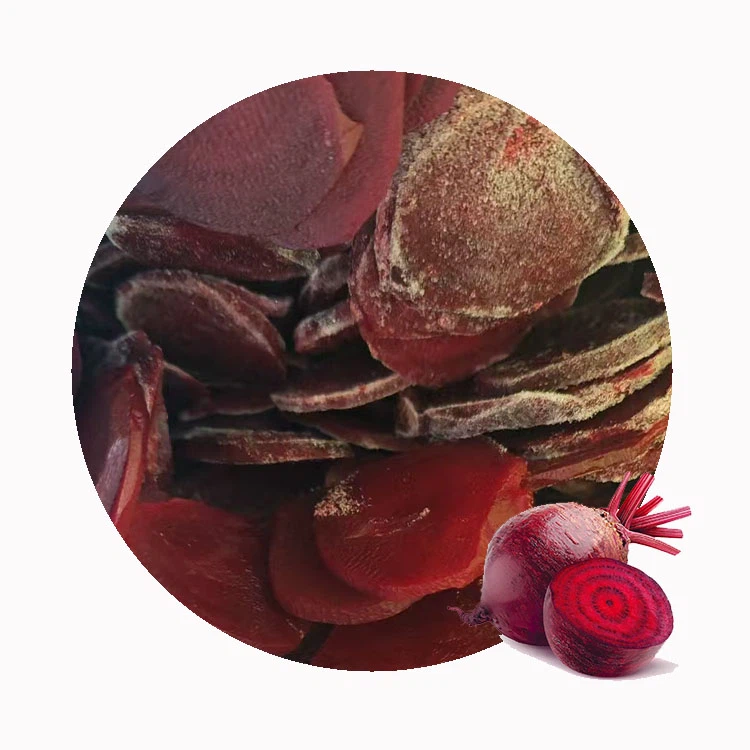
Specify the beetroot tissue and product form represented by the pigment extract.
For purchasers who already have a berry report, our blueberry anthocyanin and finished-colour guide explains the separate downstream development question. It can help a team recognize why a composition report and a formula trial are different evidence. The beetroot request must first correct the family identity. Linking the guidance is useful when the buyer works with both ingredients, but it should not encourage reuse of the blueberry analyte or equivalent for beetroot. The laboratory brief should follow the actual ingredient chemistry, with the two families clearly named where both are present.
Choose a group total or a separated beetroot pigment profile
A group measurement is useful when the decision concerns a defined broad quantity. Photometric methods can estimate betacyanin and betaxanthin groups under specified extraction, wavelength and calculation conditions. The laboratory should state the output and reference basis, including whether groups are reported separately and how any combined quantity is formed. The method needs suitable matrix assessment because light absorption can include contributions other than the intended target. A clear group result is often sufficient for an agreed composition comparison; the buyer should commission more detailed separation only when it helps answer a specific question that the group output leaves open.
Chromatography separates components before detection and can support a more detailed profile. A developer may need to distinguish named pigments, investigate suspected degradation products or evaluate a mixed-family extract. In those cases, ask which components the laboratory can identify and quantify, with what reference standards and evidence. A chromatographic trace does not mean every peak is a confirmed compound. Some peaks may be tentatively assigned or left unidentified. The report should distinguish that status. The purchaser can then use the confirmed quantified scope without treating the whole profile as a complete inventory of every colouring substance in the material.
Detection and quantification also need separate wording. A method may identify a component using its chromatographic and spectral characteristics while lacking an individual reference standard for a fully resolved mass estimate. The laboratory might report an equivalent or another qualified quantity. That can be scientifically useful, but it needs to remain explicit in the COA. If the contract asks for a particular component, confirm whether the proposed method establishes that component's mass or a surrogate response. Buyers should avoid building a numerical acceptance condition around an output whose calibration convention they have not agreed with the laboratory.
The group and profile methods need not give identical-looking totals. They may have different target coverage, response assumptions and treatment of unresolved or degraded material. When results differ, investigate those definitions before attributing the difference to product failure. Ask whether the chromatographic sum includes the same groups represented by the photometric output and whether extraction and sample bases match. A higher group estimate cannot automatically be assigned to an unidentified pigment, while a smaller chromatographic sum cannot automatically establish degradation. The laboratory should explain the difference within the methods' scope and uncertainty.

Each betalain group can contain several components. Peaks are illustrative, and unidentified peaks are not automatically included in a betalain sum.
The method choice should also reflect the development stage. Early ingredient screening may need a consistent, defined group output across samples. A later investigation can justify more detailed separation when the team has a specific component question. Once a method becomes part of an acceptance program, document changes in preparation, calibration or included components. Historical values may cease to be directly comparable if the definition changes. An improved analytical procedure can provide better information while still requiring a fresh comparison basis. This keeps procurement from reading a methodological change as an unexplained change in the supplied beet ingredient.
The comparison table below identifies the different questions a group assay and a separated profile can answer. It is a method-selection aid, with no invented laboratory values or guaranteed recoveries. Ask the laboratory to confirm the appropriate approach for the actual sample and purpose. A detailed profile should be ordered because it resolves a stated uncertainty, rather than because more peaks appear more authoritative. A well-defined group result should be used for its agreed group question, while the component and mixed-family decisions remain with a method designed to establish that additional information.
| Method output | Useful question | Reporting definition | Limit to preserve |
|---|---|---|---|
| Betacyanin/betaxanthin photometry | Broad group quantity | Extraction, groups and reference equivalents | Does not individually identify every pigment |
| Separated pigment profile | Named components or mixture distinction | Identification status and calibration | Some peaks may remain tentative/unquantified |
| Anthocyanin-specific output | Defined anthocyanin quantity | Anthocyanin method and equivalent | Cannot be relabeled as validated betalain content |
Interpret evidence from beetroot analytical comparisons
The original 2021 comparative beetroot methods study examined three differently pigmented beetroot cultivars using photometric and several chromatographic techniques. Its accessible abstract recommends photometric measurements for broad betacyanin and betaxanthin content and describes the more detailed composition information supplied by chromatography. This is direct support for choosing the method by the analytical question. The accessible abstract does not establish the extraction recovery, settings or frozen-matrix validation needed for a commercial acceptance program, so those details must come from the laboratory's procedure and suitability evidence for the buyer's material.
The study's comparison is valuable because it evaluates more than one method on described research samples. It should not be read as a universal ranking in which one technique always replaces all others. Detailed composition information is useful for a detailed composition question; a broad group output can be useful for a broad group question. Its cultivar results also remain within that research. They do not establish the pigment distribution of a current GreenLand beetroot lot or permit an acceptance range to be copied from the paper. The material, reporting basis and method still need to match the procurement requirement.

Pigment optical responses can overlap. The relationships shown are schematic and do not represent a tested GreenLand lot.
An earlier anthocyanin–betalain mixture study deliberately combined commercial anthocyanin extracts with red-beet betalain extract and developed chromatographic identification of both families. Its accessible original abstract and introduction support the chemical-family distinction and the possibility of a targeted mixed-family analytical question. The experiments concern extracts and defined blends. They do not establish frozen-piece pigment retention, colour bleeding from IQF beetroot or stability in an untested buyer formula. The correct use of that evidence is to design a suitable mixture analysis where a mixture is actually the sample.
The freeze-dried beetroot powder study adds another matrix boundary. It examines extraction conditions and group measurements in powder, with chromatographic work used alongside the photometric approach. Drying and powder preparation change the material supplied to the extraction procedure. Those results cannot be transferred directly to frozen pieces with their water and tissue structure intact. A buyer should ask whether the analytical preparation for the commercial ingredient is appropriate, rather than adopting an extraction recipe simply because it produced a high research yield. The laboratory's task is to recover and quantify the defined target consistently in the stated material.
Original work on betanin extraction and purification supplies more component detail. The published full text distinguishes extracted pigments and chromatographic characterization in its specific preparation context. That evidence helps show why a named component and a group total are different outputs. It does not make the commercial ingredient a purified betanin product. If a buyer asks for betanin specifically, the laboratory needs to define the component analysis. If the buyer asks for total betalains, it needs the method's coverage and calculation. The two requests should not be collapsed because one compound is prominent in the literature.

Specify the beetroot tissue and product form represented by the pigment extract.
Together, these comparisons support better questions rather than a ready-made specification. Ask what material was tested, which groups or components were targeted, how the response was expressed and what the method could distinguish. Keep antioxidant measurements or biological experiments outside the pigment-content conclusion unless the buyer has a separate, properly defined question. An assay response in a research system does not establish a health claim for a frozen ingredient. For this purchasing decision, the useful evidence concerns chemical family, analytical scope and matrix suitability, with commercial lot composition left to an appropriate test of that lot.
Write the analytical question for the actual beet ingredient
Begin the brief with the physical ingredient. State whether it is whole frozen beetroot pieces, slices, dice or a buyer-prepared homogenate, and whether it represents the complete supplied material or a selected fraction. Include the lot and sampling information. Our frozen beetroot supply page provides the commercial form context. A test intended for that ingredient should not quietly substitute a concentrated colour extract or freeze-dried powder. Those materials can support research, but their concentration and preparation history change the quantity the report describes.
Define the handling of associated liquid before homogenization. If the sample represents the whole product after controlled thawing, state whether all liquid is included. If a drained fraction is the intended analytical material, describe the draining procedure and explain why that fraction answers the buyer's requirement. Removing coloured liquid changes the sample definition. The laboratory should advise suitable handling so the material remains appropriate for the target measurement. The buyer's beetroot freezing guide supplies broader product-state context, while the laboratory brief needs the exact state and fractions included in the assay.
Then name the analytical output. A request may specify separate betacyanin and betaxanthin group quantities with stated equivalents, a defined total-betalain sum or a named chromatographic profile. Include units, wet or dry basis, extraction scope and how uncertainty and limits will be reported. Ask the laboratory which method is suitable and what validation supports the actual matrix. The buyer should not insert literature values as guaranteed minimums without evidence from the product program. A useful initial trial can establish the measurement approach and realistic sample comparison before a contractual acceptance condition is agreed.
Keep composition testing separate from the later formula evaluation. The initial report establishes the target quantity in the defined ingredient. A subsequent development trial can examine the behaviour of that ingredient in the intended formulation under its actual processing and storage conditions. Those trial results should have their own sample identity and purpose. The article's contribution is to prevent the wrong pigment-family request at the starting point. It does not recreate a general colour-measurement procedure or claim that the correct betalain assay alone predicts every finished-product appearance or performance requirement.

Keep the actual ingredient state. The relationships shown are schematic and do not represent a tested GreenLand lot.
For a topic-specific RFQ, send the pigment family, betacyanin and betaxanthin targets, any named components and the reason the analysis is required. Include the actual product form, intended use, sample preparation, reporting basis and complete reports if a previous assay needs clarification. Add packing, quantity, destination, private-label plans and documents for the sourcing discussion. We can use those inputs to discuss the beetroot supply specification while the laboratory confirms the method. The professional response is to agree the correct analyte and matrix first, then use the resulting evidence for the decision it can support.
The completed analytical record should state what was established without expanding the claim. A group result should retain its group and equivalent definition. A component profile should identify the quantified scope and any unresolved material. An anthocyanin report that did not answer the beetroot request should remain identified as such, alongside the followup. This record gives purchasing and R&D the same understanding of the evidence and prevents the wrong label from spreading through downstream specifications. Beetroot's visible red colour starts the commercial interest; its betalain identity determines the laboratory question.
A specification owner should also decide when the analysis is needed. An initial development sample may help choose the pigment target and method, while a lot-release sample needs a defined link to the shipment. If the buyer plans repeated composition checks, agree the preparation and reporting format before comparing successive COAs. Changes in dilution, equivalent basis or quantified components should remain visible in the program. This avoids creating an apparent pigment trend from changes in the analytical definition.
Where the laboratory cannot validate the requested target in the stated material, record the gap and ask what evidence or alternative method would address it. A familiar report template is not a substitute for suitability. The buyer can then decide whether further development work, a revised analytical request or another qualified laboratory is needed. Keeping the unresolved scope explicit makes the purchasing decision more defensible than issuing a complete-looking number under the wrong pigment-family heading.
Source Beetroot with GreenLand-food
GreenLand-food is a professional beetroot supplier and manufacturer in China, providing factory-direct wholesale supply for importers, food manufacturers, foodservice distributors, and private-label programs.
Send the product form, specification, packing, quantity, application, destination, private-label needs, and requested documents. Include the analytical target and complete method and sample-state details when your purchasing requirement depends on a laboratory report.