


Nitrate or Nitrite in Beetroot? Define the Species and Sample State Before Comparing Results
Oct 09, 2026
Leave a message


Suppose an ingredient buyer sends GreenLand-food a supplier certificate and an independent laboratory report for frozen beetroot. The buyer wants to know whether the second result invalidates the first. Our first recommendation is to obtain the complete laboratory records, including preparation, units and timing, before assigning a cause to the difference.
The practical question is what each laboratory measured in the sample it actually received. Published beetroot juice work helps explain why ion identity and storage history matter, while the limits of that work remain clear. A filtered juice experiment cannot establish a universal holding period, conversion rate, shelf life or acceptance limit for whole frozen beetroot pieces.
State whether the result measures nitrate or nitrite
Nitrate is NO3− and nitrite is NO2−. They contain different numbers of oxygen atoms and are distinct analytes. A report should name the ion beside the result, together with the unit and material basis. An abbreviation such as NOx, a translated label such as total nitrate, or a heading covering both species leaves a comparison unresolved until the laboratory explains its definition. The purchasing team needs this explanation even when the certificate carries an accreditation mark.
Units require the same attention as names. A laboratory can express nitrate as the mass of nitrate ion, while another expresses it as nitrate nitrogen. Those numbers refer to different masses for the same amount of nitrate. Using approximate molar masses, nitrate ion mass is nitrate nitrogen mass multiplied by 62/14; for nitrite the corresponding factor is 46/14. These are chemical conversions, not adjustments for sample loss. Ask the laboratory to confirm the convention before applying them to a certificate.
Mass units and volume units also answer different questions. Milligrams per kilogram of beetroot and milligrams per litre of juice cannot be compared by changing the printed unit alone. The relationship requires the actual material represented, including extraction quantities and, where appropriate, density. A laboratory may already have calculated the extract concentration back to the original test portion. Dividing that reported result by the extraction volume again would introduce a second correction that was never intended.
Some systems convert nitrate to nitrite before detecting the resulting response. The analytical conversion is a method step; it does not mean the original sample contained that measured amount of nitrite. Where an unreduced sample gives original nitrite and a reduced sample gives a combined response, the calculation must distinguish the two contributions. Ask whether original nitrite was measured separately, whether it was subtracted, and how reduction recovery entered the calculation. The worksheet or method explanation should make that relationship visible.

Nitrate and nitrite are different ions. The relationships shown are schematic and do not represent a tested GreenLand lot.
A separated chromatographic system can preserve the original identities through different retention times even though a common downstream reaction detects both peaks. A bulk colorimetric result needs its own accounting. Therefore, a certificate describing nitrate after reduction and another describing nitrate plus nitrite are not automatically measuring the same object. A reassuring method abbreviation does not remove this difference. Have the laboratory state the measurand in ordinary language and identify the equation used to report it.
An illustrative document comparison shows the consequence. Report A states nitrate as NO3− in milligrams per kilogram of complete thawed homogenate. Report B states nitrite as nitrogen in milligrams per litre of separated liquid. No acceptance conclusion follows from their numerical difference because the species, denominator and sampled material all differ. Keep the two original numbers intact while seeking clarification. A spreadsheet that converts one unit cannot repair the missing material definition or create a nitrate measurement from a nitrite measurement.
The official ISO 6635 method summary describes nitrate reduction as part of a spectrometric determination for fruits, vegetables and derived products. Its existence helps identify the method family, but it does not prove that every laboratory implementation works equally well with a particular beetroot preparation. For purchasing, the useful next document is the laboratory's confirmed scope, reporting convention and calculation record for the actual submitted matrix.
We would also check whether a symbol such as less than refers to a detection limit or a quantification limit. A censored result is not an exact zero, and two laboratories with different reporting limits may describe similar samples differently. Ask for the limit in the same units as the result, including all dilution factors. Keep this information with the original certificate so that a later comparison does not turn an analytical reporting convention into an apparent change in the lot.
Follow the laboratory's separation or reduction step
The method used in the original juice study provides a concrete example of analytical identity surviving a common detection reaction. Bescos and colleagues filtered and centrifuged their commercial and self-made juices. Their dedicated HPLC system separated nitrate and nitrite, reduced nitrate in a downstream column, and formed a colored product with Griess reagent for detection. The two analytes were identified through the separation sequence rather than treated as interchangeable compounds. These details are available in the original beetroot juice paper.
For a buyer reviewing another laboratory's report, the relevant question is where the method separates the species and where it changes them. Ask the analyst to describe that sequence before discussing whether a higher number reflects a different lot. If there is no chromatographic separation, ask how the procedure distinguishes the original nitrite from the response after nitrate reduction. A method name copied from a research paper cannot supply missing details about the laboratory's actual implementation.
Preparation is part of the method, too. Frozen pieces must become a defined test portion, which may involve controlled thawing, homogenization and extraction. A clear liquid prepared from that portion represents the extracted material after the stated operations. It is not automatically equivalent to pressed juice, drained solids or the unopened frozen pack. Ask whether extraction recovery was evaluated for the product form submitted and whether the calculation refers back to the weighed portion or stops at the extract.

The combined response is interpreted on a common molar or nitrite-equivalent basis. Nitrate and nitrite values in mg/kg cannot simply be added without the required conversion and method definition.
Beetroot's strong color makes an explanation of interference controls useful when a color reaction is involved. The laboratory should describe the blank, clarification or separation it uses to distinguish analyte response from matrix effects. A buyer does not need to prescribe the analyst's chemistry. The buyer needs to understand what evidence shows that the procedure can quantify the intended ions in this material at the required level. A water standard that behaves well cannot by itself establish performance in every colored food extract.
Spike recovery can help answer an extraction or measurement question, provided the spike enters at the appropriate stage. Adding a standard after extraction checks a different part of the process from adding it before extraction. Ask where the laboratory added it, what concentration range was assessed, and whether the result applies to nitrate and nitrite separately. Recovery information should be interpreted by the qualified laboratory, especially when sample preparation, concentration or product state falls outside its routine validated scope.
Instrument precision also needs a clear definition. Repeated readings of one prepared vial assess variation at that stage. Separate extractions from a homogenate examine more of the preparation. Independent portions from different cartons examine additional sampling variation. These observations may all be useful, but their meaning differs. When two reports conflict, a small variation among instrument readings does not show that the carton sampling or homogenization was representative. Match the repeat experiment to the suspected source of disagreement.
A separate original study on beetroot and supplements used extraction and spectrometric determination while reporting nitrate and nitrite separately, with fresh and dry material bases. Its methods section reinforces the need to read the preparation and calculation alongside the result. Those supplement and processed laboratory matrices do not establish an acceptance specification for GreenLand frozen pieces. Their value here is to show why two procedures require an explicit bridge before their outputs are treated as equivalent.
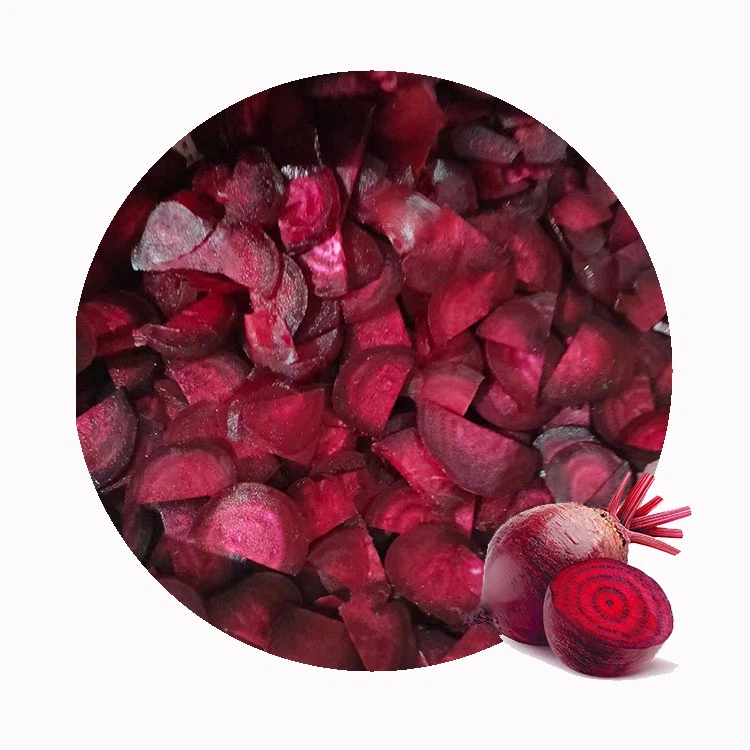
State whether the laboratory receives complete beetroot material, drained pieces or a separated liquid fraction.
Request enough method detail to make the comparison accountable without asking for a home testing recipe. The laboratory can confirm its method identifier, revision, scope, extraction basis and any departure from its normal procedure. If the two methods are both fit for their respective purposes, the remaining issue may be that the purchase agreement did not define the purpose precisely enough. Resolve that definition before commissioning repeated tests that reproduce the same ambiguity and add cost without answering the dispute.
Keep preparation time and storage state with the sample
The sample's history begins when its condition changes, not when the laboratory prints the final report. Record the time the pack was sampled, when the analytical portion was prepared, how it was held and when the measurement began. A transport temperature record for the frozen pack is useful, but it does not describe a homogenate that later waited on a bench. The chronology should follow the actual material through each operation that could affect what reaches the instrument.
The original juice research compared storage at 20°C, 4°C and −20°C, measuring the prepared juices at baseline and after three and seven days. Frozen research aliquots were thawed on the day of analysis. The results differed with juice and storage condition. That observation supports including preparation and storage history in a report comparison; it does not establish that intact frozen beetroot follows the same time course. The experiment involved prepared juice under its own stated conditions, including filtration and centrifugation.
Ask the laboratory which holding conditions it has established for the actual matrix and analytes. A laboratory may require different handling for an unopened frozen composite, a thawed homogenate and a prepared extract. Its instructions should also address receiving condition, container and any permitted delay. We cannot turn a research temperature or an isolated measurement day into a universal retention window. The agreed sampling plan should use the laboratory's confirmed procedure rather than assume that freezing any prepared material preserves every result indefinitely.
When a receiving record says frozen, clarify what that word describes. It could refer to the transport package, the outer sample surface or the material's complete condition on arrival. A partially thawed portion requires a factual receiving note. The purpose is to identify uncertainty about the analytical sample, not to infer a conversion rate from an appearance or temperature alone. Preserve the observation and ask whether the laboratory considers the sample acceptable for the defined measurement.
Separate the lot's commercial storage history from the sample's laboratory history. The lot may have followed the agreed frozen supply conditions while one prepared sample experienced a different delay. Conversely, a sample may be handled correctly despite incomplete records for the shipment. The two histories answer related but distinct questions. A nitrate or nitrite report alone cannot reconstruct every handling event or prove the cause of a difference. Use records to identify which explanation can actually be tested.

Prepared sample histories can differ. The relationships shown are schematic and do not represent a tested GreenLand lot.
In this buyer situation, we would place both laboratory timelines next to each other. Perhaps one laboratory extracted a representative frozen portion on receipt and the other measured a thawed liquid submitted several days after preparation. That is a hypothesis to investigate, not a finding about either laboratory. The next action is to request the missing timestamps and receiving notes. If those records confirm unlike preparation histories, the results should remain separate until a qualified analyst explains whether a valid comparison is possible.
Retaining an extract and retaining a representative lot portion serve different purposes. The extract may support investigation of an instrument or calculation issue within its established holding conditions. A separately preserved lot portion may allow a new preparation. Label each with the material identity and applicable preservation procedure so it cannot be mistaken for the other. If the retention conditions were never documented, the sample's availability alone does not make it suitable for settling a dispute months later.
We ask purchasing teams to discuss analytical logistics before dispatching samples. Tell the laboratory whether the delivery contains IQF pieces, cooked pieces or a prepared liquid, and state that nitrate and nitrite must be distinguished. Agree the delivery schedule and what the laboratory will do if receiving conditions deviate from its requirements. This early coordination prevents the practical sample-handling decisions from being made after the package has arrived, when preparation timing and preservation options may already be constrained.
Reconcile whole pieces, liquid and reported mass basis
Whole pieces, drained pieces and the liquid released during thawing are different material fractions. If one report represents the complete pack and another represents solids after draining, their denominators and composition may differ even when they came from the same carton. Define the product boundary before sampling: does the test include all thaw liquid, exclude a specified fraction, or measure liquid and solids separately? The answer should follow the contract's analytical purpose and the laboratory's suitable method.
For an as-supplied composition question, discuss a procedure that represents the specified product, including any liquid that belongs to it. For a downstream application using drained pieces, a separate prepared-state measurement may be useful. Neither choice should be hidden in a generic beetroot label. A preparation that intentionally discards material needs a recorded drain procedure, retained mass and explanation of the resulting basis. Otherwise a buyer may compare the ingredient with a selected fraction without realizing that the measured object changed.

Pieces and liquid have different denominators. The relationships shown are schematic and do not represent a tested GreenLand lot.
Homogenization also requires a representative input. Choosing a few attractive pieces or sampling only liquid from the bottom of a bag can create a different material from the agreed composite. The laboratory should know whether the submitted sample combines multiple increments and whether those increments were mixed before the analytical portion was taken. For a claim, document carton identity and selection. An accurate instrument can still produce a result that represents only the submitted fraction rather than the commercial lot.
The GreenLand frozen beetroot product page distinguishes forms and processing states that matter to procurement. Use the actual agreed raw, blanched or cooked status when requesting analysis. An analytical result from one prepared state should not be silently applied to another. We confirm the product identity and specification with the purchasing team so that the sampling request can describe the material accurately; specialized ion testing needs its own confirmed laboratory scope.
A useful side-by-side record has the same fields for both reports: original lot, submitted matrix, preparation, retained liquid, reported ion, unit, original mass basis and unresolved limitations. This comparison is more informative than a ranking of the final numbers. If a field is unknown, leave it unknown and assign a follow-up question. Guessing that both laboratories used wet weight or retained all liquid would remove the uncertainty from the document while leaving it in the investigation.
Fresh weight, dry weight and extract concentration require separate labels. Converting a dry-basis result to a wet-basis result needs moisture information that represents the same sample and preparation. A generic moisture value from another crop or product page is insufficient. Similarly, the amount of liquid obtained from beetroot cannot be assumed to equal the original beetroot mass. Keep any conversion worksheet attached to its source measurements and have the laboratory confirm that the comparison preserves the intended material boundary.
Consider an illustrative split sample where the buyer drains the thaw liquid for a production trial while the supplier's laboratory includes it in a complete homogenate. The buyer's preparation may accurately model its process, but it does not automatically assess the same composition specified by the supplier's report. A sensible investigation can test both questions deliberately: composition of the agreed product and composition of the prepared fraction used in the application. Naming both questions prevents either result from being asked to answer the other.
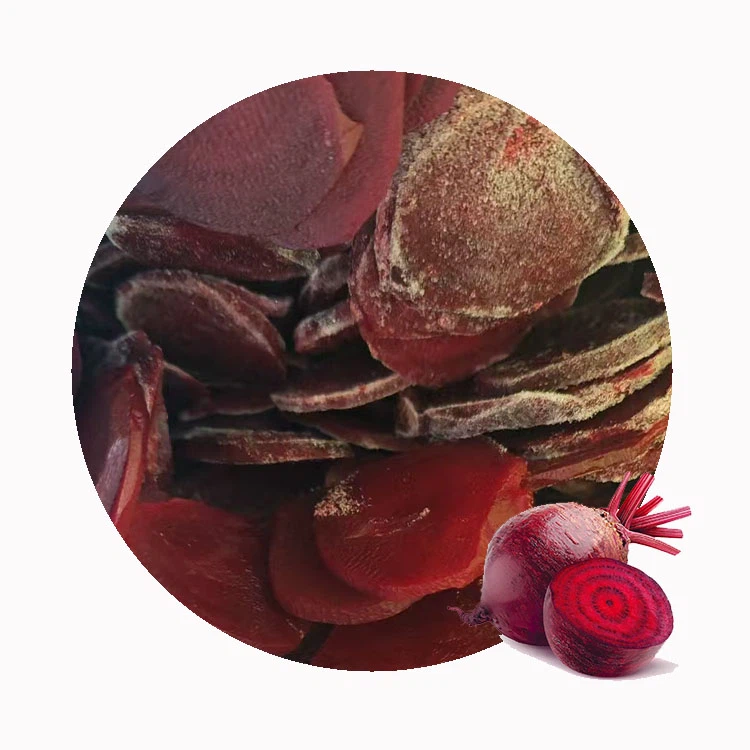
State whether the laboratory receives complete beetroot material, drained pieces or a separated liquid fraction.
For wider preparation context, our beetroot freezing guide discusses product state and practical quality considerations. Ion-report reconciliation goes further into the analytical boundary. Keep the required method definition in the laboratory request, rather than rely on a general handling article as a sampling SOP. The eventual purchase specification should say which prepared state is tested and how that state relates to the product the buyer receives. For a liquid application, our beetroot juice guide explains how blending and straining define the fraction used.
Decide when a dispute requires resampling
Resampling is justified when a new representative sample can answer a defined unresolved question. Repeating the measurement on an old extract may resolve an instrument or calculation query, but it cannot recreate the original lot sampling or reverse undocumented preparation changes. Begin with the competing explanations and decide what evidence each requires. If the reports describe different ions, the first action is clarification. If they describe different fractions or histories, a controlled new preparation may be necessary.
We would recommend a mutually agreed sampling and laboratory plan for such a disputed result. Identify the lot, product form and commercial processing state; select representative increments; preserve the material under the receiving laboratory's confirmed conditions; and arrange analysis of the specified ions on the same reporting basis. Decide before testing how the results will be interpreted, including reporting limits and uncertainty. This plan makes the new result useful to both parties rather than simply adding a third number.
When feasible, independent laboratories can receive portions of a common, appropriately prepared representative sample, with documented allocation and handling. The qualified analysts should advise where splitting belongs in the procedure. Splitting whole material before homogenization and splitting a homogeneous extract examine different sources of variation. The design must match the claim being investigated. A shared sample identifier is useful, but it does not prove that the portions have equivalent composition unless the preparation supports that conclusion.
Preserve the original certificates and clarify them through traceable revisions or addenda. A laboratory correction to a unit label, species name or calculation should be identifiable as a correction, not silently substituted for the original record. Link each report to the received sample and preparation worksheet. We can help your purchasing team organize lot and product records, while the laboratory remains responsible for analytical interpretation and confirmation of its own method. This division of responsibility makes later technical discussions easier to resolve.

Matched split samples isolate the question. The relationships shown are schematic and do not represent a tested GreenLand lot.
Acceptance criteria need a defined commercial and destination context. A nitrate program written for spinach is not evidence that its numerical limit applies to beetroot. The relevant commodity, product state and market requirements must be reviewed specifically. This article supplies no beetroot regulatory threshold and no health-based purchase limit. If the buyer requires an ion criterion, establish its applicable basis with qualified regulatory and analytical support, then put that criterion into the agreed specification before using it to reject a lot.
The final decision can remain unresolved when evidence is missing. A sample with unknown preparation timing or an unexplained combined response may be unsuitable for a fair comparison even when its printed number appears precise. Record the limitation and the action needed to remove it. An unresolved comparison is a useful technical conclusion because it identifies what the next test must change. Repeated testing under the same undocumented conditions can consume time while leaving the purchasing question unanswered.
For an inquiry, send GreenLand-food the intended beetroot application, required form and processing state, packing, quantity and destination, together with the two complete reports. Include the ion names, units, sample preparation, retained thaw-liquid procedure, preparation time and temperature, and the acceptance question you need to resolve. We will use those details to confirm the product context and discuss suitable document and sampling coordination. The aim is an interpretable comparison of the specified beetroot material, supported by an appropriate laboratory procedure.
Source Frozen Beetroot with GreenLand-food
GreenLand-food is a professional frozen beetroot supplier and manufacturer in China, providing factory-direct wholesale supply for importers, food manufacturers, foodservice distributors, and private-label programs.
Send the product form, specification, packing, quantity, application, destination, private-label needs, and requested documents. Include the analytical target and complete method and sample-state details when your purchasing requirement depends on a laboratory report.