


How to Store Fresh Beetroot Before Processing or Freezing
Sep 27, 2026
Leave a message

Decide whether the fresh roots can wait for processing
An intact beet is a living storage organ. It continues to respire after harvest and can lose water through its surface, trimmed crown and fine root. A root that arrives firm with clean skin and no active decay has more holding potential than a soft or abraded root from the same field. The first decision is therefore whether the delivered lot is suitable for the planned hold at all. If the freezing line can take the fruit promptly, reducing the holding interval may be more useful than trying to reproduce a long-term fresh-market storage regime for a processing lot.
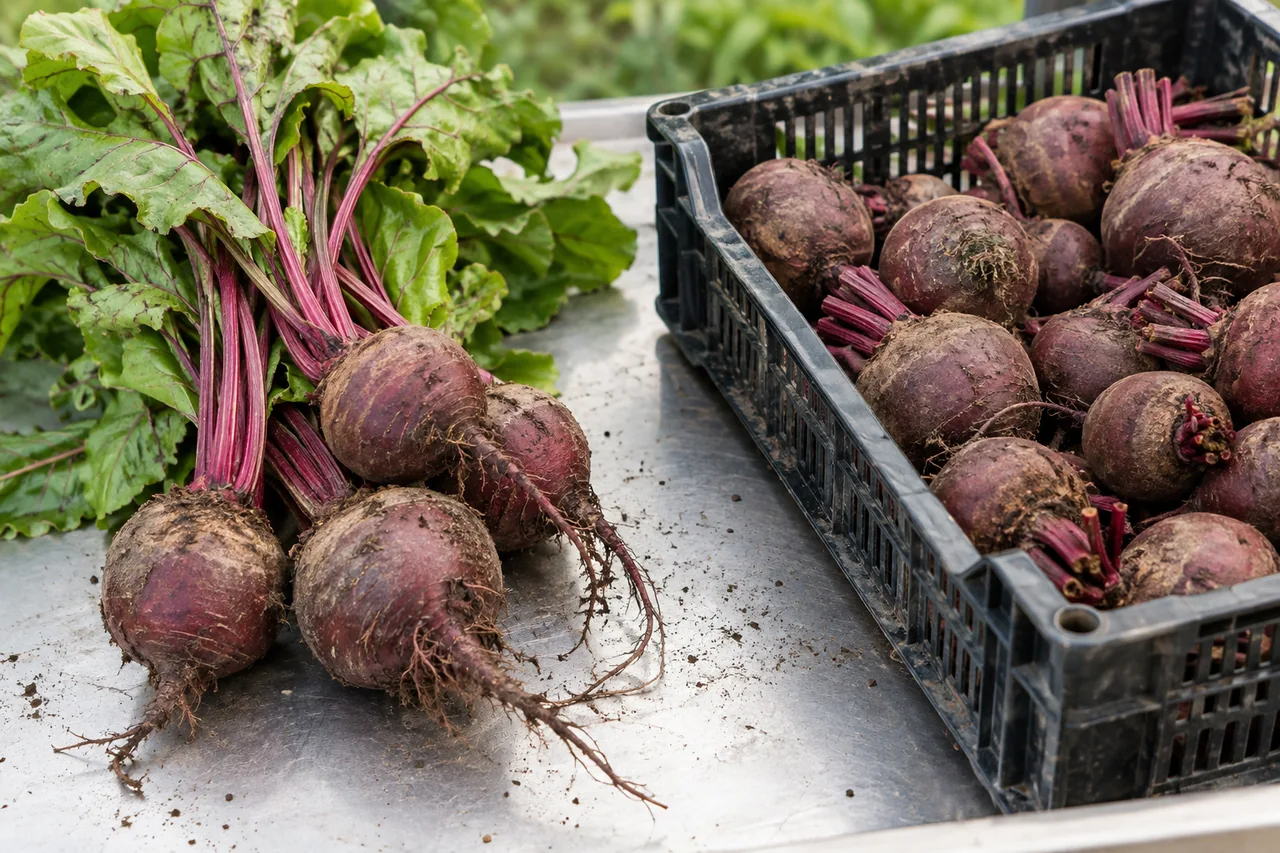
At receiving, look beyond the average appearance of the top crate. Open representative containers from different pallet positions and examine root firmness, broken skin, crown cuts, attached soil, foreign matter and moisture on the package or crate wall. Record the proportion and location of visible defects under the agreed sampling plan. A root with a small cosmetic mark may behave differently from one with a deep puncture or wet soft area. Keep the categories separate so later losses can be traced to the incoming condition instead of being assigned vaguely to storage.

Sound and scuffed fresh beets separated during a receiving check.
The receiving team should also know what will happen next. A line making small cooked dice can remove more outer tissue than one making peeled slices, but it still needs sound raw material and a validated cleaning and process route. A product that will be used for a juice or puree may tolerate a different visual shape than a retail bag of uniform pieces. None of those application differences justify accepting decayed roots without review. They do mean that the trial, reject and rework criteria need to be named for the actual product.
The GCCF beet storage guide distinguishes topped and bunched beets and calls for damaged or diseased roots to be removed before storage. It also describes why cooling and air movement matter in large quantities. Its long storage periods are achieved under specific commercial conditions; they are reference conditions, not an automatic shelf-life promise for a delivery. The useful transferable lesson is to preserve a sound root and monitor the environment that holds it.
For a short processing wait, assign a maximum planned hold in the production schedule, a reinspection point and a clear escalation trigger. If temperature, condensation or root condition departs from the plan, take a new representative sample and decide whether the lot should proceed, be segregated for a closer trial, or be rejected under the purchase agreement. Label the pallet so no one treats a temporarily parked lot as approved stock. A buyer comparing suppliers can ask how the harvest, receipt and freezing dates are tied to one traceable batch.
Separate topped roots, attached greens and damaged roots
Beet leaves are edible, but they make the root a different storage item. The leaves have a large exposed surface and lose water quickly. They can yellow or wilt while the root remains relatively sound. Utah State University's harvest and storage guidance describes a much shorter marketing window for bunched beets than for topped roots under its stated conditions. That distinction is useful when a processor receives mixed forms: the presence of leaves should change handling priority and inspection frequency.
If leaves will not be used in the finished product, agree where they are removed and how the crown is protected. Topping too deeply creates a larger wound; leaving a long mass of leaf tissue complicates the hold and may draw moisture from the root. In a small food-service setting, extension guides often advise leaving a short stem and keeping greens separately. Industrial trimming dimensions still need to fit the line, the raw-root grade and the later peeling or cutting operation. The observed cut condition matters more than copying a household stem length into a contract.
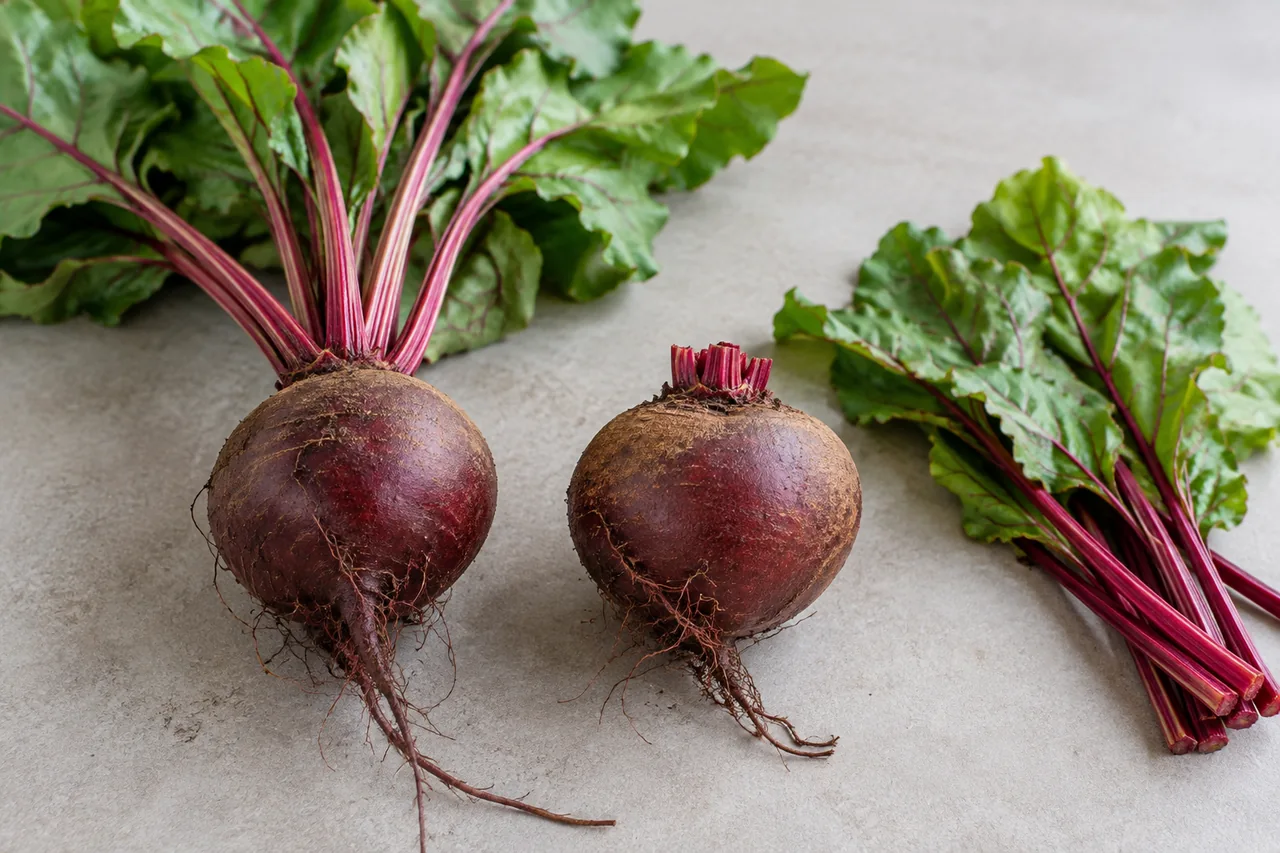
A beet with leaves beside a topped root with intact skin and crown.
The University of Illinois Extension handout recommends separating greens from unwashed roots for household refrigeration. That is a practical reminder that the two parts behave differently. Commercial operations also have to manage wash water, crate hygiene, mechanical trimming and the time between topping and cooling. A receiving photograph should show whether the root arrived with tops attached or already trimmed. Without that record, a buyer cannot tell whether later crown discoloration began before delivery or during the hold.
Inspect damage as a separate condition from leaf status. Fresh cracks, bruises, cuts and rubbed skin provide a more vulnerable surface for moisture loss and decay. One deeply bruised root within a crate can become a local source of wet deterioration; a uniform surface scuff may have a different effect. The responsible quality team should set defect definitions and a sampling rule for the lot, then document the observations. Do not assign a universal acceptable percentage from a general gardening article. The accepted limit depends on the product specification and the food-safety plan.
Segregation helps preserve decision quality. Keep sound topped roots, bunched roots and questionable roots in clearly identified containers while the lot is assessed. If a visually damaged portion is reworked, track its mass and final use rather than quietly merging it back into premium-cut output. A lot used for puree or a heavily processed component still needs appropriate food-safety review and a clean raw-material basis. A frozen item may hide the original crown or skin condition after peeling; that makes the incoming record more valuable, not less.
Choose a washing route that fits the hold period
There is no useful single answer to whether fresh beets should be washed before storage. The route depends on how much soil is present, how the roots were harvested, the hygiene of the holding area, the wash-pack equipment and the delay before processing. A lightly soil-dusted root may be stored briefly without washing and then cleaned on the processing line. Another operation may wash and sort roots before a controlled cold hold. Both routes require clear controls, and both can fail if the product remains wet or carries damaged tissue into a crowded container.
Johnny's Selected Seeds explicitly treats wash timing as situational. Its advice to avoid abrasive soil removal and allow washed roots to dry before storage is especially relevant to a line planning later peeling. Scraping off a clod with a hard edge may create a new defect. Wet roots stacked before surface water drains can develop condensation or decay in places that a superficial top-layer inspection misses. The storage plan should specify what "clean enough for holding" and "surface dry" mean for that operation.
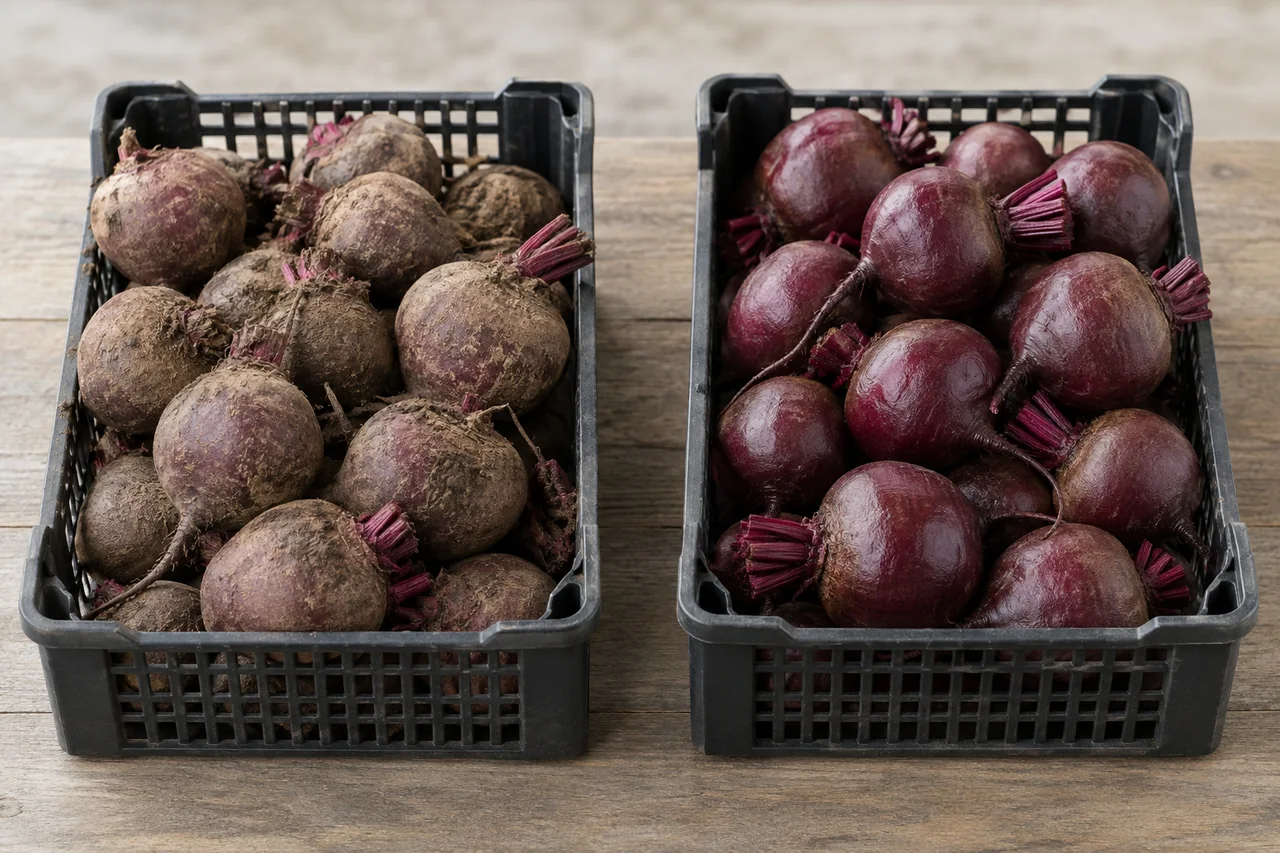
Soil-dusted beets and clean surface-dried beets held in separate crates.
If roots are washed before the hold, record the wash-water control, contact conditions and postwash drainage required by the site's food-safety system. These controls are process-specific; a generic article cannot validate a sanitation concentration or contact time for a given line. After washing, examine the outer crates and the center of a load for pooled water. If bags or liners are used, confirm that they control water loss while allowing the product to remain in the intended condition. A tightly sealed package around warm or wet roots can create a different problem from an open, excessively dry crate.
If roots remain unwashed, handle soil as a managed incoming material. Keep soil-covered containers away from cleaned or ready-to-pack food, and use dedicated movement and staging rules. Confirm how the later washing and peeling steps will remove soil and foreign material. Soil load can vary across a crop and can change sorting workload and usable yield. Record that load alongside the cut-form trial; the purchase price per kilogram of raw beet does not capture cleaning loss or line time.
The handoff from storage to processing should be deliberate. Release only the number of pallets the line can work through under its planned time and temperature controls. Check root temperature and visible condition when a pallet leaves storage, then compare them with receiving records. If a previously clean lot now shows soft wet areas, excess condensation or unusual odor, pause and route it through the site's hold-and-assess procedure. Washing immediately before processing does not reverse decay that developed during the wait.
Control cooling, humidity, condensation and airflow together
Fresh beetroot benefits from a cool, moist environment because dry air draws water from the root. Yet humidity cannot be considered alone. A cold room with stagnant air, a wet package surface or warm roots loaded into dense bins can produce local moisture where decay develops. The GCCF manual describes high humidity near 0°C for topped roots and warns that condensation and inadequate air circulation undermine storage. Use its values to understand the mechanism, then validate set points and limits for the site's actual crop, pack and holding duration.
Temperature records need locations. A sensor at the door may not describe the center of a pallet or the top of a crowded bin. Place product in ventilated containers suited to the cooling method and check that air can move through the load. Avoid holding warm roots in a large dense mass whose center cools slowly. Cooling rate should be verified by product measurements or an established validated procedure, especially when a delayed harvest arrival changes the expected starting temperature.
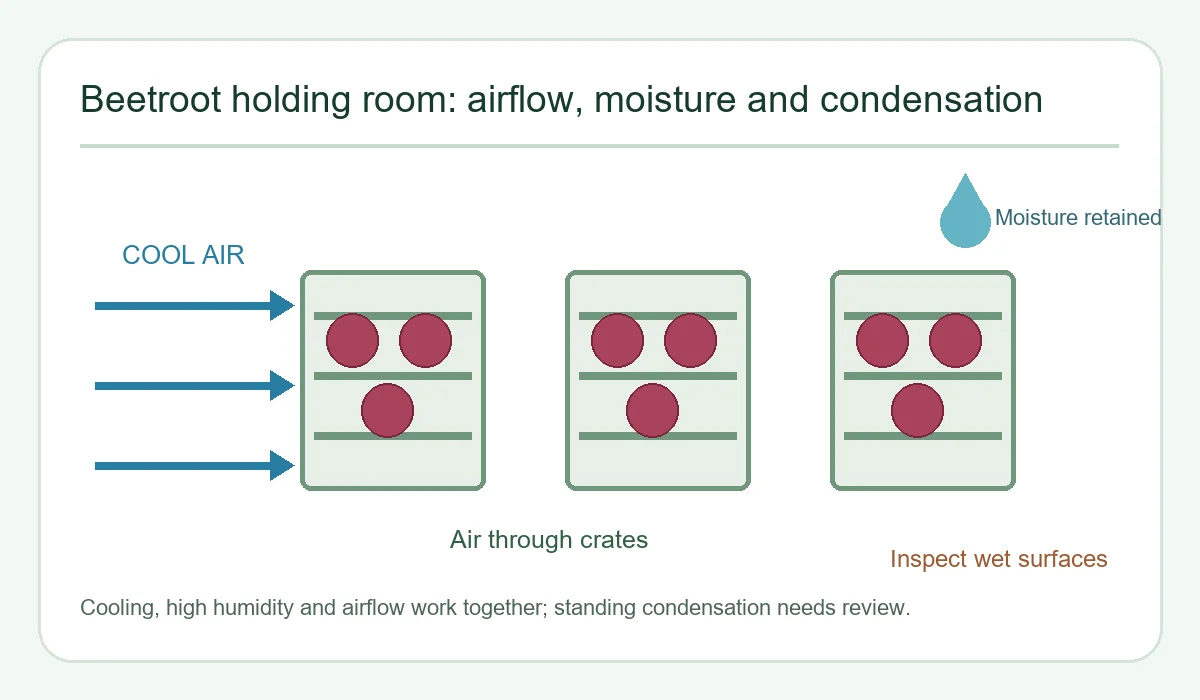
Diagram of cool air moving through ventilated beet crates while moisture and condensation are monitored.
Condensation is often a transition problem. Warm, humid air can meet a cold root or a cold container surface during loading, door opening or transfer to a warmer preparation area. The resulting water is more consequential than a relative-humidity number by itself. Inspect liner interiors, crate walls and the product at the middle of the stack. If droplets are present, determine whether the cause is wash-water carryover, room cycling, a package barrier or an uncontrolled transfer. The response may involve drainage, airflow, route timing or packaging, not simply lowering the humidity until the beets shrivel.
The root itself can freeze unintentionally if the room is too cold. That damage differs from a validated frozen-food process in which selected and prepared beetroot is deliberately treated and quick frozen. A fresh-root holding area should stay within its approved range and avoid contact points that fall below the root's freezing threshold. The GCCF guide discusses this risk along with decay. A root softened by accidental cold injury cannot be treated as a normal raw input just because its final product will eventually be frozen.
Create a short evidence trail for each lot: receiving time, first product temperature, storage location, room trend, pallet movement, reinspection and release time. Record exceptions with the affected pallet IDs. These observations help explain a later color or texture problem and prevent a dispute about whether the root deteriorated before processing or after freezing. The system need not be elaborate, but it must connect the condition of the actual roots with the lot sent to the line.
Move approved roots into the confirmed freezing process
The point at which raw beets leave storage is a quality gate. Before the line starts, confirm that the current roots still match the accepted size, firmness, color and defect description. Peeling and cutting can reveal hidden tissue defects that an external receiving check missed. Hold a representative inspection sample and record any change in yield or rejected pieces. If the lot has waited through a temperature excursion, compare its trial output with an approved reference lot rather than assuming that a good appearance at the surface predicts the finished result.
GreenLand-food's IQF frozen beetroot page describes available cut forms and processing levels. It also makes clear that the final frozen specification is a separate agreement: raw IQF, blanched, cooked or pre-cooked routes may be considered according to the order. The article's fresh storage advice cannot decide a blanching or cooking step for the buyer. That step belongs to the product and food-safety specification. We confirm the pre-treatment, cut dimensions and intended application before production planning.

Actual GreenLand frozen beetroot pieces in a bulk container.
The first finished frozen sample can expose problems carried from the fresh hold. Look for peel residue, uneven cuts, excessive soft pieces, discoloration, frost or clumps. A root with excessive water loss may peel or cut differently from the approved sample. A wet or damaged root can contribute to poor sorting yield. The observation should be traced back through incoming root condition and processing records before a cause is assigned. One final photograph rarely identifies the stage at which a defect started.
Check the product in the form the buyer will actually receive. Free-flowing dice, thick slices, strips and whole or baby beetroot differ in visual tolerance and intended cooking route. A soup manufacturer may prioritize uniform dice and color release in broth; a retail or food-service slice program may care more about diameter and presentation. Our frozen beetroot category page lists the broad forms. Use a current lot sample to establish what a particular form does after its intended heating or thawing process.
Once frozen and packed, maintain the agreed frozen cold chain. The fresh-root storage period should appear in traceability records, but it is no longer the operating storage condition. Label the finished batch, packing date and form accurately, and verify the documents requested for the destination. A buyer who asks only "how long were the beets stored?" may miss the more useful question: what was the condition of the root at processing, and did the finished frozen lot pass the agreed specification?
Specify the incoming root and the finished frozen beetroot separately
An incoming-root specification is useful only if it can be checked at the receiving dock. Describe root size or weight band, top status, expected soil level, unacceptable cuts or bruises, visible decay, foreign material and the sampling method. Link the inspection to a lot code and a disposition decision. The team should know whether a pallet with excess damage can be sorted, processed immediately under a documented deviation, or must be rejected. A vague instruction to accept "fresh, high-quality beetroot" leaves those decisions to the person on shift and makes later comparisons impossible.

Actual GreenLand frozen beetroot slices checked with a caliper.
Separately, define what the frozen customer will inspect. A beetroot dice buyer may care about piece-size distribution, cooked bite and color after reheat. A sliced-beet customer may care about thickness, intact rounds and breakage. Purée users might focus on solids and flavor. The raw-root size band influences processing yield, but it is not a substitute for the finished cut specification. Track both levels so a change in raw material can be evaluated against the sold product rather than assumed harmless or harmful.
If a processing slot is delayed, use a documented reinspection rather than silently extending the hold. Sample the lot again for firmness, surface moisture, decay and the defects most likely to worsen under its conditions. Compare with the original receipt record. A root that was acceptable on arrival can become unsuitable after a condensation event; another lot may remain stable. The decision must be made on its observed condition and the plant's validated process. Record who released the lot and whether extra sorting was required, because that extra work affects usable yield and future sourcing decisions.
An effective raw-root purchase description states the intended finished use and the conditions that make the fruit processable. Name the expected root size or grade, acceptable top status, soundness criteria, soil and foreign-material expectations, defect definitions, receiving temperature and the records needed for any planned fresh hold. The exact values should come from the receiving plant and the agreement with its grower or supplier. A household storage period cannot substitute for those fields.
The frozen product purchase description then names the form and treatment: for example, peeled dice of an agreed dimension, cooked slices, or another confirmed option. It can set color, size distribution, peel residue, broken pieces, foreign material, free-flowing condition, packing, net weight, storage temperature, batch documents and the acceptance method. GreenLand-food's product pages discuss many of these possibilities, but each order still requires confirmation. We do not infer that every cut or processing level is available from every current crop lot.
Where the buyer compares raw beet procurement with finished IQF supply, use a common useful-output basis. Weigh the raw lot, topping and peeling loss, defective pieces, final packed yield and any recipe-level loss. The cheapest incoming root can become expensive when trimming and inspection are heavy. Conversely, a higher-priced prepared frozen cut may save labor and improve scheduling for a ready-meal line. These are outcomes to measure in an application trial, not numbers to assume from one supplier's brochure.

Actual GreenLand frozen beetroot slices in close view.
A practical approval trial can follow one lot through receipt, a short hold, preparation, freezing and use in the target dish. Photograph the raw root at receipt and release, record product temperature and defects, and retain labeled frozen samples. Cook or thaw the final form exactly as the buyer plans to use it, then score color, texture, drip or color bleed, cut integrity and flavor. If several crop dates are involved, repeat the trial across those dates before fixing a broad tolerance. This creates a defensible bridge between storage decisions and the frozen product the buyer pays for.
If a production delay changes the plan, agree the new disposition before the raw lot is blended or processed. Buyers can ask for the specific hold record, reinspection result and trial evidence rather than accepting a generic statement that beetroot "stores well." We can help a purchasing team review the current beetroot form, packing, quantity and destination requirements and compare them with an approved frozen sample. A clear record of the fresh interval protects both the processor's decision and the buyer's expectation of the final product.
Source Frozen Beetroot with GreenLand-food
GreenLand-food is a professional frozen beetroot supplier and manufacturer in China, providing factory-direct wholesale supply for importers, food manufacturers, foodservice distributors and private-label programs.
Send the product form, specification, packing, quantity, application, destination and requested documents so we can confirm the current offer and sample route.