


Spinach-Ricotta Ravioli Filling from Frozen Spinach: Drain, Portion and Seal
Sep 28, 2026
Leave a message


For a buyer developing a filled-pasta line, the target is a ravioli that seals without trapped air, survives tray freezing and cooks without a visible leak. Those observations turn a familiar recipe into a usable ingredient specification. The spinach cut, the amount of ice or free water, the ricotta and the pasta geometry all affect the result. This guide gives a practical way to isolate them without pretending that a universal recipe ratio can fit every sheet thickness and filling system.
At GreenLand-food, we supply frozen spinach in forms that can be tested for this application. We would ask a buyer for the intended cut, prepared yield and finished ravioli target before recommending a sample. The kitchen or manufacturer still controls dairy, pasta, sealing, freezing and cooking. Keeping those responsibilities visible helps both sides investigate a failed trial instead of attributing every split seam to the greens.
Set the finished ravioli target before mixing
Begin with the product the customer will actually receive. Is it a small restaurant ravioli cooked fresh, a larger frozen retail piece, or a catering item that is boiled and held briefly before service? The same filling may be acceptable in one format and troublesome in another. A thicker wrapper can conceal excess moisture for a short test; a thin sheet shows the problem earlier. A large mound also stretches the seam more than a modest one, even when the formulation is unchanged.
Write down the pasta thickness, cutter dimensions, intended filling weight per piece, seal method, freezing step and cooking method for the trial. These do not have to be industry-wide standards. They need to be repeatable conditions for comparing one spinach lot or filling adjustment with the next. If a team changes the dough hydration and the spinach supplier on the same day, the reason for a leak becomes difficult to identify.
Look at the cooked ravioli before writing an ingredient judgment. The pasta should remain intact, the seam should close along its full perimeter, and a cut opening should show a filling that holds together without a pocket of liquid. A little moisture is natural in ricotta and cooked greens. The question is whether free liquid collects, pushes at the seam or dilutes the filling. Record whether a failure happened during forming, freezing, boiling or lifting. Those are different defects with different remedies.
Home recipes give useful starting techniques. Biting at the Bits stresses draining the filling and pressing air out during assembly; the Washington Post recipe squeezes frozen spinach before it goes into wrappers. Neither observation replaces a trial on the buyer's own pasta and line speed. In production, ten neatly hand-sealed samples may behave differently from a longer run in which filling sits on the sheet before sealing.

Compare where a cooked piece holds and where a split seam releases filling before changing the spinach.
An acceptance sheet can use plain observations: number formed, number that opened before freezing, number that split in the cooking test, and the location of each leak. Include a photograph of an acceptable cut piece and a failed piece. The photographs give operators a common reference when words such as slightly wet or well sealed mean different things to different shifts. We would keep the first target conservative and adjust it only after the same result repeats across representative lots.
Confirm the spinach form and cooking state
Frozen spinach is not one uniform ingredient. Chopped IQF pieces, larger leaf pieces and compressed bricks can differ in leaf length, packing density, visible ice and how evenly they thaw. A finely cut leaf can distribute readily through ricotta but may also blend into a smoother mass. A longer cut gives a distinct green bite but can bridge a narrow filling nozzle or sit across the pasta seal. A brick may be convenient for handling, yet the processor must allow enough time for its center to thaw before pressing.
Inspect the actual frozen product and the thawed sample. Note the cut, leaf and stem appearance, clumps, visible ice, odor, color and any foreign material concern under the operation's normal incoming checks. A photograph is useful for judging visible form, but it cannot establish the blanching state, microbiological specification or whether the ingredient is ready to eat. Request the current product specification and handling instructions for the exact SKU. The GreenLand IQF chopped spinach product page and spinach brick page show why form must be named rather than assumed.
For this application, keep the test sequence simple: weigh a defined frozen sample, thaw it under the approved method, drain and press it consistently, then weigh the usable spinach. Record both the starting and prepared masses. If a trial uses 500 grams of frozen spinach in one batch and 500 grams of already squeezed spinach in another, the apparent recipe is not comparable. The second batch contains more actual leaf. A yield record explains much more than a vague instruction to squeeze really well.
The amount of pressure should be repeatable, not heroic. One cook may hand-squeeze a small handful until almost dry while another empties a warm colander after a few minutes. Use the same batch size, thawing condition, sieve or press arrangement, waiting time and pressure for the comparison. A supplier can then discuss a repeatable drained yield or visible cut target with the buyer. Without a defined preparation, a target yield is only a reflection of who held the towel that day.

The real product view shows the incoming form; the supplier specification and buyer preparation record establish its cooking state and usable yield.
Do not assume that cooking the spinach in the ravioli will repair an inappropriate ingredient state or handling history. A frozen vegetable may be blanched for further processing; a specific ready-to-eat claim requires the supporting specification. Likewise, the temperature reached by a stuffed pasta during service depends on the whole recipe and cooking process. The operator should validate the finished food under its own food-safety plan rather than infer safety from the appearance of thawed greens.
There is also a purchase choice hidden in the cut. If the goal is a visible leaf texture in a large ravioli, a slightly coarser cut may be desirable. If the filling must pass through a narrow depositor, the longest pieces may cause irregular portions. Run the actual dispensing or spooning method before locking a cut size. An incoming sample that looks attractive in a bowl is useful evidence, but its behavior at the filling point decides whether the form is practical.
Measure spinach and ricotta water separately
Spinach and ricotta contribute water by different routes. Thawed greens carry surface water and liquid held among cut leaves. Ricotta can release whey as it rests, and one tub may arrive noticeably wetter than another. If both ingredients go straight into a mixing bowl, the team cannot identify which variable created a loose filling. Prepare each separately and record its condition before combining them.
For the spinach, weigh the frozen input, weigh the prepared drained material and retain the liquid for a simple comparison. The liquid quantity is not by itself a quality verdict; a different cut and pressing method will change it. The important point is to use one method while comparing candidate lots. If the leaf becomes an almost dry paste under excessive pressure, the team may have solved a leakage problem by losing the intended spinach texture. The acceptance target needs both yield and appearance.
For ricotta, place a measured amount in an appropriate sieve or draining setup and record the material actually added to the mix. Maricruz Avalos and Vitamix both recognize the problem of wet cheese in ravioli; their kitchen guidance is a starting point for defining a house method. When comparing spinach options, use the same ricotta lot and drain condition. Otherwise a wet dairy change can falsely appear to be a spinach failure.

Two separate drainage records help identify which ingredient introduces free liquid into the filling.
We prefer a small matrix to a single subjective bowl test. Hold the spinach preparation constant and compare two ricotta conditions; then hold the chosen ricotta condition constant and compare spinach samples. Keep the mixing time and rest period the same. A short rest matters because a filling can tighten while cold or release liquid as salt and cut leaves interact. The time between mixing and depositing on pasta should resemble the actual production delay.
| Variable | Keep fixed during a spinach comparison | Record before filling the pasta |
|---|---|---|
| Spinach | Thawing and pressing method | Frozen mass, drained mass, cut and visible free liquid |
| Ricotta | Lot and draining method | Added mass, whey release and consistency |
| Seasoning and binder | Recipe and mixing order | Added mass and any rest-dependent change |
| Pasta | Sheet thickness and cutter | Formed piece size and seam width |
| Process | Hold, freeze and boil conditions | Leaks by stage and cut-piece texture |
Avoid announcing an exact universal spinach-to-ricotta ratio from this table. The proportion that tastes balanced depends on the cheese, the cut, other ingredients and the size of the pasta. A better instruction is to specify the prepared weight of each main component for the trial, then adjust flavor and structure after seeing the cooked piece. This keeps purchasing discussions tied to an ingredient yield the buyer can actually check.
The approach also helps cost control. A low price per frozen kilogram does not automatically mean a low cost per kilogram of usable filling. If one lot yields less drained spinach under the same process, more frozen input may be required. Conversely, very aggressive draining could increase the apparent cost while damaging the intended leaf texture. Report purchase mass, prepared mass and finished-piece acceptance together so cost is not separated from quality.
Build a portionable filling for thin pasta
A workable filling should mound cleanly and retain enough coarse texture to read as spinach and ricotta. It should not spread into the seal area as soon as it lands on dough. Mix the prepared ingredients only after their individual conditions are known. Add seasoning and any recipe binder in a documented order; taste and food-safety controls should follow the kitchen's standard process. The point of a binder is to support the chosen filling, not to hide a large quantity of unmeasured water.
Portion size is a major control. Even a properly drained filling can split a thin sheet when overfilled. Set a provisional mass per piece and place several mounds along one test sheet. Leave a clean, broad margin that the seal method can reliably close. If an operator has to push filling back with a fingertip to clear the edge, reduce the deposit or adjust the sheet layout before changing the spinach specification.

Consistent mounds and clear margins make portioning and sealing results easier to compare.
Watch the filling after it waits. A refrigerated bowl may hold its shape at first, then loosen as the line runs. Compare the first and last portions from the same batch, not only the first five attractive samples. If the later portions puddle, review the prepared spinach, ricotta, salt addition, mixing intensity and holding time. The answer may be a shorter prepared-filling hold rather than extra flour or cheese. Record any formula change so the ingredient trial remains interpretable.
Piece distribution matters too. Long leaves can pull from one mound into the next or cross an intended cut line. Very fine greens may distribute evenly but make the filling less distinct. Place a sample through the actual depositor if one will be used; if the kitchen fills by hand, use the normal spoon or piping bag. A texture that passes a blender test may be unsuitable for the final equipment. The Gourmet Traveller recipe demonstrates one concise frozen-spinach assembly method, but its home wrapper and portion scale should not be mistaken for a universal commercial line setting.
When the formed piece is cut open after cooking, the filling should stay identifiable. If it is rubbery, a binder or cooking change may have gone too far. If it falls out as loose curds and leaves, the team may need a different prepared moisture level, portion geometry or binding method. These outcomes require a finished-pasta test; a raw filling spoon sample cannot show what the hot pasta will do.
Protect the seam and remove trapped air
Seams fail for more reasons than free water. Filling on the edge prevents pasta-to-pasta contact. Air trapped around a mound expands during heating and pushes on the closure. A sheet that dries before sealing may resist bonding. An unevenly thick edge can cook at a different rate from the body of the ravioli. Inspect the forming step before rewriting the ingredient specification to fix every opened piece.
Lay the filling within the marked area, then press from close to the mound outward to move air toward the open edge. Close the pasta without dragging filling across the margin. The exact use of water or egg wash depends on the dough and method; use a controlled amount if the process calls for it. A heavily wetted edge can become slippery, while a dry flour-covered edge may not bond. Test the actual dough rather than treating a recipe's seal instruction as an independent guarantee.

Pressing outward around a modest mound protects the clean seam; filling trapped on the edge remains a separate defect.
Check several pieces against light for obvious air pockets and against the bench for filling smeared under the rim. This is particularly useful when the spinach cut is coarse. A single leaf strand may bridge the seam even when the bulk filling is dry. If the problem clusters at one side of a machine-formed piece, inspect alignment, depositing timing and the cut line. If it appears only after a long filling hold, revisit consistency and line delay.
We would classify defects at this point into overfill, dirty margin, trapped air and weak dough contact. The team can then make one controlled correction at a time. Reducing spinach water may help a wet smear; it will not center a misaligned pasta sheet. Increasing seal pressure may close a minor gap; it cannot make a mound smaller. This distinction prevents unnecessary supplier changes when the underlying defect belongs to forming.
Handle the formed pasta gently and avoid stacking soft pieces before the tray freeze. A perfect seam can be distorted by the next layer of ravioli. Give pieces space on a suitable tray until they are firm enough for the intended packing method. If the line includes mechanical transfer, include that transfer in the trial. A sample moved carefully by hand does not represent the force applied by a conveyor or bulk container.
Test formed ravioli after freezing and boiling
The finished assessment should include the cold-chain step the product will encounter. Freeze a representative set of formed ravioli separately on a tray, then cook samples from that state using the intended procedure. Maricruz Avalos describes tray freezing for home ravioli; the principle of keeping formed pieces separate is useful, but a commercial freezing and packing process needs its own validation. Document the time between forming and freezing as well as how pieces are transferred afterward.
Boil gently enough that violent collisions are not mistaken for filling weakness, while still using a procedure realistic for the customer. Count pieces entering the pot and pieces emerging intact. Note any seam opening, puncture, clouding from escaped filling, or break during lifting. Cut several intact pieces to inspect filling coherence and water pockets. A neat outer shape can conceal a watery center that will disappoint a diner when opened.

Test the formed piece after freezing and cooking rather than approving the raw filling alone.
Use the same water volume, load, pot or equipment, and target endpoint across comparisons. A small saucepan of three pieces can look excellent while a crowded service basket causes collisions and variable heating. Test the expected batch size if the product is intended for catering or foodservice. If the final application includes saucing and holding, add that stage separately; do not present a freshly lifted ravioli as proof that it tolerates a prolonged hot hold.
A simple trial sequence makes the result easier to interpret:
- Record frozen spinach lot, cut, starting mass, thaw/press method and usable drained mass.
- Record ricotta lot, drained condition and the measured weights in the filling.
- Form a defined number of ravioli at a fixed pasta thickness and filling mass.
- Inspect and count margin contamination, trapped air and openings before freezing.
- Freeze, transfer and cook samples under the intended procedure; count new breaks by stage.
- Cut and photograph representative cooked pieces, then decide whether the next test changes the ingredient, formula or forming process.
This is a development framework, not a promised defect limit. The buyer should set the acceptable result for its product, service conditions and quality system. If a small trial shows one failure, investigate it; if a larger repeat trial shows a consistent pattern, use that evidence to refine the specification. Keeping a few accepted reference samples and photographs makes later supplier-lot conversations much more concrete.
Do not use a single boil result to assert safety or shelf life. Finished-food safety depends on the recipe, ingredient status, plant controls, freezing, packaging and cooking directions. Those require the business's applicable validation and compliance work. Here, the cook test answers the narrower but commercially important question of whether the filling and seam survive the intended preparation.
Approve the spinach specification from the finished pasta
Once a candidate spinach performs well, describe the ingredient in terms that can be supplied and checked. Include the exact frozen form and cut range, expected appearance, packaging, storage and preparation instructions from the supplier's current specification. Add the buyer's own prepared-yield method and the observed behavior in its ravioli. The supplier's product specification and the customer's application test serve different purposes; both belong in the decision file.
A useful approval note might state that the sample was thawed and pressed by a named method, delivered a prepared spinach mass within the buyer's trial band, passed through the intended portioning process, and produced an acceptable count of sealed cooked pieces under specified test conditions. The final numeric bands should come from representative trials and business requirements, not from an online recipe. If the ravioli is later resized or the ricotta changes, reopen the relevant part of the trial rather than assuming the previous approval covers it.
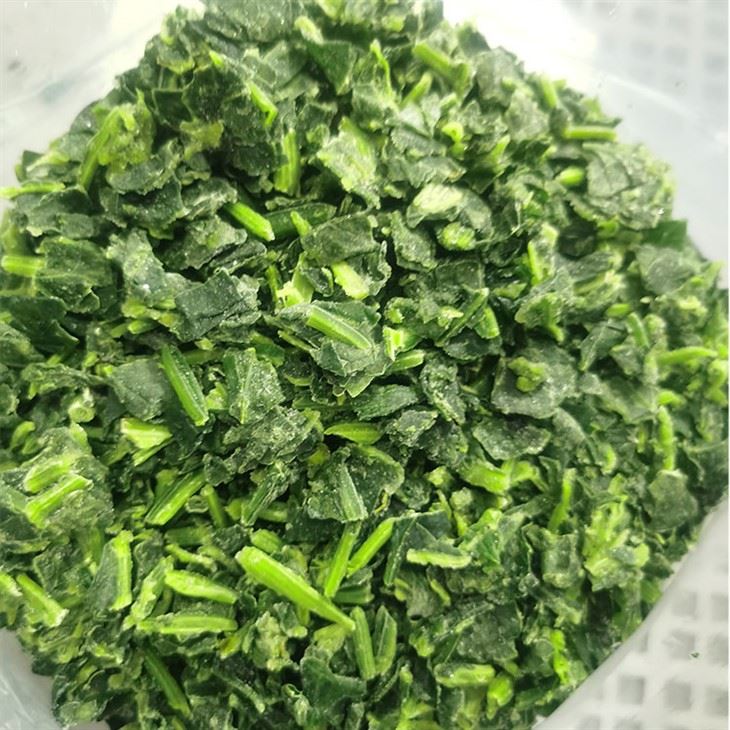
This second authentic product view supports discussion of cut and visible piece condition in an incoming specification.
Ask the supplier about cut consistency and whether leaf length, fines or ice condition are likely to vary across the planned pack format. Verify the exact cooking or blanching state and the intended further-processing instructions. If the product is a brick, confirm how the operation will thaw and press the center consistently. If it is IQF chopped spinach, check how pieces feed, portion and distribute in the filling. A visual comparison of two real product forms is more useful than a generic image of finished pasta when procurement must choose a SKU.
For incoming lots, retain a short inspection record tied to the lot number. A quick small-batch yield and cooked-piece check may be practical for a high-value line, while a larger validation schedule may be needed after a major change. Set that frequency within the buyer's quality system. We can discuss the frozen spinach form and the product documents we can supply; the buyer approves the finished ravioli under its own process.
For the purchasing decision, define the cooked ravioli first; measure spinach and ricotta water separately; use prepared spinach mass rather than unqualified frozen mass; form modest portions on clean seams; and judge the frozen, boiled piece before approving a new lot or formula. The method makes a supplier discussion specific. Instead of saying the spinach was wet, a buyer can show the prepared yield, the filling condition and where the pasta failed.
If you are developing a retail or foodservice ravioli, send us your target spinach cut, portioning method and trial volume. We can help identify a suitable frozen spinach form for sampling and discuss the product specification. Request a quotation when the application and pack requirement are clear, or consult the GreenLand product catalog while you compare options.
Source frozen spinach with GreenLand-food
GreenLand-food is a professional frozen spinach supplier and manufacturer in China, providing factory-direct wholesale supply for importers, food manufacturers, foodservice distributors, and private-label programs.
Send the required form, processing state, specification, packing, quantity, application, destination and requested documents. Include the finished-product target and the preparation route used in your accepted trial. We will confirm sample availability, order terms and supply documents for the proposed program.