


Apple Cider Fermentation: Changing Yeast May Not Rescue a Nitrogen-Poor Must
Oct 09, 2026
Leave a message
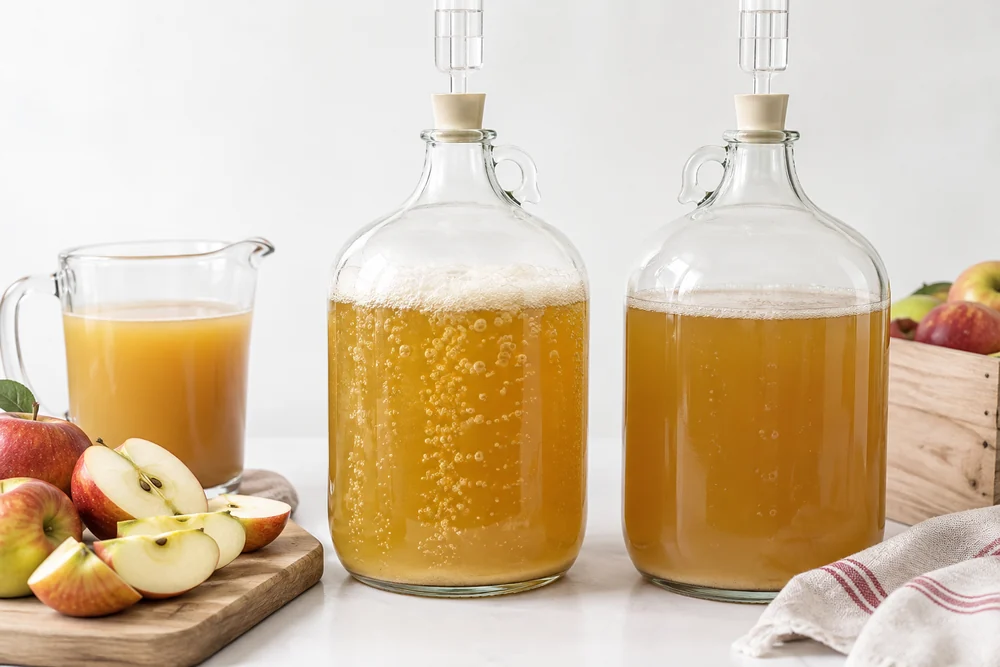
Check the must before selecting another strain
Soluble solids are important for cider yield and fermentation planning, but a Brix reading does not tell the brewer how much nitrogen yeast can assimilate. Two apple musts may have similar sugar yet differ in amino acids and ammonium. A total protein value is also an incomplete substitute because protein-bound nitrogen is not necessarily available on the same timetable as free amino nitrogen. The practical measurement is a method suited to yeast-assimilable nitrogen or the particular nitrogen fractions under investigation. The lab report needs units, sampling stage and method so later comparisons do not combine unlike results.
An apple ingredient's path into must matters. Juice extraction from whole fresh fruit, pressing thawed frozen pieces, using a puree, and blending with other juices can change the measured composition and the relevant mass basis. Fruit solids retained in a mash may release compounds differently from a clarified juice. A cider maker that compares a supplier's fruit specification with a measurement on a finished must should document the extraction yield and any blending, clarification or dilution. Otherwise a real difference in substrate can be mistaken for an effect of yeast or of the fruit source alone.
The original Journal of Food Science study analyzed amino-acid profiles of nine apple musts, then compared two musts with contrasting nitrogen levels using four enological yeast strains. Its abstract reports slow fermentation and lower measured volatile production in the low-nitrogen must across those strains. The study also discusses amino-acid-related differentiation between strains under the tested conditions. This is evidence that must composition can constrain the usefulness of strain selection. It is not a controlled demonstration that nitrogen alone explains every difference between the two selected musts; other compositional differences may have been present.
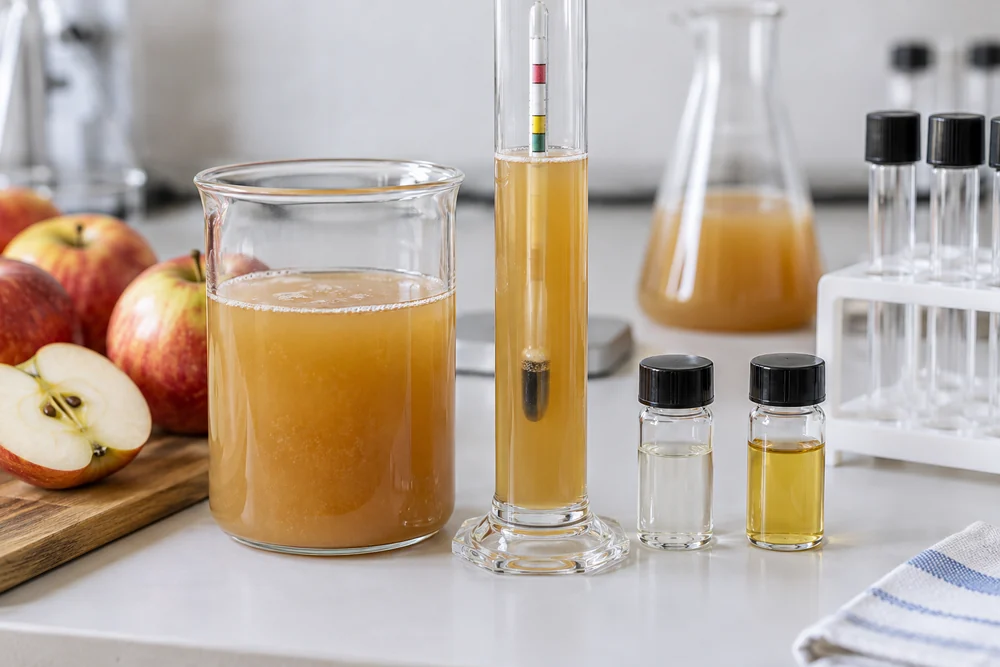
A sugar or density reading does not replace a usable-nitrogen measurement.
Before deciding a strain failed, review the must's sugar, acidity, pH, nutrient measurements and processing history together. Confirm that the inoculum was viable and prepared as intended; check fermentation temperature, oxygen exposure where relevant, sanitation and the time course of sugar loss. A slow start, a slowing middle phase and a complete stall are different patterns. Looking at a single day of fermentation or the final alcohol number alone can hide the path the yeast took. A simple plot of density or sugar against time, with temperature and intervention notes, gives the technical team a much stronger diagnosis.
This approach is particularly useful when fruit sourcing varies by crop, cultivar or season. A purchasing agreement can define the fruit form, grade and basic quality measures, but it cannot assume that every lot will make an identical must without verification. If the fermenter needs a narrow substrate range, it should establish a receiving and blending plan that measures the variables relevant to its yeast program. GreenLand can coordinate fruit sampling and lot information under the agreed specification; the cider maker remains responsible for its fermentation and alcoholic beverage compliance.
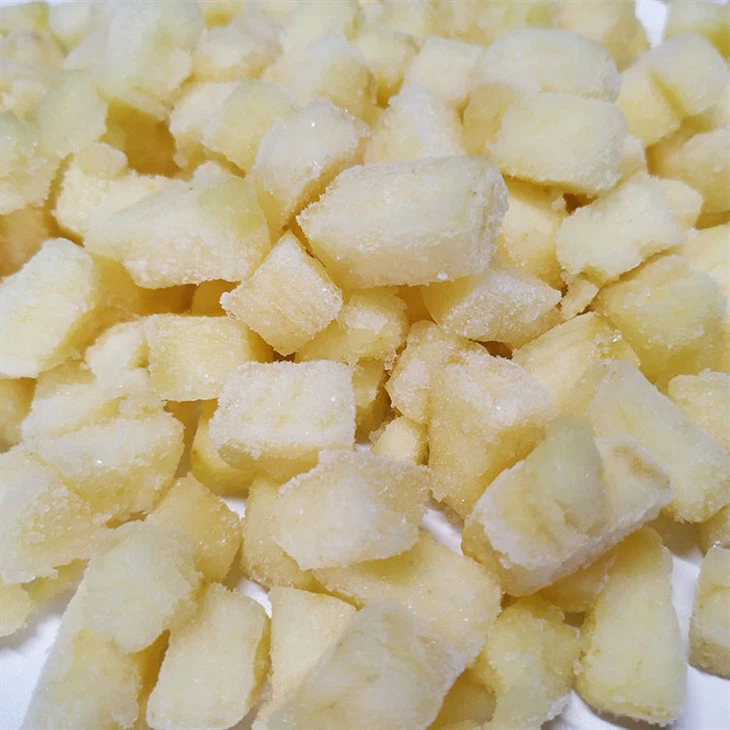
Frozen peeled apple pieces show the supplied fruit form before cider preparation.
Sampling itself can create misleading comfort. A small, highly ripe subsample may give an attractive Brix reading while the delivered lot includes fruit at different maturity stages. Juice pressed from a few pieces can also differ from the juice obtained by the production press. Define how many packs or cartons contribute to a composite, how they are thawed and how quickly the must is measured. If the aim is to investigate a disputed fermentation, preserve both the supplier lot identity and the processor's receiving conditions. A repeat test on a differently prepared sample may answer a different question.
The original must comparison affected every tested strain
The striking feature of the published comparison is not simply that one yeast produced more of a volatile than another. The lower-nitrogen must was associated with sluggish fermentation and substantially lower total measured volatile compounds regardless of which of the four tested strains was used. That broad pattern makes a substrate limitation worth investigating before buying a new culture. At the same time, the strains and musts were a small selected set. A buyer should read the result as a reason to test its own must, not as a guarantee that switching yeast never helps under low-nitrogen conditions.
The paper's endpoint included fusel alcohols and esters, measured analytically. Those groups contain many individual compounds with different sensory effects. A lower total volatile measure is not identical to a direct human judgment that the cider lacks desirable apple aroma. Some compounds are pleasant at one level and intrusive at another; balance with acidity and other aroma notes matters. A purchaser who reports a "weak ester profile" should specify whether that means a lab chromatogram, a trained panel finding or a market preference. The investigation can then choose a matching test instead of assuming one broad number decides flavor quality.
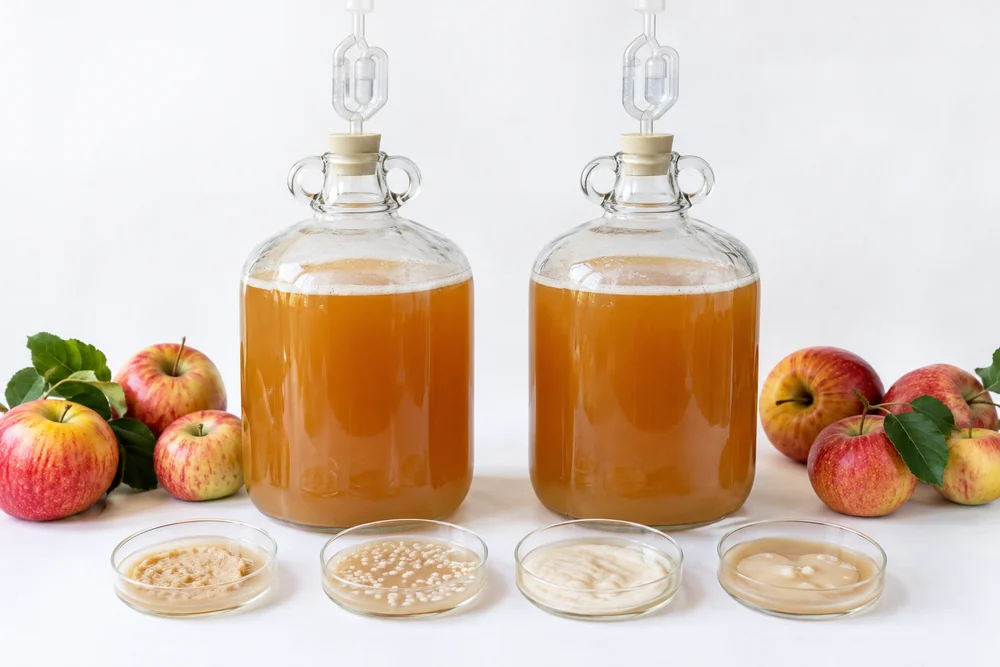
Compare the musts with the same yeast set before assigning a strain effect.
Because the two musts were not a fully reconstructed single juice differing only in nitrogen, causal wording should stay careful. The study linked a low-nitrogen must with fermentation and volatile differences, and it found amino acids relevant to strain differentiation. It cannot tell us how much of every observed difference would disappear if one commercial must received a nutrient addition. Other apple components and processing choices can also influence yeast metabolism. The conclusion is still valuable: the same strain comparison can look different when the substrate changes, so a strain ranking obtained on another juice may transfer poorly.
There is a related decision about measurement timing. Nitrogen available before inoculation is the input condition. Residual nitrogen after fermentation is an outcome shaped by yeast uptake and fermentation progress. A high final residue can mean a fermentation failed to use what was present, while a low residue can reflect consumption; neither is a standalone statement about the initial must. Preserve the pre-inoculation sample and the history of any additions. For a controlled comparison, start the candidate yeasts on aliquots of the same must and keep temperature, vessel scale and process timing aligned. This isolates strain response more effectively than comparing unrelated production batches.
Researchers have also studied yeast-assimilable nitrogen and sulfur aroma in cider. A Frontiers in Microbiology experiment examined nitrogen concentration in relation to yeast gene expression and hydrogen sulfide formation, a different endpoint from the ester profile at issue in the buyer's cider. It reinforces the need to name the aroma compound and process question. A nutritional intervention can affect one unwanted note while changing other sensory properties. No single study supplies a universal dose or an automatic flavor improvement across apple musts.
For a buyer comparing frozen apple suppliers, this means an ingredient sample should be put through the same extraction and fermentation route as the approved reference. Compare the must produced from equivalent fruit mass, then evaluate the fermentation. If the study used dessert apple musts and the buyer uses a specialty blend, transfer of the published pattern remains a hypothesis. The exact cultivar, maturity, freezing form and juice preparation can matter. A source claim about low nitrogen should rest on a test of the buyer's material, with the sampling basis recorded.
The study's approximate high and low nitrogen categories can help a reader understand why the researchers selected contrasting musts, but they should remain descriptions of those samples. A value measured by another laboratory with another nitrogen method or expressed on a different basis cannot be placed directly into the experiment's groups. The buyer also needs to consider fermentation demand: sugar concentration, target alcohol, selected yeast and process conditions influence how much nutrient is useful. A threshold copied from one paper would make that design look simpler than it is. The defensible action is to measure the actual must and interpret it with a qualified fermentation specialist.
Nutrient supply changes the value of strain selection
Yeast strains differ in nutrient demand, fermentation kinetics and volatile formation, but the substrate sets a boundary around those differences. If a must lacks a usable nutrient required by every candidate in a trial, swapping cultures may change the speed or aroma slightly without solving the underlying limitation. If a must supplies sufficient nutrients, strain characteristics may become more visible. The original study's report of greater differentiation among yeasts in the presence of particular amino acids fits that logic in its experimental scope. It should not be turned into a universal ranking of cider yeasts.
Amino acids need to be interpreted as individual components as well as part of a total nitrogen number. The study highlighted asparagine, aspartic acid, glutamic acid and alanine in relation to volatile production. A supplier specification that says only "protein" leaves the fermenter unable to evaluate that question. Even a total yeast-assimilable nitrogen value can hide differences in amino-acid composition. That does not mean every cider producer needs an exhaustive amino-acid panel on every lot. It means a technical investigation should match measurement detail to the question: basic YAN for routine screening, a broader profile when aroma or strain response remains unexplained.
The substrate itself may be deliberately different because the buyer wants a particular cider style. Some producers choose slow fermentations or blend apple varieties for acid and tannin balance. Maximum fermentation speed is not every cider maker's goal. A new nutrient program might alter aroma, residual sugar or other quality attributes, so the buyer should define its target before treating a slow curve as a failure. If the process requires reliable completion by a date, that commercial need belongs in the trial criteria. If a slower traditional style is intended, the acceptance criteria may be different.
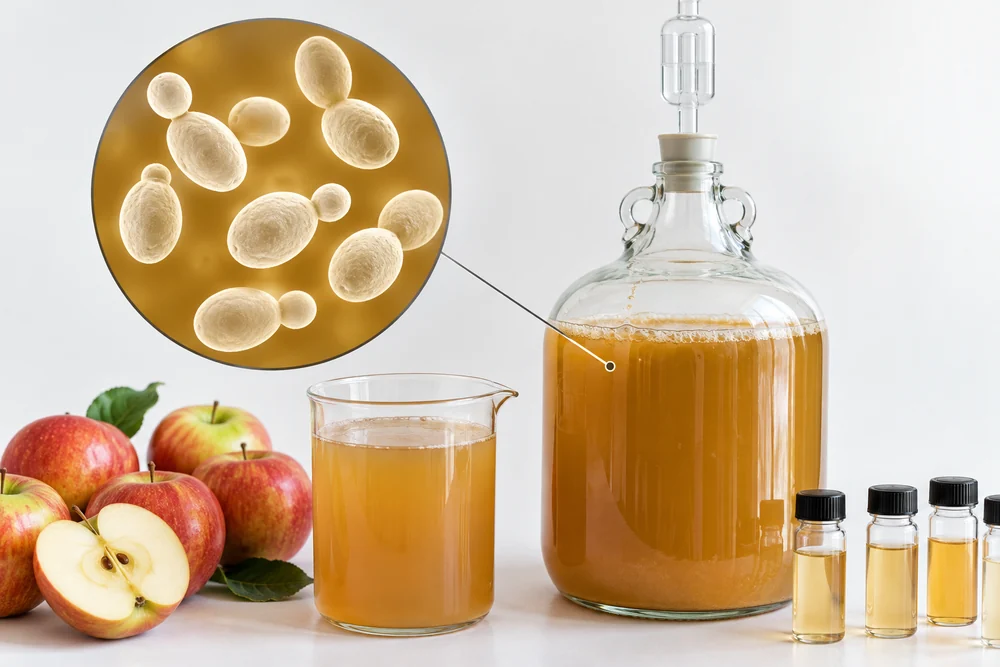
Yeast performance depends on the substrate available in the must.
Supplementation belongs to the cider maker's validated process. It should begin with a measured must, a defined target and a qualified assessment of any ingredient, market and labeling implications. The ranges used in the original research describe its samples, not a recommended specification for GreenLand apples or a dose for diammonium phosphate. A supplier should not infer a nutrient recipe from a Brix sheet, and a bakery or beverage customer should not apply a paper's experimental amounts without testing its own formulation. Process changes also need control of sanitation and fermentation behavior, not just an amended ingredient list.
Strain choice still has a place. Once the must is characterized, a well-designed pilot can compare candidate yeasts on identical aliquots. Track fermentation progress and collect finished samples under comparable conditions. If the buyer cares about ester aroma, measure or taste that endpoint with suitable methods and trained evaluation where needed. If off-odor is the concern, measure the relevant compounds rather than using a general "fruitiness" score. This preserves the distinction between an input limitation and a yeast preference. Both can matter, but they require different corrective actions.
An ingredient buyer can support that process by communicating how apples are delivered and what information accompanies the lot. Fruit variety or blend, form, cut, maturity and packing should be clear. Cold-chain records and intended thaw procedure help the fermenter avoid uncontrolled handling differences. A sample submitted as frozen apple should be tested as frozen apple through the user's extraction route. GreenLand can discuss frozen apple supply, while any claim about cider aroma must come from the customer's process data.
When comparing strains, decide in advance what would justify a change. A faster decline in sugar could be valuable if a shipping deadline is tight, but it may not justify an unfavorable aroma shift. A different ester profile could be desirable even with similar completion time. The trial sheet should state those priorities before tasting begins. It should also avoid a common selection error: choosing the most aromatic small vessel and assuming its profile will remain the same after a much larger fermenter changes mixing and heat removal. The pilot is a screening tool, followed by confirmation at production scale.
Investigate the actual fermentation with traceable inputs
Consider an illustrative buyer scenario: a cider producer asks GreenLand whether another yeast strain will solve a slow apple fermentation with a weak ester profile. This is a hypothetical procurement question, not a past customer case. We would first ask which frozen apple form entered the process, how it was thawed and pressed, whether the must was blended, and which measurements were taken before inoculation. We would then ask for the yeast identities, batch temperature, sugar trajectory and method used to judge the aroma. That evidence can distinguish a substrate issue from a culture issue or a process interruption.
The first practical comparison is between the current must and a known successful reference, sampled at equivalent stages. Record soluble solids, pH, acidity, usable nitrogen and, if justified, the amino-acid profile. Keep the laboratory methods and units attached to each result. Compare fruit yield and dilution history so a lower concentration is not merely an artifact of added water. If a reference blend contains other fruits, the apple-specific contribution should be calculated rather than assumed. The aim is to identify a difference worth testing, not to create an elaborate analysis program without a decision.
Next, build a pilot that changes one meaningful factor at a time. Several yeast strains can be compared on aliquots of one must; the current yeast can be compared across defined must conditions; a process intervention can be evaluated against a control. Record inoculation rate, preparation, vessel geometry, temperature, oxygen exposure where relevant and timing of any nutrient addition. Replicate enough to distinguish a stable pattern from one erratic vessel. Small-scale results guide a line trial, but vessel size and oxygen transfer may change at scale, so the producer should confirm the chosen approach under its production conditions.
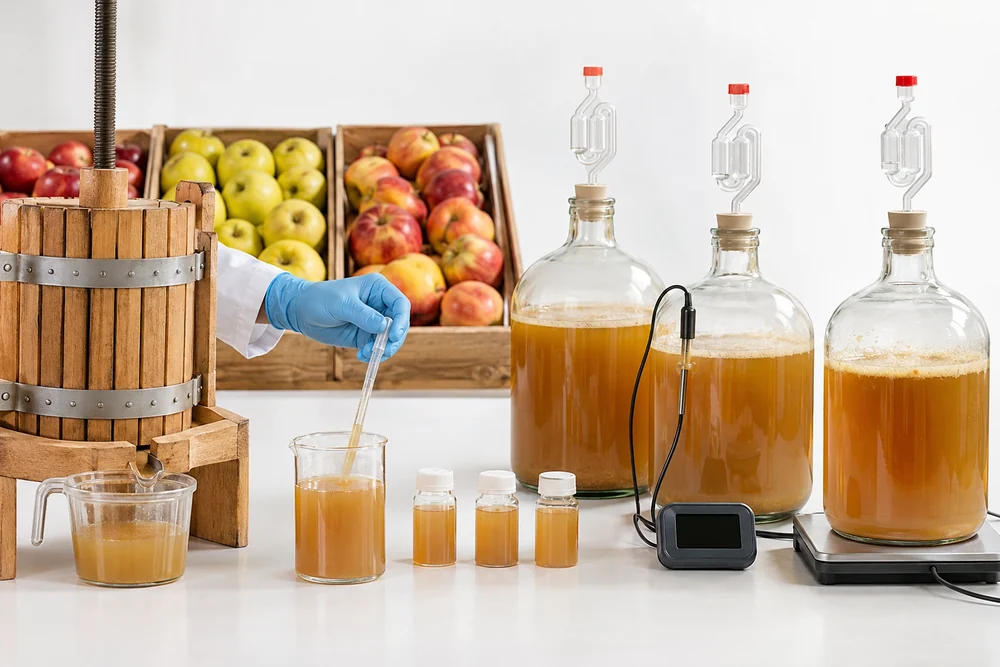
Trace the apple input, must composition and fermentation progress together.
Fermentation progress should be followed as a trajectory rather than judged from a single endpoint. The curve can show how quickly activity begins, whether the rate falls while fermentable sugar remains, and when the process completes. Keep samples from before fermentation, during the change in rate and at completion if the investigation needs them. If the low-nitrogen suspicion is confirmed, a qualified fermentation team can examine a validated nutrient strategy. If nitrogen is adequate, attention may shift to yeast vitality, temperature, inhibitory compounds, sanitation or another process variable. A stalled cider has more than one possible cause.
The volatile investigation needs comparable sample handling. Use the same fermentation age, storage conditions and analytical method for trial ciders. A result reported as total esters may obscure the individual aroma compounds that matter to the buyer. Sensory testing should use a defined panel method and avoid presenting a lab abundance as a guaranteed consumer preference. A lower analytical amount of one compound may coexist with a better-balanced cider. The goal is to determine whether the intervention improves the intended style, not simply to maximize a graph bar.

A fermentation trial must use juice prepared from the proposed apple ingredient.
Supply approval can then specify the fruit attributes that are within the supplier's scope: form, packing, acceptable defect range, quantity, destination and documentation. If a measured must property is crucial, agree on how and where it will be tested and who controls extraction conditions. The frozen fruit category gives broader sourcing context, while the cider maker should retain its own fermentation approval criteria. A fruit purchase order cannot replace a validated beverage manufacturing process.
For a recurring program, the buyer can keep a reference must profile from successful production rather than rely solely on a single fruit grade. The reference might include a range for soluble solids, acidity and usable nitrogen, alongside an observed fermentation curve and sensory description. Develop those ranges from the buyer's own process data and repeated successful runs. If a new sample falls outside a reference band, the technical team can decide whether blending, process adjustment or rejection is appropriate. This is more informative than sending a supplier the name of a preferred yeast and asking it to guarantee that yeast's performance.
Approve progress and flavor separately
A fermentation that finishes on schedule is commercially useful, but completion does not settle flavor. Conversely, a pleasant aroma in a small trial does not guarantee reliable completion at production scale. The buyer should therefore approve at least two outcomes: fermentation progress and finished sensory profile. The first can be supported by sugar-loss or density curves, residual sugar and process records. The second needs the relevant volatile analysis and sensory assessment for the intended cider. Keeping them separate prevents a change that solves timing from being praised for an aroma improvement that was never measured.
It also prevents overclaiming the ingredient. Frozen apple can be a suitable source material for further processing, but a specific ester pattern depends on the must and the fermentation. GreenLand does not supply yeast identity, nutrient supplementation or cider manufacturing as part of a frozen-apple claim unless such services are independently agreed and verified. Our role is to make the fruit offer clear and traceable so the customer's technical team can test it. An approved fruit lot should be linked to a defined extraction and trial record rather than to a published paper's average result.

An acceptable fermentation endpoint still needs a separate flavor decision.
If the cider maker changes cultivar mix, ripeness, pressing method or yeast after initial approval, the earlier comparison may no longer answer the new question. A sensible change-control note can identify which measures need repeating. A new apple lot might require must screening; a new yeast may need a controlled fermentation; a new processing temperature may call for both kinetic and aroma review. This keeps testing proportional. It also makes disagreements easier to resolve because the buyer and supplier can see whether the concern arose before or after the apple ingredient entered the process.
For a GreenLand frozen apple inquiry, specify the form and lot, how the fruit will be pressed or blended, and the target cider style. We can discuss the ingredient specification and samples for a traceable must trial. The cider maker should then pair pre-inoculation nutrient measurements with a fermentation curve, candidate yeast comparison and finished flavor assessment. If a replacement culture does not improve a slow run, the next useful evidence is the actual must and process record, not another unsupported promise about an apple lot or yeast name.
Plan frozen apple supply with GreenLand-food
For frozen apple, tell us the intended product form, application, pack, and inspection priorities. GreenLand-food is a China-based frozen-food supplier and manufacturer. We can discuss factory-direct wholesale supply around the specification you need to evaluate.