


How to Blend Apple Varieties for Cider: Acid, Tannin and Ingredient Form
Sep 27, 2026
Leave a message

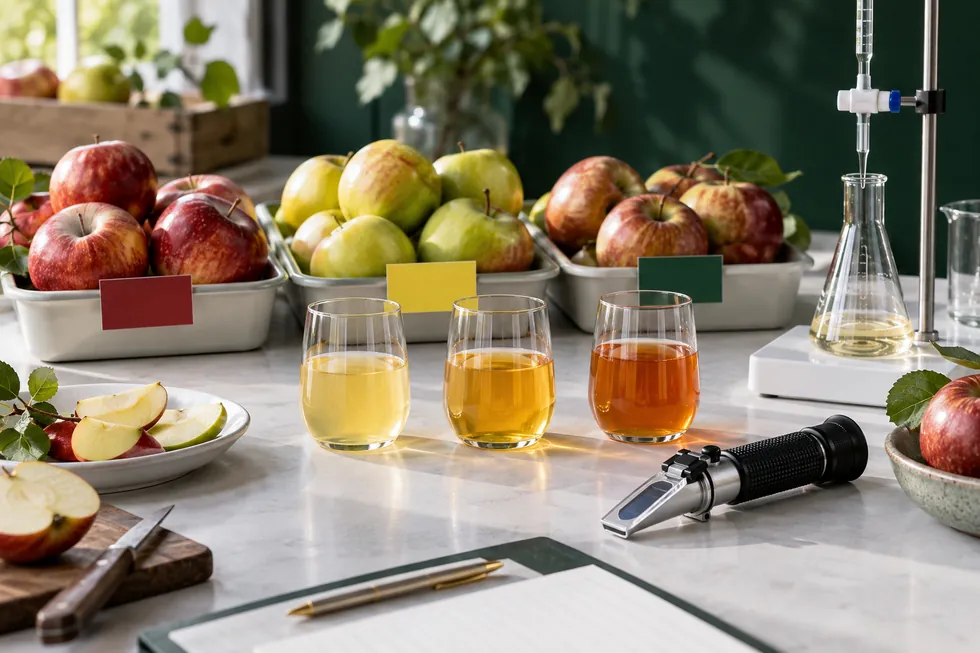
For a beverage developer, the most expensive mistake is choosing fruit by a familiar variety label and discovering late that the finished cider lacks acidity, structure or aroma. The same orchard can give different fruit in different seasons; maturity, storage and extraction also change the juice. A bench blend therefore needs both numbers and sensory judgment. The numbers narrow the trial space. The glass tells the team whether bitterness, astringency, aroma and overall finish serve the intended customer.
GreenLand-food supplies frozen apple ingredients, including cut forms that may interest beverage processors, but our frozen apple product page does not establish a cider cultivar, press yield or fermentation suitability. Any frozen cut apple route needs a separate trial in the actual extraction and fermentation process. This guide keeps that distinction visible while giving purchasing and development teams a practical way to discuss lots with a supplier.
Set the cider style and measurable blend target
First decide what the drink should be in the glass. A dry, aromatic fermented cider may need a different balance from a sweet, low-tannin beverage or a cider intended to carry another fruit flavor. Write down the intended acidity impression, bitterness, astringency, apple aroma, body and finish before selecting fruit. If the team has an approved reference product, evaluate it with the same panel and methods used for candidate blends. A style description such as "crisp" is useful to a marketer; for a formulation trial it needs a sensory reference and chemical measures.
Soluble solids, commonly read as degrees Brix, indicate the sugar-rich material available in juice before fermentation. They do not predict the full final alcohol content without knowing fermentability, dilution and process losses. Titratable acidity gives a measure of total acid, while pH describes a different property relevant to microbial control and product stability. Record both rather than treating them as interchangeable. Tannin or total phenolic measurements require a method named in the test record because different assays do not produce interchangeable figures. The Wisconsin Extension guide to cider apples explains why acid and tannin are separate contributions in traditional cultivar classes.
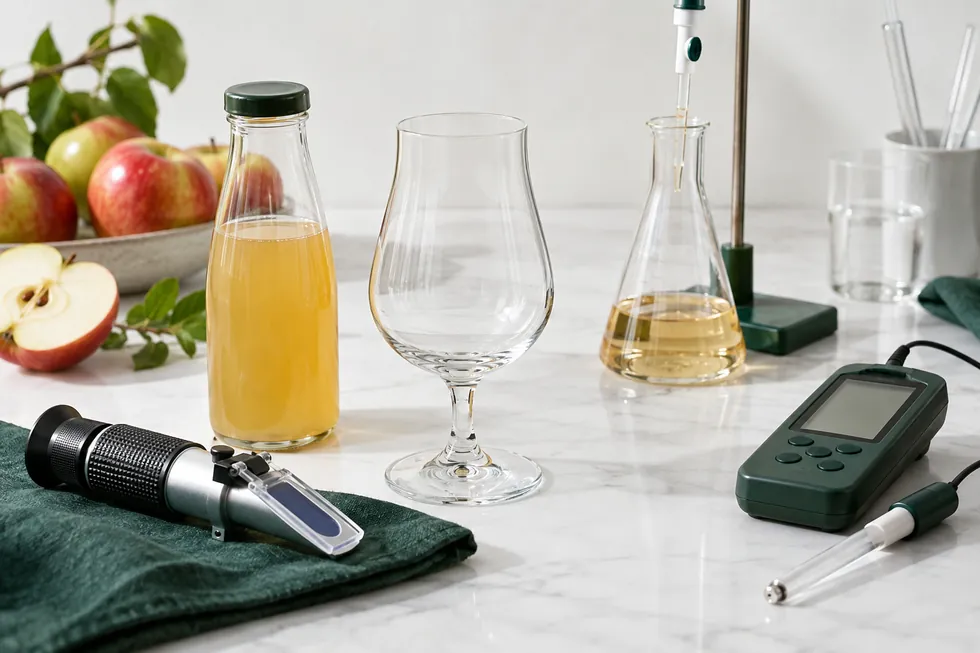
Apple juice with refractometer and acidity testing tools
Put the target in a form that a bench team can test: an acceptable range for each measured parameter, a sensory reference, and a clear rejection condition. A blend that tastes pleasant immediately after pressing may not have the same balance after fermentation, conditioning or carbonation. For hard cider, the target has to refer to a defined process stage. If the current question is juice purchase, use the unfermented juice target first, then document how a pilot fermentation changes it. This avoids comparing a fresh-juice number with a finished-cider sensory goal.
The target should also reflect the intended production route. A direct pressed juice program can select fresh fruit lots and control extraction. A manufacturer starting with purchased juice has less opportunity to change fruit handling but can blend tested liquid lots precisely. A developer considering IQF apple pieces must add thaw, extraction and solids handling to the target. The extra steps are only worthwhile when they provide a commercial benefit that survives a representative trial.
Before approving the target, name the consumer and package. A still cider served cold in a tasting room may show tannin differently from a canned sparkling product distributed through retail. Carbonation can sharpen the perception of acidity, while sweetness can soften both acid and bitterness. The team should assess the blend under the intended serving conditions and after the planned storage interval. These are product-development choices, not attributes that can be guaranteed by an apple ingredient certificate.
Read cultivar classes as contributions, not recipes
Traditional cider vocabulary groups apples by the acid and tannin character of their juice. Sweets tend to contribute fermentable sugar with comparatively low acid and tannin; sharps contribute acidity; bittersweets bring tannin at lower acid; bittersharps bring both. These classes describe likely functions rather than a purchasing specification. A "sweet" apple can still vary materially in Brix and aroma, and an apple marketed as a cider cultivar can miss a particular processor's target in a given crop year.
The four-class description is a starting map for choosing trial lots. A low-acid dessert apple might provide the main juice volume and a familiar aroma, while a smaller addition of a sharp lot lifts the palate. A tannic lot can add grip or length, but too much can leave an abrasive finish. The right proportions depend on the measured juice, the intended style and the fermentation outcome. Even a well-known variety should arrive with a current lot sample. Do not import a ratio from another producer as though the fruit, press and yeast were the same.
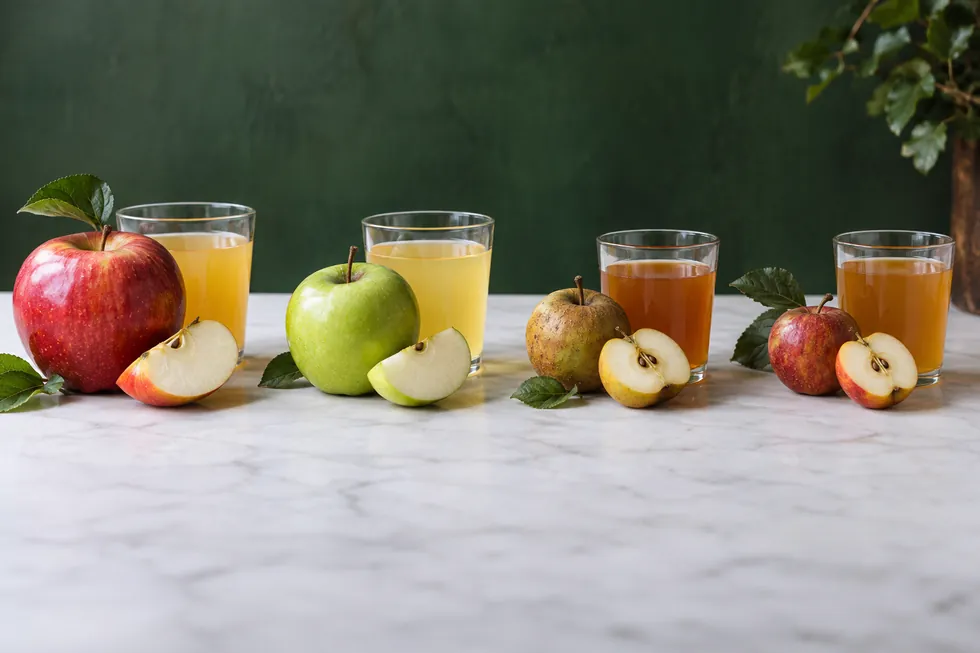
Different apple types and their juice samples
Flavor also matters beyond three chemical axes. Two juices with similar Brix, acidity and tannin can differ in esters, green notes, cooked notes or peel-derived bitterness. Fruit maturity and holding time can make a named cultivar taste different before any blending begins. Observe color and aroma when samples are prepared, then taste the blend in a sequence that minimizes palate fatigue. Make a note of the temperature and whether the sample is unfermented, partly fermented or finished; those conditions change what the panel perceives.
The current GreenLand frozen apple range names forms such as dice, chunks and slices, and asks buyers to confirm variety and Brix against order requirements. It does not publicly promise a stock of sweets, sharps, bittersweets or bittersharps. We would confirm a requested cultivar or its suitable alternative through the current specification and sample before discussing a cider application. That keeps a useful cider framework from becoming an unsupported supply claim.
Measure comparable apple and juice lots
Prepare candidate samples in a way that makes the differences interpretable. If one lot is pressed whole and another is blended after thawing, a change in juice chemistry may reflect extraction as much as variety. Use consistent fruit mass, preparation, equipment, time from cutting to extraction, pressing pressure where applicable and sample temperature. Record the yield of liquid and retained pomace. When a route uses frozen fruit, record both the thawed liquid and the extractable juice so that released drip is not silently lost or double counted.
Take Brix, pH and titratable acidity readings on well-mixed juice using calibrated instruments and a written method. If tannin is central to the style, select one assay or a consistent trained sensory method and keep it constant for all lots. Record the sample identifier, harvest or production lot, cultivar if verified, fruit condition, cut form, treatment, storage history, extraction method and measurement date. These details make the numbers usable when a buyer asks whether the next shipment is comparable to the trial material.
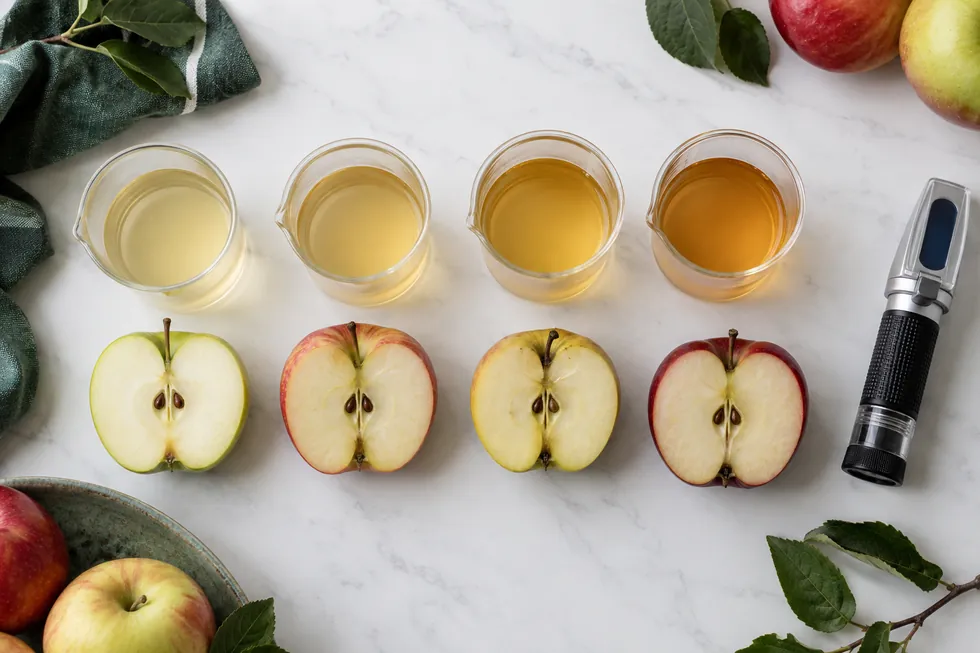
Four apple juice lots with different fruit samples
Repeat measurements when the result is near a decision boundary. A single refractometer reading from a surface layer may not represent a tank with settled solids; a small press trial may behave differently from a production press. Sampling should cover the lot rather than the best-looking carton. The Penn State discussion of processing fruit for cider identifies sugar, acidity, pH and tannin as relevant cider characteristics, but the buyer still needs a method and acceptance range suited to their own process.
Treat the initial result as a description of a lot, not a permanent cultivar constant. Weather, ripeness, orchard practice and storage can shift the next crop. A formulation team can maintain a target sensory profile by changing blend ratios after testing new lots. Purchasing can support that flexibility by contracting for measurable ranges and advance samples rather than writing an unqualified apple name into the order. If a variety is essential to an origin story, preserve identity records separately from performance measures.
When samples come from several suppliers, give them neutral codes during the first tasting. This reduces the tendency to favor a familiar orchard or a lower quoted price before the sensory result is known. Keep enough material for a repeat test, and note whether it came from a composite lot sample or a single carton. If a small amount of a high-tannin juice will have a large effect on the final blend, uncertainty in that component deserves extra sampling. The test plan should reflect its influence on the drink, not simply its percentage of the purchase order.
Build and interpret a controlled bench blend
Start with two or three candidate juices and measure their contribution by volume or mass consistently. A simple worksheet can hold the lot name, Brix, pH, titratable acidity, tannin method/result, blend fraction, stage and sensory notes. Make small blends that deliberately test one change at a time. For example, hold the base and tannic fraction steady while varying the sharp juice, then hold acidity near the preferred point while comparing tannic fractions. This method gives the team a reason for each candidate rather than a shelf of arbitrary glasses.
Use calculations as a planning aid, then measure the mixed sample. Brix and titratable acidity can sometimes be estimated from component fractions for a first pass, but a real blend may deviate because the starting measurements, densities and extraction conditions differ. pH is especially unsuitable for simple arithmetic averaging. Taste a fully mixed sample at a fixed temperature and serving condition. Record whether acidity feels refreshing or harsh, whether tannin gives body or dryness, and whether a cultivar contributes a distinctive aroma worth the supply complexity.
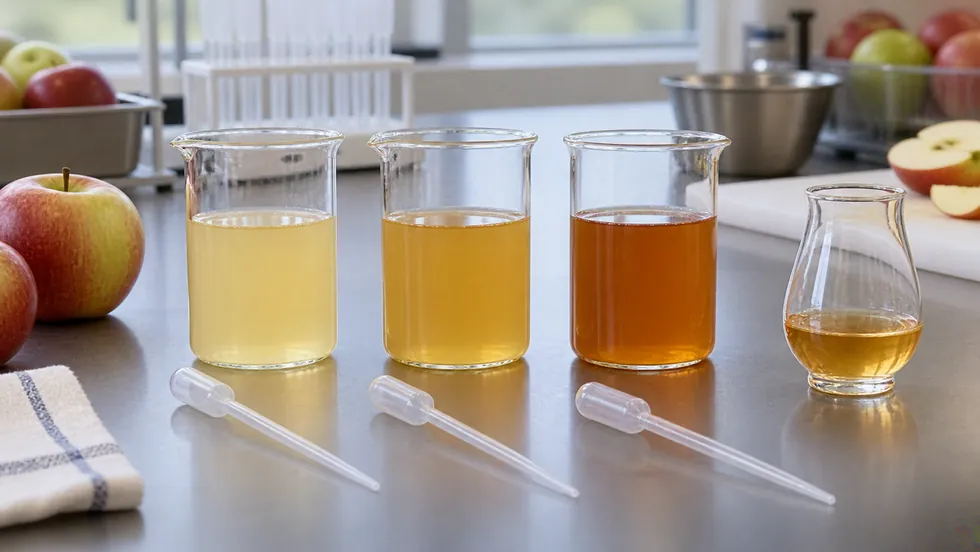
Three measured apple juice samples for a bench blend
If the product will be fermented, do not approve a final recipe on juice tasting alone. Fermentation consumes sugars, produces alcohol and changes aroma and mouthfeel. Run a pilot with the intended yeast, temperature plan and sanitation controls, then evaluate at a defined endpoint. A blend that appears balanced before fermentation can turn thin or excessively sharp when sweetness falls. Any post-fermentation adjustment belongs in the producer's validated process and legal framework; the fruit supplier should not imply that one apple lot guarantees a finished cider result.
Keep rejected blends in the record with a short reason. "Too drying after fermentation" is more actionable than "not preferred," especially when the next crop arrives. Add a cost and availability column only after a sensory candidate is technically viable. A marginally cheaper lot that requires repeated corrections may cost more in labor and yield than a stable component. The bench sheet becomes a bridge among the cider maker, quality team and ingredient buyer.
A bench ratio should be expressed in an unambiguous unit. If the team writes 20 percent of a component, state whether that means pressed-juice volume, fruit mass or finished-cider volume. Include total batch size and the calculation used to scale the trial, then confirm the scaled mixture analytically. In a tank, incomplete mixing can produce misleading samples from the top or outlet. Take a representative sample after the planned mixing interval before deciding that the pilot confirms the small glass.
Choose when to blend fruit, juice or cider
Blending before pressing can simplify one continuous production run and allow different apples to pass through the same mill and press. It also commits the blend before separate yields and juice characters are known. If one fruit lot extracts poorly or has unexpected oxidation, it changes the whole batch. Fruit-stage blending therefore needs reliable lot screening and a way to adjust the ratio before the mill. It can suit a mature recipe with stable supplier relationships and an efficient press line.
Juice-stage blending provides more control over measurable components. Press each lot separately, collect representative samples, then proportion the liquids after Brix, pH, titratable acidity and sensory checks. The team can retain some juice for correction or for another product. Separation adds tank, sanitation and traceability work, and freshly pressed juice needs prompt handling under the producer's food-safety plan. The increased control is often useful during development or when seasonal lots vary.
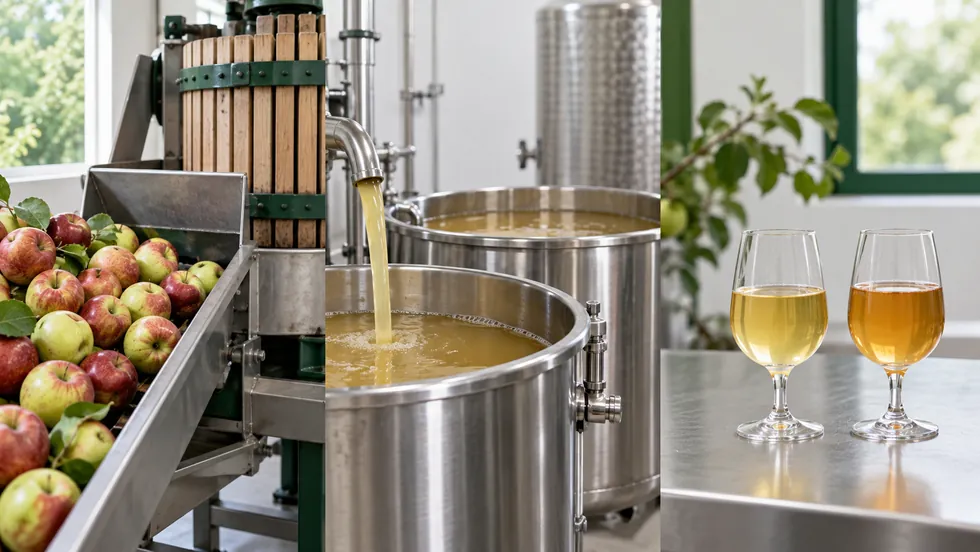
Apple fruit, juice and cider stages in a processing concept
Blending finished ciders lets the producer assess fermented character before committing to the final profile. Separate fermentation may preserve cultivar-specific aromas or show which lot becomes too sharp or tannic. It also consumes more vessels and creates separate fermentation records and potential differences in alcohol, residual sugar, microbial condition and stabilization status. Those conditions must be checked before combination and packaging. A finished-cider blend cannot repair an unsafe or uncontrolled fermentation simply by mixing it with another tank.
The stage decision should be written into the trial sheet. The same ratio of fruit by mass, juice by volume and cider by volume will not necessarily produce the same result. Press yields differ, fermentation changes composition, and losses occur at each stage. For a new apple supplier, juice-stage testing often gives the clearest information on the ingredient's contribution. A production choice can then follow once the team knows which differences are material and which controls it can afford.
Traceability follows the chosen stage. A mixed fruit hopper requires records of which apple lots entered each press run. Separate juice tanks need lot identification through transfers and cleaning. Finished-cider blending requires a record connecting each fermented vessel to the packaged batch. These records do more than satisfy an audit: they make it possible to identify which component changed when a later batch tastes different. The blend plan should therefore include both a formulation calculation and a material-flow map.
Test whether frozen apple fits the press route
IQF apple pieces may offer portioning and inventory advantages, but they are a distinct ingredient from sound fresh cider fruit. Cutting exposes more surface, frozen storage changes cell structure, and thawing releases liquid. These changes can help or hinder extraction depending on the press, screen, particle size and handling method. A smoothie or bakery specification does not establish suitability for cider. Use a representative frozen lot in a pilot press or extraction trial before treating it as a blend component.
Define whether the process accepts frozen pieces directly, tempers them or thaws them fully. Measure drained liquid, residual solids, extracted juice and total recoverable liquid separately. Include thaw drip in the mass balance and test the juice it contains rather than discarding it by habit. Compare color, aroma, turbidity, pH and acid with a fresh-fruit or established juice control. Watch for core fragments, peel, seeds, browning and suspended fine particles that could burden filtration or change the finished drink.
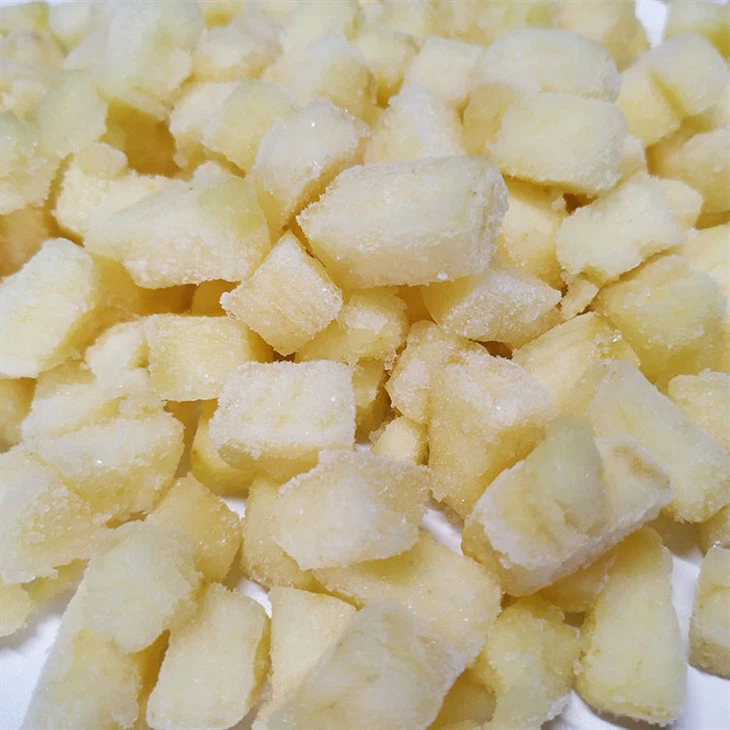
Frozen apple dice photographed on the GreenLand product page
The frozen apple photo beside this section shows a cut format, not a proven cider press input. GreenLand's existing apple freezing guide discusses browning, drip and cuts for food uses; it does not validate a fermentation route. We can confirm variety, cut size, treatment declaration, Brix, acidity and available documents against the order, then provide a sample for the customer's processing trial. Press yield, microbiology and fermentation performance belong to the cider producer's qualification work.
Food safety needs its own decision. Freezing does not sterilize fruit or remove contamination acquired before freezing. The producer must control receiving, thawing time and temperature, equipment hygiene, juice handling and fermentation according to the applicable process and market. A fruit lot that smells fermented, shows damaged packaging or has unexplained temperature history should be investigated before use. The University of Missouri cider article also stresses sound fruit and clean handling in small-scale pressing; a commercial line needs documented controls suited to its scale.
Run the frozen-apple trial with the actual production equipment when possible. A tabletop blender can release juice from small pieces that a belt press cannot handle, while a coarse sieve can retain more solids than the laboratory strainer. Record downtime for cleaning and the behavior of thawed fruit during transfer. The usable result is the amount and quality of liquid obtained at the line, not the theoretical juice content of the fruit. A frozen input may still be valuable for a beverage base or fruit preparation even if the cider press trial is unattractive.
Translate the trial into a repeatable purchase specification
Once a trial blend works, describe the ingredient by the properties that made it work. For fresh fruit, that may include cultivar identity, maturity window, sound-fruit criteria and delivery timing. For frozen apple, add cut form and size distribution, peeled or unpeeled condition, core and seed tolerance, color, browning-control treatment, Brix, titratable acidity, packaging and cold-chain expectations. Include a sample method and acceptance rule for each critical property. "Suitable for cider" alone cannot tell an inspector what to accept.
Keep the formulation flexibility that the trial revealed. If the style depends on a certain acid contribution, specify a range and an adjustment process for lots near its edge. If a cultivar name is required, document the verification method and availability. If the press route is sensitive to pieces below a certain cut size or to excessive thaw drip, test those limits with representative production material and write them into the agreed specification. Do not borrow a tolerance from a bakery apple contract simply because both use frozen fruit.
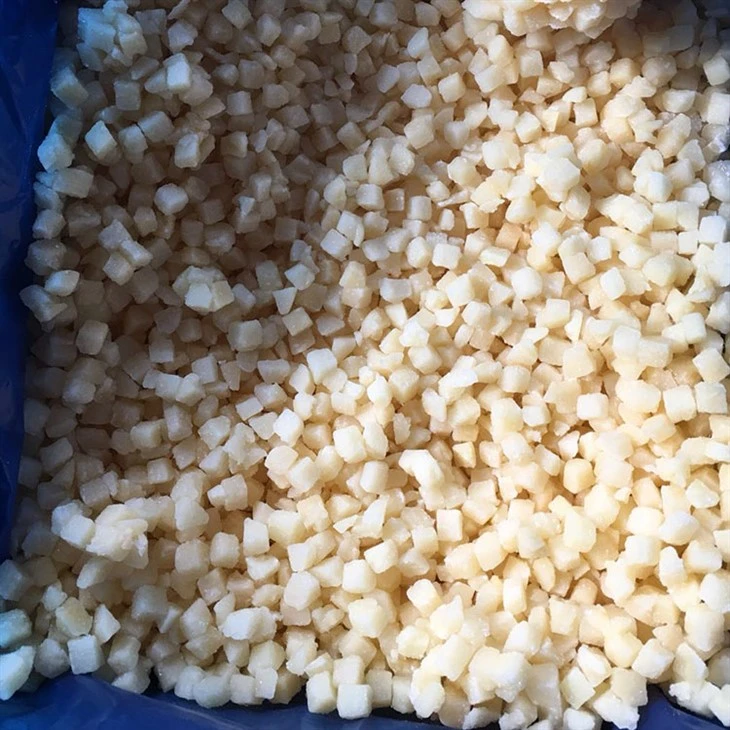
Bulk frozen apple dice in a lined container
Ask the supplier for a current sample and product sheet before committing to scale. Confirm packing unit, pallet plan, order quantity, crop and stock timing, lead time, destination, private-label needs if applicable, and required export or food-safety documents. Agree how retained samples and lot codes will connect the delivered cartons to the approved trial. At receiving, inspect temperature evidence, packaging integrity, labeling and the agreed critical characteristics before blending the lot into a larger vessel.
GreenLand-food can discuss frozen apple supply as an ingredient sourcing option, and our broader frozen fruit range may help programs with several fruit inputs. We would not promise a cider cultivar, a press yield or a finished drink character without a current specification and the buyer's trial. A repeatable cider blend is ultimately a controlled relationship among lot chemistry, the selected stage of blending and the producer's own fermentation process.
Source frozen apple with GreenLand-food
GreenLand-food is a professional frozen apple supplier and manufacturer in China, providing factory-direct wholesale supply for importers, food manufacturers, foodservice distributors and private-label programs.
Send us the product form, specification, packing, quantity, application, destination, private-label needs and requested documents. We will confirm the current supply details and sample route for your own process trial.