


Sweet Potato Croquettes from Frozen Sweet Potato: Shape, Crumb and Reheat Trial
Sep 27, 2026
Leave a message

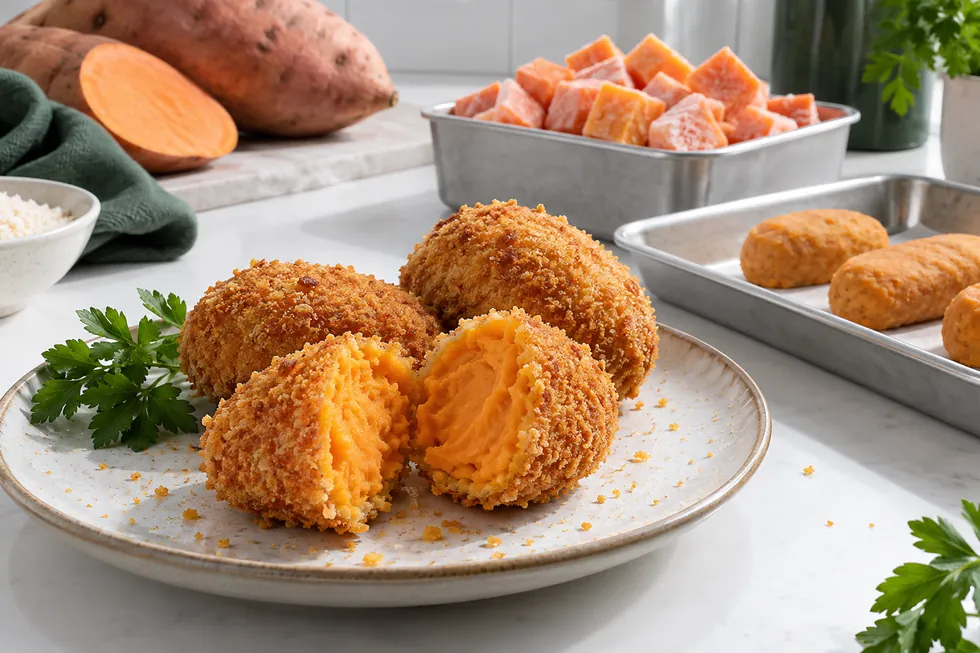
The central difficulty is the relationship between moisture and structure. Sweet potato that tastes pleasantly moist as a side dish may slump when shaped. A thick binder can hold the unit, yet too much flour makes the interior heavy and hides the vegetable. A crumb layer may look complete before freezing and still crack after a case is handled. The right process is established by a series of small trials that follow the product from incoming frozen ingredient to the plate.
GreenLand-food supplies frozen sweet potato in forms that can be discussed for food manufacturing. We do not list a finished sweet potato croquette as the ingredient offered on that page. A customer developing croquettes should confirm the current cut, color, cooking or blanching condition, packing and sample availability before relying on it as a mash input. The process and safe heating instruction for the finished appetizer remain the manufacturer's responsibility.
Define the finished unit and service route
Set the intended unit before adjusting the mash. A bite-sized foodservice appetizer, a larger retail side dish and a stuffed croquette have different structural demands. Record a target mass and shape, whether the product is served from frozen, the expected number per tray or fryer load, and the acceptable variation in color and crust. A long cylinder has more exposed shell and may be easier to turn in a fryer; a round piece can roll during coating and packing. The correct shape is the one that survives the chosen line and service method.
Describe the eating quality in observable terms. The center might be smooth with recognizable sweet potato flavor, or it might contain small vegetable pieces. The crumb may be fine and compact or deliberately coarse. Decide whether the portion is meant to be crisp immediately after frying, remain crisp after a short holding period, or recover crispness in an oven. A kitchen sample that tastes good straight from the fryer does not settle the question for a distributor whose customers bake it from a frozen carton.

Uniform croquette portions and a cut cross section
The basic unit also determines how the trial is measured. Weigh a group of portions before and after coating to calculate coating pickup, and count pieces with bare spots or visible cracks. After freezing and representative handling, count breakage rather than relying on one attractive plate. After reheating, assess shell color, attachment, center condition and any oil or moisture on the tray. Compare the results with the same unit specification at each step so that one improvement does not conceal another defect.
Consumer recipes often begin with an ingredient list and a serving photograph. The Ahead of Thyme croquette recipe shows that shaped and coated portions can be cooked by several methods and frozen before service. For a commercial program, that idea is a starting point. The receiving form, cook yield, cold structure, frozen handling and final service load must be tested with the customer's ingredient and equipment.
Agree on the acceptable appearance after service as well as before packing. A coating can be evenly applied when frozen yet show a pale underside after baking because the portion sits flat on a tray. If a customer expects a uniformly golden shell, turning, tray type or crumb design may need adjustment. Specify the result the customer sees rather than only the process step that created it. A photograph of the approved cooked unit can support acceptance, provided it is accompanied by measurable criteria and a defined heating method.
Prepare a mash with a workable moisture endpoint
Cook the frozen sweet potato according to its actual specification and the intended production method. A blanched IQF cube may need a different cook than a raw frozen cut; do not infer readiness from its appearance in the bag. Weigh the incoming frozen material, record any frost or free ice, and cook a measured batch. After cooking, drain or evaporate free moisture under a controlled method, then record the mass of usable mash. This drained yield matters more to a croquette formula than the label weight of the unopened carton.
Mash texture should be evaluated at the temperature used for forming. A hot puree can appear loose and then firm as it cools, while a heavily worked mash may become sticky. Use a simple repeatable observation: does a portion hold a defined shape on the tray for the planned waiting time, and does it release cleanly from the forming tool? If it spreads, measure the moisture and drain or cook the base further before adding binder. Adding flour to solve every wet batch can move the recipe away from sweet potato and create a dense center after reheating.
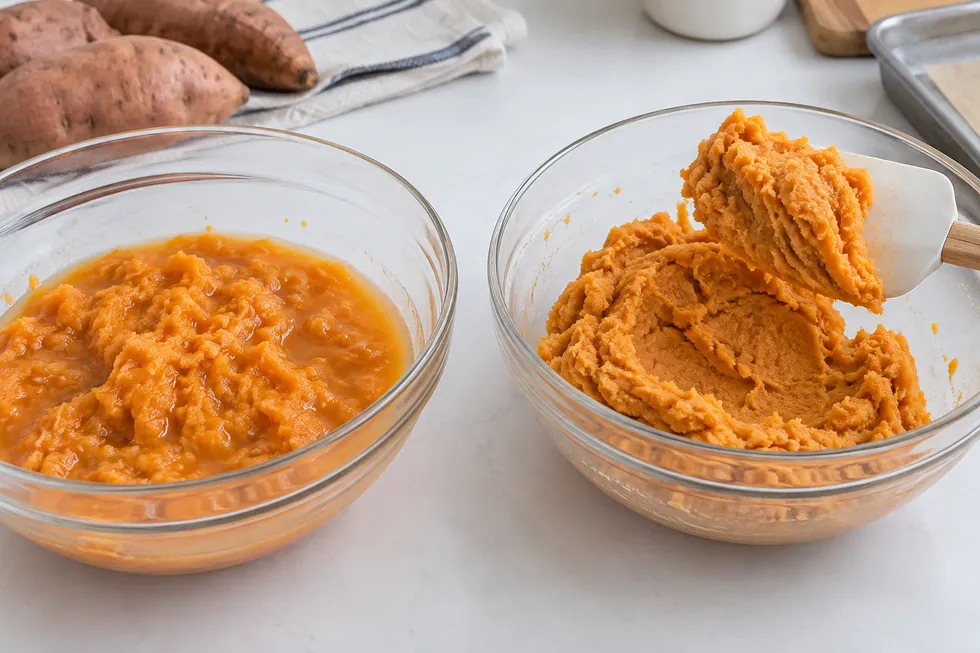
Loose and firm sweet potato mash samples
Track other sources of water in the formula. Milk, vegetable inclusions, cheese and wet seasonings may change the base even when the sweet potato lot is stable. A stuffed unit must hold the filling without leaking into the crumb layer. Add ingredients in a documented order and retest the forming endpoint after each significant change. The center should be fully cooked as required by the process, while remaining cohesive enough to move through coating without collapsing.
The GreenLand guide to using frozen sweet potato cubes discusses thawing, cooking and puree applications; this croquette trial goes further by measuring whether that puree can support a formed shell. We can provide a sample of the offered cut for testing, but the appropriate cook yield and binder level must be established with the buyer's specific recipe. Record lot codes during trial work because color and moisture can vary with variety and season.
If the incoming sweet potato has a broad size distribution, the smaller pieces may cook faster and take up or release water differently from large ones. Separate a sample by size, inspect the spread, and decide whether the recipe can tolerate it. The same applies to peel remnants and fiber. These may be acceptable in a rustic croquette, while a smooth private-label product may require a tighter cut and trimming standard. The specification should describe the intended eating texture rather than assuming every orange cube behaves alike.
Control shape, unit mass and chill
Once the mash holds together, form a small run at the intended unit mass. Check pieces at the start, middle and end of the run. A hand-formed sample may conceal variation that a depositor or extruder exposes; a production trial should therefore test the real forming device. Record whether the portion surface tears, sticks or develops a wet sheen. Uniform mass helps the center heat predictably, while uniform length and diameter make coating and packing more consistent.
Chilling the formed core can improve handling before coating, but the endpoint should be defined. A core that is still warm may smear into the flour or egg layer. One chilled until its surface becomes wet with condensation can weaken the shell. Compare coating performance after two controlled chill conditions and choose the shortest condition that gives clean transfer and adequate firmness. Keep the time and temperature record tied to the product safety plan rather than using "chill until firm" as the only instruction.
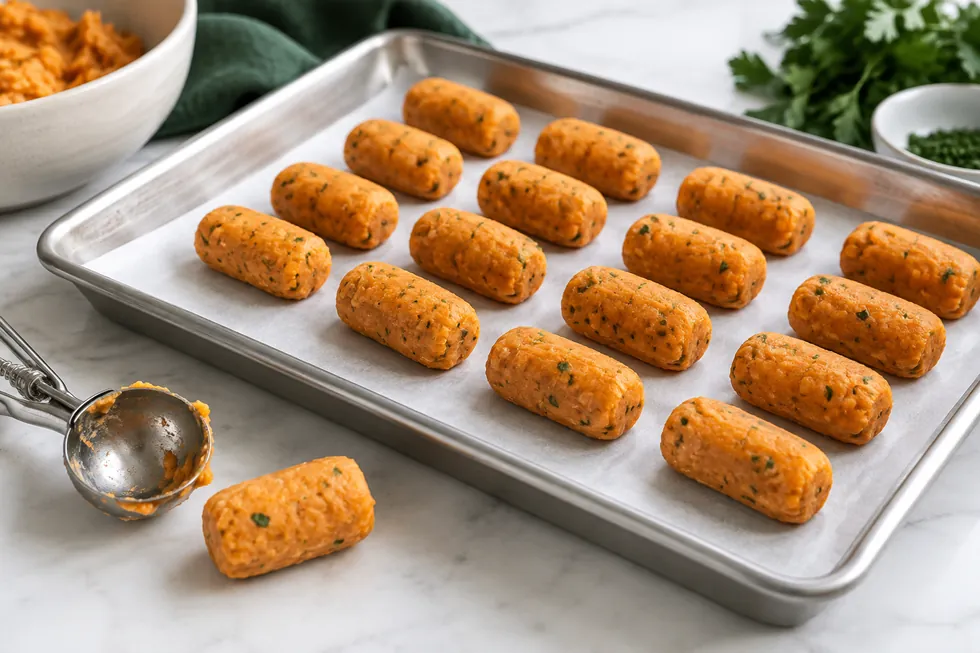
Formed sweet potato portions on a tray
Watch the transition from forming tray to coating line. A croquette that holds shape while untouched can flatten when lifted by tongs or dragged across a conveyor. Count deformed units and note where deformation occurs. If a shape fails consistently, change the core endpoint, geometry or transfer method before thickening the coating. The shell should protect an already stable core; it should not be asked to carry a fluid filling.
For a stuffed croquette, repeat the same checks after the filling is added. A cheese pocket or savory inclusion can create a weak seam. Keep the filling centered and define a minimum layer of sweet potato around it. The exact dimension depends on the unit size and equipment, so validate it through cut-open samples and heat trials. A visibly centered filling also helps identify whether the forming process has drifted over a long run.
Take chilled samples at several points in the shift. A mash may warm while it waits beside the forming line and begin to adhere to equipment. Record the batch temperature and the time it has been held before forming. If late-run pieces have more defects than early-run pieces, the answer may be cooling capacity or smaller preparation batches rather than a formula change. This is especially relevant when moving from a pilot bowl to a line that runs for hours.
Build a crumb shell that stays attached
Coating is a structure, not simply a visual finish. A typical trial may use a dry predust, a wet adhesive layer and crumb. Each step needs full but controlled coverage. Excess predust can create a powdery separation plane; too little can leave wet mash exposed. A very thick wet layer may slide during freezing. Coarse crumb can give an attractive bite but leave gaps on a small, curved unit. Select the sequence and crumb grade according to the surface of the chilled core and the final heat method.
Measure coating pickup by weighing a defined group before and after each stage. Photograph several pieces on both sides, especially ends and seams. Record bare spots, clumps and loose crumb collected beneath the line. A shell may look good before it is frozen yet release during bagging, so put coated samples through the intended freeze and handling route before approving pickup. The McCormick foodservice croquette recipe illustrates flour, egg and crumb as a practical culinary sequence, but the correct pickup for a frozen retail unit has to be tested.
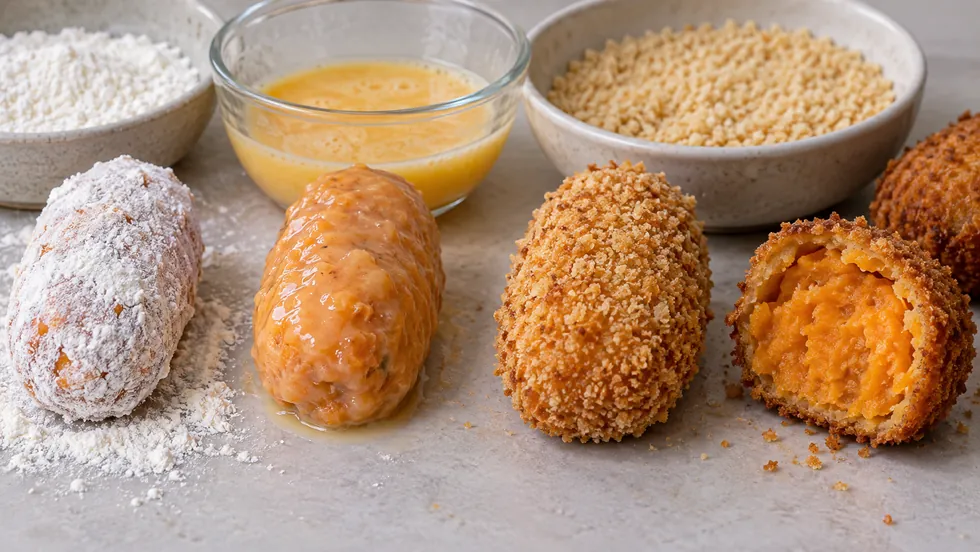
Croquette portions at flour, wet and crumb stages
Cut a cooled, cooked unit in half. The boundary between sweet potato and crumb should remain attached around the circumference. If the crust lifts as a separate sleeve, look for condensation, excessive predust, a poorly set wet layer or a core that shrank during cooking. If the crust cracks and the center escapes, examine expansion, unit mass and the heat profile. Changing only the breadcrumb quantity may hide the cause without solving it.
Allergens and label needs affect the coating choice. Egg and wheat may be acceptable in one program and excluded in another; a plant-based or gluten-free version needs its own adhesion trial, not just an ingredient swap in the approved formula. Keep formulation, allergen control and line cleaning in the manufacturer's documented plan. The frozen sweet potato input is only one part of the finished label and cannot establish the finished product's claim or nutrition panel.
The coated sample should be photographed both before and after freezing at the same scale. Compare one unit from the top of the tray, one from the center and one from an edge. If defects cluster in a position, investigate airflow, contact with the tray or coating application rather than blaming the sweet potato lot immediately. A consistent record turns a visual complaint into a solvable process problem. It also prevents approving a shell only because the best piece was selected for tasting.
Compare fryer, oven and air-fryer finishes
Evaluate the finish method that the buyer will actually use. Frying transfers heat quickly and can build a strong crust, while baking and air frying depend on airflow and often need a different crumb or surface oil approach. Use the same frozen lot of croquettes for the comparison, and record load size, spacing, equipment setting, time and product center condition. A small batch surrounded by hot air may look crisp while a full tray at service load stays pale on its underside.
Judge several attributes together. Note outside color, audible or tactile crispness, oil uptake or surface greasiness, hot center, sweet potato flavor and the amount of crumb left behind in the equipment. Examine a cut piece soon after heating and again after the expected hold time. A shell that softens rapidly during a buffet hold may be unacceptable even if it is excellent at the first bite. If multiple service methods will appear on the label, each needs its own validated instruction and acceptance criteria.
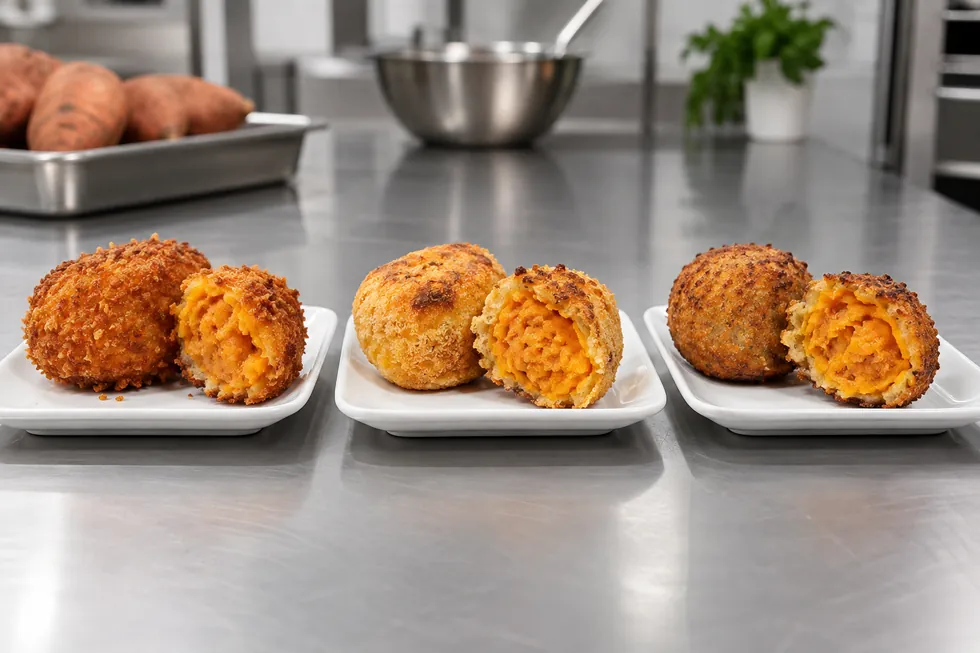
Croquette samples with different heat finishes
Hot oil introduces specific handling hazards. Water on frozen surfaces can spatter when pieces enter a fryer; overloading may lower oil temperature and lengthen the cook. The USDA FSIS deep-fat frying guidance is a safety reference, while the actual commercial fryer settings must come from the manufacturer's validated process. Do not copy a home recipe's oil temperature or minute count into a bulk finished-product specification.
Use a deliberate comparison rather than choosing the most appealing photograph. One route may provide better shell color but poorer center texture. Another may be easier for foodservice customers to execute consistently. A buyer may prefer an oven finish if it fits existing equipment even when frying has a higher immediate crispness score. Record the tradeoff and decide against the stated service requirement, not the developer's favorite sample.
For service instructions, test the product at the lowest and highest realistic equipment load, and use the common tray or basket specified for the customer. If a fryer trial uses fresh oil and a very small batch, repeat it under the conditions expected during normal service. In an oven, placement and turning can affect the underside. In an air fryer, crowding can block circulation. State the validated range and the required center check instead of presenting one household time as universally safe.
Freeze and pack a representative lot
Freeze coated pieces in the arrangement and at the throughput the intended line can handle. Separate units so they retain shape and do not freeze into a block. Evaluate whether the shell chips or cracks during transfer to the pack. A tray of a dozen carefully spaced pieces is useful for early development, but it does not show what will happen when a packing line vibrates or a case is handled several times. Run a representative lot through those motions.
Choose packing to control both physical damage and moisture exposure. A bulk bag within a carton may suit foodservice, while a retail bag may need more protection against abrasion and freezer burn. Count broken pieces, loose crumb and fused pieces after an agreed handling simulation. Inspect the bottom of the bag as well as the visible top layer. If the product relies on a crisp shell, moisture migration during storage should be tested over the intended shelf-life period rather than assumed from day-one performance.

Sweet potato dice shown on a GreenLand product page
The GreenLand product photograph here shows a frozen sweet potato input, not a coated finished croquette. It can help the buyer assess cut identity and potential preparation yield before forming. The purchase specification should state whether the input is diced, cubed, raw or blanched, and what cooking step is expected before mash preparation. If an ingredient lot arrives with excess ice, clumping or a different cut distribution, it may shift the mash endpoint and therefore the structural trial.
Keep pack and lot coding practical for the finished product. Record the sweet potato ingredient lot, coating materials, date of manufacture and frozen storage conditions. These records allow the team to trace a later crust complaint to an input or process change. They also let purchasing compare trial material with a production delivery. GreenLand can confirm the relevant frozen sweet potato order details, while the croquette maker controls coating, freezing and finished-case acceptance.
Storage trials should include a realistic opening and resealing event if foodservice customers will use part of a bag at a time. Frost can accumulate when a package is repeatedly left open in a humid kitchen, and loose crumbs can be lost with each pour. The manufacturer may choose a smaller pack or a stronger internal bag to reduce that damage. This decision depends on the unit size, expected service volume and shipping route, so test it with the actual pack rather than a laboratory container.
Judge reheating and specify the ingredient
Reheat samples from frozen after a representative storage and handling period. Measure the hot center using the method required by the finished product's safety plan, then inspect the crust at the time a customer would eat it. Test both an average unit and a larger unit within the accepted mass tolerance. If the outside darkens while the center remains cool, the process may need a smaller portion, a different pre-cook, a revised coating or a different heating profile.
Build a simple score sheet that ties the full trial together: cooked mash yield, shape retention, coating pickup, bare-spot count, frozen breakage, reheated shell attachment, center condition and hold-time crispness. Use the same panel and scoring definitions across competing frozen sweet potato lots. A nominally cheaper ingredient can reduce the number of saleable croquettes if its water variation drives more waste or more binder. That is a purchasing question as well as a culinary one.

GreenLand frozen sweet potato dices as a croquette ingredient candidate
The second GreenLand product photograph documents another frozen sweet potato cut candidate. It should be matched to the current specification before a development team assumes it gives the same cooked yield as the first photo. Ask for the actual cut, color type, peeling and blanching status, packing, quantity, destination and required documents. Confirm the sample lot and the plan for production lots. A frozen ingredient supplier can help control those inputs; only the customer's finished-product trial can establish the croquette's reheating result.
GreenLand-food works with buyers on frozen sweet potato supply and related frozen vegetable ingredients. We would start with the form that fits the buyer's cook and mash route, then review sample performance against agreed receiving checks. The strongest croquette specification connects the ingredient's measured yield to a stable core, an attached shell and a service method that customers can repeat.
Source frozen sweet potato with GreenLand-food
GreenLand-food is a professional frozen sweet potato supplier and manufacturer in China, providing factory-direct wholesale supply for importers, food manufacturers, foodservice distributors and private-label programs.
Send us the product form, specification, packing, quantity, application, destination, private-label needs and requested documents. We will confirm the current supply details and sample route for your own process trial.