


Chocolate-Covered Frozen Raspberries: Choosing Fruit for a Clean Coating
Sep 27, 2026
Leave a message

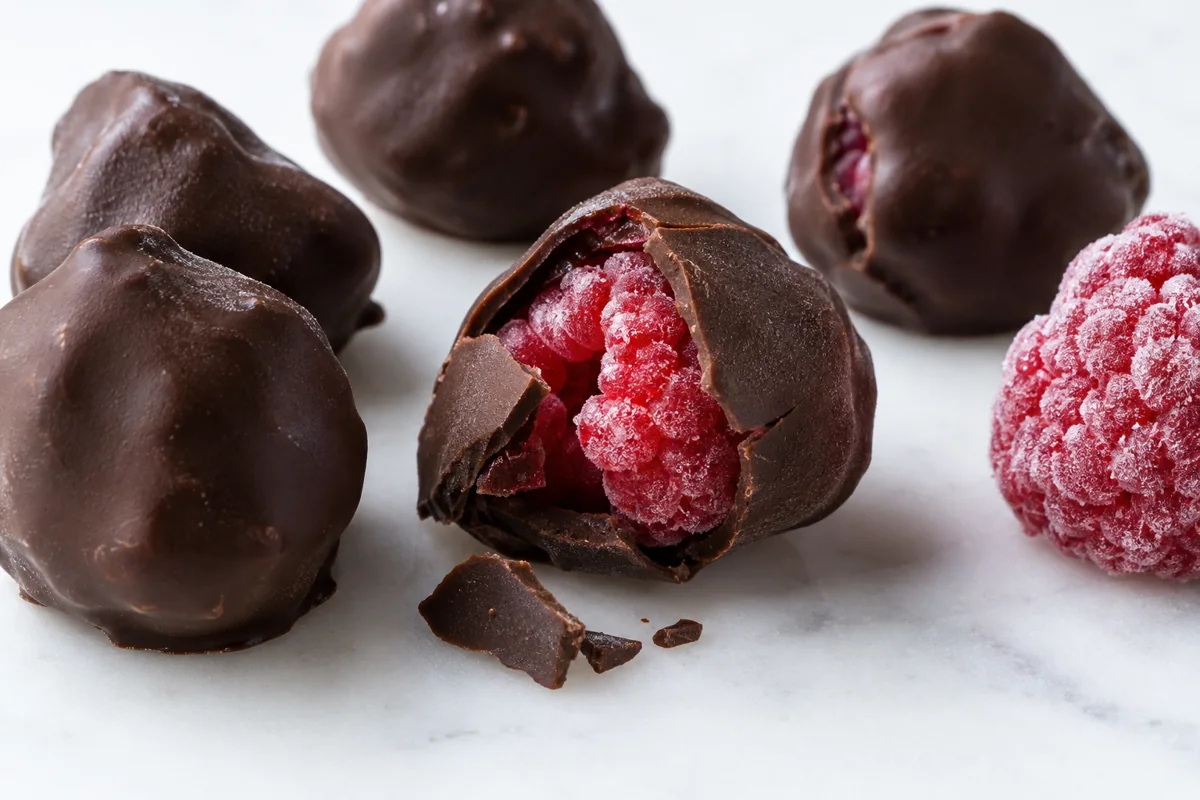
Define the frozen snack and its cold-chain state
A fresh raspberry dipped for immediate service, an IQF raspberry coated for frozen retail, and a freeze-dried raspberry used in a chocolate bar are materially different inputs. The fresh fruit may carry surface moisture from washing or storage and is commonly evaluated for short service. An IQF berry is handled and sold frozen, so the coating process has to accommodate cold fruit and preserve the frozen distribution chain. A freeze-dried piece has a very different water content and bite. It may suit a shelf-stable chocolate inclusion, but that use does not establish the behavior of a frozen berry with a high-moisture center.
Write down the intended serving condition before requesting a raspberry grade. Is the consumer expected to eat the piece directly from frozen storage, allow a brief tempering period, or use it as a dessert garnish? This choice changes the acceptable shell thickness and the perception of fruit hardness. It also changes the way the team should evaluate cracking and condensation after a package is opened. Treat the serving condition as a test condition, with a defined product temperature and time out of the freezer. A subjective tasting note taken at an unknown state cannot be compared reliably with the next trial.
The finished snack remains a frozen product unless its complete formulation and process have been validated for some other state. Chocolate around the berry does not convert the fruit center into a dry confection. Callebaut's frozen raspberry coating recipe itself describes freezer conservation and warns that chocolate thickens quickly on frozen fruit. Its suggested conditions concern the specified chocolate and recipe; they are a starting point for a controlled discussion with that supplier, not a universal enrober setting or a verified commercial shelf life for another product.
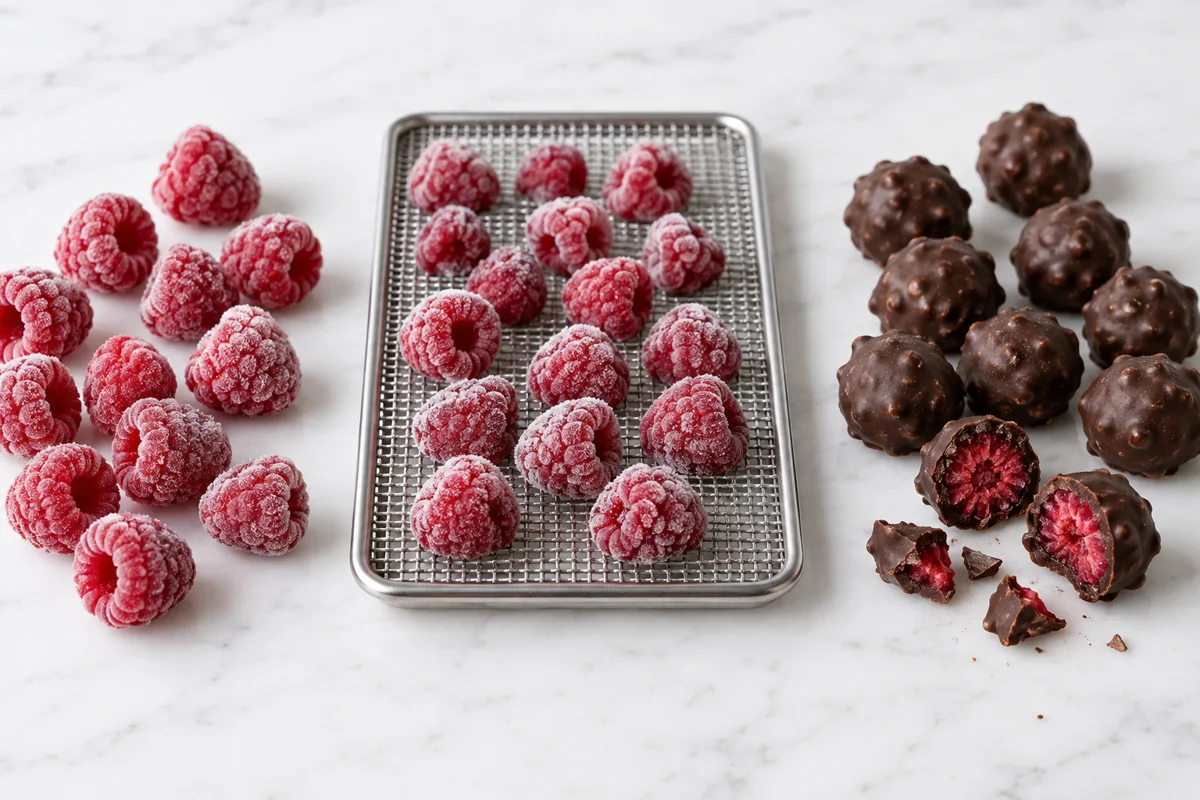
Illustrative view. Whole frozen berries, handling tray and coated output in a sample trial.
At concept stage, ask whether a single layer or two contrasting layers are needed for the target bite. More coating can hide a rough fruit surface and create a thicker snap, but it also changes weight, sweetness, label declaration and unit cost. A thinner shell may preserve raspberry acidity more clearly while exposing gaps on irregular berries. Both options should be compared at the same frozen serving state. The target should be expressed as an observable shell and fruit balance, supported by a permitted coating pickup range after the pilot run.
The package route belongs in that definition. Individually separated pieces in a pouch, a tray with compartments and bulk pieces for foodservice face different contact and abrasion during filling and transport. Record how many finished pieces stick together, crack or leave visible coating dust after a representative pack, frozen hold and distribution simulation. If the team changes the pack format after the coating trial, it should repeat the handling observations. The saleable unit is the packed frozen bite, rather than the intact ingredient sitting in an open sample bowl.
Choose berry size and integrity for the actual coating line
For an enrobed snack, intact berry yield matters at several points. A whole IQF raspberry can look suitable in a frozen carton while losing drupelets during metering, transfer or agitation. Conversely, a lot with a slightly wider size distribution may perform acceptably if it moves gently and receives even coverage. Set a representative trial with the expected thaw history, feeder, belt or drum, coating, cooling, and pack sequence. Weigh and inspect the same lot before and after those steps. Keep the fruit identity and line conditions constant when comparing a proposed grade.
Start with a frozen input sample taken from the actual shipping pack. Note its whole-to-broken distribution, clusters, loose fragments, visible frost, shape, and package condition. A percentage printed in a supplier description needs an agreed inspection method: sample size, definition of a whole fruit, and where the measurement is taken. One missing drupelet may have little effect in a puree program but may become an exposed red point under a thin chocolate shell. The buyer and supplier should agree which defects matter for this product rather than adopting a generic whole-fruit label without a line trial.
Berry size should be assessed as a distribution. Record the smallest and largest pieces that pass through the feeder, the proportion around the desired center size and the frequency of unusually broad or flattened fruit. Large berries can give a stronger visible fruit center but demand more coating and can bridge at narrow points. Small berries increase piece count per kilogram yet may become coating-heavy and harder to separate. A caliper or image measurement can describe the sample, but no universal millimeter limit follows from the product name. The limit should come from the chosen equipment, shell target, portion size and pack design.
During a pilot run, collect fruit that enters the line, fruit rejected before coating, intact coated pieces, cracked pieces, coating-only fragments and residues left on equipment. A mass balance makes a grade comparison much more useful than a photo of the best finished handful. Count pieces as well as mass: coating pickup can conceal loss if only final weight is recorded. If the line uses a pre-coat or two coating stages, inspect the berry after each contact point. The stage at which damage appears tells the team whether to change incoming fruit specification, feeding force, transfer height or coating method.

GreenLand product photograph. Whole IQF raspberries showing drupelet structure.
Keep representative samples from the beginning, middle and end of a run. Early samples may reflect a colder, drier line, while later samples may encounter accumulated fragments or a changed coating condition. A line that produces a good first tray but loses intact recovery after an hour is not ready for the intended production length. The study should record actual throughput, product temperature and coating condition beside the sample, even if the purchasing specification later reduces these to a simpler acceptance test.
The GreenLand raspberry product range identifies whole, broken and crumble supply forms. We can discuss a target whole-fruit share and defect tolerance against a buyer's application, but the final suitability for enrobing must be demonstrated with the relevant lot. A lower ingredient price per kilogram offers little value if the chosen grade creates more rejected coated pieces or excessive coating pickup. The commercial comparison should include usable finished yield, rather than treating the fruit invoice alone as the decision.
Control surface ice without inventing a thawing shortcut
Frost crystals, liquid water on fruit and condensation on nearby cold surfaces are related but separate observations. Frost may be present on an otherwise well-frozen berry. Free water can appear when the surface warms or a frozen cluster begins to thaw. Condensation can develop when a cold tray or product meets humid air. Each can affect the interface between fruit and chocolate, yet the remedy depends on how and where the moisture appeared. A single note such as "wet berries" hides the cause and makes the next trial difficult to interpret.
Check the ingredient at receipt, at bag opening, just before dosing and immediately before coating. Photograph a defined sample under consistent light and record the time, product temperature and ambient conditions. If berries have arrived with heavy snow, large ice agglomerates or signs of a broken cold chain, isolate that lot for evaluation under the supply agreement. If the surface changes only after a staging step, review the staging time and room humidity before rewriting the fruit specification. This sequence separates an incoming-material issue from a handling issue created after the pack was opened.
The practical aim is a repeatable transfer into the coating process, not a blanket instruction to warm or thaw berries. A thawing shortcut can release juice, soften the berry, increase microbial exposure and make coating conditions less stable. A manufacturer should instead work with its coating supplier to define the product-specific temperature window and how quickly the fruit moves from frozen storage to coating. The Callebaut recipe illustrates the rapid thickening of chocolate on cold fruit; it does not validate a general thawing procedure for industrial IQF berries.
Measure the observation the team can use. For example, record visible frost category, clumping, free liquid in the sample container, time at the line, and the percentage of pieces with uncovered patches. Avoid claiming that a visually "dry" berry is microbiologically safe or that one temperature reading determines shell adhesion. Moisture appearance is a quality and process observation. The required food-safety approval is a separate exercise based on ingredient controls, intended use and the final manufacturing plan.
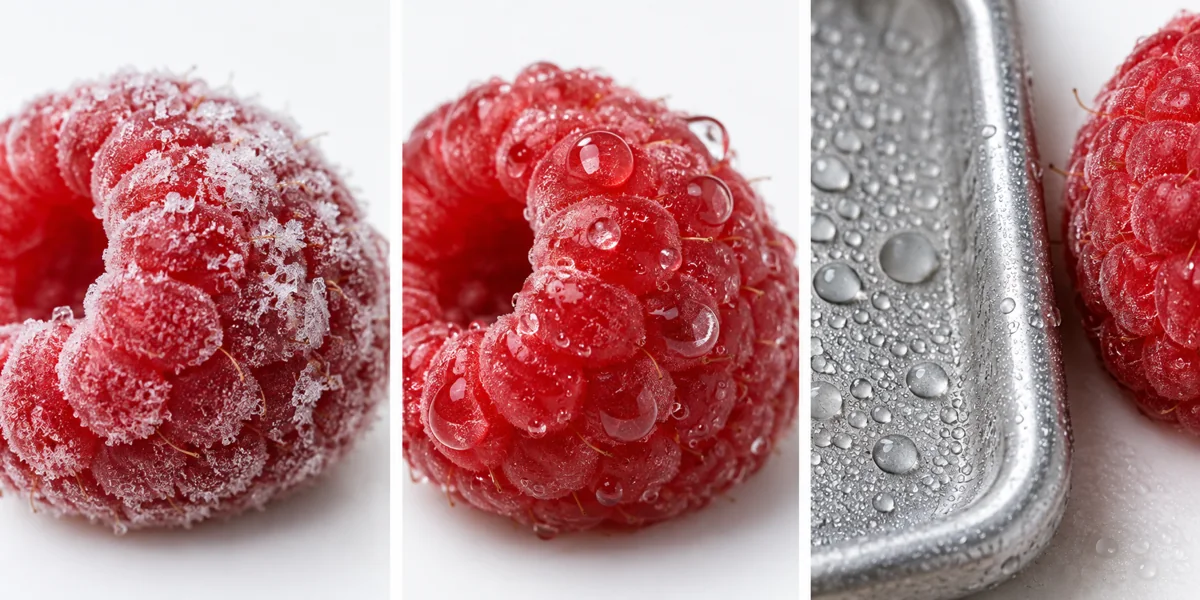
Illustrative view. Frost crystals, liquid water and tray condensation shown separately.
Run small batches when testing a moisture-control adjustment. Keep fruit lot and chocolate constant, alter one staging variable, then compare shell coverage, release from the belt, breakage and post-freeze appearance. If two variables move at once, an apparently smoother shell cannot be assigned to one cause. Repeat the best condition under the longer expected run duration and packing sequence. A process that works for a few dipped pieces on parchment may not hold when many cold pieces and a continuous coating mass interact.
Storage and distribution can reveal defects that are not visible at the coating exit. Inspect a sealed pack after the initial freeze, after the planned frozen hold, and after a defined handling simulation. Compare the same photo setup and defect categories. The commercial team should not borrow a shelf-life number from a recipe or another brand; the finished formulation, pack, storage temperature and abuse tolerance must be validated for the destination market and sales channel.
Diagnose uneven shells, breakage and bloom separately
When a pilot batch looks poor, describe the defect before changing the ingredient. An exposed red patch may result from incomplete coverage around the raspberry's irregular surface. A thick foot at the base may come from excessive coating accumulation or a slow release from the belt. A fractured shell may reflect berry movement, packing contact or a shell too rigid for handling. A pale surface film may involve bloom, but it needs a closer diagnosis. Calling every pale mark "frost" or every broken piece "bad fruit" can send the team toward the wrong correction.
Create a short defect vocabulary and use it consistently. Log exposed fruit area, pooled base, shell fracture, stuck-together units and visible white or gray film as separate counts. Take close photos of representative pieces beside an intact control, then open a few pieces to assess whether the fruit itself stayed whole. A crack in chocolate around an intact berry suggests a different failure route from a split berry that punctured the shell. Record whether the defect first appears after coating, after packing or after frozen storage.
Chocolate bloom also has more than one mechanism. Callebaut's sugar-bloom guidance explains the role of surface moisture and subsequent sugar recrystallization. An observed pale coating surface should still be assessed with the particular chocolate supplier, because fat bloom, sugar bloom and frost may look similar in a quick warehouse photo. The line team should record the surface state, storage history and whether the mark wipes away or changes on warming under a controlled test. Do not diagnose a commercial lot solely from color in a phone image.
Shell thickness can change several defects at once. A thin shell may leave exposed recesses but feel less sweet; a thicker shell may bridge surface irregularities while raising weight and the risk of a heavy pooled foot. Compare the same incoming fruit lot at a few coating conditions approved for the formulation. Measure coating pickup from input and output mass, then score coverage, fracture and bite. A better visual appearance is useful only when the frozen eating quality and packed yield also improve.
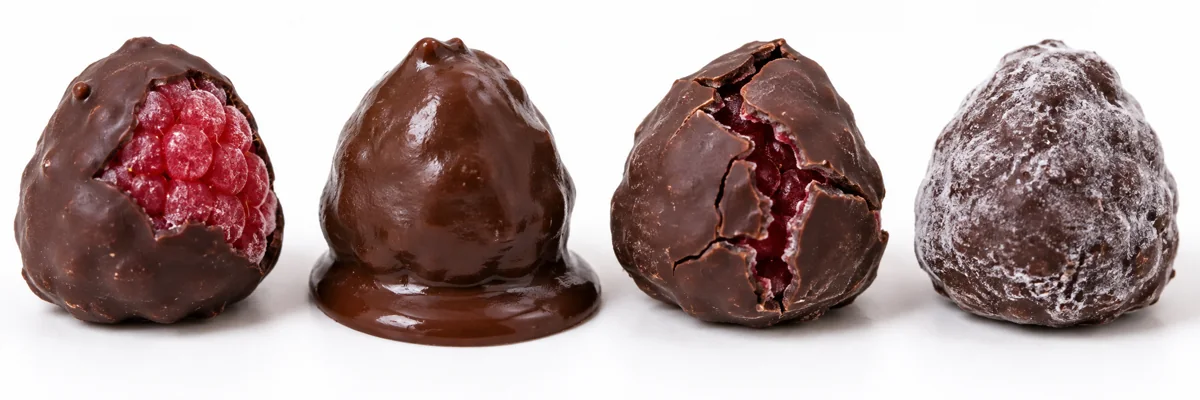
Illustrative view. Exposed fruit, pooled coating, fractured shell and surface bloom.
Fruit breakage should be traced by stage. If broken berries are already abundant in an unopened bag, ask for a different source grade or pack configuration. If breakage rises at a drop or transfer, first review that mechanical contact. If shell fractures increase during pack-out or shipping simulation, adjust the finished-product handling and pack. This stage-by-stage log protects the sourcing team from demanding an expensive fruit grade for a problem caused downstream.
Retain both an approved reference and a rejected pilot reference at the same frozen storage condition for a short controlled comparison. The references help the team align visual judgments across R&D, QA and purchasing. They do not replace written acceptance criteria or shelf-life work. When a defect changes over time, connect it to the exact sample stage and storage history so the response is reproducible. The goal is a stable product standard that another shift and another lot can apply.
Confirm the no-heat intended use before approving a lot
Chocolate enrobing commonly gives the fruit no heat treatment that could be assumed to control hazards within the berry. Frozen storage also preserves rather than reliably eliminates some pathogens. The US FDA's berry virus prevention strategy highlights the importance of preventive controls against enteric viruses in berries. A glossy shell, low finished-product temperature and attractive ingredient photo are therefore not substitutes for a documented safety assessment of the fruit and the complete process.
Before approving a supplier lot, write the intended-use statement for the raspberry ingredient. Will the fruit be consumed without an effective kill step after receipt? What treatment, if any, is applied before freezing, and what controls are documented by the supplier? What testing or verification is required by the customer's food-safety plan and destination market? Ask for the relevant specification, traceability, production and microbiological documentation, then have the responsible food-safety team judge suitability. Do not infer ready-to-eat status from "IQF," "whole" or "premium" on a sales sheet.
The coating introduces its own approval questions. Confirm the chocolate ingredient declaration, allergens, cross-contact controls and any dairy or nut handling in shared equipment. If a second layer, yogurt preparation or topping is used, account for those inputs in both the allergen plan and finished label. Verify the storage instructions and the complete finished-product shelf life under the actual package. A pilot tasting can show a good texture while the documentation for direct consumption is still incomplete; those decisions need separate signoffs.
Keep food safety, sensory performance and commercial specification in distinct records. The safety record asks whether the proposed ingredient and process meet the intended no-heat use. The sensory record asks whether the frozen berry and coating deliver the target bite. The purchasing record defines the supplier's deliverable fruit form, pack, defect tolerance, lot identity and inspection method. Approval in one column does not automatically clear the others. This separation makes it easier to change a coating or fruit grade later without losing the reason an earlier decision was made.
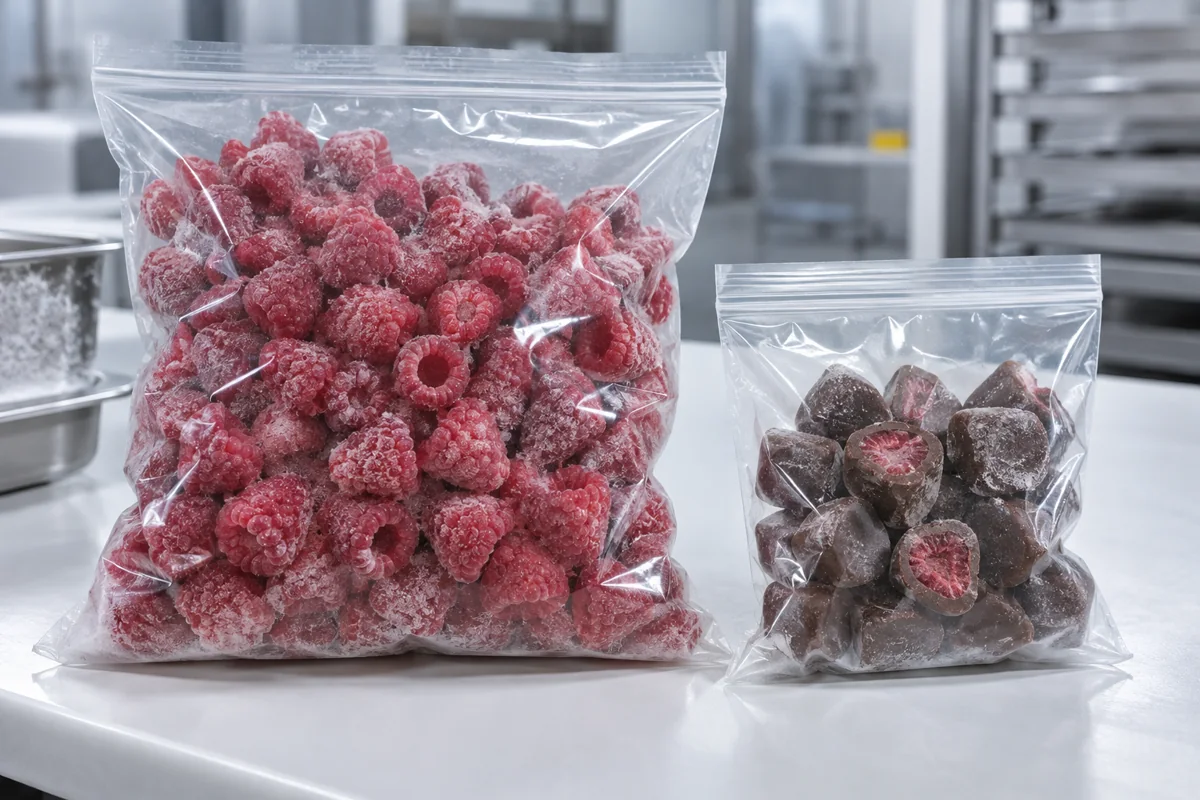
Illustrative view. Separate sealed frozen raspberry and chocolate-coated sample packs.
When a supplier cannot substantiate the intended use, hold the concept or choose a validated processing route rather than relying on freezing as a corrective step. Similarly, a food-safe lot can still fail a visible whole-berry snack if it breaks excessively or carries too much surface ice. We can provide current frozen raspberry product and documentation details for review against a buyer's application, but the customer's final hazard analysis and release remain tied to the actual process and market.
The no-heat decision should be made early, before a visually successful pilot creates momentum to launch. It determines what supplier questions, process controls and verification work are needed. Keeping it visible throughout trial design prevents a later redesign of the formula and pack after sensory and cost work has already been completed.
Turn the trial into a raspberry purchase specification
A useful purchase specification starts with the fruit form and the method used to judge it. State whether the order calls for IQF whole berries, an agreed whole-to-broken grade, or another form. Define the approved berry-size distribution with a sample method that reflects the coating equipment. Specify acceptable visible frost or clumping, foreign-material controls, pack integrity, lot coding and cold-chain condition. Include the intended-use and documentation requirements that the safety team approved. Avoid writing a tolerance from one photograph or copying a generic table without confirming the line.
Attach a concise pilot-trial sheet to the specification. It can have fields for supplier and lot, pack date, input mass, input whole count, size distribution, staging time, coating formulation and condition, finished coated mass, intact saleable count, shell-defect categories and samples after packing. Keep blank fields blank until a real run supplies observations. The same sheet should distinguish line rejects from fruit already broken at receipt. That distinction gives both supplier and processor a fair basis for corrective action.
Sample approval should include the actual frozen eating state. Score berry acidity, seed and drupelet perception, shell snap and balance at the planned serving temperature. Also score packed appearance after the defined storage and handling stages. A berry that is perfect for a plated dessert may be too large or fragile for an individually packed snack. The customer can use other raspberry applications for broader inspiration, while this specification remains focused on enrobing whole frozen fruit.
Compare cost per saleable pack rather than only ingredient cost per kilogram. In a hypothetical worksheet, start with fruit input cost and usable intact yield, add coating pickup and coating loss, then include line rejects and packing losses. Mark every value as an assumption until measured. A grade with a higher fruit price could be economical if it reduces rejected coated pieces, but the opposite is also possible when handling rather than fruit grade causes the loss. The trial's purpose is to reveal which variables actually drive the result.

GreenLand product photograph. Frozen raspberry sample with size measurement context.
Plan how the specification will be maintained across crop changes. The supplier should identify the lot and confirmed crop source and provide a representative sample for the next production window. Purchasing should compare a new lot with the approved reference using the agreed inspection method. If a change in berry size, frost or breakage is detected, a limited line check can determine whether the product still meets the finished snack target. A seasonal change need not trigger a complete concept restart, but it must not disappear under the same broad product name.
For an RFQ, send the target berry form, size range, defect tolerance, intended no-heat use, pack and quantity, destination, planned coating method and requested documents. We can then confirm what is available under a current GreenLand frozen raspberry supply offer and what must be verified on a sample. The strongest purchase brief is specific enough for the supplier to quote and for the processor to repeat the acceptance test, yet leaves line-dependent limits open until the actual pilot data support them.
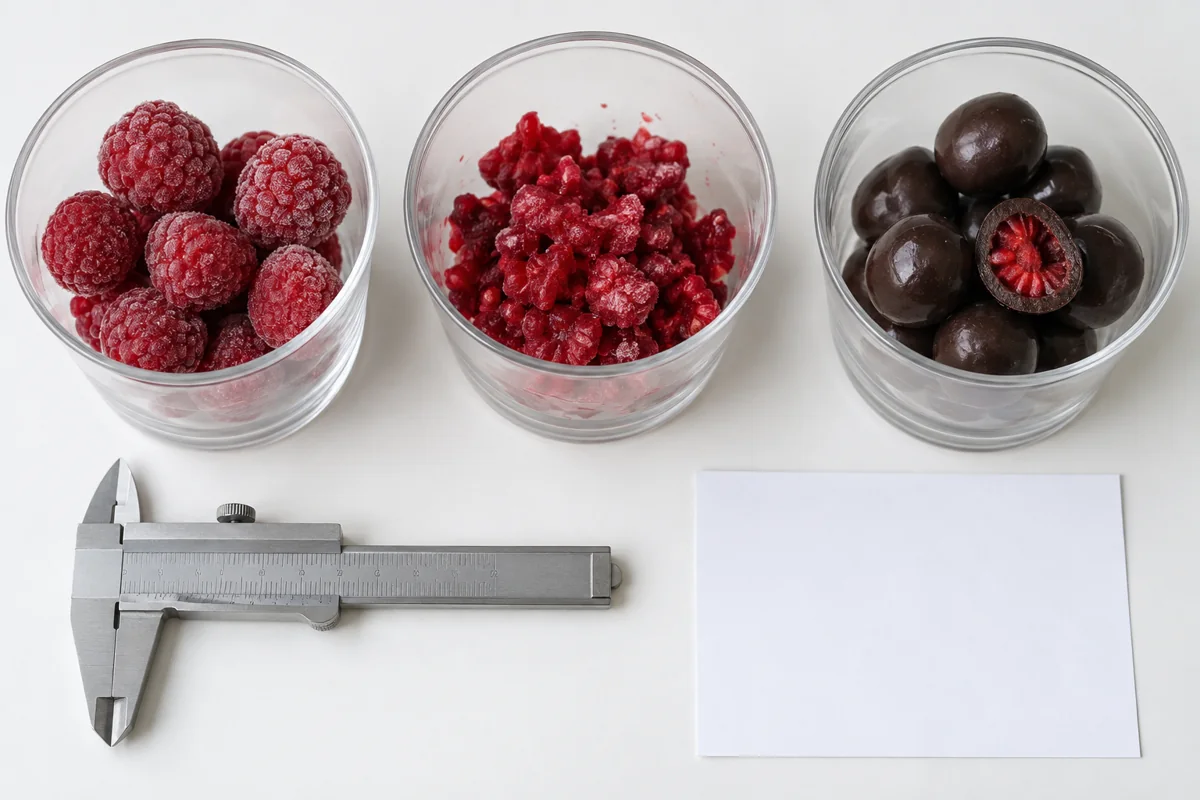
Illustrative view. Separate whole, broken and chocolate-coated raspberry trial cups.
Source Frozen Raspberry with GreenLand-food
GreenLand-food is a professional frozen raspberry supplier and manufacturer in China, providing factory-direct wholesale supply for importers, food manufacturers, foodservice distributors and private-label programs.
Send the product form, specification, packing, quantity, application, destination, private-label needs and requested documents so we can confirm a current offer.